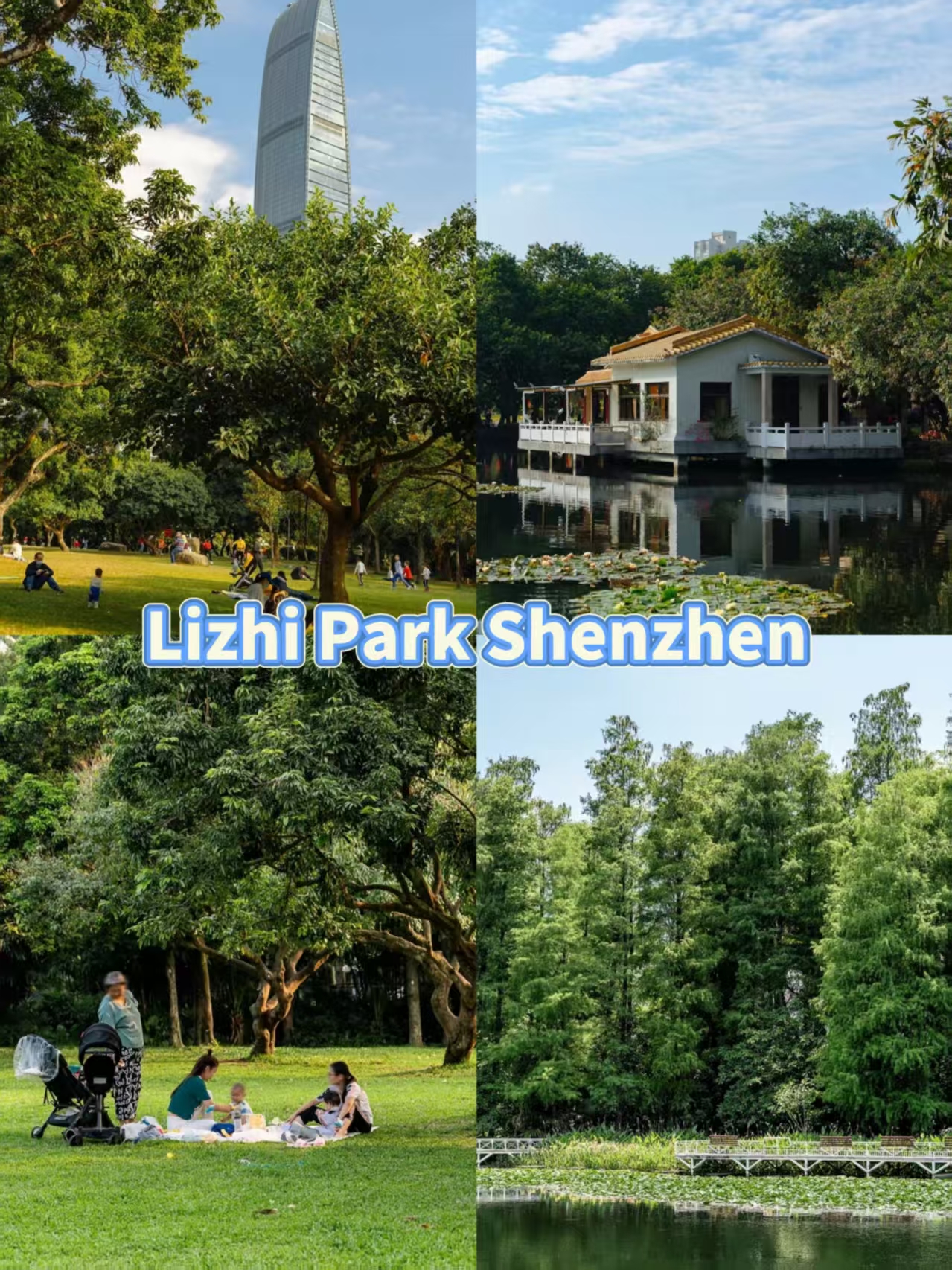
Lizhen Park Shenzhen
Breathtakingly modern, but also utterly different when stepped inside, Lizhi Park is nestled in the heart of Shenzhen amongst the skyscrapers. One of the earliest parks constructed in the city (1989, before much of the skyline even formed in Shenzhen), it remains free. A great majority of tourists make a mistake by thinking it is going to be a stroll and find themselves there longer than they anticipated. There's more here than meets the eye between the lychee trees, the lake, the early morning people doing tai chi and that Deng portrait at the entrance. And if you're still putting together your Shenzhen itinerary beyond the park, our full guide to things to do in Shenzhen covers the rest of the city's highlights.
A Brief History of Lizhi Park: From Lychee Orchard to Urban Landmark
It was not until 1989 that Lizhi Park officially opened, just ten years after Shenzhen was given the designation of a Special Economic Zone. The city was still in the construction process, and the concept of green space was not a top priority at that time. This is why the park's history is somewhat unusual.
The lychee trees in the park have not been planted at the time of its establishment. They had already arrived. They had been cultivated by local farmers since time immemorial and the park was actually built around the orchard rather than the reverse. It's an important tidbit to know, since some of these trees are much older than the city itself.
A few things that explain the park's name and background:
- Name origin: "Lizhi" (荔枝) is the Mandarin word for lychee. The park goes by several English spellings — Lizhi Park, Lychee Park, Litchi Park — but they all refer to the same place.
- Regional roots: One well-traveled TripAdvisor reviewer noted that lychee cultivation in the Pearl River Delta region dates back over 2,200 years. The trees in this park aren't just decorative — they're part of a much longer agricultural history.
- Urban context: By 1989, Shenzhen's population was growing fast. Lizhi Park became one of the first large public green spaces in the city, a place for ordinary residents to actually slow down — which felt almost countercultural for a city moving that quickly.
🌳 Explore Urban Nature Parks Across China: If you enjoy discovering serene city parks that mix traditional landscape design with local community life, check out our guide to Chengdu's famous Huanhuaxi Park.
Highlights and Attractions Inside the Park
Lihu Lake and the Duck Boats
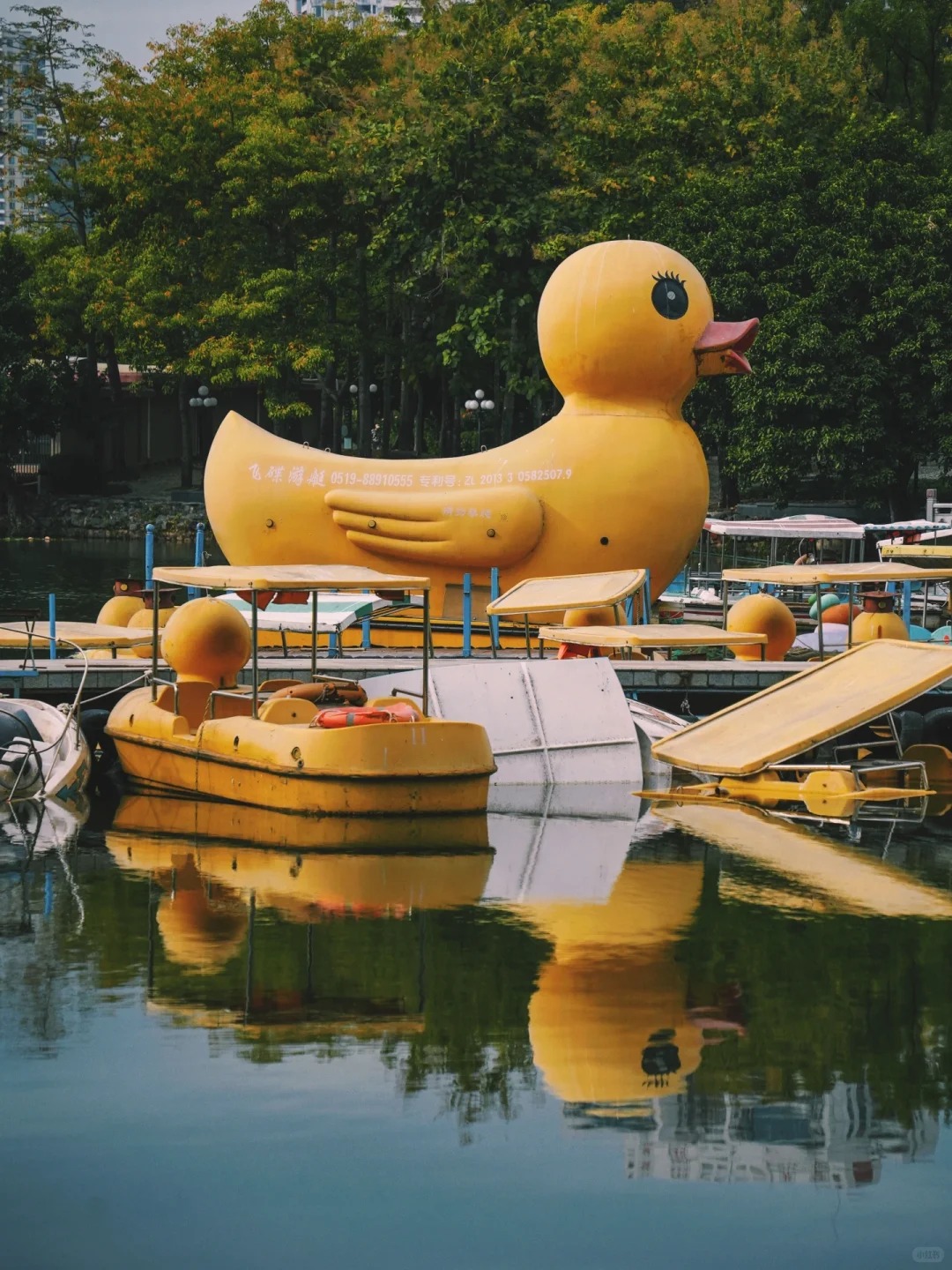
Lihu Lake and the Duck Boats
Most of the walking trails of the park naturally circle Lihu Lake, which is the focal point of the park: that is where most people find themselves spending most of their time. The lake is not a pond but a large body of water, and the shoreline walk is wide and shaded for the majority of its path length. A complete lap will take about 30-40 minutes, and is a good place to begin before venturing into the rest of the park.
Lotus ponds bloom on the east side until July and August. The park is quite different during the few weeks of midsummer when both the lotus and the lychee trees are in bloom. However, the lake is still a destination for non-residents, as residents fish from the banks most mornings and small flat-bottomed boats are occasionally seen moving about on the surface to clear the debris. Not only a beautiful lake, but also a working one. If Lizhi Park's lake scenery appeals to you, Shenzhen Talent Park is another lakeside green space.
- Location: Center of the park; accessible from most entrances within a short walk
- Highlight: Duck-shaped paddle boats available to hire at around 10–20 RMB per 30 minutes — a straightforward way to see the park from the water
- Price note: Rates can nudge up slightly on public holidays and weekends
- Tip: Bring cash. Not all rental spots reliably accept WeChat Pay or Alipay, and you don't want to find that out after you've already queued
The 500 Lychee Trees and the Red Cloud Season
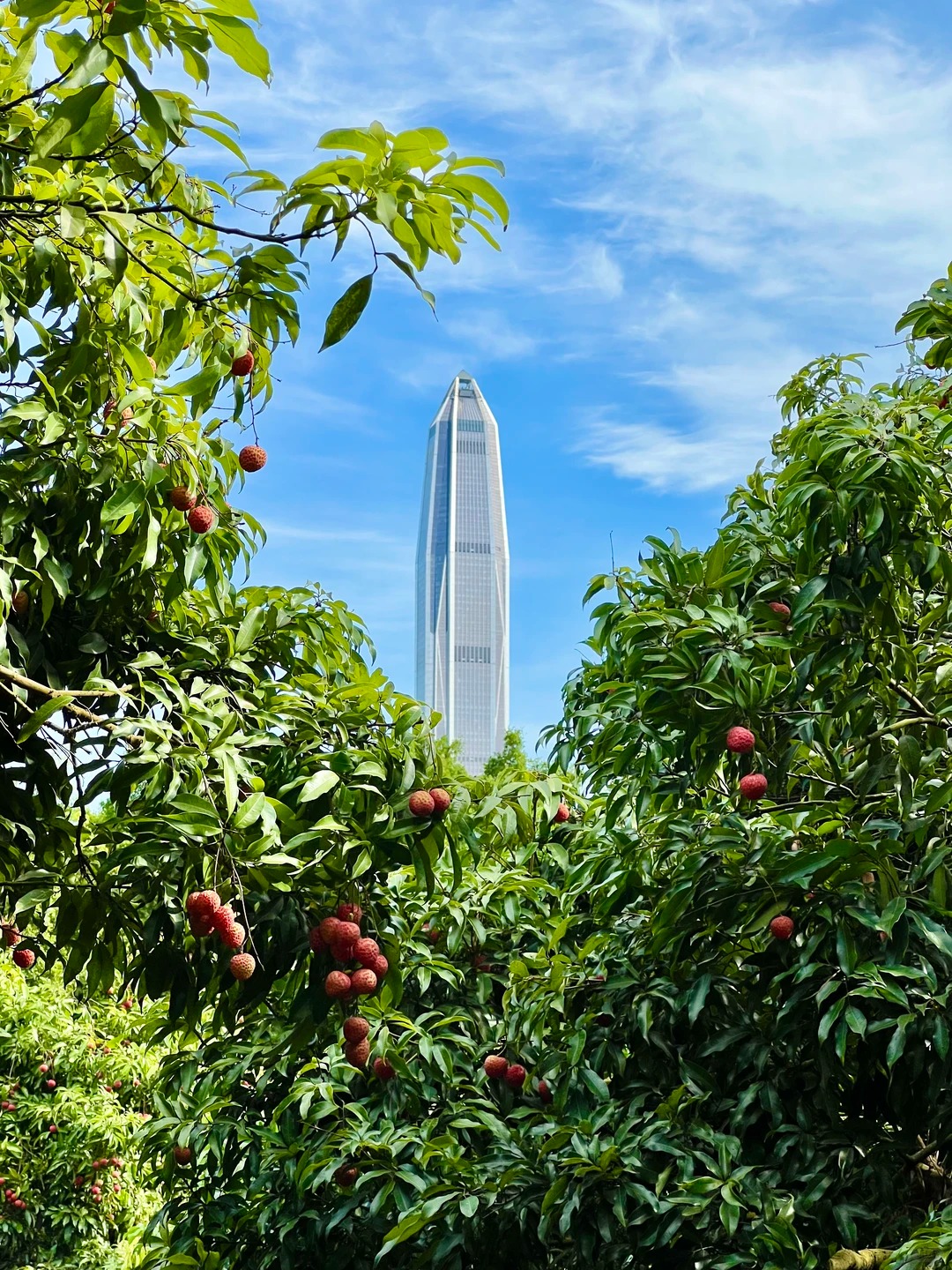
The 500 Lychee Trees and the Red Cloud Season
The lychee trees are why the park exists and why it's named what it is. There are over 500 of them, most of them old-growth with wide canopies that spread across the main paths. For most of the year they function mainly as shade — which is genuinely useful in a city where summer temperatures sit well above 30°C for months at a stretch. But from mid-June through July, the trees fruit simultaneously and the whole character of the park shifts.
Locals call it "红云盖顶" — roughly translated as "red cloud overhead." The fruit clusters so densely on the branches that entire canopy sections turn crimson. It's the kind of seasonal visual that photographs don't fully prepare you for. Vendors set up in and around the park during peak season selling fresh lychees by the bag. One TripAdvisor reviewer put it plainly: "Don't leave without buying a bag." That's not an exaggeration — the fruit picked near where it grows tastes noticeably different from what you'd find in a supermarket.
Outside of harvest season, the trees still give the park its texture. They don't lose their leaves in winter, so the park stays green and walkable year-round.
- Location: Throughout the entire park; highest concentration along the central and northern paths
- Highlight: "Red cloud season" from mid-June to July — the most visually distinctive period in the park's annual calendar
- Tip: For close-up photography, late afternoon around 4–5pm in late June gives the best angled light on the fruit, making the red color more saturated than at midday
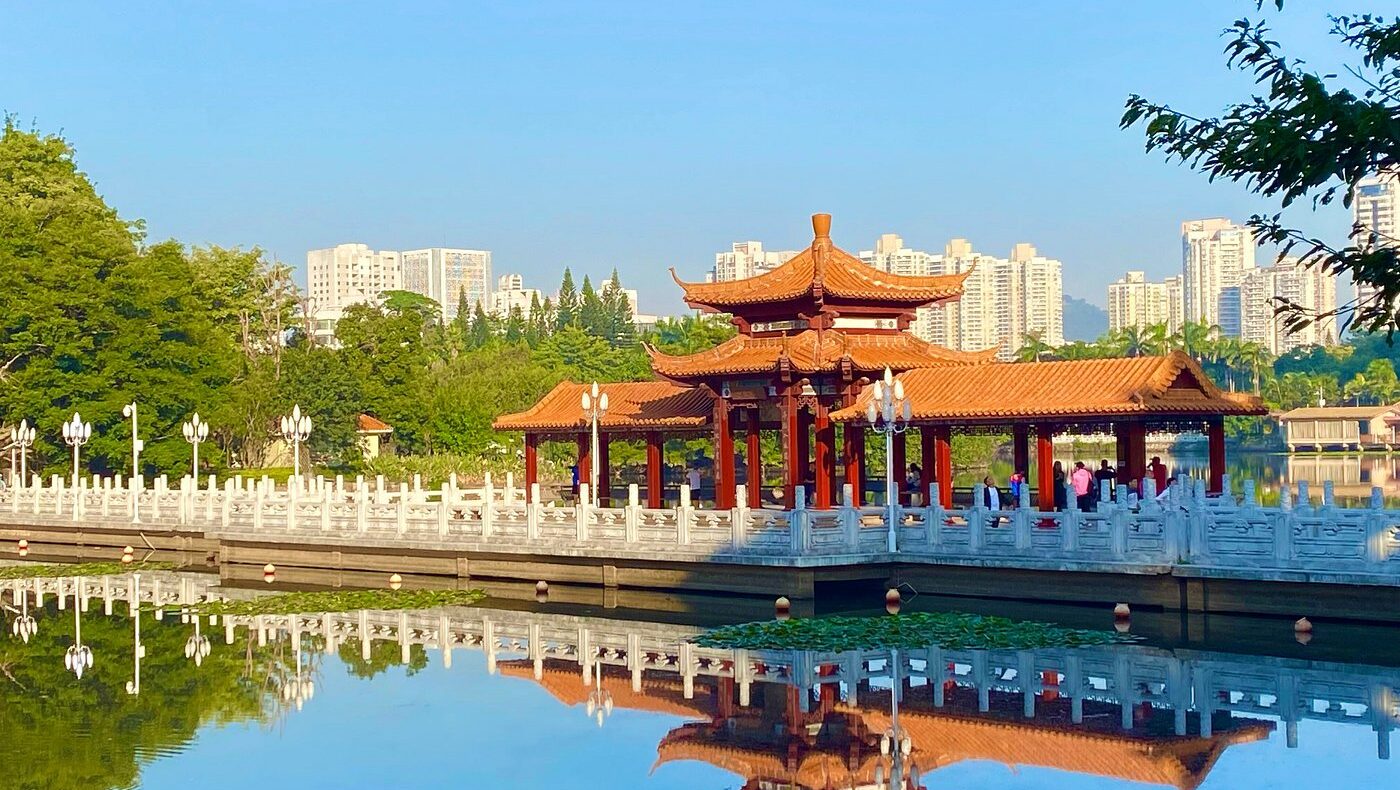
Pavilions, Bridges and the Classic Garden Atmosphere
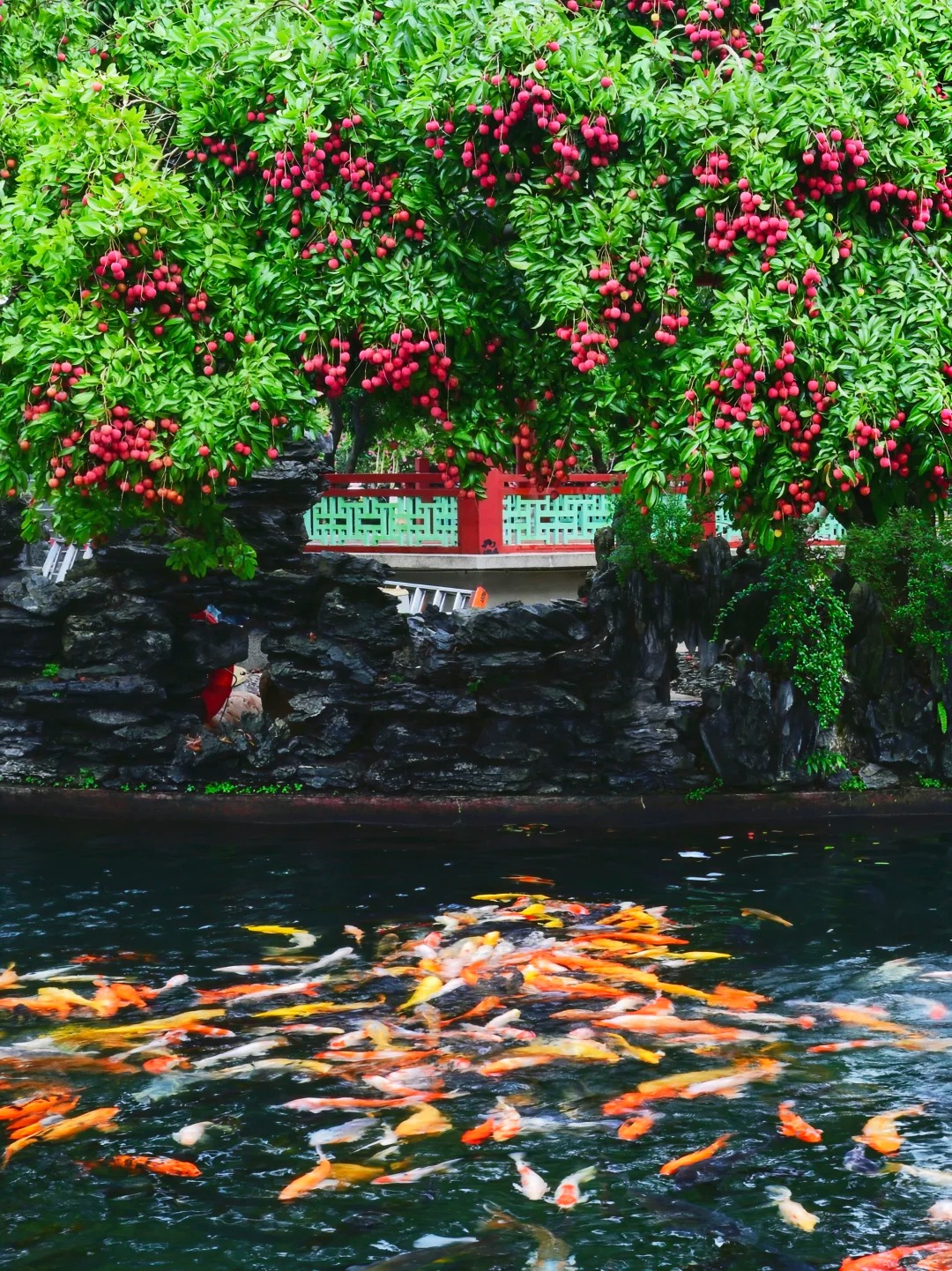
Pavilions, Bridges and the Classic Garden Atmosphere
The park has several named bridges crossing Lihu Lake — Lanyue Bridge, Jinyue Bridge, and Feihong Bridge among them. All are built in traditional Chinese style with curved profiles, tiled railings, and red lacquered woodwork. They're functional crossings, but they're also the best photography spots in the park, for a reason that has nothing to do with the bridges themselves.
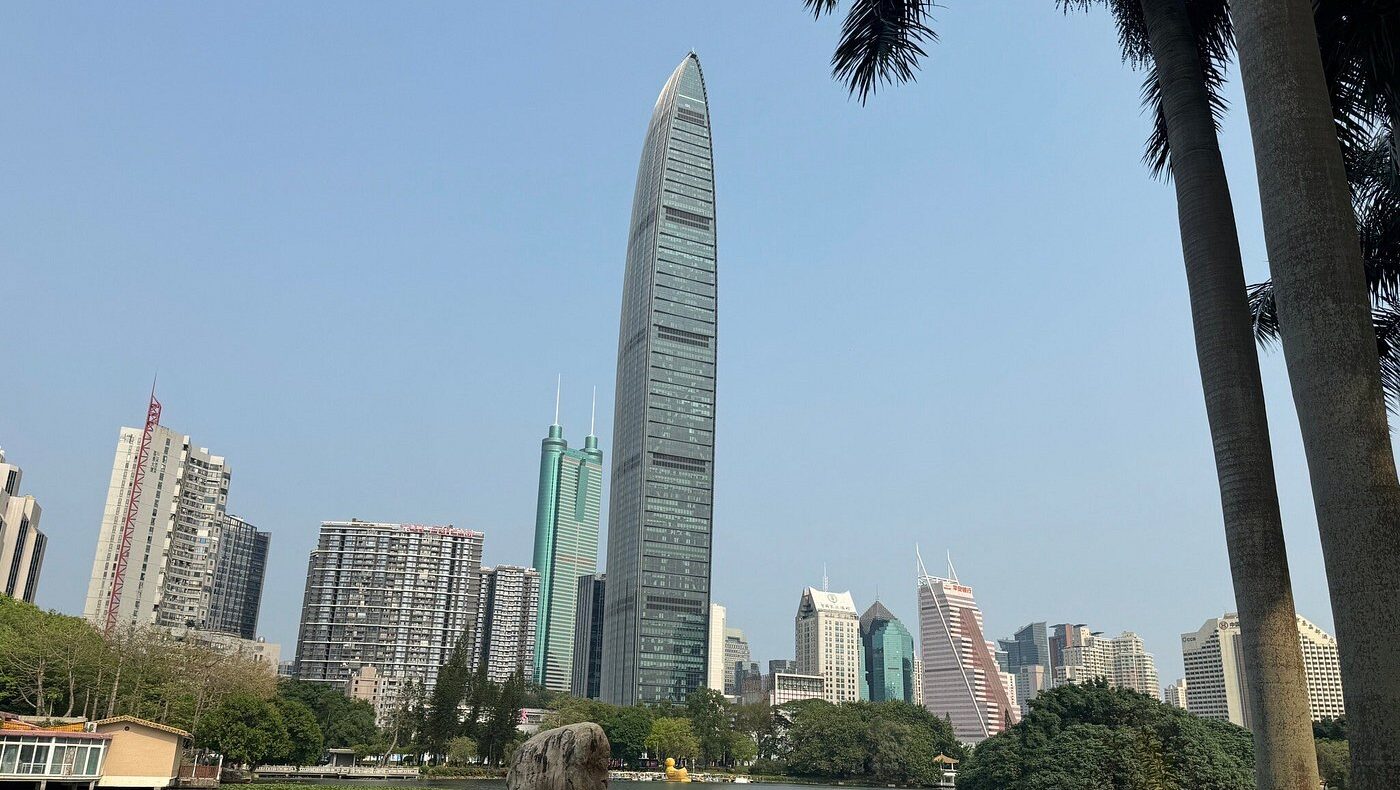
Standing on any one of them, you can frame a classical Chinese garden scene in one direction and a wall of Shenzhen skyscrapers in the other. The KK100 building and the Diwang Building both sit clearly above the treeline from several points along the lake. That contrast — ornamental pavilion in the foreground, glass tower in the background — is the image most associated with Lizhi Park, and it's genuinely difficult to replicate elsewhere in the city. Trip.com describes the overall layout as evoking the refined aesthetic of Jiangnan-style gardens, which is accurate; the arrangement of water, walkways, and covered structures follows a deliberate design logic, not just decorative planting.
The pavilions scattered across the park are functional rest spots as much as architectural features. Red columns, grey-tiled roofs, open sides — standard classical Chinese construction, well maintained.
- Location: Bridges span Lihu Lake; pavilions distributed across the full park at regular intervals
- Highlight: Simultaneous framing of traditional Chinese architecture and the modern Shenzhen skyline from a single viewpoint on the lake bridges
- Tip: Early morning gives the softest light and the least foot traffic — useful if you want a clean shot without strangers walking through the frame
The Deng Xiaoping Portrait at the Park Entrance

The Deng Xiaoping Portrait at the Park Entrance
The portrait is at the main entrance corner and catches most first-time visitors off guard. It's large — considerably larger than a standard billboard — formal in composition, and treated with visible seriousness by the people around it. Most visitors stop. Many photograph it. A few just stand there for a moment.
Deng Xiaoping's 1992 Southern Tour brought him to Shenzhen specifically, at a point when China's economic reform program had stalled following political turbulence. His speech here effectively relaunched that process and confirmed Shenzhen's role as the model for what China's modernization could look like. The city's entire trajectory — from fishing village to one of the most economically productive urban areas on earth in under four decades — runs directly through that moment. The portrait isn't decorative. It's a claim about what this city represents.
Multiple TripAdvisor reviewers mention the portrait as a specific reason to visit the park, not just a thing they noticed while walking past. Wanderlust Welshman described it as "a testament to one of the heroes of China." That reads about right.
- Location: Main entrance corner of the park — visible immediately on arrival
- Highlight: One of the most historically significant landmarks in Shenzhen, directly connected to China's reform and opening-up narrative
- Tip: Shoot before 10am from the eastern side for clean front lighting with no shadow across the portrait face — and pull back wide enough to keep the entrance environment in frame, not just the portrait itself
The China-Japan Friendship Garden
The China-Japan Friendship Garden
It is a completely isolated zone in the park and most of the visitors pass it without knowing it's there. The entrance is not well signposted and is not on the main circuit of the lake. It is in fact one of the reasons why it's worth looking for.
The garden was designed to be a symbol of the relationship between China and Japan, and the design is a reflection of that. The style of the stone lanterns, dry gravel grounds raked in traditional Japanese patterns, hedges tightly trimmed and ornamental plants skillfully formed is very different to the classical garden style. It is a compact area but it has a sense of thoughtfulness about it, but not token. If you're paying attention, you'll find the contrast between the two design traditions, as they share the same park boundary, to be very interesting. Interested in more of Shenzhen's quieter, less-visited corners — Pingshan District is a good place to start exploring.
In practical terms, this section is the quietest part of the park by a significant margin. Even on busy weekend afternoons, it tends to have very few people. If you need somewhere to sit without noise or foot traffic, this is the place.
- Location: Separate enclosed section within the park — not on the main lake path, requires a short detour to find
- Highlight: Japanese garden aesthetic including stone lanterns, dry landscape features, and sculpted hedges — a clear contrast to the rest of the park
- Tip: Worth ten minutes at minimum; many long-term Shenzhen residents have never visited this section, which gives you a sense of how often it actually gets used
The Hidden Bee Farm Inside the Park
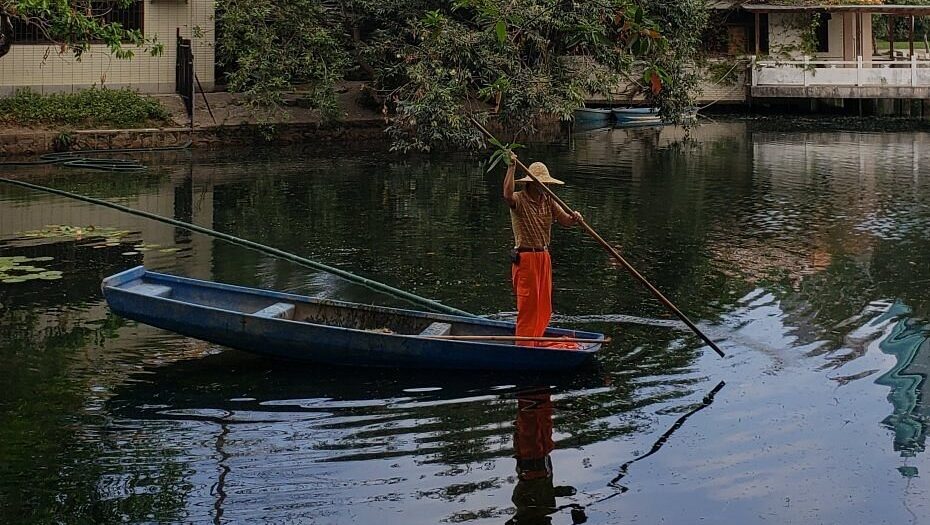
The Hidden Bee Farm Inside the Park
The back section of Lizhi Park has a noticeably different character from the manicured lake area. The paths get narrower, the trees feel older, and the general atmosphere is closer to a neighborhood park that happened to get absorbed into a larger one — which is roughly what happened historically. This is where the bee farm is located.
It's a working operation, not a display piece. The hives are active, there's usually someone managing them, and the honey is sold directly on site. Lychee blossom honey — 荔枝蜜 — is the product to look for. It's made from lychee flowers during bloom season and has a distinctly floral flavor profile that's quite different from generic commercial honey. If you've only ever had supermarket honey, this is worth trying for the comparison alone.
It's not on the main signage circuit. Head toward the rear of the park, away from the lake, and look for the hive structures. You'll likely smell beeswax before you see anything.
- Location: Rear section of the park, away from the main lake paths — not prominently signposted, requires some wandering to find
- Highlight: Working bee farm with lychee blossom honey (荔枝蜜) available to buy directly on site — an unusual feature for any city park
- Tip: Cash only in all likelihood; the back section of the park also has a quieter, older atmosphere that's worth experiencing separately from the main tourist circuit
The Morning Scene That Makes This Park Worth Waking Up Early For
The Morning Scene That Makes This Park Worth Waking Up Early For
Between 6:30 and 8:00am, Lizhi Park runs several completely different activities at the same time, often within earshot of each other.
There's usually a tai chi group near the lake — organized, regular, and apparently open to strangers. TripAdvisor reviewers mention that the monthly fee to join is around ¥10, and a few note that older members have invited foreign visitors to participate unprompted. A few meters away, a square dancing group runs through routines to loud Chinese pop music. The contrast between the two — one slow and silent, one anything but — is one of those things that's hard to explain but immediately makes sense once you see it.
Head toward the northern end and you'll find people doing kung fu training. The southern section is more family-oriented: open grass, a small merry-go-round near the entrance, kids running around while parents set up picnic blankets. On weekends, it's common to see multiple wedding photography groups working different spots around the lake simultaneously.
Scattered throughout are people playing instruments alone — erhu, flute, occasionally accordion. One TripAdvisor reviewer described the overall atmosphere as "locals playing, dancing and praying — magic atmosphere," which is a reasonable summary.
How to Get to Lizhi Park Shenzhen
By Metro — the Fastest and Easiest Option
Metro is the obvious choice. Line 3 (Orange Line) has a station called Lychee Park Station (荔枝公园站) that exits almost directly into the park — walk time from the turnstile to the entrance is under two minutes. That's the one to use if you have any flexibility in how you get there.
If you're already on Line 1, two stops also work: Grand Theater Station (大剧院站) puts you about 8 minutes' walk from the northeast entrance, and Honglin Station (红岭站) Exit E is around 6 minutes on foot. From Futian CBD or Luohu, Line 3 runs direct with no transfer. From Nanshan, you'll need to switch to Line 3 at either Futian or Gangxia — still straightforward. Fares run roughly 3–8 RMB depending on your starting point.
By Bus, Taxi or Bike
Several bus routes stop near the park — 102, 105, 113, 212, 224, and 313 among them. Look for stops marked "荔枝公园" or "红岭中路." For taxis or Didi, from Shenzhen Railway Station expect around 20–30 RMB and 15–20 minutes; from Futian CBD it's closer to 15 RMB and under 10 minutes. Didi works reliably across the city and is usually the easier option if your Mandarin is limited.
If you're staying nearby, Meituan and Hellobike shared bicycles dock around the park perimeter. And if you're in central Futian on foot, the park has multiple street-level entrances facing different roads — you'll likely hit one naturally just walking in the right direction.
Entry, Opening Hours and a Few Tips for When You Arrive
No ticket, no booking, no ID required — just walk in. The park opens at 6:00 AM and closes at 11:00 PM daily, including public holidays. The 6:00–7:30am window is noticeably quieter than mid-morning, which matters if you're coming for the tai chi scene or photography.
The park has several entrances on different sides, which Wanderlust Welshman specifically flagged as worth knowing. Bring a small amount of cash for paddle boat rental (10–20 RMB) and the bee farm honey stall, as mobile payment isn't guaranteed at either.
Best Time to Visit Lizhi Park
| Season | Highlights | Avg. Temp | Best For |
|---|---|---|---|
| 🌸 Spring (Mar–May) | Cherry blossoms, seasonal flowers, butterflies and birds | 18–26°C | First-time visitors, photography |
| ☀️ Summer (Jun–Aug) | Lychee harvest, lotus blooms | 28–35°C | Seasonal experiences, lychee season |
| 🍂 Autumn (Sep–Nov) | Clear skies, skyline reflections, comfortable walking | 20–28°C | Photography, relaxed exploration |
| ❄️ Winter (Dec–Feb) | Evergreen foliage, quiet atmosphere | 12–20°C | Crowd-free mornings, jogging |
Summer is the one season that has something no other time of year can match. Mid-June through July is lychee harvest season — 500 trees fruiting simultaneously is not something you can approximate at any other point in the calendar. Lotus flowers in the eastern ponds peak through July and August, so if you time it right you get both in a single visit. The tradeoff is the heat: Shenzhen summers are humid and consistently above 30°C, so sunscreen and water are non-negotiable.
Spring is the most comfortable weather-wise. Trip.com contributors mention the park filling with colorful seasonal flowers from March onward, attracting birds and butterflies in numbers that give it a noticeably different energy from the rest of the year.
Autumn is underrated for photography specifically — the air clarity in September and October makes skyline reflections on the lake sharper than any other season. Fewer visitors helps too. Winter stays green, mild, and quiet — fine for a morning walk, just without the seasonal spectacle.
FAQ About Lizhi Park Shenzhen
Q: Is Lizhi Park free to enter?
Yes, completely free. There's no gate fee, no booking required, and no ID check — you walk in through any entrance. The only things that cost money are the paddle boat rental on Lihu Lake (around 10–20 RMB per 30 minutes) and optional purchases like honey from the bee farm or fresh lychees from vendors during harvest season. Bring a small amount of cash for those, as mobile payment isn't guaranteed at every stall.
Q: What are the opening hours for Lizhi Park?
The park opens at 6:00 AM and closes at 11:00 PM, every day including public holidays. The early morning window — roughly 6:00 to 7:30am — is the quietest part of the day and worth considering if you want the tai chi scene, soft photography light, or just fewer people. Mid-morning on weekends tends to be the busiest period, particularly around the lake and main entrance area.
Q: How do I get to Lizhi Park Shenzhen by metro?
The most direct option is Line 3 (Orange Line) to Lychee Park Station (荔枝公园站) — the exit puts you less than two minutes from the park entrance. If you're on Line 1, Grand Theater Station (大剧院站) is about 8 minutes' walk to the northeast entrance, and Honglin Station (红岭站) Exit E is around 6 minutes on foot. From Futian CBD or Luohu, Line 3 runs direct. Fares are roughly 3–8 RMB depending on your starting point.
Q: When is lychee season at Lizhi Park?
Lychee season typically runs from mid-June through July. That's when the 500+ trees fruit simultaneously, turning the canopy a dense red — what locals call "红云盖顶" (red cloud season). It's the most visually distinctive time of year to visit. Lotus flowers in the eastern ponds also peak through July and August, so a visit in late June or early July gives you both at once. Outside of this window, the trees still provide shade but there's no fruit.
Q: Can you rent a boat on the lake in Lizhi Park?
Yes. Duck-shaped paddle boats are available to hire on Lihu Lake at around 10–20 RMB per 30 minutes. Prices can edge up slightly on public holidays. The rental spots are near the lake shore and are fairly easy to find once you're walking the main path. Bring cash — it's not certain that all spots accept WeChat Pay or Alipay. Weekday visits mean shorter wait times, if any.
Q: Is Lizhi Park the same as Lychee Park or Litchi Park in Shenzhen?
Yes, all three names refer to the same place. "Lizhi" (荔枝) is the Mandarin pinyin for lychee, and the park gets written multiple ways in English depending on the source — Lizhi Park, Lychee Park, and Litchi Park are all in circulation. The official Chinese name is 荔枝公园, and the address is No. 1001 Hongling Middle Road, Futian District, Shenzhen. If you're searching maps or asking for directions locally, showing the Chinese characters will avoid any confusion.
Q: Are there food or drinks available inside Lizhi Park?
There are no sit-down restaurants within the park but there are options. There are small vendors and drink stalls throughout the park, especially close to the main entrances and lake area. The vendors sell fresh lychees in the park and surrounding areas during lychee season. A bee farm is located in the back part of the building where the local honey is sold direct. The streets around the park have Chinese restaurants (qingchang cha) that offer tea and snacks within 5 minutes' walking distance for a proper meal. Just across the street is a Starbucks, which several visitors say they stop at after their walk.
Q: How long should I spend at Lizhi Park?
On a basic visit, one can cover the main lake loop, visit the pavilions and look at Deng Xiaoping's portrait at a leisurely pace, in 1.5-2.0 hours. That would be approximately 2.5 to 3 hours, if the paddle boat rental, the China-Japan Friendship Garden and the bee farm is added into the back section. For lychee lovers, or if you are coming in particular for the morning activity scene, allow for extra time—it's easy to stay longer than you should without thinking you've seen everything.