Chinese Zodiac Sheep Personality
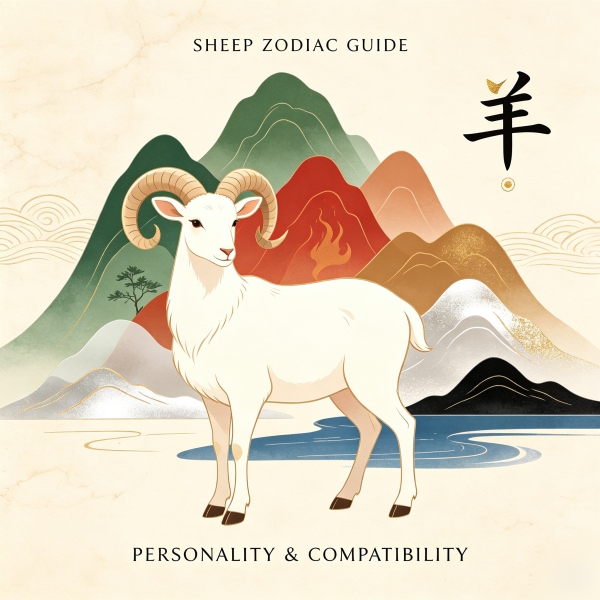
The Chinese zodiac Sheep (also called Goat or Ram) belongs to the fourth animal in the twelve-year cycle. The character 羊 covers all three animals, which is why translations vary across regions. Western English usage favors "Sheep," while traditional Chinese sources often use "Ram" and older Western publications prefer "Goat." Beyond the basic archetype, each Sheep year is shaped by one of the five elements — and this layer is where the real nuance lives. A Fire Sheep in 2027 will read very differently from a Metal Sheep born in 1991. This guide covers the full picture: traits, elements, compatibility, careers, and famous Sheep personalities, so readers can identify their own profile accurately.
Quick Facts
Core Sheep Personality Traits
Chinese Zodiac Sheep Personality
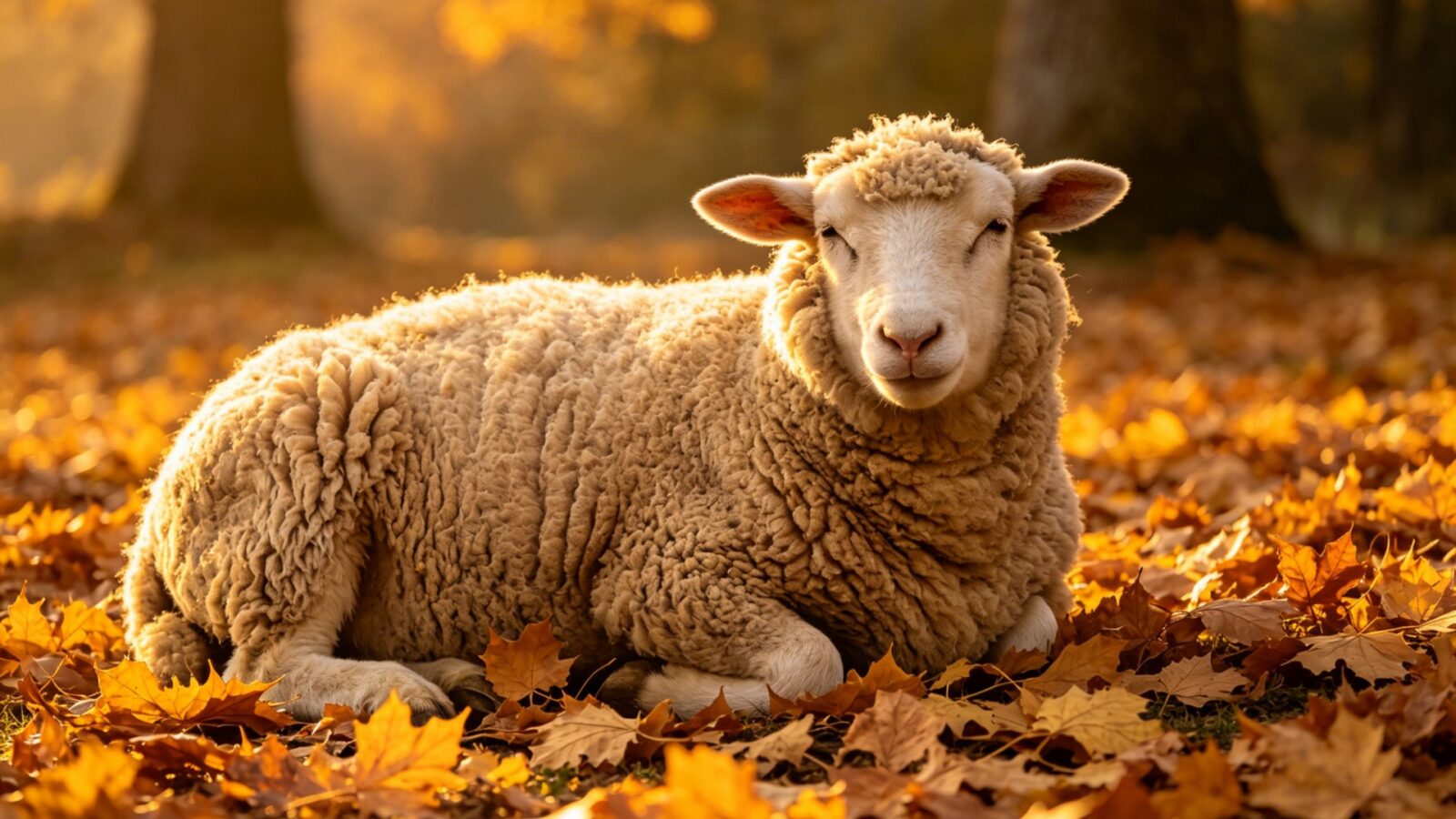
The Sheep personality centers on gentleness, empathy, and a deep appreciation for beauty. Artistic sensibility runs strong through this sign. Sheep individuals are introspective and peace-loving, drawn to home, family, and familiar surroundings. They are slow to trust but fiercely loyal once inside a trusted circle. Their charming manner often masks a cautious, sometimes anxious inner world.
Strengths That Define the Sheep
These traits form the positive core of the Sheep personality:
- Empathy: Reads emotional undercurrents quickly, offers genuine comfort without being asked.
- Creativity: Strong aesthetic sense; drawn to art, music, design, and beautiful environments.
- Loyalty: Once trust is established, Sheep friends and partners can count on steadfast support.
- Taste: Sharp eye for quality and style; often the person others ask for decorating or gift advice.
- Patience: Unhurried approach to problems; willing to wait for the right outcome rather than force one.
Weaknesses and Blind Spots
Every archetype has shadow sides, and the Sheep is no exception:
- Indecision: Weighs options so thoroughly that choices stall, especially under pressure.
- Anxiety: High sensitivity to conflict and uncertainty creates persistent low-level worry.
- Conflict Avoidance: Will absorb discomfort rather than address tension directly.
- Over-Sensitivity: Criticism lands harder than intended; perceived slights linger.
- Approval Dependency: Seeks external validation; adjusts behavior to please rather than assert boundaries.
🐅 Comparing Dynamic Elemental Signs: While Sheep years emphasize quiet creativity and harmony, high-energy element combinations like the passionate Chinese Zodiac Fire Tiger bring dramatic shifts in momentum, courage, and leadership.
The Five Elements: Earth, Metal, Water, Fire, and Wood Sheep
The five-element system (Wu Xing) adds a layer of nuance that reshapes every zodiac animal. Each element shifts the base Sheep profile toward a distinct temperament. The table below maps element to year, core personality adjustment, and career tilt.
Love, Marriage, and Compatibility
The Sheep approaches love cautiously, opening slowly but committing deeply. Once inside a secure partnership, the Sheep is devoted, supportive, and willing to invest in long-term harmony. A quiet, home-centered relationship suits this sign better than flashy, high-drama romance. Conflict is the main stressor — Sheep partners tend to absorb friction rather than resolve it directly.
Best Matches for the Sheep
These pairings draw on the traditional 三合 (perfect-trine) and 六合 (six-harmony) frameworks:
- Rabbit: The strongest match. Emotional resonance, shared taste for beauty, and mutual respect create a naturally comfortable bond.
- Pig: Deep mutual devotion. Both signs value loyalty and domestic comfort; the pairing tends toward stable, long-lasting unions.
- Horse: Balances the Sheep's gentle inward energy with active warmth. The Horse adds adventure while the Sheep provides grounding care.
- Tiger (secondary): Brings excitement and new perspectives. Works well when both partners appreciate each other's differences.
Clashes the Sheep Should Avoid
These pairings create friction based on the 六冲 (opposition) and 刑冲破害 (harm) frameworks:
- Ox: Direct opposition (冲). Fundamental differences in pace, values, and conflict style make this the hardest pairing.
- Dog: Creates ongoing frustration. The Dog's directness clashes with the Sheep's need for harmony.
- Rat: Resource tension and clashing priorities. Often a mismatched dynamic under pressure.
🖌️ Understanding the Written Character: The Chinese character for Sheep (羊 - yáng) shares ancient roots with the characters for beauty (měi) and goodness (shàn). Discover its calligraphic evolution and radical usage in Chinese Symbol for Sheep.
Career, Money, and Lifestyle
Chinese Zodiac Sheep Personality
Sheep individuals thrive in environments that reward creativity, empathy, and aesthetic sensibility. High-pressure sales, cutthroat competition, and constant confrontation drain them quickly. Their ideal workplace has structure but allows for personal expression and genuine human connection.
These career clusters align best with Sheep strengths:
- Arts and Design: Painter, musician, graphic designer, interior designer, photographer, fashion stylist.
- Care and Education: Teacher, pediatric nurse, counselor, therapist, social worker, librarian.
- Nature and Environment: Gardener, florist, landscape architect, environmental consultant, organic farmer.
- Hospitality and Service: Hotel manager, event planner, sommelier, concierge, restaurant owner.
- Writing and Media: Editor, copywriter, content strategist, publishing assistant, documentary filmmaker.
- Wellness: Yoga instructor, massage therapist, nutritionist, life coach, meditation teacher.
Workplace habits to avoid:
- High-pressure sales quotas that reward aggression over relationship-building.
- Constant restructuring and unstable team dynamics that breed anxiety.
- Micromanagement that stifles the Sheep's creative process.
- Open-plan chaos — Sheep need some quiet to do their best thinking.
Financially, Sheep individuals tend to earn comfortably and spend generously on beauty, comfort, and their home environment. They are risk-averse but not stingy. Lucky directions (east, south, southeast) are often cited in feng shui recommendations for Sheep individuals seeking to optimize their living or workspace.
Famous Sheep You May Know
History and culture are populated with notable figures born in Sheep years. Michelangelo (1475, Metal Sheep) brought Renaissance art to its peak. Mark Twain (1835, Wood Sheep) defined American literary humor. Jane Austen (1775, Wood Sheep) crafted novels of quiet insight that still resonate globally.
In more recent times, Bruce Willis (1955, Wood Sheep) built a career on quiet intensity. Jamie Foxx (1967, Fire Sheep) spans music and film with warmth that suits the Fire Sheep profile. Barbara Walters (1929, Earth Sheep) broke barriers in broadcast journalism with persistence that reflects Earth's steady character. Franz Liszt (1811, Metal Sheep) revolutionized piano performance, pushing boundaries with the principled drive typical of Metal Sheep. Orville Wright (1871, Metal Sheep) turned a shared vision into practical flight.
Across Chinese cultural history, many celebrated poets, scholars, and artists were born in Sheep years, though exact birth years of historical figures can vary slightly depending on whether lunar or solar calendar reckoning is used. The consistency of creative and artistic achievement across these names reflects a pattern that zodiac tradition has long recognized.
Frequently Asked Questions
Q: What are the Sheep years in the Chinese zodiac?
The Sheep years are 1907, 1919, 1931, 1943, 1955, 1967, 1979, 1991, 2003, 2015, and 2027. Each pairs with one of the five elements in a repeating cycle: Fire, Earth, Metal, Water, Wood. Chinese New Year dates shift between late January and mid-February, so anyone born in January may belong to the previous year's sign.
Q: What is the Sheep personality like in love and marriage?
Sheep individuals open slowly in romantic relationships but become deeply loyal once committed. They prefer quiet, home-centered partnerships over dramatic romance. They need reassurance and stability to thrive emotionally. In marriage, the Sheep is a devoted, supportive partner who prioritizes harmony and long-term comfort.
Q: Which Chinese zodiac signs are most compatible with the Sheep?
The Rabbit is the strongest match, followed by Pig and Horse as strong matches. Tiger adds useful adventure to the pairing. On the challenging side, Ox, Dog, and Rat create friction that requires deliberate effort to manage.
Q: What is the Fire Sheep personality?
The Fire Sheep is the boldest and warmest variant of the sign. Fire energy makes them more outgoing, optimistic, and socially confident than other Sheep. They still carry the artistic sensibility and empathy of the base sign but express it with greater ease in public settings. The next Fire Sheep year is 2027.
Q: What is the Earth Sheep personality?
The Earth Sheep is the most grounded and dependable of the five Sheep types. Earth energy gives them patience and steadiness that other Sheep lack. They think before acting and follow through reliably. This makes them less prone to the anxiety that affects other Sheep variants and more trusted in long-term commitments.
Q: What are the Sheep's lucky numbers and colors?
Lucky numbers are 2 and 7, with 3, 4, and 9 appearing in most listings as secondary options. Lucky colors are green, red, and purple. Unlucky numbers are 6 and 8, with 1 listed in some traditions. Unlucky colors are yellow and brown.
Q: What careers suit the Sheep best?
The Sheep thrives in artistic, caring, and aesthetic-driven roles. Best-fit careers include designer, teacher, musician, counselor, gardener, hospitality worker, and pediatrician. Sheep individuals tend to struggle in high-pressure sales, aggressive finance environments, and confrontational leadership roles.
Q: Why is the Chinese zodiac animal called Sheep, Goat, or Ram?
The Chinese character 羊 (yáng) encompasses sheep, goat, and ram without distinguishing between them. English translations diverged by region and era. Mainland scholarly and traditional contexts favor "Ram." Older Western publications commonly used "Goat." Contemporary English usage most often renders it as "Sheep," which has become the dominant term in international zodiac writing.