Chinese Symbol for Sheep
The Chinese symbol for sheep is 羊 (yáng). The same character covers both sheep and goat in Mandarin, and it doubles as the eighth animal in the Chinese zodiac cycle. Beyond its role as an animal referent, 羊 functions as a semantic radical that appears in roughly 200 compound characters including 美 (beautiful) and 善 (good). This guide covers the character's forms, stroke order, script history, zodiac use, and the family of compound characters built on the sheep radical.
Whether you encounter 羊 on a zodiac calendar, in classical poetry, or as part of a compound character, understanding its structure and cultural weight unlocks a core piece of Chinese writing and belief. The character has remained visually recognizable from its earliest pictographic origins to its modern standard form.
Quick Facts
The Character "羊"
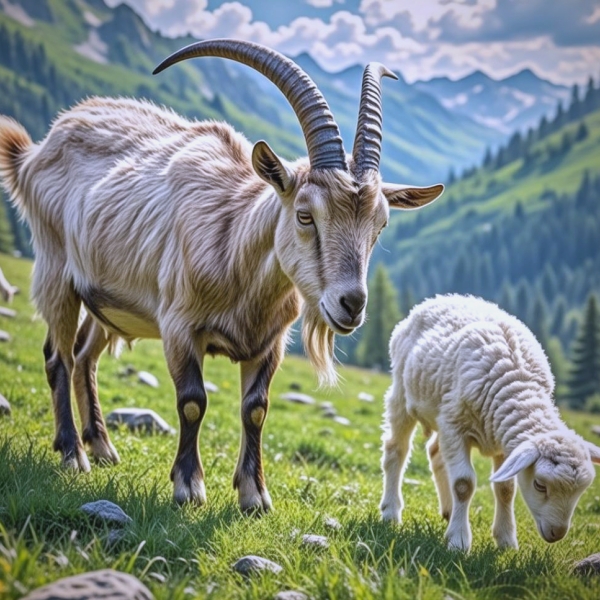
Sheep or Goat
The character 羊 is the standard Chinese symbol for sheep and goat. It serves as both an independent word and a semantic radical (Radical 123) that appears in approximately 200 compound characters. The form is identical in simplified and traditional Chinese, which is uncommon among characters with animal radicals. Below are the key attributes of this character.
Forms, Pronunciation, and Meaning
In modern Chinese, 羊 takes the same form whether the text is simplified or traditional. Pinyin pronunciation is yáng, spoken with the second tone (rising pitch). The meaning covers sheep (ovis aries) and goat (capra hircus) depending on context.
- Pronunciation: yáng, second tone (rising)
- Simplified / Traditional: identical — both forms use 羊
- Stroke Count: 6 strokes
- Radical: 羊 itself (Radical 123)
- Semantic Range: sheep, goat, and by extension the zodiac animal
Sheep, Goat, or Ram?
The Chinese zodiac animal translated as Sheep, Goat, or Ram depends on which English tradition is used. The character 羊 itself makes no distinction between the three animals. Mandarin handles specificity through compound words: 公羊 (gōng yáng) for ram, 母羊 (mǔ yáng) for ewe, and 山羊 (shān yáng) for goat. The single character covers the general concept, and disambiguation comes from context or additional modifiers rather than from the character itself.
🔮 Find Your Personal Animal Sign: Because the 羊 (Sheep/Goat) is the eighth animal in the 12-year cycle, you can confirm your exact lunar birth sign and elemental pairing using What Is My Chinese Zodiac Sign.
Stroke Order and How to Write "羊"
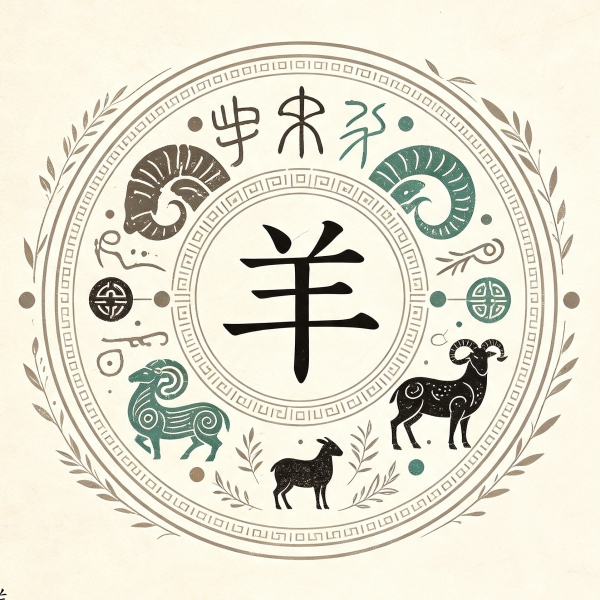
Chinese Symbol for Sheep
The character 羊 is written in six strokes. The top component 丷 (a shallow V-shape) is written first on the left, then the right. The long vertical stroke runs through the center. The base horizontal stroke anchors the character last.
- Stroke 1: Short diagonal dot at the top-left (left side of 丷)
- Stroke 2: Short horizontal stroke (top crossbar)
- Stroke 3: Long vertical stroke down through the middle
- Stroke 4: Short diagonal dot at the top-right (right side of 丷)
- Stroke 5: Short downward-left flick at the top-right
- Stroke6: Wide horizontal stroke at the base
The structure breaks into three components: the 丷 top, the central vertical stroke 丨, and the base horizontal stroke. Learners often memorize it as a top section, a vertical spine, and a bottom bar. Consistent practice with correct stroke order builds muscle memory for handwriting and recognition alike.
🐅 Explore Other Powerful Zodiac Profiles: To see how gentle 羊 (Sheep) traits compare with more fiery and dynamic animal signs, read our detailed profile on the Chinese Zodiac Fire Tiger.
Etymology and Script Evolution
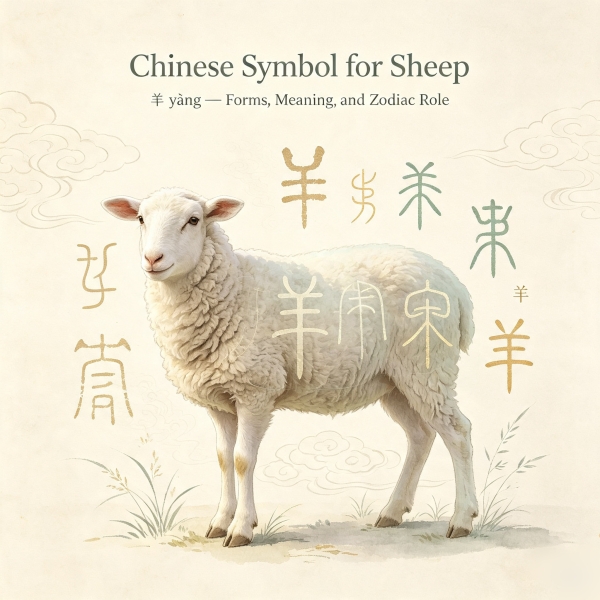
The character 羊 began as a pictograph in Shang-dynasty oracle bone script. The earliest forms depicted a frontal sheep's head with downward-curving horns and a triangular mouth opening. The pictographic origin remains visible in the modern form, where the top 丷 component preserves the horn silhouette and the vertical stroke suggests the animal's face.
Oracle Bone and Bronze Origins
Oracle bone inscriptions from the Shang dynasty (c. 1200 BCE) show 羊 as a clear pictograph of a sheep's head. The downward-curving horns and open mouth are the defining features. Bronze-script forms from the Western Zhou and Spring and Autumn periods retained the pictographic outline but introduced stylized curves and more regular stroke patterns. Both scripts still read as recognizable sheep heads when viewed without knowledge of the modern character.
From Seal Script to Modern Form
Small seal script, standardized during the Qin dynasty, smoothed the pictographic curves into more rounded strokes. The Han dynasty brought clerical script (隶书), which straightened the strokes and added the characteristic horizontal sweep at the base. Regular script (楷书), the modern standard, emerged from the Han onward and produced the form still in use today. The horns simplified into the dot-and-flick of the 丷 top, while the vertical spine and base horizontal remained structurally intact.
🐐 Look Ahead to the Next Sheep/Goat Year: The 羊 sign returns in full force during upcoming lunar cycles. Discover the dates, traditions, and symbolism for the year ahead in our guide to the Chinese New Year 2027 Animal.
Sheep in the Chinese Zodiac
The sheep is the eighth animal in the 12-year Chinese zodiac cycle. The zodiac pairs each animal with one of five elements in a 60-year sexagenary cycle. Sheep years fall every 12 years: 1931, 1943, 1955, 1967, 1979, 1991, 2003, 2015, 2027, 2039. The element shifts each cycle, creating a distinct character for each Sheep year. The Sheep is traditionally associated with gentleness, creativity, and stability.
Recent and Upcoming Sheep Years
Sheep years follow a consistent 12-year rhythm. The most recent completed Sheep year was 2015, which fell under the Wood element. The next Sheep year begins on Lunar New Year in 2027, bringing the Fire element.
- 1931: Metal Sheep
- 1943: Water Sheep
- 1955: Wood Sheep
- 1967: Fire Sheep
- 1979: Earth Sheep
- 1991: Metal Sheep
- 2003: Water Sheep
- 2015: Wood Sheep
- 2027: Fire Sheep
- 2039: Earth Sheep
The Five-Year Element Cycle
Each zodiac animal cycles through five elements: Wood, Fire, Earth, Metal, and Water. The element pairing repeats every 60 years, meaning the same element-animal combination returns six decades later. For example, 1991 was Metal Sheep and 2051 will also be Metal Sheep.
- Wood Sheep: 1955, 2015
- Fire Sheep: 1967, 2027
- Earth Sheep: 1979, 2039
- Metal Sheep: 1991, 2051
- Water Sheep: 2003, 2063
Common Characters Built on "羊"
The radical 羊 functions as a semantic component in roughly 200 compound characters. The sheep radical typically contributes meanings related to the animal, gentleness, or group behavior. Below is a selection of well-known characters that use 羊 as a component.
Frequently Asked Questions
Q: What is the Chinese symbol for sheep?
The Chinese symbol for sheep is 羊, pronounced yáng with the second tone (rising pitch). The same character also covers goat, and it serves as the eighth zodiac animal. The simplified and traditional forms are identical.
Q: How do you write "羊" in Chinese?
The character 羊 requires 6 strokes. The order is: dot at top-left → horizontal → vertical middle → dot at top-right → flick → base horizontal. The character breaks into three components: 丷 (top), 丨 (vertical), and 一 (base).
Q: How do you pronounce "羊"?
Standard Mandarin pinyin is yáng, spoken with the second tone (rising from mid to high pitch). The same pronunciation applies whether the meaning is sheep, goat, ram, or the zodiac animal.
Q: Sheep or goat — which animal is the zodiac sign?
The Chinese zodiac animal 羊 covers both sheep and goat. English translations vary by tradition, using "Sheep," "Goat," or "Ram." Mandarin handles specificity through compound words like 山羊 (goat) and 公羊 (ram), not through the base character itself.
Q: Are there simplified and traditional forms of "羊"?
No — 羊 takes the same form in both simplified and traditional Chinese. This is unusual among characters with animal radicals, most of which have distinct simplified versions.
Q: Which common Chinese characters contain the sheep radical?
The radical 羊 appears in roughly 200 compound characters. Common examples include 美 (beautiful), 善 (good/kind), 群 (group/herd), 羔 (lamb), 羡 (to envy), 羚 (antelope), and 翔 (to soar).
Q: Where did the character "羊" come from?
The character originated as a pictograph in Shang-dynasty oracle bone script, depicting a frontal sheep's head with downward-curving horns and a triangular mouth. It evolved through bronze script, seal script, and clerical script before becoming the modern regular-script form still in use today.