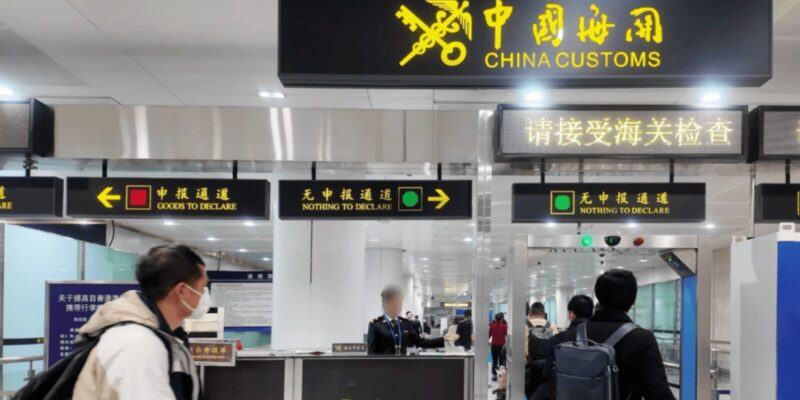
As foreign travelers arrive at China’s customs halls, they encounter frequent delays due to the uncertainty of what channel to use, what to declare, and the limits for duty-free items. Some travelers incur fines or lose their belongings because of these uncertainties. In addition, many questions arise regarding the amount of cash and electronics they can bring; therefore, if you want to know how to get through airport customs without delays, use the resources listed below for a list of prohibited items, a method to determine how much duty you need to pay, a list of customs regulations, and tools that can help you through customs.
1. Red or Green — Your Channel Decision at Entry
Regardless of the status of your arrival, you will be forced into the same colour-coded classification of either green or red. Making this decision incorrectly can have serious consequences: it constitutes a criminal act rather than merely an administrative error – so make the determination well in advance, prior to arrival at the counter – otherwise you risk being penalised.
The Two-Channel System at a Glance
- Green channel (无申报通道) — for passengers with nothing to declare
- Red channel (申报通道) — for passengers carrying declarable goods, excess cash, or restricted items
- Officers run random X-ray checks on green channel bags — not a free pass
- Wrong channel: fine up to 30% of the undeclared item's value
- When in doubt, always choose red — voluntary use of red carries no penalty
- A declaration form is required at the red channel; available on paper in arrivals or digitally via the China Customs App (海关申报)
⚠️ Rule: If you are unsure which channel applies — take the red channel. There is no penalty for over-declaring. Penalties apply only for under-declaring.
Channel Checklist — Which One Applies to Your Bags
Select each box that describes your situation and select the button below. The result will indicate whether your entry falls under green or red channel procedures. This checklist is a listing of all types of declaration triggers in accordance to current customs regulations.
How to Handle It — Completing the Declaration Form
- Before landing: Download the China Customs App and complete the form digitally — skips the paper queue in the arrivals hall entirely
- Paper form: Collect in the arrivals hall before reaching the customs counters; all fields are available in English
- What to fill in: Full name, passport number, flight number, country of embarkation, and a complete list of declarable goods with estimated RMB values
- At the red channel: Hand both copies to the officer; the officer stamps and returns the carbon copy to you
- Keep your copy: Store it throughout your trip — required at exit customs if carrying more than USD 5,000 in foreign currency
- Wrong channel, realized early: Approach any officer before your bags clear X-ray scanning — voluntary disclosure at this stage can reduce or eliminate administrative fines entirely
- Receipts: Bring purchase receipts for all high-value goods; presenting them at the counter supports your declared price and prevents reassessment
2. Banned Items — What Cannot Enter or Leave China
There are two lists of prohibited items to bring into or take out of China under the Customs Law. The two lists have some items found on both lists, so check both before packing because if you carry an item that is prohibited, Customs will confiscate it, and some violations may result in prosecution.
Prohibited on Entry — Six Categories, No Exceptions
- Weapons and ammunition — all firearms, imitation weapons, explosives
- Narcotics and psychotropics — opium, morphine, heroin, marijuana, amphetamines
- Harmful media and storage devices — films, photos, records, cinematographic film, computer storage media against China's political or cultural interests
- Counterfeit currency — forged banknotes and forged securities
- Deadly poisons — all types
- Pests and harmful organisms — animals and plants from epidemic regions, soil, carcasses, genetically modified organisms
💊 Medication Alert: > Since “narcotics and psychotropics” cover many common Western prescriptions, don’t risk a customs delay. Check our [Can You Bring Medicine to China? Full 2026 Checklist] for the specific rules on OTC drugs, ADHD meds, and required doctor’s letters.
Prohibited on Exit — Relics, Species, and Secrets
- Cultural relics and antiques — require an official appraisal seal and export permit from the cultural relic authority; a shop receipt alone is not sufficient
- Endangered species — live animals, plants, seeds, and reproductive materials from protected species
- State secret materials — manuscripts, films, computer storage media, and digital files containing state secrets
- Traditional Chinese medicine (TCM) — export limit of RMB 300 to overseas; RMB 150 to Hong Kong or Macau
How to Handle It — Before and At the Airport
- Check both ban lists before packing: Cultural relics and animal products are the most commonly overlooked — cross-reference every item in your bag against both the entry and exit lists
- Food items on arrival: Quarantine disposal bins are clearly marked in every arrivals hall before the customs counter; using them carries zero penalty — concealing a banned item triggers an automatic fine
- Antiques and relics: Obtain the official appraisal seal from the State Administration of Cultural Heritage before departing China — this must be arranged in advance, not at the airport
- Prescription drugs near the controlled-substance line: Carry a doctor's written prescription with exact quantities; customs retains a copy on inspection; one prescription covers one inspection only
- Media and storage devices: Declare at the red channel if uncertain about classification of any external hard drives, USB drives, or printed publications
- When an item is confiscated: Request and keep the confiscation receipt; non-criminal items may be collected at departure; criminal categories transfer directly to police — cooperate immediately
- TCM on exit: Keep purchase receipts and stay within the value limits; exceeding the limit stops the shipment at customs
- Exit check preparation: Keep all purchase receipts for goods bought in China throughout your stay; exit X-ray scanning is routine at major hubs including Shanghai Pudong and Beijing
3. Duty-Free Allowances — Limits by Category and Status
When arriving at a destination as a traveler, there is a duty-free limit for your entry. Certain restrictions apply for a variety of product categories that have fixed quotas regardless of your total duty free allowance. The tables below will help you to make your pre-flight travel plans.
The Rule — Allowances by Category
- Goods (tourist / non-resident): Duty-free up to RMB 2,000 total; 20% tax on the excess portion only
- Goods (resident returning after 6+ months abroad): Duty-free up to RMB 5,000 total; 20% tax on excess
- Cigarettes: 400 cigarettes OR 100 cigars OR 500g tobacco — one category only; adults only
- Alcohol: 1,500ml of beverages at 12% ABV or above
- Foreign cash: No cap on entry; declare if over USD 5,000 (tourists) or USD 2,000 (residents)
- Chinese yuan (RMB): Hard cap of ¥20,000 — absolute entry limit; excess cannot enter China
- Gold and silver: Duty-free up to 50g per item; 20% tax on value above 50g
- Passengers under 16: Cannot import tobacco or alcohol regardless of quantity
- Items over RMB 5,000 (brought from overseas): Require a dual-entry declaration form to protect duty-free status on your return trip
How to Handle It — Planning Before You Fly and at the Counter
- Know your status before you shop: Non-residents get RMB 2,000; residents returning after 6+ months get RMB 5,000 — check which applies before purchasing on your trip outbound
- Calculate your total in RMB: Add up the value of all goods staying in China using current exchange rates, not estimated conversion
- Tobacco and alcohol: Category limits are separate from your overall allowance — if you carry both, each must stay within its own category limit independently
- High-value electronics and jewelry: Items over RMB 5,000 that you plan to bring back out of China require a dual-declaration form on entry; complete this at the red channel and store the stamped copy safely throughout your trip
- Pay duty on-site if over limit: The customs payment window is inside the arrivals hall; the rate is 20% on the excess value only — present your purchase receipt to support your declared price and avoid reassessment
- Gold and silver bought in China: Keep the People's Bank of China receipt; it proves domestic purchase and exempts the item from re-entry duty on exit
- Foreign currency above the threshold: Keep the endorsed declaration form from entry; you must present it at exit customs to take the same amount of foreign currency back out of China
4. Common Surprises — Food, Electronics, Pets, and Vapes
While most travelers are aware of the general rules, many overlook the specifics associated with them. The categories listed below create the most problems at customs for international arrivals; therefore it is important to review each of them before you leave home.
Food and agricultural products
🚫 Banned — Do Not Bring In
- Fresh fruit (all types)
- Peppers, eggplants, tomatoes
- Raw meat, poultry, viscera
- Eggs (all forms)
- Fresh milk, cream, butter
- Animal skins, bones, hides
- Animal carcasses
- Soil (any type)
- Genetically modified organisms
- Waste or used clothing
📋 Declarable — Allowed with Declaration
- Seeds & nursery stock (pre-entry permit needed)
- Cut flowers and dried flowers
- Nuts, dried and frozen vegetables
- Plant specimens and exhibits
- Bamboo, rattan, straw crafts
- Cats and dogs (1 per passenger, with cert)
- Cereal and beans (with permit)
Electronics, vapes, and pets
- Personal electronics (1× phone, laptop, tablet, camera): Duty-free; no declaration needed if clearly used
- Brand-new sealed device as a gift: Taxable — declare at red channel; 20% on value over your limit
- Multiple units of the same device (e.g., 3 iPhones): Treated as commercial goods — commercial rules apply, not personal use exemption
- Vape devices: Not on the official entry ban list for personal use; high-nicotine liquids have been confiscated at Chinese airports
- Vape liquids and batteries: Liquids under 100ml in carry-on only (aviation rule); lithium batteries inside any vape must also travel carry-on only
- Pets (dogs and cats): Maximum one per passenger; require a valid rabies vaccination certificate and official quarantine certificate from the departure country
- Pets on arrival: All pets enter a mandatory 30-day quarantine at a designated facility — cannot be waived regardless of certificate status
Food
- Go through snacks and perishables item by item against the banned list before packing — packaged processed foods are generally fine; raw or fresh produce is not
- On arrival, check for quarantine disposal bins in the arrivals hall before the inspection lane — no penalty for using them, even if you forgot to dispose before landing
- If unsure whether an item is banned, dispose of it — confiscation plus a fine will cost more than the item itself
- For seeds, plants, or specimens, obtain a pre-entry import permit from the General Administration of Customs of China (GACC) before you travel — permits cannot be issued at the airport
Electronics
- For items over RMB 5,000 that you plan to bring back home, complete a dual-entry declaration form at the red channel on arrival and keep the stamped copy safely
- New sealed devices intended as gifts should always be declared — undeclared gifts found at X-ray trigger automatic assessment at 20% over your limit
- If carrying multiple personal devices, be prepared to show they are used — worn cases, existing screen scratches, and saved data all help establish personal-use status
Vapes
- Declare your device at the red channel if uncertain about its classification — the filing takes under two minutes and provides legal protection against confiscation
- Pack all vape liquids in carry-on, not checked bags, in a clear resealable bag with each container under 100ml
- Bring only the nicotine concentration you need — high-strength liquids attract more scrutiny at Chinese customs checkpoints
Pets
- Begin the preparation process at least 4–6 weeks before your flight — vaccination certificates must be issued within a specific window before travel
- Obtain a health certificate from your departure country’s competent authority issued within 10 days of departure
- On arrival, declare at the red channel immediately; the officer refers you to the port Animal and Plant Quarantine Office — do not attempt the green channel with a pet
- Budget for 30 days of quarantine accommodation costs; the fee varies by facility and is paid on-site
5. At the Customs Counter — What Goes Wrong and How to Respond
When your items get flagged by customs at Chinese airports, that is one of the most stressful experiences. By knowing what to expect ahead of time, you can reduce your stress considerably. These examples and rules are applicable to all international airports throughout China regardless of your country of origin or destination.
The Rule — What Officers Can Do
- Officers may stop any passenger at the green channel for random X-ray scanning — routine at all international hubs
- Undeclared goods found at X-ray: administrative fine up to 30% of the item's value; item may be confiscated
- Prohibited items (narcotics, weapons): automatic transfer to police; customs officers have no discretion on these categories
- Dutiable goods over limit: officer assesses market value at 20% on the excess portion; payment is due on-site before clearance
- Food and agricultural products confiscated at the counter: no fine if within the quarantine-bin window and no prior warning was given
- Concealment after direct questioning converts an administrative case into a potential obstruction case — penalties escalate significantly
- All confiscated non-criminal items receive a confiscation receipt; some may be collected at departure
(1) If You Chose the Wrong Channel
- Do not walk through the exit gate — approach any officer in the hall immediately and declare proactively
- Voluntary disclosure before X-ray scanning is recognized under Chinese customs regulations and can reduce or eliminate the administrative fine entirely
- State clearly that you realized your error and wish to declare — officers deal with this situation regularly and the process is straightforward
(2) If an officer flags goods over your duty-free limit
- Present your purchase receipt immediately — this supports your declared price and prevents the officer from applying a higher assessed value
- Pay 20% on the excess portion only at the designated customs payment window inside the arrivals hall — takes 5–10 minutes
- The officer issues a clearance receipt on payment; keep it for the duration of your trip and for exit — it is legal proof that the item entered China correctly
- Do not attempt to negotiate the duty rate — the 20% rate is fixed by regulation and cannot be waived
(3) If an item is confiscated
- Cooperate immediately — arguing or concealing items after questioning escalates any case, including administrative ones
- Request and keep the confiscation receipt issued by the officer; it identifies the item, the reason, and the reference number for follow-up
- For food and produce: ask whether the item can be disposed of in the quarantine bin — officers sometimes allow this for items caught at the counter if the passenger was unaware of the ban
- For criminal categories: do not offer money, do not attempt private conversation with the officer, and request consular notification if you are a foreign national
- Approach any officer before X-ray
- State your items and estimated values
- Fines can be reduced or removed entirely
- 20% on excess value only, not full item price
- Payment window is inside the arrivals hall
- Keep the receipt as proof of cleared entry
China Airport Customs Rules — Real Questions Answered
The list below contains questions that appear on Google’s People Also Ask results, as well as suggestions made by the autocomplete of the term you are viewing. The answers contained within these questions are brief responses to the individual questions, and you can see all answers by clicking on the question.
QWhat items need to be declared at customs in China?
Under china airport customs rules, travelers must declare goods over RMB 2,000 staying in China, foreign cash exceeding USD 5,000, tobacco or alcohol beyond duty-free limits, gold and silver over 50g, live animals, plants, biological products, and radio transmitters or communication devices. When uncertain about any item, always choose the red channel to avoid penalties.
QWhat items can you not bring into China?
China airport customs rules strictly prohibit weapons, narcotics, counterfeit currency, deadly poisons, and media deemed harmful to China's political or cultural interests from entering the country. Fresh fruit, raw meat, animal carcasses, soil, and pests from epidemic regions face automatic confiscation. Concealing any prohibited item upon entry results in heavy fines and potential criminal prosecution.
QHow much US currency and Chinese RMB can I bring into China?
Under china airport customs rules, there is no cap on foreign currency entering the country. However, non-residents must declare cash exceeding USD 5,000, while residents declare above USD 2,000. Chinese yuan carries a hard entry limit of ¥20,000 — not merely a declaration threshold. Exceeding this absolute RMB cap means the excess amount cannot legally enter China.
QAre cigarettes and alcohol duty-free at China airports?
China airport customs rules allow duty-free import of 400 cigarettes, 100 cigars, or 500g of tobacco per person on each entry. Alcohol allowance is 1,500ml for beverages at 12% ABV or above. Both limits are per individual adult traveler. Passengers under 16 years of age cannot import any tobacco or alcohol, even within these standard limits.
QCan I bring a vape or e-cigarette into China?
China airport customs rules do not explicitly ban vape devices for personal use, but specific restrictions apply. Lithium batteries must travel in carry-on baggage only, while all liquids must be under 100ml following aviation rules. High-nicotine liquids have been confiscated at inspection points. When carrying vape products, always choose the red channel and declare the items proactively.
QWhat food can you not bring to China in your luggage?
Under china airport customs rules, fresh fruit, peppers, tomatoes, raw meat, eggs, fresh milk, and all animal products are prohibited. Genetically modified organisms and animal carcasses face automatic quarantine on arrival. Travelers should dispose of any banned food in the clearly marked quarantine bins before reaching customs counters, as doing so carries absolutely no penalty whatsoever.
QDo I need to declare my laptop, phone, or camera when entering China?
China airport customs rules allow one personal phone, laptop, tablet, and camera per traveler duty-free, provided devices are clearly used for personal purposes. Brand-new sealed devices intended as gifts require red channel declaration. Multiple units of the same device trigger commercial goods rules. High-value items over RMB 5,000 need a dual declaration form for re-export protection.
QHow strict is China's airport customs with baggage?
China airport customs rules are consistently and thoroughly enforced at every international hub across the country. Officers conduct X-ray scanning and random manual baggage checks on both green and red channels. Travelers arriving prepared — with declarations complete and receipts organized — clear customs efficiently. Undeclared prohibited items result in confiscation, significant fines, and possible criminal prosecution.
QDo I need a health declaration card when entering China in 2026?
Under china airport customs rules, passengers are not required to fill out a health declaration card when no major epidemic is currently active. However, travelers showing symptoms such as fever, cough, or breathing difficulty must verbally declare at the inspection lane. Anyone carrying biological products, human tissue, or blood products must always declare regardless of current epidemic status.
QWhat happens if I don't declare items at China customs?
Violating china airport customs rules by failing to declare dutiable goods results in confiscation and fines reaching up to 30% of the undeclared item's value. Prohibited items such as narcotics or weapons escalate immediately to criminal prosecution. Officers routinely scan green channel bags at random. Always choose the correct channel before walking through to protect yourself legally.