Reed Flute Cave, Guilin
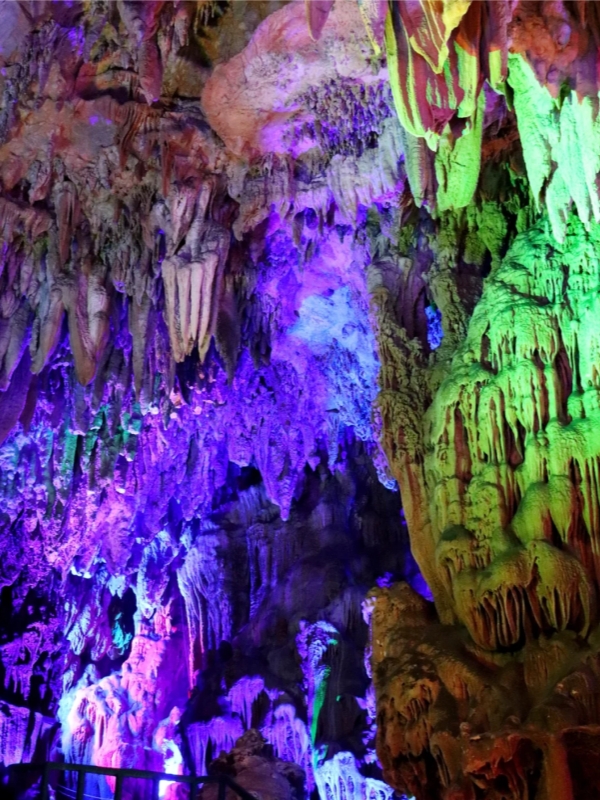
Reed Flute Cave is a vast karst chamber that has been slowly carved by groundwater over 700,000 years. The cave sits about 5 km (3 mi) northwest of central Guilin, on the slopes of Guangming Hill, and it holds some of the most dramatic limestone formations in southern China — stalactites, stalagmites and stone columns glazed in shifting colored light. A single one-way walking route threads about 500 m through the main chambers, past formations named Tower-shaped Pine, Crystal Palace and the Monkey King's lair, before returning visitors to the surface. It draws hundreds of thousands of visitors each year and is routinely paired with a Li River day trip or an afternoon at the adjacent Seven Star Park.
Whether you arrive with a camera or a notebook, the cave offers a rare combination: geological age, Tang Dynasty poetry on the walls, and an engineered light show that makes every column glow in rose, emerald and sapphire tones. This guide covers ticket prices in US dollars, transport options, the exact walking route, and the practical details that help photographers and casual visitors alike plan a smooth visit.
Quick Facts
Why Reed Flute Cave Glows
Reed Flute Cave, Guilin
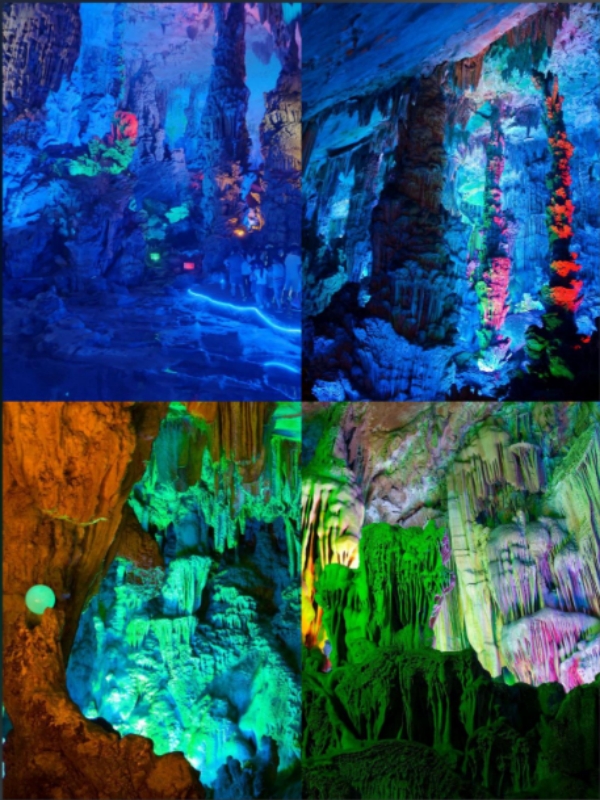
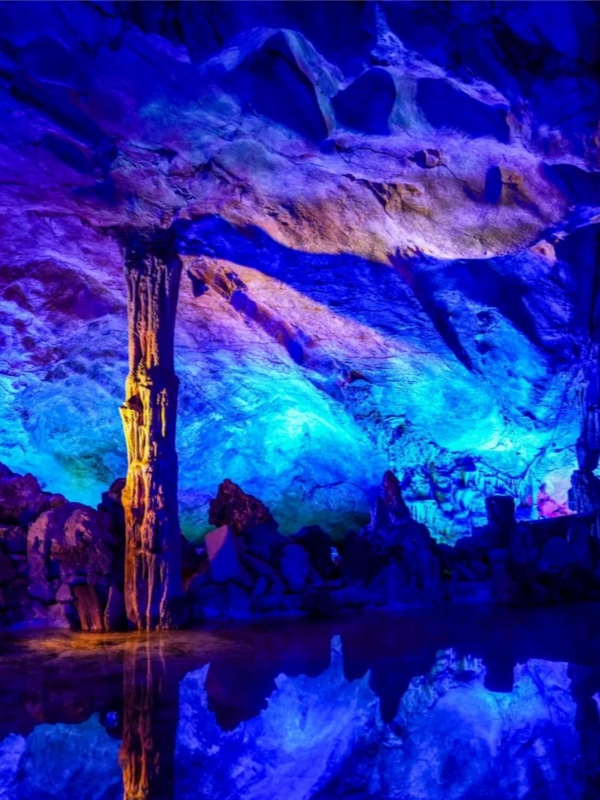
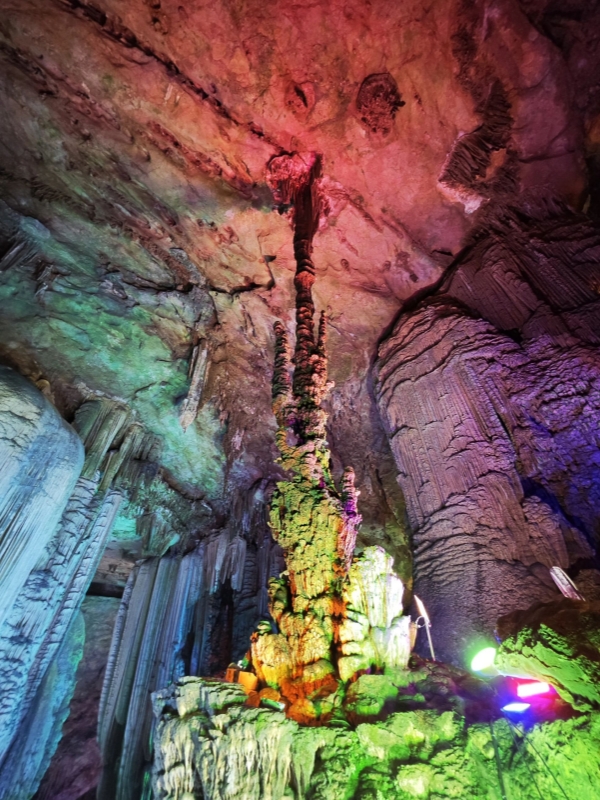
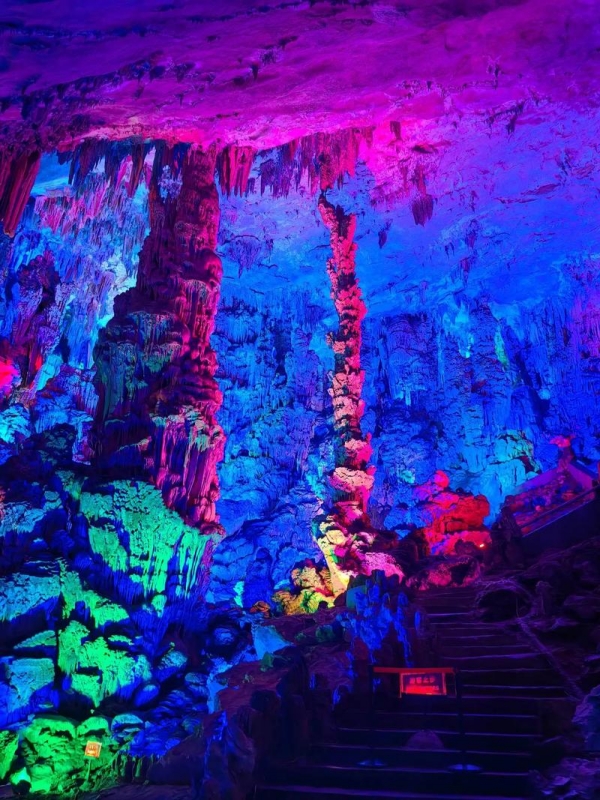
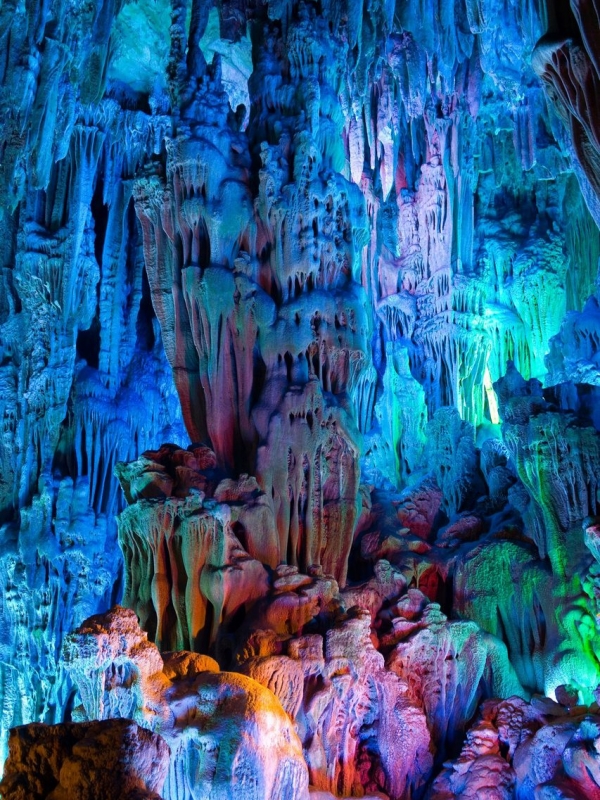
The glow that draws photographers and curious visitors into Reed Flute Cave comes from artificial colored lighting installed throughout the chambers. The rock itself is naturally cream, gray and amber limestone — every rose, emerald and sapphire tone in the photographs is engineered light, not a property of the stone. This distinction matters for visitors who arrive expecting natural mineral color. The lighting was upgraded several times after the cave reopened to tourism in 1959. Between tour groups, the lights are briefly dimmed and then ramped back up as the next batch of visitors approaches, which can cause a sudden brief darkening of a section you may have been photographing.
The cave's stalactites and stalagmites are built from calcium carbonate (calcite), the same mineral as the surrounding limestone. Mineral-rich groundwater dissolves calcium carbonate from rock above, then carries it in solution until it drips from the cave ceiling. Each drop leaves a microscopic calcite deposit. Over tens of thousands of years, these deposits build into the hanging cones of stalactites and the rising mounds of stalagmites. Where a stalactite and stalagmite eventually meet, they fuse into a stone column. The surrounding karst landscape north of Guilin — a network of dissolved joints and fractures in thick limestone — is the water source that feeds the cave. Growth continues today at fractions of a millimetre per year.
The Colors Are Artificial — The Formations Are Not
The cave rock is naturally cream-gray limestone; every color tourists photograph comes from installed colored lighting. The rainbow effect is engineered, refreshed several times since the cave reopened. The lights are dimmed between tour groups and restored as the next group arrives, which can briefly darken a section.
What the Stalactites and Stalagmites Are Made Of
Calcium carbonate (calcite) deposited by dripping mineral water over ~700,000 years builds the formations. Stalactites hang from the ceiling, stalagmites rise from the floor; where the two meet they form stone columns. The surrounding host rock is limestone dissolved along joint and fracture systems in the karst plain north of Guilin. Growth continues at fractions of a millimetre per year.
Lighting Schedule & Best Times to See the Glow
There is no formal light show with posted start times — the colored lighting runs continuously during opening hours. Key points for timing:
- Mid-morning window: 10:00–11:30 tends to offer the richest color because groups are spaced and the cave's humidity makes hues read more vividly.
- Mid-afternoon window: 14:30–16:00 is similarly well lit and less crowded than the late-morning peak.
- Late afternoon: after 16:00 the lighting is dimmest and the cave is quietest — a trade-off between atmosphere and image quality.
🌃 Unwind After Your Cave Tour: Since the cave sits just a short ride from the city center, you can easily transition from exploring ancient subterranean passages to enjoying lively lakeside walks, night markets, and cultural performances. Discover how to spend your evenings in our guide to Guilin Nightlife.
Inside the Cave: Tour Route & Top Formations
Reed Flute Cave, Guilin
A single U-shaped walking path threads the cave, with entry and exit close to each other on the surface. The underground route covers about 500 m and typically takes 40 minutes at a steady pace. The cave stays cool year-round at around 18–20°C, which makes a light layer welcome even in Guilin's hot summers. Audio narration plays through hidden speakers near the most photographed formations, and some translations carry a charmingly literal quality — "Lion Seeing Off His Guests" is a well-known example. Visitors set their own pace once inside.
The U-Shaped Walking Route
Entry is at the main gate; the single-direction path winds through the main chambers before looping back toward the exit, which sits near the entrance. The total underground distance is roughly 500 m. Gentle inclines and steps mark the route, and the temperature inside holds steady at 18–20°C regardless of season.
Tower-shaped Pine (Ta Song Ao Xue)
One of the most photographed formations is a pair of stalagmites that together resemble a snowman with hands in pockets standing beside a rounded snow-covered pine. The pairing evokes a winter pine on a Guilin hillside, which is the logic behind the Chinese name 塔松傲雪 (Ta Song Ao Xue, roughly "Tower Pine Defying Snow"). This is the first major photo stop inside the cave.
Crystal Palace
The widest hall in the cave stretches 93 m across and rises 18 m high. Stalactites hang like lanterns in all directions, and the audio plays a description here that frames the chamber as a paradise where the gods live. The scale and lighting make this the single most dramatic space in the cave. Wide-angle lenses earn their keep in Crystal Palace.
Monkey King and the Dragon King's Palace
Narrow lanes after Crystal Palace are themed around the Monkey King's battle with the Dragon King's underlings for the magic needle from Journey to the West — the passage where Sun Wukong wins his legendary gold-ringed staff. This section is one of the most photographed in the cave, combining the natural formations with the theatrical lighting design that makes them look like a mythological court.
🚲 Continue Down the Li River: While Reed Flute Cave showcases the geological marvels near the city center, the absolute peak of this karst landscape lies further downstream, where towering green fingers of stone rise directly out of the water. Plan your journey into the countryside with our guide to Yangshuo, Guilin, Guangxi, China.
Cave Inscriptions, Tang Dynasty History & the Name "Lu Di Yan"
Reed Flute Cave, Guilin
Reed Flute Cave is older than its modern tourism — Tang Dynasty visitors left their mark literally carved into the walls. The Chinese name refers to the reeds that still grow on the slope outside, and an unexpected literary echo connects the cave to an Australian poet.
77 Poems on the Cave Wall
Seventy-seven travelogues and poems are carved into the cave walls, dated to the Tang Dynasty (618–907 AD). These inscriptions are the clearest evidence that Reed Flute Cave has been visited, admired and recorded for more than a thousand years — long before the first tourist brochures, the colored lighting or the audio guide.
How the Cave Got Its Name
The Chinese name 芦笛岩 (Lú Dí Yán, "Reed Flute Rock") comes from the reeds — Arundo donax — that grow thick on the slope outside the entrance. Locals traditionally cut these tall grasses to fashion flutes, which gave the rock its name. The English name "Reed Flute Cave" is a direct translation and has been the standard rendering in international travel literature for decades.
The Oodgeroo Noonuccal Poem "Reed Flute Cave"
Australian Aboriginal poet Oodgeroo Noonuccal (1920–1993, also known as Kath Walker) published a poem titled "Reed Flute Cave" in her collection. The poem uses the cave as a landscape of light and silence, drawing on its imagery in a way that resonates with the cave's own layered geological and cultural history. It is a small literary footnote that occasionally brings literary-minded travelers to Guilin who already know the name.
Visiting Reed Flute Cave: Photography & Practical Tips
Reed Flute Cave, Guilin
A few practical details — tripods, the hill outside, luggage storage — make a meaningful difference to the visit, particularly for visitors arriving from the train station or continuing to other sites the same day.
Photography Guide: Tripods, Phones & Low Light
The cave welcomes tripods, which is useful given how dim and uneven the colored lighting is. For phone photographers, night mode is the best setting, and bracing the phone against the handrail helps avoid motion blur at slow shutter speeds. Flash flattens the formations and washes out the colors — turn it off. The most rewarding shots come from two locations: the Tower-shaped Pine pair near the start of the route and the wide Crystal Palace chamber where stalactites hang like lanterns in every direction.
Outside the Cave: Reed Flute Hill
Guangming Hill wraps the cave entrance. Short walking paths lead to viewpoints over the karst plain north of Guilin, and the reed thickets that gave the cave its name still grow on the lower slopes. Visitors who have time after the cave walk can spend 20–30 minutes on the hill before heading back into the city.
Luggage, Accessibility & On-Site Logistics
- Luggage storage: available at the ticket office of the sightseeing train inside the scenic area — convenient for travelers heading to Guilin North or Guilin West railway station the same day.
- Path conditions: paved but uneven in places, with stairs — not fully wheelchair accessible; comfortable closed shoes are recommended.
- Facilities: clean restrooms at the entrance and exit; light snacks and water sold near the exit.
🌊 Discover More Karst Wonders: If you are fascinated by the dramatic limestone chambers and underground water channels of Guilin, you will love exploring Southwest China's spectacular above-ground karst canyons and giant cascades. Plan your next adventure with our visitor's guide to Huangguoshu Waterfall, Guizhou.
Tickets, Opening Hours & How to Book
Tickets for Reed Flute Cave are straightforward to buy on the day or in advance, and the price structure is transparent whether you pay in cash or via an international platform. A small optional add-on covers the electric sightseeing train that shuttles visitors from the ticket gate to the cave entrance — useful if you are pairing this visit with Seven Star Park next door.
Current Ticket Prices
Opening Hours & Peak Windows
The cave opens at 09:00 and closes at 17:00 every day, with last entry around 16:30. The busiest window is 10:00–13:00 when tour buses arrive from hotels across Guilin. The quietest slots are right at opening and after 15:30. A combined ticket with Seven Star Park is sometimes available at the gate, which can be worth asking about if you plan to visit both sites in the same afternoon.
How to Buy Tickets (and Whether to Book in Advance)
Walk-up purchase at the ticket window is standard and reliable. For foreign cardholders who prefer not to deal with cash or mainland mobile payment, Trip.com and Klook list the same ticket at the same RMB fare. Advance booking matters mainly during the late-morning peak and for visitors combining a Reed Flute Cave stop with a Li River day trip from Guilin or Yangshuo.
Getting to Reed Flute Cave
Reed Flute Cave sits on the northern edge of Guilin, on the slope of Guangming Hill (also called Reed Flute Hill), adjacent to Seven Star Park. Three practical options cover most visitor needs.
By Bus from Central Guilin
City Bus 3 runs from downtown Guilin to the Reed Flute Cave stop. The journey takes roughly 30 minutes and costs about $0.30 (¥2). Buses are frequent during daytime hours, though service thins noticeably after 19:00.
By Taxi or Ride-Hailing
A taxi or ride-hailing pick-up from anywhere in central Guilin takes 15–20 minutes and costs approximately $2–3 (¥15–20). Meter use is inconsistent in Guilin — some drivers will refuse to run it. Agree on a fare before departure or insist on the meter. Ride-hailing apps work in the city but require a Chinese mobile number for full functionality.
By Tour, Private Car or On Foot from Seven Star Park
Half-day Guilin city tours typically bundle Reed Flute Cave with Elephant Trunk Hill and Fubo Hill, which is a practical option if you prefer not to navigate public transport. A private car with driver is popular among families. If you are already visiting Seven Star Park next door, the cave entrance is a short walk from the park gate — many visitors pair the two without needing any transport at all.
Frequently Asked Questions
Q: How was Reed Flute Cave formed?
Long-term water erosion of limestone combined with carbonate deposition created the cave. Mineral-rich groundwater dissolved calcium carbonate and then redeposited it as stalactites, stalagmites and stone columns over roughly 700,000 years. The cave sits in the karst landscape north of Guilin.
Q: How old is Reed Flute Cave?
The cave is approximately 700,000 years old. The rock formations inside are still growing, at fractions of a millimetre per year, as mineral water continues to drip and deposit calcite.
Q: Where is Reed Flute Cave located?
On the northern edge of Guilin in Guangxi, southern China, about 5 km (3 mi) northwest of the city centre on the slope of Reed Flute Hill (Guangming Hill), adjacent to Seven Star Park.
Q: When was Reed Flute Cave discovered?
The cave was rediscovered and opened to tourism in 1959. Tang Dynasty (618–907 AD) inscriptions on the walls show it was visited and recorded for over a thousand years before that.
Q: Why does Reed Flute Cave glow?
The glow comes from artificial colored lighting installed throughout the cave. The limestone itself is naturally cream, gray and amber — every rainbow tone in photographs is engineered light.
Q: What kind of crystals grow at Reed Flute Cave?
Calcite (calcium carbonate) — the same mineral as the surrounding limestone. It forms stalactites, stalagmites, flowstone and stone columns as mineral water deposits layer by layer, very slowly.
Q: What animals live in Reed Flute Cave?
Bats are the main residents. Some cave insects and spiders live near the entrance and in quieter side passages. The controlled show-cave environment prevents large mammals or fish from establishing populations.
Q: Is the color inside Reed Flute Cave natural?
No — the colors are artificial. The rock is monochrome limestone and calcite. Visitors sometimes mistake the lighting for a natural property of the rock.
Q: How long does the tour take?
About 40 minutes inside the cave. Allow 2–3 hours total including travel from central Guilin.
Q: Can I store luggage at Reed Flute Cave?
Yes — luggage storage is available at the ticket office of the sightseeing train inside the scenic area. This is convenient for travelers heading to Guilin North or Guilin West railway station the same day.