Yuanmingyuan Park
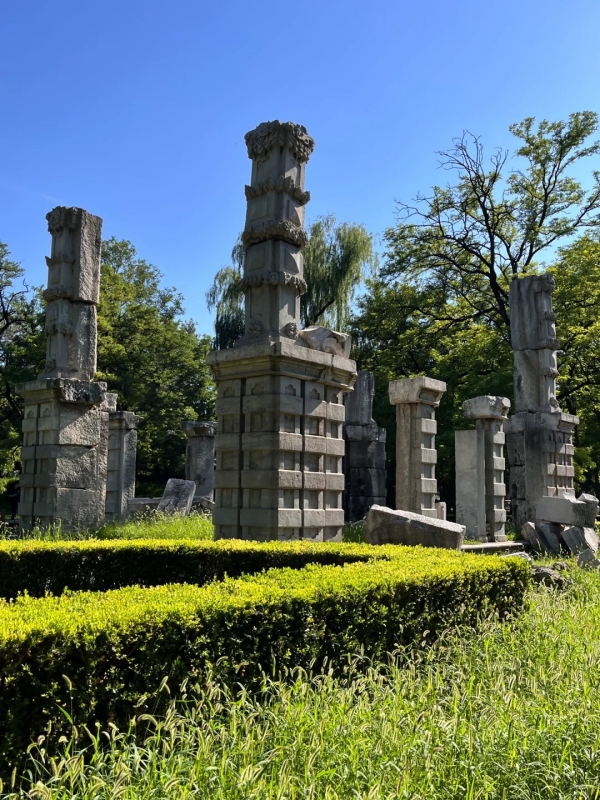
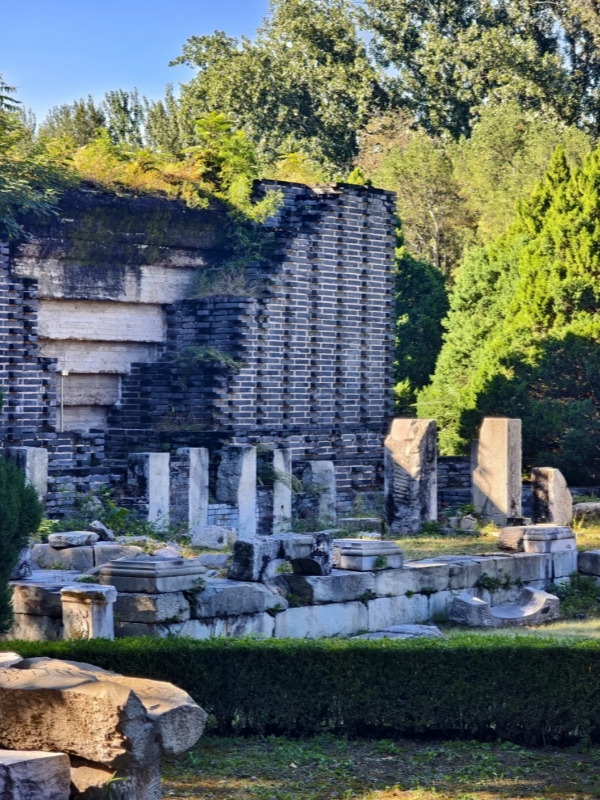
Yuanmingyuan Park preserves what was once the grandest imperial garden complex in China — a 350-hectare labyrinth of palaces, lakes, and pavilions that European visitors in the 18th century called the "Garden of Gardens." Today, visitors walk among moss-covered stone ruins that hint at a lost world of Baroque fountains, Manchu halls, and southern Chinese landscapes all assembled under one vast imperial estate. The site sits in Beijing's Haidian District, roughly 18 kilometers northwest of Tiananmen, and draws history-minded travelers with its unusual blend of Chinese and European architecture. What makes the ruins so striking is not just their scale but the story behind them: commissioned by the Qianlong Emperor, designed by Jesuit artists, burned by Anglo-French forces in 1860, and further dismantled by the Qing court itself in the decades that followed.
Quick Facts
History of Yuanmingyuan Park
-

- Yuanmingyuan Park
-
- Yuanmingyuan Park
Yuanmingyuan began as a princely estate granted by the Kangxi Emperor to his son Yongzheng in 1709. Yongzheng inherited the land in 1707, when construction first started, and systematically expanded the garden into a grand imperial retreat. Under the Qianlong Emperor — who ruled from 1735 to 1796 — the complex grew into its final form. Qianlong poured enormous resources into the estate, drawing on more than 200 artists, architects, and engineers to create a landscape that combined Manchu, Han, and European styles across the grounds. By the time it reached its peak in the late 18th century, the estate covered approximately 350 hectares, roughly five times the size of the Forbidden City, and contained over 100 pavilions connected by waterways and covered walkways. Contemporary observers called it the "Garden of Gardens" — a place where the emperor could experience miniature versions of famous southern Chinese landscapes without leaving Beijing.
Building and Expansion (1707–1796)
The earliest structures appeared in 1707 under Kangxi's reign, but the real transformation came when Yongzheng took personal charge of the garden's layout after receiving it as a princely estate. He added the first significant pavilions and reshaped the lakes to their current configuration. Qianlong then embarked on the most ambitious phase of construction between the 1740s and 1760s, adding replicas of classical southern Chinese gardens and — crucially — the European-style palaces that would later become the site's most photographed ruins. The total area at peak reached roughly 350 hectares, a scale that made it by far the largest imperial garden in China at the time.
The 1860 Destruction and Its Aftermath
In October 1860, Anglo-French expeditionary troops marched into Beijing amid the Second Opium War after the Qing imperial court escaped to Rehe, known today as Chengde. Around 4,000 soldiers spent three days methodically burning down all wooden palace structures, and these destructive fires ravaged the entire imperial estate from October 18 to October 20. Looters seized over 1.5 million cultural artifacts such as bronze works, porcelain, jade wares, silk fabrics and gold treasures, then scattered these relics to museums throughout Europe and North America, with the British Museum and many other global top institutions holding these stolen collections to this day.
The European-style stone palace frameworks endured the flames, yet the Qing government commanded workers to tear down these stone buildings in the 1870s to wipe out traces of foreign architectural influence within the imperial precinct. Foreign troops came back to the site in the 1900 Boxer Rebellion and inflicted extra destruction on all surviving above-ground ruins.
Officials first partially opened the Yuanmingyuan site to visitors as a public park back in 1928, but thick wild vegetation blocked access to most areas of the landmass. The People's Republic of China added Yuanmingyuan to the national key cultural relic protection roster in 1961, which greatly speeded up all subsequent restoration work for the ruins; authorities have also put this imperial garden on China’s tentative list for UNESCO World Heritage registration. Managers fully opened the whole park to the public in 1988, and the site currently functions as both a solemn historical memorial and a public green leisure area for local residents living in Haidian District.
See also our Beijing to Badaling Great Wall guide.
The Three Gardens of Yuanmingyuan
-
- Yuanmingyuan Park
-
- Yuanmingyuan Park
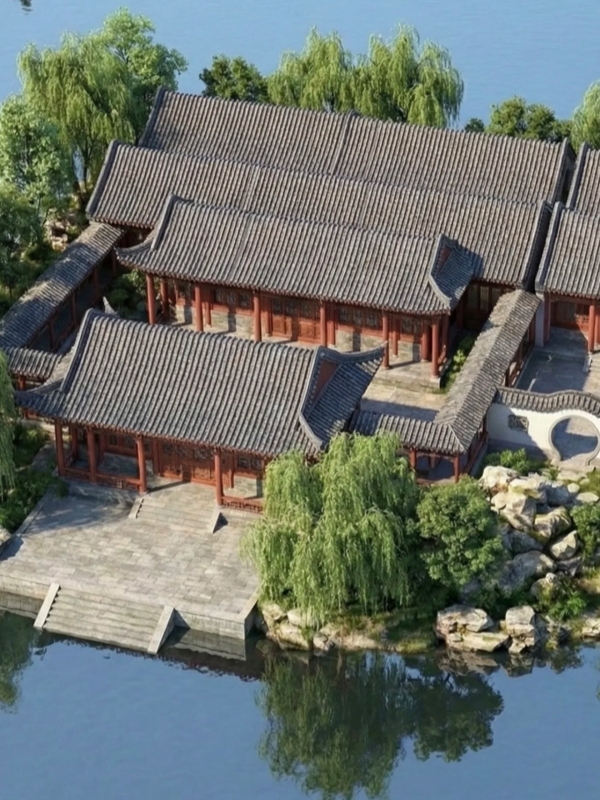
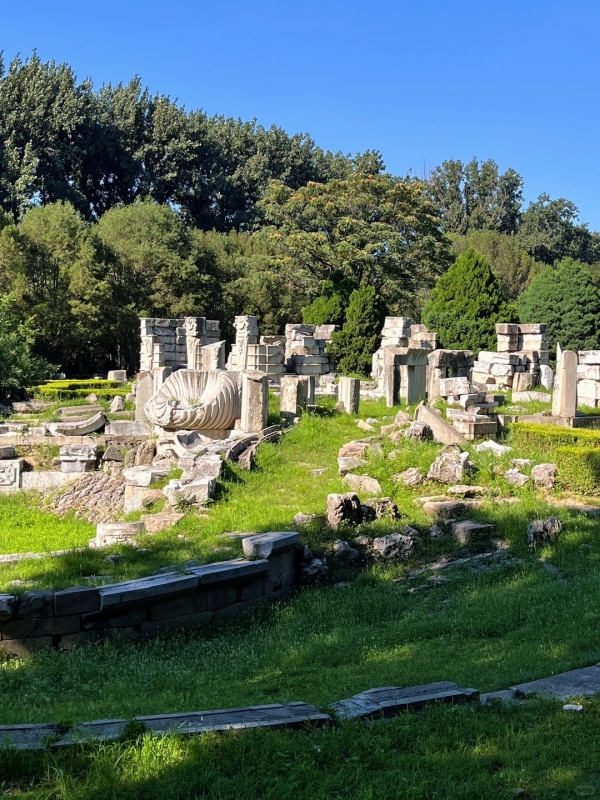
Yuanmingyuan is not a single garden but a complex of three interlinked estates that were gradually joined together from the 1700s onward. The three gardens share waterways and a unified landscape plan, though each has its own distinct character and history. Their combined area covers approximately 350 hectares, with lakes and waterways accounting for roughly one-third of the total ground. Today, the three gardens form the core visitor area of the modern park.
The three component gardens are:
- Garden of Perfect Brightness (Yuanmingyuan): The largest of the three, covering approximately 200 hectares. This was the original estate from 1707 and served as the administrative core of the complex. Today the area is largely open lawns, lakes, and tree cover with few standing structures. The Zhengjue Hall site and the historic lotus ponds — which bloom spectacularly in summer — remain the main points of interest.
- Garden of Eternal Spring (Changchunyuan): The middle garden in size, positioned between the other two. This garden contains the Western-Style Section (Xiyang Lou) and its famous ruins, as well as Spring Waves Lake and Qianlong-era reproductions of classical Chinese garden scenes.
- Garden of Elegant Spring (Qichunyuan): The smallest and southernmost of the three. It was the last to be incorporated into the complex, joining around the 1770s, and preserves the densest concentration of surviving pavilions, halls, and small bridges. Sections were rebuilt and reopened to the public in the 2010s following years of careful restoration.
Garden of Perfect Brightness (Yuanmingyuan)
As the original heart of the estate, the Garden of Perfect Brightness once held the most elaborate palace buildings and served as the emperor's primary working residence during summer months. The scale was staggering — at 200 hectares it dwarfed the other two gardens combined. Today, visitors will find broad lawns, irregularly shaped lakes, and mature tree cover that creates a park-like atmosphere quite different from the manicured formality of the Forbidden City. Summer lotus blooms on the old ponds draw local visitors in July and August, and the open layout makes this section particularly pleasant for walking in warm weather.
Garden of Eternal Spring (Changchunyuan)
The Garden of Eternal Spring occupies a middle position — literally and figuratively — between the other two gardens. Its most celebrated feature is the Western-Style Section (Xiyang Lou), a complex of European Baroque palaces and fountains built for the Qianlong Emperor in the 1750s and 1780s. Beyond the ruins, the garden also contains Spring Waves Lake and a series of classical Chinese garden reproductions commissioned by Qianlong that showcase different regional landscape traditions. The lake provides one of the most photographed perspectives on the marble ruins of the European palaces on its far bank.
Garden of Elegant Spring (Qichunyuan)
The Garden of Elegant Spring is the smallest and most southerly of the three, and it preserves the greatest number of surviving traditional structures. Its relatively compact layout features dense arrangements of small pavilions, covered walkways, and ornamental bridges around a series of linked lakes. The garden joined the estate last, incorporated under Qianlong's expansion program in the 1770s. Restoration work in the 2010s reopened several halls and pavilions that had been damaged or lost, giving visitors a clearer sense of the scale and refinement of traditional imperial garden design.
The Western-Style Section (Xiyang Lou)
-
- Yuanmingyuan Park
-
- Yuanmingyuan Park
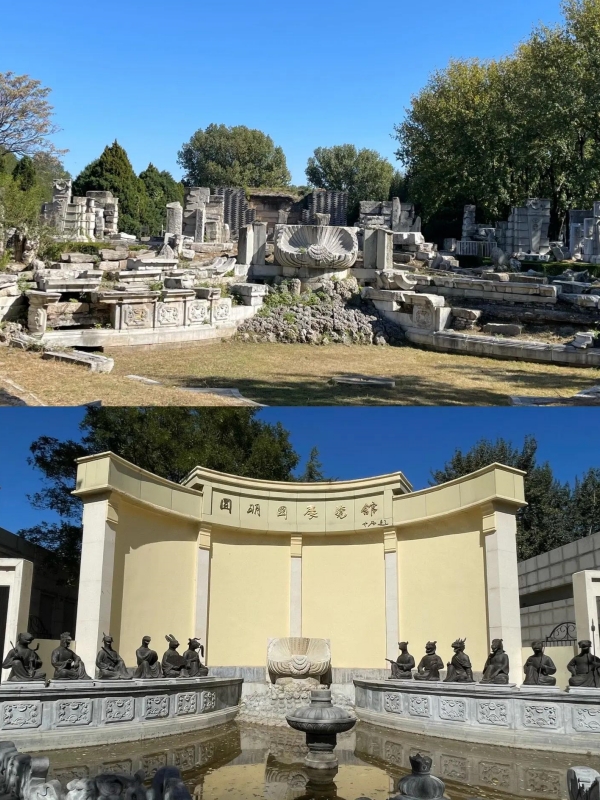
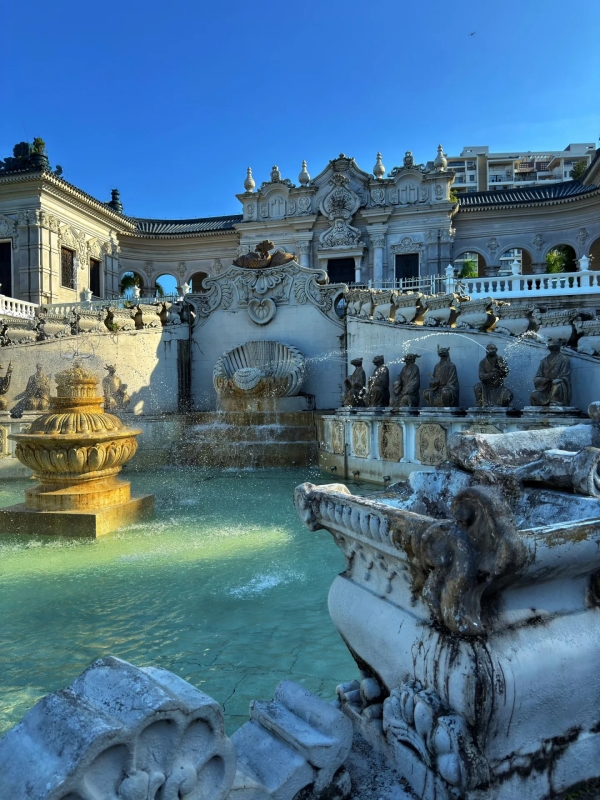
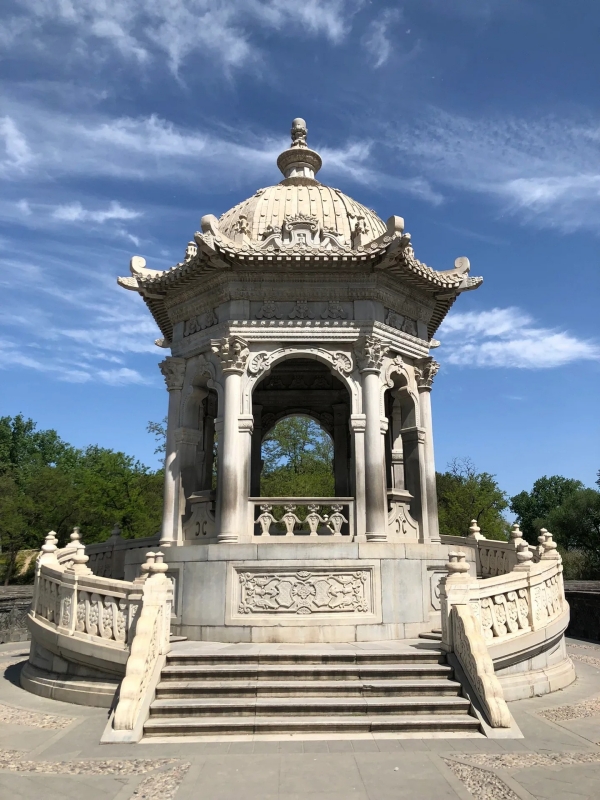
The Western-Style Section represents the most architecturally distinctive — and historically paradoxical — part of the Yuanmingyuan complex. Built for the Qianlong Emperor, it is the only large-scale European Baroque palace complex ever constructed for a Chinese ruler. Today, visitors encounter carved marble ruins that stand in sharp contrast to the Chinese-style garden landscape surrounding them. The section requires a separate ticket from the main park admission.
Key ruins to see in the Western-Style Section include:
- Dashuifa (大水法): The Large Water Clock fountain — a grand tiered fountain platform with carved stone basins that formed the focal point of the European complex. Water once cascaded through multiple levels before the complex was destroyed.
- Huanghuazhen (远瀛观): The Ocean-All-Seeing palace — a five-arched marble facade that is perhaps the most recognizable ruin in the park. Its carved columns and European ornamental details survived the 1860 fire and remain standing today.
- Xiyang Lou: The Western palace labyrinth that gives the whole section its name. Visitors can trace the footprint of the original building and its waterworks system, which once featured elaborate hydraulic displays.
- Western Palaces Platform: The remaining stone platform and column bases of the main European residential halls. The carved marble screens that once separated interior courtyards are among the most-photographed features in the park.
How the European Palaces Were Built
The Qianlong Emperor first encountered European engravings and prints through Jesuit missionaries at court and became fascinated by Baroque architecture. In 1759, he commissioned two Jesuit artists — the Italian painter Giuseppe Castiglione and the French engineer Michel Benoist — to design a European-style palace complex within the Yuanmingyuan grounds. Castiglione, who had already served at the Qing court for two decades, handled the architectural elevations and decorative details, blending Italian Baroque forms with French garden parterres.
Benoist, a skilled engineer, designed the hydraulic systems that powered the elaborate fountains — a major technical challenge in a landscape with no natural elevation. Construction proceeded in phases, with initial fountains completed in 1759 and the full palace range finished around 1783 according to some chronologies. The complex included water clocks, cascading fountains, and residential halls arranged along a classical axial plan. When Anglo-French forces burned the site in 1860, the bronze fountains, animal-head zodiac sculptures, and other fittings were looted along with the Chinese art collections inside.
What to See Among the Ruins Today
Walking through the Western-Style Section today, visitors encounter the stone skeletons of buildings that once gleamed with white stucco and colorful glazed tiles. The ruins are arranged along a central axis that mirrors European palace design, with the main platform elevated above the former garden parterres. The five-arched facade of Huanghuazhen rises dramatically from the terrace — its carved columns and ornamental niches are the most detailed surviving examples of European decorative carving at the site. To the west, the footprint of the Xiyang Lou labyrinth is visible as a low stone outline, with scattered column fragments marking the former interior spaces. The marble screens — tall carved panels depicting European scenes in low relief — stand in a row along the approach and remain the most photographed features of the entire park.
Getting to Yuanmingyuan Park
By Subway
Beijing Metro Line 4 is the most reliable travel route to Yuanmingyuan Park Station Exit A, and visitors only need a five-minute walk along a tree-lined avenue to reach the park South Gate from this exit. Metro Line 16 arrives at Xiyang Lou Station on the park’s west side for tourists heading straight to Huanghuazhen and Dashuifa marble ruins. Travellers from Beijing South Railway Station can take direct Line 4 trains with no transfers for around 30 minutes, while visitors starting from the Forbidden City need Line 6, Line 9 and Line 4 transfers for a total journey time of nearly 50 minutes, and the single subway ticket costs $0.45 to $0.70 (¥3–5) based on your travelling distance.
By Bus and Taxi
Multiple bus routes serve the park, including 365, 432, 498, 539, 664, 681, and 717, as well as Yuntong 105 and 106. These stop near the South Gate and East Gate and are useful for connections from Tsinghua University or the Wudaokou area. For door-to-door convenience, a taxi or Didi ride from central Wangfujing covers approximately 25 kilometers and costs roughly $14–18 (¥100–130), with a travel time of 40–60 minutes depending on traffic conditions. From Beijing Capital International Airport, the distance stretches to about 38 kilometers, with fares in the $28–35 (¥200–250) range and a typical journey of 60–90 minutes. Travelers arriving at Beijing Daxing Airport face a 60-kilometer trip; the subway plus Line 4 is a more practical option for that route.
Walking and Cycling Inside the Park
Many public buses including 365, 432, 498, 539, 664, 681, 717 plus Yuntong 105 and 106 serve the Yuanmingyuan park and stop near its South Gate and East Gate, bringing convenient transfers from Tsinghua University and Wudaokou area. A taxi or Didi ride from central Wangfujing covers roughly 25 kilometers and costs $14–18 (¥100–130) with a 40–60 minute ride affected by real-time traffic, while trips from Beijing Capital International Airport span 38 kilometers at a fare of $28–35 (¥200–250) within 60 to 90 minutes. Beijing Daxing Airport is 60 kilometers away from the scenic spot, making subway transfers via Line 4 the more practical travelling choice here.
Tickets, Opening Hours and Practical Info
The park adjusts its opening hours to match seasonal changes. Staff open the park at 7 a.m. and close it at 7 p.m. from May to September, while they operate the venue from 7 a.m. to 5:30 p.m. between October and April. Ticket staff shut down all ticket windows about 30 minutes ahead of the park’s formal closing time. Visitors may buy tickets directly at the entrance gates or reserve them in advance via Trip.com and Klook; this pre-booking method helps foreign tourists skip long entry queues and steer clear of troublesome payment issues.
The park accepts cash, Alipay and WeChat Pay for on-site ticket purchases, yet travelers need a local Chinese bank account to use these two mobile payment applications. Park administrators have continuously upgraded English signposts across the whole park starting in the 2010s, and the aforementioned booking platforms also supply tourists with relevant information about English-speaking guided tours.
Frequently Asked Questions
Q: How much does admission to Yuanmingyuan Park cost?
Standard park admission is about $1.40 (¥10). The Western-Style Section requires a separate ticket at roughly $3 (¥20), or you can purchase a combo ticket covering both the main park and the Western Section for about $5 (¥35). Children under 1.2 meters and seniors aged 65 and above with a passport enter free. Tickets are available at the gate or through Trip.com and Klook for advance booking.
Q: What are Yuanmingyuan Park's opening hours?
The park operates from 7am to 7pm between May and September, and from 7am to 5:30pm from October through April. Ticket counters typically close about 30 minutes before the park's official closing time.
Q: How do I reach Yuanmingyuan Park by subway?
Take Line 4 to Yuanmingyuan Park Station and exit through Exit A — the South Gate is roughly a five-minute walk from there. Alternatively, Line 16 stops at Xiyang Lou Station on the park's west side, which puts you closer to the Western-Style Section ruins.
Q: Why was Yuanmingyuan destroyed in 1860?
Anglo-French troops set fire to the whole complex in the Second Opium War as revenge on captured diplomatic messengers, and around four thousand soldiers spent three full days burning wooden buildings from October 18 to October 20 in 1860. The stone western buildings withstood the fierce flames and did not collapse, yet the Qing government pulled these stone structures apart during the 1870s to wipe out visible marks of foreign imperial architectural design.
Q: What is the Western-style Section (Xiyang Lou)?
Xiyang Lou stands for the European Baroque palace group in the Garden of Eternal Spring. Qianlong Emperor ordered its construction officially back in the year 1759, while Jesuit Castiglione and Benoist drew all the architectural blueprints for it. Only carved marble relics have been preserved down to the present day, and Huanghuazhen five arches and Dashuifa fountain are its most iconic ruins, so tourists need an extra ticket to access this western building zone alone.
Q: How long does a typical visit take?
Most visitors spend three to four hours covering the main sights across the three gardens and the Western-Style Section. A full day allows time to explore all areas, take a boat ride on the lakes, and visit the restored pavilions in the Garden of Elegant Spring.
Q: Is there a film about the burning of Yuanmingyuan?
Yes. The 2006 film is titled The Burning of the Imperial Summer Palace. Its original Chinese name is 火烧圆明园,helmed by director Li Hanhua. It dramatises the 1860 ruin of the historic Old Summer Palace. This work is the most famous screen retelling of this tragic event. The film forms one chapter of a Second Opium War trilogy. It acts as the key visual reference for most Chinese audiences.
Q: Are there hotels near Yuanmingyuan Park?
International-brand options within 3 kilometers include the Beijing Friendship Hotel and Holiday Inn Haidian. The Wudaokou university district, about 2 kilometers east of the park, offers mid-range choices suitable for budget-conscious travelers. All major hotels in the area can be booked through Trip.com.
Q: When is the best season to visit?
Late April to mid-May brings spring blossoms and peonies across the garden grounds. July and August coincide with the peak lotus bloom on the ponds of the Garden of Perfect Brightness. October offers the clearest weather and autumn foliage, making it a comfortable time for walking the extended garden paths.