Beijing Drone Rules for November 2026
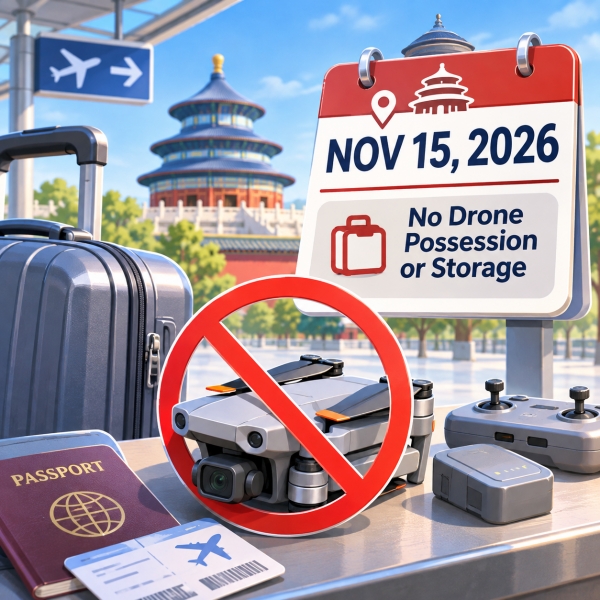
From November 15, 2026, Beijing's revised rules prohibit ordinary visitors from possessing or storing drones and their listed core components within the city. Leaving your drone switched off will not solve that problem, and bringing it into Beijing is already restricted. For travelers checking Beijing drone rules November 2026, the practical first step is to plan a Beijing visit without the aircraft. Review connecting flights before packing, keep equipment outside Beijing where lawful, and deal with any existing equipment before the transition deadline. Small size, foreign ownership, and an airport connection should never become assumed exemptions in your travel plans.
Quick Facts
🚫 Customs & Local Regulations in China: Want to avoid common legal pitfalls, restricted items, and local compliance rules while traveling across Chinese cities? Check out our complete guide to Things To Not Do In China.
The November 15 Possession Ban
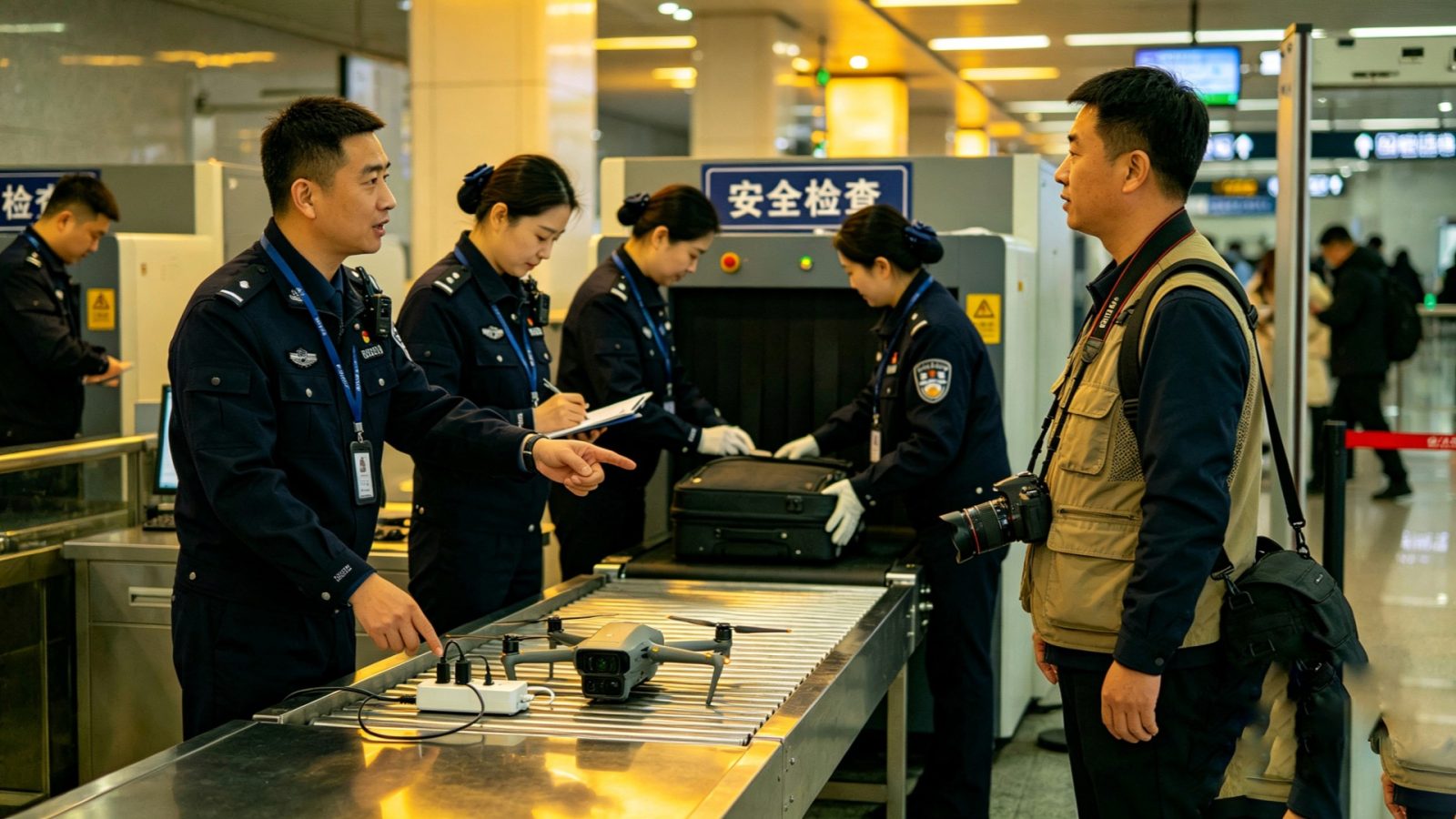
Airport Security Check For Drone
A citywide change
The revised Beijing regulations on unmanned aircraft (北京市无人驾驶航空器管理规定) take effect on November 15, 2026. They cover Beijing's entire administrative area. This is a citywide equipment issue, so choosing a hotel farther from the center does not remove it.
Separate three questions when planning: can you bring the equipment in, can you keep it there, and can you fly it? A restriction on one does not disappear because you avoid another. A packed aircraft still matters even when aerial photography is absent from your itinerary.
Old registration advice expires
Beijing adopted its earlier regulations in March, with implementation beginning in May. The September revision adds a stricter framework for November. Consequently, a successful journey or registration story from the earlier period cannot settle a trip under the revised rules.
The distinction matters when reading advice about local owners taking verified equipment out and back. Those arrangements belonged to the earlier framework. For Beijing drone rules November 2026, they do not establish a general visitor entry route or support a November return booking with the aircraft.
Tourist status is not an exemption
The revised text does not provide an ordinary foreign-tourist exception. Nor does it supply a blanket exemption for aircraft below 250 grams. National registration categories and local restrictions answer different questions; a lightweight camera drone does not become acceptable simply because it is small.
Special safeguards exist for specified necessary uses, including emergency work, research, and agricultural purposes, subject to the relevant assessments. These institutional arrangements are not a routine holiday permit. Paying a photographer or describing your trip as filming does not itself establish eligibility.
🛍️ Online Shopping Tax Refunds: Interested in claiming departure tax refunds on online purchases made via major e-commerce platforms like JD.com during your stay? Read our detailed guide on JD.Com Tax Refund For Tourists.
Pack Without Relying on Drone Size
Inspect the whole kit
Start with the bag you actually intend to bring. Camera bags often contain forgotten spares, a small backup aircraft, or parts moved between trips. Review the complete kit rather than deciding only whether your main drone will make the journey.
An equipment check for Beijing drone rules November 2026 should distinguish an aircraft from loose accessories. Removing the battery does not turn the aircraft into an ordinary camera. Likewise, putting the controller in a different suitcase does not establish a legal route for the drone itself.
- Aircraft: Remove the main drone and any backup aircraft from the Beijing packing plan.
- Structural spares: Review spare frames and propellers against the official component catalogue.
- Control and communications: Identify dedicated flight-control and transmission modules instead of labeling everything as generic electronics.
- Shared bags: Tell travel companions which equipment must stay behind, especially when you normally split a kit between passengers.
Use the actual component catalogue
Beijing's Municipal Bureau of Economy and Information Technology (北京市经济和信息化局) issued a trial catalogue of 17 core components across four system groups. It includes specified airframes, propellers, packaged flight-control systems, communications modules, and specified methanol power equipment.
Read the actual descriptions when a spare part matters to your journey. The catalogue's power-system entries name methanol fuel cells and methanol engines. That does not justify replacing the list with a sweeping claim that every ordinary lithium battery or electric motor is a listed core component.
Keep other equipment separate
For a Beijing photography trip, bringing your usual handheld camera or phone while leaving the drone elsewhere avoids making aerial equipment essential to the visit. This is a packing choice, not a promise that every photography activity or location permits unrestricted filming.
Keep batteries and accessories clearly associated with the equipment you are taking. Follow the carrier's applicable battery rules separately. Passing a battery safety check does not decide whether an aircraft may enter Beijing; the two requirements should not be treated as interchangeable approvals.
💰 China Tax Refund Guide: Looking for step-by-step procedures on claiming departure tax refunds, minimum spending thresholds, and airport customs validation across mainland China? Read our comprehensive overview on China Tax Refund.
Review Every Beijing Transit Segment
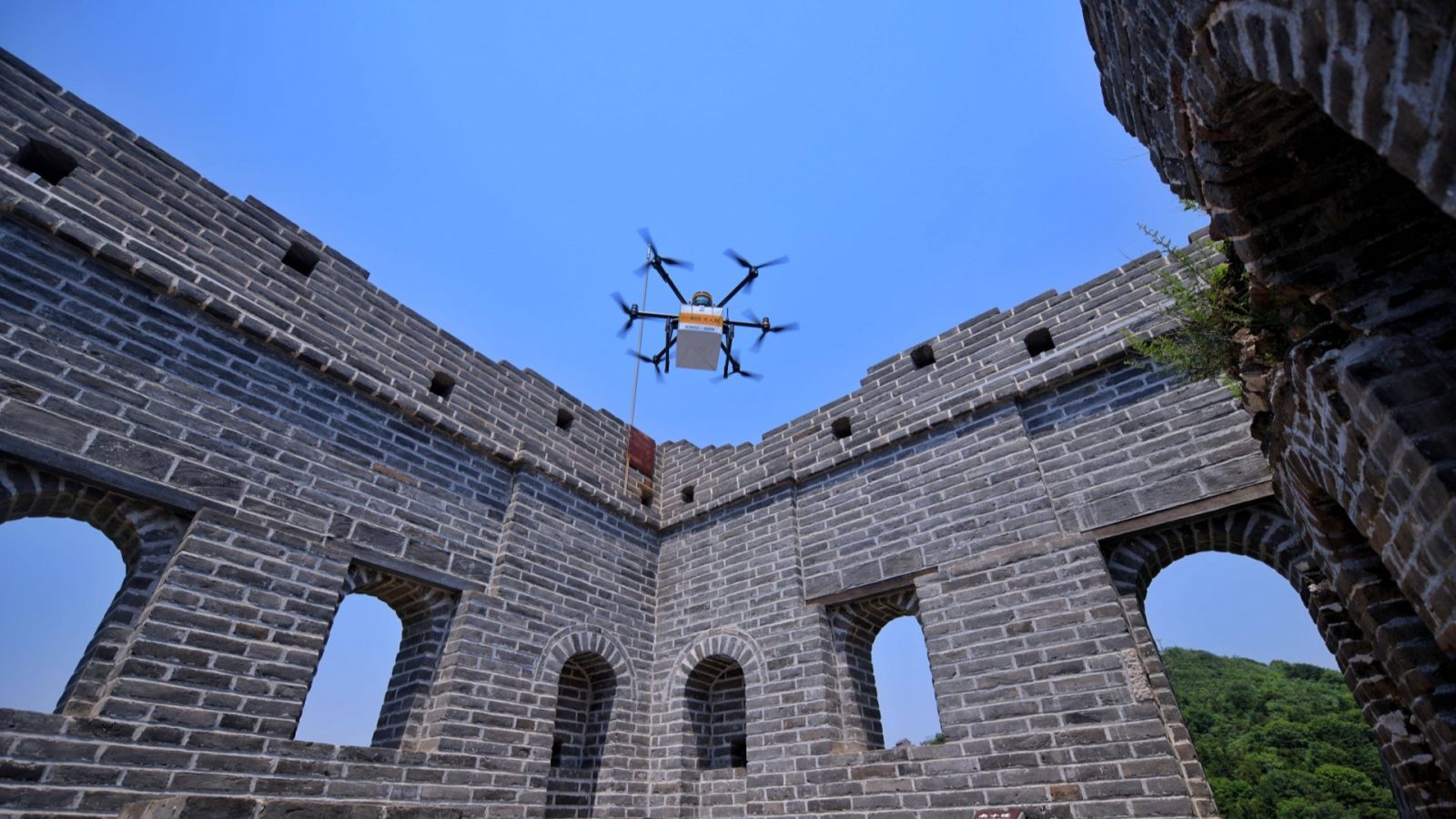
Drone Flying Over Great Wall
International through-transit needs a specific answer
Do not assume that remaining airside, holding one ticket, or checking baggage through creates a drone exemption. The revised regulation does not supply a specific international-through-transit procedure. A general airport transfer description also does not establish permission for this particular equipment.
This uncertainty changes the booking decision. If taking the drone matters more than using a Beijing connection, consider an itinerary without Beijing, subject to the other places' rules. If Beijing is essential, plan to travel without the aircraft unless the relevant authorities establish an applicable arrangement for your exact journey.
Domestic connections and airport changes
Review the direction of every segment, not just the final destination printed on the booking. Arriving in Beijing from another Chinese city still brings equipment into Beijing. A later international departure does not erase the earlier arrival with the aircraft.
The same planning issue arises when a journey involves collecting baggage, changing airports, staying overnight outside the transit area, or continuing by rail. Do not place these different scenarios under the single word “transit” and expect one general answer to cover them all.
Choose the route before paying
Use this sequence while changes are still practical:
- ① List each segment: Record every arrival in Beijing, including a return connection after visiting another city.
- ② Identify baggage handling: Establish whether you must collect or recheck the bag, and whether the transfer requires leaving the international transit area.
- ③ Describe the equipment: Give the aircraft model, relevant spare parts, and whether the body and batteries travel separately.
- ④ Ask the right question: Request guidance on that equipment and route under the rules effective November 15, not simply the airline's normal drone baggage policy.
- ⑤ Keep a workable fallback: If permission remains unestablished, leave the drone out of the Beijing journey or change the route before committing to avoidable costs.
Ask the operating carrier about boarding and baggage handling, and the relevant airport or authorities about local restrictions. One reply may address only one part of the journey. Preserve the question and response together so that a battery answer cannot later be mistaken for entry authorization.
Move Existing Equipment Before the Deadline
Carry equipment out before November 15
For equipment already in Beijing, the official transition guidance provides for moving it outside the city before the revised regulations take effect. Personal carriage may use air, rail, or road transport. That guidance is an outbound arrangement, not permission to bring new equipment in during the transition.
Plan around the equipment's actual removal from Beijing, rather than merely buying a ticket or beginning a booking. A departure scheduled close to the deadline leaves less room for a cancellation or a carrier's additional requirements. Build your plan around a journey you can complete before November 15.
- Before departure: Check the carrier's requirements for the equipment and its batteries; the city transition notice does not replace transport safety rules.
- At the destination: Keep a record of where the equipment went and any relevant handover or transport documents.
- For local verified owners: Follow instructions from the responsible local police station about closing or updating the earlier equipment record.
Dongsi Subdistrict's resident guidance, for example, asks owners carrying equipment out to record themselves with the aircraft and its code at the destination, then provide the video to the local police station. This is a specific local instruction; it should not be represented as a universal foreign-tourist application process.
Ask EMS about acceptance first
The municipal announcement identifies China Postal Express & Logistics, commonly called EMS (中国邮政速递物流), as an outbound shipping channel during September 12–November 14. It describes shipment to an address outside Beijing, with verification before a postage waiver.
The announcement does not provide a complete application checklist for every short-stay foreign visitor or every unverified aircraft. Therefore, do not promise yourself free shipping, immediate acceptance, international delivery, or a particular collection service merely because the channel appears in the notice. Resolve these points first:
- ① Describe your situation: State that you are a foreign visitor and explain whether the equipment completed the earlier Beijing police information verification.
- ② Describe the shipment: Give the model, components, battery details, and the proposed address outside Beijing.
- ③ Ask about requirements: Confirm the identity documents, equipment information, packing, transport restrictions, charges, and verification needed for this shipment.
- ④ Confirm completion: Obtain the actual acceptance record and tracking details if the shipment is accepted. An inquiry, collection request, or draft order is not proof of completed handover.
These are preparation questions, not invented mandatory documents. Dongsi's published guidance names Dongsi Shitiao Post Office (东四十条邮政所) for its local arrangement. It does not guarantee that a visiting passport holder can complete the same transaction on the same terms.
Separate disposal from subsidy eligibility
Officially designated buyback and scrapping channels provide other ways to deal with existing equipment. They involve different outcomes: selling transfers the equipment for an agreed price, while scrapping gives it up for disposal. Neither should be treated as temporary storage followed by later collection.
The subsidy announcement limits eligibility to personally held equipment that previously completed police information verification. For November 1–14, the stated buyback subsidy is 15% of the transaction price, capped at CNY 1,500 per aircraft; the stated scrapping subsidy is CNY 100 per aircraft.
Use district-published locations for these channels and establish eligibility before traveling to a point. Keep any quotation, sale confirmation, disposal record, and subsidy paperwork distinct. If a proposed channel cannot accept your equipment, do not interpret that refusal as permission to store it beyond the deadline.
Keep Your Trip Independent of Storage
Avoid a hotel storage workaround
After the possession and storage ban takes effect, an ordinary hotel room, front desk, or commercial luggage locker is not a dependable workaround. The revised text does not provide a general tourist-storage exception. A staff member agreeing to hold a suitcase does not establish one.
Similarly, do not plan to arrive with equipment and then negotiate customs or police storage as an automatic service. No confirmed tourist holding-and-return procedure under the revised rules is established here. Keep the trip workable without assuming that such a facility will take responsibility for the aircraft.
Allow for an unconfirmed transfer
If a transfer arrangement remains unclear, resolve the equipment decision before the journey begins. Options include leaving the aircraft at home, keeping it outside Beijing where lawful, or choosing a route that avoids Beijing. Each choice has different baggage, custody, and booking consequences.
Avoid a plan that sends equipment out of Beijing only to bring it back for your flight home. Review the return journey when deciding the outbound route. This is especially important on a multi-city holiday, where a Beijing departure can otherwise become a surprise equipment problem at the end.
Keep a useful equipment record
Prepare a small information file for any necessary discussion with the carrier, postal operator, or authorities. The following details help explain the actual situation; they do not amount to an application for an exemption.
- Equipment identity: Model, serial number, and clear photographs of the aircraft and relevant components.
- Travel details: Flight or train segments, dates, airports, and baggage collection arrangements.
- Existing records: Relevant verification, shipment, sale, or disposal documentation that you genuinely hold.
- Specific question: The exact action you need confirmed, such as acceptance for outbound shipment or handling of a particular connection.
Keep the response with the information you supplied. If your route, equipment, or date changes, the earlier answer may address a different situation. Apply Beijing drone rules November 2026 to the journey you will actually take, rather than relying on a folder of unrelated reassurance.
Frequently Asked Questions
Q: Can I bring a drone if I never fly it?
No. Avoiding flight does not remove restrictions on bringing the aircraft into Beijing. From November 15, 2026, the revised rules also prohibit ordinary possession and storage within the city. Plan a Beijing visit without the drone rather than assuming that a switched-off aircraft inside a suitcase is acceptable for your stay.
Q: Does a drone under 250 grams qualify?
The revised Beijing regulation does not provide a blanket exemption for drones weighing under 250 grams. Do not rely on a lightweight product label or another country's recreational rules. Check the actual equipment category, but plan without the aircraft unless an applicable official arrangement establishes permission for your particular equipment and purpose.
Q: Does UOM registration override the Beijing ban?
No. Registration on the national unmanned-aircraft platform does not establish an exemption from Beijing's local restrictions. Earlier accounts of verified local equipment returning to Beijing should not be used as permission under the November revision. For an ordinary holiday, registration alone does not solve the questions of entry, possession, or storage.
Q: Can an international transit passenger assume an exemption?
No. A through-ticket and baggage checked to another country do not themselves establish an exemption under the revised Beijing regulation. Ask about the exact airport, flights, baggage handling, and equipment before departure. If an applicable arrangement cannot be established, do not rely on transit status to carry the drone through Beijing.
Q: Can a hotel store my drone until departure?
Do not plan on ordinary hotel storage after November 15. The revised rules prohibit possession and storage, and they do not provide a general hotel exception for tourists. A room booking or informal promise from reception does not establish permission. Arrange your equipment outside Beijing where lawful before making the Beijing visit.
Q: Is EMS shipping automatically free for foreign tourists?
No automatic entitlement is established for every foreign tourist. The municipal transition notice describes outbound EMS shipping with verification during September 12–November 14, while the subsidy policy includes prior police-verification conditions. Confirm acceptance, documents, battery handling, and charges for your equipment. Do not treat a general announcement as guaranteed free service.