What Portable Chargers Are Allowed in China
What Portable Chargers Are Allowed in China? China tightened its power bank rules sharply in 2024 and 2025. As of June 28, 2025, only CCC-certified power banks are allowed in the cabin on Chinese domestic flights — uncertified units are turned away at the gate. For foreign visitors this raises a few practical questions: will your existing charger clear security, can you top up a laptop on a Shanghai-to-Chengdu hop, and if yours fails, where do you actually buy a replacement in China and how do you pay for it? This guide covers the regulations, the watt-hour math, the airline behavior, and the workarounds — without the buyer-guide fluff.
Quick Facts
The CCC Certification Requirement
CCC (China Compulsory Certificate) is mandatory for every power bank sold or used in mainland China since August 1, 2024. From June 28, 2025, only CCC-marked power banks may ride in the cabin on Chinese domestic flights. The mark is a stylized three-letter logo, usually accompanied by a 12-digit certificate number. Major brands offering CCC-certified models include Xiaomi, UGREEN, Baseus, Anker, and Romoss — all of which sell internationally, so buying a compliant unit before arriving is straightforward.
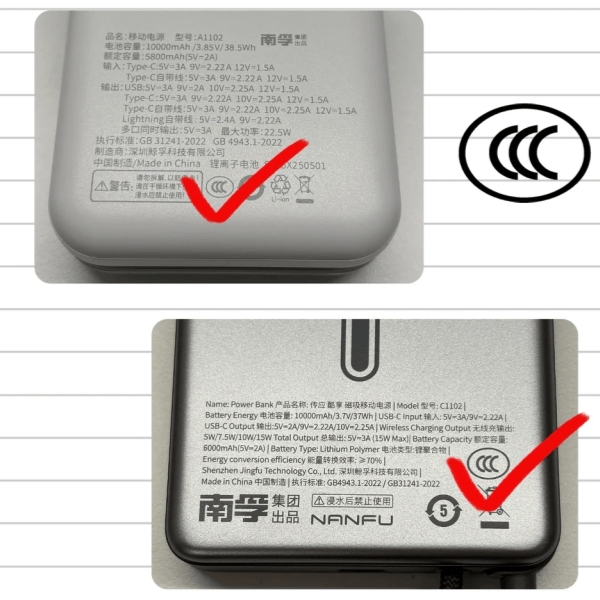
What the CCC Mark Looks Like
The genuine CCC mark has four visual cues you can check in under a minute. Each of these appears on the device body itself, not the retail packaging.
- Logo shape: The three letters "CCC" appear with a registered-R style notch on the middle C — the mark is clean, not pixelated.
- Certificate number: A 12-digit alphanumeric ID is etched or printed near the logo on the unit's casing.
- Manufacturer name: The company's official name in Latin characters appears on the same label as the CCC mark.
- Location check: The mark must appear on the power bank body. If "CCC" is printed only on the retail box or a hangtag, that is not a certified unit.
How to Verify a CCC Certificate Online
To confirm a certificate is genuine, visit cnca.gov.cn and navigate to 认证结果查询 (Certificate Query). Enter the 12-digit ID found on the device. A valid entry returns the issuing laboratory, the certificate's product scope, and the expiry date. Power banks purchased before August 2024 may legitimately predate the rule. Units bought after that date without a verifiable ID are suspect — walk away.
⚡ Shop Globally Approved Power Banks: Avoid security confiscations at airport gates by choosing verified portable chargers from our guide to the Top 3C Certified Power Banks to Buy (Travel-Ready & Globally Approved).
Power Banks on Domestic Flights in China
Portable Chargers Allowed in China
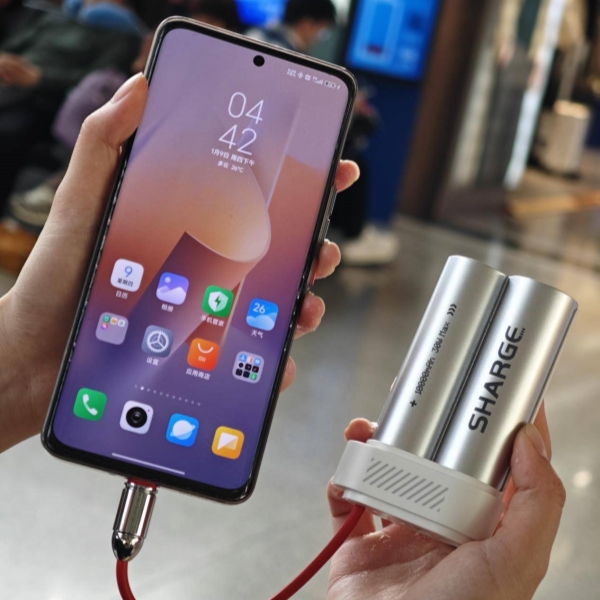
Since June 28, 2025, only CCC-certified power banks are permitted in cabin baggage on Chinese domestic flights. There is no official watt-hour ceiling stated in the rule itself, but airlines commonly restrict units above 20,000mAh without prior approval. Power banks must travel in carry-on on every carrier worldwide. Major domestic carriers include Air China, China Eastern, China Southern, XiamenAir, Hainan Airlines, and Spring Airlines.
What the June 2025 Rule Actually Bans
The enforcement targets five specific cases. Each one can result in confiscation at the gate with no return or mailing option.
- Uncertified units: Any power bank without a verifiable CCC ID is barred from Chinese domestic cabin baggage after June 28, 2025.
- Damaged units: Devices with swollen cells, cracked casing, or exposed wiring are refused regardless of certification status.
- Recalled models: Any brand model under an active recall is barred, even if it carries a valid CCC mark.
- Market-purchased no-names: Uncertified units from street markets are the primary enforcement target and the primary safety risk.
- Checked baggage: Power banks of any size are prohibited in checked luggage on all commercial airlines globally — this rule predates 2024 and is strictly enforced in China.
Note that the rule targets cabin carriage on Chinese domestic carriers. Chinese airports do not currently refuse inbound international passengers for carrying a non-CCC unit in their personal bag.
📱 Essential Travel Prep & Digital Tools: Navigating payment apps, high-speed trains, and local regulations becomes much easier with proper preparation. Discover key tips in our complete China Survival Guide.
Power Banks on Flights To and From China
Portable Chargers Allowed in China
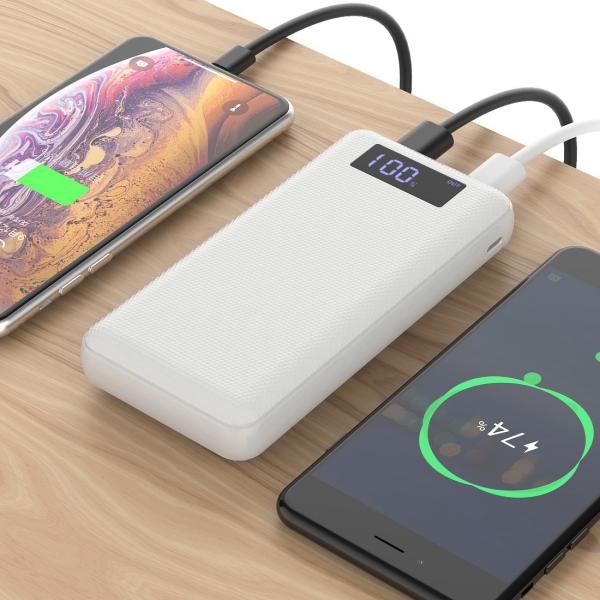
Most international carriers follow IATA Dangerous Goods Regulations. The IATA limits apply on flights to and from China, regardless of the domestic CCC rule. The practical threshold for nearly all consumer power banks is 100Wh — most units sit well below this line. For travelers connecting through China on a single ticket, the international rule governs the long-haul segment, and the domestic rule applies on the inner leg.
IATA Watt-Hour Limits Explained
The IATA framework sets three watt-hour thresholds. These apply to all passenger aircraft worldwide and are enforced by airlines, not airports.
- ≤100Wh (≈27,000mAh at 3.7V): Cabin carry-on, no airline approval required.
- 100–160Wh (≈27,000–43,000mAh at 3.7V): Cabin only, requires advance airline permission, limited to two units per passenger.
- >160Wh: Forbidden on all passenger aircraft. No exceptions.
Power banks must always travel as cabin baggage. They are never permitted in checked luggage.
Watt-Hour to mAh Conversion Table
To calculate Wh, multiply capacity in mAh by the cell voltage (almost always 3.7V for Li-ion units) and divide by 1,000. The table below uses that 3.7V figure.
What Capacity Counts as Allowed
The most traveler-friendly size is 10,000–20,000mAh (≈37–74Wh). This range sits well below the 100Wh IATA ceiling and within the typical 20,000mAh soft cap that Chinese carriers apply without question. For most visitors, a 10,000mAh unit is the practical sweet spot: one to two phone recharges, pocket-sized, no airline friction. Anything above 27,000mAh (100Wh) requires a conversation with the airline. Anything above 43,000mAh (160Wh) is off-limits on all passenger flights worldwide.
🛃 Review Airport Security & Entry Rules: Beyond power bank restrictions, international travelers should familiarize themselves with baggage limits and screening procedures in our guide to China Airport Customs Rules.
Buying and Using a Power Bank in China
Portable Chargers Allowed in China
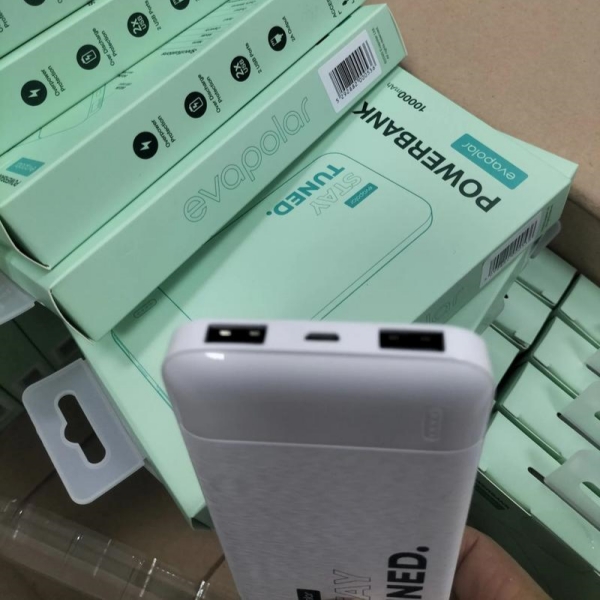
Most foreign visitors either arrive with their own unit or buy a replacement through a channel that accepts international payment. Realistic options include pre-ordering before the trip, purchasing through platforms with English-language checkout, or buying at the hotel concierge. Domestic retailers JD.com and Taobao require Alipay or WeChat Pay linked to a mainland Chinese phone number — a hard blocker for short-stay visitors.
Where to Buy (and How to Pay)
Five sourcing channels work for foreign visitors. Each has a different trade-off between price, speed, and payment friction.
- Amazon before travel: Xiaomi PB20S 20,000mAh about $28–$38 (¥200–270); Anker PowerCore 20,000 about $35–$45 (¥250–320). International delivery available.
- Tmall Global (English site): Brand official stores accept Visa and Mastercard. International shipping available for most models.
- Trip.com "Travel Essentials": Convenience over price. The platform accepts international payment methods and delivers to hotels.
- Hotel concierge: Small markup but immediate availability. Useful as a last resort or for urgent same-day needs.
- Airport electronics shops: Beijing Capital and Shanghai Pudong both have electronics stores airside. Pricing runs higher; use only if no other option exists.
Voltage, Plugs, and Charging in China
Four practical points cover what you need to know about charging in China. The power bank itself charges from any USB source — wall-plug type does not matter.
- Mains electricity: 220V / 50Hz. Most modern chargers are rated 100–240V and work without an adapter.
- Plug types in use: Type A (two flat pins), Type C (two round pins), and Type I (three angled pins — Australian-style). Check your charger before departure.
- Universal adapter: Required for older or US-only chargers that are not multi-voltage. A basic adapter costs about $10–$15 online.
- Cables and fast-charge blocks: Type-C cables and fast-charge wall blocks are widely available at 7-Eleven, Lawson, FamilyMart, and hotel shops across China.
Frequently Asked Questions
Q: Can I bring a non-CCC power bank into China?
Yes. The CCC rule applies to domestic Chinese flights (effective June 28, 2025), not to inbound international flights. A non-CCC power bank can be carried on the plane into China. It will, however, be confiscated at the gate if you attempt to use it on a Chinese domestic carrier.
Q: What happens at the gate if my power bank exceeds the limit?
On Chinese domestic flights post-June 28, 2025, a non-CCC unit is confiscated and not returned — there is no mailing option. On international flights, a unit above 160Wh will not be accepted at check-in; a 100–160Wh unit without prior airline approval is refused at the gate.
Q: Do I need to remove my power bank at security screening?
Yes in China. Power banks must be removed from bags and placed in a separate tray at security screening, consistent with laptop rules. This is enforced strictly at Chinese airports on all flights.
Q: Are power banks with no watt-hour label allowed?
Technically no. The IATA rule requires the watt-hour rating to be visible. Without it, security staff default to refusing the unit. Modern CCC-certified power banks always print Wh on the device body.
Q: Is it safe to buy a cheap power bank at a Chinese market?
Cheap uncertified units are the models most associated with the thermal-runaway incidents that prompted the 2024–2025 crackdown. Stick to CCC-verified units from named brands. The price premium is small relative to the safety risk.
Q: Will my power bank work with Chinese sockets?
The power bank charges from any USB source — wall-plug type does not matter, only the input cable and adapter. China uses 220V/50Hz mains and Type A/C/I plugs. Bring a universal adapter if your home charger is not multi-voltage.
Q: How old is too old for a power bank to fly?
Airlines and IATA rules do not set an age limit, but lithium-ion cells degrade after 300–500 cycles (roughly 2–3 years of regular use). A visibly swollen, dented, or non-charging unit should be left at home regardless of its legal status.
Q: Can I charge my phone from a power bank during the flight?
Yes. Using a power bank to charge a phone or laptop during the flight is permitted on every commercial carrier. Some carriers request the unit remain stowed during takeoff and landing.