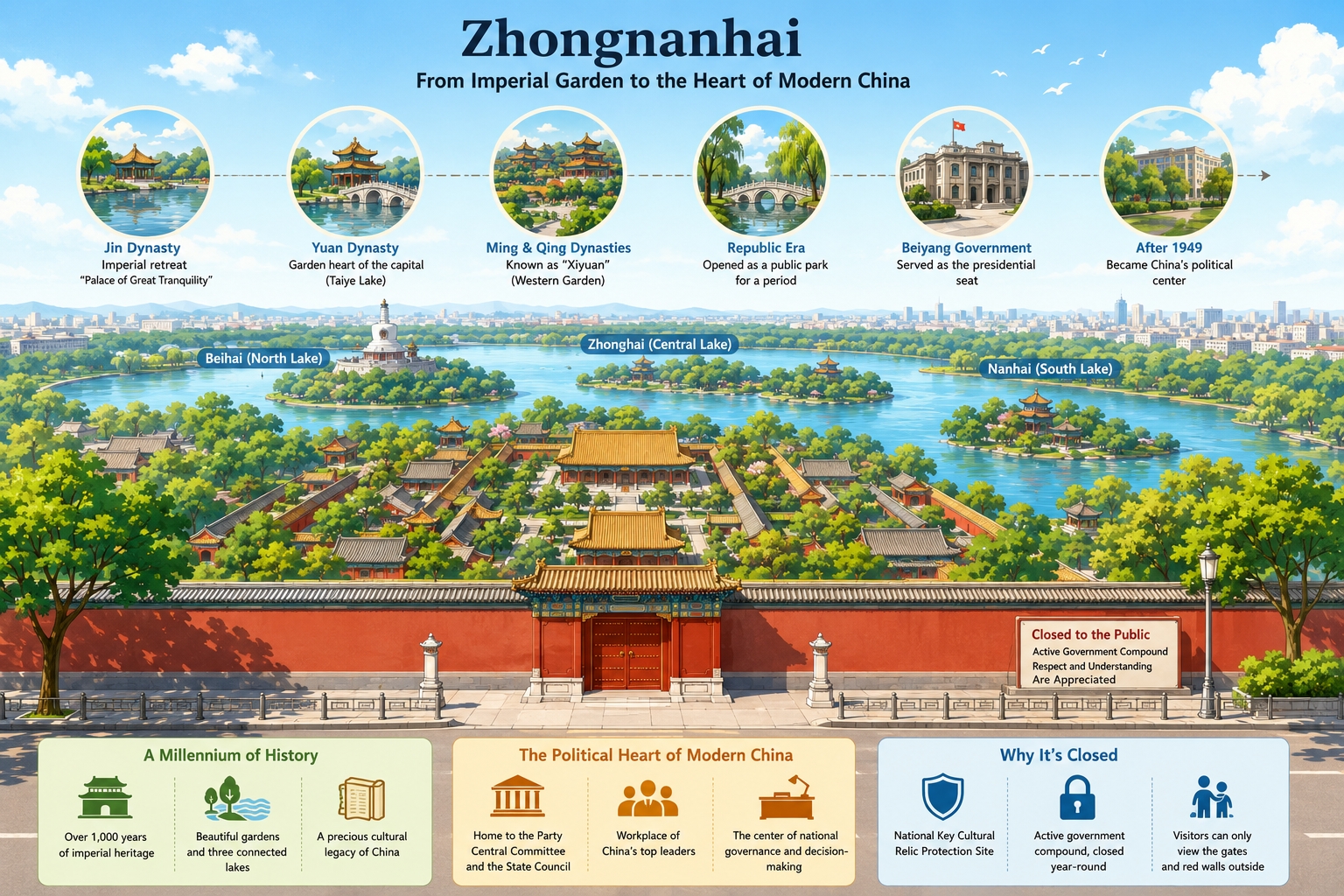
Timeline And Overview Of Zhongnanhai’s Political And Historical Changes
On May 15, 2026, U.S. President Donald Trump and President Xi Jinping strolled side by side through Zhongnanhai’s lush, tree-shaded gardens. Their historic walk drew global attention. So — what is Zhongnanhai? In simple terms it’s China’s highest political headquarters — home base of the Communist Party Central Committee and the State Council.
Its famous red walls are off-limits to ordinary visitors. Now here’s the good news: Beihai Park and Jingshan Park are right next door. Once the Chinese imperial garden, together Zhongnanhai, Beihai and Nanhai were known as the “Xiyuan,” or the Western Garden. Visit these two public parks and you’ll see the same royal gardens, the same historic waterways and you’ll receive a true red carpet welcome. 🏯
Zhongnanhai: An Imperial Garden Turned Political Seat
Before exploring what lies beyond those red walls, here is a quick overview of Zhongnanhai itself.
| Dimension | Overview |
|---|---|
| 🏛️ History | Founded during the Liao and Jin dynasties. Developed through the Yuan, Ming, and Qing eras as the imperial "Xiyuan" garden. Briefly opened to the public during the Republic era. Became China's political center after 1949. |
| 🏛️ Politics | Current headquarters of the Communist Party Central Committee, the State Council, and related central offices. Home and workplace of China's top leaders. The supreme symbol of Chinese state authority. |
| ⚠️ Current Status | Designated as a National Key Cultural Relic Protection Site. Closed to the public year-round as an active government compound. Tourists may only view the gates and red walls from the outside. |
History: A Millennium of Imperial Legacy
That broad story over a millennium old. The Jin dynasty built an imperial resort around here, calling it the “Palace of Great Tranquility.” During the Yuan dynasty it became the garden heart of the new capital — renamed Taiye Lake. In the Ming and Qing, the whole complex acquired the name “Xiyuan” (Western Garden). It was the Ming court that excavated the southern lake and formed the three-lake matrix — Beihai, Zhonghai and Nanhai — we see today. In the Republic the site was briefly opened as a public park, and then became the presidential seat of the Beiyang government. Such is the massive story behind the place.
Politics: The Living Center of Modern Governance
In 1949, Zhongnanhai was transformed into the permanent residential and working home of the Chinese leadership — the Communist Party Central Committee, the State Council, the Secretariat, and the Central General Office. Since then, all of China’s national leaders have lived, worked, and made their decisions behind those red walls. Xinhuamen, the South Gate, bears the national emblem of China — a kind of status equal to that of Tiananmen itself. In other words, every defining choice of modern China has taken place within the complex. For that reason, Zhongnanhai is no mere historic garden. It is the current living heart of power in China.
Access: Why Gates Remain Firmly Closed
Today, Zhongnanhai bears the designation of a National Key Cultural Relic Protection Site, though in practice, at least in terms of visitor access, the facility is a working government compound that is shut to the public all year round, with one interesting exception — between 1977 and 1985, parts of Nanhai (Fengze Garden, Yingtai Island) were opened for guided visits — but those doors have not swung open since that time. Tourists today are limited to Xinhuamen, and the red walls along Fuyou Street. The gate tells us a lot just looking from the outside. ⚠️
Alternatives: Why Beihai and Jingshan Shine
-
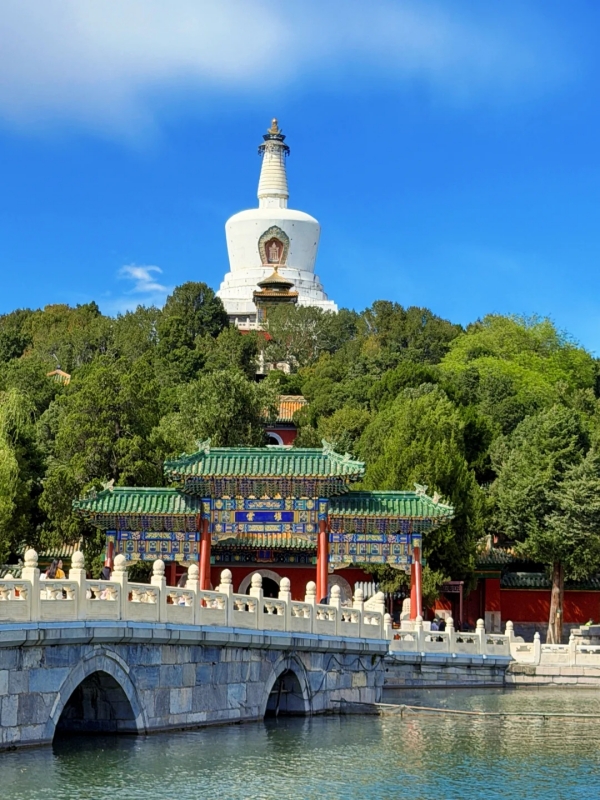

- Beihai Park White Pagoda
-
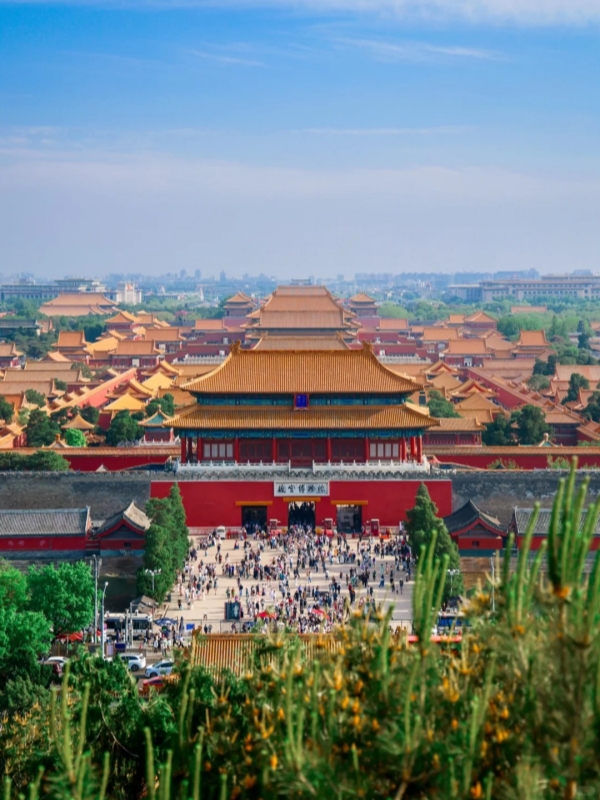
- Jingshan Park View of Palace Museum
| Dimension | Beihai Park 北海公园 | Jingshan Park 景山公园 |
|---|---|---|
| 📜 Historical Roots | Part of the same "Xiyuan" imperial garden system as Zhongnanhai. China's oldest and best-preserved classical royal garden. | Imperial rear garden of the Yuan, Ming, and Qing dynasties. Located at the precise center of Beijing's ancient central axis. |
| 🏞️ Key Highlights | Vast Taiye Lake, iconic White Pagoda, Qionghua Island, and the Nine-Dragon Wall — sharing the same waterway and heritage as Zhongnanhai. | Five hilltop pavilions. Wanchun Pavilion offers a full panorama of the Forbidden City, Beihai, and a distant view of the Zhongnanhai area. |
| 👁️ Visitor Experience | Boat across the imperial lake. Stroll pavilion-lined paths. Experience the classic "one lake, three mountains" garden design shared with Zhongnanhai. | Climb to the summit for a bird's-eye view of the Forbidden City and central axis — the most dramatic way to grasp Beijing's imperial spatial logic. |
Beihai, Zhonghai and Nanhai were once a unified imperial garden - all called "Xiyuan", clustered around Taiye Lake. Beihai Park and Zhongnanhai use the same waterway and the same architectural and stylistic tradition. Like a bloodline, the ancient example of one lake and three mountains runs through them together - Taiye Lake, Qionghua Island, Tuancheng, and Xishan Terrace. Walking inside Beihai feels as if stepping close to the world behind that red wall.
Jingshan, meanwhile, offers an entirely different gift — height. As the imperial "guardian mountain" and rear garden of the Ming-Qing palace complex, it puts you above everything. Climbing Wanchun Pavilion reveals Beijing's entire central axis at your feet. Southward lies the Forbidden City. Westward, Beihai's White Pagoda catches the light. And looking southeast, the broad green treetops of the Zhongnanhai compound stretch into view. That perspective makes the whole design finally click. 🔭
Beihai Park: The Imperial Garden Experience
Landmark: Lake Views and White Pagoda
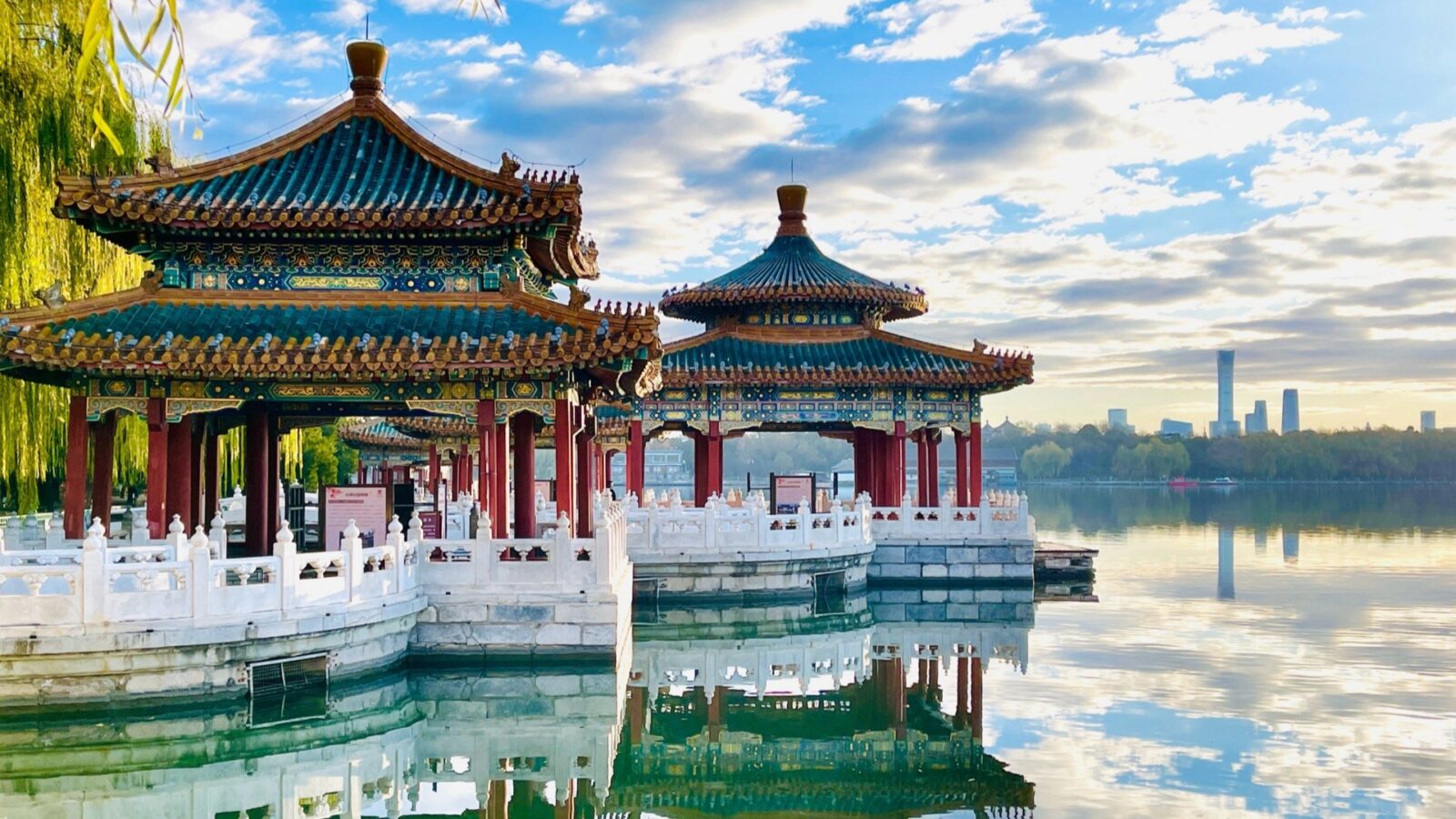
Beihai Park
The centerpiece of Beihai Park is Taiye Lake. Historically, it was part of the same water system connected to Zhongnanhai's lakes. Step onto a boat and the old imperial atmosphere settles around you instantly. In the center of the lake, Qionghua Island rises in lush, layered green. Above the treetops stands the White Pagoda — a Tibetan-style stupa built in 1651. Indeed, this elegant tower has defined Beijing's skyline for nearly four centuries. In the Yuan Dynasty, furthermore, Qionghua Island was the spiritual anchor of the entire imperial capital. For a deeper look at everything the park contains, check out our full guide to Beihai Park for more details.
Detail: Jingxin Zhai and Dragon Walls
-
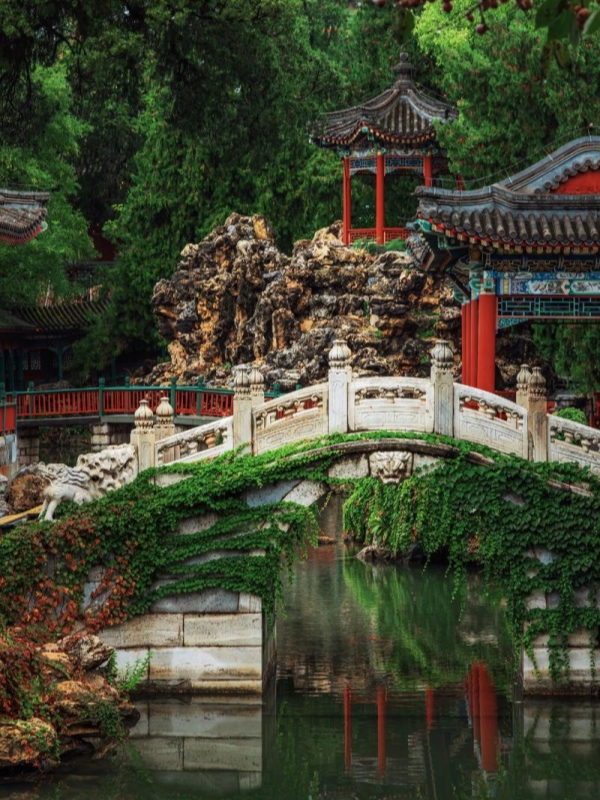
- Jingxinzhai Garden Beihai Park
-
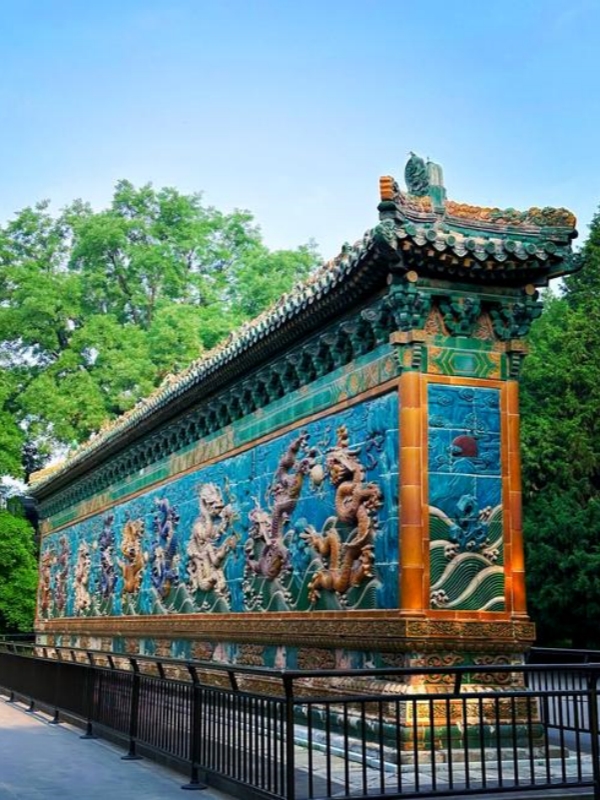
- Nine Dragon Wall Beihai Park
Beyond Beihai’s great lake awaits rewards for the slow and curious. Tucked up in its most northerly corner is Jingxin Zhai — the Studio of Tranquil Heart — legitimising its name as a garden within a garden. Emperor Qianlong originally built it as a private place to read. He imitated here the gentler style of Jiangnan gardens closer to the Yangzi in southern China. Its successive rockeries and converging gallery corridors attain a genuine intimacy. The still mirror surface of the reflecting pools presents a tranquil catalogue of Beihai’s grand topography. The northern shore takes you to the Nine-Dragon Wall, one of only three ancient glazed-tile dragon walls still to be seen in China. Nine vivid ceramic dragons writhe across a surface alive with all the colours of the glazed rainbow – a wonder of Qing decorative art.
Logistics: Essential Tips for Visitors
- 🧭 Address: 1 Wenjin Street, Xicheng District, Beijing
- ⏰ Opening Hours:
- Peak Season (Apr 1 – Oct 31): Park 6:00–21:00 (last entry 20:30); Inner gardens 8:00–18:00
- Off-Season (Nov 1 – Mar 31): Park 6:30–20:00 (last entry 19:30); Inner gardens 8:30–17:00
- 🎫 Admission:
- Peak Season: ¥10 (park entry); ¥20 (combined ticket including Qionghua Island and Tuancheng)
- Off-Season: ¥5 (park entry); ¥15 (combined ticket)
- 🚌 Getting There: Metro Line 6 to Beihai North Station; Buses 5, 101, 103, 109, 124, 128, Special 1, Special 2 to "Beihai" stop; Buses 13, 42, 107, 111, 118, 612, 701 to "Beihai Park North Gate" stop
Jingshan Park: The City's Historic Vantage Point
Summit: Wanchun Pavilion's Sweeping Panorama
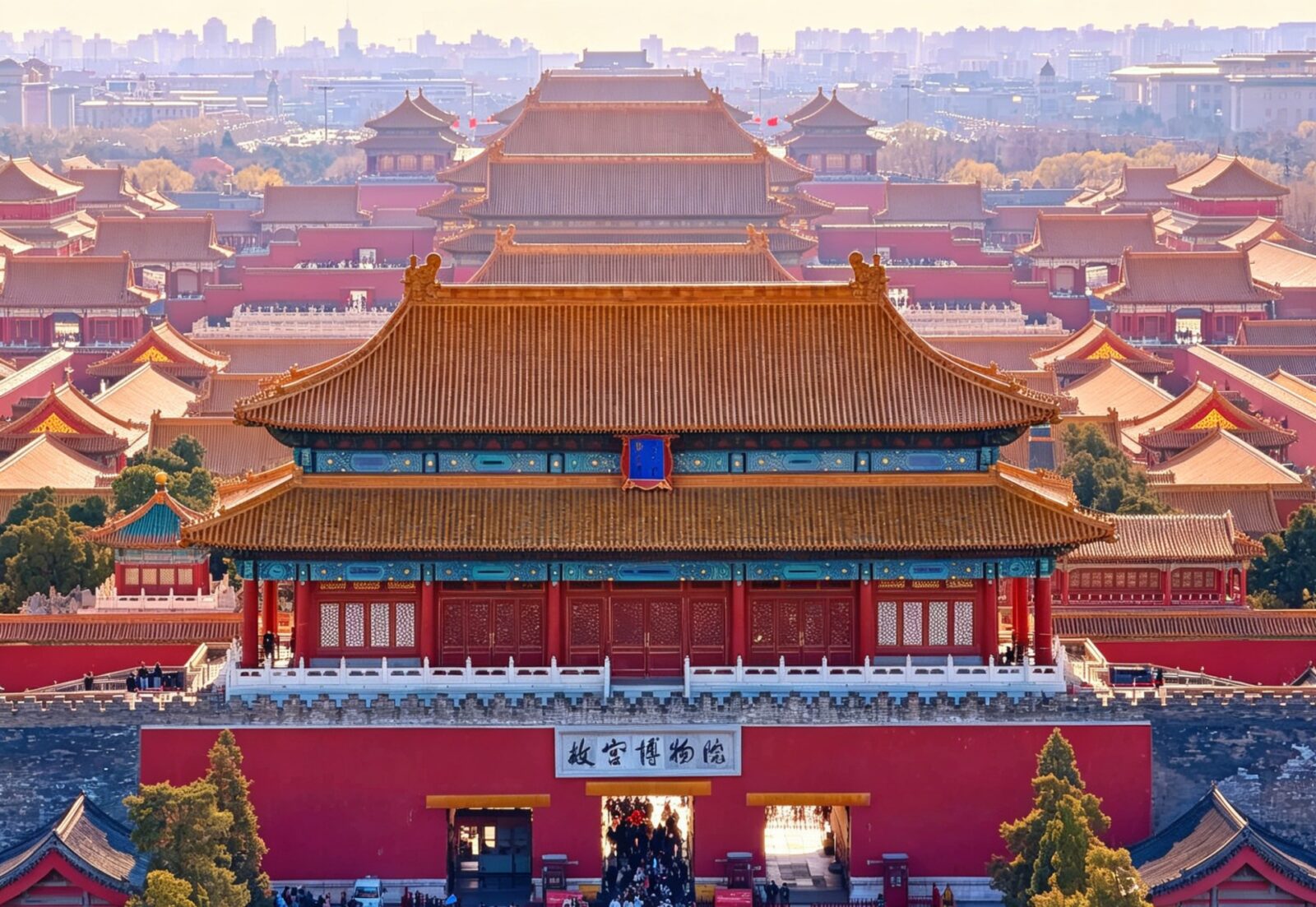
Jingshan Park View of Central Axis
But the true heart of Jingshan Park is in its elevated core, Wanchun Pavilion, the precise midpoint and erstwhile highest point of the old Beijing axis. The climb takes only 10 to 15 minutes; what awaits you at the top is unforgettable. Look south, and the Forbidden City lies before you, a golden symmetrical sea of tiles. Look west, and you see Beihai’s White Pagoda gleaming above Taiye Lake. North are the Drum Tower and Bell Tower. And at a southeast turning of your gaze lies the pageant of Beijing’s imperial geography fit into a single frame: the sprawling green tops and sparkling surface of Zhongnanhai and the long sweep of Chang’an Avenue.
Heritage: Shouhuang Hall and Imperial Memory
-
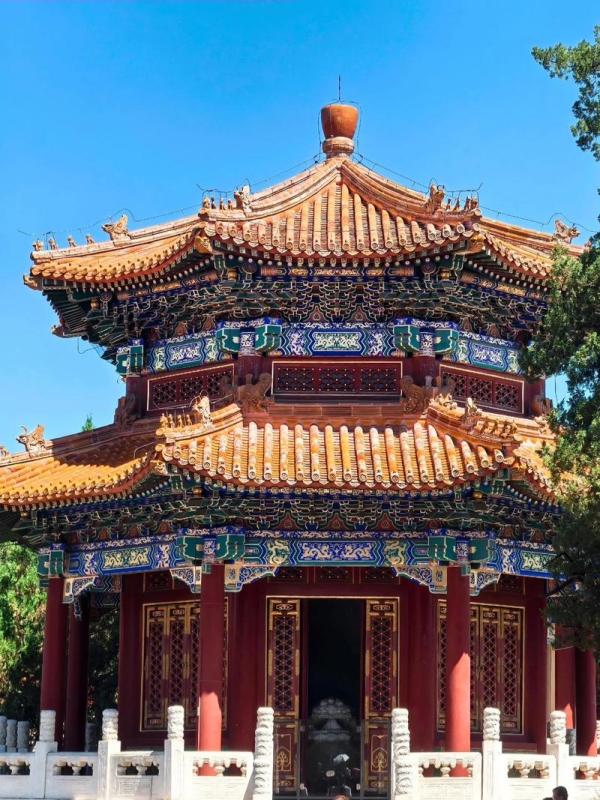
- Shouhuangdian Pavilion Jingshan
-
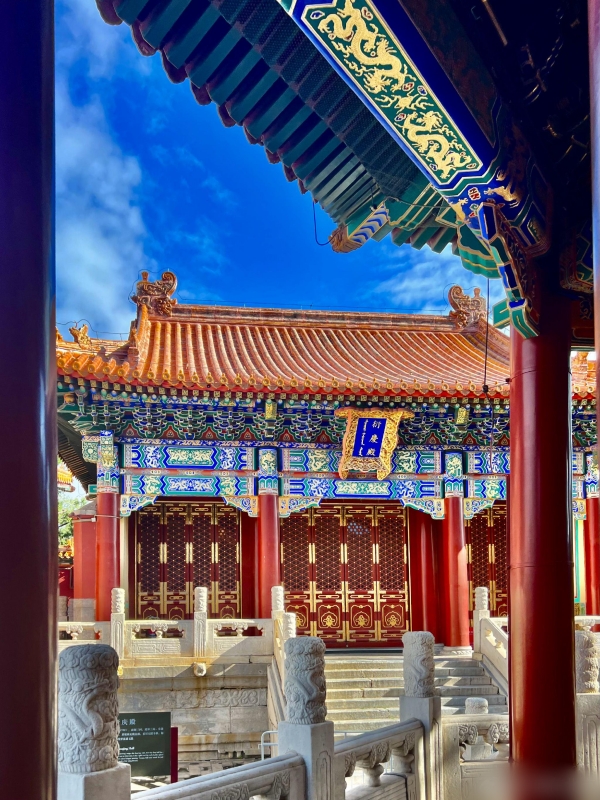
- Jingshan Park Yanqing Hall
Jingshan has more to offer than just a panoramic view. Behind the hill, the Shouhuang Hall was the Qing Dynasty’s imperial ancestry shrine where emperors went to pay respects to their forebears. Its great proportions and gloomy ambiance are strangely present to this day. Then on the eastern slope is an old locust tree behind a railing in a small enclosure. It was here that the last Ming Emperor Chongzhen, in a private chamber, committed suicide in the year 1644 as his Dynasty collapsed. For this reason Jingshan is not just another nice garden hill with a good view. It is where one of China’s greatest imperial stories ends at its saddest moment.
Logistics: Essential Tips for Visitors
- 🧭 Address: 44 Jingshan West Street, Xicheng District, Beijing
- ⏰ Opening Hours:
- Peak Season (Apr 1 – Oct 31): 6:00–21:00 (last entry 20:30)
- Off-Season (Nov 1 – Mar 31): 6:30–20:00 (last entry 19:30)
- 🎫 Admission: ¥2 for adults; ¥1 for students (prices may temporarily increase during flower festivals)
- 🚶 Getting There: Located directly opposite Shenwu Gate (North Gate of the Forbidden City). Walk across the street after visiting the Palace Museum. Buses 101, 103, 109, 124, 128, Special 1, Special 2 to "Forbidden City" or "Jingshan East Gate" stops
Parks: Exploring China's Royal Heritage
Beyond Beijing's imperial center, China's other great parks carry equally deep royal heritage. And if you're extending your Beijing trip with a look at the city's modern chapter, our guide to Beijing's Olympic Park is a great companion — it reveals how today's capital layers grand ambition right alongside ancient tradition.
Yuyuantan: Royal Retreats Near State Guesthouses
-
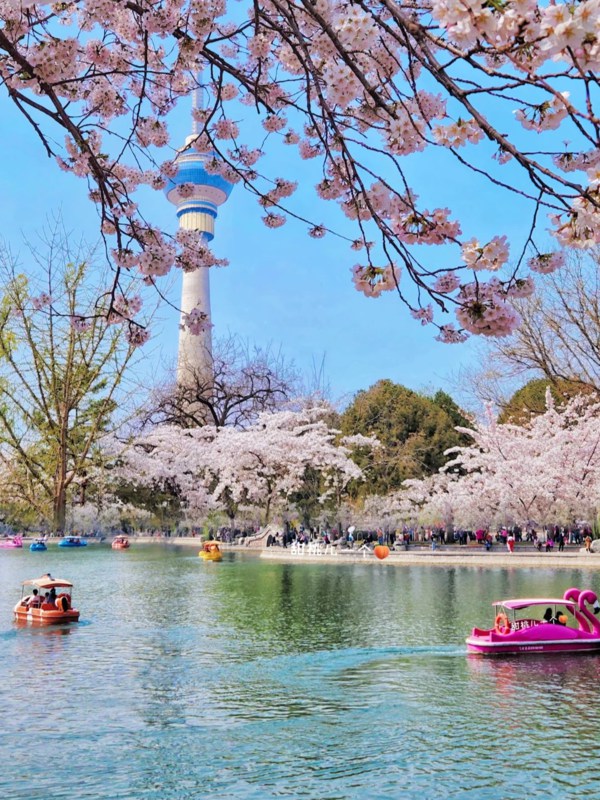
- East Lake
-
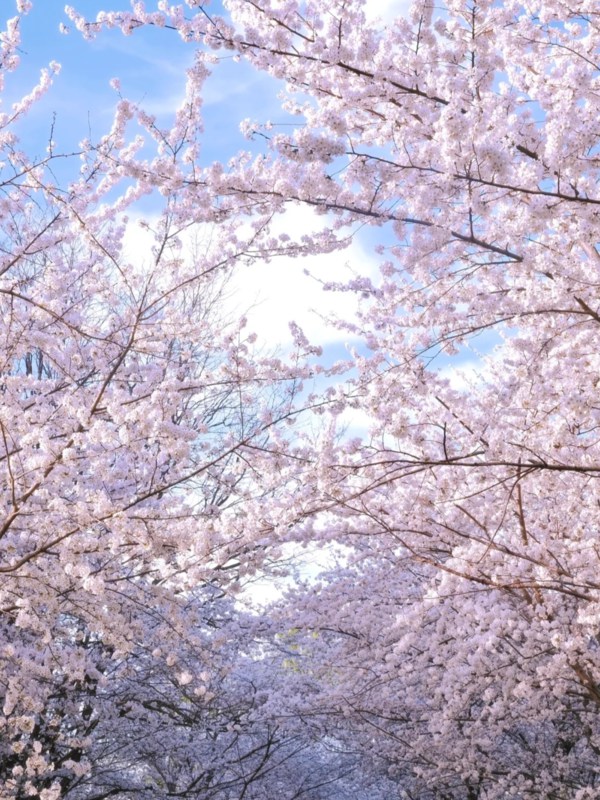
- Early Cherry Blossoms
Yuyuantan Park shares a boundary with the prestigious Diaoyutai State Guesthouse — China's premier venue for hosting foreign dignitaries. Its imperial roots reach back to the Jin Dynasty, when Emperor Zhangzong used this spot as a personal fishing retreat. Later, Emperor Qianlong of the Qing Dynasty constructed an imperial villa here, cementing its royal heritage. Today, Yuyuantan is a national AAAA-level scenic area. It is renowned for its broad lake and spectacular spring cherry blossom displays. Its layout differs from Zhongnanhai's three-lake design. Nevertheless, as a landscape prized by emperors across multiple dynasties, it carries a distinctly imperial spirit. For full details on planning your visit, check out our dedicated guide to Yuyuantan Park before you head out.
Xuanwu Lake: Jiangnan’s Grand Imperial Garden
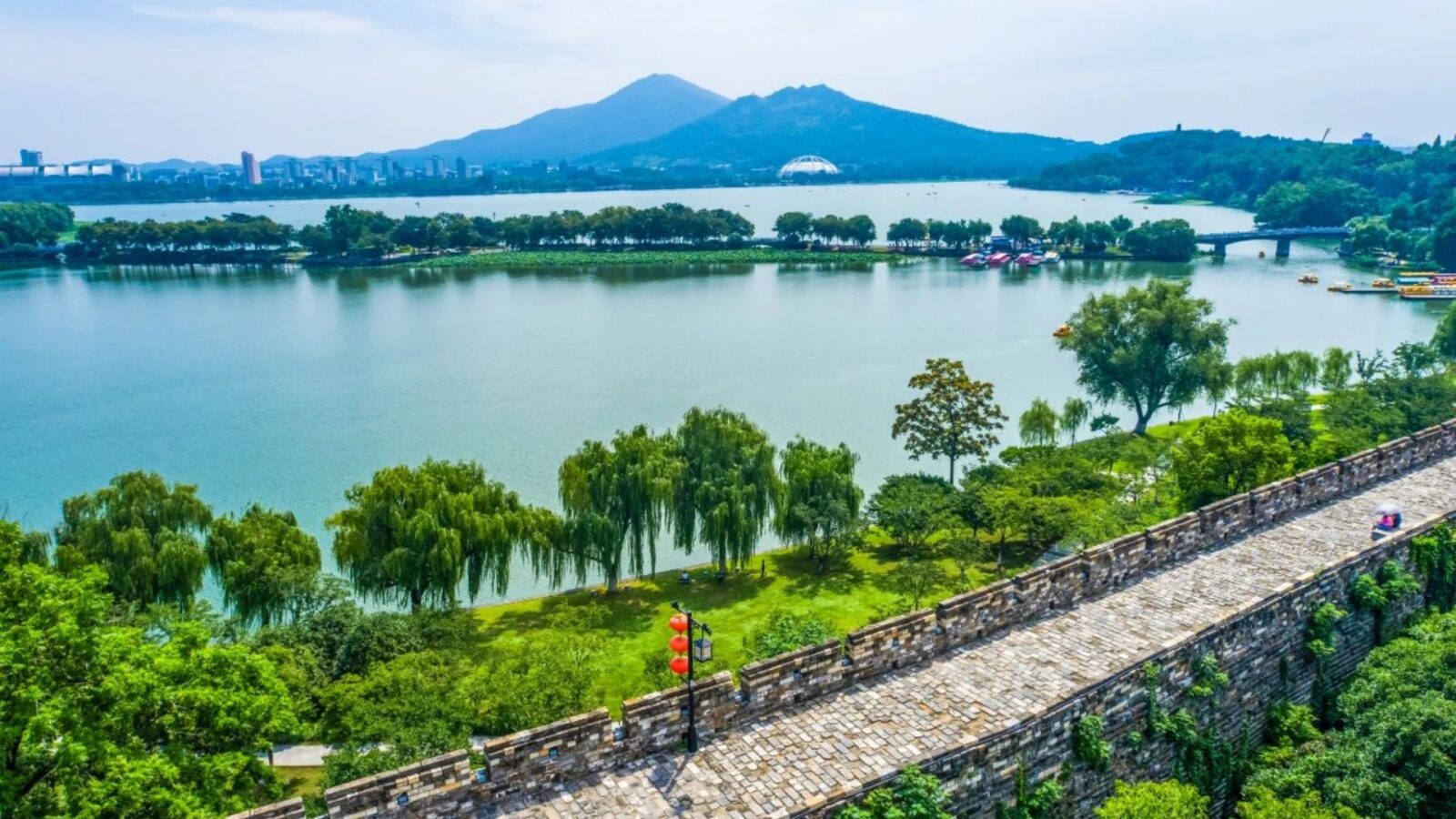
Xuanwu Lake
Xuanwu Lake, or as the locals call it, Jinling’s ’pearl’, with another specific appellation, ‘National Archive Lake’, preserves one of the most important records located in Jiangnan area, a true gem in metropolitan park, and of course one of the best of China’s remaining imperial lake gardens. The land began imperial use in Six Dynasties period. In Ming Dynasty, the most important household records were stored there. Its classical five islands are actually a retelling of the ‘three sacred mountains on a divine lake’ concept, following the idea of Han emperor we have already seen in Beihai and ZhongNanhai a few centuries later. So visiting Xuanwu Lake is the southern replica of the imperial park in Beijng, equally enpoetic and remarkably Jiangnan!
West Lake: The Muse of Garden Design
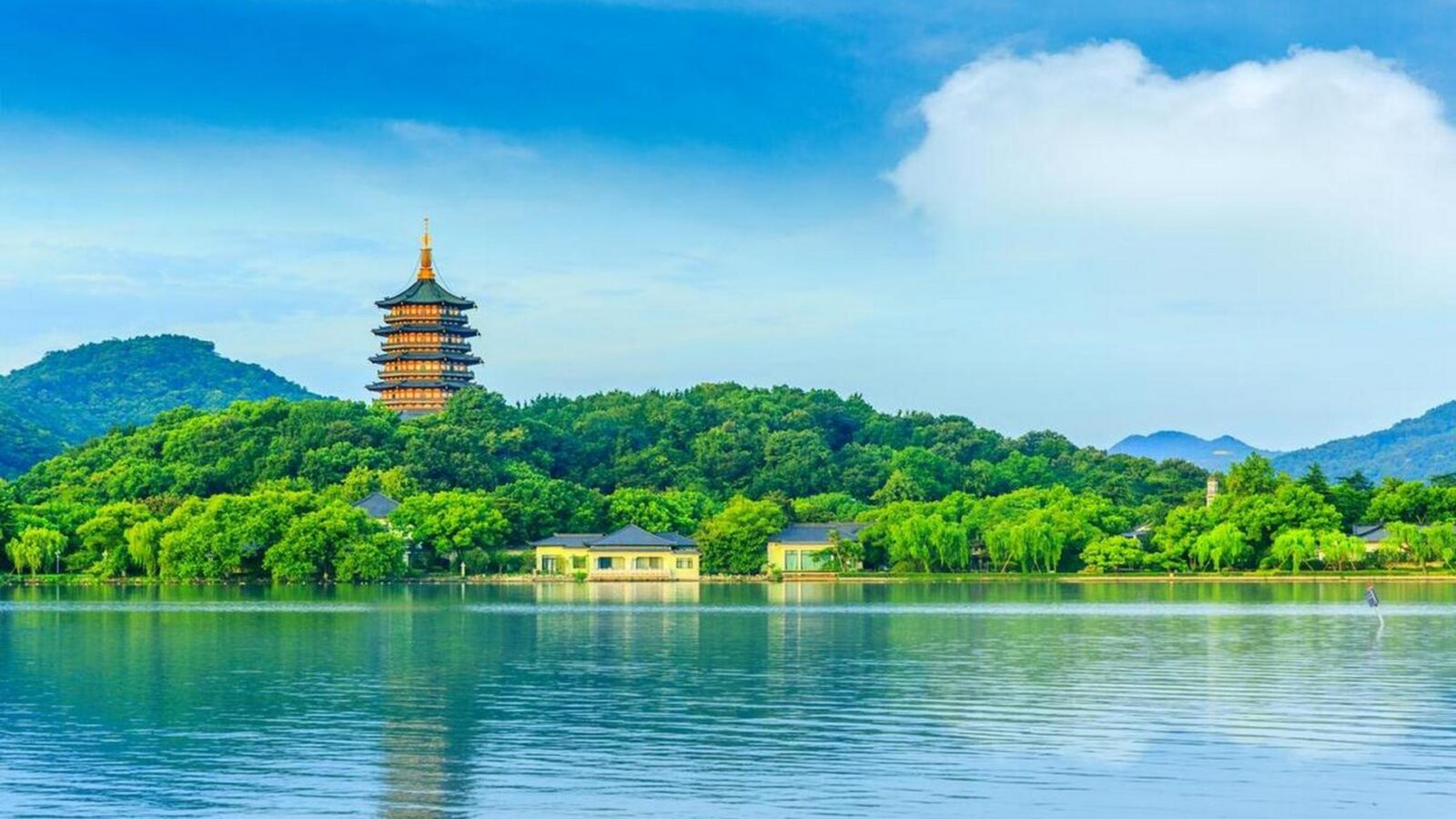
West Lake
Hangzhou’s West Lake was the first lake landscape in the world to be designated a UNESCO World Cultural Heritage site. Never an enclosed world for the imperial eye, its philosophy of beauty influenced Qing dynasty royal garden design. Emperors Kangxi and Qianlong were ardent fans, and during their southern tours they transplanted the renowned West Lake “Ten Views” design to Yuanmingyuan (the Old Summer Palace) and the Summer Palace. Several imperial pleasure gardens had surrounded the lake in the Southern Song dynasty. Thus, strolling at West Lake we are tracing the aesthetic source for some of China’s greatest royal landscapeswho laid the foundations for Zhongnanhai itself.
Faqs: Common Questions About Zhongnanhai
Q: What exactly is Zhongnanhai?
So, what is Zhongnanhai in practical terms? It is China's most politically significant compound — the operational headquarters of the Communist Party Central Committee and the State Council. Often compared to the White House or the Kremlin, Zhongnanhai sits in the heart of Beijing, directly west of the Forbidden City. It functions as both the workplace and official residence of China's top leaders. Public access is not permitted.
Q: Can tourists visit Zhongnanhai today?
No — and knowing what is Zhongnanhai makes the reason clear. As the fully operational headquarters of China's central government, it remains closed to the public year-round. A limited opening did occur between 1977 and 1985, when portions of Nanhai briefly welcomed visitors. However, that window closed long ago. Today, only Xinhuamen — the South Gate along Chang'an Avenue — is visible to anyone passing on the street outside.
Q: How is Beihai Park connected to Zhongnanhai?
Understanding what is Zhongnanhai requires knowing its origins. Beihai Park and Zhongnanhai once formed a single integrated imperial garden — collectively called "Xiyuan," or the Western Garden, centered on Taiye Lake. Their waterways remain physically connected to this day. Therefore, Beihai is not merely a park near Zhongnanhai — it is literally the publicly accessible portion of the same ancient royal landscape that Zhongnanhai still occupies today.
Q: What can you see of Zhongnanhai from Jingshan Park?
Standing at Wanchun Pavilion on Jingshan's summit, you enjoy one of Beijing's most sweeping panoramic views. Looking southeast from that vantage point, the dense green treetops and shimmering lake surface of the Zhongnanhai compound come clearly into view. Knowing what is Zhongnanhai adds real weight to that moment — you are gazing directly down at the compound where Trump and Xi held their landmark May 2026 garden walk.
Q: Where is Zhongnanhai, and how close is it to Tiananmen Square?
Zhongnanhai sits directly west of the Forbidden City and immediately north of Tiananmen Square — at the very core of Beijing's historic power district. Knowing what is Zhongnanhai means understanding how central its location truly is. Its southern boundary runs along Chang'an Avenue. Xinhuamen (New China Gate) stands just a short walk west of Tiananmen. That proximity to the symbolic heart of China is precisely what makes this compound so historically and politically extraordinary.