Weather in China in September
September occupies a narrow, valuable window in China's travel calendar. The oppressive August heat has broken across the north and central regions, while the domestic school-holiday rush has ebbed and Golden Week is still two weeks away. That combination makes September one of the most civilised months to visit the country — provided you know which regional climate you are walking into, because a single nation the size of China can run a 15-degree temperature spread on the same day.
This guide covers the national climate picture, breaks down conditions city by city across five climate zones, gives you a packing strategy by region, ranks seven destinations that genuinely excel in September, and answers the practical questions about crowds, costs, and the Mid-Autumn Festival. Everything is grounded in current climate ranges and prices bookable through channels foreign visitors can actually use.
Quick Facts
China's Climate in September: The Transition Month
Weather in China in September is defined by a single large-scale shift: the East Asian summer monsoon retreats northward, draining moisture from the air over central and northern China and leaving behind dry, increasingly clear skies. The north — Beijing, Xi'an, the grasslands of Inner Mongolia — transitions most visibly, shedding August's humidity and picking up the first genuine crispness in early-morning air. Meanwhile the monsoon still exerts a grip on the southeast coast and the Pearl River Delta, though its grip loosens as the days pass.
Temperature spread across the country widens to roughly 14°C to 30°C (57–86°F) on a typical day, and that range is not theoretical — it describes the difference between standing in the Gobi Desert near Dunhuang at noon versus standing on a Lijiang mountain trail at 8 a.m. The traveller who spends a week moving between Shanghai and Urumqi will pack more differently than for any comparable distance in Europe or North America.
Compared with August, September runs about 5°C cooler on average nationwide, with roughly 30% less rainfall and far fewer days of oppressive humidity in the east. Compared with October, it sits about 4°C warmer, with foliage only beginning to turn in the north and snow confined to the highest peaks of the Tibetan Plateau and Changbai Mountain. For travellers who want summer's accessibility without summer's discomfort, September is the bridge.
🌧️ Comparing Summer Conditions: If you are comparing autumn travel with early summer monsoon patterns and high humidity, read our full breakdown of June Weather China.
City-by-City September Weather
China spans five distinct climate zones, and the temperature differential between them on any given September day can exceed 20°C. The following table gives you the headline numbers for fifteen major gateway and destination cities, while the H3s below it add regional context and travel-specific detail.
Northern China — Beijing, Xi'an, Dalian
-


- Beijing Tiongkok Travel Guide
-
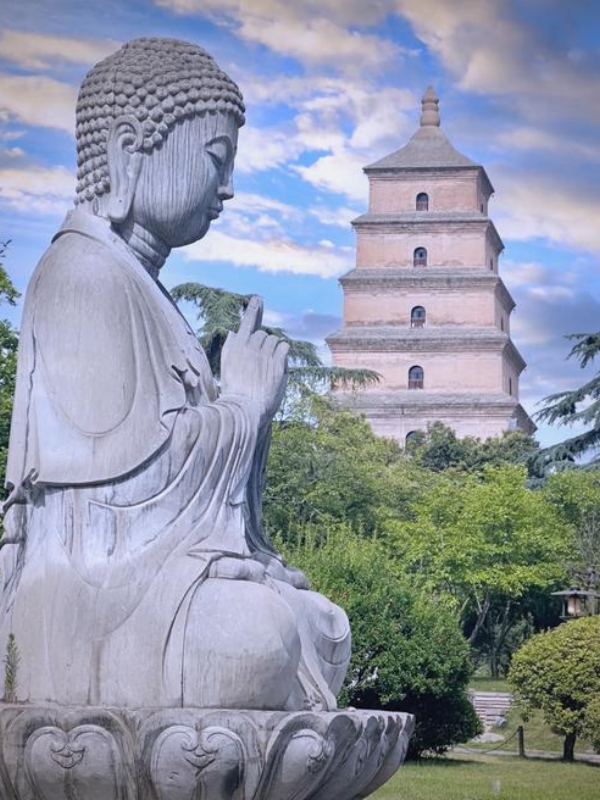
- Giant Wild Goose Pagoda, Xi’an
Beijing settles into its most comfortable stretch of the year in September. Daytime highs range from 19°C to 26°C (66–79°F), the summer haze clears from most days, and blue-sky sightings become routine. Rainfall drops to roughly one shower per week. The first genuinely crisp mornings appear by mid-to-late month — the kind of air that makes a walk through the Summer Palace's Long Corridor feel different from August's thick heat. UV remains moderate to strong on clear afternoons, so sunscreen stays relevant even as the temperature drops.
Xi'an runs slightly cooler at 16–25°C (61–77°F), carrying the tail end of its rainy season but with precipitation lightening noticeably. Five rain days per month is the norm, and the showers tend to be brief. The city walls and the Muslim Quarter work well for walking in this weather — warm enough for short sleeves at midday, cool enough in the morning and evening for light layers. Hanfu rentals and photography sessions are popular here in September precisely because the weather removes the summer heat penalty.
Dalian on the Liaodong Peninsula registers 19–24°C (66–75°F). The sea breeze coming off the Bohai Sea keeps humidity lower than Beijing or Xi'an, which makes a difference for outdoor sightseeing. The coastal promenade and Bangchui Island are at their best in this weather window, and the water is still warm enough for swimming in early September before the season winds down.
East Coast and the Yangtze — Shanghai, Hangzhou, Guilin
-
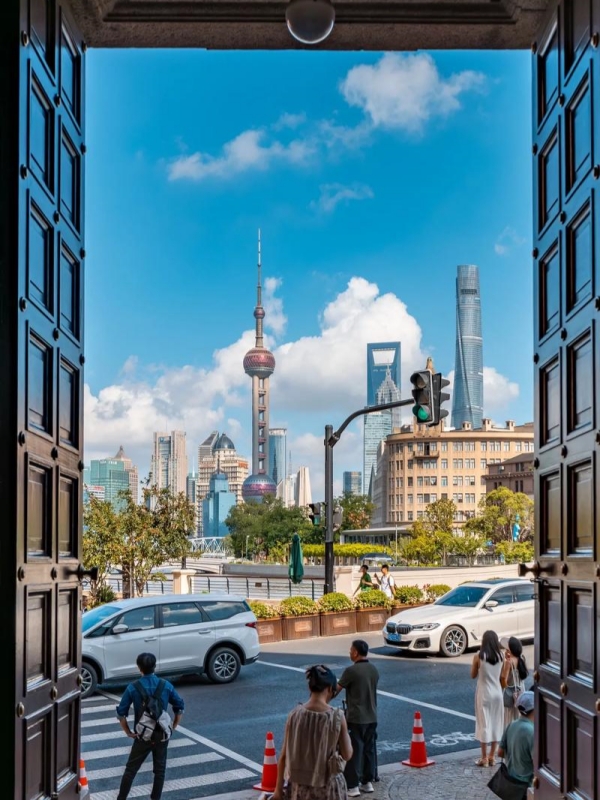
- Shanghai Weather in September
-
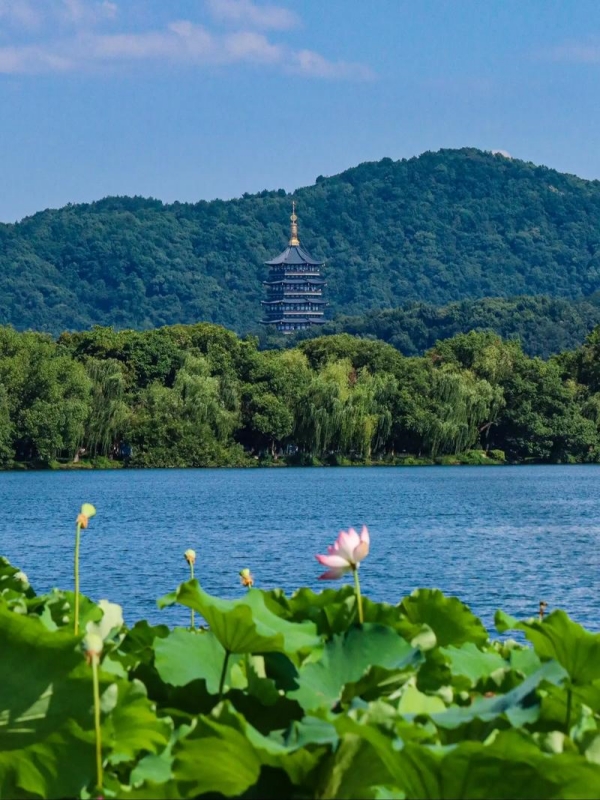
- Hangzhou Xi Hu Lake
Shanghai in September runs 22–28°C (72–82°F) and retains enough humidity to make the air feel heavier than the numbers suggest. Roughly ten rain days are scattered through the month, and the first half still carries genuine typhoon risk — a storm can ground flights and flood low-lying streets for 24–48 hours. After mid-month, typhoon probability drops sharply, and the city settles into clearer, drier conditions with afternoon highs settling into the mid-twenties. The Bund at sunset becomes more reliable from the third week onward.
Hangzhou mirrors Shanghai's pattern at 21–27°C (70–81°F), with the added variable of West Lake's microclimate creating misty early mornings — a photographic draw that persists through September. The humidity here is sticky enough that quick-dry travel fabrics outperform cotton, and a rain shell in the daypack is worth carrying even on forecast-sunny days.
Guilin at 23–31°C (73–88°F) is warm but not oppressive, and the river conditions are among the best of the year. Summer silt settles as rainfall decreases, the Li River runs clearer, and late-afternoon side light sharpens the karst formations against the sky. The Reed Flute Cave's interior temperature stays constant year-round regardless of the outdoor conditions outside, which makes it a reliable rainy-day option.
🏙️ Shanghai September Climate: Planning to visit East China's commercial hub during early autumn? Get detailed daily temperature averages, humidity levels, and packing advice in Shanghai Weather September.
Southern China — Guangzhou and the Pearl River Delta
-
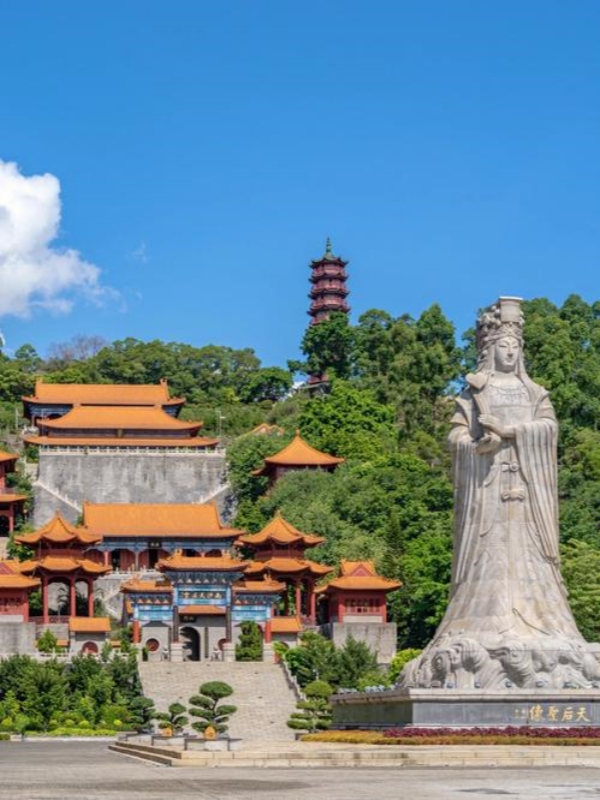
- Nansha District, Guangzhou
-
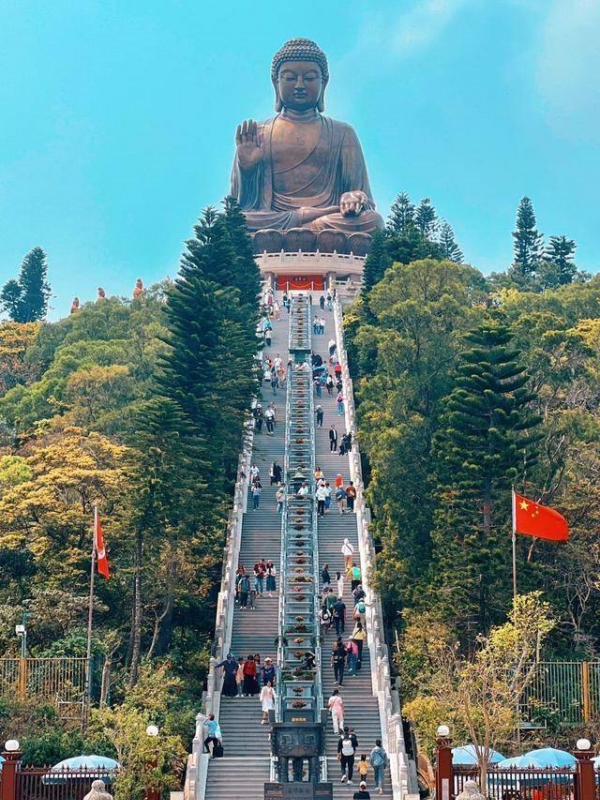
- Hong Kong to Macau
Guangzhou runs 25–32°C (77–90°F) with humidity that stays high throughout the month, and roughly twelve rain days concentrated in the first half. The South China Sea typhoon season peaks from July through September, meaning the opening fortnight of September can see tropical storms that disrupt flights and flood streets. Late September brings a meaningful drop in both rainfall frequency and humidity levels, making the final week of the month noticeably more comfortable than the first.
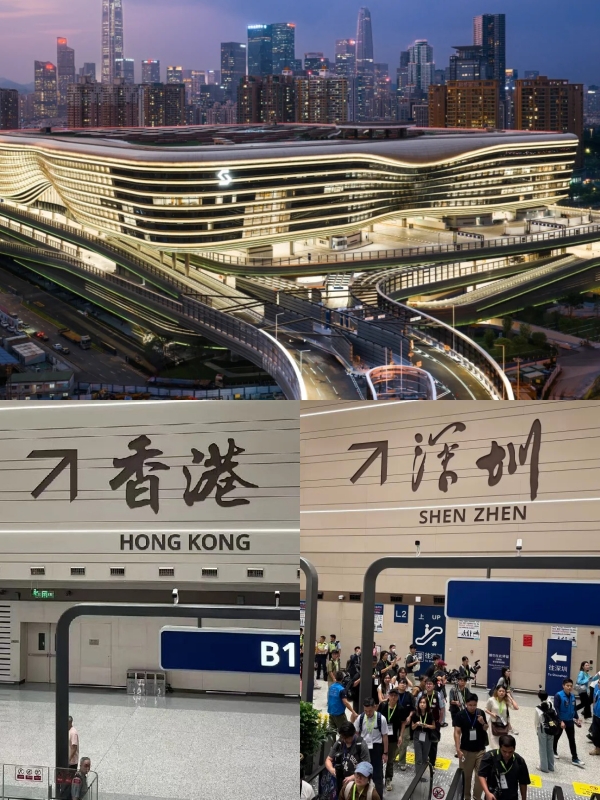
Hong Kong sits within about 1°C of Guangzhou's temperatures, though the coastline generates sea breezes that take the edge off. Shenzhen runs marginally cooler thanks to its coastal position. The Pearl River Delta is not a September highlight for weather alone — the heat and humidity are genuine — but it is a viable time to visit if your plans centre on food, architecture, or transiting through the region.
🍂 Looking Ahead to Late Autumn: If your trip extends into the Golden Week holiday and cooler autumn breezes, check out temperature forecasts in Shanghai China Weather in October.
Southwest Highlands — Chengdu, Chongqing, Kunming, Jiuzhaigou
-
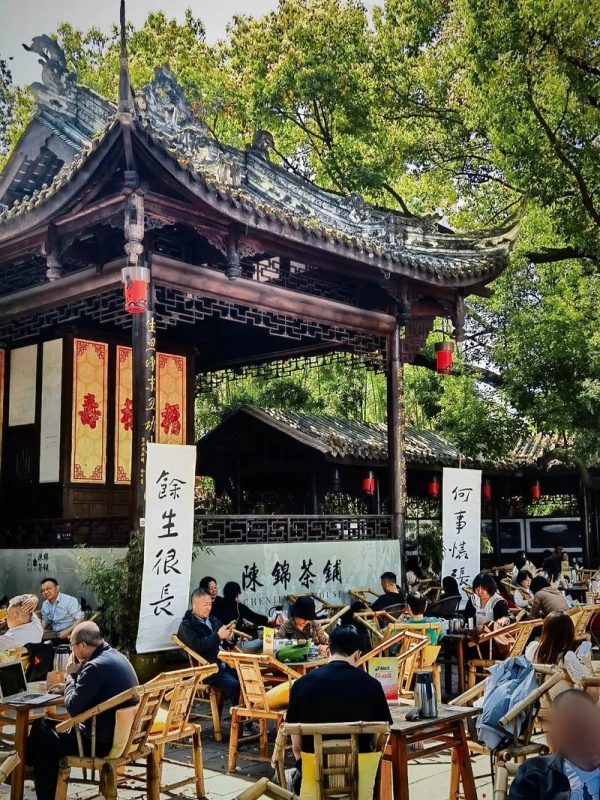
- Chengdu Tea Houses
-
- Dianchi Lake
Chengdu in the Sichuan Basin averages 21–26°C (70–79°F) under a persistent overcast sky. Light drizzle falls on roughly twelve days, rarely heavy enough to cancel plans but frequent enough to keep streets damp and make a rain jacket more useful than an umbrella. The humidity is the bigger discomfort factor; the city's famous tea-house culture is best enjoyed when you can sit outdoors without melting.
Chongqing, where the Yangtze and Jialing rivers converge, holds summer heat well into autumn. At 23–32°C (73–90°F) with high humidity, it remains one of China's hottest cities through September — a point worth noting for travellers routing through on their way to Wulong Karst or Dazu Rock Carvings. The riverfront fog that characterises the city in cooler months has not yet set in, so visibility tends to be better than in October or November.
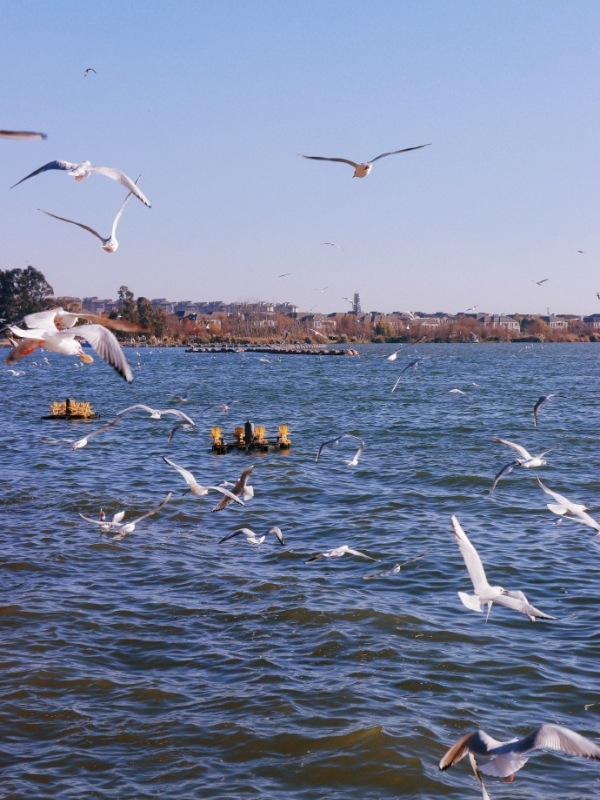
Kunming at 16–23°C (61–73°F) earns its "Spring City" nickname most reliably in September. Humidity is low, afternoons are mild, and the city is well-positioned as a base for day trips to the Stone Forest or Dali. The elevation (1,890 m) means UV is strong despite the moderate temperature — sun protection matters here as much as in the tropical south.
Jiuzhaigou Valley at 2,000–4,500 metres elevation ranges from 10°C to 20°C (50–68°F), with the upper reaches noticeably colder. This is the week when the first autumn colour begins to appear in the valley — maples along Shuzheng Valley start turning, and Five-Flower Lake reflects the emerging reds and yellows. By the last days of September, snow has been known to dust the peaks above the main loop. The daily visitor cap of 20,000 (dropping to 10,000 off-peak) means booking your entry ticket on Trip.com or Klook well in advance is essential for September travel.
Northwest and the Silk Road — Urumqi, Turpan, Dunhuang, Kashgar
The Northwest is China's most weather-stable region in September. Urumqi at 13–23°C (55–73°F) sees almost no rain, low humidity, and the kind of clear highland light that makes Tianshan Tianchi (Heavenly Lake) look otherworldly on camera. The Gobi Desert's edge is within driving distance, and the grasslands around Narat are golden by late September.
Turpan in the Xinjiang Turpan Basin registers 18–35°C (64–95°F), running hot in the first half of the month before the lows drop toward the end of September. The Karez Well System's ancient underground canals and the ruins of Jiaohe are best explored in the shade during midday heat — head out at dawn or dusk when the dunes and ruins are backlit. Humidity here falls below 30% on most days; lip balm and moisturiser become practical necessities rather than luxuries.
Dunhuang at 11–26°C (52–79°F) is dry and clear, with the Singing Sand Dunes at Mingsha Mountain glowing amber and red under late-afternoon sun and shifting to cool blue-grey after sunset. The Mogao Caves' interior stays at a constant 12°C regardless of outdoor conditions, making a light layer a sensible addition to your daypack. The Gansu Silk Road corridor from Dunhuang through Zhangye to Lanzhou runs dry throughout September, with Zhangye's Danxia Rainbow Mountains at their most saturated under low-angle autumn light.
Kashgar at 12–26°C (54–79°F) receives almost no rain and serves as the gateway to the Karakoram Highway and the Pamir Plateau. The Sunday bazaar in the old town is the headline draw, and the dry air means dust is the main environmental challenge — a scarf or buff over the nose and mouth while exploring markets is a practical choice.
Best Places to Visit in September
September's quiet window makes nearly any headline destination in China more enjoyable than in peak August or crowded early October. However, seven destinations stand out for the specific combination of weather advantage, scenery, and shoulder-season value they offer during this month. Below the H3 explains why September qualifies as the sweet spot, and then the following H3 ranks seven destinations that genuinely earn a place on a September itinerary.
Why September Is the Sweet Spot
The domestic school-holiday season ends in late August across most Chinese provinces, and the effect is visible within days. Queue times at the Forbidden City drop, the French Concession footpaths clear, and the highways between Beijing and the Great Wall return to normal traffic. International visitor numbers hold steady through September, so the atmosphere is genuinely quieter without feeling empty.
From a climate standpoint, the East Asian summer monsoon has retreated from the north and central regions, leaving blue skies over the Northwest, golden autumn light in Beijing and the Great Wall, and comfortable warmth along the Yangtze. The south still carries some tropical weather risk, but that is factored into the ranking below.
Shoulder pricing works in the traveller's favour here. International flights and four-star hotel rates in Beijing, Shanghai, Xi'an, and Chengdu run 15–30% below Golden Week levels in early-to-mid September. Mid-range four-star accommodation in Beijing or Shanghai averages $90–160 (¥640–1,140) per night on Trip.com — roughly 15–25% below what those same properties charge during the National Day holiday starting 1 October.
Seven September Destinations Ranked
The following seven destinations rank highest for September travel based on weather advantage, headline attraction quality, and value. The top two earn their position through broad international accessibility and reliable September conditions; destinations three through seven reward travellers who have more time and a specific interest.
Northern & Central‑China Destinations
- Beijing: the clearest skies of the year after summer haze clears; mild 19–26°C (66–79°F) makes outdoor sightseeing genuinely comfortable. The Mutianyu or Jinshanling sections of the Great Wall have short queues on weekday mornings; the Temple of Heaven and Summer Palace catch golden-hour light. Key costs: Forbidden City about $8 (¥60), Mutianyu Great Wall shuttle and ticket about $15 (¥100).
- Shanghai: warm but no longer peak typhoon risk after mid-month; 22–28°C (72–82°F) with conditions settling into drier, clearer weather from the third week. The Bund at dusk, the French Concession architecture walk, and the West Bund cultural district are the highlights. Most major attractions are free or low-cost.
- Xi'an: dry and sunny at 16–25°C (61–77°F); the Terracotta Army and evening Tang Dynasty show are the headline draws. The Ancient City Wall is manageable for cycling in September's mild evenings — bike rental runs about $10 (¥70). Hotel rates here run lower than Beijing or Shanghai.
- Jiuzhaigou Valley (Sichuan): first autumn colour appears in the valley; crisp 10–20°C (50–68°F) with the Five-Flower Lake and Shuzheng Valley at their most photogenic. The entry fee of about $28 (¥200) counts as peak-season pricing, but the September window is worth it. Daily visitor caps apply — book on Trip.com or Klook.
Western & Southern‑China Destinations
- Zhangye & Dunhuang (Gansu Silk Road): the driest, clearest weather of any region in China; 11–26°C (52–79°F). The Danxia Rainbow Mountains at Zhangye hit peak saturation in late-September light; the Singing Sand Dunes at Dunhuang glow at sunset. Mogao Caves entry costs about $22 (¥150) and requires advance booking (daily cap 6,000 visitors).
- Guilin & Yangshuo (Guangxi): warm at 23–31°C (73–88°F) with Li River water running clear as summer silt settles; the karst hills sharpen in late-afternoon side light. The Li River cruise from Guilin to Yangshuo is the signature experience — about $42 (¥300). Reed Flute Cave costs about $11 (¥80) and is a reliable option if afternoon rain arrives.
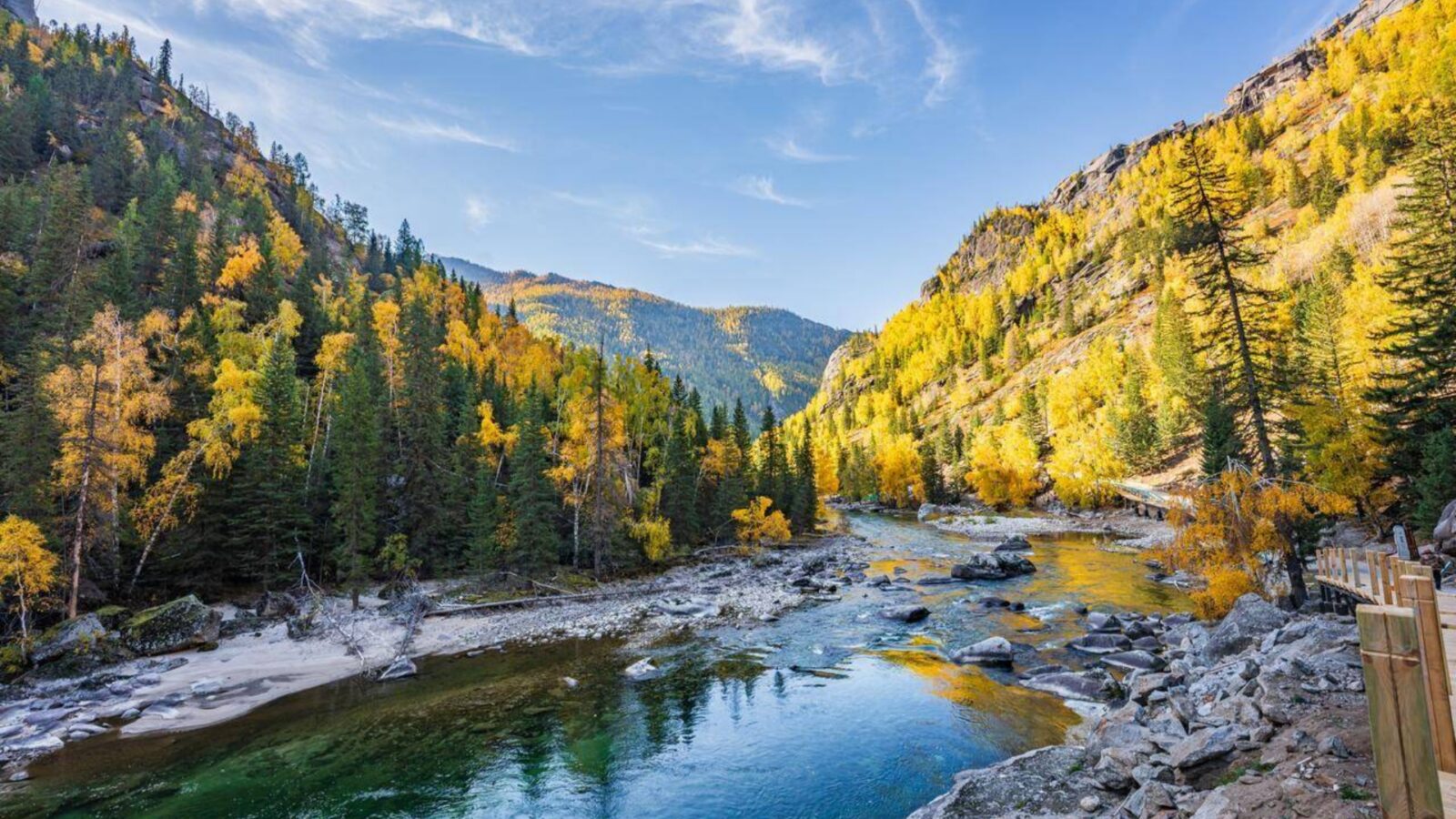
- Kanas (Xinjiang): the birch and larch forests turn gold in the final week of September, opening a narrow colour window that lasts roughly three weeks. At 5–15°C (41–59°F) it is cold by Chinese standards, but the Three Bays (Fairy Bay, Moon Bay, Wolong Bay) and the village of Hemu above the lake are extraordinary at this moment. Park entry plus shuttle runs about $42 (¥300).
What to Wear in September by Region
Weather in China in September straddles summer and autumn, and the divide runs geographically, not chronologically. What fits perfectly in Shanghai will leave you shivering in Urumqi on the same calendar date. Layering is the single most useful principle across all regions, but the specifics shift significantly depending on where you are headed.
Northern & Eastern China: City‑Focused Packing Guidance
- Northern China (Beijing, Xi'an, Dalian): light long-sleeve shirts plus a fleece or thin hoodie for mornings and evenings; one warmer jacket for late September nights; a short-sleeve top for midday sun; a compact umbrella for the occasional shower. Closed walking shoes handle the mix of paved city streets and uneven Great Wall terrain.
- East Coast & Yangtze (Shanghai, Hangzhou, Guilin): breathable shirts and quick-dry trousers; a light rain shell or packable waterproof is more useful than an umbrella in sudden showers; humidity-resistant fabrics outperform cotton; waterproof closed shoes that can handle a wet pedestrian crossing without discomfort.
- Southern China (Guangzhou, Hong Kong, Shenzhen): summer-weight clothing remains appropriate; high-SPF sunscreen is non-negotiable; quick-dry fabrics reduce discomfort after sudden tropical showers; a single light layer serves only for heavily air-conditioned interiors — leave the fleece in the hotel.
Southwest, Northwest & Universal Travel Essentials
- Southwest Highlands (Chengdu, Chongqing, Kunming, Jiuzhaigou): layering is mandatory in Kunming and Jiuzhaigou, where the temperature can swing 12°C between morning and afternoon; a rain jacket handles Chengdu drizzle; a warm fleece or insulated layer is essential if you are walking above 2,500 m at Jiuzhaigou or Mount Emei; sun protection is critical on the Yunnan Plateau where elevation amplifies UV.
- Northwest & Silk Road (Urumqi, Turpan, Dunhuang, Kashgar): summer-weight clothing for daytime sightseeing, but a windbreaker or light shell for evenings at altitude; wide-brim hat, UV sunglasses, lip balm, and a scarf or buff for desert grit are practical; moisturiser is genuinely useful — humidity in the Turpan Basin and Dunhuang regularly drops below 30%.
- Universal items worth packing: comfortable walking shoes (city sightseeing in China averages 12–18 km per day on foot); a refillable water bottle for arid regions; a universal power adapter (China uses Type A, I, and C plugs); portable Wi-Fi device or eSIM for navigation and translation apps.
Crowds, Costs and Golden Week Timing
The logistical picture in September is shaped by two competing forces: the domestic travel slump after school resumes in early September, and the approaching National Day Golden Week that begins on 1 October. Navigating that window correctly is the difference between paying peak prices and enjoying shoulder-season rates.
- Crowd pattern: domestic family travel falls sharply once the school year begins in early September. International visitor volumes remain steady. The result is quieter attractions in tier-1 cities and more availability on high-speed rail routes compared with July or August.
- Mid-Autumn Festival: falls on the 15th day of the 8th lunar month — in 2025 it lands on 6–8 October; in 2026 expect it in late September. The 3-day public holiday creates a brief spike in domestic travel affecting train stations and popular domestic resort destinations, but it has less impact on most foreign-visitor itineraries than Golden Week.
- Golden Week (National Day): 1–7 October every year. Hotel rates in Beijing, Shanghai, and Xi'an roughly double during this week. Mid-to-late September offers the same weather quality at significantly lower cost. If you are booking flights, arrive before 28 September or after 8 October to avoid the worst of the surge.
- Hotel rates: mid-range four-star accommodation in Beijing or Shanghai averages $90–160 (¥640–1,140) per night in early-to-mid September on Trip.com, roughly 15–25% below Golden Week pricing. Four-star rates in Northwest and Southwest regional cities run $50–90 (¥360–640) per night.
- Internal transport: high-speed rail Beijing–Shanghai costs about $85–110 (¥600–800) second class for the 4.5-hour journey; Beijing–Xi'an runs about $55–80 (¥400–570) second class, also 4.5 hours. Book HSR tickets two weeks ahead on Trip.com's English interface for September travel.
Frequently Asked Questions
Q: How is the weather in China in September?
September brings warm to mild conditions across most of China, ranging from roughly 14°C to 30°C (57–86°F) nationwide. The north and northwest are dry and clear, the east coast is warm but typhoon risk eases after mid-month, and the south remains hot and humid with rain days concentrated in the first half. It is one of the best travel months because the summer monsoon has cleared central and northern regions while autumn colour and Golden Week crowds have not yet arrived.
Q: What is the weather like in Beijing in September?
Beijing typically sees 19–26°C (66–79°F) in September with about five rain days and low humidity. Clear, blue-sky days become common, mornings turn crisp by late September, and the city is comfortable for outdoor sightseeing from morning to evening. UV remains moderate to strong on clear afternoons.
Q: What is the weather like in Shanghai in September?
Shanghai runs 22–28°C (72–82°F) with warm, humid conditions in early September and possible typhoons in the first two weeks. Conditions settle after mid-month into clearer, drier weather with afternoon highs in the mid-twenties. Ten rain days is typical across the month.
Q: Is September cold in Beijing?
No — daytime highs sit in the low-to-mid 20s°C and Beijing is comfortably warm for outdoor sightseeing. Mornings and evenings require a light jacket by late September, but freezing conditions do not appear until late October or November. Sweaters and heavy coats are not yet necessary.
Q: Does it rain a lot in southern China in September?
Southern China (Guangzhou, Hong Kong, Shenzhen) sees the tail end of the wet season with roughly 10–12 rain days, mostly heavy short showers. Typhoons are possible in the first half of the month; the second half tends to be calmer and drier, though humidity remains high throughout September.
Q: How does September compare to October for travel in China?
September runs about 4°C warmer than October on average and is noticeably less crowded because National Day Golden Week (1–7 October) has not begun. October brings stronger autumn colour in the north and better conditions in the south, but also the year's largest domestic travel surge. For the balance of weather quality and crowd levels, late September is the sweeter spot.
Q: When is the Mid-Autumn Festival and how does it affect September travel?
The Mid-Autumn Festival falls on the 15th day of the 8th lunar month — in 2025 it falls 6–8 October, and in 2026 it is expected in late September. The three-day public holiday creates a brief domestic travel spike, particularly affecting train routes and popular domestic resort destinations. For most foreign visitors, the impact is significantly less than Golden Week in early October.
Q: What should I pack for China in September?
Pack layers — short-sleeve shirts for daytime plus a fleece or light jacket for mornings and evenings. Comfortable walking shoes handle city sightseeing. A compact umbrella or rain shell covers the east and south. UV sunglasses and a scarf serve both the northwest deserts and high-altitude UV on the Yunnan Plateau or Sichuan highlands. Include moisturiser for arid regions, a refillable water bottle, and a universal power adapter (Type A/I/C plugs).