Travel Adaptors for China
China's electricity runs at 220V and 50Hz. For foreign visitors, that means bringing the right travel adaptor is not optional — it is essential. The country uses three distinct outlet types (A, C, and I), and the one your devices plug into depends on when the building was built and where in China you are staying. Most travelers will encounter at least two of these socket types on a single trip. The good news is that almost all modern electronics — phones, laptops, cameras — are dual-voltage and need only the correct plug shape, not a full voltage converter. This guide covers which adaptors to pack, where to buy them, and how to handle power on trains, planes, and in hotels.
The core question most visitors ask is straightforward: what plug do I need for China? The short answer is a universal travel adaptor that handles Type I, the modern grounded standard, as a minimum. The longer answer involves a few regional differences and one important voltage distinction that trips up travelers who bring US-only appliances. Read on for the details.
Quick Facts
Which Plugs and Sockets Does China Use?
Three types of plugs
Mainland China operates at a fixed 220V and 50Hz. The country uses three outlet types simultaneously, which means a single trip can require adaptors for two or three different socket shapes. The reasons are historical: older buildings still have older sockets, while newer hotels and office buildings have adopted the modern standard. Understanding which socket you are likely to encounter — and why — shapes what you pack.
The Three Outlet Types (A, C, and I)
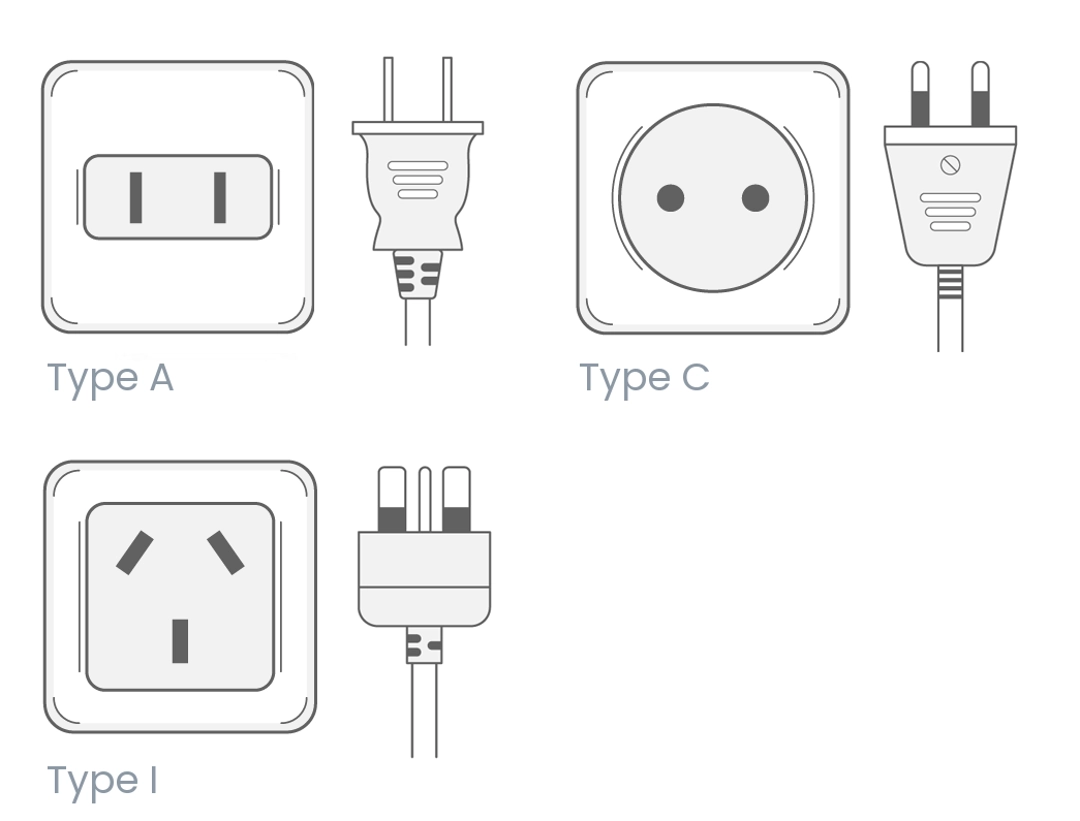
Type A outlets have two flat parallel slots. They resemble US ungrounded plugs and are found in older hotels and budget guesthouses. Type C outlets have two round holes, the same shape used across most of continental Europe. These are also common in older buildings. Type I is the current standard in newly built or renovated properties. The socket has three flat holes — the top two are angled diagonally in a V — with a grounding pin below. This is the only grounded socket type in China, and it is increasingly the only one installed in city hotels aimed at international guests.
Voltage and Frequency in Mainland
All of mainland China runs at 220V and 50Hz. The voltage is fixed everywhere in the country, with no regional variation. The 50Hz frequency is standard. Anything in the 220V to 240V range from a generator or inverter is compatible with Chinese mains. This differs sharply from North America (120V / 60Hz) and Japan (100V / 50–60Hz depending on region). Devices rated for 220V to 240V operate normally in China. Devices rated only for 110V to 120V will not work and may be damaged.
🧳 Complete Travel Packing Checklist: Along with power adapters and electronics, make sure you pack the right clothing, summer essentials, and gear with our comprehensive China Summer Packing List.
Do Devices Need a Voltage Converter?
For most travelers, the answer is no. Modern electronics are designed to work across a range of voltages and need only the correct plug shape. However, a small category of appliances — typically high-wattage heating devices bought in North America — are single-voltage and require a converter to operate safely in China.
- Devices needing only a plug adaptor: Phone chargers, laptop chargers, tablet chargers, camera battery chargers, e-readers, electric toothbrushes, USB-powered gadgets. These are almost always marked "Input: 100–240V, 50/60Hz" on the label.
- Devices needing both a plug adaptor AND a voltage converter: US and Canadian hairdryers, curling irons, flat irons, and clothes steamers that are rated 110–120V only. These will burn out or trip the breaker if plugged directly into 220V.
- High-wattage warning: Even a voltage converter rated for the correct wattage adds bulk and weight. Many travelers opt to leave single-voltage hair appliances at home and buy a 220V replacement in China instead.
Dual-Voltage Devices (Most Modern Electronics)
Phones, tablets, laptops, cameras, e-readers, and most USB chargers sold today are dual-voltage. The label on the power brick or charger will read something like "Input: 100–240V, 50/60Hz." This means the device accepts any mains voltage from 100V to 240V and any frequency from 50Hz to 60Hz. For travel adaptors for China, these devices require only the correct plug shape. No voltage converter is needed. Check the small print on your charger before packing — if you see "100–240V" you are covered.
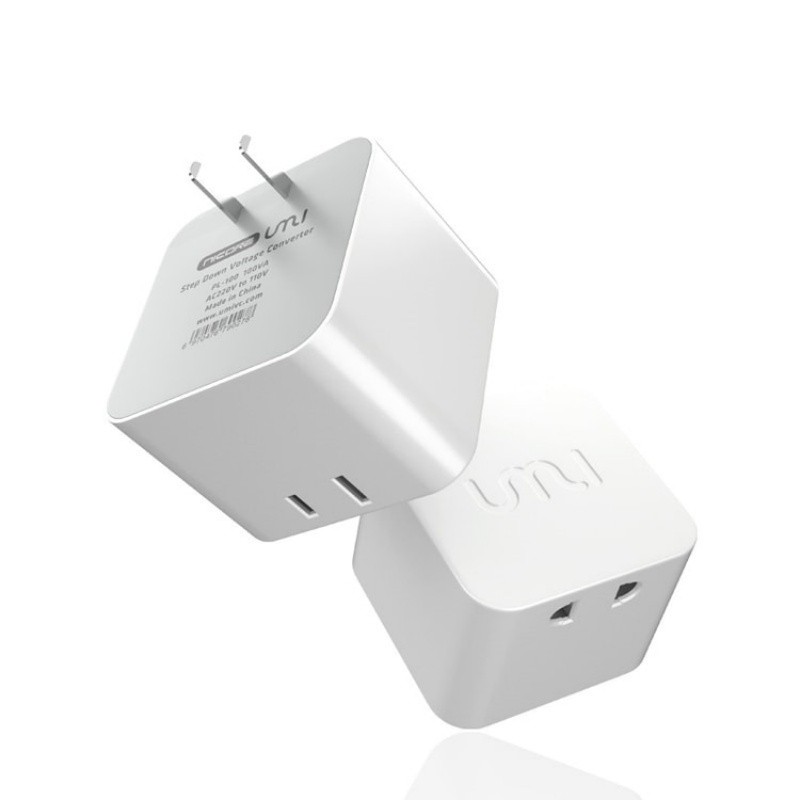
Single-Voltage and High-Wattage Devices
Hairdryers, curling irons, flat irons, clothes steamers, and some travel kettles bought in the US or Canada are often rated for 110–120V only. The label will state something like "120V, 60Hz" without the 100–240V range. Plugging these into 220V Chinese mains will burn out the heating element instantly and may trip the room's circuit breaker. These appliances need a voltage converter capable of handling the wattage — typically 25–45 dollars on Amazon or at Best Buy — or a replacement 220V model purchased in China. Some hotels keep a 110V shaver-only outlet in the bathroom, but this is not reliable and should not be counted on for a dual-voltage hair appliance.
🔌 Choosing the Right Adapter: For a deeper look at multi-plug compatibility, grounded vs. ungrounded pins, and where to buy reliable adapters before departure, explore our guide on China Plug Adapter.
Travel Adaptors for China from the US, UK, EU, and Australia
Plug adapter
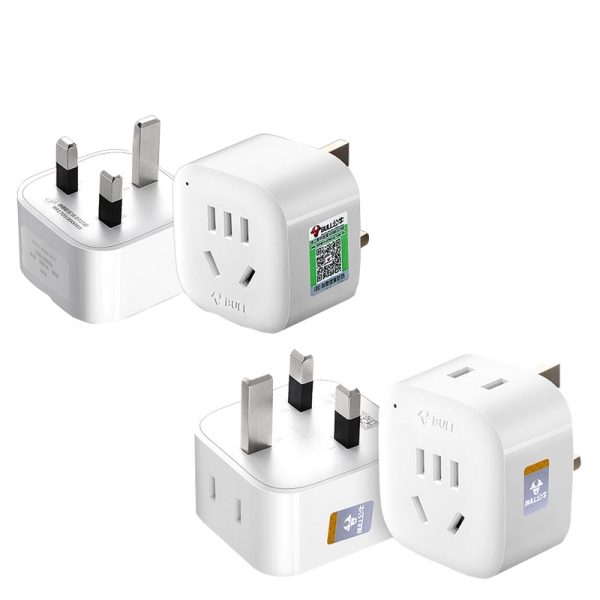
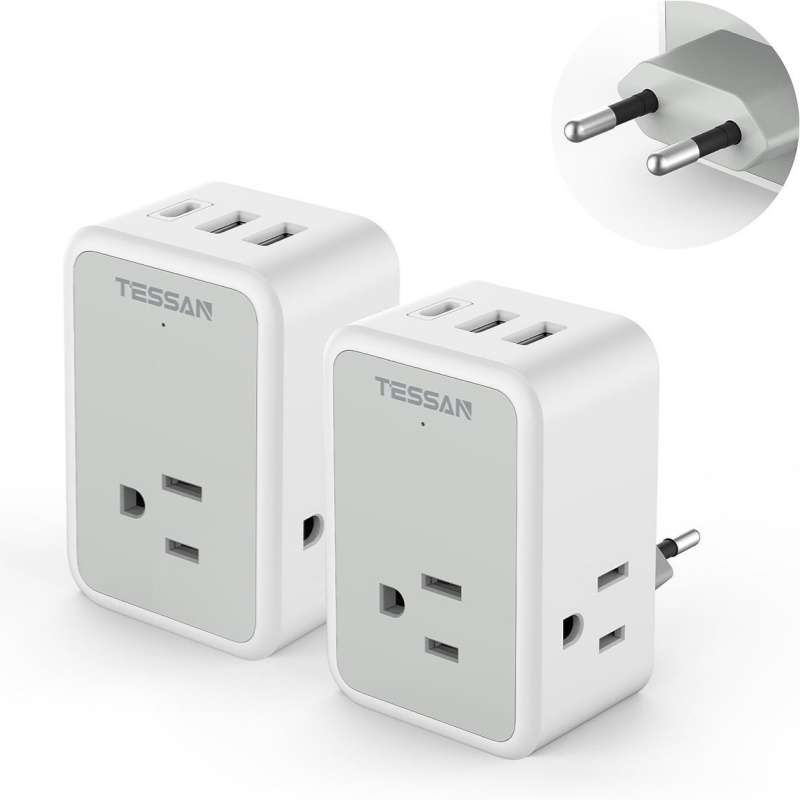
The adaptor you need depends on where you are traveling from. Most international visitors require a dedicated travel adaptor for China because their domestic plug shape does not match China's modern Type I standard. A universal adaptor — one that covers Type A, C, and I — solves the problem in one compact unit. Below is what to pack based on your origin country.
- US Travelers: US plugs are Type A (two flat pins) or Type B (two flat pins plus a ground). Chinese Type A exists in older buildings but the fit is often loose, and Type B does not exist in mainland China. Pack a US-to-China travel adaptor or a universal unit. Laptop and phone chargers are dual-voltage and need only the plug-shape adaptor.
- UK Travelers: UK Type G plugs (three rectangular pins) fit no Chinese socket at all. A dedicated UK-to-China adaptor is mandatory. Boots and Argos carry travel adaptors for China both online and in stores, useful for last-minute purchase.
- EU Travelers: EU Type C and Type E/F plugs (two round pins) will enter Chinese Type C sockets in older buildings. However, most modern hotels install Type I only. Pack a dedicated EU-to-China adaptor or a universal unit to be safe.
- Australian and Canadian Travelers: Australian Type I plugs are physically compatible with Chinese Type I — many Australian devices work in China without any adaptor. Canadian devices with Type B plugs (grounded) will not fit. A universal adaptor covers all edge cases.
Adaptors for US Travelers
US plugs use Type A (two flat parallel pins) or Type B (two flat pins plus a grounding hole). Chinese Type A sockets do exist in older hotels, but the fit is often loose — polarized US plugs with one wider pin may not seat properly in a Chinese Type A socket. Type B grounding plugs have no matching socket anywhere in mainland China. The safest approach is to pack a universal travel adaptor that covers Type I, or a dedicated US-to-China adaptor. Most visitors carry a universal unit because it works across multiple socket types they will encounter in older buildings as well as newer ones.
Adaptors for UK and EU Travelers
UK Type G plugs carry three rectangular pins in a triangular pattern. That shape does not exist in mainland China under any circumstances — a UK-to-China adaptor is required. For EU travelers, the situation is less dire but still requires preparation. EU Type C and Type E/F plugs (two round pins) will physically enter Chinese Type C sockets in older buildings. However, most modern hotels, airports, and office buildings now install only Type I, which will not accept a round-pin EU plug. Packing a dedicated EU-to-China adaptor or a universal unit eliminates the risk of arriving at a hotel with no compatible socket.
Adaptors for Australian, Canadian, and Other Travelers
Australian and New Zealand plugs use Type I, which shares the same physical standard as Chinese Type I. Many Australian travelers find their devices work in China without any adaptor. However, polarity differences and socket quality variations mean a small universal adaptor is still a sensible backup. Canadian devices with Type B grounded plugs (the US-style three-pin configuration) do not fit Chinese sockets at all — pack a universal adaptor. Japanese travelers (Type A) face the same loose-fit issue as US visitors and should also carry an adaptor.
Hong Kong, Macau, and Taiwan Outlet Differences
Voltage Converter
If your itinerary crosses into Hong Kong, Macau, or Taiwan, you will need additional adaptors. These regions have different plug standards, different voltages, or both. Packing one universal adaptor for mainland China and a second one for these territories is the practical approach.
Hong Kong
Hong Kong uses British-style Type G outlets (three rectangular pins in a triangular pattern) at 220V and 50Hz. The plug shape is identical to the UK standard. A mainland China travel adaptor — Type A, C, or I — will not fit a Hong Kong socket under any circumstances. Pack a separate UK/HK-style Type G adaptor if your itinerary includes Hong Kong. The voltage and frequency match mainland China, so no converter is needed for dual-voltage devices.
Macau and Taiwan
Macau uses a mix of Type G, Type D (older Indian three-round-pin style), and Type F (two round pins with grounding clips) — all at 220V and 50Hz. A Type G adaptor covers most hotel encounters. For older buildings, a universal adaptor with multiple head options is the safest choice. Taiwan uses US-style Type A and Type B sockets at 110V and 60Hz — a different voltage from mainland China, not just a different plug shape. Most dual-voltage devices handle 110V fine, but you still need a Type A/B plug adaptor, which a mainland China adaptor does not provide.
Where to Buy Travel Adaptors Before and During the Trip
Buying before departure is cheaper. Buying in China is convenient but costs more. Here is where to get a travel adaptor for China depending on your timeline and preference.
- Pre-trip online: Amazon, Best Buy, and Walmart carry both China-specific and universal travel adaptors. Boots and Argos serve the UK market. Basic units cost $8–15 (¥55–100); premium universal adaptors with USB-C Power Delivery run $20–35 (¥140–250). Order at least a week ahead to account for shipping windows.
- Pre-trip in stores: Best Buy, Target, and electronics chains carry travel adaptors on the travel accessories wall. Boots (UK) stocks adaptors for China in most high-street stores and online. Boots is useful for last-minute UK pickups.
- Hotel loaner: Most international-brand hotels — Marriott, Hilton, Hyatt, IHG — keep a small stock of universal adaptors at reception. Some lend them free; others ask for a small deposit. Ask at check-in before unpacking.
- In-China retail: Airport electronics shops at Beijing PEK, Shanghai PVG, Guangzhou CAN, and Shenzhen SZX stock basic adaptors. City supermarkets (Gome, Suning, Walmart China) and convenience stores (7-Eleven, Lawson, FamilyMart) also carry them. Expect to pay roughly double the online price at the airport.
Buying Adaptors Before the Trip
Ordering online before departure is the most cost-effective option. Amazon, Best Buy, Walmart, and Target (US) stock universal adaptors alongside China-specific models. Boots and Argos serve the UK market well. Basic universal travel adaptors run $8–15 (¥55–100); models with multiple USB ports or USB-C Power Delivery cost $20–35 (¥140–250). Place the order at least a week before departure — shipping times vary, and arriving without an adaptor on a late-night flight is avoidable. Boots stores offer same-day in-store pickup for online orders, which is useful for travelers who decide last minute.
Buying Adaptors Once in China
If you arrive without an adaptor, all is not lost. International-chain hotels often have universal adaptors at reception — check when you check in. If not, major airports stock basic adaptors at electronics or convenience shops. Beijing PEK, Shanghai PVG, Guangzhou CAN, and Shenzhen SZX all have adaptor options, though the selection is limited and the price is higher — roughly $15–30 (¥100–200), about twice the online rate. In the city, Gome and Suning electronics stores, large Walmart China branches, and convenience store chains (7-Eleven, Lawson, FamilyMart) all carry basic travel adaptors. Booking ahead online saves money; arriving unprepared costs more but remains viable.
🔋 Power Bank Rules & Airline Limits: When traveling with portable power banks on domestic flights and high-speed trains, strict watt-hour (Wh) and labeling regulations apply. Read our guide on What Portable Chargers Are Allowed in China to avoid getting yours confiscated at security.
Power and Charging Tips for Hotels and Trains
Modern Chinese infrastructure is well-equipped for charging, but expectations should vary by accommodation tier. Here is what to expect and how to prepare.
- USB outlets: Hotels renovated after ~2018 typically include at least one USB-A port near the bed or desk. Budget and older properties often have none — a travel adaptor for China plus a small multi-port USB charger is the most reliable setup.
- Power bank rules: Power banks must be carried on, not checked, for domestic flights in China. Units under roughly 100Wh are accepted universally; those between 100Wh and 160Wh require airline approval. Confirm capacity before packing.
- Train outlets: China Railway High-Speed (CRH) trains have power outlets at most second-class seats and all first-class seats. Older "green-skin" conventional trains often have no outlets — charge before boarding or bring a power bank.
- Rural guesthouses: Small guesthouses and homestays in rural areas may have only one socket per room. Bring a power strip with a long cord if multiple devices need charging simultaneously.
Hotel Rooms and USB Outlets
Newer Chinese hotels — particularly international chains and urban business properties renovated after ~2018 — typically install a mix of Type I (the modern grounded standard), Type A, and USB-A ports at the desk and bedside. Many offer USB-A charging without any adaptor at all. Older three-star and budget hotels, including many independent properties outside major cities, still rely on domestic sockets without USB ports. Bringing a travel adaptor for China covers both scenarios. A compact multi-port USB charger paired with your travel adaptor solves the charging problem regardless of which socket type the room has.
Power Banks, Trains, and Flights
Power banks must travel in your carry-on bag on all Chinese domestic flights — they cannot be checked. The Civil Aviation Administration of China limits batteries to under 100Wh without approval, and between 100Wh and 160Wh with airline sign-off. Small units (10,000mAh or less) are universally accepted. On China Railway High-Speed (CRH) trains, every second-class seat has a power outlet within reach; first-class and business-class cars have dedicated outlets at each seat. Older "green-seat" slow trains usually have no power infrastructure — charge before boarding if your route uses them.
Frequently Asked Questions
Q: What travel adaptor do I need for China?
Mainland China uses Type A, C, and I outlets at 220V / 50Hz. Most foreign travelers need a universal travel adaptor that covers all three plug shapes. Type I (three flat angled pins, grounded) is the modern standard and the one a new universal adaptor must definitely support. An adaptor covering Type A and Type C alone will leave you without power in newer hotels.
Q: Is the plug type in China the same as Hong Kong?
No. Mainland China uses Type A, C, and I. Hong Kong uses British-style Type G (three rectangular pins). A travel adaptor for mainland China will not fit Hong Kong sockets. Pack a separate UK/HK-style Type G adaptor for that leg of your trip. The voltage and frequency (220V / 50Hz) are the same between the two regions, so no voltage converter is needed.
Q: Do I need a voltage converter for my laptop or phone?
Usually no. Modern laptop and phone chargers are dual-voltage — look for the label "Input: 100–240V, 50/60Hz" on the power brick. These devices only need the plug-shape travel adaptor for China, not a voltage converter. The voltage converter question only applies to single-voltage 110–120V appliances like US or Canadian hairdryers and curling irons.
Q: Can I use a US, UK, or EU hairdryer in China?
Not directly. Most US and Canadian hairdryers are rated for 110–120V only. Plugging a 120V hairdryer into a 220V Chinese socket will burn out the heating element and may trip the room breaker. UK and EU hairdryers rated for 220–240V will work physically but still need the correct plug adaptor. Use a voltage converter (about $25–45 / ¥180–320) for 110–120V appliances, or buy a 220V-rated Chinese model once you arrive.
Q: Where can I buy a power adaptor once I am already in China?
International-brand hotels (Marriott, Hilton, Hyatt, IHG) often keep universal adaptors at reception — ask at check-in. Airport electronics shops at Beijing PEK, Shanghai PVG, Guangzhou CAN, and Shenzhen SZX stock basic adaptors, though at a premium (roughly $15–30 / ¥100–200). City options include Gome and Suning electronics stores, Walmart China, and convenience stores (7-Eleven, Lawson, FamilyMart). Buying online in advance is meaningfully cheaper.
Q: Do Chinese hotel rooms have USB outlets?
Many hotels renovated after ~2018 include at least one USB-A port near the bed or desk. Older and budget hotels often have none. Bringing a travel adaptor for China plus a small multi-port USB charger is the safest setup regardless of hotel tier. The USB port situation has improved rapidly in major cities but remains inconsistent outside them.
Q: Are travel adaptors for China expensive at the airport?
They cost roughly $15–30 (¥100–200) at Chinese airport shops, typically about double the online price. Basic universal adaptors run $8–15 (¥55–100) on Amazon or at Boots or Best Buy. If you arrive without an adaptor, the hotel loaner option is worth trying first — it is often free or requires only a small deposit.
Q: Can I bring a power bank on Chinese trains and domestic flights?
Power banks must be in your carry-on bag on domestic flights — checked baggage is not permitted. Small units under roughly 100Wh are accepted universally. Larger units between 100Wh and 160Wh require airline approval. On high-speed rail (CRH) trains, power outlets are available at most seats in second class and all seats in first class, so a power bank is useful mainly for older slow trains or as a backup.