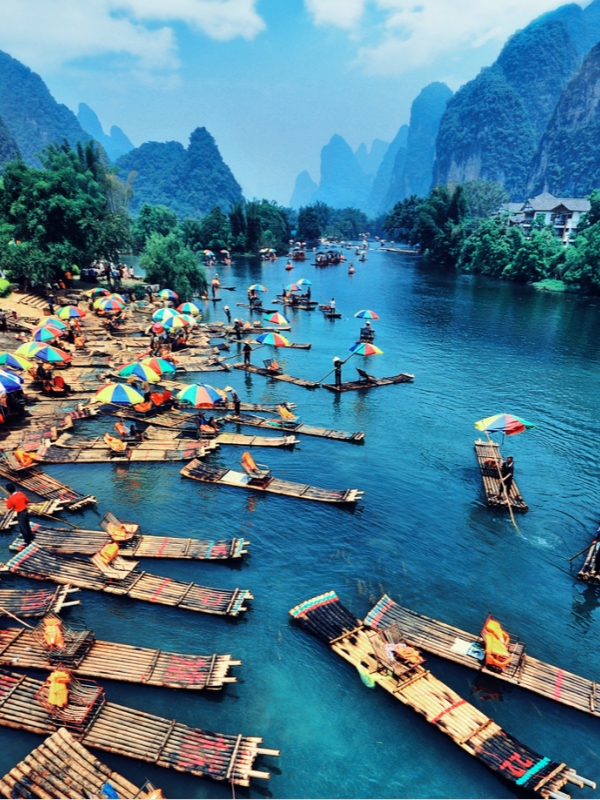
Things to Do in Guilin
Guilin sits in northeast Guangxi, framed by some of the most photographed karst peaks on Earth. Most travelers come for the Li River, but the city itself, the rice terraces beyond Longsheng, and the small towns tucked into the karst reward anyone who stays longer than a single overnight. This guide covers the activities that are actually worth your time — the cruise that justifies the ticket, the Yangshuo stops that warrant a stopover, the local dishes worth hunting down — and explains what the ticket desks and tour buses do not tell you up front, from which pier to use to how to keep a rain day from going to waste.
Quick Facts
📍 Explore City & Countryside Highlights: Planning your daily schedule across downtown limestone hills and surrounding countryside stops? Read guilin things to see.
Booking the Li River Cruise Without Pitfalls
-

- Li River Cruise

-
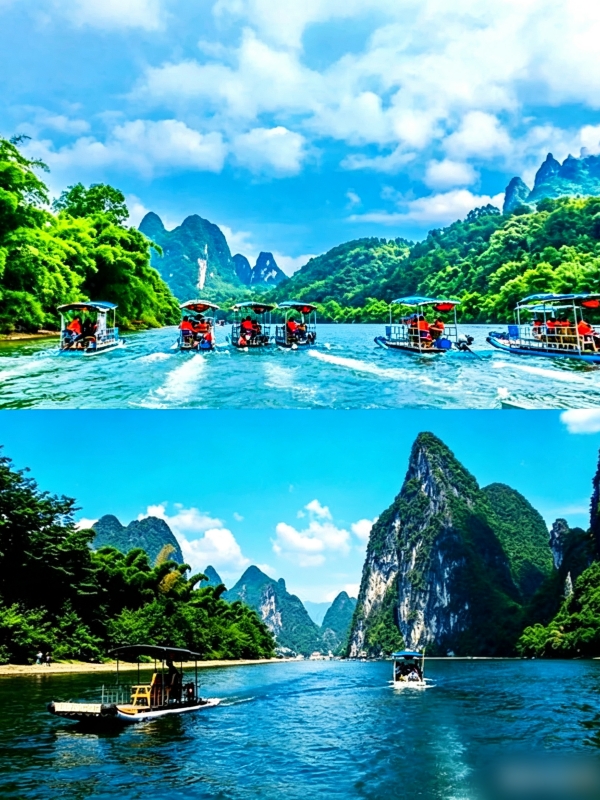
- Li River Cruise from Guilin to Yangshuo
-
- Li River Cruise from Guilin to Yangshuo
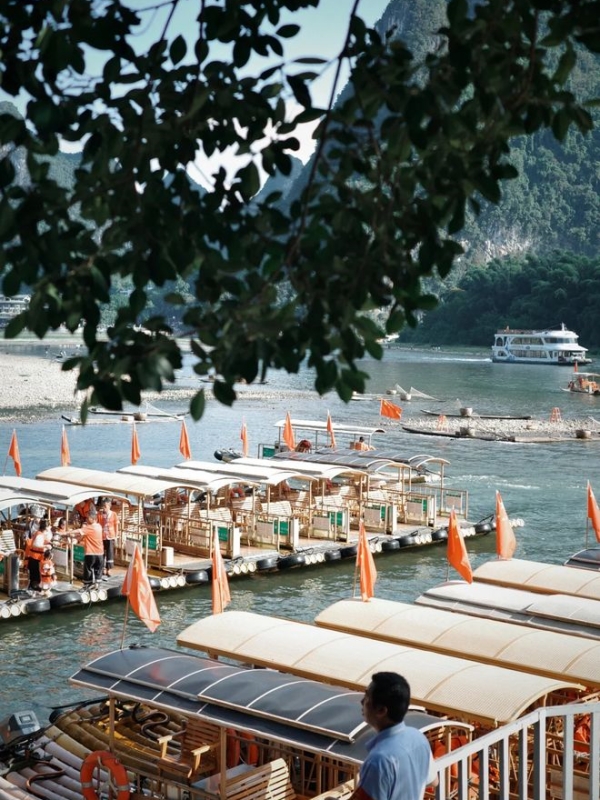
The Li River cruise is Guilin's signature experience, but ticket desks and resellers apply very different prices to the same journey. Most first-time visitors underestimate how much the boat class affects a four-hour ride, and how much the booking channel determines whether they can actually board. The gap between a smooth booking and a frustrating morning starts before you leave your hotel.
Cruise Class and Price Differences
Two classes run the Guilin-to-Yangshuo route. The 3-star boat carries roughly 120 passengers, has hard seats, and serves no meal — the fare starts around $30 (¥215). The 4-star boat carries about 80 passengers, has soft seats, and includes a simple Chinese lunch (rice, vegetables, a meat dish) — the fare is around $50 (¥360). Departures are around 09:00 from either Mopanshan or Zhujiang pier. The comfort difference matters on the water; four hours in a padded seat with lunch beats four hours in a fold-down plastic chair with nothing.
Bamboo Raft Alternatives for Shorter Visits
Travelers short on time have two raft options. A motorized bamboo raft at Xingping covers the 20-yuan note backdrop in about one hour for roughly $15 (¥100–150). A manual Yulong River bamboo raft — propelled by a boatman — costs around $28 (¥200) for a four-seat raft, or roughly $7 per person if shared, and offers quieter countryside scenery. Operators restrict children under 6 and travelers over 70 on both options; confirm on site before boarding.
Booking Channels and Common Pitfalls
Four issues trip up foreign visitors most often. Chinese-only apps (Meituan and WeChat mini-programs) require a mainland phone number and WeChat Pay — book through Trip.com or Klook instead. The pier lies outside central Guilin; allow 60–90 minutes for the transfer and do not plan to arrive on the morning without a confirmed pickup. Low-water conditions in December through February sometimes shorten or cancel sailings — confirm your booking 24 hours before departure. Finally, bring your passport; it is required at boarding, and the name must match your ticket.
- App restriction: Use Trip.com or Klook for foreign credit card payment; Meituan and WeChat require mainland accounts
- Transfer time: Allow 60–90 minutes from downtown to Mopanshan or Zhujiang pier
- Winter water levels: December–February sailings may be rerouted or canceled; verify 24 h before
- Passport required: Carry your passport; booking name must match the document exactly
Landmarks to Watch From the Deck
The scenery that makes the cruise famous sits in the second half of the journey — stay out of the cabin for this section. At Xingping, the karst grouping printed on the back of China's ¥20 bill lines up with the riverbank. Nine-Horse Fresco Hill (Jiuban Shan) shows a cliff face where most travelers spot seven horses; legend says seeing all nine requires luck. Yellow Cloth Shoal (Huangbu Shazhou) reveals a submerged sand pattern that appears only at certain water levels, visible from the deck. The Yangdi-to-Xingping stretch delivers the folded peaks that define the region's landscape photography.
- 20-yuan note backdrop: Xingping fishing village, the karst grouping printed on China's ¥20 bill
- Nine-Horse Fresco Hill: Jiuban Shan cliff face — count the horses in the rock formation
- Yellow Cloth Shoal: Huangbu Shazhou sand pattern, visible only at specific water levels
- Yangdi–Xingping stretch: The folding karst peaks that define the region
🌊 Navigate the Iconic Waterway: Curious which section of the river features the famous landscape depicted on the 20 RMB bill? Explore li river guilin to yangshuo.
Yangshuo Slow Days After the Cruise
-
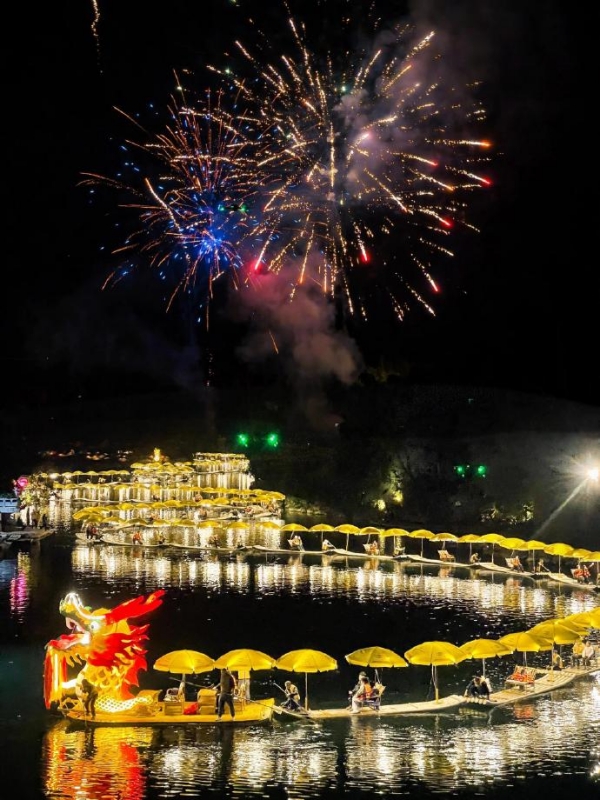
- Yulong River
-
- The Xianggong Hill at Sunrise
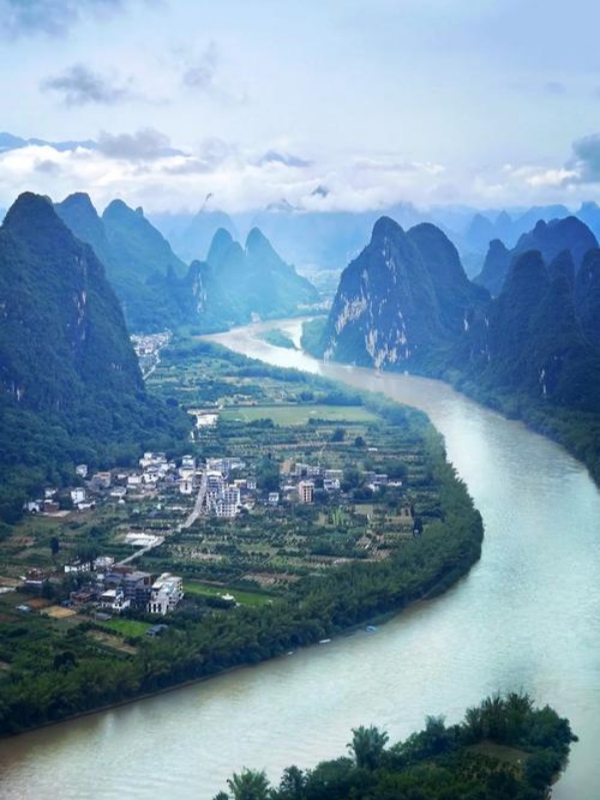
-
- The Moon Hill and the Big Banyan Tree
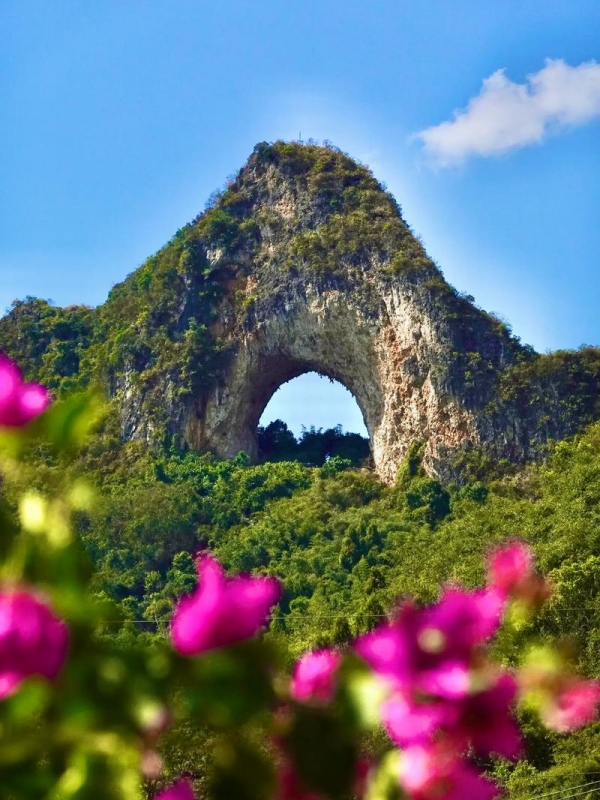
An overnight in Yangshuo makes the difference between passing through the karst and actually feeling it. The town is walkable, the countryside is dense with activities, and daytime crowds thin out by 7 am and again after 6 pm. Those who rush back to Guilin after the cruise miss the side of the region that keeps people coming back.
Yulong River and Cycling the Karst Backdrop
The Yulong River runs close to the karst, so the peaks feel intimate rather than panoramic — cycling or drifting under them delivers a different experience than the cruise vista. A manual-propelled bamboo raft costs about $28 (¥200) for four seats. E-bike rental runs ¥30–50 (roughly $5–7) per day. Mountain weather changes quickly; carry a light rain jacket regardless of the morning forecast. Start from the west side of Yangshuo town where rental shops cluster.
- E-bike rental: ~¥30–50 / $5–7 per day from shops west of town; bring ID
- What to wear: Light layers; a rain jacket handles sudden mountain shifts
- Where to start: West-side rental shops have the best route access
Xianggong Mountain at Sunrise
Entry costs about ¥60 ($8) and the climb takes roughly 20 minutes. The view from the top shows the karst folding in every direction over the Li River bend — the panorama that appears on most Yangshuo postcards. Summer sunrise is around 5:30 am; winter pushes it to 6:30 am. Allow 90 minutes from central Yangshuo, including the pre-dawn walk. A headlamp is useful for the dark section of the trail.
Moon Hill and Other Karst Lookouts
Moon Hill sits near Gaotian village, about 30 minutes from Yangshuo by e-bike, with ¥20 ($3) entry. A natural arch spans roughly 50 meters and frames karst peaks through the opening. Two other lookouts suit a half-day loop. Cuiping Mountain (Five Fingers) offers sunset views. TV Tower Hill provides a lower vantage point above West Street. All three are reachable by e-bike on a single afternoon route.
- Moon Hill: Natural arch, ¥20 / $3 entry, ~30 min e-bike from Yangshuo
- Cuiping Mountain: Sunset viewpoint, Five Fingers formation
- TV Tower Hill: Lower hill above West Street, good for golden hour
Adventures on the Cliffs and Above
Yangshuo is one of China's top limestone-climbing destinations, with hundreds of established routes. Via ferrata (fixed cables and ladders) is beginner-friendly at roughly $40–70 (¥300–500) for a half-day session. Rock climbing with a guide costs around $55 (¥400) for half a day; route selection is not obvious to newcomers, so a guide is worth the cost. Caving tours go beyond Reed Flute's lit walkways, with underground rivers and rope descents. Summer white-water drifting opens on the Longjing River (June–August only; age and height restrictions apply — confirm on site). Adventure operators in Yangshuo are not always set up for English; book through climbing cafés or a hotel concierge.
- Via ferrata: Fixed cables on limestone, beginner-friendly, ~$40–70 (¥300–500) half-day
- Rock climbing: Hundreds of routes, guide recommended, ~$55 (¥400) half-day
- Caving tours: Underground rivers and rope descents beyond lit cave walkways
- White-water drifting: Longjing River, June–August only, confirm restrictions on site
🏔️ Explore Downstream Karst Valleys: Want to compare rock climbing routes, bamboo raft piers, and boutique hotels in the countryside? Read yangshuo guilin guangxi china.
Longji Rice Terraces by Season
-
- Guilin Longji Rice Terraces

-
- Terrace Views at Jinkeng

The Longji (Dragon's Backbone) sits 2–2.5 hours each way from Guilin and rewards travelers who plan the village choice before departing. Pick Ping'an if hiking and quiet matter; pick Dazhai if scale and easy access matter. Do not attempt to cover both in one day — the transfer between villages kills the schedule.
Ping'an or Jinkeng Dazhai
Ping'an has older, smaller-scale terraces with more stone-path hiking and fewer day-trippers. Classic photo stops include Seven Stars with Moon and Nine Dragons viewpoints. Jinkeng Dazhai (Dazhai) has newer terraces at larger scale, more viewpoint platforms, and a cable car that cuts the climb. Entry to Longji runs about $13–14 (¥90–95). The cable car at Dazhai costs roughly $9 (¥60–80) one way — useful for tired legs on the way down. Half a day is the minimum; one night allows sunrise and sunset viewing.
Timing Your Visit by Season
Half a Day in Guilin City
-
- Reed Flute Cave Guilin China
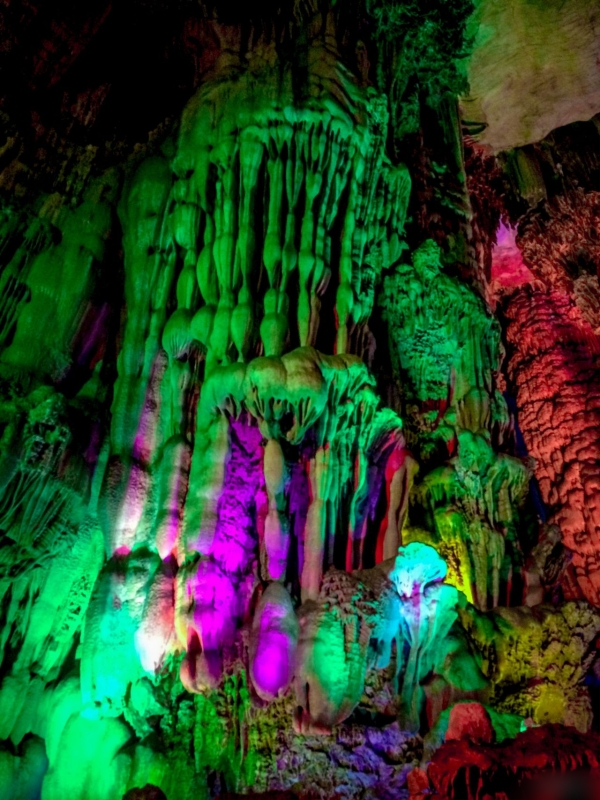
-
- Reed Flute Cave Guilin China
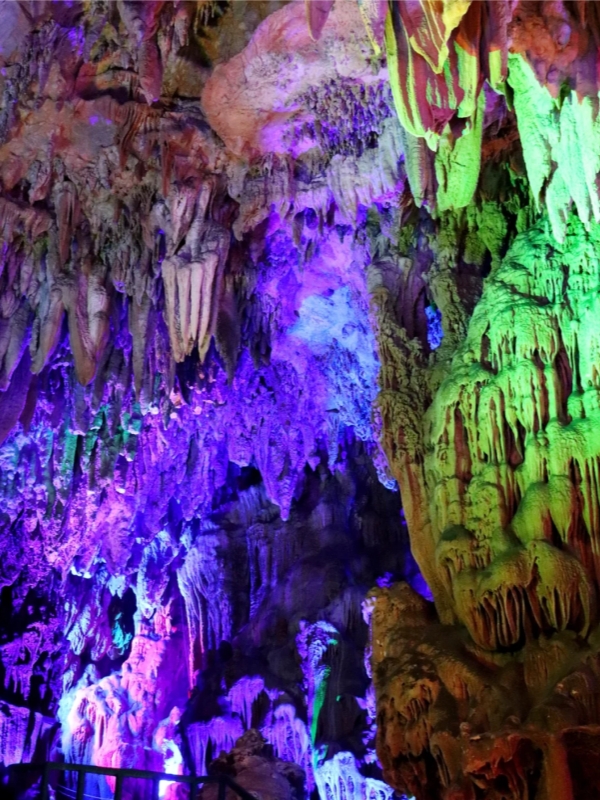
-
- Reed Flute Cave, Guilin
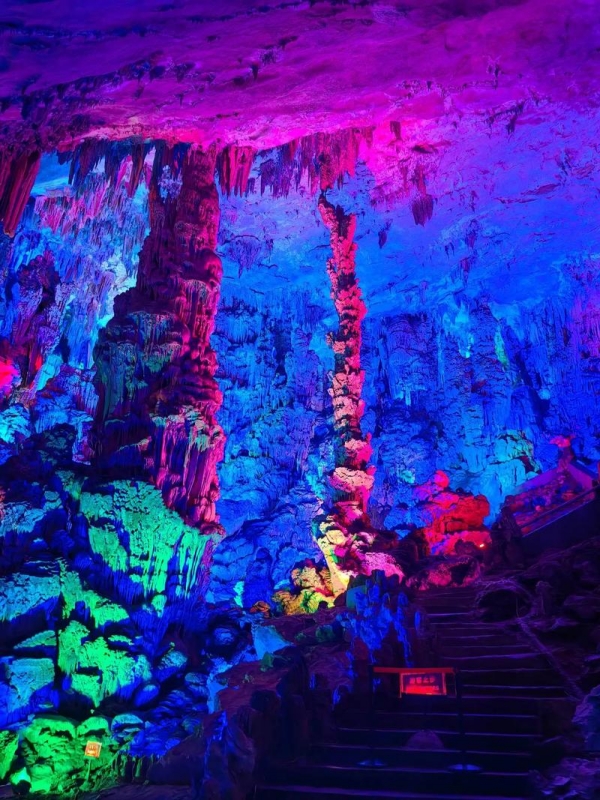
Guilin city works as a useful gateway rather than a destination in its own right. Give it half a day on arrival or departure rather than trying to fill a full schedule. The highlights are walkable from the river and close enough to each other that you can move between sites without a taxi.
Elephant Trunk Hill and Reed Flute Cave
Elephant Trunk Hill (Xiangbi Shan) is Guilin's signature city landmark — the rock formation genuinely resembles an elephant drinking from the Li River. Entry is free, and the site takes 1–2 hours. Rooftop cafés across the river offer an unobstructed view of the full shape without entering the park. Reed Flute Cave (Ludi Yan) is a 240-meter illuminated walk through stalactites and stalagmites named after the reeds once used for flutes outside the entrance. Entry costs about $8 (¥60) and takes 1–1.5 hours; it works well for families and serves as a reliable rainy-day option.
- Elephant Trunk Hill: Free entry, 1–2 hours; café view across the river is worth the detour
- Reed Flute Cave: ~$8 (¥60), 1–1.5 hours; strong rainy-day fallback
Two Rivers Four Lakes After Dark
The linked waterway system runs through central Guilin. A day walk is free. The night cruise costs roughly $17 (¥120) for one hour and passes illuminated bridges, pagodas, and the Sun and Moon twin pagodas (Riyue Shuangta) reflected on Fubo Lake. Covered boats operate in rain, and the wet-city atmosphere adds to the appeal rather than subtracting from it.
Daxu Ancient Town and the Old Trade Streets
Daxu sits 30 kilometers downriver from Guilin, with bluestone streets, Ming-Qing riverside houses, and old trading docks along the Li River. Entry is free. Fewer foreign visitors come here compared to Yangshuo's West Street. Reach it by local bus or taxi (roughly ¥80 / $11) and combine the visit with a riverside lunch. Half a day covers the main street and the waterfront without rushing.
✨ Explore Evening Entertainment Options: Looking for relaxed bar streets or night cruises beneath lit-up karst peaks? Read guilin nightlife.
Guilin Rice Noodles and Local Food
-
- Guilin Rice Noodles
-
- Beer Fish
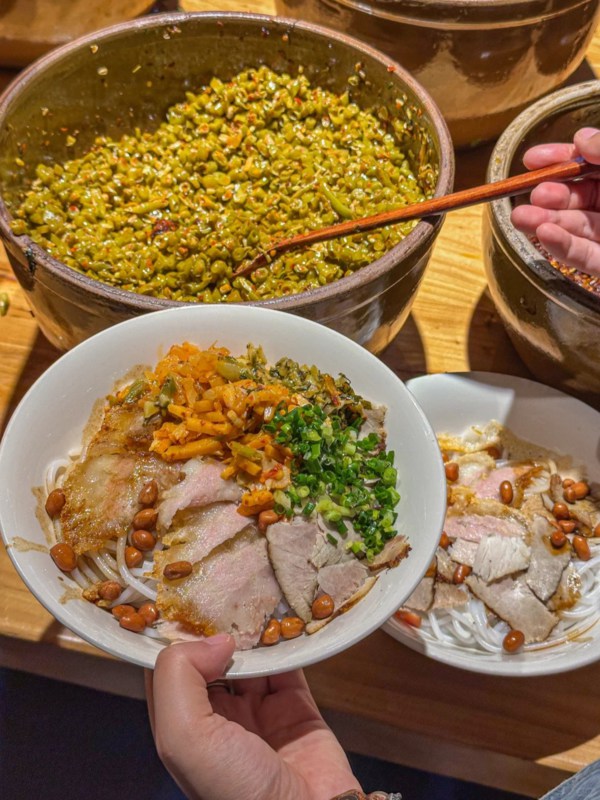
Guilin has its own food identity, anchored by three noodle traditions that no neighboring province shares. Eating well here does not require a food tour or a Mandarin phrase list — most dishes appear on laminated photo menus at local shops.
The Three Noodle Traditions
Guilin mifen is rice noodles in a broth of pork, beef, peanuts, fermented bean, chili oil, and pickled greens. A bowl costs roughly $1–2 (¥8–15) at any neighborhood shop. Chongshan Rice Noodle (Chongshan Mifen) is the most-cited local institution and opens early for breakfast. Luosifen (snail rice noodles) originated in Liuzhou but appears on menus throughout Guilin — the fermented smell is part of the experience. Oil tea (you cha) is a savory tea soup with puffed rice, peanuts, and herbs, rooted in Yao and Dong ethnic tradition. Eat mifen for breakfast, oil tea as a side, and luosifen at any hour.
- Guilin mifen: Rice noodles in broth, ~$1–2 (¥8–15); Chongshan Mifen is the local benchmark
- Luosifen: Snail rice noodles with fermented bamboo shoots; pungent aroma is normal
- Oil tea: Savory tea with puffed rice, Yao and Dong ethnic origin; found in local restaurants
Beer Fish and Countryside Dinners
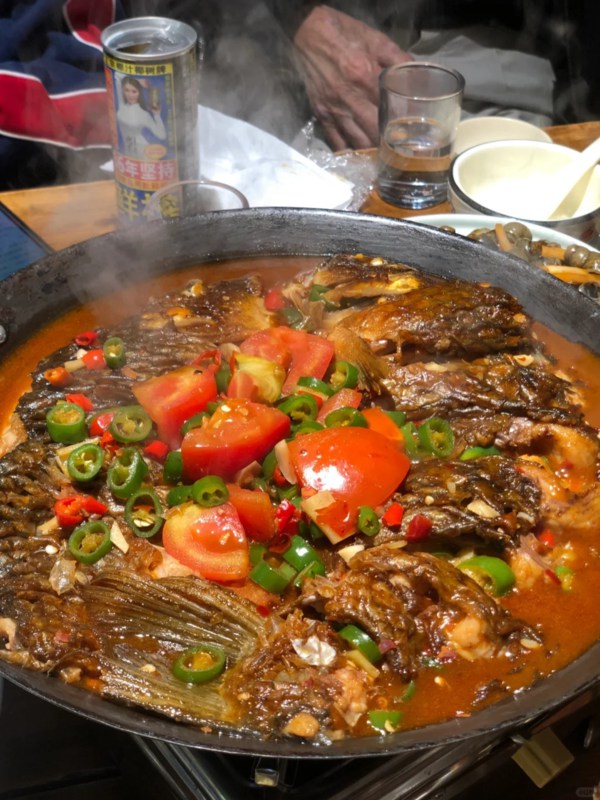
Beer fish (pijiu yu) is Yangshuo's signature dish — a whole carp braised in beer with tomatoes, chili, and perilla leaves. Expect to pay roughly $10–15 (¥70–100) per person. Stuffed tofu (doufu bao) are pan-fried triangles of tofu stuffed with fish paste, common as a street snack. Free-range chicken with ginger (zhuang yuan ji) appears in village restaurants around Yangshuo and Longsheng. The West Street branch of Master Chef Beer Fish draws the most citations, but local shops outside the tourist strip are cheaper and often better.
- Beer fish: Whole carp braised in beer, ~$10–15 (¥70–100) per person; Master Chef Beer Fish on West Street is the tourist reference
- Stuffed tofu: Fish-paste-filled tofu triangles; street snack, ~$1–2
- Free-range ginger chicken: Village restaurant specialty around Yangshuo and Longsheng
🍜 Discover Regional Culinary Specialties: Beyond scenic boat rides, taste famous local specialties like sour-spicy rice noodles and beer fish in guilin food.
Night Markets Worth a Detour
Yangshuo West Street is the obvious choice — lively until midnight with souvenir stalls and small restaurants. Zhengyang Pedestrian Street in central Guilin is the city's main snack and shopping strip. Shangshui Jiajie Food Street near Two Rivers Four Lakes draws late-night crowds with luosifen, grilled skewers, and tropical fruit. A comfortable per-person spend at night markets runs $5–15 (¥40–100).
🍢 Evening Street Food & Souvenirs: For vibrant night markets featuring local street snacks, handmade crafts, and evening strolls, visit guilin night market.
Seasons, Rainy Days, and Winter Visits
Guilin is a year-round destination, but the experience changes sharply by month. The best windows are April through May and late September through October. Two periods demand specific caution: Chinese National Day week (October 1–7) when accommodation triples, and Spring Festival week (lunar late January/February) when many shops close and transport books out weeks ahead.
Best Months and Worst Crowds
- Best: April, May, late September, October — clear skies, mild temperatures, low rain risk
- Acceptable: March, November — fewer crowds, occasional rain
- Summer: June–August — hot (30–35°C), humid, rainy; white-water rafting on Longjing River opens
- Winter: December–February — cold (5–12°C), misty; fewer tourists, lower prices
- Worst crowds: October 1–7 (National Day) and Spring Festival week — avoid if possible
Rainy-Day Alternatives Beyond Staying Inside
Rain does not have to kill a day in Guilin. Five plan-B options cover indoor and sheltered activities. Reed Flute Cave is fully covered and illuminated. Jingjiang Princes' Palace has covered courtyards and halls plus the Duxiu Peak viewpoint. Daxu Ancient Town has bluestone streets under old wooden eaves. The Impression Liu Sanjie outdoor show operates in light rain (heavy rain cancels — check at the ticket desk the same day). The Two Rivers Four Lakes night cruise uses covered boats and the rain-on-water atmosphere adds to the experience.
Guilin in Winter
Winter temperatures range from 5–12°C with frequent mist and drizzle. Occasional snow on the upper Longji terraces draws photographers. The Li River cruise may run on a reduced schedule or be rerouted in low-water months — verify 24 hours before departure. Reed Flute Cave and Elephant Trunk Hill operate normally. Accommodation prices drop significantly and major attractions are uncrowded. Outdoor activities like e-biking and rock climbing are chilly but workable with layers. Pack a light rain jacket regardless of the forecast.
- Cold and mist: 5–12°C; pack layers and a rain jacket
- Li River low water: Confirm cruise schedule 24 h before; some routes shortened
- Longji snow: Upper terraces occasionally snow-covered; photographers' draw
- Lower prices: Hotels and attractions uncrowded; rates drop outside holidays
Frequently Asked Questions
Q: How many days do I need for the things to do in Guilin?
Three days is the realistic minimum for the Li River cruise plus a Yangshuo overnight plus a half-day in the city. Two days can fit Guilin-to-Yangshuo cruise and one night in Yangshuo but feels rushed. Four to five days adds Longji Rice Terraces. One day means choosing between the cruise and the city attractions — you cannot comfortably do both.
Q: Is the Li River cruise really worth the ticket?
Yes for first-time visitors — it is the experience that defines the region. The 4-star boat at roughly $50 (¥360) is worth the upgrade over the 3-star at roughly $30 (¥215) for the comfort over four hours. Book through Trip.com or Klook since Chinese-only apps require a mainland phone number and WeChat Pay.
Q: Can Guilin and Yangshuo fit into two days?
Yes, but tight: Day 1 — morning Li River cruise, arrive Yangshuo by early afternoon, Yulong River raft or countryside cycle in late afternoon, overnight in Yangshuo. Day 2 — Xianggong Mountain at sunrise, e-bike loop or Moon Hill, return to Guilin for the Two Rivers Four Lakes night cruise. Skip Longji on this schedule.
Q: What is the best time of year to visit Guilin?
April through May and late September through October are the best windows. Avoid October 1–7 (National Day week) due to price spikes and crowds. December through February is cold and misty but uncrowded with lower prices. June through August is hot and rainy but unlocks white-water drifting on the Longjing River.
Q: Do I need a guide to travel around Guilin?
No for the core loop — English signage is sufficient at major sites and e-bike rental in Yangshuo is self-explanatory. A guide helps for Longji (ethnic villages and logistics), rock climbing (route selection), and caving beyond Reed Flute. Book English-speaking guides through Yangshuo climbing cafés or hotel concierges, not Meituan.
Q: Is Guilin expensive for foreign visitors?
Mid-range costs overall. A rice-noodle bowl runs roughly $1–2 (¥8–15), a beer fish dinner about $10–15 (¥70–100) per person, a 3-star hotel in Yangshuo roughly $30–60 (¥200–450) per night, the Li River 4-star cruise about $50 (¥360), and Longji entry roughly $13–14 (¥90–95). Food and city attractions are affordable; the main cost is accommodation and the cruise.
Q: What should I do in Guilin on a rainy day?
Reed Flute Cave (indoor, illuminated, about $8 / ¥60), Jingjiang Princes' Palace (covered halls plus Duxiu Peak viewpoint), Daxu Ancient Town (bluestone street under eaves), the Impression Liu Sanjie outdoor show (light rain continues, heavy rain cancels), and the Two Rivers Four Lakes night cruise (covered boats, rain on water adds atmosphere).
Q: Are Guilin attractions bookable without Chinese payment apps?
Yes — book the Li River cruise and major attraction tickets through Trip.com or Klook using a foreign credit card. Yulong River bamboo rafts and e-bike rentals can be arranged in person at the dock or rental shop (cash or WeChat Pay). Longji entry is available at the gate. Some smaller restaurants and rural buses are cash-only — keep small RMB notes on hand.
Q: Is a printed guidebook still useful for Guilin?
Optional. For offline maps and quick reference, yes. For current prices and Chinese-app-required bookings (Longji cable car, some local buses), no. A focused guide combined with Trip.com or Klook and the operator's official site covers the practical gap better than a printed book.