Guilin Things to See
Spelled 桂林 in Chinese and pronounced roughly "gway-lin," this Li River city has drawn poets, painters, and travelers for nearly a thousand years on the strength of one feature: a dense forest of karst peaks rising above mirror-still water. The appeal for first-time foreign visitors is concrete — short distances, frequent high-speed trains, an English-friendly hotel scene, and visa-free entry for many passport holders via Guilin Liangjiang International Airport. If you are planning guilin things to see, this guide sorts the famous icons from the less-crowded alternatives, lays out day-by-day routes for 1 to 5 days, and adds the seasonal notes that match what Guilin's weather actually does in spring, summer, autumn, and winter.
Guangxi's karst heartland splits into two layers: the city-side cluster around Elephant Trunk Hill and Reed Flute Cave, and the downstream landscape around Yangshuo where the river bends between sculpted peaks. Beyond those, Longji Rice Terraces climb the mountains two to three hours north, and a string of Ming-era towns and sunrise peaks stay light on the tourist radar. Every sight covered here is bookable through Trip.com or Klook with prices in USD, and none requires more than a five-day itinerary to see well.
Quick Facts
Iconic Guilin and Yangshuo Sights
-

- The Elephant Trunk Hill
-
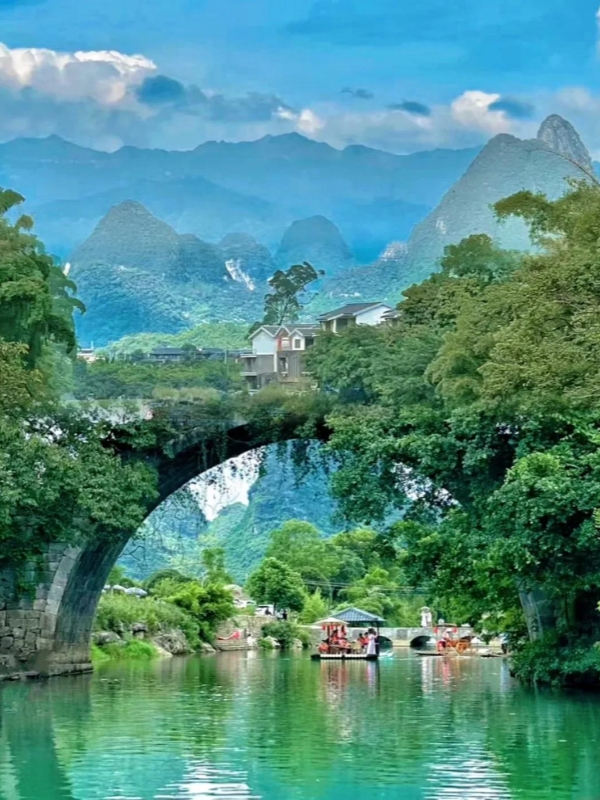
- Li River Cruise
For most travelers, guilin things to see cluster into three zones: central Guilin city with its riverside parks and cave, the Li River corridor that links Guilin to Yangshuo, and Yangshuo County's countryside trails and rivers. These are the sights that earn Guilin its reputation, and each is reachable in under an hour from the city center.
Elephant Trunk Hill and Reed Flute Cave
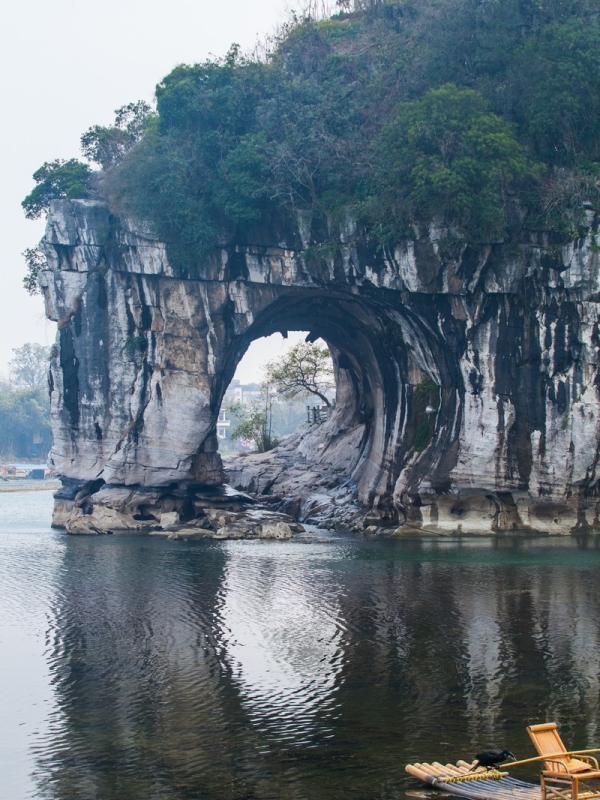
Elephant Trunk Hill sits at the confluence of the Li River and Taohua River, a 15-minute walk from Zhengyang Pedestrian Street. The arch through the "trunk" frames the river at a particular angle — locals call it the moon-over-water view. A circuit around the park takes 30 to 60 minutes. The hill is universally billed as the symbol of Guilin.
- Elephant Trunk Hill: ticket about $8 (¥55), hours roughly 6:30am–9pm, 30–60 min visit
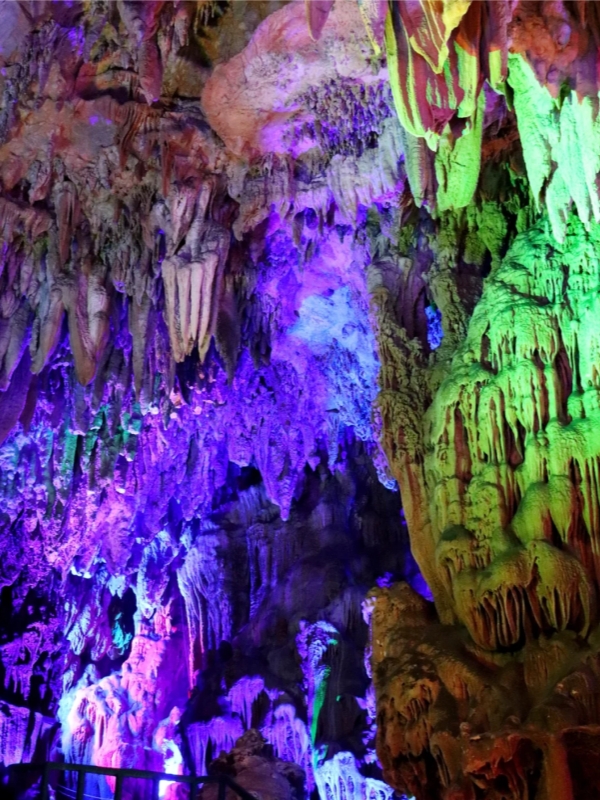
- Reed Flute Cave: karst cave north of downtown; ticket about $12 (¥80–90), hours 8am–5pm; lit stalactites fill a cathedral-scale chamber called the Palace of Natural Art; plan 60 min inside; rainy-season humidity may affect cave conditions
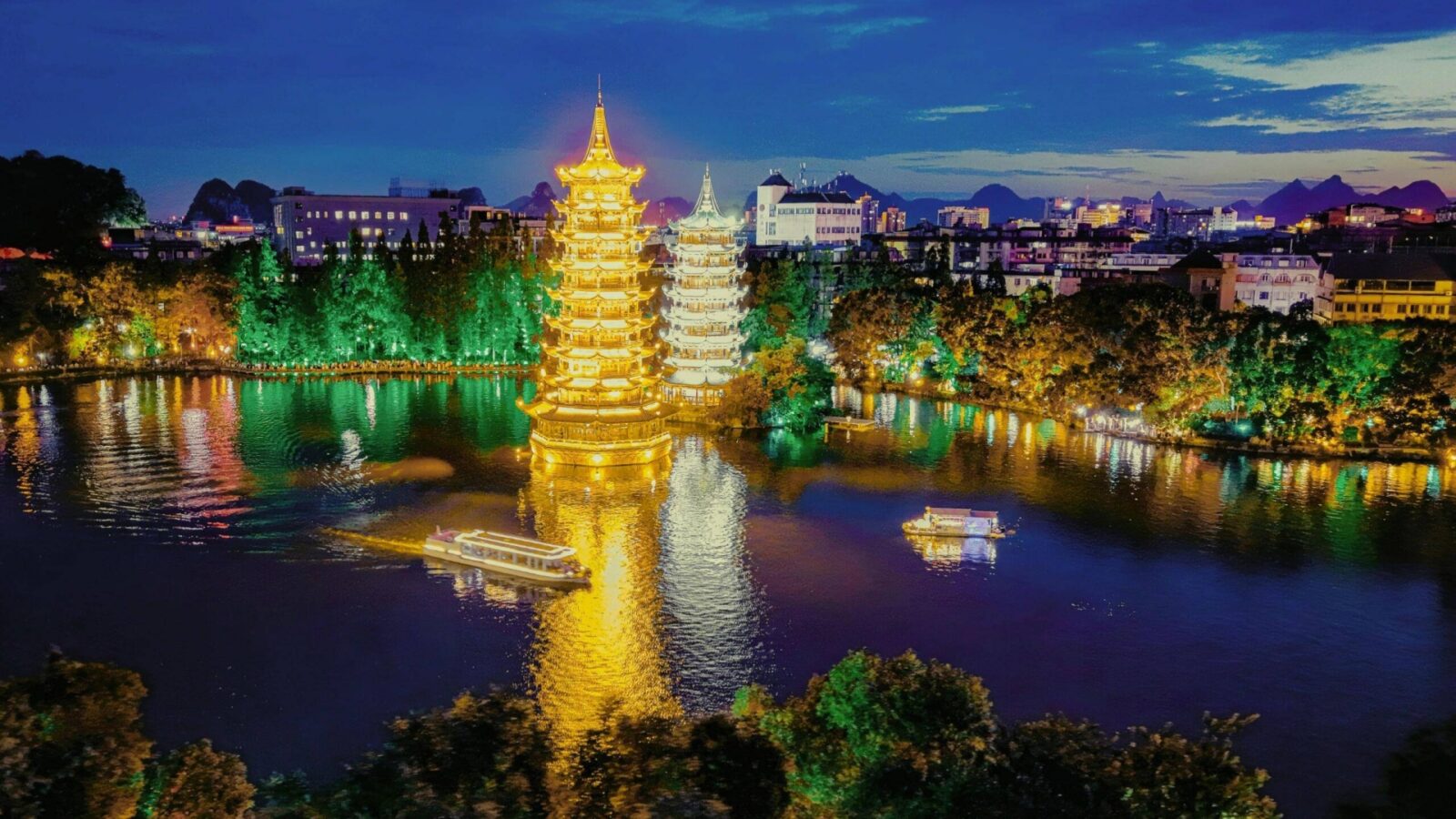
- Nearby city sights: Two Rivers and Four Lakes walk (free, Sun and Moon Pagodas at the center) and Seven Stars Park (free entry, includes a zoo with red pandas) both fit a half-day itinerary
The Li River Cruise from Guilin to Yangshuo
The four-hour motorized cruise from Mopanshan Pier to Yangshuo is the classic Guilin experience. The river narrows between karst peaks, and the light shifts as the boat moves downstream. Lunch is included on some vessels; the upper deck costs extra on standard boats. Advance booking through Trip.com or your hotel concierge is recommended, especially in shoulder season.
- Standard 4-hr cruise: about $50–65 (¥350–450), motorized ship, Mopanshan Pier to Yangshuo
- VIP or upper-deck: about $80–110 (¥580–780), lunch-inclusive options available
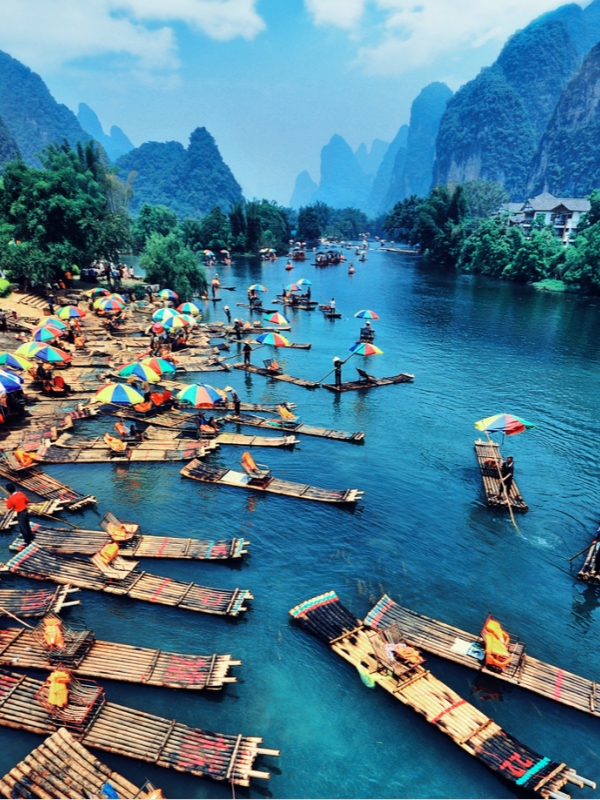
- Bamboo raft (Xingping section): about $5–7 (¥35–50) per raft, slower and more scenic; shorter route only
- Seasonal note: rainy season (April–August) affects water level and visibility — verify on the day before booking
Yangshuo's Karst Heartland
Yangshuo sits 65 kilometers south of Guilin as the crow flies, but the Li River route makes it feel much further. The county is the base for countryside exploration: rivers, peaks, cycling tracks, and a pedestrianized street that has catered to foreign travelers for decades.
- Yulong River bamboo rafting: short sections about $10–15 (¥70–100) per raft; water reflections are clearest in the morning
- Ten-Mile Gallery: free entry; e-scooter or bike rental about $5–10 (¥35–70)/day
- Moon Hill: ticket about $5 (¥35); an optional climb leads to a natural arch
- West Street: pedestrianized, English-friendly bars and restaurants, free to walk
- Impression Sanjie Liu: open-air night show on the Li River; standard seat about $50–80 (¥350–580); runs weather-permitting
🚣 Explore Yangshuo & the Li River: For many travelers, continuing downstream to cycle through rural villages and cruise past limestone peaks is the highlight of the trip. Plan your itinerary in Yangshuo Guilin Guangxi China.
Longji Rice Terraces and Mountain-Village Stays
-

- Terrace Views at Jinkeng
-

- Ethnic Villages and Mountain Homestays
Longji (Dragon's Backbone) Rice Terraces lie two to three hours north of Guilin by road, climbing mountain flanks in stepped contours that change color with each season. When it comes to guilin things to see, this is the one that rewards an overnight stay — the sunrise views from the upper platforms require being there at dawn, and the ethnic villages have more depth if you sleep in one.
The Terrace Views at Jinkeng and Ping'an
Ping'an is the older, lower-altitude village. The walking trails are gentle, and two named viewpoints — Seven Stars Around the Moon and Nine Dragons and Five Tigers — sit within a short walk of the guesthouse zone. Jinkeng sits at a higher elevation and draws photographers for its wider panoramas. A cable car rises to Jinkeng's primary viewing platform, saving the steep climb. Temperatures at the upper platforms drop noticeably in the early morning even in summer.
- Ping'an: lower altitude, easier walks, iconic viewpoints within 20-min walk of village
- Jinkeng: cable car to viewpoint #1, about $10 (¥70) round-trip; more dramatic high-altitude panoramas
- Longji scenic area ticket: about $10 (¥70–100)
- Practical tip: combine Ping'an and Jinkeng in one day unless staying overnight; bring layers — the viewing platforms are cold before 8am
Ethnic Villages and Mountain Homestays
Longji sits within Longsheng County, home to Zhuang and Yao communities that have farmed these mountains for generations. Zhuang villages feature wooden stilted houses and indigo clothing traditions. Yao villages are smaller in population; Yao women historically grew floor-length hair and wore it coiled on the head. Boutique homestays in Ping'an and Jinkeng typically run about $25–50 (¥180–350) per night with breakfast included.
- Zhuang villages: largest ethnic group in Longsheng; stilted wooden houses, traditional indigo textiles
- Yao villages: smaller population; women historically wore floor-length hair, a cultural marker still visible during festivals
- Homestay range: about $25–50 (¥180–350)/night per room with breakfast
- Huangluo Yao Village: known as the Long-Hair Village; small entrance fee about $3–5 (¥20–35); sits near the Longji entrance and makes a worthwhile detour
Hidden and Less-Crowded Sights Around Guilin
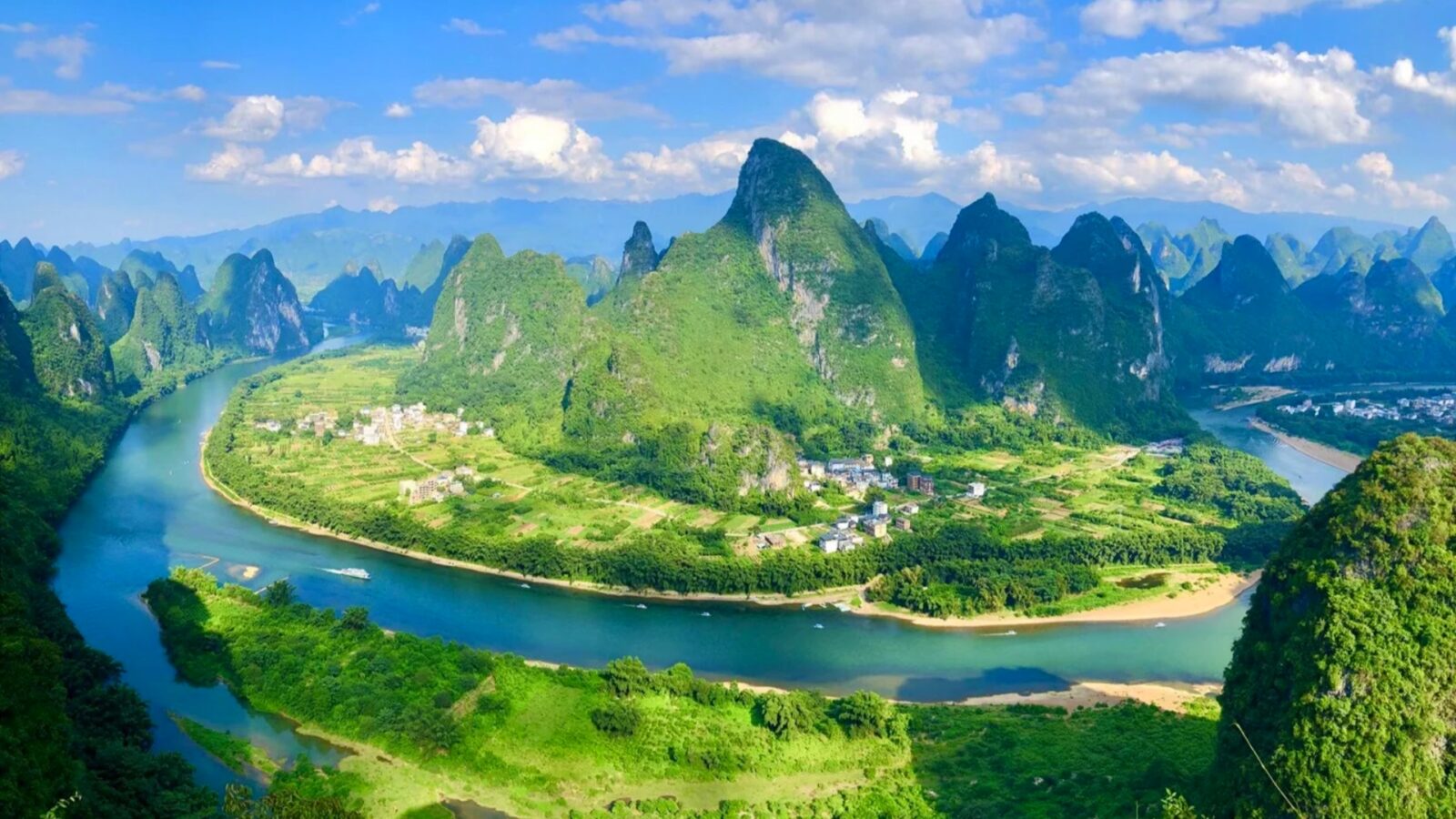
Xianggong Mountain around Guilin
For guilin things to see beyond the tour-bus circuit, the karst hills north of Yangshuo and the ancient market towns west of the city offer quieter alternatives. These spots take 30 minutes to a full morning, and they pair well with the main itinerary.
Xianggong Mountain and Sunrise Lookouts
Xianggong Mountain rises about 28 kilometers north of Yangshuo on the road heading back toward Guilin. A stone-step path climbs 20 to 30 minutes to the summit platform, which faces east toward the river valley. Sunrise is the peak experience: autumn mornings see first light around 6am, summer around 5:30am. The platform is small and fills quickly on weekends — arriving by 5:30am secures a clear spot.
- Location: ~28 km (17 mi) north of Yangshuo on the Guilin road
- Ticket: about $5–7 (¥35–50)
- Climb: 20–30 min stone steps to summit
- Best time: sunrise; platform gets crowded after 7am on weekends; bring a headlamp for pre-dawn hiking
- Combine with: Xingping Ancient Town, which sits close by and works well the same morning
Xingping Ancient Town and Yellow Cloth Shoal
Xingping Ancient Town is a Ming- and Qing-era riverside settlement 27 kilometers from Yangshuo West Street. The brick architecture and horse-head wall details survive along the old flagstone street, which runs free to visitors. The photo point here is Yellow Cloth Shoal — the exact view printed on the back of China's 20 RMB banknote. A short bamboo-raft trip out to the shoal takes about 20 minutes and costs about $5–7 (¥35–50) per raft. The old town and the shoal combine easily with a Yangshuo morning or as a stop on a Guilin-to-Yangshuo cruise.
More Off-the-Beaten Sights
Five additional sights stay relatively quiet even in peak season. Daxu Ancient Town is 30 minutes from Guilin by bus and preserves a Ming-era flagstone street. Cuiping Five Fingers Mountain presents a karst summit shaped like an open hand; the ticket runs about $10–14 (¥70–100). Gudong Scenic Area centers on a forested waterfall trail; ticket about $10 (¥70) and less frequented than Reed Flute Cave. Fubo Hill rises in central Guilin near Elephant Trunk Hill with a ticket around $3 (¥20) and a sword-testing rock legend. Lingqu Canal, a UNESCO-listed waterway over 2,200 years old, lies about 90 minutes from Guilin; ticket about $10 (¥70).
🌏 Discover the Broader Region: Guilin is located in southern China's autonomous region known for its unique culture and karst terrain. Learn more about the province's geography and background in Guangxi Chinese.
Itineraries by Number of Days
The right answer to how many guilin things to see depends on how much time you have. The itineraries below are structured as time-stop routes: morning, lunch, afternoon, and evening for each day.
One Day in Guilin City
Guilin city itself packs two strong sights into a single day, with manageable walking distances between them.
- 8:00am: Reed Flute Cave — open at 8am, beat the tour-bus wave that arrives around 9:30am; 60 min inside
- 10:30am: Elephant Trunk Hill — compact, 30–60 min circuit
- 12:00pm: Lunch at Zhengyang Pedestrian Street — Guilin rice noodles about $3–5 (¥20–35)
- 2:30pm: Two Rivers and Four Lakes walk — free; Sun and Moon Pagodas at the center
- 7:30pm: Pagodas lit at night, dinner on the pedestrian street
- Optional add-on: Diecai Hill sunset — ticket about $3 (¥20)
Two to Three Days in Guilin and Yangshuo
The standard route adds the Li River cruise and Yangshuo's countryside to the city base. A third day opens up Xianggong Mountain or Longji for those who want more.
- Day 1 morning: Li River cruise from Mopanshan Pier — depart ~9–10am, ~4 hr, standard about $50–65 (¥350–450)
- Day 1 afternoon/evening: Arrive Yangshuo, West Street walk; Impression Sanjie Liu at night about $50–80 (¥350–580)
- Day 2 morning: Yulong River bamboo raft — about $10–15 (¥70–100) per raft for a short section
- Day 2 afternoon: Ten-Mile Gallery by e-bike — rental about $5–10 (¥35–70)/day
- Day 3 (optional): Xianggong Mountain sunrise + Xingping Ancient Town before HSR back to Guilin
Four to Five Days Adding Longji
A five-day plan incorporates Longji Rice Terraces with an overnight homestay, which is the only way to see the sunrise panorama properly. The rest of the days distribute between Guilin city, the Li River, and Yangshuo.
- Day 1: Arrive Guilin, light evening walk along Two Rivers and Four Lakes
- Day 2: Private car or tourist shuttle to Longji (~2 hr; entrance about $10 (¥70–100)); Ping'an or Jinkeng homestay for the night
- Day 3: Sunrise at the terrace viewpoint, afternoon return to Guilin; evening Li River cruise to Yangshuo
- Day 4: Yulong River + Ten-Mile Gallery + West Street
- Day 5: Xianggong sunrise, Xingping Old Town, afternoon HSR back to Guilin or onward
Best Times to Visit by Season
Season shapes the Guilin experience more than almost any other factor. The karst landscape reacts directly to rain and temperature, and crowd patterns shift around Chinese public holidays. When planning guilin things to see, match your dates to what you want from the scenery.
Season by Season
Crowds, Weather Hazards, and Booking Timing
Chinese National Day (October 1–7) is the single busiest stretch of the year. Yangshuo and Longji both surge during the first week of May (Labor Day) and the Mid-Autumn Festival period. Plan around these dates if crowd-free photos matter to you.
- National Day: first week of October — highest prices and congestion; book Li River cruise and homestays months ahead
- May Day / Mid-Autumn: first week of May and September–October lunar festival — expect larger domestic tour groups
- Rainy season: April through August — Yulong River bamboo rafts may be suspended on short notice; verify on the morning of
- Flood risk: June peak rain occasionally floods the lower bank walk at Elephant Trunk Hill; check conditions before heading down
- Booking: Li River cruise, Impression Sanjie Liu, and Longji homestays need 1–2 weeks advance booking in peak season; walk-up works in winter
Getting There, Getting Around, and Where to Stay
Guilin is one of southern China's most accessible travel hubs. High-speed rail connects it directly to Guangzhou, Hong Kong, and省会 cities across the region, and Guilin Liangjiang Airport handles international arrivals including visa-free transit for eligible passport holders.
Arriving by Air and High-Speed Rail
Getting Around Guilin and Yangshuo
Guilin's city center is compact enough to cover on foot between Elephant Trunk Hill and Two Rivers and Four Lakes. Yangshuo and the countryside require some form of motor transport.
- DiDi: China's main ride-hailing app; works in Guilin and Yangshuo; requires data roaming or an eSIM
- Metered taxi: cheap and readily flagged in the city center; suitable for short hops
- Public bus: ¥2 flat fare; slow but functional for budget travelers on fixed routes
- E-scooter rental in Yangshuo: about $5–10 (¥35–70)/day; the most flexible way to tour the Ten-Mile Gallery independently
- Private car charter for Longji: about $80–110 (¥580–780) round-trip from Guilin; recommended for the mountain roads, which are steep and unfamiliar to most visitors
Where to Stay and How to Book
Guilin has four main accommodation zones, each serving a different phase of the itinerary. Trip.com handles the widest Mainland-China inventory, followed by Klook for activity bundles.
- Central Guilin: near Zhengyang Pedestrian Street, walking distance to Elephant Trunk Hill and the train stations; mid-range hotels about $40–80 (¥280–560)/night
- Yangshuo West Street: pedestrian nightlife hub, highest concentration of English-speaking staff; mid-range about $50–100 (¥350–700)/night
- Yulong River homestays: boutique countryside properties along the river; about $60–150 (¥420–1,050)/night; book via Trip.com
- Longji Ping'an or Jinkeng: traditional wooden stilted houses; basic but atmospheric; about $25–50 (¥180–350)/night, usually includes dinner and breakfast
Frequently Asked Questions
Q: How many days do you need for Guilin?
Two days covers Guilin city plus a Li River cruise and Yangshuo West Street. Three days adds the Yulong River and Ten-Mile Gallery. Four to five days adds Longji Rice Terraces with an overnight homestay. Fewer than two days means skipping either Yangshuo or Longji, which are the two sights that justify the trip beyond the city.
Q: What is the best time of year to visit Guilin?
April–May and September–November are the two best windows. September–October brings dry weather and golden Longji terraces. April–May offers misty spring greens and fewer crowds than October. June–August is the rainiest period, when Yulong River bamboo rafts may be suspended. November–March is cool and quiet, with the fewest tourists and lowest hotel rates, though the terraces are bare.
Q: Is Guilin worth visiting?
Yes for karst-landscape lovers and anyone who enjoys slow river travel. The Li River cruise between Guilin and Yangshuo consistently ranks among China's signature scenic experiences. Guilin is less suited to travelers seeking dense urban sightseeing or high-intensity nightlife — the appeal here is the landscape, not the city itself.
Q: What are the top-rated Guilin attractions?
The most-visited sights include the Li River cruise, Longji Rice Terraces, Reed Flute Cave, Elephant Trunk Hill, Yulong River bamboo rafting, the Ten-Mile Gallery, Xingping Ancient Town with Yellow Cloth Shoal, Xianggong Mountain, the Impression Sanjie Liu night show, and West Street in Yangshuo.
Q: How do you get from Guilin to Yangshuo?
Three options exist. The Li River cruise ship runs one way from Mopanshan Pier to Yangshuo, about four hours, and is the most scenic option. HSR from Guilin North Station to Yangshuo Station takes roughly 30 minutes and costs about $10–15 (¥75–100). A private car or tourist shuttle covers the road distance in about 1.5 hours. The cruise is the only option that runs in one direction only.
Q: Do I need a visa to visit Guilin?
Many passport holders can enter via China's 144-hour visa-free transit through Guilin Liangjiang International Airport, provided they hold a ticket to a third country. Some European and Asian passport holders qualify for unilateral visa-free entry — confirm the current list at the Chinese embassy or your visa-service provider before booking flights. Your passport must have at least six months of validity remaining.
Q: Is English spoken in Guilin?
English is limited at taxi stands, bus drivers, and most restaurants outside the tourist zones. Yangshuo West Street has the highest concentration of English-speaking staff. Hotels that cater to foreign guests and booking platforms like Trip.com handle inquiries in English. Download an offline translation app and carry a printed card with your hotel's Chinese address for trips into rural areas.
Q: What is the difference between Guilin city and Yangshuo?
Guilin city is the administrative and transport hub — the airport, two railway stations, and city-center sights like Elephant Trunk Hill and Reed Flute Cave. Yangshuo County lies 65 kilometers south along the Li River and is quieter and countryside-focused: the Yulong River, Ten-Mile Gallery, West Street, Xianggong Mountain, and Xingping are all there. Most travelers spend one night in Guilin city and two to three nights in Yangshuo.
Q: Can you visit Guilin as a day trip from Hong Kong or Guangzhou?
Practically no. The HSR from Hong Kong West Kowloon to Guilin takes about 3.5 hours one-way, and getting to Yangshuo adds another 30 minutes, leaving almost no time on the ground. Guangzhou to Guilin by HSR is roughly 2.5 hours one-way — the same constraint. A minimum two-night, three-day visit is realistic for a meaningful first trip.
Q: What should I pack for Guilin?
Comfortable walking shoes handle cobblestones and the stone steps at Longji. A light rain jacket covers the April–August wet season. Layers are essential for Longji mornings, which can be cold even in summer. Bring sunscreen, a power adapter (China uses Type A, C, and I plugs), an eSIM or roaming data plan for DiDi and translation apps, photocopies of your passport, and small RMB cash for rural homestays that may not accept cards.