Guangxi, China
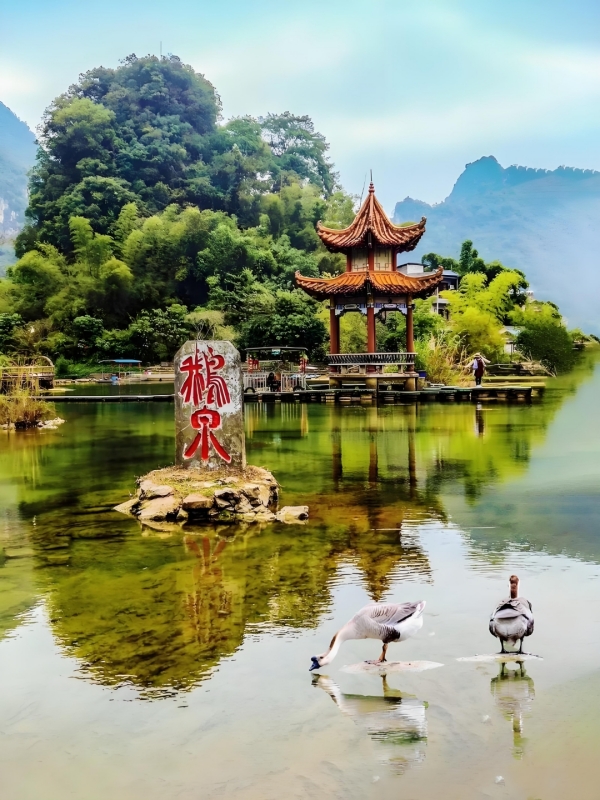
Guangxi (广西) is the Chinese region south of Guangdong — a mountain-locked, river-carved province where karst peaks rise from rice paddies and the Li River bends past limestone towers that have inspired Chinese painters for a thousand years. For foreign travelers, Guangxi is China at its most visually arresting and least crowded.
This guide covers the three anchors of any Guangxi itinerary: Guilin for the karst-side city and its iconic cave, Yangshuo for the Li River cruise (like Yangshuo Guilin Guangxi) and countryside cycling, and Nanning for the modern provincial capital and ASEAN gateway. It also covers the practical layer — transport, food, and what to budget.
Quick Facts
Why Visit Guangxi
Three concrete reasons draw foreign visitors to Guangxi. First, the karst landscape: the South China Karst is a UNESCO World Heritage-listed terrain centred on the Li River between Guilin and Yangshuo — the most concentrated karst topography in China. Second, ethnic and cultural diversity: the region is home to the Zhuang, China's largest ethnic minority, plus Dong, Yao, Miao and Hui communities in the Longsheng and Sanjiang areas north of Guilin and the western mountainous counties. Third, the ASEAN gateway role: Nanning hosts the annual China–ASEAN Expo and sits on China's land border with Vietnam, serving as the natural hub for overland routes into Southeast Asia.
As for the name: "Guang" (广) means "broad," from a Han-Dynasty edict, while "xi" (西) means "west" — so Guangxi translates as "west of Guangxin," referring to the ancient reference city in today's Wuzhou or Fengkai area.
See also our Li River Guilin to Yangshuo guide.
Guilin, Karst Capital of China
Guilin (桂林; pop ~5 million) is the gateway city for karst sightseeing. The Li River runs through town, and most travellers spend two nights here before or after the cruise to Yangshuo. The downtown is walkable, with key sights within a 5 km radius.
Here are the main sights and what to budget:
- Li River cruise boarding point Zhujiang Pier: ~$28–45 (¥200–320) standard seat, ~$55–85 (¥400–600) VIP upper deck; boats depart 09:00 and 14:30
- Reed Flute Cave (芦笛岩): ~$10 (¥75), open 08:00–17:30
- Elephant Trunk Hill (象鼻山): ~$3 (¥25), open 07:00–22:00
- Seven Star Park (七星公园): ~$3 (¥25)
- Fubo Hill (伏波山): ~$3 (¥25)
For more, see our guide to Reed Flute Cave Guilin.
Li River Cruise to Yangshuo
Li River Cruise from Guilin to Yangshuo
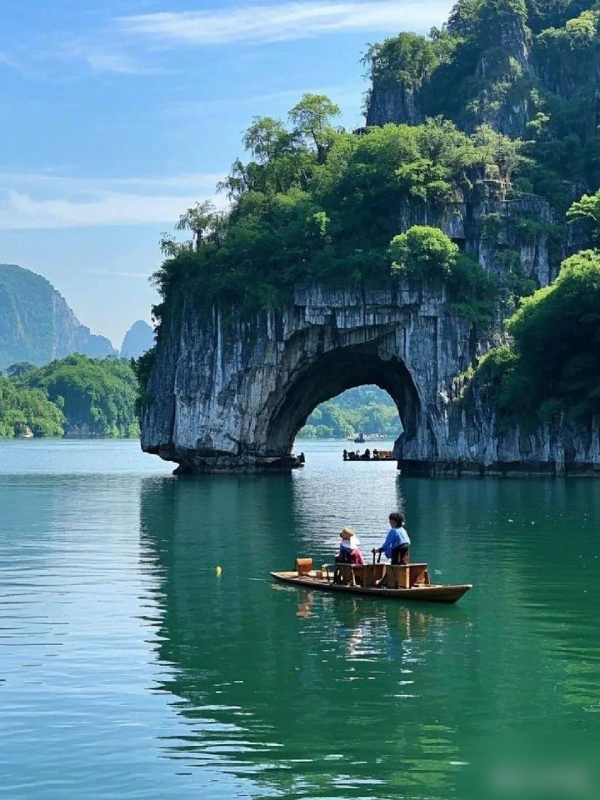
The Li River cruise is the signature activity of any Guangxi trip. A 4-hour motorized boat departs from Guilin's Zhujiang Pier and travels downstream to Yangshuo, passing the painted-limestone scenery that defines Chinese landscape painting. Standard boats run at 09:00 and 14:30 daily.
Standard seats cost about $28–45 (¥200–320); the VIP upper deck runs about $55–85 (¥400–600). Book through Trip.com or Klook at least one day ahead in peak months. The upper-deck upgrade is worth it in clear weather because photography is significantly better from above the cabin roof.
Reed Flute Cave and Downtown Sights
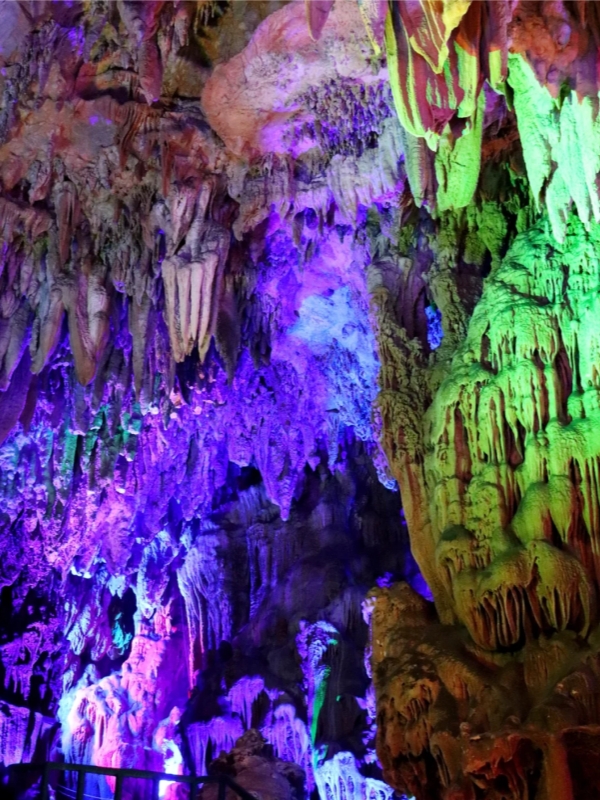
Reed Flute Cave Guilin China
Reed Flute Cave (芦笛岩) is a 240-million-year-old karst cave with illuminated stalactite and stalagmite galleries — the most-visited cave in Guilin. Admission costs about $10 (¥75), and the cave opens 08:00–17:30.
In town, Elephant Trunk Hill (象鼻山) is the iconic photo stop — a hill shaped like an elephant drinking from the river. Admission is about $3 (¥25), and the park opens 07:00–22:00. Nearby Seven Star Park (七星公园) combines several small karst hills and Seven Star Cave into one ticket for about $3 (¥25). Plan 4–5 hours for all three together.
Longsheng Rice Terraces Day Trip

The Longsheng Rice Terraces
Longsheng (龙胜) lies a 2.5-hour tourist-bus ride north of Guilin, home to the Longji (Dragon's Backbone) Rice Terraces. These are centuries-old terraced rice paddies carved into hillsides by Zhuang and Yao farmers. Scenic area entry costs about $10 (¥70); the optional cable car runs about $14 (¥100). Allow a full day.
Two main viewing areas exist. Ping'an Village is the most visited and most developed. Dazhai Village is quieter and better for hiking. The best windows for photography are May–June, when flooded paddies mirror the sky, and late September–October, during the golden harvest season.
Yangshuo and the Li River
Yangshuo (阳朔; pop ~300,000) sits 65 km south of Guilin down the Li River — a small county town ringed by karst peaks and surrounded by rice-paddy farmland. The town centres on West Street (西街), a 1.4 km pedestrian strip mixing Chinese and foreign restaurants, bars and souvenir shops. Yangshuo deserves two nights even after the cruise ends, and here is how to fill the time:
- West Street evening walk: free
- E-bike rental: ~$5–10 (¥35–70) per day for karst countryside loops
- Moon Hill (月亮山): ~$3 (¥25)
- Yulong River (遇龙河) bamboo-raft ride: ~$20–30 (¥140–200) per 2-person raft over 1.5–2 hours
- Xingping Ancient Town (兴坪古镇): free; home to the actual ¥20 banknote viewpoint
West Street and the Old Town
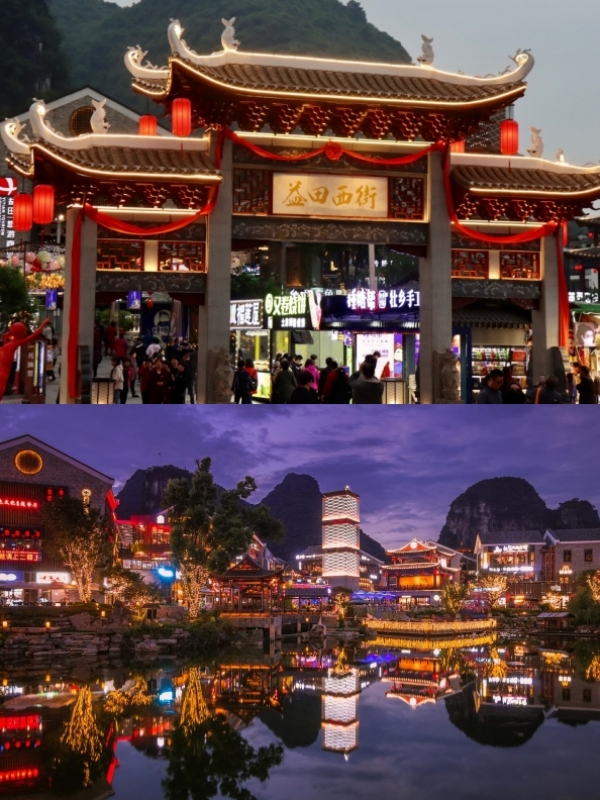
Bustling Yangshuo West Street at Night
West Street (西街) is Yangshuo's 1,400-year-old pedestrian spine. The 1.4 km strip runs between two stone gates, packed with cafes, dumpling shops, beer-fish restaurants and souvenir stands. Cruise-boat tourists flood in from late morning to mid-afternoon; mornings and evenings are calmer. Stay overnight to see the town without the day-trippers — most boutique hotels cluster within walking distance of the street.
Moon Hill, Bike Tours, and Bamboo Rafting
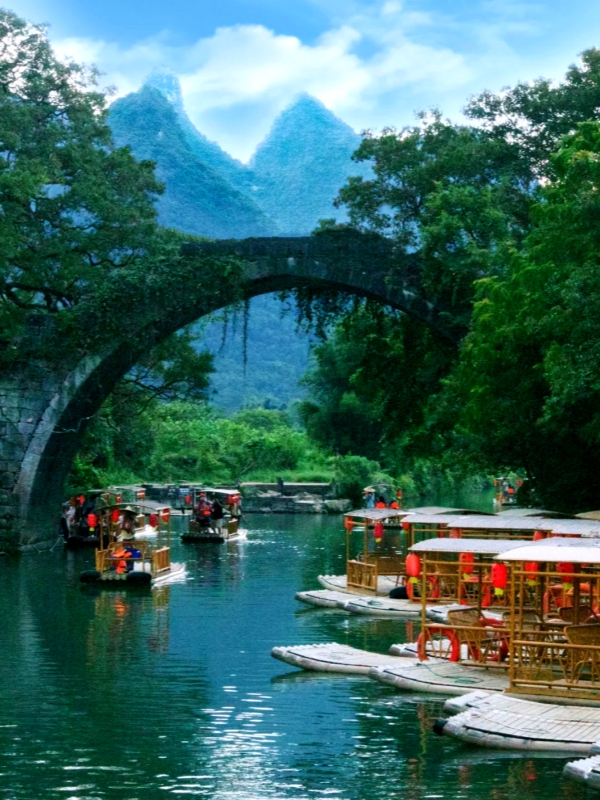
Bamboo Raft the Yulong River
Three ways to leave town and get into the karst countryside. E-bike rental from West Street costs about $5–10 (¥35–70) per day. The classic loop is Moon Hill (月亮山) and back — roughly 25 km round-trip past rice paddies and limestone towers.
Yulong River (遇龙河) bamboo rafting offers a slower, quieter version of the Li River cruise, poled by a raftsman. The cost is about $20–30 (¥140–200) per raft for two people over 1.5–2 hours.
Xingping Ancient Town (兴坪古镇) is a small riverside town 25 km south of Yangshuo. It is the actual location of the viewpoint pictured on the back of the ¥20 banknote. Reach it by local bus for about $2 (¥12) or as part of a bike loop.
Impression Liu Sanjie Outdoor Show
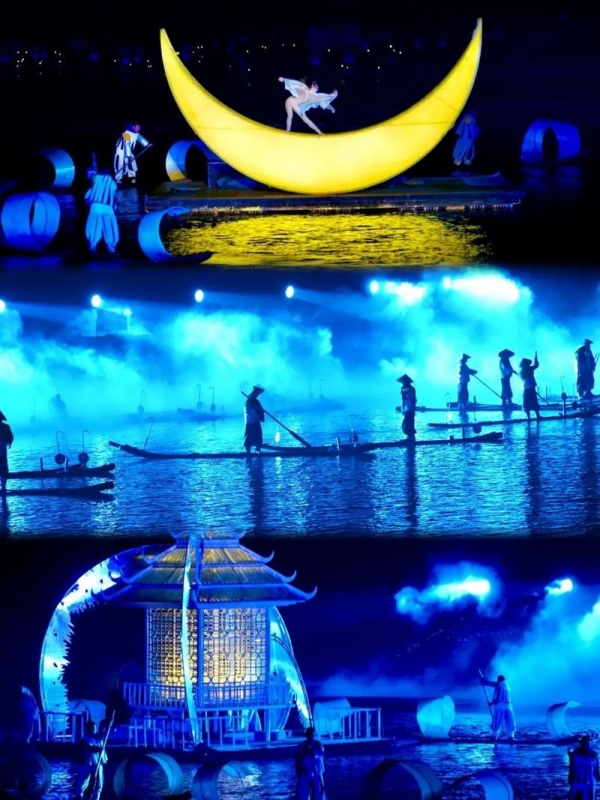
Impression Liu Sanjie Live on the Li River
The Impression Liu Sanjie is a 90-minute outdoor light-and-music performance staged on the Li River, with karst peaks as the natural backdrop. Zhang Yimou — the same director behind the 2008 Beijing Olympics opening ceremony — directed the show. Two acts run nightly during peak season. Standard seats cost about $28–50 (¥200–360); the VIP upper tier costs more. Book through Trip.com or your hotel — tickets are easy to find, but the seat class closest to the water sells out on weekends.
Nanning, Capital City and Gateway
Nanning (南宁; pop ~8.9 million) is Guangxi's capital and largest city — modern, green, and often skipped by travellers who rush from Guilin to Yangshuo. The city deserves 1–2 nights. Here are the highlights:
- Qingxiu Mountain (青秀山): 4.8 sq km forested park in the east of the city, with pagodas and skyline viewpoints; ~$3 (¥25)
- Guangxi Museum (广西博物馆): free, daily 09:30–16:30; the bronze-drum collection is the highlight, though English labels are spotty
- Zhongshan Road Night Market (中山路夜市): the cleanest, most tourist-friendly night market in Guangxi
- ASEAN context: Nanning hosts the annual China–ASEAN Expo each September and has visible Vietnamese, Thai and Lao business communities
Qingxiu Mountain and the City Centre
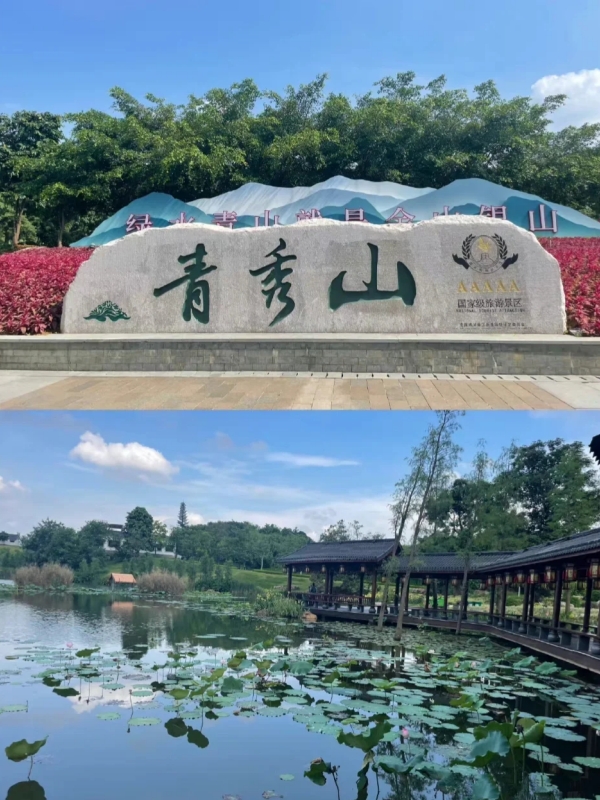
Nanning Qingxiu Mountain
Qingxiu Mountain (青秀山) is Nanning's signature green space — a 4.8 sq km park with forested trails, temples including the climbable Longxiang Pagoda (18 m tall), and panoramic viewpoints over the city skyline. Entry costs about $3 (¥25); the park opens at 06:30 and closes at 22:00 in summer. Allow half a day. Combine this with the Guangxi Museum (广西博物馆), which is free and open 09:30–16:30. The bronze-drum gallery is the strongest exhibit; English labels are inconsistent, but the bronze pieces speak for themselves.
Night Markets and Old Friend Noodles
Nanning's night market culture centres on Zhongshan Road (中山路夜市) — cleaner and more tourist-friendly than most Chinese night markets, with bilingual menu boards and Western-style seating. The must-try dish is Old Friend Noodles (老友粉) — a sour-spicy noodle soup with fermented beans, garlic and chili, the city's signature. Expect to pay about $3–5 (¥20–35). Also try rolled-rice noodles (粉虫), grilled oysters for about $1 (¥8) per skewer, and fresh-squeezed sugarcane juice.
Detian Waterfall Day Trip
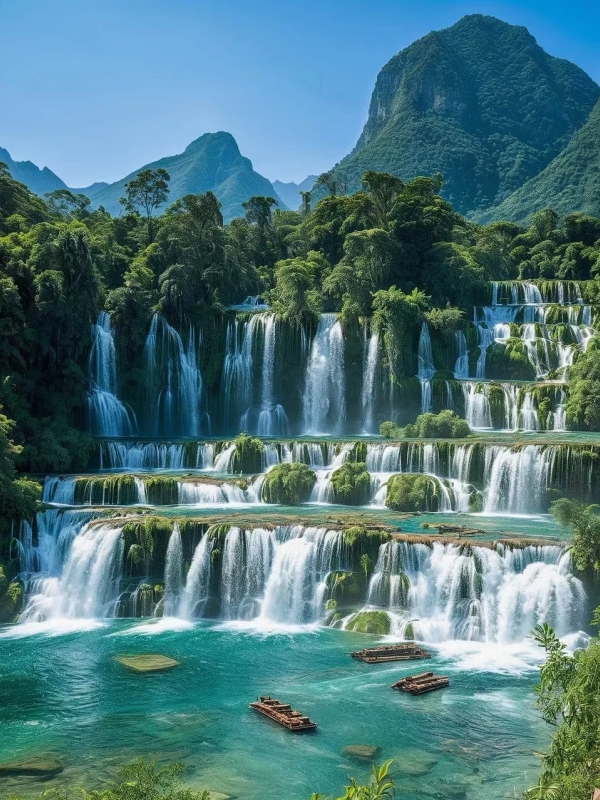
The Detian Waterfall
Detian Waterfall (德天瀑布) is a 70-m tall, three-tier waterfall straddling the China–Vietnam border — the largest transnational waterfall in Asia and the fourth-largest in the world by width. The falls sit 200 km southwest of Nanning in Chongzuo Prefecture, about 3 hours each way by tourist bus or hired car. Entry costs about $13 (¥95); the optional bamboo-raft ride to the base runs about $3 (¥25).
The best time to visit is May–November when water flow is full. In the dry season the falls shrink to a trickle. Combine the trip with a stop at Mingshi Pastoral (明仕田园) on the return route — a karst-and-rice-paddy landscape often called "mini Guilin."
Getting Around Guangxi
Guangxi is unusually well connected for a Chinese region considered remote. Two international airports, full high-speed rail coverage, and the only overland rail link between China and Vietnam make logistics straightforward.
What to Eat in Guangxi
Guangxi is a noodle-and-rice province where each major city stakes its identity on a single signature dish. Here is what to seek out:
- Luosifen / Liuzhou River Snail Rice Noodles (柳州螺蛳粉): fermented, sour-spicy noodle soup with pickled bamboo shoots, tofu skin and a distinctive broth; went globally viral in 2023–2024 when it outsold every other pre-packaged Chinese noodle category; ~$3–5 (¥20–35) per bowl
- Guilin Rice Noodles (桂林米粉): milder clear-broth noodle with toppings, the local breakfast staple; ~$2–4 (¥15–25)
- Yangshuo Beer Fish (阳朔啤酒鱼): whole carp braised in beer, tomatoes and chili, the signature Yangshuo dish; ~$10–15 (¥70–110) for a whole fish
- Nanning Old Friend Noodles (老友粉): sour-spicy noodle soup with fermented beans, garlic and chili; ~$3–5 (¥20–35)
- Bama Yao longevity foods: Hechi City's Bama County is one of China's recognised longevity villages; locals eat hemp seeds, roasted river snails and boiled pumpkin; available on Hechi menus
- Vietnamese coffee: Vietnam-border influence makes Vietnamese-style drip coffee (cà phê sữa đá, condensed-milk iced coffee) easy to find in Nanning; ~$2–3 (¥15–20)
Frequently Asked Questions
Q: How do you spell Guangxi Chinese?
Guangxi is the standard English spelling (Pinyin: Guǎngxī, tones marked). The province's full official name is Guangxi Zhuang Autonomous Region (广西壮族自治区). In older English sources — especially 19th- and early-20th-century texts and WWII histories — the region was sometimes rendered "Kwangsi" (Wade–Giles romanisation). That spelling is no longer used in modern travel writing. The "x" in Pinyin sounds like "sh," so "Guangxi" sounds roughly like "Gwang-shee."
Q: Which languages are spoken in Guangxi Chinese?
Standard Mandarin is the official language and works in hotels, restaurants and most transport. Cantonese — specifically the local dialect "bahk wá" — is the native tongue across eastern and southern Guangxi, including Nanning and Guilin. Zhuang, the language of China's largest ethnic minority, is co-official in the region and appears on bilingual signs alongside Chinese. Vietnamese is spoken in the border counties. Pinghua, a separate dialect, is spoken in some northern communities. English is rare outside Guilin and Yangshuo tourist zones.
Q: How do I get from Guilin to Yangshuo?
Four practical options exist. The tourist coach from Guilin South Bus Station takes about 1.5 hours and costs about $5 (¥35) — the cheapest choice. The HSR from Guilin North Station to Yangshuo Station takes about 25 minutes for roughly $5 (¥35) — the fastest option. The Li River cruise downstream takes 4 hours and costs about $28–45 (¥200–320) standard seat — the scenic option that combines transport and sightseeing. A private car or hired driver via expressway takes about 1 hour and costs about $40–60 (¥280–420) one way — the most flexible choice.
Q: Do I need a visa to visit Guangxi Chinese?
Standard Chinese visa rules apply. Most passport holders need a tourist (L) visa before arrival. Holders of passports from 38+ countries — most of the EU, Australia, New Zealand, South Korea, Japan, Malaysia and others — can enter China visa-free for up to 30 days under China's expanded unilateral visa-free policy. Separately, ASEAN passport holders can apply for the 144-hour visa-free scheme covering Guilin, Yangshuo and Longsheng only, provided they enter and exit via Guilin Liangjiang Airport and join an approved group tour. Confirm current rules on the official site before booking.
Q: How many days do I need in Guangxi Chinese?
Seven to ten days covers the three anchors comfortably — 2 nights in Guilin, 2 nights in Yangshuo, 1–2 nights in Nanning, plus a half-day Longsheng Terraces trip and a full-day Detian Waterfall trip. A 5-day rushed version is possible (Guilin and Yangshuo only) but skips the capital and Detian. Add 1–2 days if you want to overnight at Detian, hike Longsheng properly, or include Bama Yao.
Q: When is the best time to visit?
April–May (mild 18–26 °C, clear before the monsoon) and September–October (post-monsoon, clear skies, golden rice terraces) are the two best windows. June–August is hot (30–35 °C) and rainy — Li River cruises still run but visibility is lower. November–March is cold (5–15 °C), grey and off-season — fewer crowds and cheaper hotels, but the mist hides the karst views.
Q: Is English spoken in Guangxi Chinese?
English is limited. Guilin and Yangshuo tourist zones — Li River cruise operators, West Street cafes, larger hotels — often have basic English speakers; elsewhere English is rare. Mandarin is essential. Install Pleco or Google Translate's camera feature for menus and signs. Nanning's tourism staff speak less English than Guilin's. English-speaking guides can be arranged through Trip.com.
Q: What else is worth seeing in Guangxi Chinese?
Beyond the three anchors: Longji Rice Terraces near Guilin, included as a day trip. Chengyang Dong Villages (程阳), about 2.5 hours from Guilin — eight traditional Dong wind-and-rain bridges and drum towers. Beihai (北海), a coastal city with Silver Beach and Weizhou Island (涠洲岛), a volcanic island with coral and fishing villages. Bama Yao longevity villages in Hechi Prefecture, about 5 hours from Nanning — marketed as one of China's longevity hotspots.
Q: Does Guangxi have traditional Chinese medicine schools?
Yes. Guangxi University of Chinese Medicine (广西中医药大学), based in Nanning, is the main TCM research and teaching institution and runs programmes aimed at international students. Guangxi University (广西大学) and Guangxi Normal University (广西师范大学) in Guilin also run Chinese-language semester programmes for international learners. These are not tourist sites, but the bilingual TCM signage and herbal pharmacies across Guangxi reflect that academic presence.