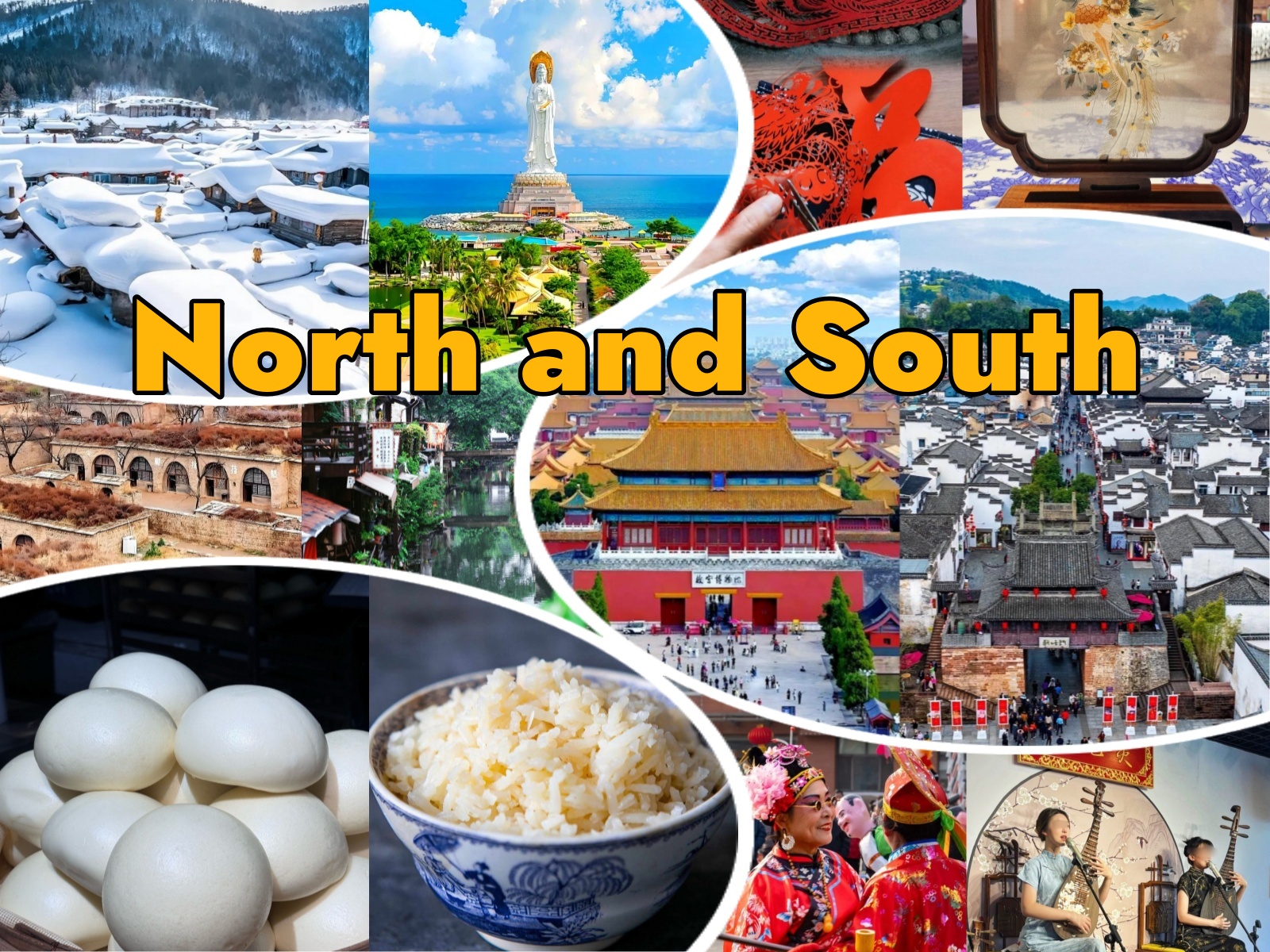
North and South in China:From Snow to Sun, Wheat to Rice, Imperial Grandeur to Water Town Grace
In one territory, China, there lies a remarkable duality. The Qinling-Huaihe Line is thought to mark the division between north and south china along two scientific thresholds: the 0C January isotherm and 800mm annual rainfall. North of this line, where winters are fierce, it rains little, and the people feed on wheat, flow rivers. South of this line, the climate turns, the rivers run all through the year, and rice is the staple of every meal. Yet there are more profound lines than weather and food that divide. Imperial red walls turn into “scholar white” walled gardens. Thick walled siheyuan become stilted house, built along riversides. State-driven economy gives way to private commercial dynamism. North and south china describe eight different degrees of difference that define two different civilizations within one national identity.
Landscape: Southern Topography Frames A More Captivating Canvas
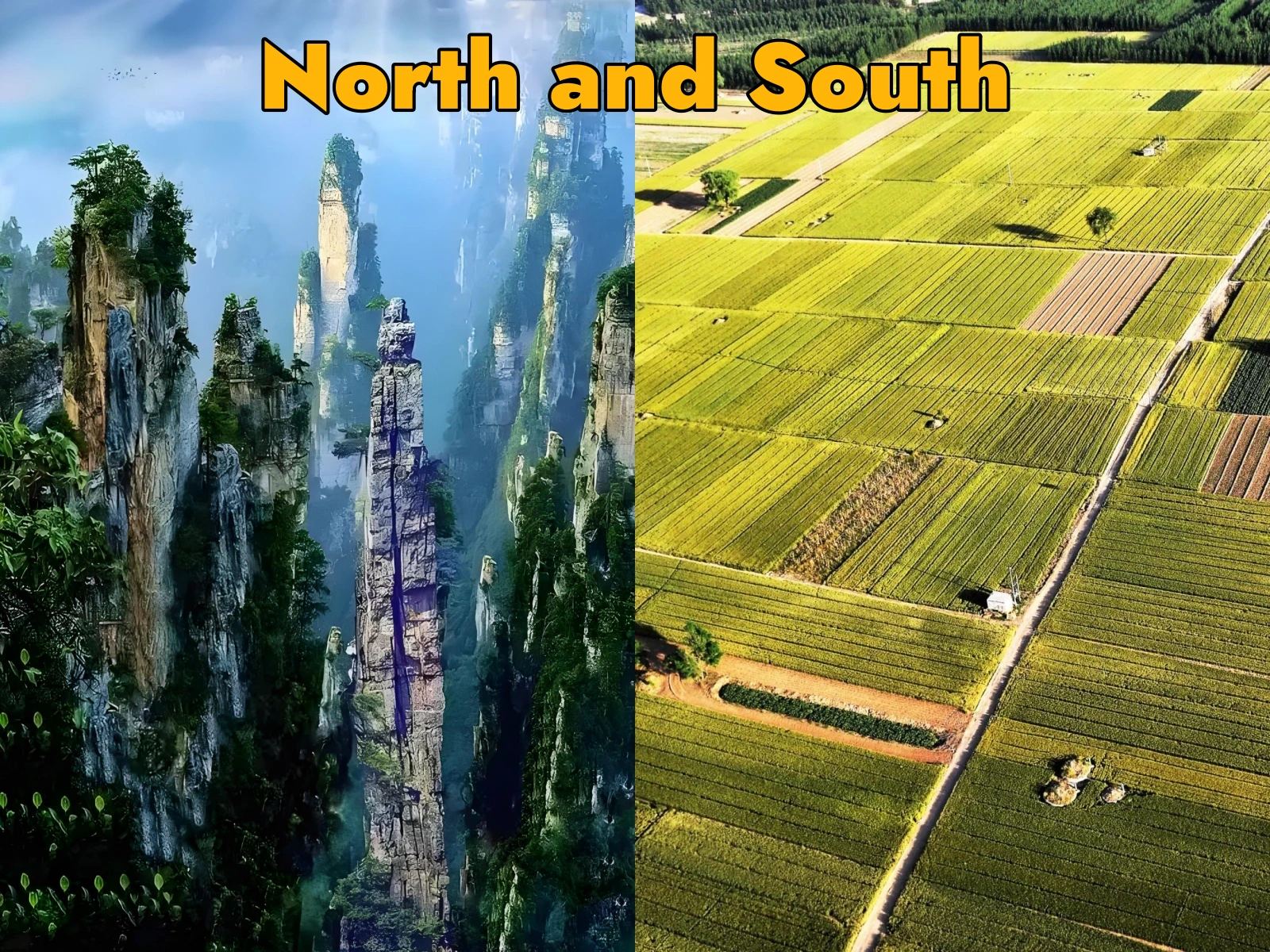
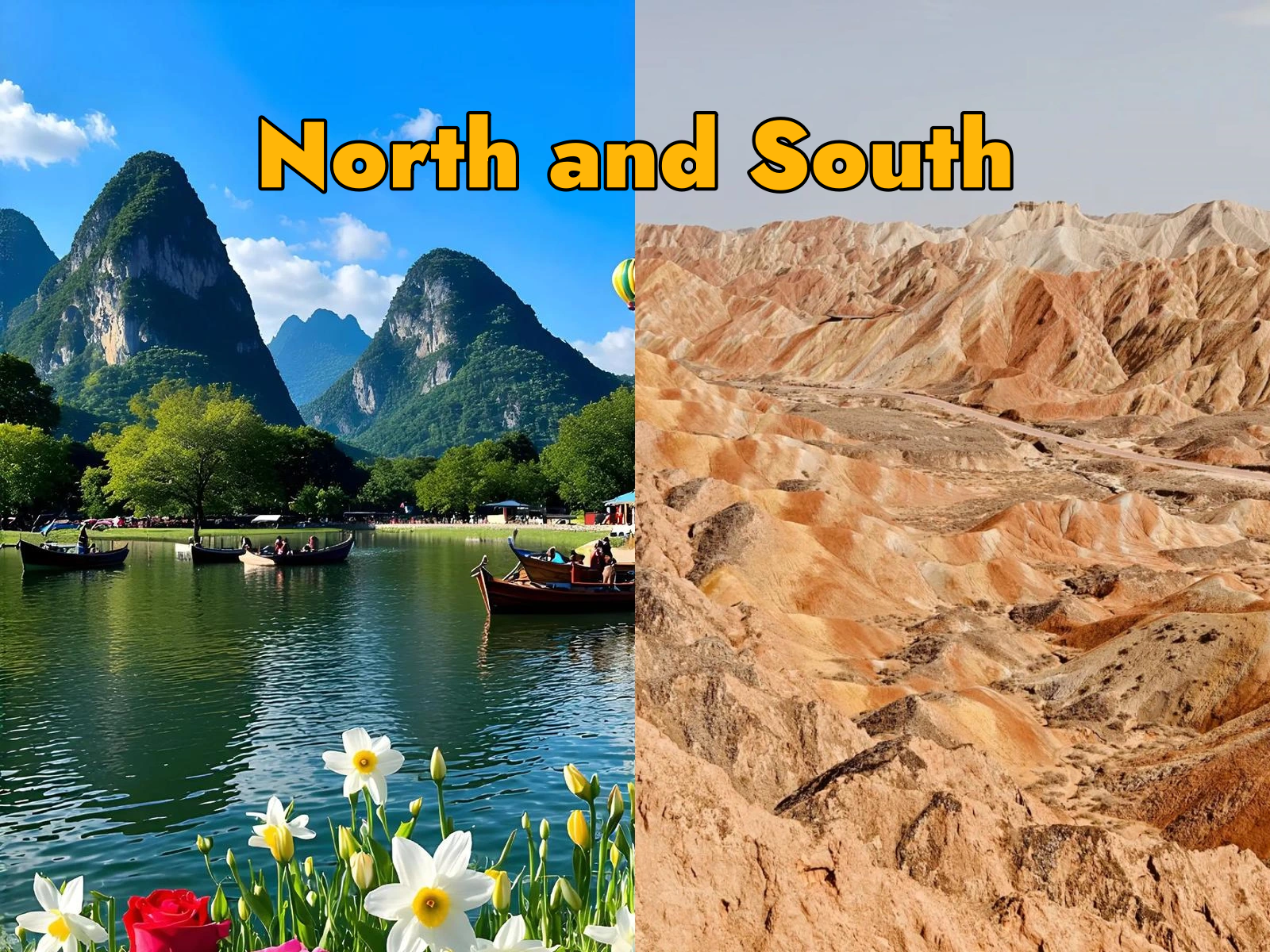
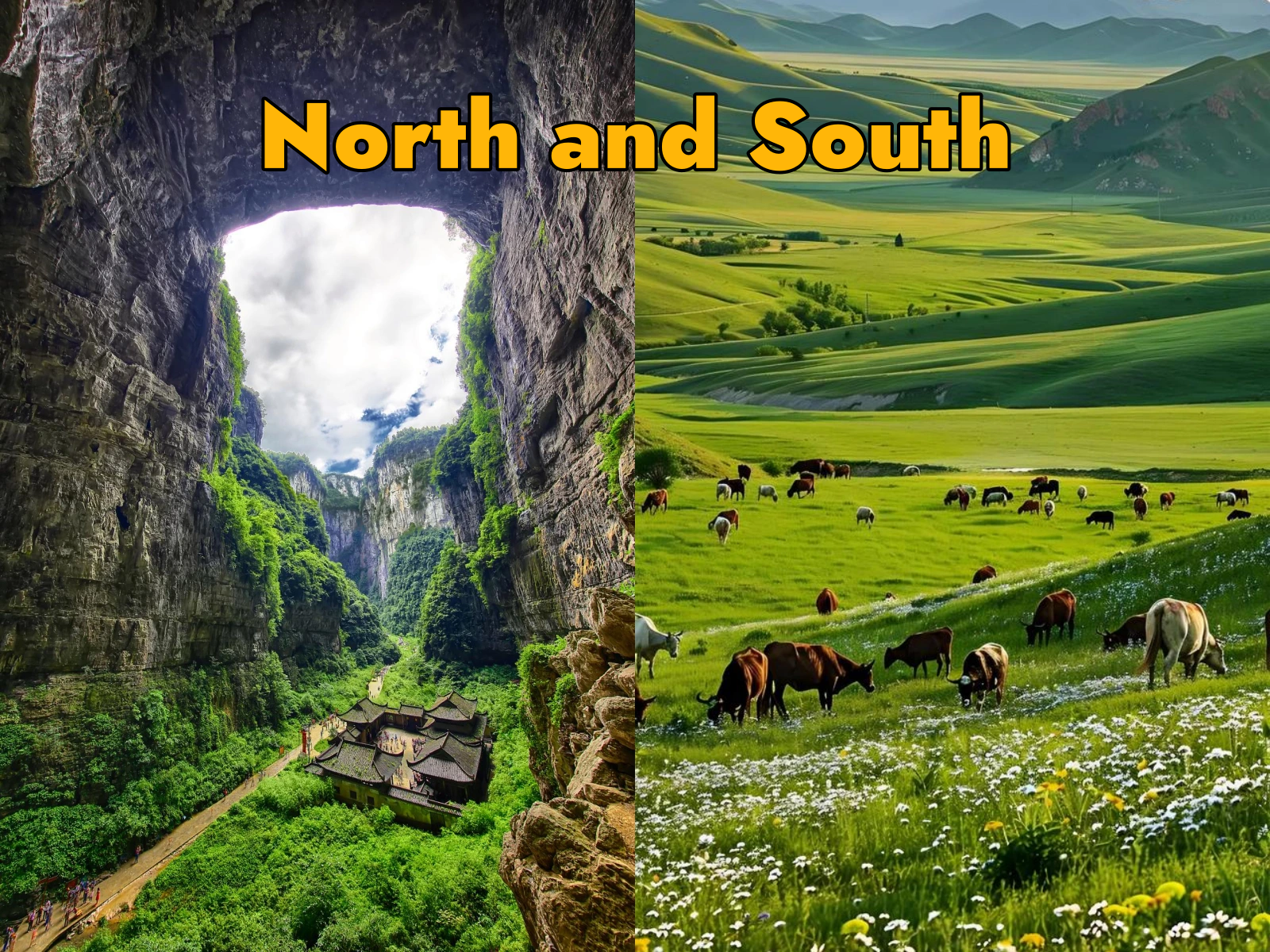
North vs. South Landscape: A Visual Contrast
| Feature | Northern China | Southern China |
|---|---|---|
| Dominant terrain | Plains, plateaus | Hills, mountains, river deltas |
| River behavior | Seasonal; freezes in winter | Year-round flow, dense network |
| Primary color palette | Yellow-brown / steel-grey | Deep green / terracotta red |
| Forest type | Temperate deciduous | Subtropical evergreen |
| Signature view | Endless flat horizon | Misty peaks over winding rivers |
Northern China Landscape: Open Skies, Loess Earth, and Seasonal Drama
Northern China is all open territory, plateau and plain. The aspect varies greatly with the seasons. Thus we get the picture of winter in the north, black and white. Photographers revel in the wintry beauty of the northern land.
- Terrain & Rivers
- The North China Plain, Northeast Plain, and Loess Plateau define the region's geography.
- The Yellow River freezes in winter and turns to vast mudflats during droughts.
- Color & Vegetation
- Ochre, earth-brown, and steel-grey dominate the visual landscape across all seasons.
- Temperate deciduous forests shed leaves in autumn, exposing stark winter skeletons.
- Visual Signature
- Unbroken sight lines stretch for hundreds of kilometers across flat open plains.
- Inner Mongolia's steppe offers dramatic, sky-dominant winter photography opportunities.
Southern China Landscape: Karst Peaks, River Networks, and Perpetual Green
Southern China is all chopped up ground of bill and burn and water, of river beds between beautiful alluvial plains. Water is the important feature all the year round, so that the south possesses the grandest scenery in the land.
- Terrain & Rivers
- Hills, mountains, river deltas, and coastal plains create a highly fragmented geography.
- Rivers flow year-round; the south holds over 70% of China's river network density.
- Color & Vegetation
- Deep green, terracotta red soil, and misty blue-grey define the regional scenery.
- Subtropical evergreen forests retain dense foliage throughout all four seasons.
- Visual Signature
- Karst peaks rise from rivers, producing the misty scenes famous in classical Chinese art.
- Guilin, Zhangjiajie, and Yunnan represent the south's most celebrated natural highlights.
Landmark Architecture: Northern Symmetry Delivers A More Monumental Impact
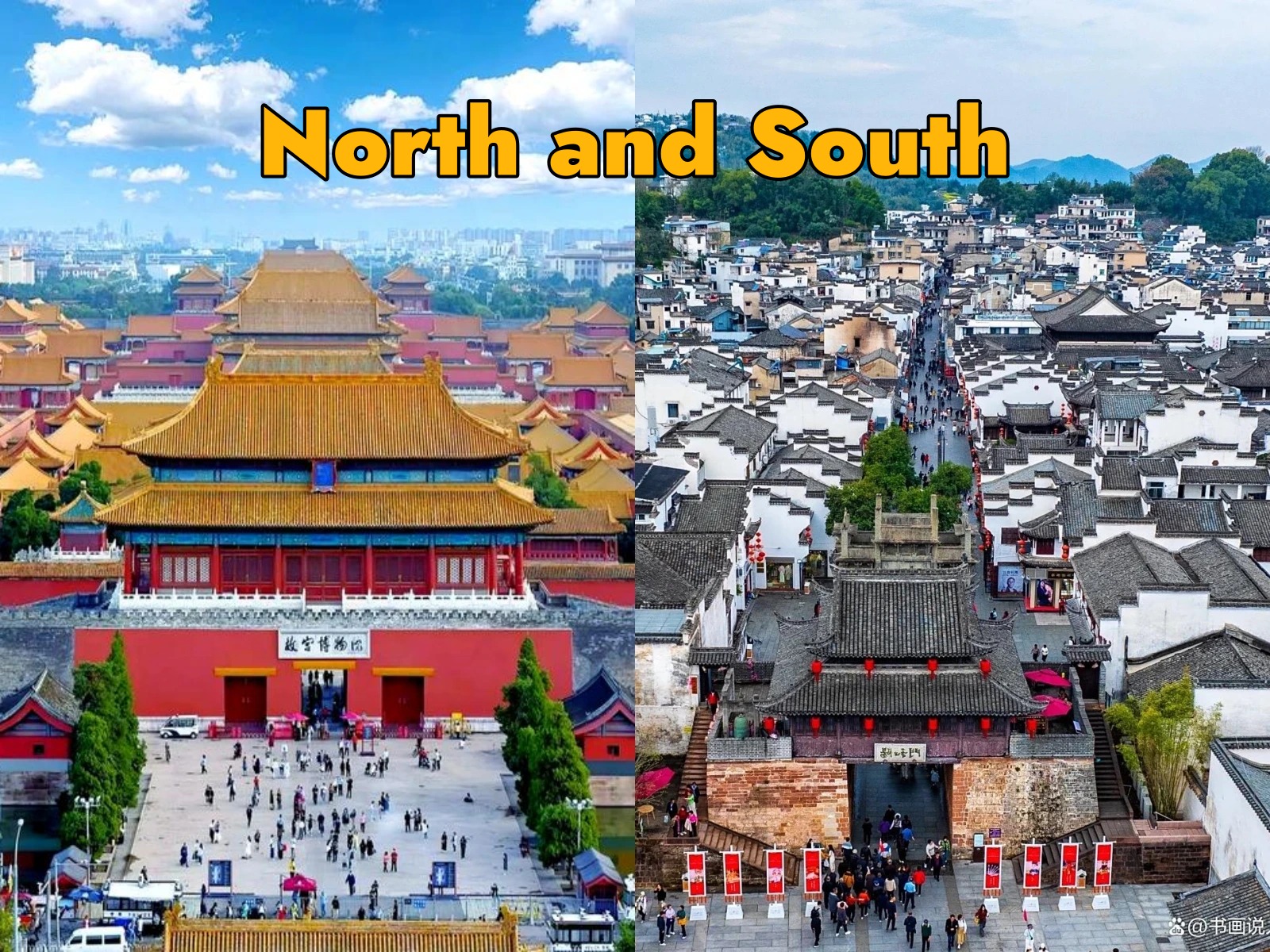
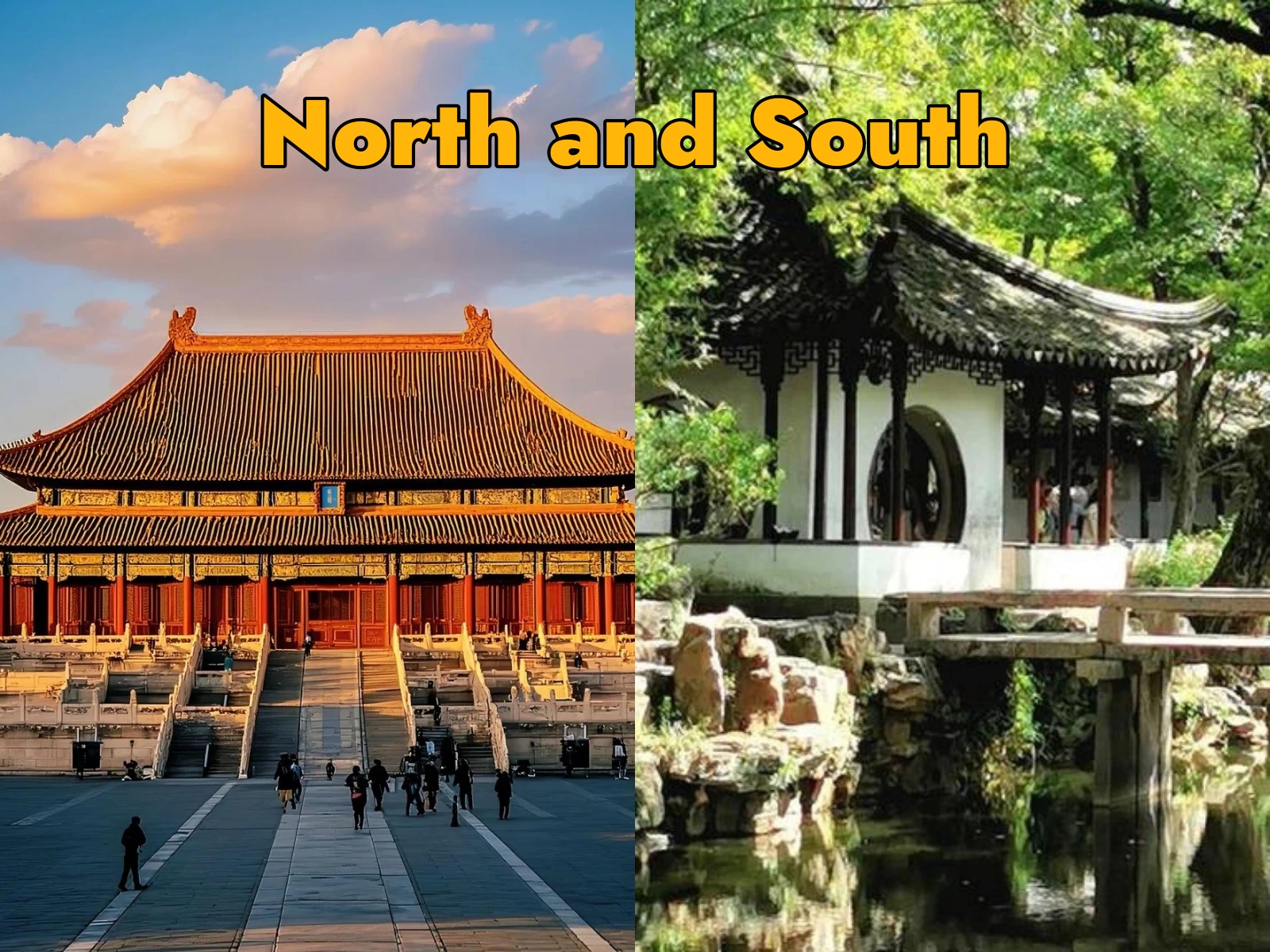
North vs. South Architecture: Two Design Philosophies
| Feature | Northern Landmarks | Southern Landmarks |
|---|---|---|
| Philosophical root | Confucian hierarchy | Daoist harmony / literati aesthetics |
| Color palette | Vermillion red + imperial yellow | White + ink grey (monochrome) |
| Scale | Monumental (Forbidden City: 72 ha) | Intimate (Suzhou gardens: 0.2–4 ha) |
| Roof pitch | Gentle slope (wind resistance) | Steep with upturned eaves (rain drainage) |
| Axis / layout | Strict central symmetry | Organic, asymmetric, nature-integrated |
| Iconic landmark | Great Wall, Forbidden City | Suzhou Gardens, Huizhou villages |
Northern China Landmarks: Where Power Is Carved in Stone
Northern features echo Confucian airs and imperialistic airs. The sheer magnitude and symmetry of such sites present political power naked. These places are monumental in all the usual senses.
- Philosophy & Palette
- Confucian order drives strict hierarchical design across all major imperial structures.
- Vermillion red walls and imperial yellow glazed tiles signal exclusive royal status.
- Scale & Structure
- The Forbidden City covers 720,000 m²; its north-south axis extends 7.8km through Beijing.
- Gentle slopes resist northern winds while maintaining a commanding horizontal profile.
- Layout & Icon
- Strict central-axis symmetry physically expresses the emperor's role as cosmic center.
- The Great Wall stretches 21,196km, built to be seen as well as functional.
🗺️ Northern China's imperial landmarks inspire many first-time visitors to weigh them against Japan's castles and temple districts. If you're still choosing between the two destinations, our in-depth breakdown — China or Japan: The Full Travel Comparison — covers costs, culture, and what each country does best.
Southern China Landmarks: Where Aesthetics Retreat from Power
Southern ones echo Daoist airs and literati airs. Intimacy and suggestion will have their way with scale and power. But their smallness in space does not deprive them of exhilarating depth of spirit in proper detail.
- Philosophy & Palette
- Daoist harmony and scholarly (literati) aesthetics govern every spatial and material decision.
- Whitewashed walls and dark grey tiles create a refined ink-wash monochrome atmosphere.
- Scale & Structure
- Suzhou's classical gardens average 0.2–4 hectares — deliberately intimate and human-scaled.
- Steep roofs with upturned eaves drain monsoon rain and create elegant curved silhouettes.
- Layout & Icon
- Organic asymmetry integrates nature into the structure, suggesting infinity within limited area.
- Suzhou Classical Gardens and Huizhou villages both carry UNESCO World Heritage designation.
Housing & Living: Northern Insulation Secures A More Reliable Warmth
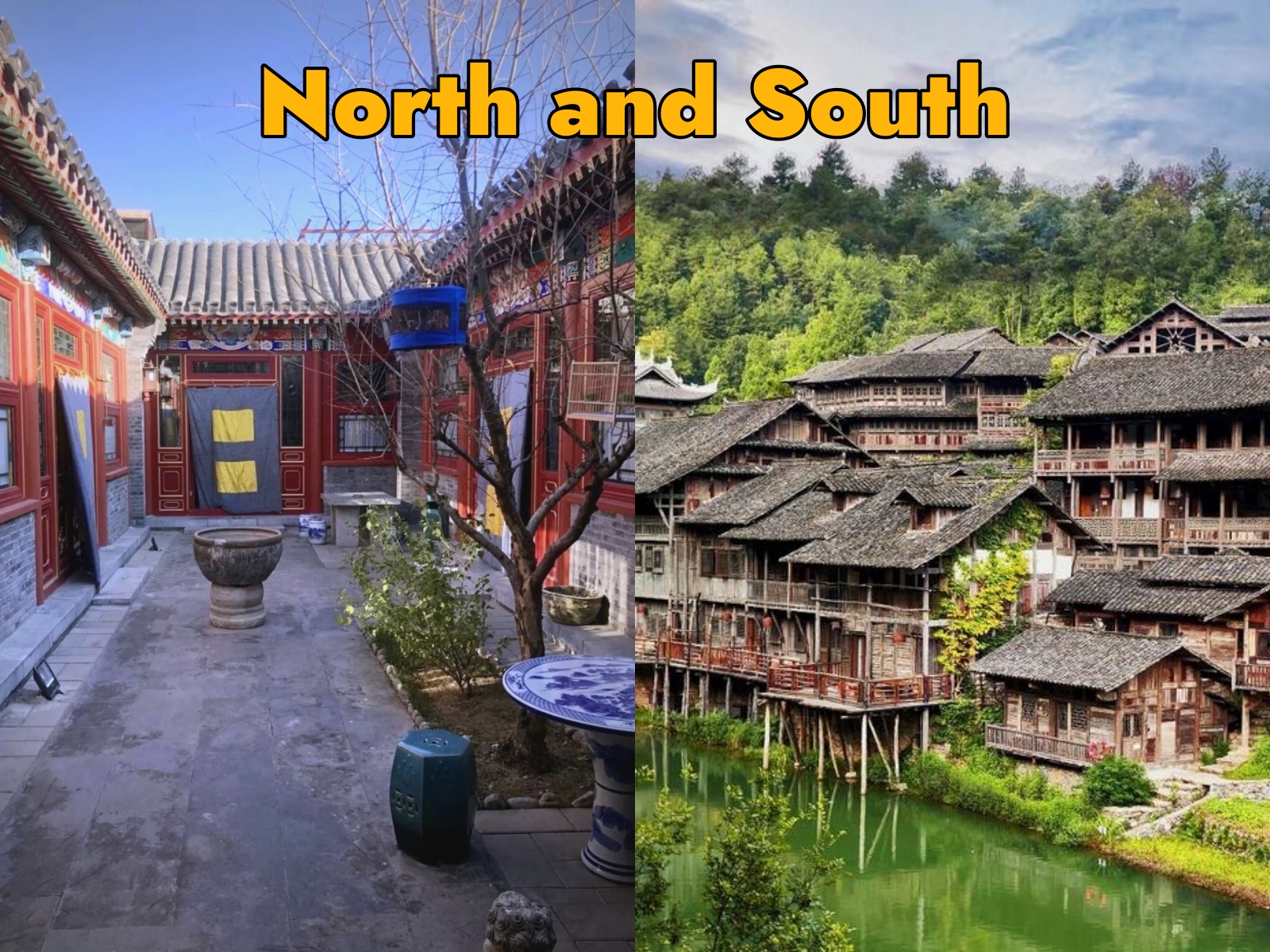
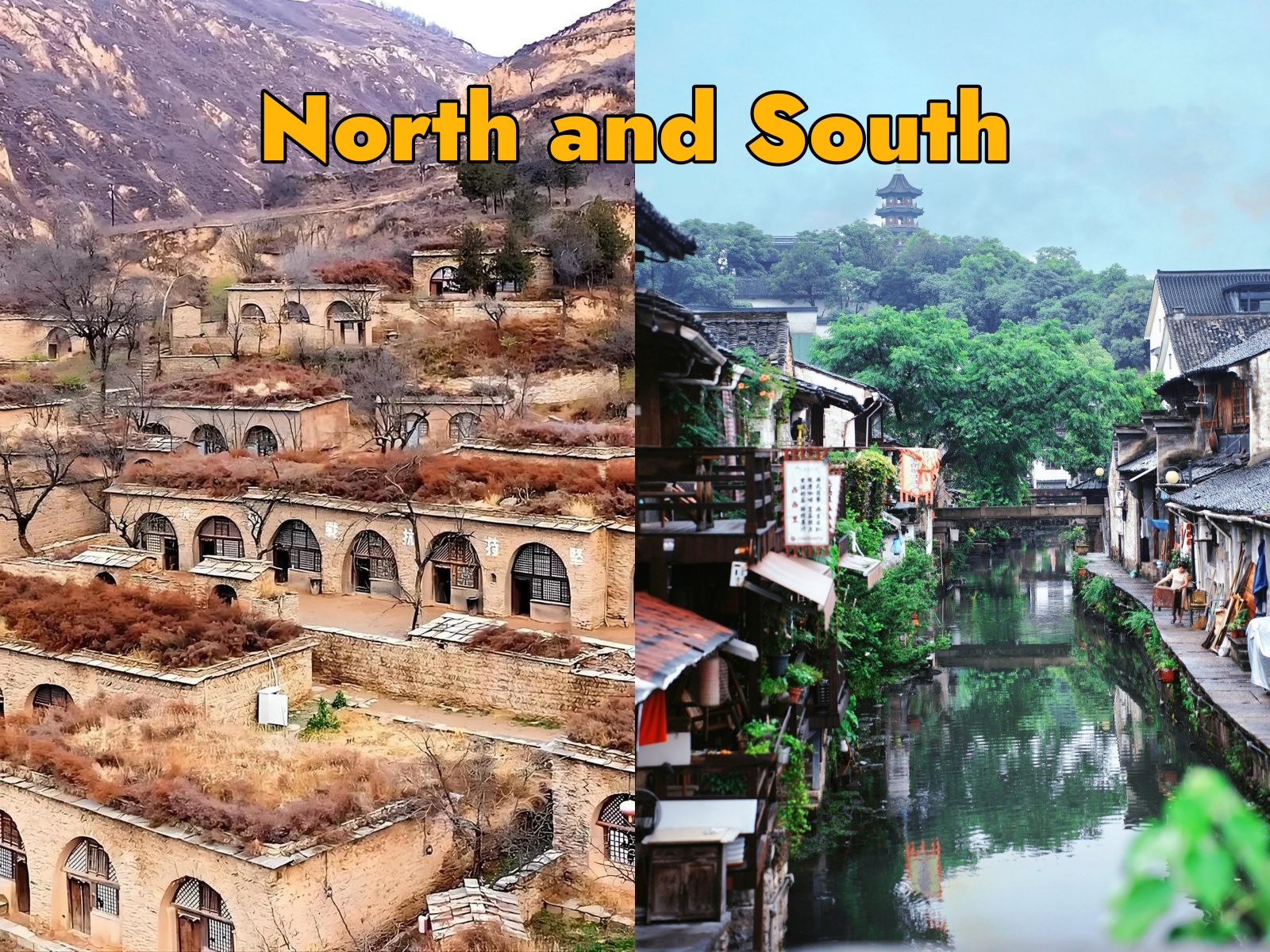
North vs. South Housing: Function Follows Climate
| Feature | Northern Homes | Southern Homes |
|---|---|---|
| Core design goal | Heat retention | Ventilation + moisture control |
| Wall construction | 50cm+ brick / rammed earth | Thin wood, bamboo, or light brick |
| Window style | Small, often double-glazed | Large, maximized for cross-breeze |
| Roof pitch | Gentle slope | Steep (30°+) with deep eaves |
| Iconic structure | Siheyuan (四合院) | Stilted house (干栏式); Sky-well house |
| Social space | Indoors (kang-centered) | Semi-outdoor (arcade, courtyard) |
Northern Chinese Homes: The Physics of Warmth
Northern houses are built to keep in the heat; very thick walls and a southern aspect to the inner house yard to retain the light and warmth. Therefore one lives much indoors throughout the tedious long winter.
- Design & Materials
- Every structural decision prioritizes insulation against extreme and prolonged winter cold.
- Brick and rammed-earth walls exceed 50cm in thickness throughout the entire structure.
- Openings & Roof
- Small windows, frequently double-glazed, minimize heat loss during the coldest months.
- Gentle slopes resist northern winds and shed light snowfall without structural stress.
- Structure & Social Space
- The siheyuan (四合院) faces strictly south to maximize solar gain in winter months.
- The heated kang sleeping platform centers indoor social life throughout winter.
Southern Chinese Homes: The Physics of Airflow
Southern houses are built to ventilate the house and get rid of moisture; with open doors and windows, and roof pearlings like thatch to dissipate the sun’s heat and the heavy rains see-saw. But they are cold houses when the icy winter comes.
- Design & Materials
- Every structural decision prioritizes airflow and rapid drainage in humid conditions.
- Thin wood panels, bamboo weave, or light brick keep structures cool and moisture-resistant.
- Openings & Roof
- Large openings and open layouts maximize cross-breeze ventilation throughout the year.
- Steep 30°+ roofs with deep eaves shed monsoon rain rapidly and protect walls below.
- Structure & Social Space
- Stilted ganlan houses (干栏式) elevate the living space entirely above damp ground.
- Covered qilou arcades (骑楼) extend daily social life into semi-outdoor street environments.
Food: Southern Complexity Presents A More Refined Palate
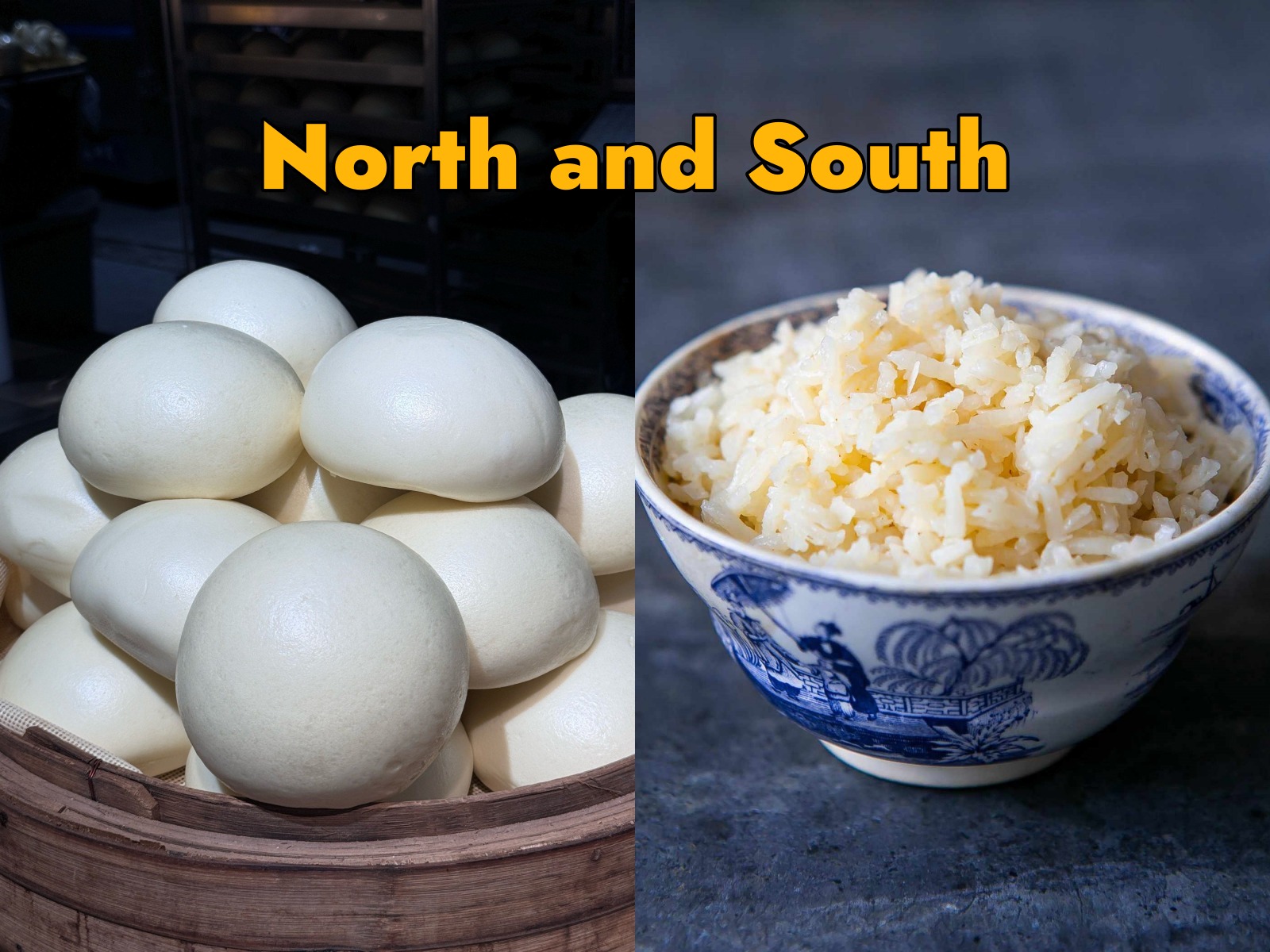
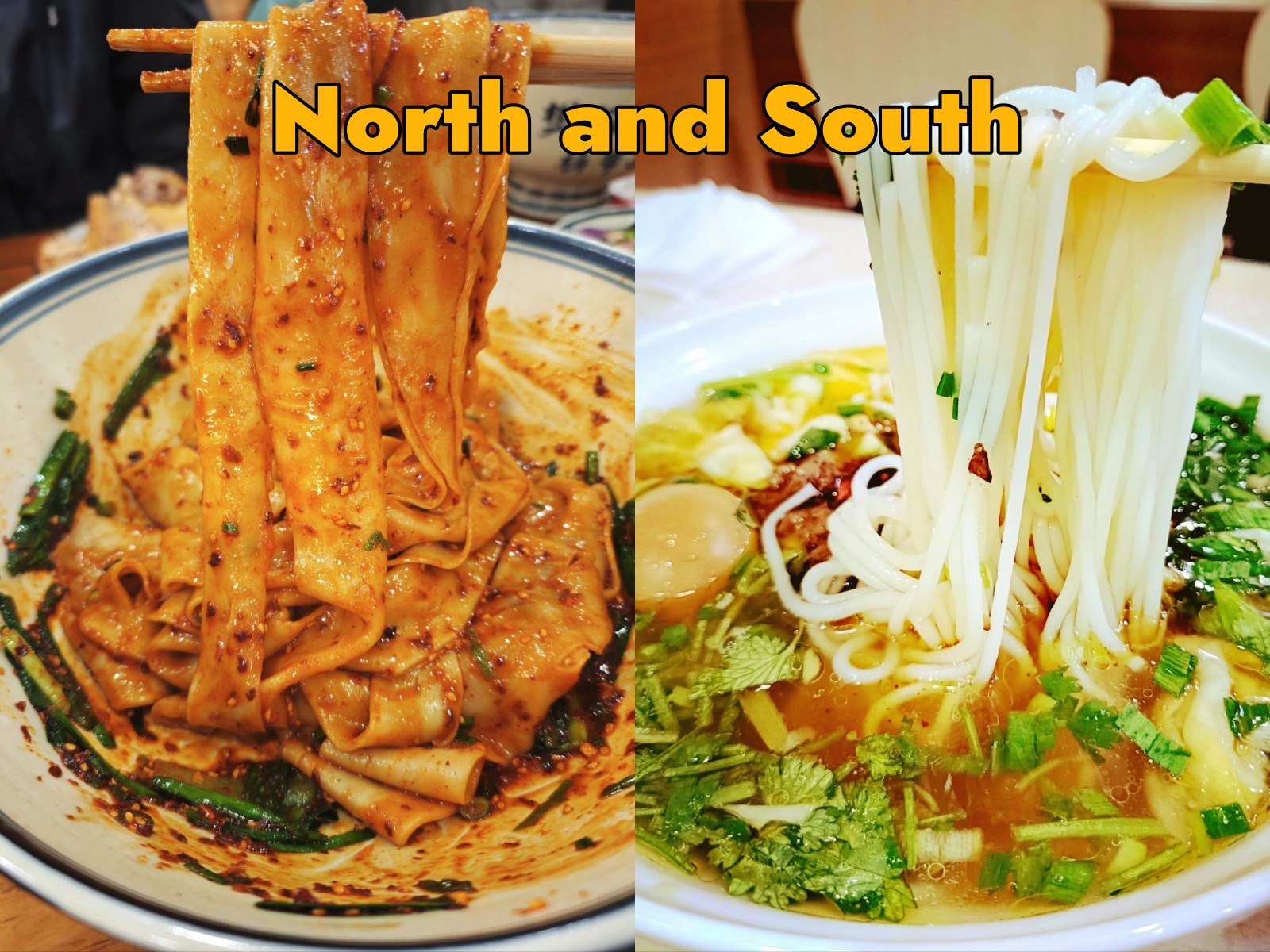
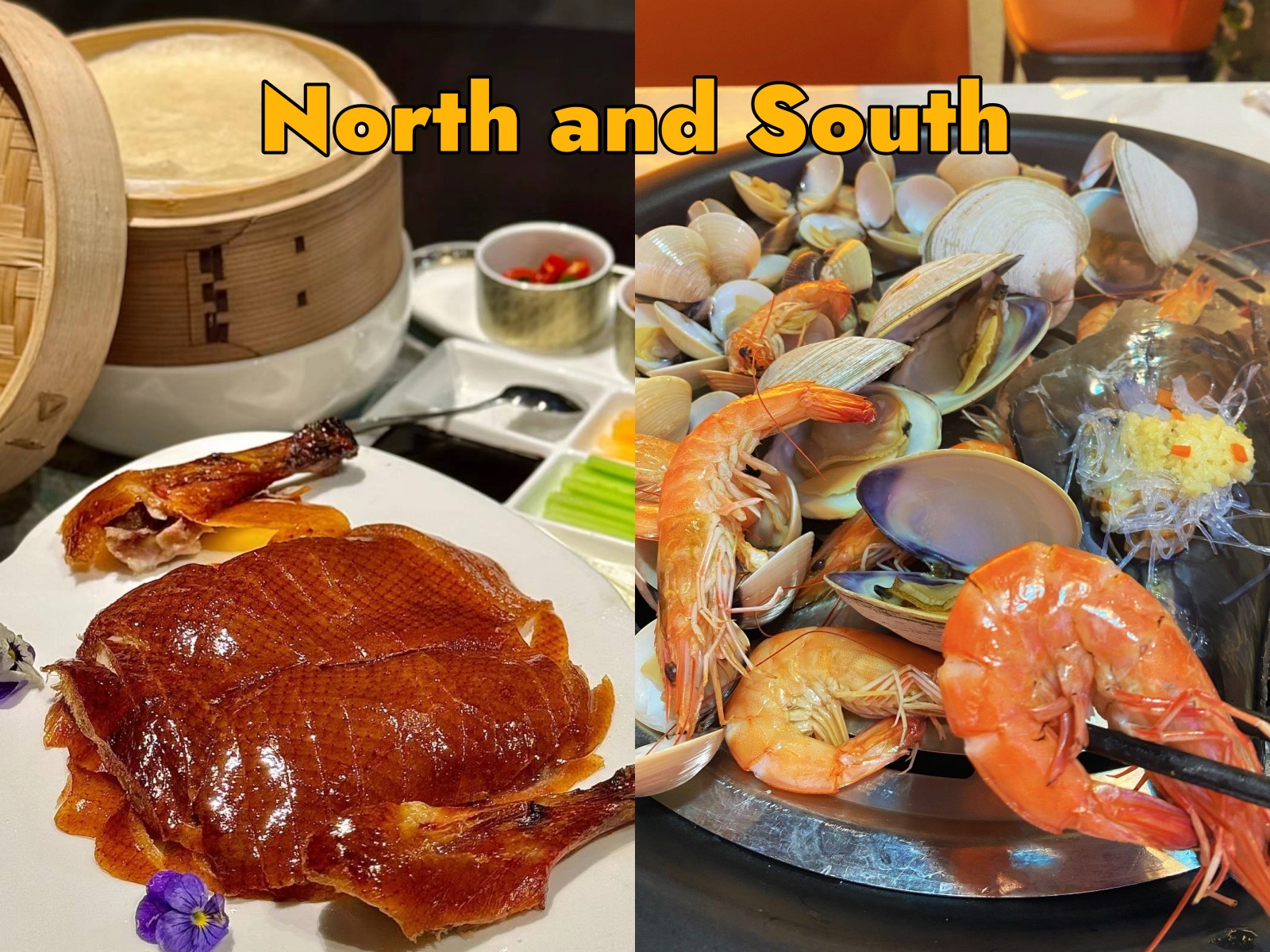
North vs. South Food: 10 Iconic Dishes Compared
| Category | Northern China | Southern China |
|---|---|---|
| Staple grain | Wheat | Rice |
| Bread / starch form | Steamed bun, flatbread, noodles | Rice noodles, rice cakes, congee |
| Dominant flavor | Salty, savory, soy-forward | Complex: sweet (Shanghai), spicy (Sichuan/Hunan), fresh (Cantonese) |
| Signature protein | Lamb, pork belly (braised) | Seafood, freshwater fish, chicken |
| Iconic dish | Beijing Roast Duck; Lanzhou Beef Noodles | Cantonese Dim Sum; Sichuan Hot Pot |
| Meal culture | Large communal plates; baijiu toasts | Small shared plates; tea culture |
| Market behavior | Buy in bulk; preserve for winter | Buy daily; maximum freshness |
Northern Chinese Food: Carb-Forward, Bold, and Communal
Northern Chinese cuisine revolves around wheat and heavy, salty flavours. Chilling winters gave rise to a food culture of preservation and largesse, so northern food is filling, convivial, and unapologetically intense.
- Staple & Flavor
- Wheat dominates; noodles, steamed buns, dumplings, and flatbreads appear at every meal.
- Salty and savory dominate; soy-sauce-forward seasoning defines most northern dishes.
- Protein & Iconic Dish
- Lamb and pork belly appear frequently, often braised or roasted for warming effect.
- Beijing Roast Duck and Xi'an Oil-Splashed Noodles (油泼面) lead the must-try list.
- Culture & Market
- Large communal plates arrive together; baijiu toasts mark social and business occasions.
- Families buy in bulk and traditionally preserve ingredients to last through winter months.
Southern Chinese Food: Rice-Based, Delicate, and Ingredient-Obsessed
Southern Chinese cuisine revolves around rice and the importance of ingredient freshness above all else. The regional differences are staggering, from Cantonese delicacy to Sichuan fire. But all that southern food in common is its fresh obsession.
- Staple & Flavor
- Rice is non-negotiable; congee, rice noodles, and rice cakes fill daily southern menus.
- Cantonese favors fresh umami; Sichuan delivers numbing spice; Shanghai leans sweet.
- Protein & Iconic Dish
- Seafood and freshwater fish dominate; wet-market live purchases are standard practice.
- Cantonese dim sum and Chengdu mapo tofu represent two distinct southern culinary peaks.
- Culture & Market
- Small shared plates arrive gradually; tea culture broadly replaces baijiu across the south.
- Vendors sell daily; freshness within hours is non-negotiable across Cantonese cooking culture.
🌶️ Within southern China's spice story, Chengdu and Chongqing compete as the two dominant Sichuan food capitals. For a city-by-city breakdown of food, transport, and travel style, our guide Chengdu vs Chongqing: Panda Calm or Mountain Fire? helps you choose between them.
Arts & Culture: Southern Elegance Inspires A More Delicate Aesthetic
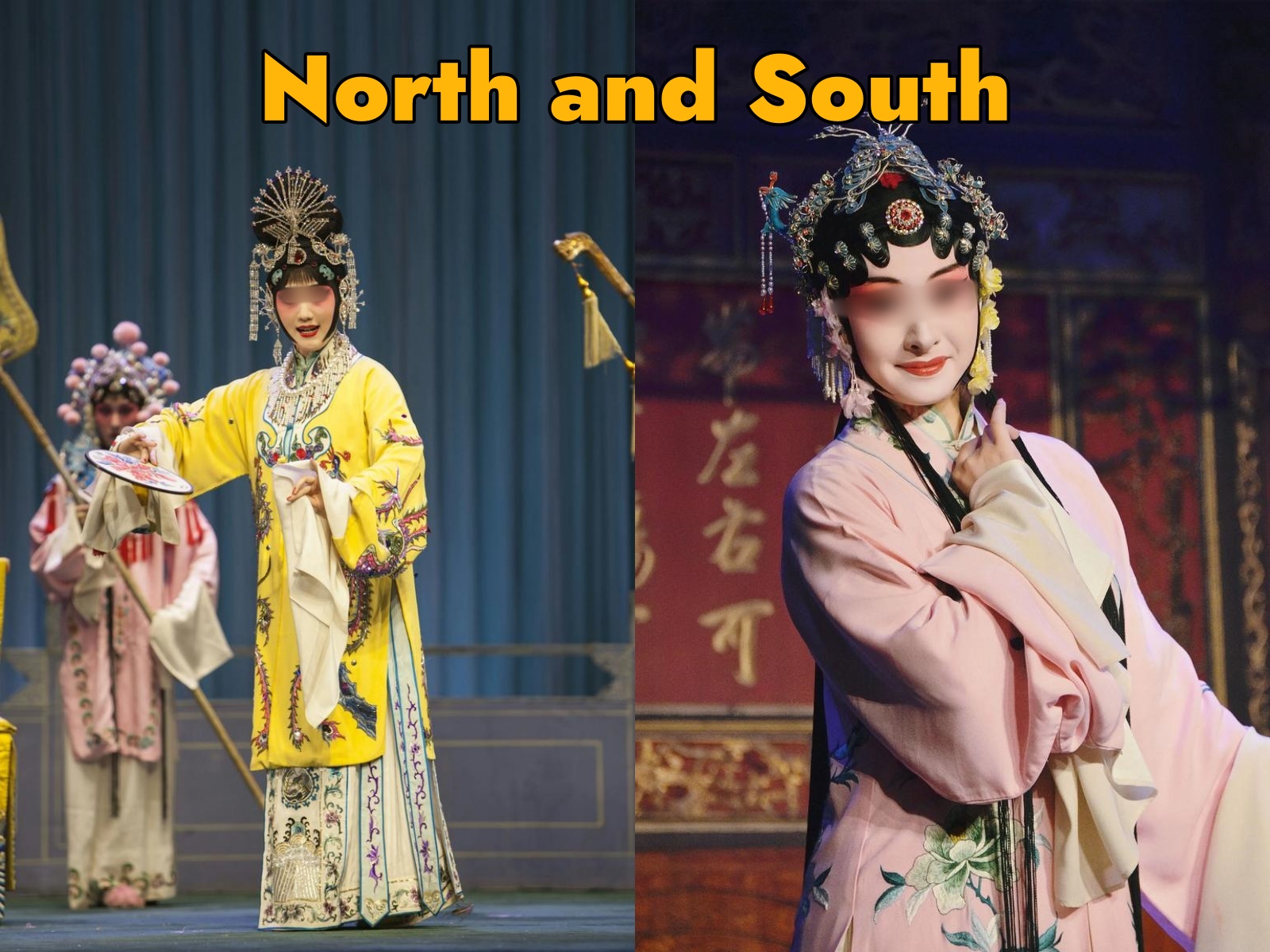
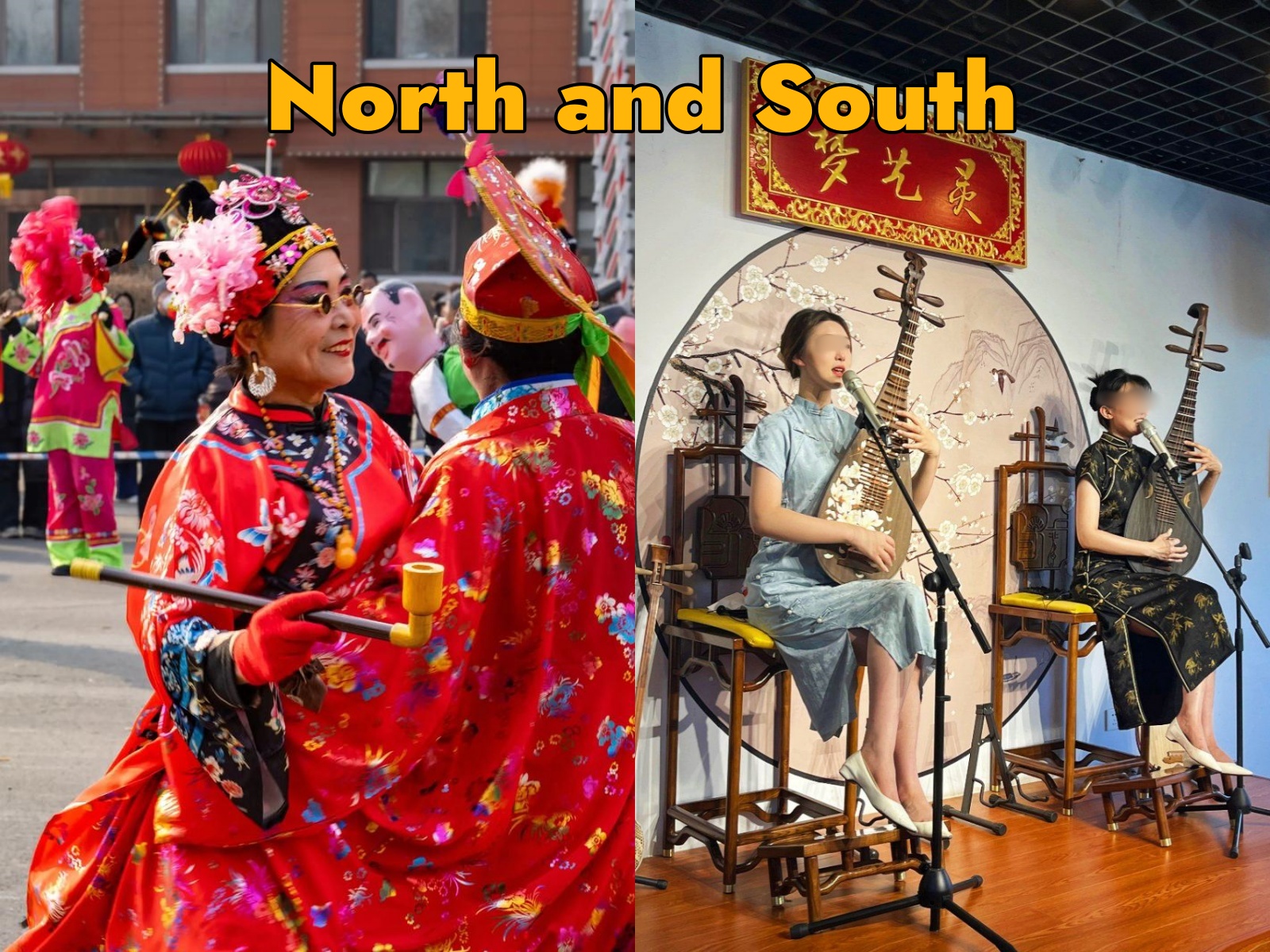
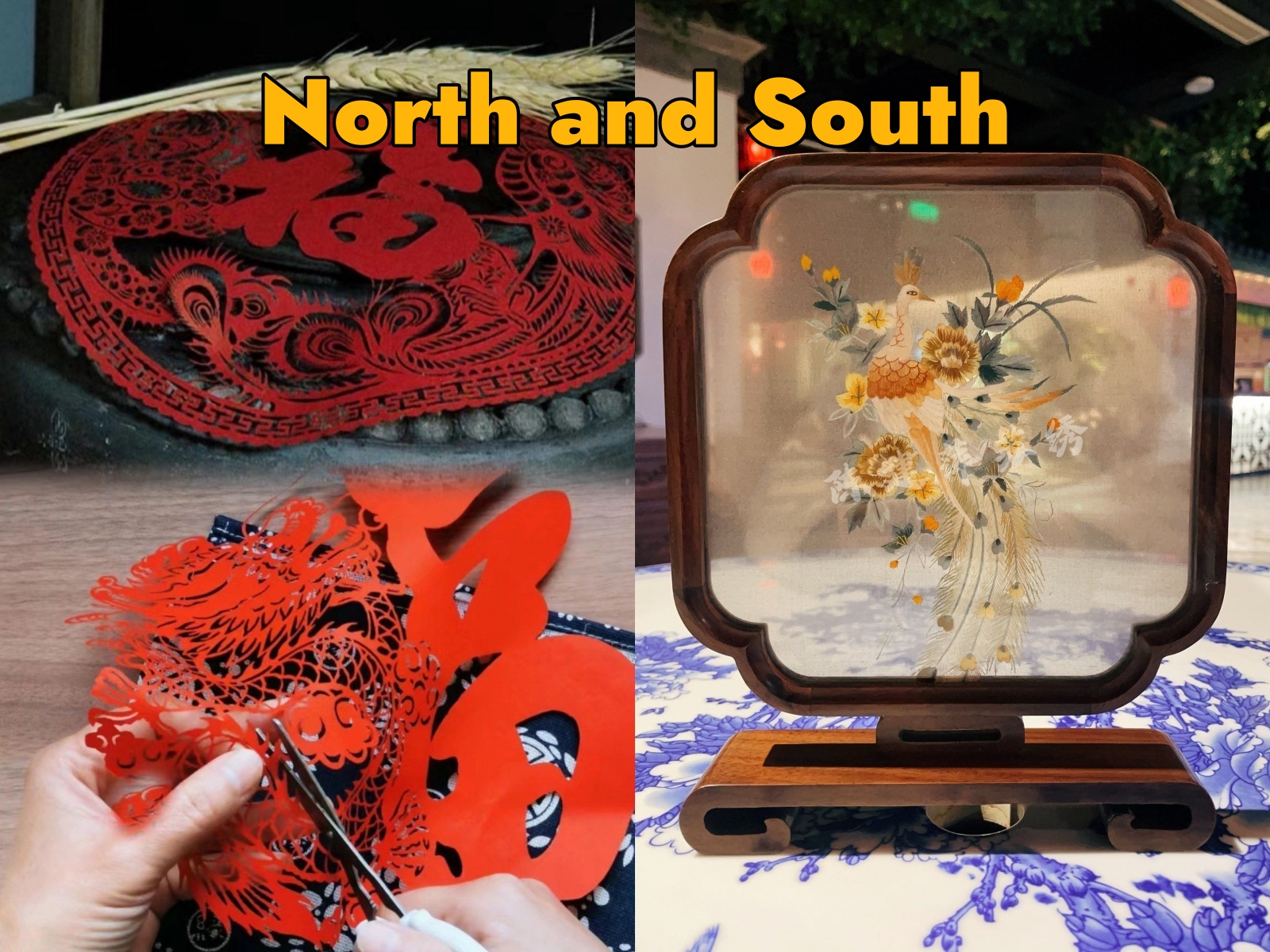
North vs. South Arts: The Aesthetic Spectrum
| Art Form | Northern Style | Southern Style |
|---|---|---|
| Opera | Beijing Opera (bold masks, percussive) | Kunqu (UNESCO), Yue Opera, Pingtan |
| Musical texture | High-pitched, forceful, percussive | Melodic, soft, string-and-flute led |
| Folk art | Paper-cutting, shadow puppetry, Yangge dance | Suzhou embroidery, blue-and-white porcelain |
| Color palette | Primary colors, high contrast | Ink-wash tones, muted pastels |
| Performance scale | Outdoors, crowd-facing | Intimate, courtyard / teahouse scale |
| Philosophical root | Confucian order + Taoist epic grandeur | Literati seclusion + Chan Buddhist restraint |
Northern Chinese Arts: Raw, Loud, and Built for the Open Plain
Art from northern China is powerful and energetic, with landscapes that have influenced creation of outdoor public performance traditions or media. Therefore, northern Chinese art creates loud, large, and visually expansive forms.
- Aesthetic Identity
- Majestic and rugged (豪迈); all art forms calibrate for vast, open outdoor landscapes.
- Primary colors in high contrast define the visual language of all northern artistic forms.
- Opera & Music
- Beijing Opera uses stark primary-color face masks and broad, expansive physical movements.
- High-pitched, forceful, and percussive; drums drive rhythm across all major northern forms.
- Folk Art & Stage
- Paper-cutting, shadow puppetry, and Yangge dance dominate the northern folk tradition.
- Outdoor plazas and large teahouses accommodate crowd-facing communal performances.
Southern Chinese Arts: Subtle, Melodic, and Built for the Intimate Courtyard
Arts of Southern China - soft, subtle and visually refined - created an arts tradition of performance developed for small, intimate settings in water towns (water cities) and gardens (garden pagodas). Southern arts are characterized by their lyrical and svelte (elegant) form (sound) and visual (beauty).
- Aesthetic Identity
- Graceful and restrained (婉约); all art forms calibrate for garden pavilions and teahouse interiors.
- Ink-wash tones and muted pastels create delicate, scholar-inspired visual compositions.
- Opera & Music
- Kunqu Opera uses soft Suzhou dialect syllables designed for intimate indoor acoustic spaces.
- Melodic and unhurried; string-and-flute ensembles lead most traditional southern performances.
- Folk Art & Stage
- Suzhou embroidery uses 0.2mm needles; Jingdezhen porcelain defines the southern craft tradition.
- Courtyard gardens and teahouse interiors host small-scale, immersive cultural performances.
People: Southern Pragmatism Fosters A More Efficient Exchange
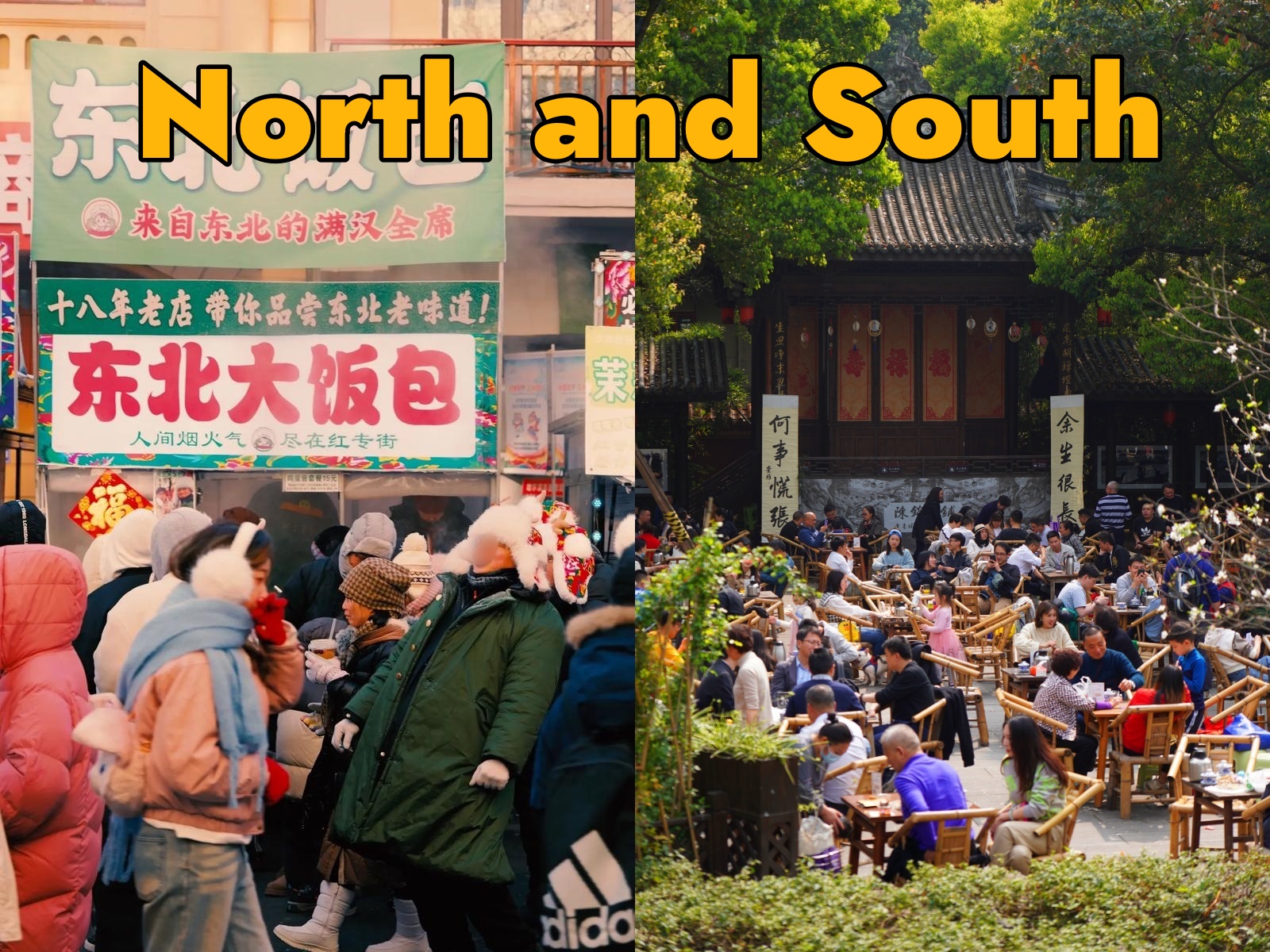
Bustling Street vs. Leisurely Teahouse
North vs. South Chinese People: Personality, Social Style, and Stereotypes Examined
| Dimension | Northern Chinese | Southern Chinese |
|---|---|---|
| Communication style | Direct, loud, open, hyperbolic humor | Reserved, indirect, precise in words |
| Social currency | Guanxi (relationships) + face | Contract, efficiency, practicality |
| Hospitality style | Drinking culture (baijiu) | Tea culture (slow sipping, conversation) |
| Attitude to money | Discussed openly; generosity on display | Discussed privately; frugal reputation |
| Dialect landscape | Relatively uniform Mandarin | Cantonese, Min, Hakka, Wu — extreme fragmentation |
| Entrepreneur reputation | Government / state enterprise culture | Private business instinct (生意人) |
Northern Chinese People: Physical Traits and the Geography Behind Them
Northern populations exhibit a certain physical and social inkovation refelctive of their climate and history, with certain statistical tendencies at the population level. Against this, the range of individual variation within all groups is still vast.
- Physical Appearance
- Northern provinces like Shandong average 172–175cm for men, above the national mean.
- Broader facial structures and more prominent double eyelids appear at a population level.
- Lighter complexions are more common; colder climates reduce year-round sun exposure significantly.
- Social Behavior
- Direct, open, and loud; hyperbolic humor signals warmth and genuine social trust.
- Guanxi (relationships) and face drive social and professional interactions throughout the north.
- Language & Identity
- Mandarin is relatively uniform across northern provinces; most dialects remain mutually intelligible.
- This linguistic unity reflects the north's historical role as China's political and cultural center.
Southern Chinese People: Physical Traits and the Geography Behind Them
Southern populations reflect a different heritage - geography and history make for a greater genetic mixing, and thus physical and cultural variability is greater across all subtypes.
- Physical Appearance
- Southern populations average slightly shorter than northern counterparts at a statistical level.
- Finer facial features are more common, reflecting greater Baiyue (百越) ancestry historically.
- Slightly darker complexions correlate with lower latitude and greater year-round sun exposure.
- Social Behavior
- Reserved and indirect; precision in word choice conveys respect and clear intention.
- Contract, efficiency, and practical outcomes drive social and professional interactions.
- Language & Identity
- Cantonese, Min, Hakka, and Wu create extreme fragmentation across all southern regions.
- Dialects are often mutually unintelligible, even between neighboring counties or towns.
Economy: Southern Innovation Drives A More Dynamic Market
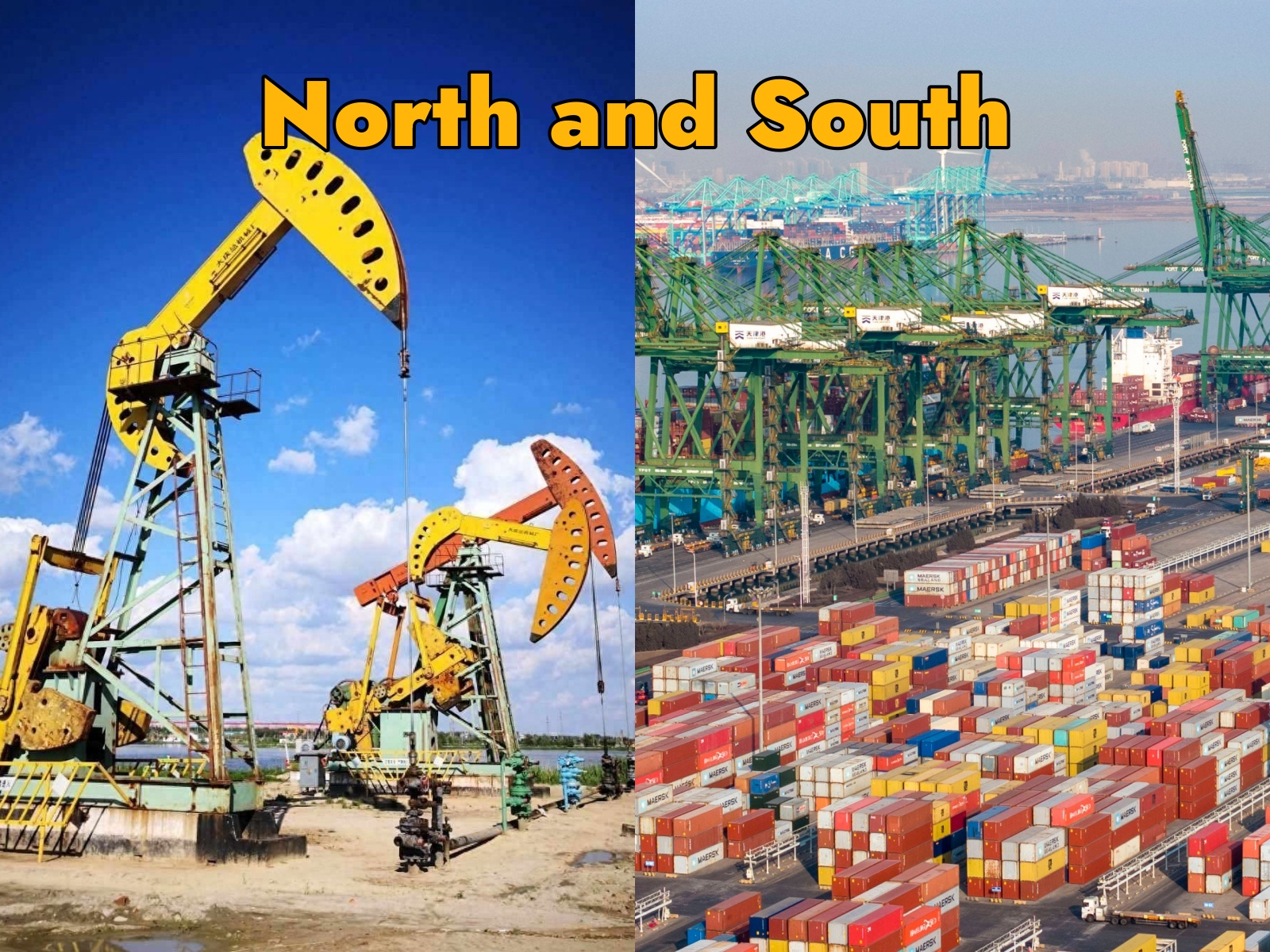
Heavy Industry vs. Global Trade
North vs. South Economy: Key Metrics
| Metric | Northern China | Southern China |
|---|---|---|
| Share of national GDP (2025) | ~34.4% | ~65.6% |
| Economic driver | State-owned enterprise, heavy industry | Private enterprise, tech, trade |
| Tertiary sector share | ~50% in major cities | 60%+ in major cities |
| Signature city (economy) | Beijing (political capital) | Shanghai, Shenzhen, Guangzhou |
| Key industry | Energy, steel, agriculture | Electronics, finance, e-commerce |
| Entrepreneurial culture | Moderate (SOE preference) | High (commercial instinct — 做生意) |
Northern China Economy: The State-Backed Industrial Heartland
Northern China has traditionally been the political and industrial center of the nation. State-owned enterprises, along with energy extraction, are the primary sources of production in the region. However, many of the northeastern provinces are experiencing structural barriers that will continue to restrict growth.
- Scale & Output
- The north contributes approximately 34.4% of China's national GDP in 2025.
- Coal, oil, and heavy manufacturing anchor the northern regional economic engine.
- Cities & Industry
- Beijing serves as the national political, cultural, military, and academic capital.
- Energy extraction in Inner Mongolia, Shaanxi, and Heilongjiang leads northern output sectors.
- Enterprise & Services
- State-owned enterprises dominate; government relations remain central to all business activity.
- Services account for approximately 50% of major northern city economies in current data.
Southern China Economy: The Private Sector and Innovation Frontier
Southern China is the heart of the nation’s private sector and innovation engine, its export manufacturing sector and technology investment have propelled the region to drive substantial and continued economic growth. The region produces almost 2/3rds of the total national GDP.
- Scale & Output
- The south generates approximately 65.6% of China's national GDP in 2025.
- Private enterprise, tech innovation, and international trade power southern regional growth.
- Cities & Industry
- Shanghai leads in finance; Shenzhen leads in tech; Guangzhou leads in trade and manufacturing.
- Electronics, e-commerce, consumer finance, and consumer goods dominate southern output sectors.
- Enterprise & Services
- Commercial instinct (生意人) runs deep; private enterprise creates the majority of employment.
- Services exceed 60% of GDP in major southern cities, reflecting a mature and diversified economy.
Climate: Southern Warmth Yields A More Consistent Comfort
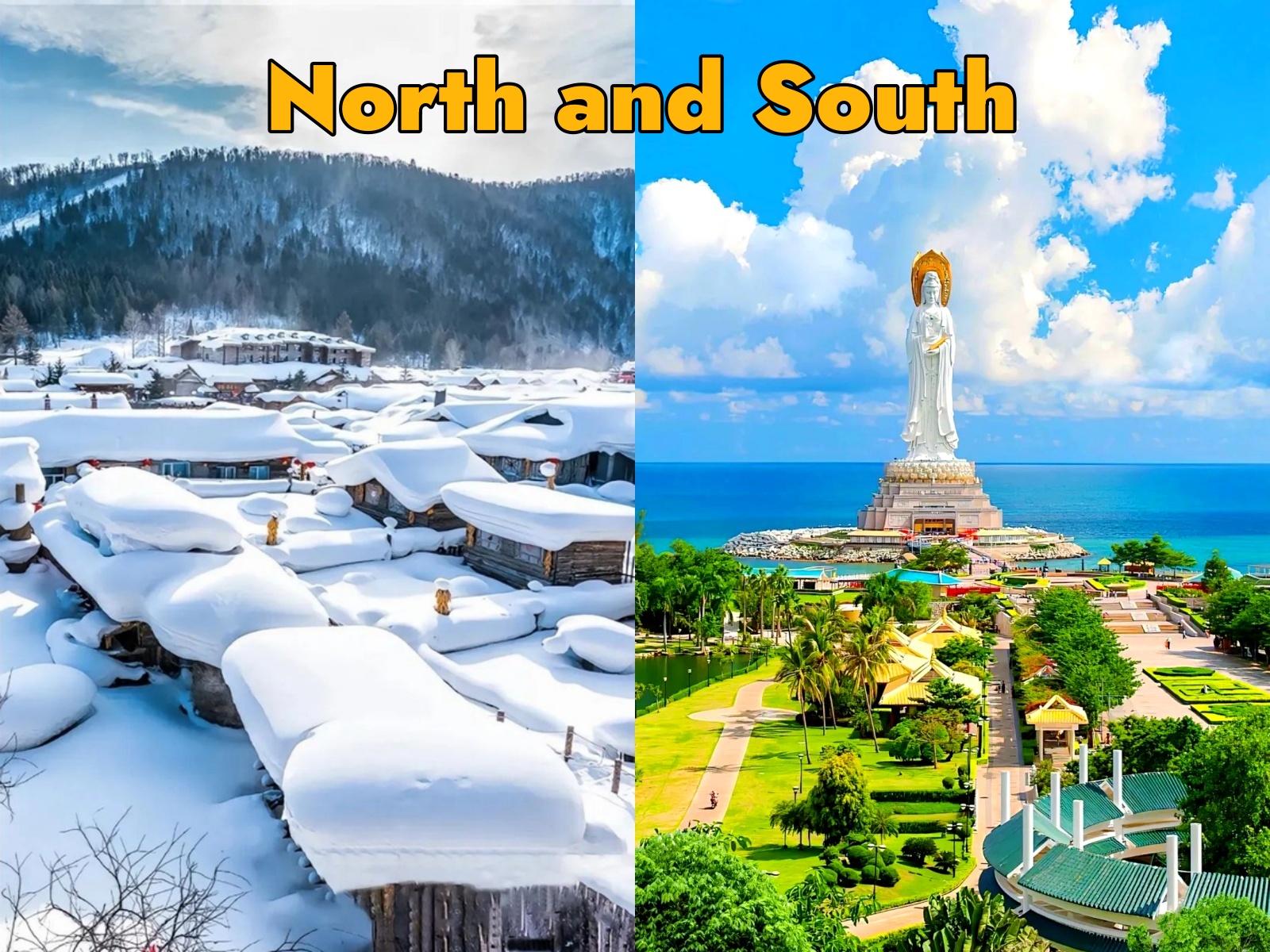
Snowy Winter vs. Sunny Coast
North vs. South Climate: The Numbers That Define Your Trip
| Metric | Northern China (Beijing) | Southern China (Guangzhou) |
|---|---|---|
| Winter avg. temp | -3°C | 13°C |
| Summer avg. temp | 26°C | 29°C |
| Annual rainfall | ~600mm | ~1,720mm |
| Unique phenomenon | Sandstorm season | Plum rain / Typhoon season |
| Central heating | Yes (government-mandated) | No |
Northern China Climate: Four Distinct Seasons, One Brutal Winter
Northern China belongs to the temperate monsoon zone. Winters are protracted, dry and sharp, and packing and travelling arrangements differ entirely from those in the south.
- Temperature & Rainfall
- Winters average -3°C to -20°C; Beijing's July average reaches ~26°C.
- Beijing records ~600mm annually; dry air dominates most months of the year.
- Seasonal Character
- Four distinct seasons define the year; spring and autumn are notably brief.
- Sandstorms strike in spring, coating northern cities in dense yellow dust.
- Practical Guidance
- Government mandates central heating from November 15 through March 15 each year.
- May–June and September–October offer the most comfortable travel conditions.
Southern China Climate: Mild Winters, Punishing Humid Summers
Southern China lies within a subtropical and tropical monsoon zone. Humidity prevails throughout the year, and climate is high sub-tropical. Homes are mild and mostly frost free.
- Temperature & Rainfall
- Guangzhou averages 13°C in winter and 29°C at peak summer heat.
- Guangzhou records ~1,720mm annually — nearly three times Beijing's total precipitation.
- Seasonal Character
- Wet and dry seasons replace four defined seasons across most of the region.
- Plum rain season (May–June) precedes typhoon season almost immediately.
- Practical Guidance
- Central heating is absent; indoor spaces often feel colder than outdoor air.
- October through December delivers cool, dry, and clear travel conditions.
Getting Around: Northern Infrastructure Enables A Much Smoother Transit
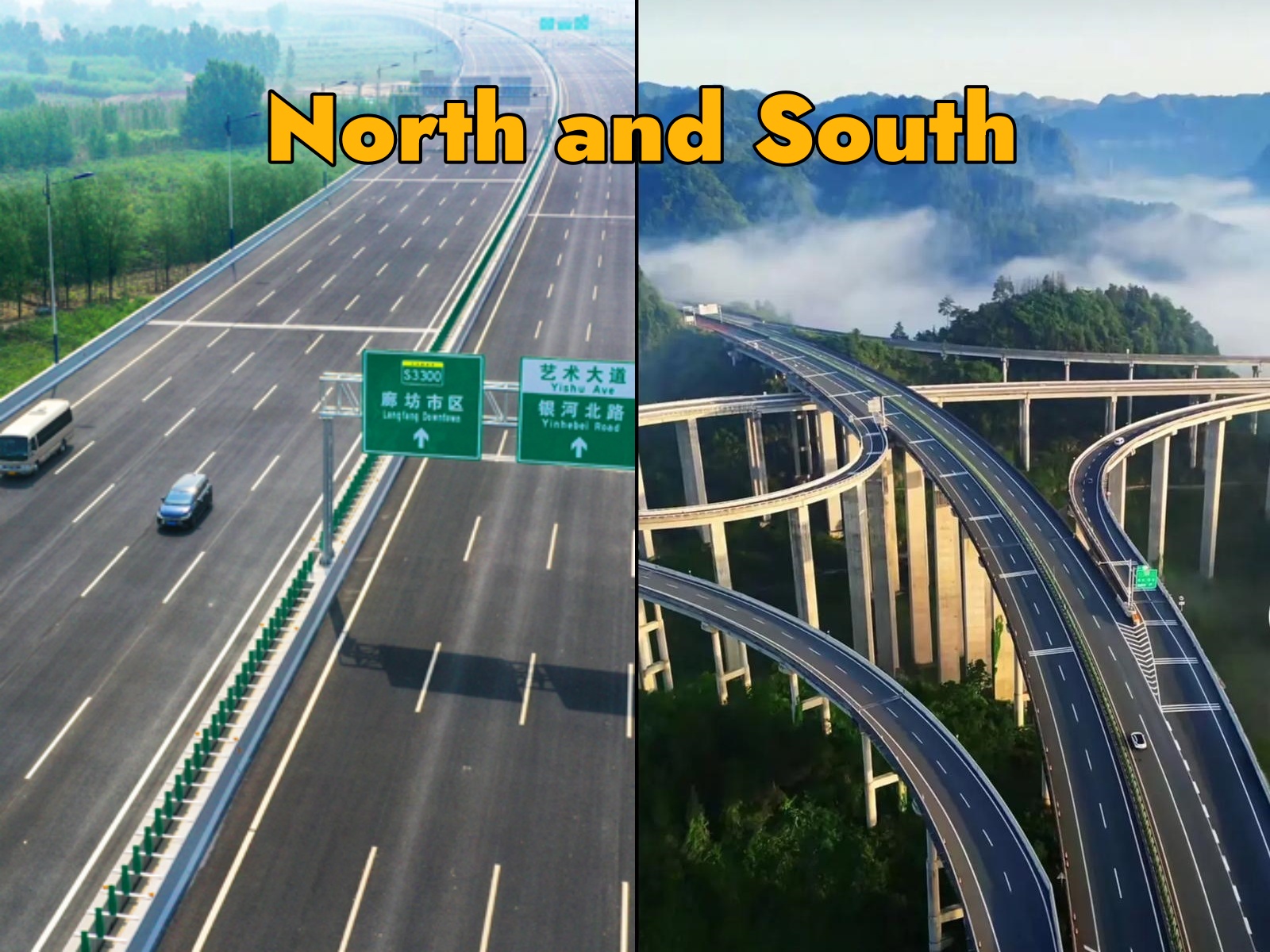
Flat Plains Expressway vs. Mountain Viaduct
North vs. South Transport: Connecting the Two Halves
| Feature | Northern China | Southern China |
|---|---|---|
| Terrain challenge | None (flat plains) | Rivers, mountains, coastline |
| Signature infrastructure | Straight expressways, metro grids | Mega-bridges, tunnels, river ferries |
| City navigation style | Cardinal-point grid (easy to orient) | Organic curves (GPS-dependent) |
| Historical transport | Horse cart (北马 "northern horse") | River boat (南船 "southern boat") |
| Rail highlight | Beijing–Shanghai HSR (4.5 hrs) | HK–Zhuhai–Macau Bridge; Yangtze cruises |
| Quirky landmark | Beijing's 6th Ring Road (188km loop) | Chongqing's skyscraper-piercing metro line |
Northern China Transportation: Grid Roads and High-Speed Rail on Flat Ground
Northern China's flat land allows an advantage in terms of infrastructure. The grid system of roads and railroads emanating from Beijing creates an efficient manner to navigate around the northern cities using a compass-based system.
- Terrain & Infrastructure
- Flat plains require no major engineering workarounds for road or rail construction.
- Straight expressways and rectilinear metro grids define the northern urban transport network.
- Navigation & Rail
- Locals give cardinal-point directions; compass orientation effectively replaces GPS dependency.
- Beijing–Shanghai HSR covers 1,318km in ~4.5hrs at ¥553 second class in 2025.
- History & Character
- The horse cart (北马) served as the primary long-distance transport across the flat north.
- Beijing's 6th Ring Road forms a 188km loop encircling the capital's outer suburban zone.
Southern China Transportation: Bridges Over Water, Tunnels Through Mountains
Peregrine on a patch of elevated land, made inaccessible by impassable valleys and hollow hills—the southern province is riddled by a labyrinth of such. Bridges, tunnels, and mountain railways solve terrible problems there, but they also beget some of the most beautiful things in the world.
- Terrain & Infrastructure
- Rivers, mountains, and coastlines demand bridges, tunnels, and elevated routes at every turn.
- The Hong Kong–Zhuhai–Macau Bridge spans 55km as the world's longest sea crossing structure.
- Navigation & Rail
- Organic street layouts curve through hilly terrain; GPS navigation is essential for all visitors.
- Shanghai–Guangzhou HSR completes the journey in ~8hrs at ¥862 second class in 2025.
- History & Character
- River boats (南船) carried goods and people across the dense southern waterway network.
- Chongqing's Line 2 metro passes directly through floors 6–8 of a residential tower block.
FAQs: Expert Answers to Guide Your Final Decision
Q: What is the main difference between North and South China?
The primary divide between north and south china runs along the Qinling-Huaihe Line. Above it, the north is cold, dry, and wheat-based. Below it, the south is humid, warm, and rice-based. This division actively shapes climate, food, architecture, language, and economic structure across the entire country.
Q: Is China officially divided into North and South?
China has no official administrative boundary separating north and south china. However, the Qinling-Huaihe Line serves as the recognized geographic dividing line. The government uses it to determine central heating zones. Geographers, meteorologists, and educators treat this line as China's definitive natural boundary.
Q: Why is white skin considered beautiful in China?
Fair skin preferences across north and south china share a common historical root. Tanned skin historically signaled outdoor agricultural labor. Fair skin indicated an indoor, scholarly life instead. This class distinction predates modern media by over a millennium. Therefore, the preference reflects social hierarchy rather than racial aesthetics.
Q: What is the legal marriage age in China, and does it differ North to South?
The legal marriage age applies uniformly across north and south china. For women, the minimum age is 20. For men, it is 22. National law sets these thresholds for all citizens. Therefore, no regional variation exists between northern and southern provinces in marriage age requirements.
Q: Are Northern Chinese people taller than Southern Chinese people?
Statistical data confirms height differences between north and south china populations. Northern provinces like Shandong average 172–175cm for men. The national male average stands at 169.7cm. However, individual variation remains enormous. Climate, diet, and historical genetics all contribute to these documented population-level differences.
Q: Is Hong Kong considered part of South China?
Geographically, Hong Kong sits within the Pearl River Delta of south china. It shares Cantonese culture, language, and a humid subtropical climate with Guangdong Province. However, politically, Hong Kong operates as a Special Administrative Region under "One Country, Two Systems," with distinct laws, currency, and border controls for travelers.
Q: What language do they speak in North vs. South China?
Mandarin functions as the official language across north and south china. However, the north uses relatively uniform Mandarin dialects. The south presents extreme linguistic fragmentation — Cantonese, Min (Hokkien), Hakka, and Wu are all distinct language families. Southern dialects are often mutually unintelligible, even within the same province.
Q: Is the food spicier in North or South China?
Neither north and south china presents a uniform spice level. Northern food generally favors salty and savory flavors. However, the south contains China's spiciest cuisines — Sichuan and Hunan. Cantonese cuisine, by contrast, remains mild and freshness-focused. Therefore, spice level depends heavily on which southern province you visit.
Q: Which is cheaper to travel — North China or South China?
Both north and south china offer affordable travel by international standards. However, costs vary more by city tier than by region. Beijing and Shanghai carry premium pricing within their respective areas. Budget travelers find lower costs in secondary cities such as Xi'an in the north or Guilin in the south.
Q: Do I need a different visa or permit to travel between North and South China?
No additional visa or permit is required to travel between north and south china on the mainland. A single Chinese visa covers all mainland provinces. However, Hong Kong and Macau require separate permits for mainland Chinese citizens. Foreign passport holders should verify specific entry requirements before traveling to either territory.