Lake of a Thousand Islands, China
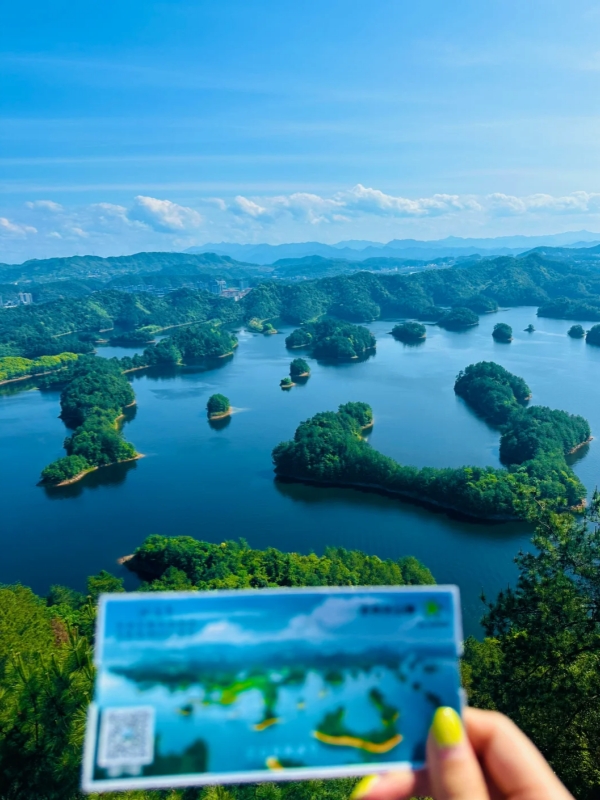
The Lake of a Thousand Islands (Qiandao Lake) is a vast man-made reservoir in Chun'an County, western Zhejiang, roughly 150 km southwest of Hangzhou. The Xinanjiang Dam was completed in 1959, flooding a river valley to create a lake holding 1,078 large named islands and several thousand smaller ones across about 580 sq km of unusually clear water — the same source that feeds the Nongfu Spring bottling plants. For foreign visitors, the lake combines easy access from Hangzhou and Shanghai with island-hopping cruises, white-water rafting on tributary streams, and the freshwater cuisine of Chun'an County.
Two or three nights is the practical minimum. Most visitors arrive by high-speed rail in just over an hour, buy a combined Central Lake cruise ticket, and fill the remaining time with Jiulong Brook rafting, a lakeside greenway cycle, or a bowl of the region-famous fish-head soup at a waterfront restaurant.
Quick Facts
🗺️ Orient Yourself Around the Regional Capital: High-speed trains to Qiandao Lake depart directly from Hangzhou's major rail hubs. Get your bearings across the city's districts and metro lines with our Hangzhou City Map.
Islands and Scenic Areas to Explore
The Lake of a Thousand Islands is administratively divided into three tourism zones — Central, Southeast, and Southwest — each with its own pier, cruise routes, and signature islands. The 1,078 large islands were counted and named by the Chun'an authority when the reservoir was inventoried in 1984; thousands more half-submerged hills exist but are not individually named. Most foreign visitors buy a combined ticket covering the Central Lake area, and many add a separate Southeast Lake line for quieter, hillier scenery.
Central Lake Area
Lake of a Thousand Islands, China
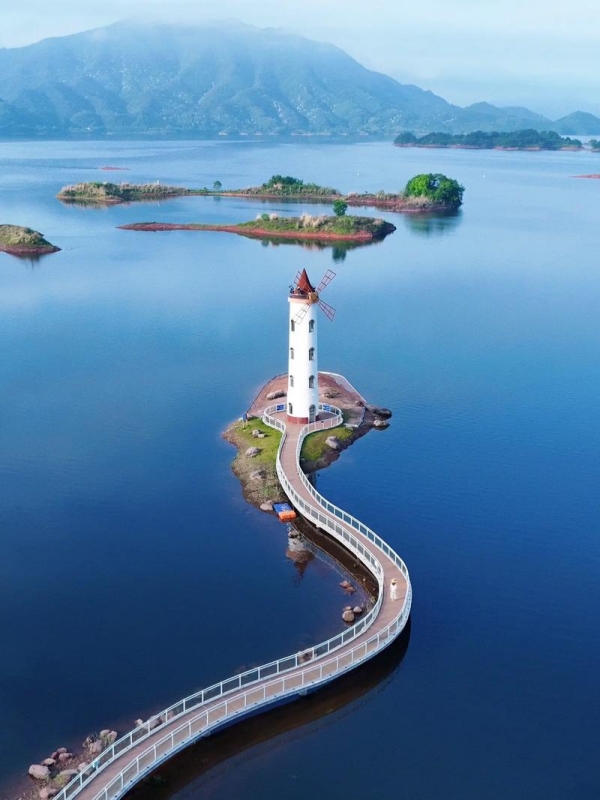
The Central Lake zone is the busiest area, with the densest cluster of named islands and the standard cruise loop serving most day-trippers.
- Moonlight Island (月光岛): Five linked islets connected by walking bridges; the most-photographed spot in the lake area.
- Yule Island (渔乐岛): Entertainment and dining island; the standard lunch stop on central-lake cruise routes.
- Lock Island (锁岛): Themed island displaying historical Chinese padlocks and lock-themed artifacts.
- Wulong Island (五龙岛): Five connected islets joined by locks and footbridges, including the Animal Islands grouping with Monkey Island and Snake Island.
- Mishan Island (密山岛): Home to a Ming-dynasty Buddhist temple complex popular with day-trippers.
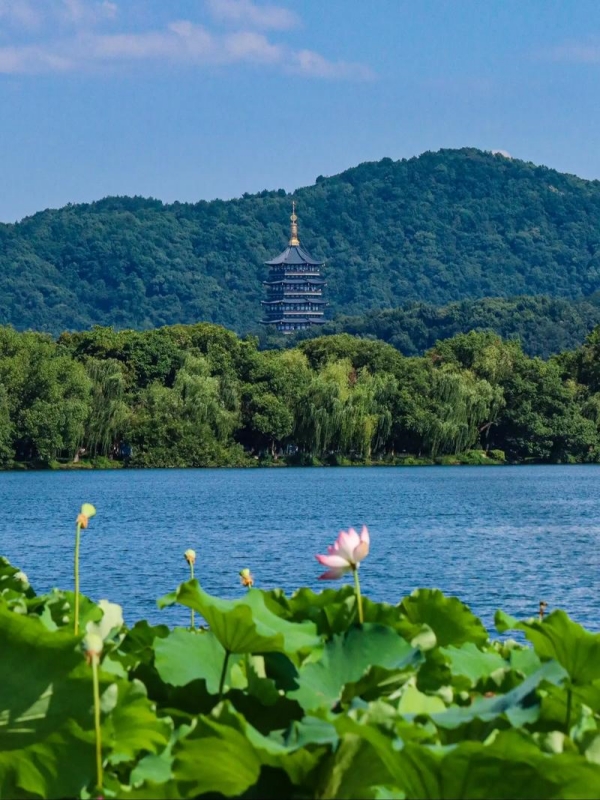
🌊 Compare Zhejiang’s Most Famous Waterways: While Qiandao Lake offers vast island reservoirs, Hangzhou’s central UNESCO site provides classic Chinese garden landscapes. Read our full guide to Hangzhou Xi Hu.
Southeast Lake Area
Lake of a Thousand Islands, China
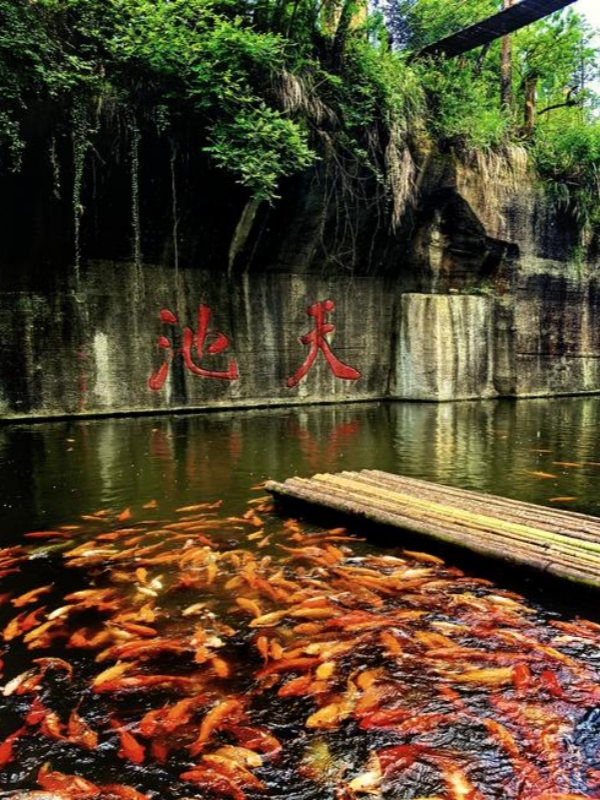
The Southeast Lake area is quieter, with steeper hills and clearer water, reached by a separate pier from the central zone.
- Tianchi Island (天池岛): Known for a natural freshwater pool at the island's summit, referred to as the "Heavenly Pool."
- Huangdeng Island (黄登岛): Hilltop viewpoint reached by a short stair climb, offering panoramic lake views.
- Cormorant fishing pier: A small fishing-village pier where visitors can watch cormorant fishing demonstrations — a Zhejiang tradition staged for tourism.
- Bamboo-forest cove: Reachable by a short walk from the southeast pier; particularly atmospheric in morning mist.
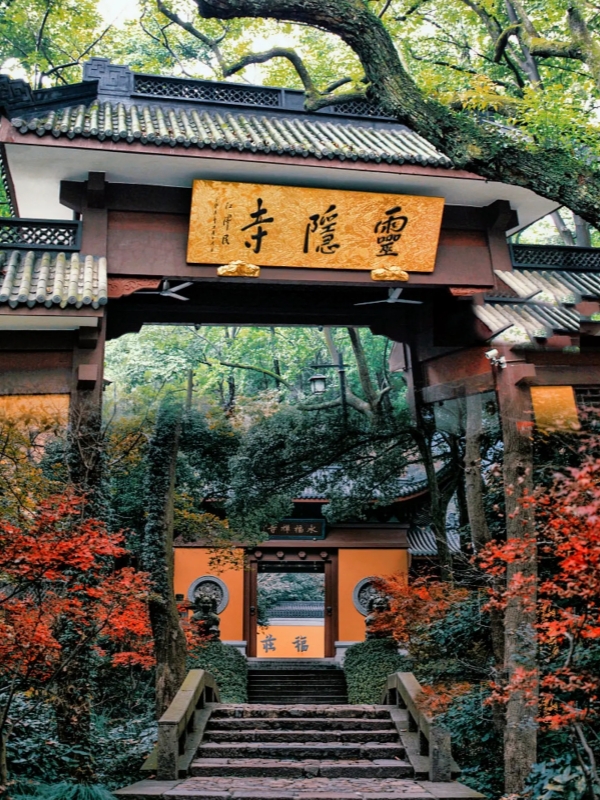
⛰️ Add Historic Landmarks to Your Itinerary: Balance your lake cruise with a walk through Feilai Feng's stone carvings and forested grounds detailed in our feature on Lingyin Temple Hangzhou China.
Southwest Lake Area and Outer Islands
Lake of a Thousand Islands, China
The Southwest zone is the most recently developed and least-crowded area, requiring a separate ticket from the central and southeast lines.
- Longchuan Bay (龙川湾): Wetland and reed-marsh area on the southwest arm, with boardwalks through marshland.
- Jinxi Hanging Village: Short rural-walk area showing the pre-reservoir settlement pattern of the valley that was flooded in 1959.
- Outer-island viewing pier: A high pier on the southwest arm where island density is highest and open-water vistas are widest in the entire lake.
🛶 Discover China’s First National Wetland Park: Pair the open waters of Qiandao Lake with the tranquil, reed-lined canals of Hangzhou's urban nature reserve using our complete visitor guide to Xixi Wetland.
Things to Do on the Lake
Most visitors spend two days doing one lake cruise plus one rafting or cycling half-day, with a third activity — fishing, hot springs, or a lakeside hike — filling the second afternoon. The lake's recreational infrastructure was built into the original scenic-area plan from the early 1990s onward, so the activity network is mature and well-signed.
Lake Cruises
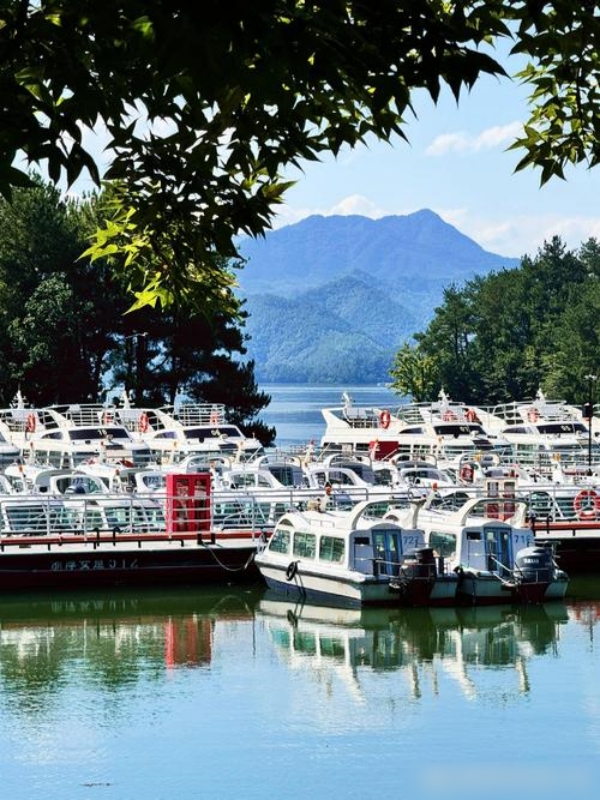
The cruise system is the backbone of any Lake of a Thousand Islands visit. The central lake route is the standard choice for first-time visitors.
- Central Lake line: Standard A/B/C route loop, 4–5 hours, ticket about $21–28 (¥150–200) including island stops.
- Southeast Lake line: Quieter alternative, 3–4 hours, ticket about $21–28 (¥150–200) as a separate add-on.
- Southwest Lake line: Newest route, half-day duration, separate ticket.
- English audio guides: Available on Central Lake cruise boats at the main pier on request for groups under 10; no advance booking needed.
- Private charter boats: Run about $140–210 (¥1,000–1,500) for 4 hours, letting visitors set their own island sequence.
Jiulong Brook Rafting
Lake of a Thousand Islands, China
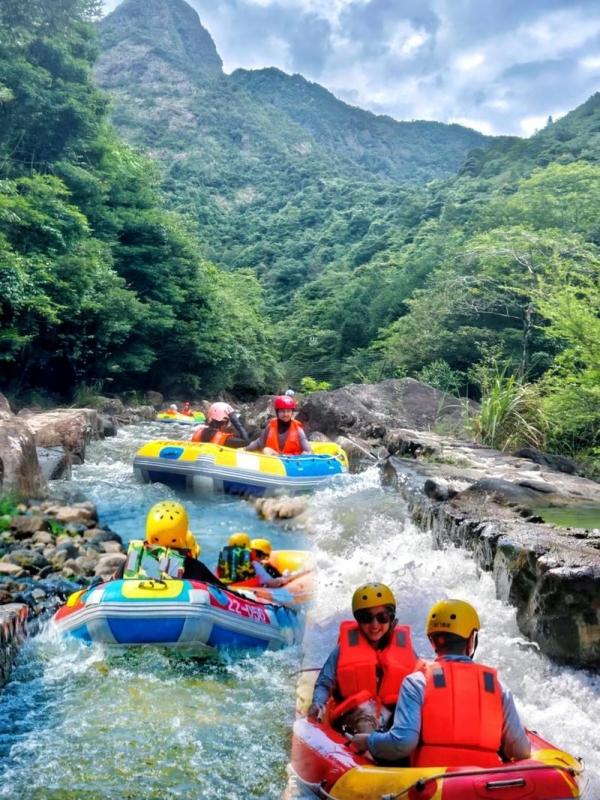
Jiulong Brook (九龙漂流) is the most-booked half-day activity at the lake — a 2- to 3-km white-water course in the mountains south of the lake with mild Class II–III rapids and a final splash chute. Rafters get soaked, especially at the final chute, so come prepared.
- Ticket: About $25–35 (¥180–248) per person, including helmet and life vest.
- Duration: Allow 3–4 hours including transfer from the lake area.
- What to bring: Dry change of clothes, towel, and a waterproof phone pouch — rafters get wet without exception.
- Season: Roughly April through October; outside these months, water temperature is too cold or water release is reduced.
Fishing, Cycling, and Hot Springs
Lake of a Thousand Islands, China
A secondary layer of activities fills afternoons and offers alternatives to the main cruise circuit.
- Open-water fishing: The lake is restocked for sport fishing; half-day boat-fishing charters run about $70–110 (¥500–800) for up to 4 people, tackle usually included.
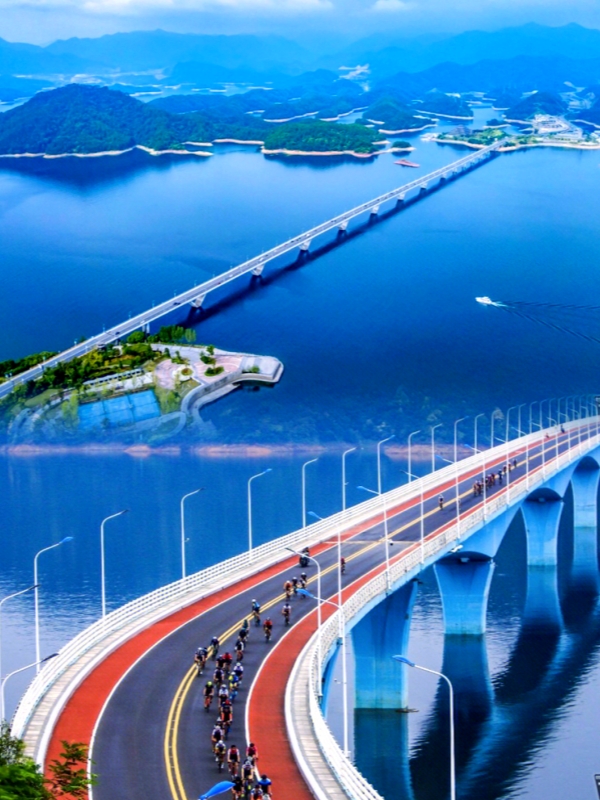
- Lakeside cycling: A 30-km greenway runs along the central lake's north shore; bike rental costs about $7–10 (¥50–70) per day from shops near the central pier.
- Qiandao Lake Hot Spring Resort: Forested hot-spring complex on the lake's western edge; day-pass about $21–35 (¥150–250).
- Short island trails: Marked paths on Mishan and Wulong Islands suit early-morning hikes; English-language maps available at the central pier.
Where to Eat and What to Stay
Most foreign visitors choose between staying in Qiandao Lake town — the main lakeside resort strip near the central pier — or on one of the larger island resorts reachable by shuttle boat. The food scene centers on freshwater fish from the reservoir itself, with fish-head soup as the regional signature.
What to Eat
Lake of a Thousand Islands, China
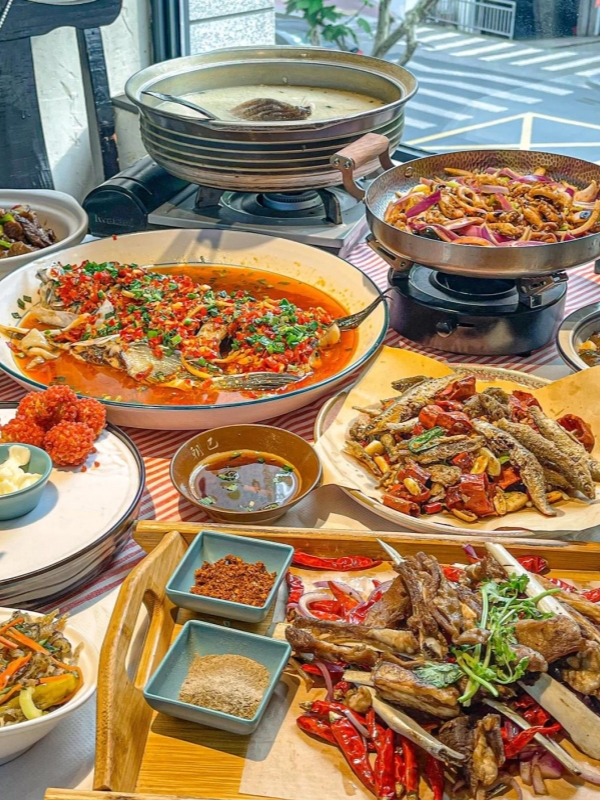
Chun'an County's cuisine revolves around the lake's freshwater catch and local root vegetables. Fish-head soup is the signature, but there is more to explore.
- Qiandao Lake fish-head soup (千岛湖鱼头汤): The signature dish — a milky-broth preparation using a large freshwater fish head, served in most area restaurants and hotels; about $14–21 (¥100–150) per person.
- Chun'an dried-taro stew (东楼土菜): Local root-vegetable specialty, hearty and warming.
- Bamboo-shoot and cured-pork stir-fries: Seasonal dishes best found in spring; look for them at Chun'an town restaurants.
- Lake perch, mandarin fish, and silver fish: Typically steamed or braised; displayed live in tanks at most lakeside restaurants for point-and-order service.
Where to Stay
The lodging landscape splits roughly into four clusters, each targeting a different budget and experience level.
- Qiandao Lake town mid-range: Holiday Inn Resort, Howard Johnson, and similar chains; $70–140 (¥500–1,000) per night in shoulder season, lakeside views from upper floors.
- Island resorts: Tachee Island Holiday Hotel and similar on-island properties; $120–220 (¥850–1,600) per night including boat transfers.
- Boutique lakeside B&Bs: Along the central greenway; $50–90 (¥350–650) per night.
- Budget hotels in Chun'an town: About 15 minutes from the lake; $30–55 (¥200–400); no lake view but useful for short, tight-budget stays.
Best Time to Visit and June Weather
The Lake of a Thousand Islands sits in a humid-subtropical band where summer is hot and wet, winter is mild and grey, and shoulder seasons offer the clearest skies and thinnest crowds. Late April to mid-May brings azalea blooms on the hillslopes under mostly clear skies; the second half of September through early November keeps water temperatures warm enough for swimming while summer domestic crowds thin out. August is the hottest and busiest month for domestic tourism; December through February is quiet but often misty, and some boat schedules run reduced services.
June Weather Compared by City
The lake itself runs only marginally cooler than Hangzhou and Shanghai in June due to the water's heat-buffering effect. However, it is materially cooler than inland Huangshan, which sits at higher elevation and catches more cloud and rain from the same weather system.
Rainy Season and What to Do
The East Asian plum-rain season arrives when warm moist air from the South China Sea meets cooler air over the Yangtze basin, producing long overcast spells rather than short sharp storms. This typically runs from mid-June through mid-July across the Yangtze River Delta region.
Rainy days do not stop most lake activities. Here are practical alternatives when the weather turns wet:
- Nongfu Spring Water Museum: A free indoor tour of the bottling-line operations draws water directly from the lake; English guides are available on request.
- Covered boat lunch: Book a Chinese-style enclosed boat for lunch on the central lake instead of an open sun-deck cruise.
- Chun'an cooking class: A hands-on session covering fish-head soup and Chun'an dried-taro dishes fills rainy mornings with activity.
- Lakeside tea houses: Qiandao Lake town has several waterfront tea houses open year-round, well-suited to a drizzly afternoon.
- Save island hiking for post-rain mornings: Visibility often clears after a heavy night of rain; the morning after a storm typically offers the clearest views.
Getting to the Lake of a Thousand Islands
The lake is reached via Qiandaohu Railway Station on the Hangzhou–Huangshan high-speed rail line, or by car on the Hangxinjing Expressway (G4012). Drive times from Hangzhou vary from 2 to 3 hours depending on departure point within the city — the city edge is closer than downtown Hangzhou.
Frequently Asked Questions
Q: How many islands are in the Lake of a Thousand Islands, China?
The lake holds 1,078 large named islands inventoried during the original reservoir survey; it also contains several thousand smaller half-submerged hills that are not individually named.
Q: Where exactly is the Lake of a Thousand Islands in China?
The lake sits in Chun'an County, western Zhejiang province, about 150 km southwest of Hangzhou, created as the reservoir of the Xinanjiang Dam completed in 1959.
Q: How far is the Lake of a Thousand Islands from Hangzhou and Shanghai?
From Hangzhou it is about 150 km — 2–3 hours by car and roughly 1 hour by high-speed rail to Qiandaohu Station. From Shanghai, the HSR takes about 2 to 2.5 hours.
Q: What is the best month to visit the Lake of a Thousand Islands, China?
Late April through mid-May for azalea blooms and clear water, and the second half of September through early November for warm water and thinner crowds. Avoid mid-June to mid-July (plum rains) and the August peak-domestic-tourism window.
Q: How much does it cost to enter the Lake of a Thousand Islands, China?
The Central Lake area combined ticket runs about $21–28 (¥150–200); the Southeast Lake area costs a separate $21–28 (¥150–200). Both are bookable through Trip.com, Klook, or on-site ticket windows.
Q: Can I visit the Lake of a Thousand Islands on a day trip from Hangzhou?
Yes in a pinch — the 1-hour HSR each way leaves 6–7 hours on site, enough for one Central Lake cruise loop. Most foreign visitors prefer an overnight to add rafting, cycling, or a sunrise boat.
Q: Is the Lake of a Thousand Islands man-made?
Yes — it is a reservoir formed by the completion of the Xinanjiang Dam in 1959. The flooded river valley created the 1,078-island landscape visible today.
Q: Can foreign visitors buy tickets without a Chinese phone number?
Yes — Trip.com and Klook sell Central Lake, Southeast Lake, rafting, and HSR tickets using a foreign passport and email confirmation. On-site ticket windows also accept foreign passports and cash.
Q: When is the rainy season at the Lake of a Thousand Islands?
The East Asian plum-rain season runs roughly mid-June to mid-July. Expect overcast skies, muggy air, and 14–16 rainy days per month; most cruises and rafting still operate in light rain.
Q: What is the Lake of a Thousand Islands famous for?
The 1,078-island lake scenery itself, Class-I water clarity, fish-head soup as the regional signature dish, and the Nongfu Spring water-bottling plants that draw from the reservoir.