Xixi Wetland, Hangzhou, China
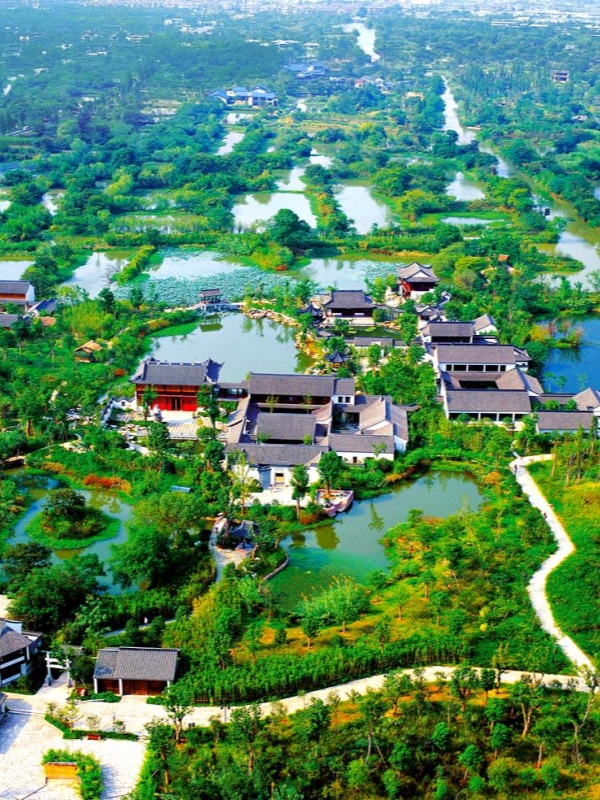
Hangzhou's Xixi Wetland sits about 5 km west of West Lake, a working tangle of six rivers, fish ponds, and reed-fringed islands covering roughly 11 square kilometers. Designated China's first national wetland park in 2005, it threads Tang and Song dynasty hydrology with a still-active fishing-folk culture and a restored ecology that has put over 180 recorded bird species back on the water.
Most travelers come for the rowing boats — flat-bottomed sculls poled through narrow canals — but the restored villages, scholar-official gardens, and four-season festivals make Xixi Wetland a full day rather than a quick detour from the city.
Quick Facts
Origin and Why Xixi Wetland Matters
From Taihu Lake Fringe to Imperial Refuge
Xixi Wetland in Hangzhou
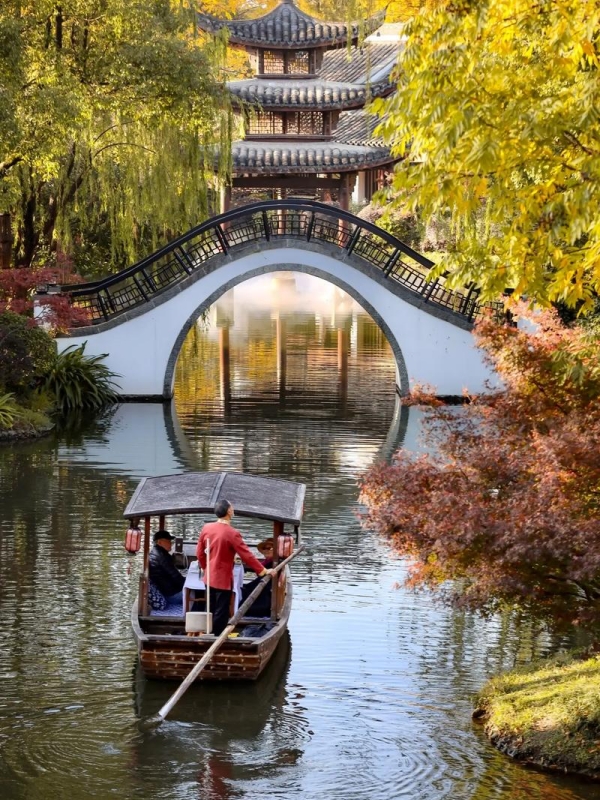
Xixi Wetland began as a fringe of Taihu Lake during the Eastern Han, when Liangzhu-era peoples harvested fish and reeds from the same shallows. Roughly 1,800 years ago, flood engineers formalized the hydrology by completing the Nanhu flood-storage basin. In 988 CE, the Song dynasty founded Xixi Town on the reclaimed land.
Centuries later, Southern Song Emperor Gaozong reportedly paused here on his southern flight and declared, "Save Xixi" — a phrase that spared the wetland from being chosen as the new imperial capital. As a result, the canals and ponds survived intact.
Modern Restoration and National Park Status
Xixi Wetland in Hangzhou
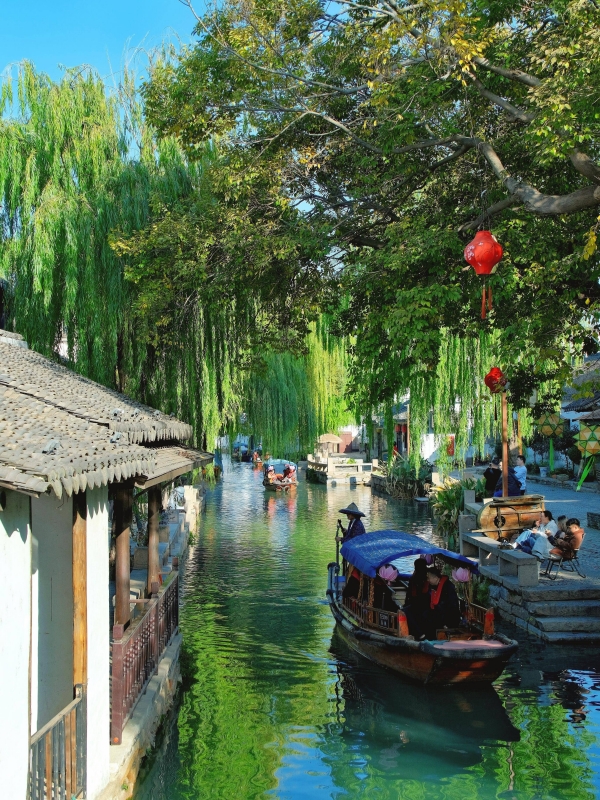
From the 1950s through the 1990s, urban expansion and unchecked aquaculture shrank the wetland and silted its channels. In 2003, the Hangzhou Municipal Government adopted a strict "ecological priority, minimal intervention" policy and froze encroaching real-estate development. Two years later, the park opened to the public and was designated China's first national wetland park.
Today, the restored wetland functions as an urban "kidney" that filters water for western Hangzhou while preserving the highest concentration of wetland habitat of any park within a Chinese city of its size.
🎋 More Historic Scholar Gardens: If you appreciate the fusion of serene waterways, traditional pavilions, and scholar-official heritage, you should also discover Chengdu’s famous bamboo oasis in our guide to Wangjianglou Park.
Landscape of Water, Reeds, Persimmons, and Birds
Waterways and the Pond-Dike System
Xixi Wetland in Hangzhou
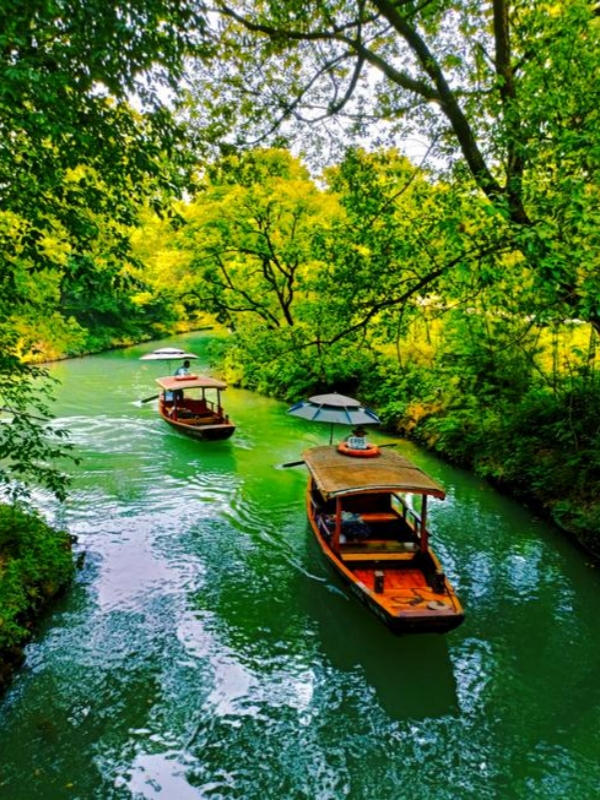
Six rivers crisscross the park, feeding deep pools like Chaotian Muyang, open lakes such as Yufudang, shallow shoals, and dozens of small fish ponds. The pond-dike system of channels, islands, and embankments is a living textbook of Tang and Song hydraulics. Most channels are narrow enough that only a sculling boat fits — a fact that shapes how the wetland is experienced.
Early in the morning, mist rises off the still water and reed heads hang motionless above the surface. By late afternoon, low-angle light bleaches the bays gold.
Reeds, Persimmons, and Plum Trees
Xixi Wetland in Hangzhou
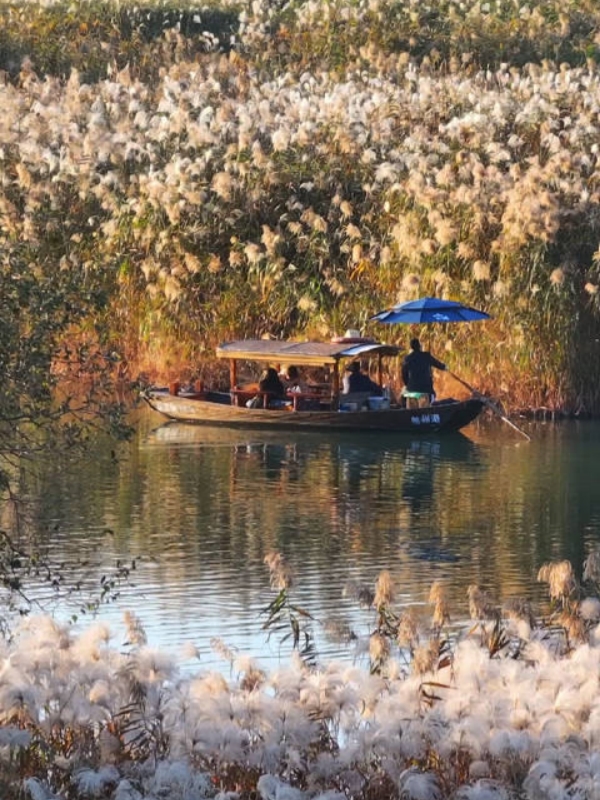
Three botanical signatures define the park: reeds that release their white "snow" in autumn, century-old persimmon trees hung with red fruit in October, and plum blossoms that open in late winter. Around these signatures runs a four-season bloom cycle — rapeseed and crabapple in spring, lotus and water lilies in summer, hibiscus mutabilis and spider lilies in autumn, camellias through winter.
The arrangement is purposeful. Pond dikes carry the trees; the water carries the lilies and lotus; the marsh edges carry the reeds. Meanwhile, every season offers a recognizable look, which is why photographers return year after year.
Birdwatching Species and Watch Sites
Xixi Wetland in Hangzhou
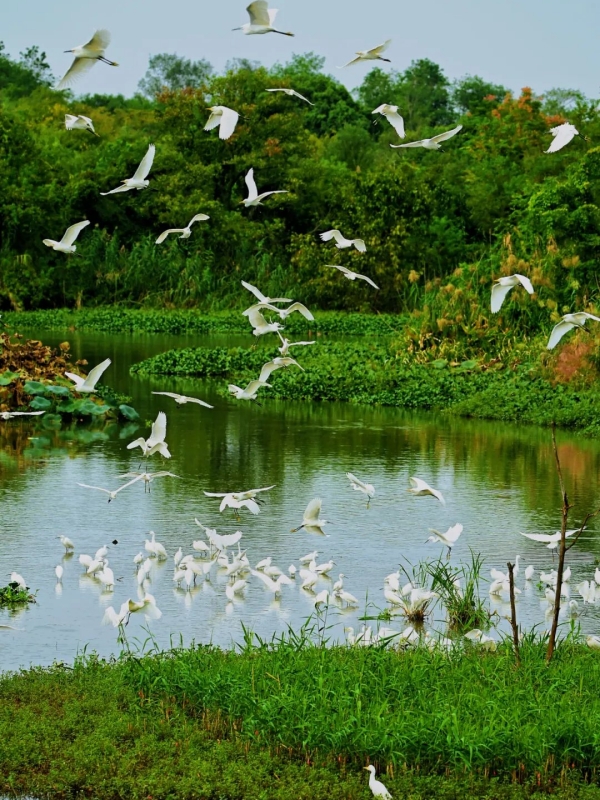
Published species counts differ between sources — one figure lists 180+ species, another gives 190+. Among the regularly recorded species are egrets, black-crowned night herons, little grebes, mandarin ducks, common snipe, kestrels, and kingfishers. The wetland sits on the East Asian–Australasian Flyway, which is why migratory waterfowl appear reliably each winter.
Two observation points anchor the season. The Lotus Shoal Bird Observation Area along the eastern channels is best at dawn, while the Xialongtan Ecological Reserve to the west offers a watch tower and a longer, quieter trail. An underwater corridor at the southern end shows fish life from beneath the surface.
🌿 Other Urban Green Spaces: If you enjoy discovering peaceful aquatic sanctuaries nestled right within China's bustling modern metropolises, you might also want to explore our guide to Lizhi Park Shenzhen.
Cultural Villages and Scholar Gardens
Hezhu Street and Shentankou
Xixi Wetland in Hangzhou
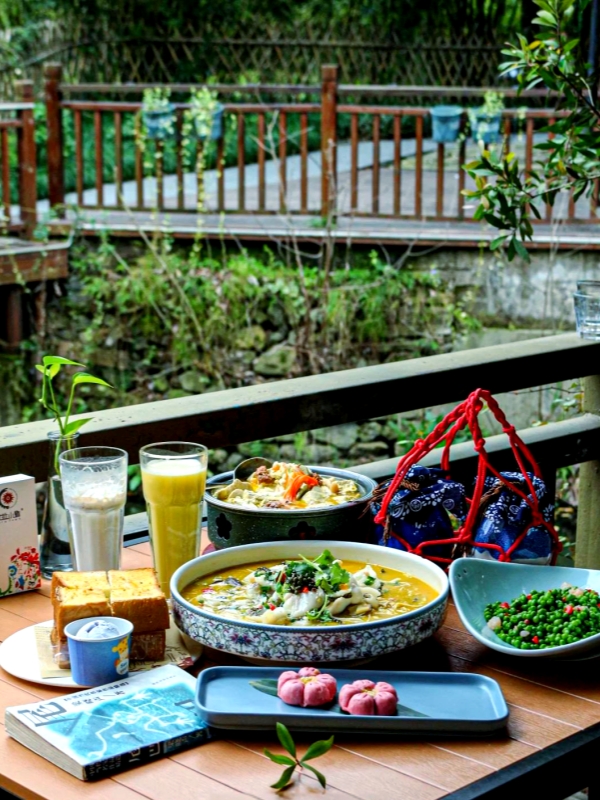
Hezhu Street is the park's recreated old market — a flagstoned lane of low shops selling small flower baskets, blue-printed cloth, lotus-root starch, and Dingsheng cake. Visitors stop here between boat rides to browse the craft stalls and eat farmhouse snacks. Shentankou, an ancient wharf a short row upstream, marks the spot where boats once tied off beneath a 600-year-old camphor tree. Today it doubles as one of the main rowing-boat boarding docks.
Hongyuan and Gaozhuang Gardens
Xixi Wetland in Hangzhou
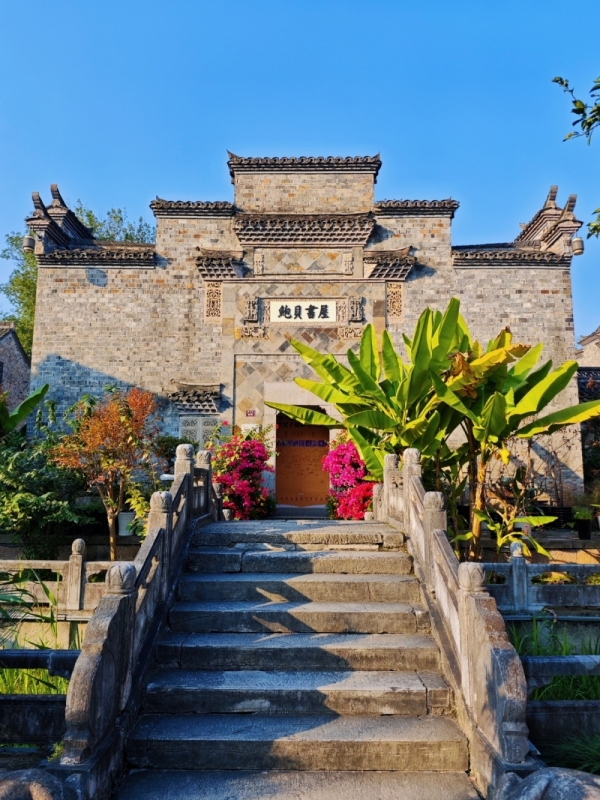
Two scholar-official gardens carry the cultural weight. Hongyuan, the Hong family garden of the Ming dynasty, earned its fame through the line "three Song prime ministers father and sons, five Ming ministers grandfather and grandson" — a roll call of officials produced by one Hangzhou clan.
Gaozhuang, also called Gao Villa, was the Qing-era garden of Gao Shiqi, a favored official of Emperor Kangxi. The emperor reportedly visited on his southern inspection tour, and the surviving pavilions still lay out the classical axes those visitors would have walked.
Dragon Boat Festival and Folk Customs
Xixi Wetland in Hangzhou
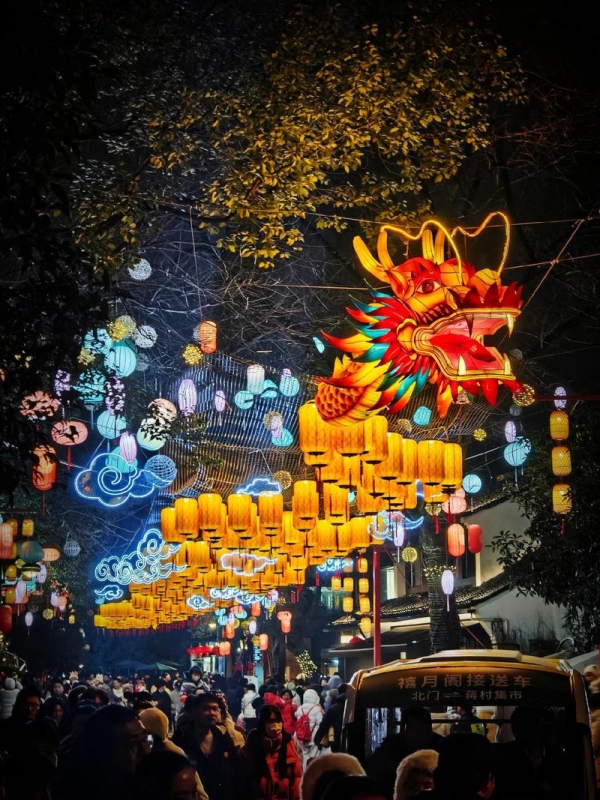
Held around the fifth day of the fifth lunar month, the Dragon Boat Festival at Shentankou is the park's signature folk event. It runs as a performance rather than a competitive race — processions, music, and rice dumplings draw visitors from across Hangzhou.
Three other festivals anchor the cultural calendar: the Spring Flower Festival in April, the Persimmon Festival in October, and the Reed Festival in late November. Together they give the wetland a reason to return in every season.
🌊 Explore Hangzhou's Most Famous Landmark: Located just a few kilometers east of Xixi Wetland, Hangzhou's iconic lake district offers historic causeways, ancient pagodas, and scenic boat rides. Plan your visit with our guide to Hangzhou Xi Hu (West Lake).
Boats, Walks, and What to Do Inside
Rowing Boats at the Park
The rowing boat is the signature Xixi experience. Flat-bottomed and poled by a boatman through channels too narrow for anything larger, it slips past reed beds, persimmon groves, and old stone bridges. The classic route runs Zhoujiacun → Meizhu Villa → Qiuxue Temple → Yanshui Fishing Village → Shentankou and takes roughly 1.5 hours.
A short boat-and-tea package, with tea served aboard, can be pre-booked on Trip.com and at the docks. Most visitors rate the rowing boat as the single most memorable part of the day.
Electric Boats, Balloon, and Trails
Electric boats cover the longer circuit linking Shentankou, Autumn Snow Temple, Reflection of Red Persimmon, Plum and Bamboo Villa, and Misty Water Fishing Village. The full loop saves rowing-boat queues for those short on time.
For aerial views, a helium balloon lifts visitors roughly 100 meters over the wetland and the western skyline. Below it, ecological boardwalks and birdwatching corridors thread Fudi and Xialongtan. The Underwater Ecological Observation Corridor on the south side lets walkers see submerged plants and fish from beneath the surface.
Photography Tips
The helium balloon offers the strongest wide-angle frames. From a rowing boat, a medium telephoto is best for herons and kingfishers. Late afternoon sun turns reed catkins gold near Qiuxue Temple — backlit, they read as drifting snow on a still surface.
For cultural shots, the ancient wharf and century camphor at Shentankou are reliable, and the "Xixi, Please Stay" wall at Hezhu Street is the most-photographed frame in the park.
Suggested One-Day Route
Start at 09:00 from the Zhoujiacun main entrance. Step onto a rowing boat for the 1.5-hour run to Shentankou, then break for lunch at a farmhouse restaurant on Shentankou or Hezhu Street.
After lunch, walk or take an electric cart to Gaozhuang for the afternoon, then loop east to the Lotus Shoal Bird Observation Area. End the day at the helium balloon or Hongyuan Garden, and exit before sunset from the south gate.
Tickets, Hours, and Getting to Xixi Wetland
Admission and Boat Fares
Combo tickets covering admission plus a single boat ride are sold at the gate and on Trip.com and Klook. Rowing boats sell out on holiday weekends, so book a few days ahead either at the dock window or on Trip.com.
Opening Hours and Best Time of Day
From April to October the park runs 08:00 to 18:00; from November to March, 08:00 to 17:30. Last entry lands around 16:30, and soft-ticket scanners close half an hour before the gates shut. Arrival at opening time keeps the rowing-boat queues short, while summer evenings cut both heat and mosquitoes.
Getting to Xixi from Hangzhou
International travelers without a mainland phone number can book a Didi through international roaming or pre-arrange a private car through Trip.com or a Hangzhou tour operator. The Wensan West Road entrance adds a short taxi or bus hop to the main Zhoujiacun entrance.
Where to Stay and When to Visit
Hotels Inside and Near the Wetland
Premium in-park properties such as Banyan Tree Hangzhou and Mushu Xixi put visitors on the water from morning. Mid-range chains near the south gate trade wetland-front rooms for easier metro access. Book one to two months ahead for Dragon Boat Festival and Chinese national holiday weekends.
Best Season for the Wetland
Spring (March to May) opens with plum, rapeseed, and crabapple, with mild weather for long boat rides. Autumn (September to November) is the second peak: reeds turn gold, century-old persimmons ripen, and the festival calendar fills.
Summer (June to August) brings lotus at peak bloom, but heat, humidity, and mosquitoes make early mornings the only comfortable window. Winter (December to February) is the quietest season and best period for wintering waterfowl, with occasional snow dusting the reed beds.
Annual Festivals
The Spring Flower Festival anchors April, with floral displays and boat processions around Zhoujiacun. The Dragon Boat Festival around the fifth day of the fifth lunar month takes over Shentankou with music, costumes, and rice dumplings.
The Persimmon Festival in October coincides with the red-fruit harvest in the old groves. The Reed Festival in late November celebrates the "reed catkins flying snow" of the wetland. Verify exact dates on the official site each year.
Frequently Asked Questions
Q: How do I get to Xixi Wetland from downtown Hangzhou?
Subway Lines 3 or 19 serve Xixi Wetland South Station, the stop nearest the Zhoujiacun main entrance — about 20 to 30 minutes from West Lake. From Hangzhou East Railway Station, transfer from Line 1 to Lines 3 or 19. From Xiaoshan Airport, ride Line 7 and transfer. A taxi from West Lake costs about $7–10 (¥50–70) and runs 15 to 25 minutes.
Q: How much does it cost to enter Xixi Wetland?
General admission runs about $9 (¥60) per person. Rowing boats cost an extra $20–25 (¥140–180) per boat per hour and remain the signature Xixi experience. Electric boats run about $7 (¥50) per person, and a helium balloon ride runs about $20 (¥150). Combo tickets covering admission and a boat ride are bookable on Trip.com and Klook.
Q: Are rowing boats included in the admission ticket?
No — admission covers park entry only. Rowing boats are paid separately, and most travelers consider them the signature Xixi experience. Reserve a boat at the Zhoujiacun or Shentankou docks, or pre-book through Trip.com. Plan to arrive when gates open to avoid peak-season queues.
Q: How long should I spend at Xixi Wetland?
Half a day covers the highlights if time is short. A full day fits the signature rowing-boat ride plus Shentankou, Hezhu Street, Gaozhuang, and a birdwatching stop. The park spans roughly 11 square kilometers and cannot be crossed end to end on foot. Most travelers consider a full day the right plan.
Q: What is the best season to visit Xixi Wetland?
Spring (March to May) brings plum, rapeseed, and crabapple blossoms plus mild weather. Autumn (September to November) carries reeds, ripe persimmons, and the main festival calendar. Winter is the quietest season and best for waterfowl. Summer is hot and mosquito-prone — early mornings on a rowing boat are the only reliable window.
Q: Can I see birds at Xixi Wetland, and what species?
Yes — published species counts differ between sources, with one source listing 180+ species and another giving 190+. Typical sightings include egrets, black-crowned night herons, little grebes, mandarin ducks, common snipe, kestrels, and kingfishers. The Lotus Shoal Bird Observation Area and Xialongtan Ecological Reserve are the main watch points, with dawn the strongest hour.
Q: Is Xixi Wetland suitable for children and older visitors?
Yes — boardwalks and electric boats are flat and shaded, and the main circuits at Shentankou, Hezhu Street, and Gaozhuang are fully paved. Rowing boats require stepping into a low, rocking hull, which suits older children more than toddlers. Confirm accessibility specifics with the park on arrival, and bring a stroller if needed.
Q: Is there English signage or English-speaking guides at Xixi Wetland?
Main entrances and the nearest metro station carry English signage, and interpretive panels in the core villages are partly bilingual. Private English-speaking guides can be pre-arranged through Trip.com, Klook, or a Hangzhou tour operator. Download an offline map and translation app before arriving, since some interior trails carry Chinese-only signage.