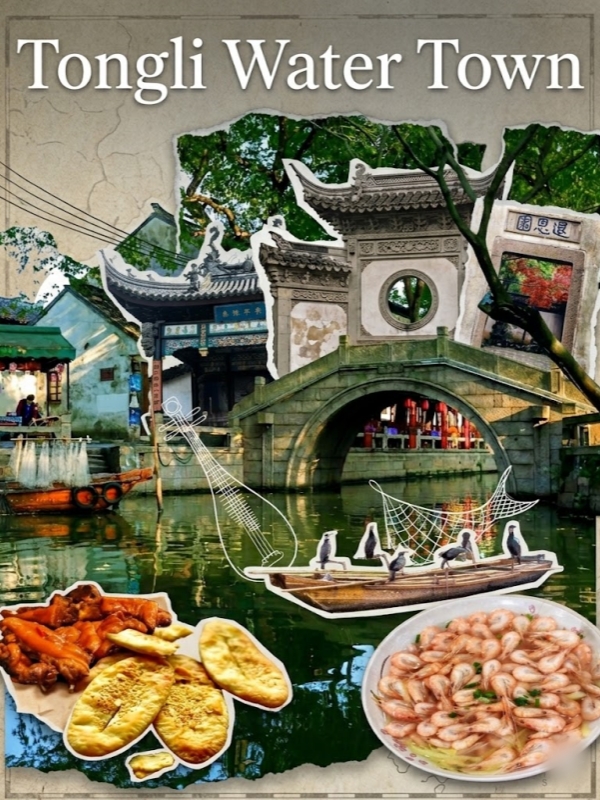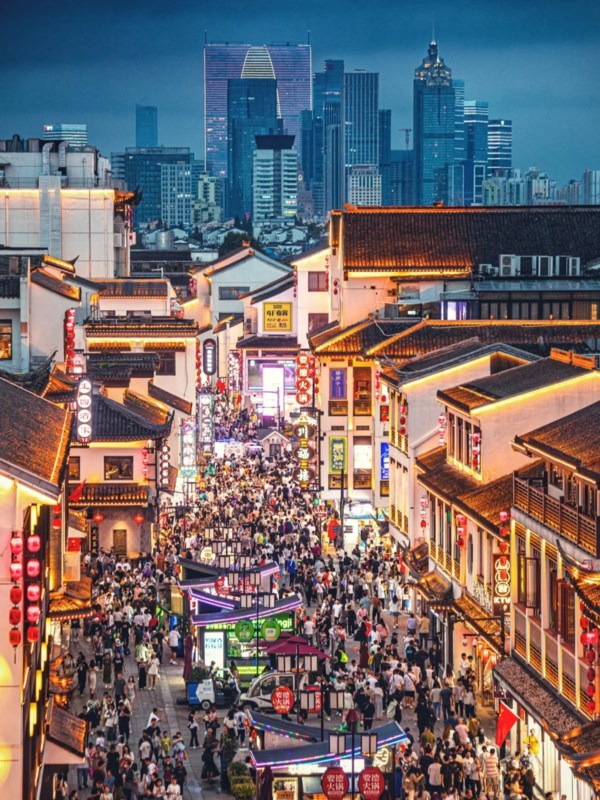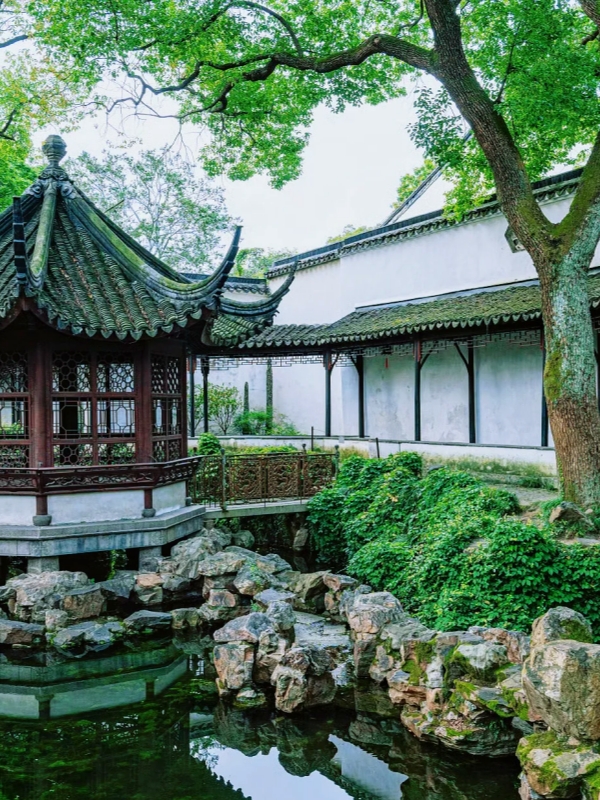
Humble Administrator's Garden, Suzhou
The Humble Administrator's Garden tops nearly every Suzhou list for a reason: at roughly 52,000 square meters it is China's largest classical garden, and the only one of Suzhou's nine UNESCO-recognized gardens designed by Ming dynasty painter Wen Zhengming. Built in 1509 as a former government official's private retreat, it stretches nearly the entire length of Dongbei Jie, a pedestrian street in the old town. Today visitors move through three distinct sections — central, eastern, and western — connected by arched bridges, lotus ponds, and a 700-meter network of covered walkways.
From the main gate, the Suzhou Museum, Lion's Grove Garden, and the historic Pingjiang Lu canal street are all within a few minutes' walk. This guide covers what to see pavilion by pavilion, how to reach the garden from Suzhou Railway Station, what tickets cost in dollars, and the best windows for the spring blossoms and summer lotus.
Quick Facts
The Three Sections Explained
All three sections share a single ticket, which makes exploring the full garden straightforward. The central section holds the original Ming-dynasty layout, centered on a large lotus pool that dominates the visual field. The eastern section occupies land that was rebuilt in the mid-20th century after years as a vegetable garden, giving it a more open character with lawns and a winding stream rather than dense pavilion clusters. The western section is the smallest but most ornate, packed with bonsai displays, fan-shaped pavilions, and the paired halls named for camellias and mandarin ducks.
Covered walkways connect all three sections. The corridors linking the western and central areas are often called the "wave corridor" for their undulating roofline, which keeps rain off visitors' heads as they move between the lotus pond and the bonsai garden. Altogether the walkways total 700 meters — enough to wander in any weather without retracing steps.
The Central Section
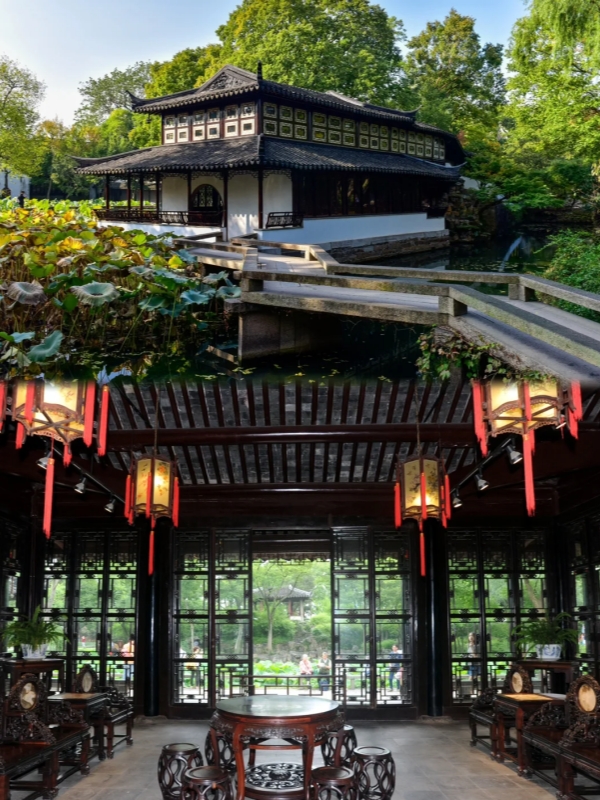
Humble Administrator's Garden, Suzhou
The central section follows Wen Zhengming's original 1509 layout. A large lotus pool forms the visual anchor, with the Distant Fragrance Hall, a covered bridge, and the four-season-view pavilion all positioned around its edges. Most visitors spend 1.5 to 2 hours here at a comfortable pace, working through the pavilions and pausing at the railings where the water reflects the surrounding architecture.
The Eastern Section
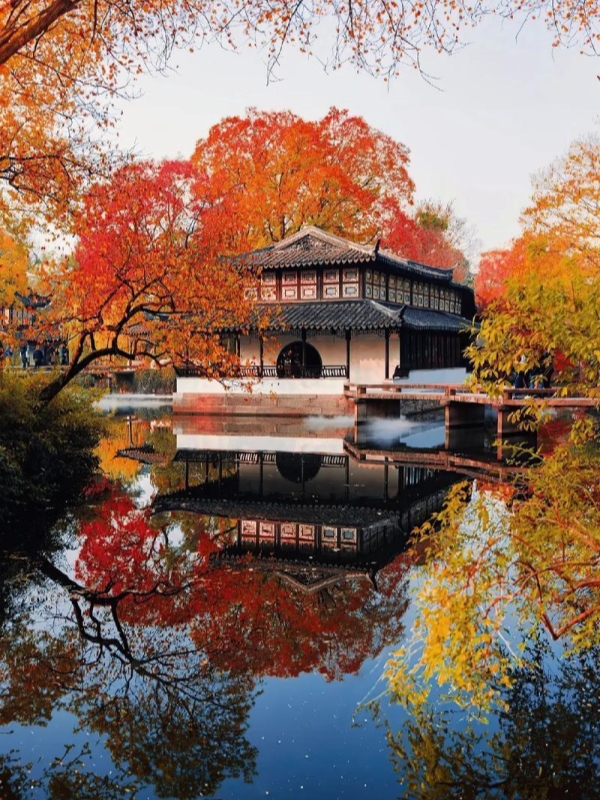
Humble Administrator's Garden, Suzhou
After the dense Ming architecture of the central garden, the eastern section feels like stepping into a different landscape. Open lawns stretch across the former vegetable plots, broken only by a winding stream and a plum grove. The character here is quiet and green — a visual palate cleanser that takes 30 to 45 minutes to walk, and a useful retreat when the central section fills with tour groups in mid-morning.
The Western Section
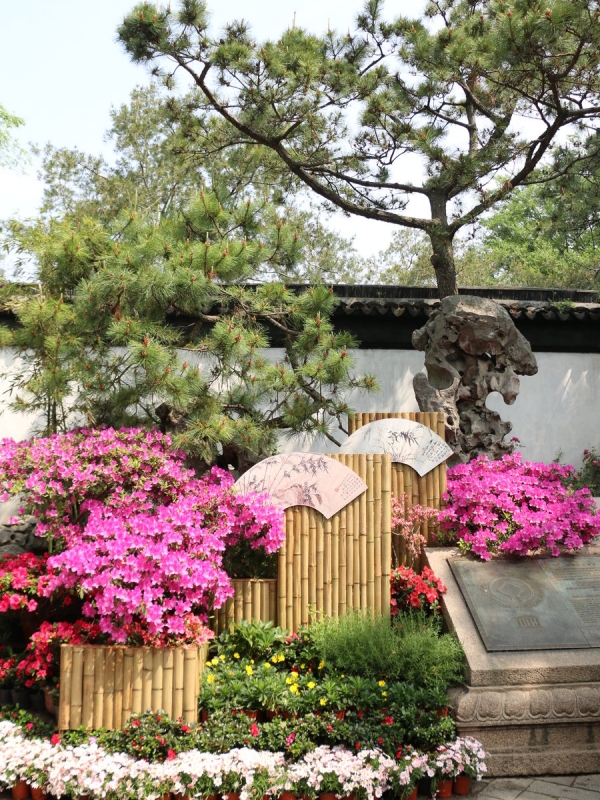
Humble Administrator's Garden, Suzhou
The western section is the most ornamental of the three. At the far west end sits the bonsai collection, with mature specimens arranged in ceramic pots along the covered walkways. The fan-shaped "Who I Sit With" pavilion takes its name from a poem by Su Shi (1037–1101): "I sit with the clean breezes and the bright moon." Nearby, the Hall of 18 Camellias and the paired Hall of 36 Pairs of Mandarin Ducks face each other across a small courtyard, with real ducks paddling in the pool beneath. A miniature stone pagoda in the western pond echoes the larger pagodas of Hangzhou's West Lake and traditionally symbolized flood protection. The Hat Pavilion and the highest point of the western section cap the walk. Plan 45 minutes to an hour for this area.
🌸 Plan Your Spring Visit: Late spring is one of the best times to experience the garden, as wisteria and peonies reach full bloom across Suzhou’s historic canals. Discover other top seasonal destinations across the country in our guide on Where to Visit China in Late April.
Why Everything Comes in Nines
Numbers in the garden's named features consistently appear in multiples of nine — 18 camellias, 36 pairs of mandarin ducks. This is not coincidence. In Chinese, 九 (jiǔ, "nine") is a near-homophone for 久 (jiǔ, "long-lasting"), and the pun was deployed deliberately throughout classical Chinese garden naming to wish a space eternal durability. The same logic extends to the count of latticed windows, the paired halls, and the zigzag bridge layouts. Once you notice it, the pattern appears everywhere.
🐟 Explore More South China Masterpieces: For travelers planning to visit nearby cities on their East China itinerary, you can find another world-famous example of Ming-dynasty classical design nestled right in the heart of Shanghai's old town. Plan your next stop with our visitor's guide to Yu Garden Shanghai.
Walking the Central Section
Counter-clockwise from the southeast corner of the central section gives the most natural flow past the major pavilions. The Distant Fragrance Hall anchors the route, with the lotus pond spreading out in front of it and the garden's longest couplet running across its doors. Every pavilion has a curved "mei ren kao" (美人靠) railing — the "leaning beauty" rail that the household's women originally used to sit sideways and observe the garden without being fully seen.
Distant Fragrance Hall and the Longest Couplet
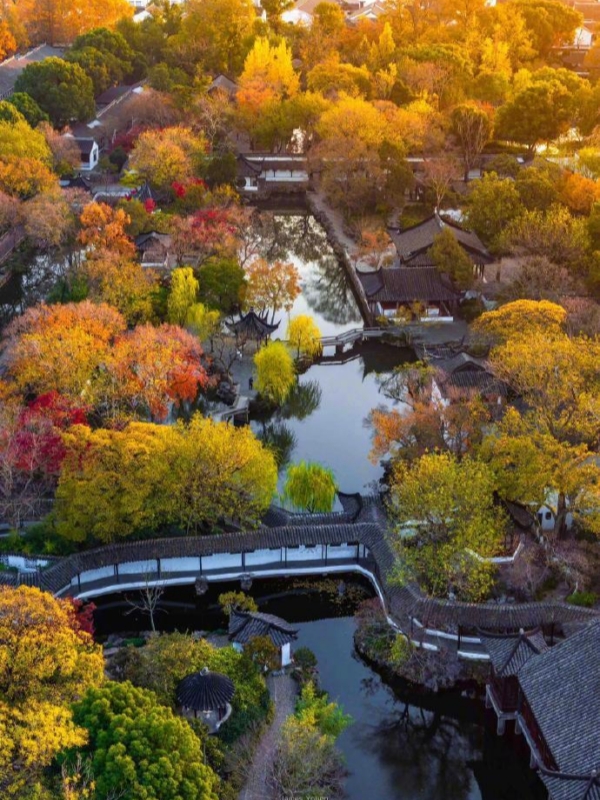
Humble Administrator's Garden, Suzhou
The Distant Fragrance Hall (远香堂) faces the lotus pond directly. Its name comes from the way lotus fragrance drifts across the water toward the hall in summer. The couplet inscribed across its doors runs 26 characters per side — the longest in the entire garden. Over the doorway of one boat-shaped hall, calligraphy by Wen Zhengming himself is still visible. The hall's name plays on a homophone: the character 香 (xiāng, "fragrant") sounds identical to 舟 (zhōu, "boat") when spoken quickly, so the name simultaneously means "fragrant hall" and puns on "boat." This kind of layered meaning runs through the entire garden.
Lotus Ponds, Bridges, and the "Leaning Beauty" Railings
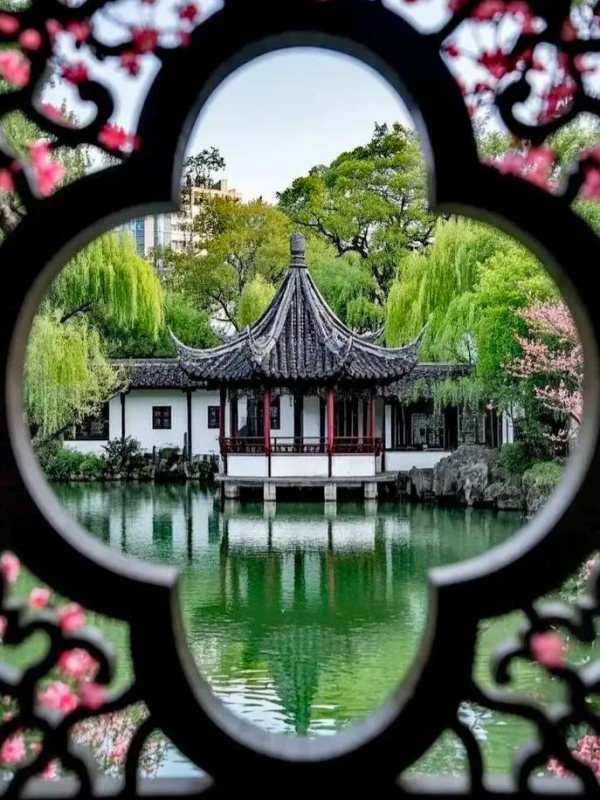
Humble Administrator's Garden, Suzhou
The lotus pond is the visual spine of the central section. A small zigzag bridge crosses one arm of it, with the lotus pressing close on the left as you cross. The covered bridge here is the only one of its kind in any of Suzhou's classical gardens — the others are all open to the sky. Most pavilions sit behind a curved wooden "mei ren kao" railing designed so that a woman of the household could sit sideways, lean against the rail, and gaze out at the garden with her back partially turned. The rail is just wide enough for that posture. Below the rail, the stone base is carved with a subtle relief.
Small Details Most Visitors Walk Past
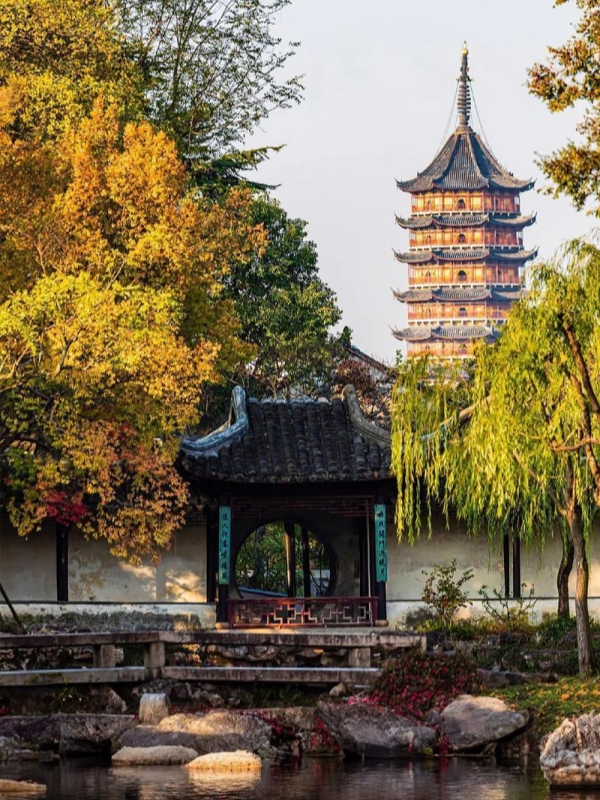
Humble Administrator's Garden, Suzhou
Lattice windows punctuate the whitewashed walls at regular intervals, and every pattern is unique — an informal count rewards the effort. Beneath the south wall of the House of Sweet-Smelling Rice, miniature wood bas-relief carvings sit close to ground level, easy to miss unless you crouch. The paving stones near the Reflecting Hall are arranged in interlocking V shapes that together form the character 人 (rén, "people") — a paving style invented specifically to honor the emperor by embedding his name into the ground itself. A circular arrangement of lighter-colored paving stones near the Reflecting Hall provides a rough surface that doubles as a free foot massage for anyone who stands on it.
👑 Compare Private and Imperial Gardens: If you are captivated by the delicate, intimate layout of this 52,000-square-meter private estate, you will find a fascinating contrast in the grand, sweeping scales of China's imperial resort structures. Discover the masterwork of royal landscaping in our guide to the Summer Palace.
Eastern and Western Sections
The western section concentrates the garden's ornamental extremes. Highlights include the fan-shaped "Who I Sit With" pavilion quoting Su Shi's moon-and-breeze poem, the bonsai collection at the far end, and the paired camellia and mandarin duck halls where real ducks paddle beneath the floor. A miniature stone pagoda in the western pond echoes Hangzhou's West Lake skyline and traditionally represented flood protection — the same symbol appears in gardens across the lower Yangtze delta. The Hat Pavilion and the western section's highest viewing point close the walk. Wen Zhengming's own tree stands just outside the museum exit on the west side, planted by the designer himself centuries ago.
The eastern section reads as a deliberate contrast. Where the central and western sections pack pavilions together across water and rock, the east opens into lawns, a meandering stream, and a plum grove. This section was rebuilt in the mid-20th century on land that had been a vegetable garden, so the planting is younger and the sight lines are wider. It takes 30 to 45 minutes to walk and serves as a quiet counterweight to the density elsewhere.
The Eastern Section
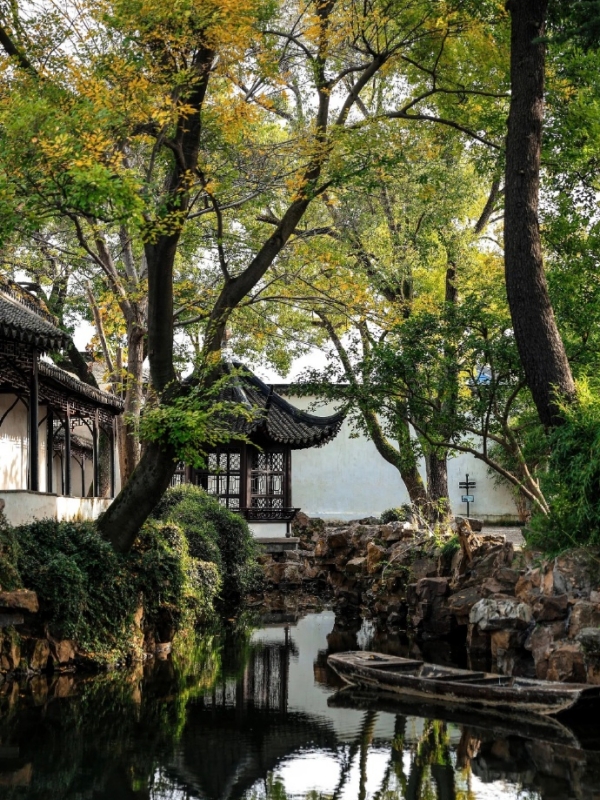
Humble Administrator's Garden, Suzhou
The eastern section feels more like a park than a garden. Lawns dominate, broken by a winding stream that follows an irregular course planted with reeds and bamboo. A plum grove occupies the section's northern edge — in February or early March before the garden officially enters peak season, the white blossoms draw photographers despite the cool weather. The open layout means fewer covered walkways and more exposure to the sky. Allow 30 to 45 minutes. This is also the least-visited section on weekday mornings.
The Western Section
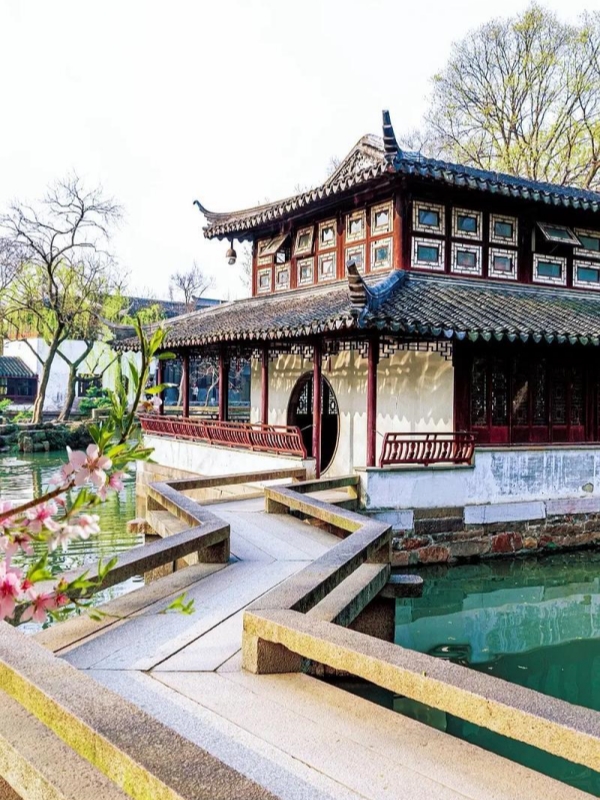
Humble Administrator's Garden, Suzhou
The western section packs the most variety into the smallest footprint. The fan-shaped "Who I Sit With" pavilion (与谁同坐轩) takes its name from the couplet "I sit with the clean breezes and the bright moon / the wind and moon have no feelings, yet people have heart" — a reflection on solitude borrowed from Su Shi. The bonsai (盆景) collection at the far west end displays mature specimens in ceramic pots, some estimated at over a century old.
The Hall of 18 Camellias (十八曼陀罗花馆) and the Hall of 36 Pairs of Mandarin Ducks (三十六鸳鸯馆) face each other across a small courtyard; a viewing window in the duck hall floor looks directly down at the pool below, where the birds paddle in circles. The miniature stone pagoda in the western pond rises from the water as a deliberate echo of West Lake's larger structures. The Hat Pavilion and the western section's highest point offer a final overview before the exit. Plan 45 minutes to an hour.
🏛️ From Private Retreats to Modern Leadership: While this Suzhou masterpiece represents the pinnacle of private scholar gardens, classical garden design also heavily influenced China's imperial and political landscapes. To understand how ancient architectural styles transitioned into modern governance hubs, read our explainer on What is Zhongnanhai.
Tickets, Hours, and When to Visit
Opening hours run 7:30am to 5:30pm year-round, with last entry typically around 5:00pm — confirm at the ticket booth on arrival. The peak-season ticket (April through October) costs $10 (¥70), and the off-peak ticket (November through March) drops to $7 (¥50). One ticket covers all three sections, and it is also valid for the Suzhou Garden Museum inside the garden compound. Foreign visitors can book on Trip.com and Klook using an international card; the on-site ticket booth on Dongbei Jie accepts WeChat Pay and Alipay. Two to three hours is a comfortable visit for all three sections, with 30 minutes extra if you want to linger at specific pavilions or revisit the lotus pond.
Ticket Prices and How to Buy
Peak-season admission (April through October) is $10 (¥70) and off-peak (November through March) is $7 (¥50). Trip.com typically lists the peak-rate window; Klook sometimes carries the off-peak rate. Either platform accepts international cards, which makes advance booking the most practical option before arrival. The on-site ticket booth at the main gate on Dongbei Jie also sells tickets on the day — bring WeChat Pay or Alipay if paying locally, as cash is less commonly accepted at the booth.
The Garden's Calendar
April and May bring plum blossoms, cherry blossom, and peony in quick succession. Late June through August is lotus season in the central pool — the blooms open with morning sun and begin closing by mid-afternoon. Peak lotus bloom typically falls in the first two weeks of July. Autumn maples color the western section from mid-October through mid-November. Winter is the quietest period: snow settles on the whitewashed walls and roof tiles, and the round-door pavilion's "winter view" composition becomes the garden's main draw. Spring lotus-viewing crowds can overlap with cherry season visitors in the second week of April, so arriving early on those dates pays off.
Getting There from Suzhou Railway Station
Suzhou Railway Station sits roughly 6 kilometers southwest of the garden. The cheapest and most reliable option is Metro Line 1 from Suzhou Railway Station to Lindun Lu, taking about 30 minutes and costing roughly $1 (¥4). A Didi ride or taxi covers the same distance in 20 to 25 minutes for $7–10 (¥50–70) depending on traffic. Bus routes from the railway station take 35 to 45 minutes for around $0.50 (¥2).
Suzhou North Railway Station is farther north; from there, Metro Line 2 southbound connects to Line 1 with a transfer, totaling about 50 minutes and $1 (¥4), or a Didi takes 30 to 40 minutes for $10–14 (¥70–100). Most Shanghai-based day-trippers arrive via Shanghai Hongqiao HSR, then take a 25-minute high-speed train to Suzhou for $5–10 (¥40–60) second class and continue by metro or taxi. The garden's main gate is at the east end of Dongbei Jie — the pedestrian street — and the ticket booth sits just where vehicles are blocked off.
From Suzhou's Two Railway Stations
From Suzhou Railway Station, Metro Line 1 runs directly to Lindun Lu in roughly 30 minutes for about $1 (¥4). A Didi or taxi takes 20 to 25 minutes and costs $7–10 (¥50–70) without traffic. From Suzhou North Railway Station, Line 2 southbound to Guangji Road and a transfer to Line 1 gets you to Lindun Lu in about 50 minutes for roughly $1 (¥4). A Didi from Suzhou North is 30 to 40 minutes and runs $10–14 (¥70–100).
From Shanghai and Other Arrival Points
Shanghai Hongqiao International Airport's HSR hub connects to Suzhou in about 25 minutes for $5–10 (¥40–60) second class. From Suzhou station, Line 1 to Lindun Lu adds another 30 minutes and $1 (¥4). Wuxi Airport is roughly 50 kilometers away and has direct buses to Suzhou, though the HSR route from Shanghai is faster for most visitors. If arriving by cruise or long-distance bus into Suzhou city, the metro and Didi options above apply once you are within the city limits.
Photography, Crowds, and Nearby Attractions
The garden fills with tour groups by 10am in peak season and stays busy through 4pm. The best strategy is to arrive at 7:30am when the gates open — the central lotus pond is quiet and the light comes in low across the water. Lotus blooms open with the morning sun and begin closing by late afternoon, so early arrivals get the fullest flowers. The most photographed single spot is the round moon-door at the boundary between the central and western sections; expect a queue there at any time after 9am. The framed view through that door — garden layers visible through the circle — is the signature composition. English signage is present throughout, and audio guides in English rent at the main gate for roughly $3–5 (¥20–30, confirm on site).
Beating the Crowds and Photographing Well
Arrive at 7:30am opening to have the central lotus pond largely to yourself for the first hour. The round moon-door at the boundary between central and western sections is the most-photographed composition in the garden — queues form there after 9am on most days. Morning light on the lotus pond produces the best reflection shots, since the blooms are fully open and the water is still. By late afternoon, many lotus heads have closed. The Distant Fragrance Hall reflected across the water from the small bridge is the second-most captured view. If you are visiting during peak lotus season (first two weeks of July), the crowd at the pond edge can be dense by mid-morning.
What's Within Walking Distance
The Suzhou Museum (I.M. Pei, 2006, free entry but often with a queue) is a five-minute walk from the garden's main gate. The building itself is worth visiting — the architect's geometric skylights make it one of the most photographed modern structures in old Suzhou. Lion's Grove Garden (狮子林), built in 1342 and famous for its rockeries, is five minutes away on foot and costs $6 (¥40). A combined Suzhou Gardens pass covering the four main classical gardens — Humble Administrator's, Lion's Grove, Lingering, and Master of the Nets — is available on Trip.com and at major hotels. At the south end of Pingjiang Lu, canal boat tours launch from the historic waterway that runs parallel to the garden district.
Frequently Asked Questions
Q: How long does a visit take in Humble Administrator's Garden, Suzhou?
A comfortable visit covering all three sections takes 2 to 3 hours. Allow an extra 30 minutes if you want to revisit specific pavilions or sit by the lotus pond during lotus season. The eastern section alone can be walked in 30 to 45 minutes if time is tight.
Q: How much is the ticket and where do I buy it?
Tickets are $10 (¥70) during peak season (April through October) and $7 (¥50) off-peak (November through March). One ticket covers all three sections. Book on Trip.com or Klook with an international card, or use the on-site ticket booth on Dongbei Jie with WeChat Pay or Alipay.
Q: When is the best time to see the lotus?
Late June through August is lotus season in the central pool. Blooms open with morning sun and close by mid-afternoon. Peak bloom is typically the first two weeks of July. Arriving at 7:30am gives you fully open flowers and the best light on the water.
Q: How do I get from Suzhou Railway Station to the garden?
Take Metro Line 1 from Suzhou Railway Station to Lindun Lu — about 30 minutes and roughly $1 (¥4). A Didi or taxi takes 20 to 25 minutes and costs $7–10 (¥50–70). The garden's main gate is at the east end of Dongbei Jie, the pedestrian street.
Q: Is the garden wheelchair or stroller accessible?
Not fully. Paths are narrow, stone bridges have steps, and several halls require climbing. Visitors with mobility needs should plan to see the central section from the main loop only. The adjacent Suzhou Museum is step-free and makes a good accessible alternative nearby.
Q: Can I buy a combo ticket for several Suzhou gardens?
A Suzhou Gardens combo pass covering the four main classical gardens (Humble Administrator's, Lion's Grove, Lingering, and Master of the Nets) is sold on Trip.com and at major hotels. Check the current pass price on Trip.com before buying, since individual tickets are already inexpensive at $7–10.
Q: Should I visit this garden or Lion's Grove Garden first?
Visit Humble Administrator's first if you want the larger, more famous water-and-pavilion layout. Start with Lion's Grove if rockeries and maze-like boulder gardens are your priority — it is much smaller and takes 30 to 45 minutes. The two are five minutes apart on foot, so doing both in one morning is entirely realistic.
Q: Are English-language guides or audio tours available?
English audio guides rent at the main gate for roughly $3–5 (¥20–30, confirm on site). Many signs throughout the garden are bilingual. Private English-speaking guides can be booked through Trip.com or major Suzhou hotels for a half-day or full-day tour.