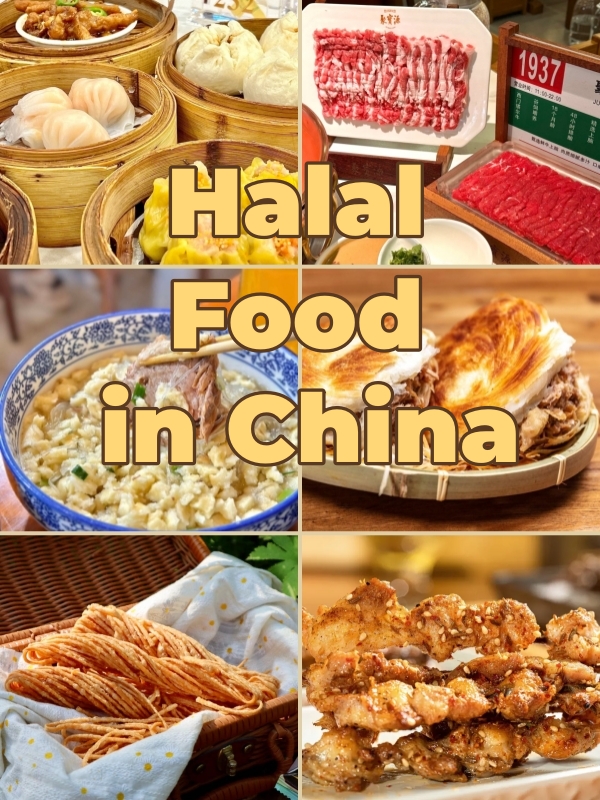
Halal Food in China:Centuries-Old Muslim Cuisine Featuring Noodles, Roasted Meat And Traditional Pastries
Halal food in China is the product of one of history’s most remarkable culinary marriages. Since the Tang Dynasty when Islamic civilisation first arrived via the Silk Road, Muslims have mingled with Chinese culture for more than 1,300 years, producing a unique and profound qingzhen (清真) - literally meaning ‘pure and true’ - food tradition. With some 30 million Muslims from the Hui, Uyghur, Kazakh and Dongxiang ethnic groups living in China, it is woven into the quotidian of every city. The bright green “清真” sign on a restaurant facade is no tempting niche for foreign visitors. It is a marker of a living tradition stretching from ancient imperial capitals to modern megacities, and one of the surest guides to the best food China has to offer.
This guide covers everything you need to eat confidently as a Muslim traveler in China — which cities to prioritize, how to identify a genuine halal restaurant, the key phrases to use, and the apps that make the search effortless. Whether you are arriving in Beijing for the first time or passing through Shenzhen on a day trip from Hong Kong, you will finish this guide knowing exactly what to do. For a deep dive into the cultural roots that made this tradition possible, explore the full history of halal food in China — from the Silk Road to the moder&l
Culinary Categories: China's Rich Halal Heritage
Chinese halal cuisine, heavily influenced by Hui Muslim cooking, Uyghur customs, and the spice routes of the Silk Road, is more diverse than outsiders may realize. It’s not a single style of cooking, but a family of cuisines tied together by common dietary rules and expressed differently across China’s vast geography. Knowing the main food categories makes it easier for you to order with confidence no matter where you are.
🍜 Noodle Dishes: The Halal Wheat Backbone
-
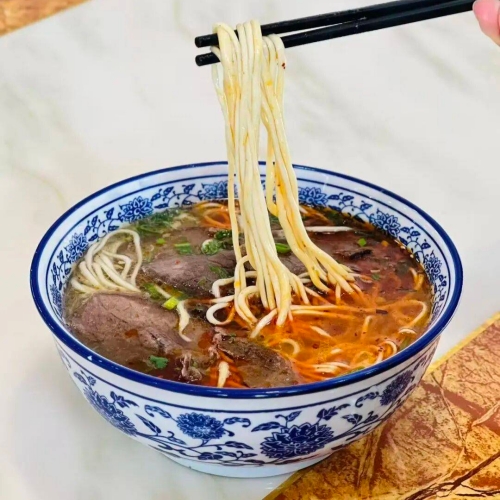

- Lanzhou Beef Noodles
-
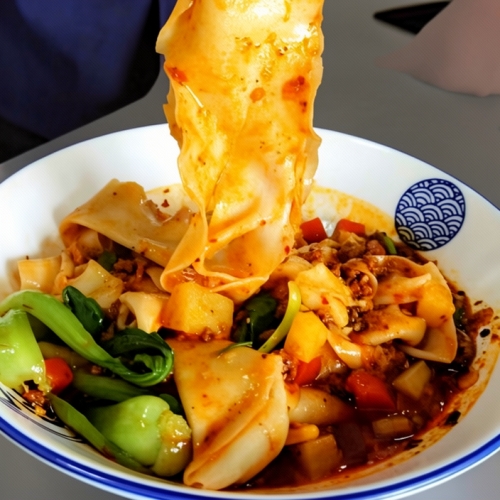
- Biangbiang noodles
-
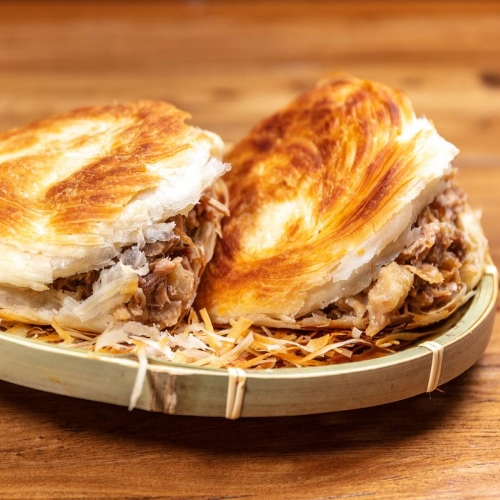
- Roujiamo
-
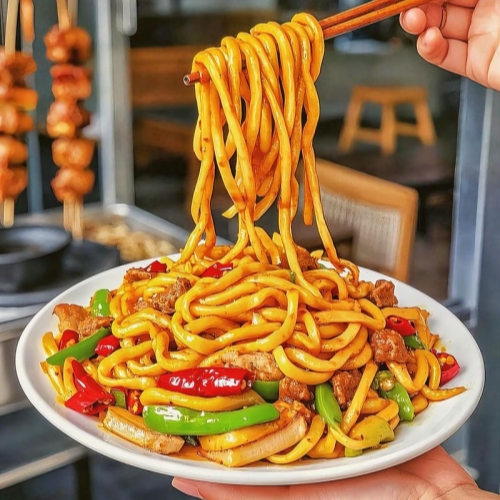
- Laghman
The most widely available halal food in China are hand-pulled noodles — the safest fallback whenever in doubt. From the crystal clear beef broth or Lanzhou to Xi’an’s wide ribbons drenched in chili oil, there’s breakfast, lunch, and quick dinners priced at ¥10 to 35 a bowl.
| Dish | Chinese | Origin | Price | Flavour Profile |
|---|---|---|---|---|
| Lanzhou Beef Noodles | 兰州牛肉面 | Lanzhou | ¥10–20 | Clear broth, savoury, mildly spiced — the national halal staple |
| Biangbiang Noodles | Biángbiáng面 | Xi'an | ¥18–28 | Thick belt noodles, sizzling chili oil poured tableside |
| Roujiamo | 肉夹馍 | Xi'an | ¥10–20 | Sesame flatbread + braised halal beef or lamb; eat walking |
| Laghman | 拉条子 | Xinjiang | ¥20–35 | Hand-pulled noodles tossed with stir-fried lamb and vegetables |
Tip:For the most accurate and up-to-date availability, it is highly recommended to verify halal certification directly with the restaurant staff before ordering.
🥩 Meat Selections: Masterful Beef and Lamb
-
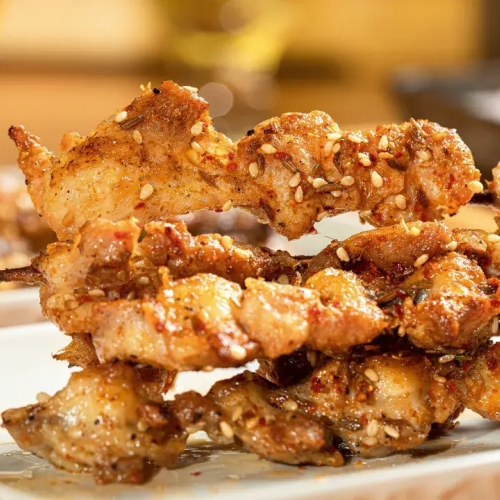
- Lamb skewers
-
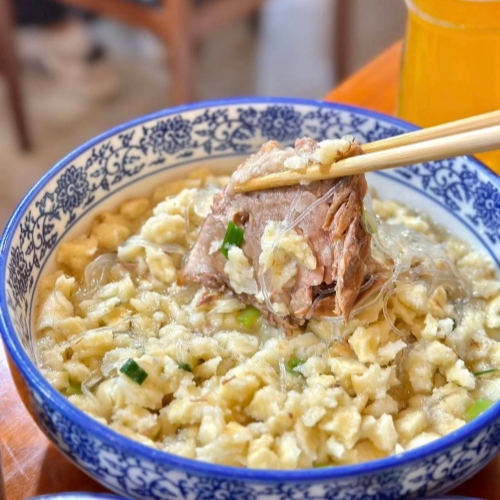
- Yangrou Paomo
-
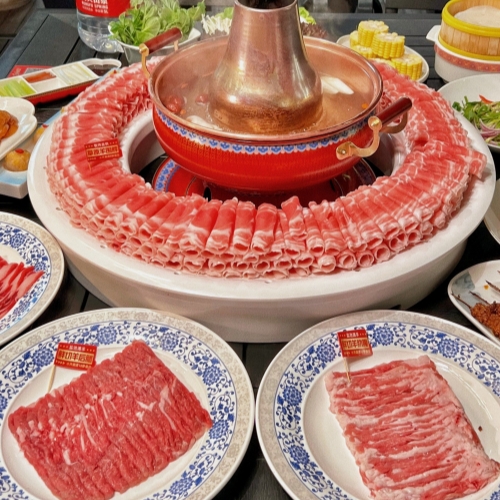
- Copper Pot Hotpot
-
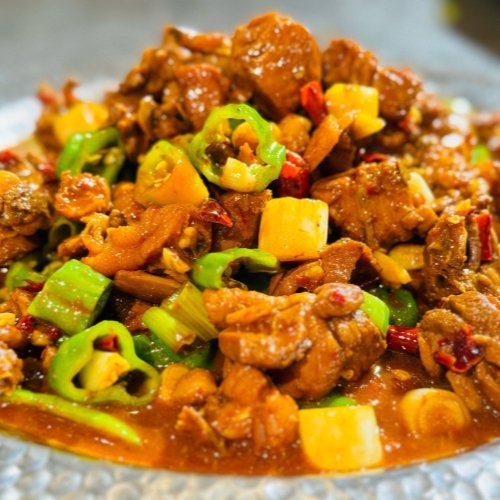
- Big Plate Chicken
With pork absent from halal kitchens by definition, lamb and beef take centre stage — and Chinese Muslim cooks have had over a millennium to master both. Expect everything from street-side cumin skewers at ¥3 each to imperial-style copper pot hotpot in Beijing's historic Muslim Quarter.
| Dish | Chinese | Origin | Price | What Makes It Special |
|---|---|---|---|---|
| Lamb Skewers | 羊肉串 | Nationwide | ¥3–8/skewer | Charcoal-grilled, cumin-crusted; the most widespread halal street food |
| Yangrou Paomo | 羊肉泡馍 | Xi'an | ¥35–55 | Slow-cooked lamb broth; you tear the flatbread in yourself |
| Copper Pot Hotpot | 铜锅涮羊肉 | Beijing | ¥80–150/person | Paper-thin lamb in clear broth; imperial-era technique, sesame dip |
| Big Plate Chicken | 大盘鸡 | Xinjiang | ¥60–120/dish | Bone-in chicken, potatoes, peppers; hand-pulled noodles served underneath |
Tip: For the most accurate and up-to-date availability, it is highly recommended to verify halal certification directly with the restaurant staff before ordering.
🍲 Slow Broths: The Art of Simmering
-
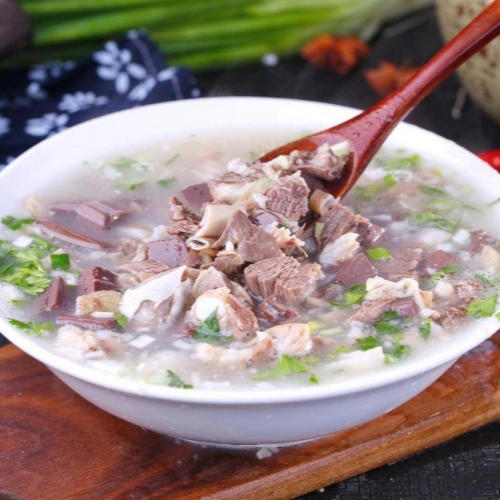
- Niujie Mutton Soup
-
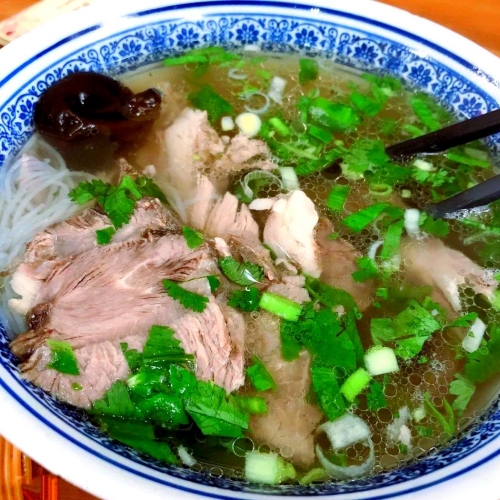
- Water Basin Lamb
Northwestern Chinese halal culture is built around the slow-simmered pot. Broths here are architectural — each one constructed from specific bones, spices, and timing, and treated as a serious craft. The best examples have been refined over hundreds of years without changing.
| Dish | Chinese | Origin | Price | Broth Character |
|---|---|---|---|---|
| Yangrou Paomo Broth | 羊肉泡馍汤 | Xi'an | Included in dish | Milky white, 4–6 hrs lamb bone; rich, mineral-deep |
| Lanzhou Beef Broth | 兰州牛肉汤 | Lanzhou | Included in noodles | Crystal-clear, carefully skimmed; clean and savoury |
| Niujie Mutton Soup | 牛街羊汤 | Beijing | ¥25–45 | White bone broth; Beijing-style, predates the Ming Dynasty |
| Water Basin Lamb | 水盆羊肉 | Xi'an | ¥30–50 | Light amber broth, whole lamb cuts; lighter than paomo |
Tip: For the most accurate and up-to-date availability, it is highly recommended to verify halal certification directly with the restaurant staff before ordering.
🍚 Grain Plates: Silk Road Rice Influences
-
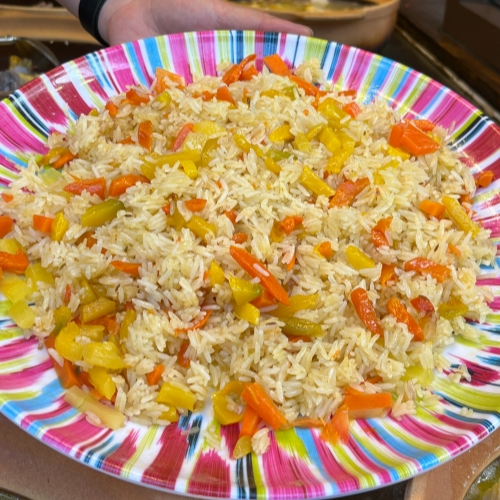
- Lamb Rice Pilaf (Zhuafan)
-
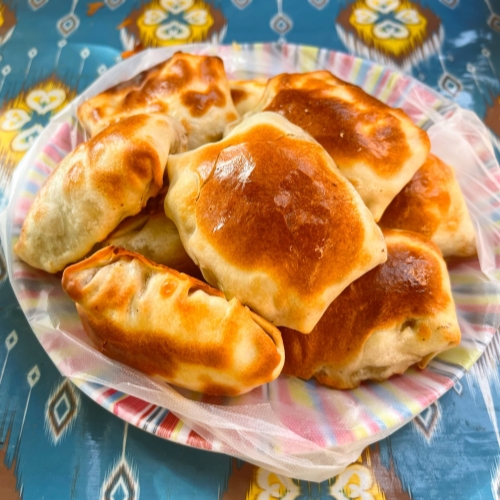
- Samsa (Baked Dumpling)
The further northwest you travel, the more Central Asian heritage appears on the plate. These dishes arrived via the same trade routes that brought Islam to China — and they still taste like it. Richer, spiced differently, and deeply satisfying in cold climates.
| Dish | Chinese | Origin | Price | Key Ingredients |
|---|---|---|---|---|
| Lamb Rice Pilaf (Zhuafan) | 手抓饭 | Xinjiang | ¥25–50 | Lamb, carrots, onions, raisins; one-pot Silk Road cooking |
| Nang Flatbread | 馕 | Xinjiang | ¥3–8/piece | Sesame-crusted, clay tandoor-baked; eaten at every meal |
| Samsa (Baked Dumpling) | 烤包子 | Xinjiang | ¥5–10/piece | Crispy pastry, spiced lamb and onion filling |
Tip: For the most accurate and up-to-date availability, it is highly recommended to verify halal certification directly with the restaurant staff before ordering.
🧁 Sweet Pastries: Authentic Halal Street Treats
-
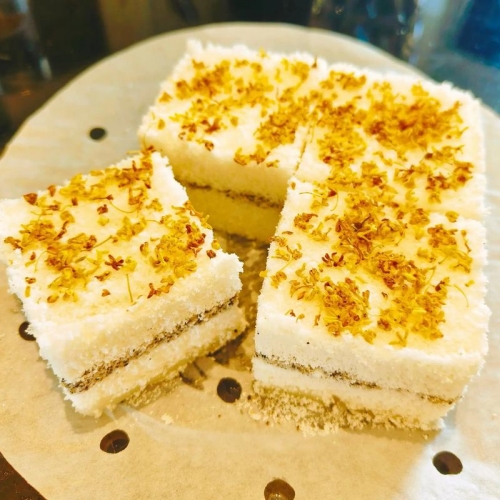
- Osmanthus Rice Cake
-
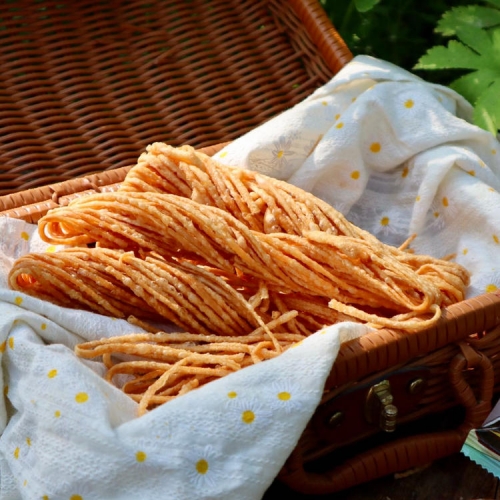
- Fried Dough Twist
Xi'an's Muslim Quarter is also one of China's great street-snack destinations. These halal sweets and pastries are beloved far beyond Muslim communities — you will see non-Muslim locals lining up for them just as enthusiastically. Budget ¥5–20 and graze your way down the alley.
| Snack | Chinese | Origin | Price | Taste & Texture |
|---|---|---|---|---|
| Persimmon Cake | 柿子饼 | Xi'an | ¥5–10 | Crispy-fried dough, sweet persimmon paste centre; warm, chewy |
| Osmanthus Rice Cake | 桂花糕 | Xi'an | ¥5–8/piece | Fragrant, floral, soft; made from glutinous rice and osmanthus |
| Rose Pastry | 玫瑰饼 | Xi'an | ¥5–8/piece | Flaky shell, rose jam filling; a Muslim Quarter original |
| Fried Dough Twist | 油馈子 | NW China | ¥3–6 | Crispy, lightly salted; the halal morning snack across the northwest |
Tip: For the most accurate and up-to-date availability, it is highly recommended to verify halal certification directly with the restaurant staff before ordering.
Top Destinations: Must-Visit Halal Food Cities
Not every city offers the same experience. Your choice of base matters more for halal dining than almost any other dietary need in China. Here is the honest picture before you book.
| City | Muslim-Friendliness | Signature Halal Dish | Core Area | Avg. per Person |
|---|---|---|---|---|
| Xi'an | ★★★★★ Highest | Yangrou paomo, roujiamo | Muslim Quarter (Huimin Jie) | ¥30–80 |
| Lanzhou | ★★★★★ Highest | Lanzhou beef noodles | City-wide coverage | ¥10–40 |
| Beijing | ★★★★ High | Lamb hotpot, roast meat | Niujie, Xicheng District | ¥50–150 |
| Shanghai | ★★★ Medium | Northwestern, Xinjiang cuisine | Huxi Mosque area | ¥40–120 |
| Guangzhou | ★★★ Medium | Halal dim sum, NW dishes | Huaisheng Mosque, Xiaobei | ¥40–100 |
| Shenzhen | ★★ Lower | Xinjiang cuisine, halal hotpot | Nanshan, Futian scattered | ¥50–150 |
Tip: For the most accurate and up-to-date availability, it is highly recommended to verify halal certification directly with the restaurant staff before ordering.
Xi'an City: The Ancient Halal Capital
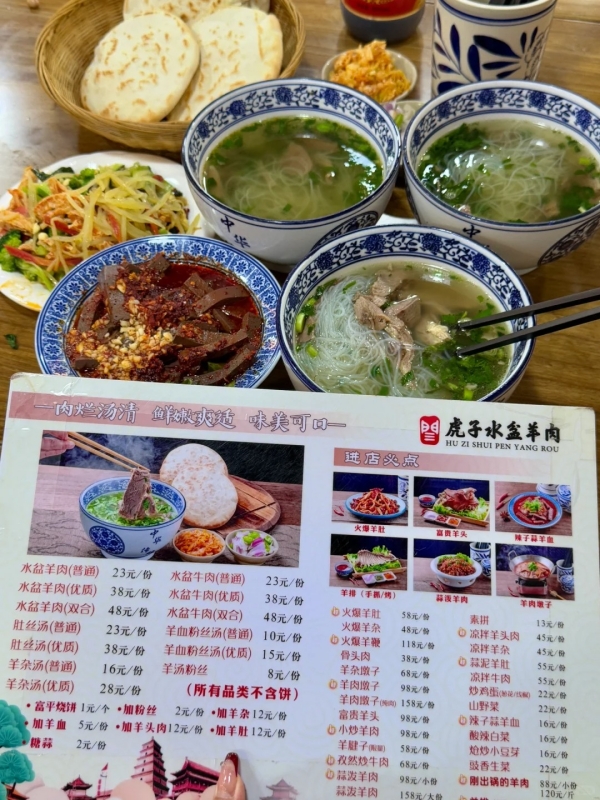
Lao Baijia Lamb Soup
Stroll down Huimin Street at lunchtime and you will understand at once why Xi’an tops every halal food list in China. The smells assault you before the sights do — cumin-rubbed lamb on open grills, thick lamb broth simmering in copper pots, sesame oil over fresh noodles. This is food made the same way, in the same neighborhood, for generations.
The star of the menu is yangrou paomo (羊肉泡馈): a bowl of slow-cooked lamb broth that you thicken yourself by tearing flatbread into it piece by piece. The smaller your pieces, the more the staff appreciate you. It takes patience but delivers one of the most satisfying meals you can have anywhere in Asia.
| Type | Restaurant | Specialty | Location |
|---|---|---|---|
| Old classic | Lao Baijia Lamb Soup | Morning lamb broth, crowded by 8am | Muslim Quarter core |
| Local favourite | Yang Tianyu Roujiamo | Hidden on Sajin Bridge alley, worth finding | Sajin Bridge (洒金桥) |
| Experience | 1915 Beef Noodles (rooftop) | Views of the Ancient City Wall while you eat | Ring Road |
| Street food row | Dapiyuan & Beiyuanmen | Less crowded than the main street, better value | Off Huimin Jie |
Pro tip: After 6pm, the Muslim Quarter's main street becomes a slow-moving crowd. Go at lunch or between 2–4pm. Walk two blocks into Dapiyuan or Beiyuanmen and you'll find the same food at lower prices with half the queue.
For visitors who want to go deeper — beyond yangrou paomo and into the 20+ dishes that define Xi'an's halal food culture — the complete Xi'an halal food guide covers every dish worth trying, including the local spots most tourists never find.
Lanzhou City: The Ultimate Noodle Heaven
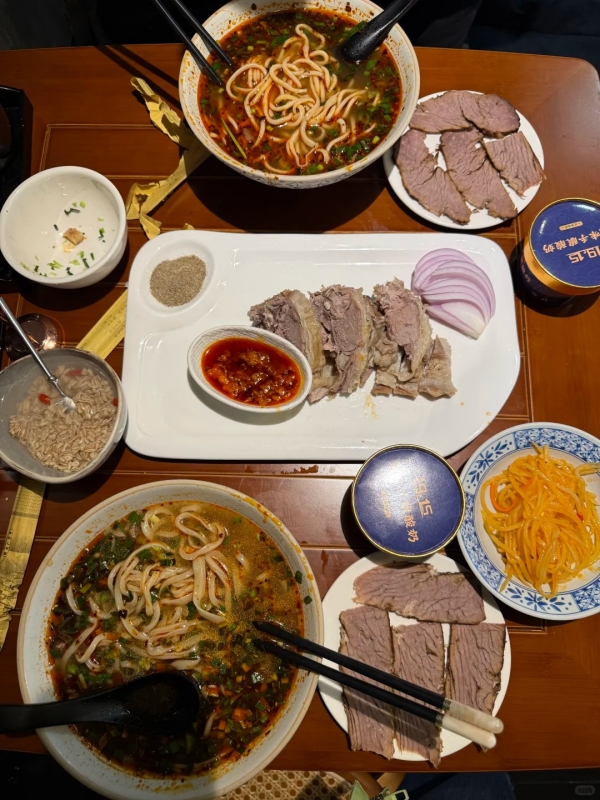
1915 Beef Noodles (rooftop)
Lanzhou is the easiest city in China for halal food. No looking required. No special neighbourhood to navigate. Step into almost any noodle shop before noon and you will eat well. The dish that defines the city – Lanzhou beef noodles (兰州牛肉面) – is halal by custom, produced in a halal kitchen, and costs between ¥10 and ¥20.
The identity is exact: clear beef broth (one clear), white radish slices (two white), red chili oil (three red), green garlic and coriander (four green), yellow pulled noodles (five yellow). Locals queue from 6am for the first broth said to be clearer and richer than later produced. When ordering, be explicit – specify a thickness of noodle from maoci (extremely thin) through to da kuan (fat belt noodle). Just Pointing at what the person nearest ordered would actually work very well.
| Type | Restaurant | Specialty | Location |
|---|---|---|---|
| Old classic | Mazilu Beef Noodles (马子禄) | Most famous name in the city, queues from 7am | Multiple citywide branches |
| Local favourite | Zhanglao'er Beef Noodles | Smaller, less tourist-facing, honest quality | Guancheng District |
| Experience | 1915 Beef Noodles (rooftop) | City views while you eat; same quality, better setting | Ring Road, city center |
| Food cluster | "Carb Crossroads" (碳水十字) | Multiple top-rated noodle shops within walking distance | Guancheng District |
Ordering tip: Tell the server your preferred noodle thickness — from maoci (hair-thin) to da kuan (wide belt). Most locals choose xi (thin) or er xi (medium). Add a side of sliced beef and a boiled egg to make it a full meal for under ¥30.
Beijing City: Imperial Muslim Quarter Legacy
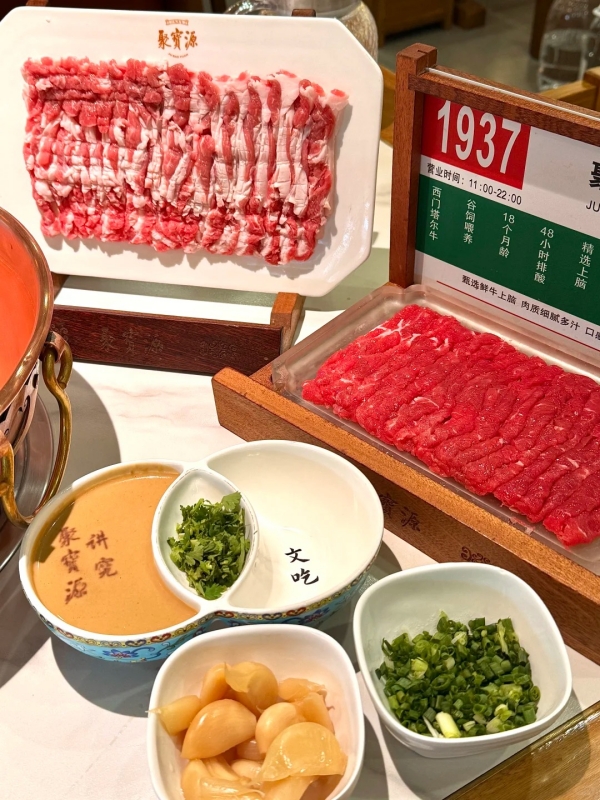
Jubaoyuan
Beijing’s tradition of halal food cannot be separated from Xicheng District’s Niujie (牛街, “Ox Street”), the Muslim neighbourhood that has existed for more than a millennium. The mosque here, built in 996 CE, is one of the oldest in China. The food, as might be expected, reflects a thousand years of imperial influence on Hui Muslim cooking; recipes are more refined, ingredients more carefully selected, portions generous, and landover procured with the conscious seriousness of haute cuisine.
The two most popular experiences in the capital’s halal world are copper pot lamb hotpot (铜锅洮羊肉) and charcoal grilled roast meat (炙子烤肉). In the copperpot style, the lamb interfacing is sliced paper thin then dipped into clear simmering broth — not spiced stock or flavoured oil (in other words the oil, normally known as greasy, is absent), just plain clean water.
| Restaurant | Type | Why Go | Price/Person |
|---|---|---|---|
| Jubaoyuan (聚宝源) | Copper pot hotpot | Local favourite, serious queues at weekends | ¥80–120 |
| Donglaishun (东来顺) | Halal hotpot chain | Est. 1903, multiple locations across the city | ¥100–150 |
| Kaorouji (烤肉季) | Charcoal roast meat | Centuries-old recipe, lakeside setting | ¥80–120 |
| Yar Li Jiji (鸦儿李记) | Modern halal (2025) | Large space, shorter waits, wide menu | ¥60–100 |
| Mabeier Xiaoguan | Home-style halal | Unassuming, genuinely local, budget-friendly | ¥40–70 |
Transport note: Line 19's Niujie Station opened in 2024, making the neighborhood directly accessible from central Beijing. From the Forbidden City area, take Line 1 to Xuanwumen, then Line 4 south to Caishikou, and walk 10 minutes.
Shanghai City: Modern Global Halal Mosaic
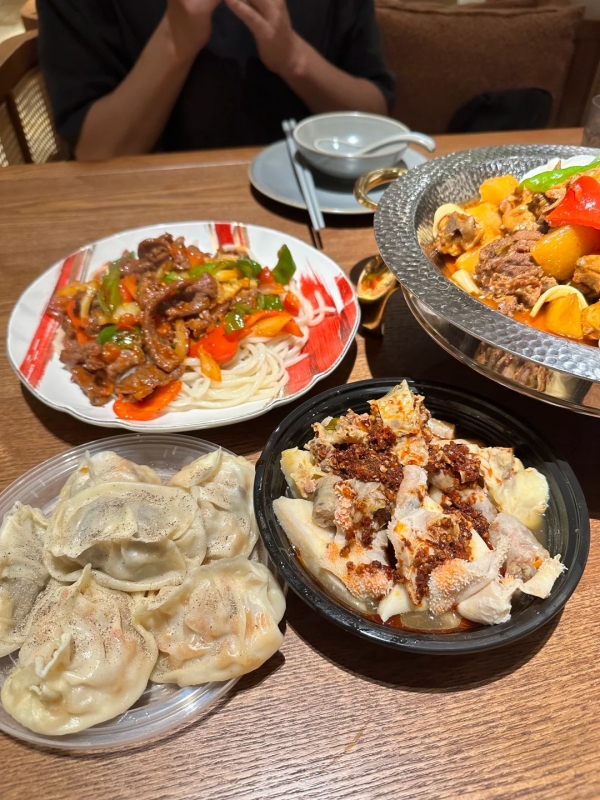
Pinhuiwei
Unlike other major Chinese cities, Shanghai does not have a Niujie or any designated Muslim Quarter. What it does have is a loose patchwork of over 40 halal and halal-friendly restaurants across a metro community of 25 million, with some going back to 1868. Save yourself the headache of searching aimlessly — do not arrive expecting a food street, do arrive knowing which three zones to zero in on.
The most historically significant zone clusters around the Huxi Mosque (淯西清真寺) on Changde Road in Putuo District. The second zone is Hongkou District, home to a smaller Hui community and several unpretentious neighbourhood restaurants. The third is the international halal scene in Jing'an and Gubei — Turkish, Lebanese, and Middle Eastern restaurants certified halal and popular among the city's Muslim expat community.
| Type | Restaurant | Specialty | Location |
|---|---|---|---|
| Heritage NW Chinese | Pinhuiwei (品回味) | 4,000m² flagship; Northwestern halal dishes | Changshou Road, Putuo |
| 24-hour noodles | Zhang Youde Lanzhou Noodles | Hand-pulled beef noodles, open around the clock | Hongkou District |
| Upscale halal | Axiya Lanzhou (阿西娅) | Refined Northwestern menu; good for business dining | Gubei, Changning |
| Chain / hotpot | Haidilao (selected branches) | Halal broth option — call ahead to confirm | Multiple locations |
Heads up for specific attractions: Shanghai Disneyland and Pudong Airport have no halal-certified restaurants as of 2026. Eat before you go, or carry certified packaged snacks.
For the complete picture — all eight certified restaurants with full addresses, metro directions, and honest assessments of each — the Shanghai halal food guide covers everything you need before you arrive.
Guangzhou City: Southern Maritime Silk Route
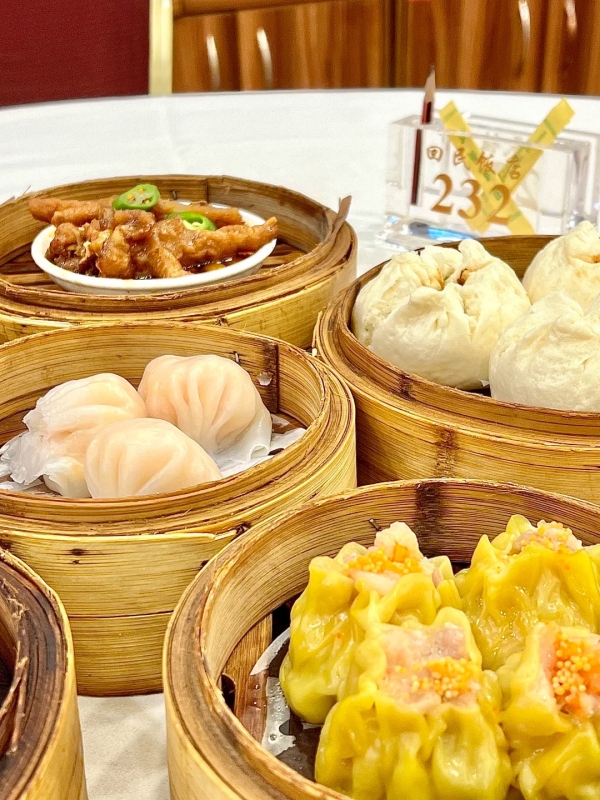
Huimin Restaurant
Most visitors aren’t aware of how long Guangzhou’s relations with Islamic food culture go. The Huaisheng Mosque (怀圣寺) on Guangta Road was constructed in 627 CE — established by Arab merchants active in the Maritime Silk Road. The halal food scene here reflects that cosmopolitan heritage: more diverse than Xi'an's, more locally adapted, and home to halal-certified Cantonese dim sum, a rare find in China.
The majority of the city’s halal options can be found in and around Xiaobei area (小北路), as well as Huaisheng Mosque, though on Fridays a halal street market takes form on Lanpu Road, lined with vendors serving lamb skewers and flatbreads: a remnant of Northwest China, rather than the Pearl River Delta.
| Type | Restaurant | Specialty | Location |
|---|---|---|---|
| Heritage NW Chinese | Huimin Restaurant (回民饭店) | Halal Cantonese food; one of the few places for halal dim sum | Zhongshan 6th Road |
| Mosque area | Guangta Road cluster | Multiple long-running halal eateries near Huaisheng Mosque | Guangta Road, Yuexiu |
| Middle Eastern | Salaamu Restaurant (赛俩目) | Authentic Middle Eastern dishes; popular with Arab expats | Baohan Zhijie, Yuexiu |
| Weekly market | Lanpu Road Halal Market | Friday-only street market; street food atmosphere | Lanpu Road (Fridays only) |
Important: The Huaisheng Mosque is closed to non-Muslim visitors every Friday for Jumu'ah prayers. Plan any mosque visit for Monday through Thursday.
Shenzhen City: The Practical Modern Hub
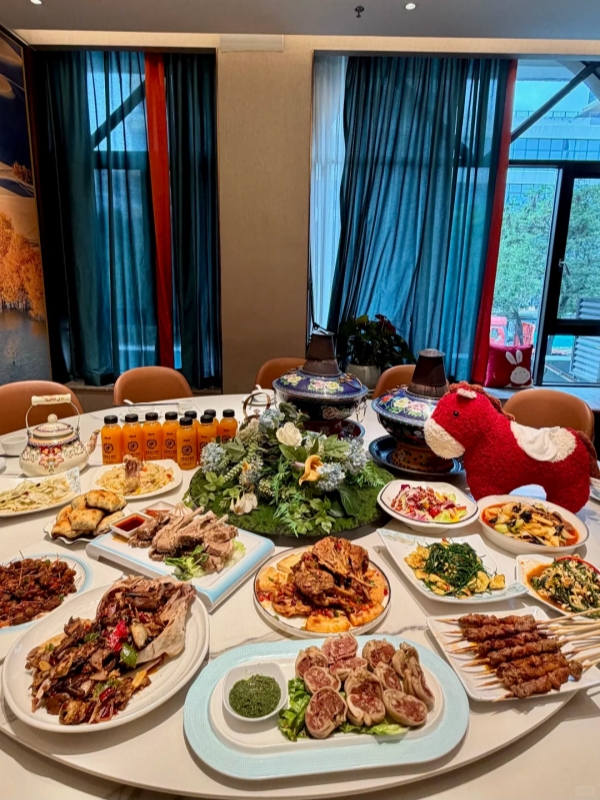
Xibei Lingtoyang
Let’s level with you here: Shenzhen is not the easiest city for halal food in China. It’s a young city without an historical Muslim population, so the halal restaurants are scattered, not consolidated. That being said, they do exist — and with the right tools, you can eat well here every day.Xinjiang restaurants are the most reliable backbone. We search 新疆菜 on Dianping before departing. For hotpot, call ahead to a Haidilao branch to check if that particular location provides a halal broth (清真锅底) — it does vary by branch. Large supermarkets carry halal-labeled packaged foods in dedicated sections.
| Type | Restaurant | Specialty | Location |
|---|---|---|---|
| Xinjiang cuisine | Bayi Laoya (巴依老爷) | Strong Dianping rating; solid big plate chicken and skewers | Nanshan District |
| Northwestern Chinese | Xibei Lingtoyang (西北领头羊) | Wide Northwestern menu; reliable for groups | Futian District |
| Local fixture | Yakeshi Xinjiang Restaurant (亚克西) | Long-standing local reputation; Luohu old-guard | Luohu District |
| Hotpot chain | Haidilao (海底捞) | Some branches offer halal broth — confirm before visiting | Multiple locations |
Hong Kong tip: If your itinerary includes Hong Kong, consider shifting your main halal dining there. The Kowloon Mosque area and Wan Chai have significantly more certified options than Shenzhen.
National Safety Net: Ubiquitous Xinjiang Dining
Here is the single most useful piece of information in this guide: wherever you are in China — including small cities, county towns, and places that appear on no tourist itinerary — you can almost always find a Xinjiang restaurant (新疆菜馆). These restaurants, run by Uyghur and other Northwestern Muslim communities, serve halal food by default. They are the national safety net for Muslim travelers.
The search takes 90 seconds. Open Dianping or Amap, type 新疆菜 (xīnijiāng cài) or 新疆餐厅, and look at what appears nearby. In any city above county level, you will find options. Sort by rating and pick the one with the most recent reviews.
| Dish | Chinese Name | Price Range | What to Expect |
|---|---|---|---|
| Big Plate Chicken | 大盘鸡 (dà pán jī) | ¥60–120/dish | Whole chicken, potatoes, peppers, hand-pulled noodles added at the end |
| Lamb skewers | 羊肉串 (yángròu chuàn) | ¥3–8/skewer | Cumin-crusted, charcoal-grilled; order a dozen minimum |
| Rice pilaf | 手抓饭 (shǒu zhuā fàn) | ¥25–50 | Lamb, carrots, and raisins cooked into rice; rich and filling |
| Baked dumplings | 烤包子 (kǎo bāozǐ) | ¥5–10/each | Crispy pastry filled with spiced lamb and onion |
| Mixed noodles | 过油肉拌面 (guò yóu ròu bàn miàn) | ¥20–40 | Hand-pulled noodles tossed with stir-fried lamb and vegetables |
Xinjiang's culinary identity runs much deeper than these five dishes — the region has 18+ signature foods shaped by centuries of Silk Road exchange. The complete Xinjiang food guide covers the full range, from street food to formal restaurant dining, with the cultural context that makes each dish make sense.
Restaurant Identification: Spotting Genuine Halal Eateries
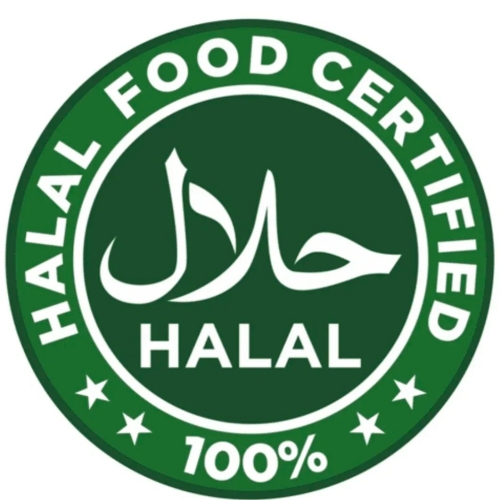
Official Green Logo
The good news: halal restaurants in China advertise themselves clearly. Once you know what to look for, identification becomes almost automatic.
Visual Cues: Reliable Signs and Symbols
The single most important thing to know is that halal food in China is called 清真 (qīngzhēn), meaning "pure and true." These two characters appear on signage, menus, packaging, and government certificates — almost always in green. Green is the unofficial color of halal in China. Train your eyes to scan for it before anything else.
✔ Trustworthy signals
- Green 清真 sign on the facade
- Arabic script حلال visible
- Official certificate displayed at entrance
- Staff wearing hijab or white kufi caps
- Crescent moon / dome decorative elements
- Menu dominated by lamb and beef
- Cumin and roasted meat smell at the door
✗ Warning signals
- Pork dishes on the menu
- Alcohol openly sold or displayed
- No halal signage of any kind
- Open kitchen shows pork ingredients
- Isolated restaurant in non-Muslim area
Beyond the visual, trust your senses. The smell of cumin, charcoal lamb, and slow-cooked beef bone broth is unmistakably different from standard Chinese cooking oil fumes. In areas with Xinjiang restaurants, you may also hear Central Asian music playing — it's a reliable auditory cue. Staff wearing white kufi caps (men) or hijabs (women) are one of the strongest possible signals that you are in the right place.
Official Certification: Understanding Local Halal Standards
China has a government-regulated halal certification system overseen by the Islamic Association of China (中国伊斯兰协会) in cooperation with local religious affairs bureaus. Certified restaurants display a green certificate at the entrance featuring both Arabic script and Chinese characters, along with the issuing authority's stamp. This is not a sticker anyone can print; it's an official document subject to periodic inspection.
| Region | Certification Reliability | Recommended Approach |
|---|---|---|
| Northwest China (Ningxia, Gansu, Xinjiang) | ★★★★★ Highest | Sign visible = safe to enter |
| Beijing / Xi'an core areas | ★★★★ High | Confirm with Muslim staff presence |
| Shanghai / Guangzhou / Shenzhen | ★★★ Variable | Certificate + staff + pork-free menu: all three |
| Small towns and rural areas | ★★ Mixed | Ask directly using the phrase card below |
Tip: For the most accurate and up-to-date availability, it is highly recommended to verify halal certification directly with the restaurant staff before ordering.
Warning Signs: Identifying Suspicious Halal Claims
Most restaurants that display the 清真 sign take it seriously. But traveling in any country requires some critical awareness. Be cautious when you see a claimed "halal" restaurant that:
- Has no physical certificate — only verbal assurance
- Has an open kitchen where pork products are visible
- Lists pork dishes on the same menu alongside "halal" items
- Has no Muslim staff at all in a major city restaurant
- Is located in a completely non-Muslim neighborhood with no other signals
When in doubt, use the phrase card in the next section. Asking directly — politely and with a printed card — is completely normal in China, and genuinely halal restaurants will answer the question without hesitation.
Essential Tools: Apps and Survival Phrases
Digital Apps: Top Navigation and Booking
Before you cross the border (or land at the airport), install these apps. They're the difference between spending 20 minutes finding a great halal meal and spending an hour walking in circles.
| App | Rating | Main Use | Search Terms | Limitation |
|---|---|---|---|---|
| Dianping (大众点评) | ★★★★★ | Find restaurants + reviews + group deals | 清真 or 清真餐厅 | Interface is in Chinese |
| Amap / Gaode (高德地图) | ★★★★★ | Navigate to restaurants | 清真餐厅 | Navigation only, no review detail |
| Meituan (美团外卖) | ★★★★☆ | Halal delivery to hotel | 清真外卖 | Requires Alipay for payment |
| HalaLive | ★★★☆☆ | Dedicated halal certification finder | Built-in | Smaller cities have thin coverage |
Before you leave home: All four apps require Chinese phone verification or a WeChat/Alipay login. Set up Alipay first — it links to a foreign Visa or Mastercard and unlocks payment across all platforms. Do this before crossing the border; the identity verification step is much smoother on a foreign network.
Useful Phrases: Your Chinese Dining Card
You do not need to speak Mandarin to eat safely in China. You need seven words and one sentence. Show the printed card below to any restaurant staff member and the communication problem is solved.
| Chinese | Pinyin | Sounds Like | Meaning |
|---|---|---|---|
| 清真 | Qīngzhēn | ching-jen | Halal — the single most important word |
| 猪肉 | Zhūròu | joo-row | Pork |
| 猪油 | Zhūyóu | joo-yo | Lard — ask about this separately from pork |
| 牛肉 | Niúròu | nyo-row | Beef |
| 羊肉 | Yángròu | yahng-row | Lamb / mutton |
| 不要 | Bù yào | boo yow | No / I don't want |
| 穆斯林 | Mùsīlín | moo-suh-lin | Muslim |
Five questions cover almost every dining situation you will encounter:
- Is this a halal restaurant? — 你们是清真餐厅吗? (Nǐmen shì qīngzhēn cāntīng ma?)
- Is this dish halal? — 这道菜是清真的吗? (Zhè dào cài shì qīngzhēn de ma?)
- Is it cooked in lard? — 这是用猪油做的吗? (Zhè shì yòng zhūyóu zuò de ma?)
- Is the broth made with pork bones? — 这个汤底有猪骨吗? (Zhège tāng dǐ yǒu zhū gǔ ma?)
- Is the kitchen halal-certified? — 厨房是清真认证的吗? (Chúfáng shì qīngzhēn rènzhèng de ma?)
Practical Tips: Smooth Muslim Travel Strategies
Accommodation Choices: Muslim-Friendly Base Locations
Accommodation location shapes your entire halal food experience. The difference between staying a 5-minute walk from Niujie and staying in a random business hotel across the city is the difference between halal breakfast being effortless and it requiring a 40-minute round trip.
| City | Recommended Area | Metro Reference | Why It Works |
|---|---|---|---|
| Xi'an | Muslim Quarter / Bell Tower area | Line 2, Bell Tower Station | Walking distance to almost all halal food |
| Beijing | Niujie (Xicheng) or Xuanwumen | Line 19, Niujie Station | Metro line makes it directly accessible |
| Lanzhou | Any central area | Line 1 city center stops | Halal coverage is city-wide, location matters less |
| Shanghai | Jing'an / Changning / Putuo | Line 7, Changshou Road Station | Close to Huxi Mosque area and new restaurant cluster |
| Shenzhen | Nanshan District | Lines 2, 11 | Highest concentration of Xinjiang restaurants |
Tip: For the most accurate and up-to-date availability, it is highly recommended to verify halal certification directly with the restaurant staff before ordering.
Morning Buffets: Solving the Breakfast Problem
Chinese hotel breakfast buffets are a genuine challenge for Muslim travelers. Pork products appear in unexpected forms: bacon alongside eggs, pork floss sprinkled on congee, pork sausages mixed into hot trays. Even at four-star hotels, the default buffet isn't halal. This is one of the most consistently reported pain points for Muslim visitors, and it's easy to solve with a bit of planning.
- Ask at check-in: Request a pork-free breakfast option — most hotels can provide eggs, toast, fruit, and yogurt without issue. The words 不要猪肉 (bù yào zhūròu, "no pork") at the buffet station usually work.
- Go out early: Search 清真早餐 (qīngzhēn zǎocān) on Dianping for nearby halal breakfast options. Lanzhou noodle shops typically open by 6:30am.
- Pack backup: Dates, nuts, certified halal crackers, and UHT milk in your bag means you're never stuck.
- Book with intent: In Xi'an and Lanzhou, some guesthouses and boutique hotels near Muslim neighborhoods offer halal breakfast by default. Worth calling ahead to confirm.
Hidden Ingredients: Avoiding Unexpected Pork Products
Pork is everywhere in standard Chinese cooking, and not always where you'd expect it. This matters even in restaurants that seem safe, especially if you're eating somewhere without explicit halal certification. The five below are the most common hidden risks.
- Lard (猪油, zhūyóu): Used for frying in many Chinese kitchens. Looks identical to vegetable oil. This is why asking about lard separately from pork is essential — a dish may have no visible pork but still be cooked in lard.
- Pork floss (肉松, ròusōng): Dried shredded pork sprinkled on bread, congee, pastries, and cakes. Often the only non-halal ingredient in an otherwise safe food item.
- Soup stocks: Many restaurants use pork bone broth as a base for soups, stir-fry sauces, and braises. Even dishes without visible pork may contain it in the liquid.
- Oyster sauce and compound sauces: Some brands contain non-halal ingredients. In certified halal kitchens this is managed; in regular restaurants, less so.
- Instant noodle flavoring packets: Many popular instant noodle brands include pork extract in the seasoning. Look for the 清真 label on the packaging before buying.
The safe rule: Eat at clearly certified 清真 restaurants. Ordering "vegetarian" at a regular restaurant is not a safe workaround — shared woks, shared lard, and cross-contamination make it unreliable.
Packaged Foods: Reliable Supermarket Halal Snacks
Stocking a small supply of halal packaged snacks is smart travel practice for any Muslim visitor to China. Long train journeys, remote attractions, and days when restaurant options are thin all become much easier with something reliable in your bag.
In any major supermarket — Walmart, CR Vanguard (华润万家), or RT-Mart (大润发) — look for a dedicated 清真食品 (qīngzhēn shípǐn) section, usually marked with green signage. The most consistently safe categories are: pure milk and yogurt from major national brands; dried fruits and nuts from Xinjiang (raisins, apricots, walnuts, figs are widely sold and almost universally halal); halal-labeled crackers and biscuits; and UHT packaged drinks. For longer trips, Xinjiang-branded dried fruit packs make excellent carry-on snacks with a long shelf life.
In-Flight Meals: Ordering Halal Aviation Food
All three major Chinese carriers offer halal meals on request, but you must pre-order. Showing up at the gate and asking doesn't work — the meal needs to be loaded onto the aircraft in advance.
| Airline | Halal Meal Code | How to Order | Deadline |
|---|---|---|---|
| Air China (CA) | MOML | Official website → Manage Booking → Special Meals | 48hrs before departure |
| China Eastern (MU) | MOML | Official website or customer service phone | 48hrs before departure |
| China Southern (CZ) | MOML | Official website → Special Meal Request | 48hrs before departure |
| Cathay Pacific (CX) | MOML | Manage My Booking on cathaypacific.com | 24hrs before departure |
MOML is the universal IATA code for Muslim meals on all carriers — if you're connecting through a third airline, use that code in the special meals request and it will be understood. Bring a small supply of halal snacks regardless; flight delays or last-minute aircraft swaps occasionally mean special meals don't make it on board.
Safety Advice: General Tips for Visitors
A few practical notes that sit outside the food topic but directly affect your trip quality. First, get a reliable VPN installed before you arrive — Google Maps, WhatsApp, and Gmail are all blocked inside China, and a tested paid VPN (NordVPN, ExpressVPN, or Astrill) is essential for staying connected. Free VPNs are unreliable inside the country. Second, activate Alipay with a foreign card linked before you cross the border — it's accepted almost everywhere, including at street food stalls that won't take cards or foreign cash.
- In crowded spots like Xi'an's Muslim Quarter, keep bags in front of you in dense evening crowds
- Approach viral social-media restaurant recommendations with realism — check the date of recent reviews, not just the overall rating
- If joining a tour group, verify the contract includes a no-forced-shopping clause before paying
- Public USB charging ports are a security risk — use your own cable and power bank
FAQs: Essential Halal Travel Queries in China
Q: Is halal food easily available in China?
Finding halal food in China is considerably easier than in most Western countries. With over 30 million Muslims living across the country and an unbroken culinary tradition stretching back more than 1,300 years, certified halal restaurants exist in virtually every city. Xi'an, Lanzhou, and Beijing's Niujie district offer the densest concentration, but even in cities with no Muslim neighborhood, a Xinjiang restaurant is rarely more than a Dianping search away.
Q: What is halal food called in China?
Halal food in China is called 清真 (qīngzhēn), pronounced roughly as "ching-jen." The term means "pure and true" and appears on restaurant signs, food packaging, and official certificates — almost always in green. Memorizing these two characters is the single most useful thing you can do before your trip. Show them on your phone if you are unsure how to say them aloud.
Q: Can you wear a hijab in China?
Yes, without any legal restriction. Hijabs are a common sight in Xi'an's Muslim Quarter, Lanzhou's streets, and Beijing's Niujie neighborhood. In major cities across China, including Shanghai and Shenzhen, wearing a hijab is unremarkable. It's worth checking for updated regional advisories before traveling to Xinjiang specifically, as local conditions there can vary; for all other destinations covered in this halal food China guide, there are no practical concerns.
Q: Is halal food expensive in China?
No — and this is one of the most pleasant surprises for Muslim travelers. Halal food in China is priced the same as non-halal Chinese food because it's not an imported or niche product. It's a domestic tradition with a domestic supply chain. A bowl of Lanzhou noodles costs ¥10–20. A sit-down meal in Beijing's Niujie area runs ¥60–120 per person. The premium you might pay for halal food in Paris or London simply does not exist here.
Q: How do I find halal food in small towns in China?
Search for 新疆菜 (Xinjiang cuisine) or 兰州拉面 (Lanzhou noodles) on Dianping or Amap. Both are halal by default and exist in virtually every city, town, and county in China — even places with no other Muslim food presence. Keep a small supply of certified packaged snacks in your bag as insurance. In towns smaller than county level, fresh fruit and sealed packaged foods from any supermarket are reliable fallback options while you search.
Q: What apps should I download to find halal food in China?
Dianping (大众点评) is the primary tool — search 清真 and filter by distance and rating. Amap (高德地图) handles navigation once you've found a restaurant. HalaLive is specifically designed for Muslims visiting China and shows certification status, though its coverage is better in large cities. Install all three before arriving, along with a tested VPN, since your usual mapping and search apps won't work inside China without one.
Q: Do Chinese airlines offer halal meals on flights?
Yes — Air China, China Eastern, and China Southern all offer halal meals (Muslim Meal, code MOML) on domestic and international routes. You must request this when booking or at least 48 hours before departure through the airline's website or customer service. Do not leave it to the airport check-in desk. Cathay Pacific requires 24 hours' notice. Carry halal snacks regardless, since aircraft swaps and catering delays occasionally mean pre-ordered special meals don't arrive. This is true on any airline globally, not specific to halal food in China flights.