China Airports
China operates more than 250 certified civil airports, yet most international visitors touch down at a small cluster of major gateways. Beijing Capital (PEK) and Shanghai Pudong (PVG) handle the bulk of long-haul arrivals. Guangzhou Baiyun (CAN) anchors the southern Pearl River Delta, while Shenzhen (SZX) serves the tech corridor and cross-border traffic into Hong Kong. Beyond these, hubs like Chengdu (CTU), Xiamen (XMN) and Kunming (KMG) connect passengers to specific regions — pandas, coastal Fujian, Southeast Asia. This guide focuses on what international travelers actually need: which terminals to navigate, how to get downtown, how to handle a SIM card, and how the 240-hour visa-free transit policy works in 2026.
Quick Facts
Beijing Capital International Airport (PEK)
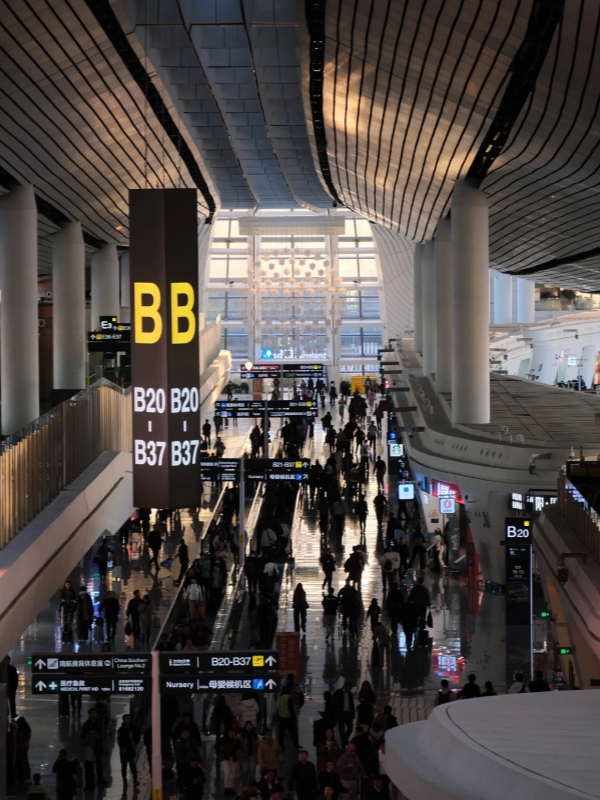
The Beijing Capital International Airport
Beijing Capital International Airport (IATA PEK / ICAO ZBAA) sits 32 kilometers north of central Beijing. It opened in 1980 and has since grown into one of the world's busiest aviation hubs. The most notable addition came in 2008, when Terminal 3 was commissioned ahead of the Beijing Olympics. Terminal 3 remains one of the largest single terminal buildings globally, covering roughly 1 million square meters of floor space across two concourses. Air China (CA, Star Alliance) uses PEK as its primary hub, connecting passengers to more than 200 domestic and international destinations. The terminal houses a wide range of passenger services, including currency exchange, left luggage, SIM card booths and 24-hour information desks. Free airport Wi-Fi is available after a passport scan at the registration kiosks.
Getting downtown from Beijing Capital is straightforward. The Airport Express line runs from T3 and T2 directly to Dongzhimen, where passengers can transfer to Metro Lines 2 and 13. The journey takes roughly 40 minutes and costs about $5 (¥25). A taxi to the Tiananmen area or Dongcheng district typically costs $20–28 (¥140–200) and takes 60–90 minutes depending on traffic conditions. Airport buses cover multiple routes to different city districts for around $3–7 (¥20–50). The 240-hour visa-free transit policy applies at PEK for travelers holding a confirmed onward ticket to a third country.
🛫 Compare Beijing's Major Airports: Deciding whether to fly into the classic Beijing Capital or the ultra-modern Daxing International? Read our comparison guide on PEK vs PKX.
Shanghai Pudong International Airport (PVG)
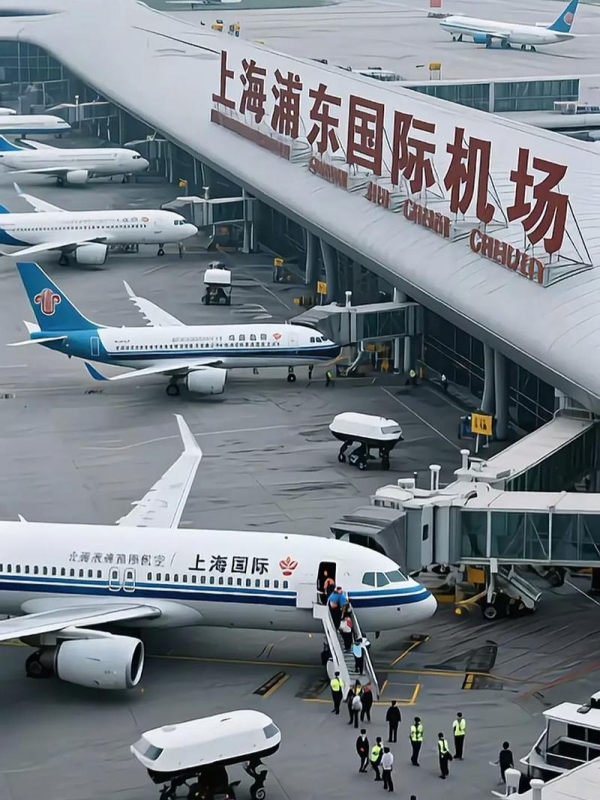
The Shanghai Pudong International Airport
Shanghai Pudong International Airport (IATA PVG / ICAO ZSPD) lies roughly 30 kilometers east of central Shanghai, in the Pudong New Area. It functions as China's primary international cargo hub alongside passenger operations. China Eastern Airlines (MU, SkyTeam) operates its main hub here, while other mainland carriers and numerous foreign airlines also serve the airport. The Terminal 1 rebuilding completed in 2019 featured a dragon-silhouette architectural motif, blending cultural symbolism with modern aviation infrastructure. This terminal handles most international departures and arrivals. As a result of its cargo significance, PVG maintains extensive freight facilities alongside passenger terminals, supporting global supply chains that extend well beyond tourism.
Ground transport from PVG includes the famous Shanghai Maglev Train. It connects the airport to Longyang Road station at a top speed of 431 km/h, completing the run in approximately 7 minutes. A one-way Maglev ticket costs about $8 (¥50). From Longyang Road, Metro Line 2 continues to People's Square and Jing'an Temple, with a total fare of $1.50–2 (¥10–14). Taxis to the Bund or People's Square run $20–28 (¥140–200) in 50–70 minutes depending on traffic. A dedicated airport bus links PVG to Shanghai Hongqiao (SHA) on the city's west side, covering roughly 50 kilometers in about 60–80 minutes. Free Wi-Fi at PVG is accessible via SMS code or passport scan at self-service kiosks.
✈️ Navigate Shanghai's Main Hub: If you are landing at East China's largest international gateway, get full details on terminal layouts, metro lines, and Maglev access in our guide to Shanghai Pudong International Airport.
Guangzhou Baiyun and Southern Gateways
Guangzhou Baiyun International Airport (IATA CAN / ICAO ZGGG) occupies a key position in China's southern aviation network. It sits in the Huadu district, approximately 28 kilometers north of downtown Guangzhou. China Southern Airlines (CZ, SkyTeam) operates its global hub here, moving 164.7 million passengers and managing a fleet of 675 aircraft as of 2023. The volume reflects Guangzhou's role as the main gateway to the Pearl River Delta, a manufacturing and trade powerhouse that draws significant business and leisure traffic. For international travelers heading to Hong Kong, Macau or Southeast Asia, CAN often provides a practical entry point with shorter queues than the busier eastern hubs.
Shenzhen Bao'an International Airport (SZX)
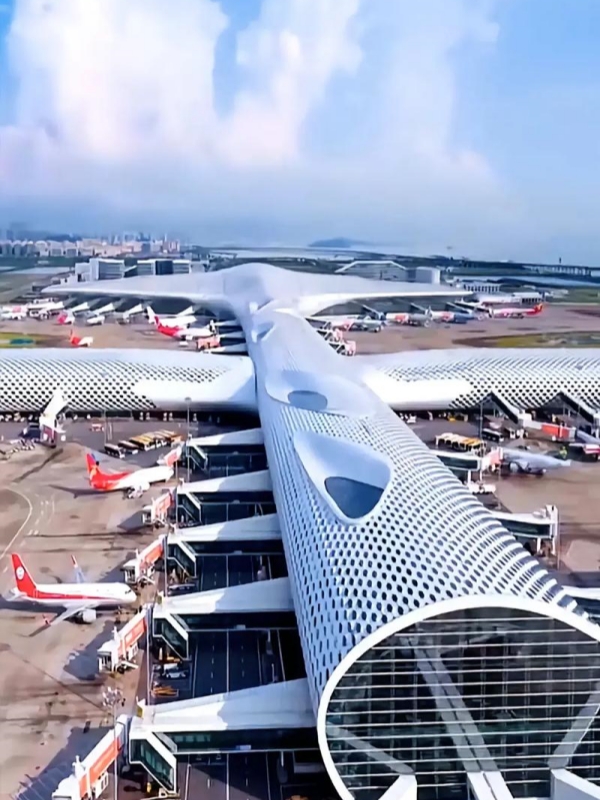
The Shenzhen Bao'an International Airport
Shenzhen Bao'an International Airport (IATA SZX / ICAO ZGSZ) lies about 32 kilometers northwest of central Shenzhen in the Bao'an district. Shenzhen Airlines (ZH, Star Alliance) operates its hub here, serving both domestic routes and select international services. A new satellite terminal opened in 2021 as part of the ongoing T3 complex expansion, increasing capacity for passengers and improving processing efficiency. Metro Line 11 provides a direct link to downtown Shenzhen for $2–3 (¥13–22). For travelers continuing to Hong Kong, cross-border buses complete the journey in roughly one hour at a cost of $15–20 (¥100–140). Ferries to Macau are available via connecting bus services from the airport terminal.
Hong Kong Cross-Border Connections
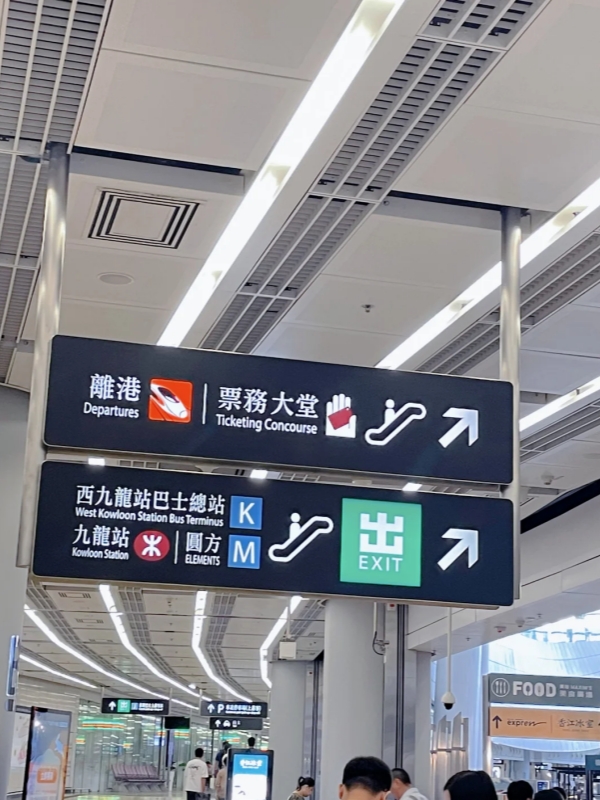
The Hong Kong International Airport
Hong Kong International Airport (HKG) operates under its own immigration, currency and visa system, separate from mainland China airports. Travelers should note that HKG does not fall under the 240-hour mainland visa-free transit policy. However, HKIA's SkyPier ferry service links directly to mainland ports, offering a water-based crossing option. Overland routes via Shenzhen — Shenzhen Bay, Lo Wu and Lok Ma Chau — often prove faster than flying between Shenzhen and Hong Kong, particularly when accounting for airport security and boarding times. Many Pearl River Delta travelers use a combination of SZX or CAN plus a land crossing to reach Hong Kong efficiently.
🏨 Rest During Southern Layovers: Travelers transferring through Guangzhou Baiyun (CAN) on late arrivals or early connections can stay comfortable right near the terminals. Check out top options in our guide to Guangzhou Airport Hotel.
Other Major International Hubs
Western and Southwestern Hubs
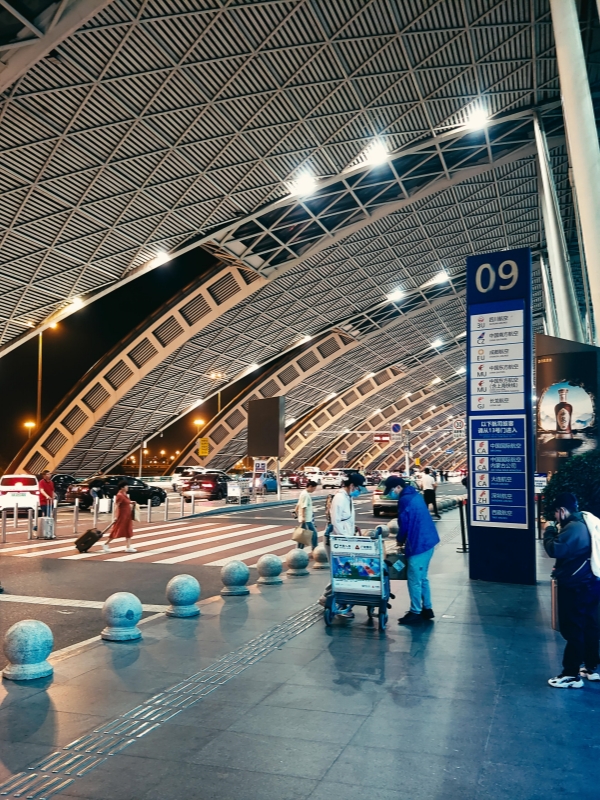
The Chengdu Shuangliu International Airport
Chengdu Shuangliu International Airport (CTU) serves as the hub for Sichuan Airlines and the gateway to western China. Chengdu itself is the departure point for giant panda base visits at Dujiangyan and Bifengxia, making CTU a key inbound route for wildlife-focused itineraries. The airport handles substantial domestic traffic alongside growing international connections to Europe and Asia.
Xiamen Gaoqi International Airport (XMN) is the hub for XiamenAir and faces southeast across the Taiwan Strait. XMN handles significant Fujian diaspora traffic and Taiwan-facing routes, with the city of Xiamen itself known for its colonial Gulangyu Island and coastal Putuo Temple.
Kunming Changshui International Airport (KMG) functions as Yunnan province's primary aviation hub and the main gateway to Southeast Asia from China's southwestern corridor. Travelers heading to Dali, Lijiang or the Myanmar/Laos borders often transit through KMG.
☁️ Experience Scenic Mountain Terminals: Beyond major metropolitan hubs, China features extraordinary regional facilities built on mountain ridges above the Yangtze Gorges. Learn more about Wushan Airport in Chongqing: China's Cloud-Top Terminal.
Eastern and Central Hubs
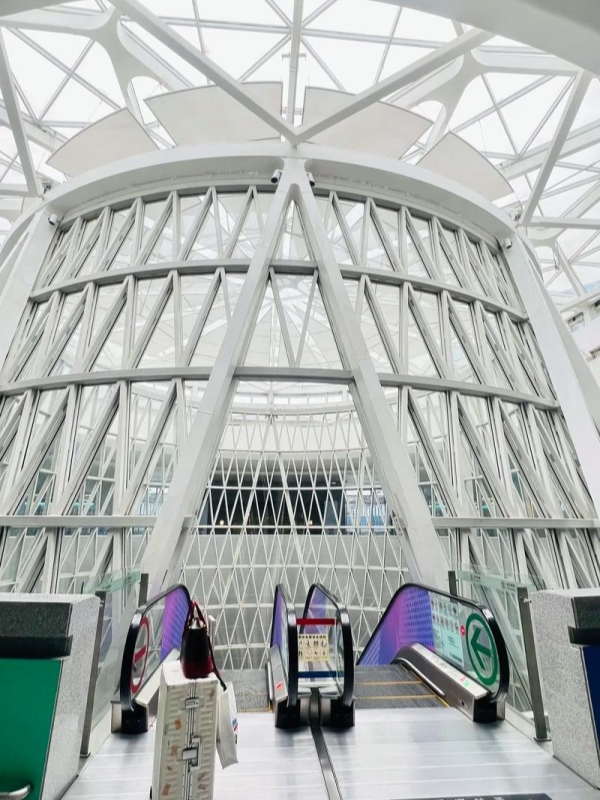
The Hangzhou Xiaoshan International Airport
Hangzhou Xiaoshan International Airport (HGH) sits in the eastern Zhejiang tech corridor, serving Alibaba's home city and the broader Hangzhou metropolitan area. The airport handles a mix of business travelers bound for tech headquarters and leisure visitors to West Lake.
Chongqing Jiangbei International Airport (CKG) serves China's most populous municipality in the upper Yangtze region. Chongqing's mountainous terrain and position as a Yangtze River cruise departure point make CKG a hub for interior western travel.
Xi'an Xianyang International Airport (XIY) is the main airport serving the historic Silk Road city of Xi'an, best known for the Terracotta Army archaeological site near the city center. The airport handles strong heritage tourism traffic alongside growing business links to western China.
Shanghai Hongqiao International Airport (SHA) functions primarily as a domestic feeder connecting to the broader HSR network. It sits roughly 50 kilometers west of central Shanghai and shares transport connectivity with PVG via dedicated airport bus. Many travelers use SHA for domestic flights before continuing onward on high-speed rail.
Haikou Meilan International Airport (HAK) serves as Hainan Island's main gateway, handling beach and resort tourism traffic for Sanya and Haikou. The island's visa-free entry policy for certain nationalities complements the airport's role as a tropical leisure destination.
Practical Airport Guide for International Travelers
Navigating China airports as a foreign visitor involves a few specific preparations. The good news is that major hubs have steadily improved services for non-Chinese speakers over the past decade. Most international terminals past customs offer SIM card booths, free Wi-Fi registration points and English-language information desks. The key practical decisions center on connectivity (SIM or eSIM), payment method (cash, foreign card or app-based), transport mode (metro, taxi or bus) and whether your itinerary qualifies for the 240-hour visa-free transit window. This section addresses each of these decision points directly.
SIM Cards, Wi-Fi and Charging
China Mobile, China Unicom and China Telecom operate booths past customs at most international terminals. Tourist SIMs typically cost $8–25 (¥50–180) for 7–30 days of data, with varying call and SMS inclusions. eSIMs via Airalo, Holafly or Nomad work on most modern unlocked phones and can be activated before departure, avoiding the need to locate a booth. Free airport Wi-Fi is available at all major international China airports. Registration requires a passport scan at self-service kiosks or an SMS code obtained from the registration page. English-language landing pages are standard at PEK, PVG, CAN and SZX. Travelers should note that China uses power outlets types A, C and I; a universal travel adapter is advisable for devices that do not match Asian-standard plugs.
Visa-Free Transit and Leaving the Airport
China's 240-hour visa-free transit policy, expanded from 144 hours in late 2024, applies at most major international China airports. Eligible airports include PEK, PVG, CAN, SZX, CTU, XMN, KMG, XIY, HGH, HAK and SHA. The requirements are straightforward: travelers must hold a confirmed onward ticket to a third country and remain within designated provinces or regions during the stay. Transit passengers must pass through immigration to exit the terminal; there is no sterile transit corridor for leaving the airport. For under-24-hour connections, several major hubs offer transit hotels inside the secure area — PVG, PEK, CAN and SZX have on-site facilities suitable for short rest periods without clearing full immigration.
Payments, Currency and Translation
The official currency is the Chinese Yuan (CNY, ¥). ATMs accepting foreign cards are present at every major airport, though per-transaction withdrawal fees are common. UnionPay cards work universally across mainland China. Foreign Visa and Mastercard are accepted at airport retail counters and hotel desks, but many taxis, street vendors and smaller shops remain cash-only or app-only. Alipay "Tour Card" and WeChat Pay now permit foreign credit card binding without a Chinese phone number, which has significantly improved payment access for visitors. Translation support varies; major hubs provide English signage and staffed information desks, but smaller regional airports may offer limited English-language assistance. Pocket Wi-Fi rental at airport kiosks costs approximately $7–10 (¥50–70) per day for travelers preferring a dedicated device.
Getting from the Airport to the City
Four main ground transport options link major China airports to their city centers: metro or Airport Express, taxi or ride-hail, airport bus, and high-speed rail for select hubs. The metro is the cheapest option but can be crowded with luggage during rush hours. Taxis and Didi (China's Uber, available in English via the international app version) offer door-to-door convenience at $18–28 (¥140–200) from any major hub. Airport buses cover fixed routes for $3–7 (¥20–50). High-speed rail connections are growing — Beijing Daxing Airport Station links to the HSR network, and Shanghai Hongqiao (SHA) sits adjacent to Hongqiao Railway Station. The table below summarizes typical fares and recommended use cases.
🚕 Reach Downtown Beijing Smoothly: Find the fastest express rail routes, taxi stands, and private transfers from the airport to central hotels in our guide on Beijing Airport Transfer.
📱 Book Rides Across China: Once you clear customs, requesting a taxi or private car via your smartphone is one of the most convenient ways to leave the airport. Learn how to set it up in our guide to DiDi Ride-Hailing App in China: How to Easily Use It as a Foreigner.
Airlines Serving China's Major Hubs
The mainland Chinese airline market is dominated by three major carriers, each anchored at a different hub. Air China (CA, Star Alliance) operates from its Beijing (PEK) base, connecting passengers to global destinations through Star Alliance partners. China Eastern (MU, SkyTeam) runs its main hub at Shanghai Pudong (PVG), while China Southern (CZ, SkyTeam) manages its largest operation from Guangzhou (CAN). China Southern moved 164.7 million passengers and maintained a fleet of 675 aircraft as of 2023. Hainan Airlines (HU), headquartered at both PEK and Haikou (HAK), operates an extensive international route network as the largest privately-owned mainland carrier. Numerous foreign carriers serve the major hubs — Lufthansa, Emirates, Singapore Airlines, ANA, JAL, Cathay Pacific, Korean Air, Qantas, Air France, KLM, British Airways, United, Delta and American all maintain routes to Beijing, Shanghai and Guangzhou.
Frequently Asked Questions
Q: How many airports does China have?
China has more than 250 certified civil airports under the Civil Aviation Administration of China (CAAC), of which approximately 80 offer scheduled international services. The top 30 by passenger volume include PEK, PVG, CAN, SZX, CTU, XMN, KMG, HGH, CKG, XIY, SHA and HAK. Hong Kong International Airport (HKG) and Macau International Airport (MFM) operate under separate jurisdictions and are not counted in the mainland total.
Q: What is the CAN airport code for China?
CAN is the IATA three-letter code for Guangzhou Baiyun International Airport. Its ICAO code is ZGGG. The airport is located in the Huadu district of Guangzhou, approximately 28 kilometers north of the city center.
Q: Where is Guangzhou airport in China?
Guangzhou Baiyun International Airport sits in the Huadu district of northern Guangzhou, Guangdong province, roughly 28 kilometers from Guangzhou's city center. Metro Line 3 provides a direct link to T1 and T2 terminals, with onward connections to the broader Guangzhou metro network. Multiple airport bus lines also serve various districts throughout the city.
Q: Can I leave the airport during a layover in China?
Yes, provided you qualify for the 240-hour visa-free transit policy. This applies at most major international China airports — PEK, PVG, CAN, SZX, CTU, XMN, KMG, XIY, HGH, HAK and SHA — when holding a confirmed onward ticket to a third country. Travelers must stay within the designated province or region and pass through immigration to exit the terminal. For very short connections, transit hotels inside the secure area at PVG, PEK, CAN and SZX offer rest options without clearing full immigration.
Q: Does China airport have Wi-Fi?
All major international China airports provide free Wi-Fi. Registration is required at PEK, PVG, CAN, SZX and other major hubs, typically via passport scan at a kiosk or an SMS code from the registration page. English-language landing pages are standard. Signal strength is generally reliable in departure halls and gate areas.
Q: Can I buy a SIM card at China airports?
Yes. China Mobile, China Unicom and China Telecom operate booths past customs at most international terminals. Tourist SIM packages typically range from $8–25 (¥50–180) for 7–30 days of data. eSIM options from providers such as Airalo, Holafly and Nomad are also available and can be activated before arrival, eliminating the need to locate a booth on landing.
Q: How far is the Great Wall from Beijing airport?
The Mutianyu section of the Great Wall lies approximately 70 kilometers from Beijing Capital Airport (PEK), a taxi ride of roughly 90–120 minutes depending on traffic. The Badaling section is slightly closer at around 65 kilometers. Travelers with tight layovers can book Layover Great Wall tours, which typically include round-trip transport from PEK and are available through Trip.com and Klook.
Q: Are Chinese airports safe for international travelers?
China airports maintain low crime rates, 24-hour police presence and comprehensive CCTV coverage across all terminals. The main practical concerns for foreign visitors are language barriers at smaller regional airports, occasional long queues at immigration during peak hours at PEK and PVG, and app-only payment at some retail and transport outlets. Carrying your passport at all times is mandatory for identification checks.