Shanghai Hongqiao International Airport
Shanghai Hongqiao International Airport carries the IATA code SHA and the ICAO code ZSSS — the designation you'll see printed on your boarding pass and baggage tag. Located roughly 13 kilometers west of People's Square in Changning District, Hongqiao moves approximately 40 million passengers a year, making it one of China's busiest domestic hubs and the primary gateway for travelers connecting to the adjacent high-speed rail station. The airport splits across two unconnected terminals, and for a foreign visitor the two biggest uncertainties are: which terminal holds your flight, and what is the fastest way to reach it from the city? This guide answers both, along with every practical detail you need to clear check-in, catch a train, or continue onward.
Quick Facts
Terminal 1 vs Terminal 2
Shanghai Hongqiao International Airport
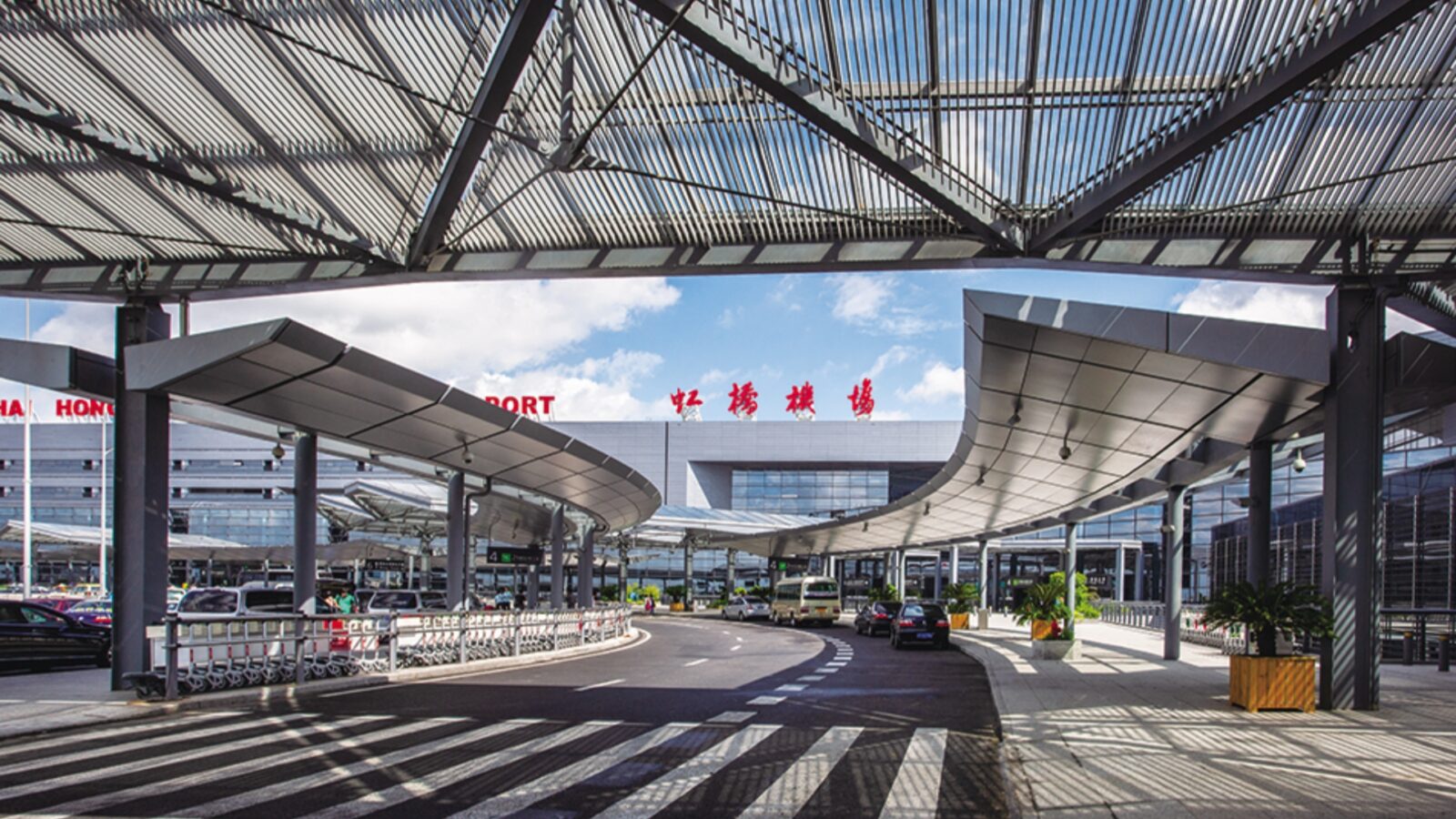
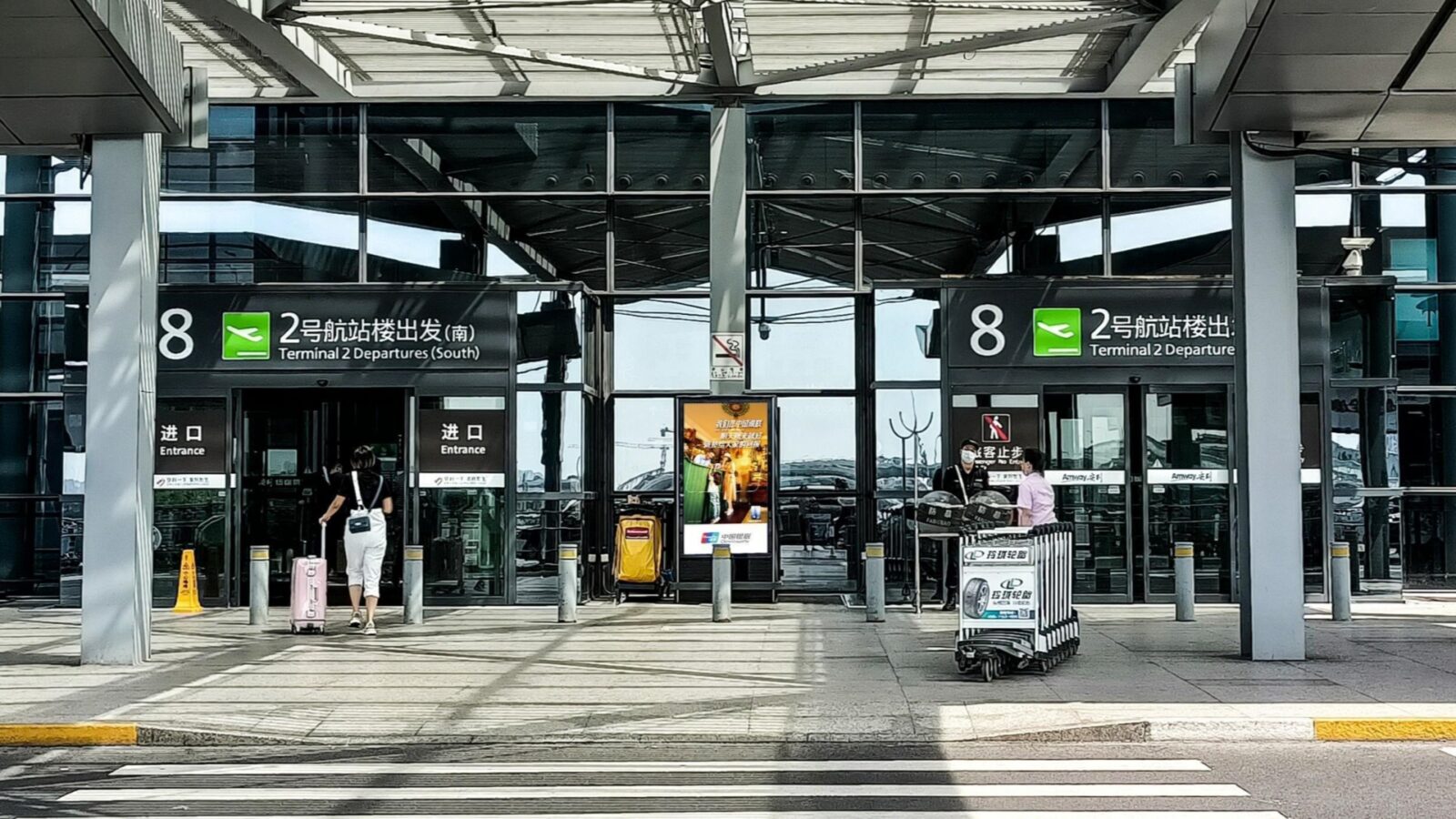
Hongqiao's two terminals are separated by a 10–15 minute shuttle ride and are not linked by any internal walkway or tunnel. For travelers, the practical difference is significant: your boarding pass will specify T1 or T2, and switching between them after you have cleared security requires exiting, re-entering the terminal building, and going through security again. The two terminals also differ in age, scale, airline clustering, and metro access, so identifying your correct departure point before you arrive at the airport is essential.
- Terminal 1 (T1): Original 1921 site, rebuilt 1988; smaller footprint and older layout; primarily Spring Airlines, Juneyao Airlines, and some charter services; metro access via Line 10 (Hongqiao Airport 1 Station) only; no high-speed rail connection.
- Terminal 2 (T2): Opened 2010; modern glass-and-steel structure covering ~82,000 m² with 15 waiting halls, 18 VIP lounges, and over 100 dining and retail outlets; most full-service carriers (Air China, China Eastern, China Southern, Shanghai Airlines); all international regional flights; metro access via Lines 2 and 10 (Hongqiao Airport 2 Station); direct pedestrian connection to Hongqiao Railway Station.
- Metro access: T1 served by Line 10 only; T2 served by Lines 2 and 10.
- HSR access: T2 only — Hongqiao Railway Station sits directly adjacent to Terminal 2.
- Transfer between terminals: Free shuttle bus, Line 10 (one stop), or taxi — allow 45–60 minutes if you have checked bags.
- Retail and dining scale: T2 dwarfs T1; if you are departing from T1 with time to spare, eat before clearing security or plan to grab something in the arrivals hall.
How to Identify Your Terminal
Three reliable methods confirm your terminal before you reach the airport. The boarding pass or e-ticket issued by your airline always states the terminal, and this is the most authoritative source. Your airline's app or website confirmation page also displays the departure terminal. At the airport itself, the flight information displays (FIDs) visible from the curb at each terminal entrance will confirm which building to enter.
- Boarding pass / e-ticket: Look for "Terminal 1" or "Terminal 2" in the booking confirmation or on the pass itself.
- Airline app or website: Log in to your booking 24 hours before departure; the terminal is listed on the flight details page.
- Airport FIDs at the curb: Large screens outside each terminal entrance show which flights are departing from that building.
- Rule of thumb — full-service carriers: Air China, China Eastern, China Southern, Shanghai Airlines, and most international regional airlines = T2.
- Rule of thumb — budget carriers: Spring Airlines and Juneyao Airlines = T1.
Getting Between Terminal 1 and Terminal 2
The two terminals are not internally connected, so if you arrive at the wrong building you will need to exit and re-enter. Three options bridge the gap, and your choice depends on how much luggage you are carrying and how much time you have before your flight.
- Free shuttle bus: Runs between T1 and T2; journey time ~10–15 minutes; follow the orange "Terminal Transfer" signs inside each building.
- Metro Line 10: One stop between Hongqiao Airport 1 Station (T1) and Hongqiao Airport 2 Station (T2); journey time ~5 minutes; fare ~$1 (¥6–8).
- Taxi between terminals: Takes ~5–10 minutes; typically under $3 (¥20); the quickest option if you are in a rush.
If you have checked luggage, we recommend allowing 45–60 minutes for the terminal transfer, since you will need to collect your bag, cross to the other terminal, re-check it, and pass through security again.
🛫 Exploring Domestic & International Terminals: Planning connecting flights beyond Shanghai? Read our nationwide visitor breakdown in China Airports.
How to Get to Hongqiao Airport
Hongqiao ranks among China's best-connected airports, with metro, taxi, bus, coach, and high-speed rail all converging at or near the terminals. The defining feature of the Hongqiao transport hub is the proximity of Hongqiao Railway Station to T2 — arriving by train and departing by air is often faster than traveling from central Shanghai by road. The table below summarizes the main options from the city center.
Metro Lines 2 and 10
Shanghai's metro is the fastest ground option between the city and Hongqiao during most hours. Two lines serve the airport, and the distinction matters.
- Line 2: Serves T2 only (Hongqiao Airport 2 Station). It runs express through People's Square and Nanjing East Road, continues past Lujiazui and the Oriental Pearl Tower, and terminates at Pudong International Airport Station — making it the only metro line in the world that connects two international airports end-to-end. Journey time from People's Square to Hongqiao Airport T2 is approximately 35 minutes. Operating hours are roughly 5:30 AM to 10:30 PM.
- Line 10: Serves both terminals — Hongqiao Airport 1 Station (T1) and Hongqiao Airport 2 Station (T2). The line runs south through Xintiandi, past the French Concession, through Jing'an, and continues north. Journey time from Xintiandi to the airport is approximately 40–45 minutes. Operating hours are roughly 5:30 AM to 10:30 PM.
Buy metro tickets at machines with English-language menus, or use the Metro Daduhui (大都会) app or Alipay's built-in metro mini-program. At peak hours, when roads into the airport corridor are congested, the metro consistently outperforms taxis and buses on time.
Taxis, DiDi, Buses and Coaches
Road-based options offer door-to-door convenience, though travel times vary widely with Shanghai's traffic conditions. Taxis queue outside the official rank at each terminal; drivers generally speak limited English, so having your destination in Chinese characters on your phone is essential. The useful phrase for showing a taxi driver is 请送我到上海虹桥机场 ("Please take me to Shanghai Hongqiao Airport").
- Taxis: Official queue outside each terminal; journey to People's Square ~25–45 minutes depending on traffic; fare ~$7–11 (¥50–80) plus tolls.
- DiDi: China's dominant ride-hailing platform; foreign credit cards work when linked to Alipay; the app offers English-language interface in international mode.
- Airport buses: Routes 925, 938, 806, and 941 cover multiple city destinations; fares ~$3–4 (¥18–30); less convenient than metro if you have luggage but cheaper than a taxi.
- Long-distance coaches: Operators at the airport offer direct services to Suzhou, Hangzhou, and Nanjing; fares are lower than HSR but journey times are considerably longer — worth considering only if you are on a very tight budget.
🚕 Booking Rides from the Terminal: To bypass taxi queues at Hongqiao and call a driver directly to the dedicated ride-hailing pick-up zone, follow our step-by-step setup guide for Didi Ride-Hailing App in China: How to Easily Use It as a Foreigner (2025).
Hongqiao Railway Station — Air-Rail Hub
Shanghai Hongqiao International Airport
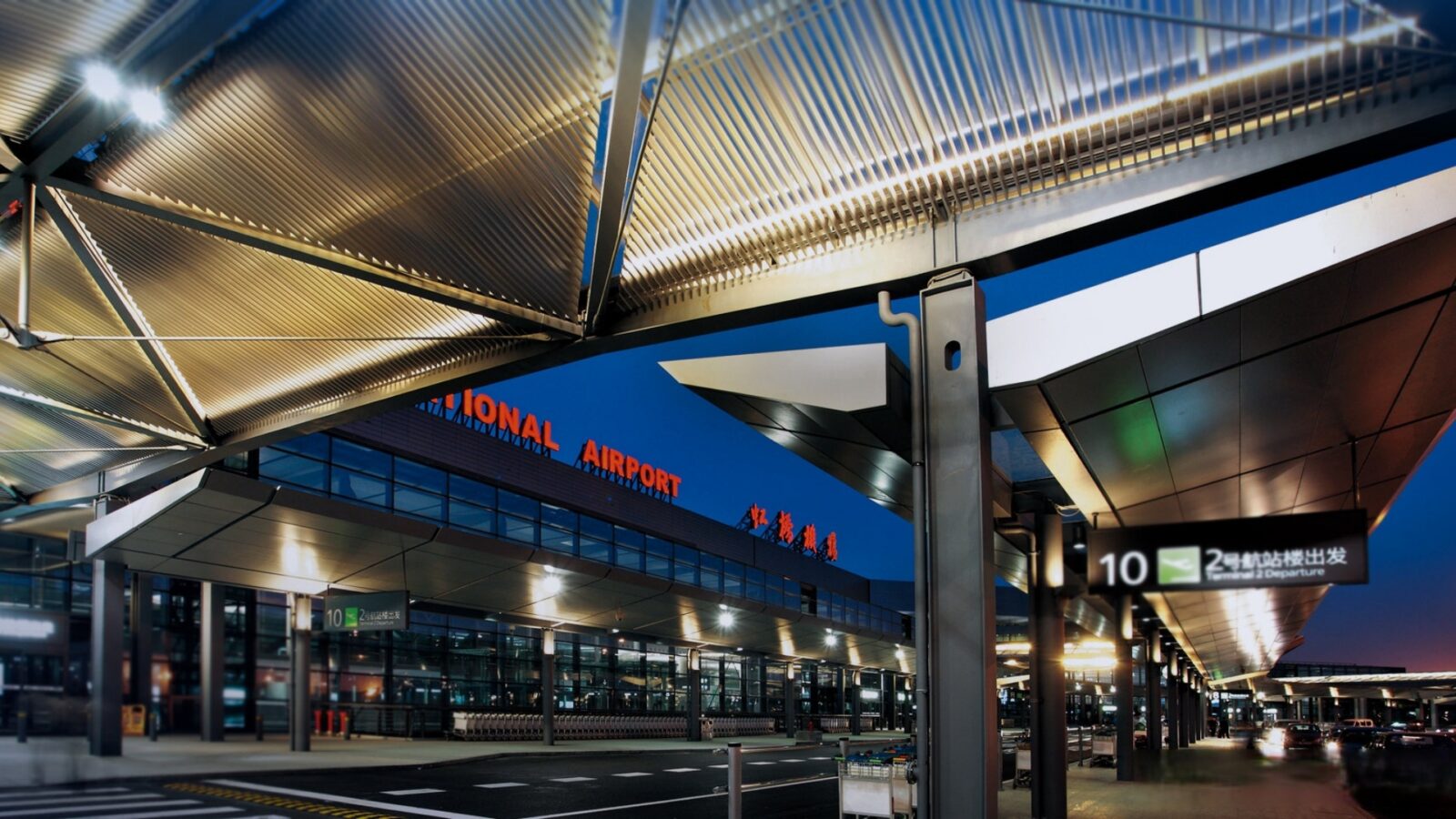
Hongqiao Railway Station sits directly adjacent to Terminal 2, connected by a covered pedestrian walkway — a deliberate piece of urban planning that makes the Hongqiao complex one of China's most efficient multimodal transport nodes. For travelers arriving by train and departing by plane (or vice versa), the transfer is straightforward: from the underground HSR arrivals hall, follow signs marked "Airport Transfer" and take the elevator to the T2 departures level. The walk is approximately 500 meters and takes 10–15 minutes in total. There is no need to exit the building or brave city traffic.
Book HSR tickets via Trip.com (accepts foreign cards and has an English interface) or the official 12306 app (requires a mainland Chinese phone number, +86, for verification). For passengers flying out of T1, the route is: train to Hongqiao Railway Station, walk to T2, then take the free shuttle bus or Line 10 one stop to Hongqiao Airport 1 Station — budget 45–60 minutes for the full air-rail transfer if you have checked bags.
✈️ Navigating Capital Rail & Air Hubs: Flying onward to Beijing and wondering which airport is closer to your hotel or high-speed rail line? Check out PEK vs PKX.
Check-In Tips and Security Lines
Shanghai Hongqiao International Airport
Hongqiao moves approximately 40 million passengers a year and is one of China's busiest domestic aviation hubs. At that scale, the difference between a smooth check-in and a stressful sprint often comes down to knowing two things: how early to arrive, and which queue to join. Counter check-in closes 30–45 minutes before scheduled departure — late arrivals cannot board even with a valid ticket — so building in buffer time is not optional here.
- Mobile check-in via airline app: Opens 24–48 hours before departure; once you have a digital boarding pass you can proceed directly to the security checkpoint, bypassing the check-in counter entirely if you have no checked luggage.
- Bag-drop-only lanes: For passengers who checked in on their phone, bag-drop desks are faster and less crowded than full-service check-in counters.
- Self-service kiosks in T2: Passport scan, seat selection, and bag-tag printing — after using a kiosk, join the bag-drop queue rather than the main check-in line.
- Peak security hours: Friday evenings, Sunday nights, and the day before and last day of major public holidays (Spring Festival, National Day, May Day, Mid-Autumn) bring 30–40 minute queues; weekday mornings and early afternoons are often under 15 minutes.
- Priority Pass and lounge access: Several airline-operated lounges in T2 admit Priority Pass holders; the China Eastern Lounge is the largest and best appointed in Terminal 2.
- Chinese airline app phone-number requirement: Most Chinese airline apps (China Eastern, Air China, etc.) require a +86 mobile number to receive an SMS verification code. Foreign visitors should book via Trip.com, the airline's overseas website, or a third-party OTA to avoid this trap.
- Go straight to security if already checked in: Once you have a boarding pass in hand — physical or digital — and no bags to drop, proceed directly to the security zone; do not join the check-in queue.
Arrival Timing and Peak Hours
The minimum recommended arrival windows at Hongqiao depend on your route type and whether you have checked luggage.
- Domestic flight, no checked bag: 90 minutes before scheduled departure.
- Domestic flight, with checked bag: 120 minutes before scheduled departure.
- International flight: 180 minutes before scheduled departure.
- Holiday peak add-on: Add 30–45 minutes on Friday evenings, Sunday nights, and public holiday eves, when security queues can reach 30–40 minutes.
Counter check-in closes 30–45 minutes before the scheduled departure time listed on your ticket. If you arrive after that window, you will not be accepted for boarding, regardless of ticket validity.
Documents, Apps and Skip-Queue Tricks
For foreign visitors, the document checklist at Hongqiao is straightforward but must be complete: passport, airline booking reference, and boarding pass (physical or digital). A health declaration may still be required for some routes — check with your airline before departure. Several practical steps can reduce or eliminate time spent at check-in counters.
- Required documents: Passport (foreign nationals), booking reference, e-ticket or boarding pass.
- Mobile check-in: Airline apps typically open check-in 24–48 hours before departure; a digital boarding pass lets you skip the counter entirely if you have no checked luggage.
- Bag-drop-only line: The fastest queue for those who checked in online — shorter than the full-service check-in line and designed specifically for passengers with bags.
- T2 self-service kiosks: Scan your passport, select your seat, and print a bag tag at the machine; then proceed to the bag-drop desk only.
- Lounges: Open to business-class passengers and Priority Pass holders approximately 2 hours before departure; the China Eastern Lounge in T2 is the largest and most well-equipped.
- Book via Trip.com or an overseas airline portal: This sidesteps the +86 phone-number verification required by Chinese airline apps and makes your booking accessible on non-Chinese-app platforms.
Hongqiao vs Pudong — Which to Use
Shanghai has two major airports, and the choice between them is determined almost entirely by the type of flight you are taking. Hongqiao handles the vast majority of domestic traffic and all short-haul regional Asia routes; Pudong handles all long-haul international operations and the remainder of domestic flights. The two airports are roughly 64 kilometers apart, so arriving at the wrong one is an expensive mistake.
🌐 Shanghai's Primary International Gateway: While Hongqiao handles mostly domestic routes, long-haul international flights arrive at PVG on the east side of the city. Plan transfers and terminal routes using Shanghai Pudong International Airport.
Facilities and Practical Services
Both terminals at Hongqiao offer the standard range of airport services, though T2 is noticeably better equipped given its larger footprint and newer infrastructure. The areas where most foreign visitors encounter friction are connectivity (Wi-Fi and VPN), payments (mobile-first culture), and baggage (storage and handling). Planning for these in advance saves time and stress on arrival or departure day.
- Lounges: Airline-operated lounges in both terminals; the China Eastern Lounge in T2 is the largest and most well-appointed; third-party paid lounges are limited compared to Pudong.
- Wi-Fi: Free throughout both terminals — reliable in T2, functional in T1. No password required for basic access in most areas.
- VPN: Install and test a VPN before entering mainland China. Google, WhatsApp, Instagram, and most Western platforms are blocked, and you cannot download VPN apps from foreign app stores once on Chinese soil.
- Mobile payments: WeChat Pay and Alipay dominate in-terminal retail. Link a foreign Visa or Mastercard to either app before departure so you can scan-to-pay at shops, restaurants, and vending machines.
- Cash backup: Carry ¥200–500 in cash — many smaller vendors cannot process foreign cards, and some airport kiosks are cash-only.
- Luggage storage: Available in both terminals (see below for locations and fees).
Wi-Fi, VPN and Mobile Payments
Three connectivity and payment topics account for the majority of practical friction for foreign visitors at Hongqiao. Each has a straightforward solution if you prepare before you arrive.
- Wi-Fi: Free airport Wi-Fi in both terminals — coverage is reliable in T2 and functional in T1. Connect by selecting the airport network and accepting the terms of service; no password is generally required.
- VPN: Google, WhatsApp, Instagram, YouTube, and most Western websites and apps are blocked in mainland China. Install a VPN on your devices before departure and test it at home — you cannot download VPN apps from foreign app stores once inside China.
- Mobile payments: WeChat Pay and Alipay are the default for all in-terminal purchases. Link a foreign Visa or Mastercard to either app before you arrive, or you will need to pay cash for everything from a bottle of water to a meal.
Luggage Storage, Lounges and Food
Services beyond the departure gate are concentrated in T2, while T1 is more limited. Knowing where to find baggage storage, how to access a lounge, and where to eat before you clear security can meaningfully improve your airport experience.
- Luggage storage: Section A near Gate 1 (T1, tel 021-51144520); Section B near Gate 5 (T2, tel 021-51144553); storage available for up to one month. Fees are tiered by size and duration: small piece (≤85 × 85 × 60 cm) ¥15/20/25 for 1–4 / 4–10 / 10–24 hours — roughly $2 / $3 / $4. Large piece ¥30/40/45 for the same tiers — roughly $4 / $6 / $6.
- Lounges: Airline-operated lounges in both terminals; the China Eastern Lounge (T2) is the largest and most well-appointed; third-party paid lounges are limited compared to Pudong, so Priority Pass holders should confirm lounge access in advance.
- Food and shopping: T2 has 100+ dining and retail outlets spread across the departures and arrivals levels. T1 is more limited — if you are departing from T1 and have time to spare, eat before clearing security, or plan to grab food in the arrivals hall.
Frequently Asked Questions
Q: What is the airport code for Shanghai Hongqiao International Airport?
The IATA code is SHA and the ICAO code is ZSSS. The IATA code SHA is what appears on boarding passes, baggage tags, and airline booking systems; the ICAO code ZSSS is used in air-traffic control and flight-planning applications. The Chinese name is 上海虹桥机场 (Shànghǎi Hóngqiáo Jīchǎng).
Q: Does Hongqiao have international flights?
Yes, but limited. Most international Hongqiao routes are short-haul regional Asia — Tokyo (NRT/HND), Osaka (KIX), Seoul (ICN/GMP), Taipei (TPE), and Bangkok (BKK/DMK) — and they operate almost entirely from Terminal 2. Long-haul international flights to and from Shanghai use Pudong International Airport (PVG) instead.
Q: Which metro line goes to Hongqiao Airport?
Metro Line 2 serves Terminal 2 (Hongqiao Airport 2 Station) and runs all the way through the city to Pudong International Airport Station. Metro Line 10 serves both Terminal 1 (Hongqiao Airport 1 Station) and Terminal 2 (Hongqiao Airport 2 Station). Both lines operate roughly 5:30 AM to 10:30 PM, with fares around $1 (¥6–8) to the city centre.
Q: How early should I arrive at Hongqiao?
Allow 90 minutes minimum for a domestic flight with no checked bag, 120 minutes with a checked bag, and 180 minutes for an international flight. Add 30–45 minutes on Friday evenings, Sunday nights, and the eve of major Chinese public holidays, when security queues can reach 30–40 minutes. Counter check-in closes 30–45 minutes before scheduled departure.
Q: How do I get from Hongqiao to Pudong Airport?
Metro Line 2 runs the full cross-city route from Hongqiao Airport 2 Station to Pudong International Airport Station in about 80–90 minutes for $1 (¥6–8). An airport shuttle bus covers the same route in roughly 75 minutes for $4 (¥30). If you are catching a connecting flight at the other airport, allow at least 3 hours for the full terminal-to-terminal transfer.
Q: Is there luggage storage at Hongqiao?
Yes, in both terminals. Section A is near Gate 1 in T1 (tel 021-51144520) and Section B is near Gate 5 in T2 (tel 021-51144553). Storage is available for up to one month. Fees are tiered by size and duration — roughly $2–7 (¥15–50) per piece per day.
Q: Which airlines fly from Hongqiao?
China Eastern Airlines and Shanghai Airlines dominate the schedule. Major full-service carriers also operating significant capacity include Air China, China Southern, Xiamen Air, Sichuan Airlines, and Hainan Airlines. Budget and regional carriers — Spring Airlines and Juneyao Airlines — cluster at Terminal 1. International regional carriers (ANA, JAL, Korean Air, Asiana, EVA Air, Peach Aviation) operate from Terminal 2.