Beijing Chinese New Year
Beijing Chinese New Year Turns the Ancient Capital into the World’s Largest Cultural Festival. For two weeks every February, the city of 20 million becomes a vast living museum in which ancient imperial palace ceremonies, hutong neighborhood temple fairs, and family reunions all take place at once. You’ll see traditions preserved for over a millennium: dragon dances snaking through the alleyways of old Beijing, master craftsmen demonstrating centuries-old techniques, and families coming together for symbolic reunion dinners explaining why Chinese people travel halfway across the country to be together on this one night.
This guide covers all the major Spring Festival experiences in Beijing, plus practical survival tips. We include information vital to separating the well-prepared from the poorly-prepared traveler: which museums are open when everything else shuts down, how to book sold-out ticketed venues, and where to find the most authentic heritage items on display at the massive capital events. From photographing lantern-lit Great wall battlements to making your way through the legend of Chunyun travel chaos, you can immediately start planning an easy but incredible Chinese New Year in Beijing!
1. China Arts & Crafts Museum: National Heritage Masters and Horse Year Exhibition
-
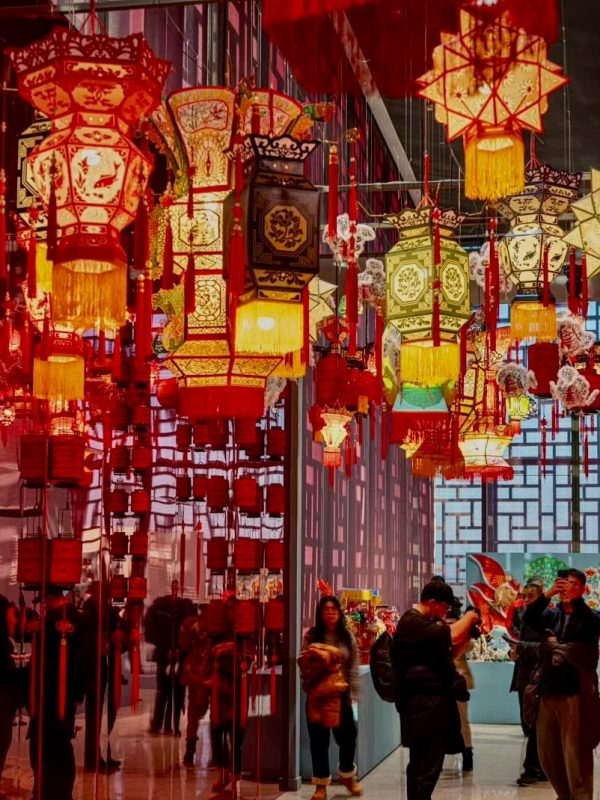

- China Arts & Crafts Museum
-
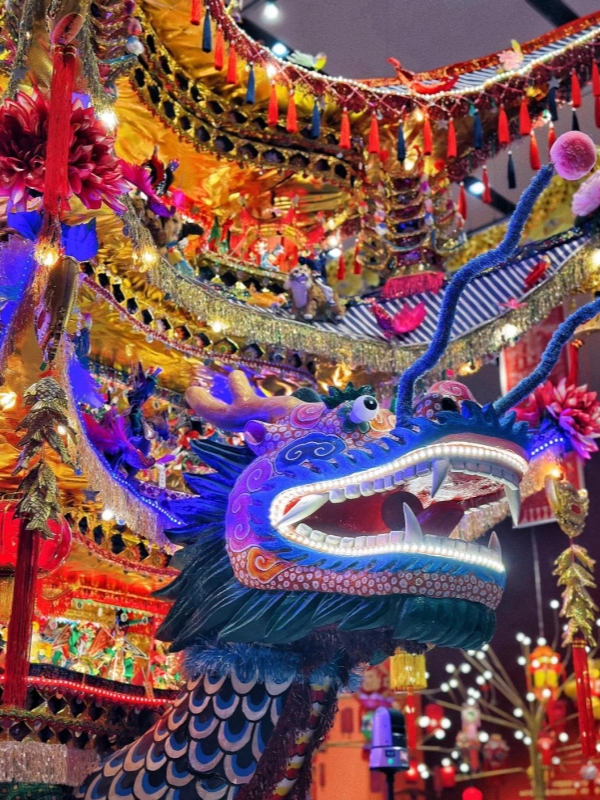
- China Arts & Crafts Museum
-
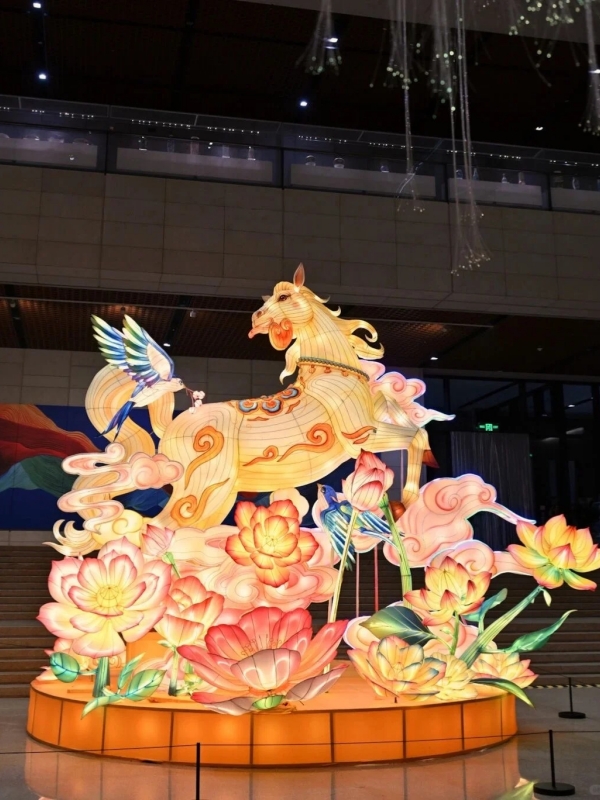
- China Arts & Crafts Museum
You’ll find China’s most prestigious Spring Festival exhibition at this national-level cultural venue where the 2026 “Galloping Steeds Welcome Spring” showcase celebrates the Year of the Horse through 200+ masterpieces. Think museum-quality cloisonné screens depicting eight legendary horses, jade sculptures titled “Dragon-Horse Spirit,” and intricate woodcarvings created by masters who’ve spent decades honing techniques handed down over generations.
The real magic happens twice daily when national-level heritage masters demonstrate their crafts right in front of you. You’ll watch jade carvers shaping stone with tools hardly changed since the Ming Dynasty, inner-painting artists forming miniature scenes inside glass bottles, and velvet flower makers twisting silk into delicate brooches. English translation is available during the Q&A, so you can ask how long it takes to master cloisonné enameling.
The hands-on workshops let you try woodblock printing your own Horse Year blessing characters, assemble traditional lanterns, paint Peking Opera masks, or weave Chinese knots under expert guidance. Everything you create becomes a souvenir you actually made yourself. At 3 PM daily, folk music concerts play classic Spring Festival pieces while the museum entrance's massive installation wall combines paper-cutting and shadow puppet elements.
Tips:
- 📍 Location: Chaoyang District, Hujing East Road 16 | Metro Lines 8/15 to Olympic Park, 5-min walk
- ⏰ Hours: Jan 20–Feb 25, 9 AM–5 PM (last entry 4 PM, open Mondays, closes noon CNY Eve)
- 💰 Pricing: Free admission (reservation required) | Workshops ¥20-60 | Audio guide ¥30
- 📱 Booking: Reserve 7 days ahead at 8 PM via "中国工艺美术馆" WeChat | Max 3 tickets/person | Passport accepted
- ⚡ Avoid Crowds: Peak 10 AM–2 PM | Best: opening hour or after 3:30 PM | Book workshops immediately upon entry
2. Badaling Great Wall Night Festival: Lantern Shows and Heritage Performances
-
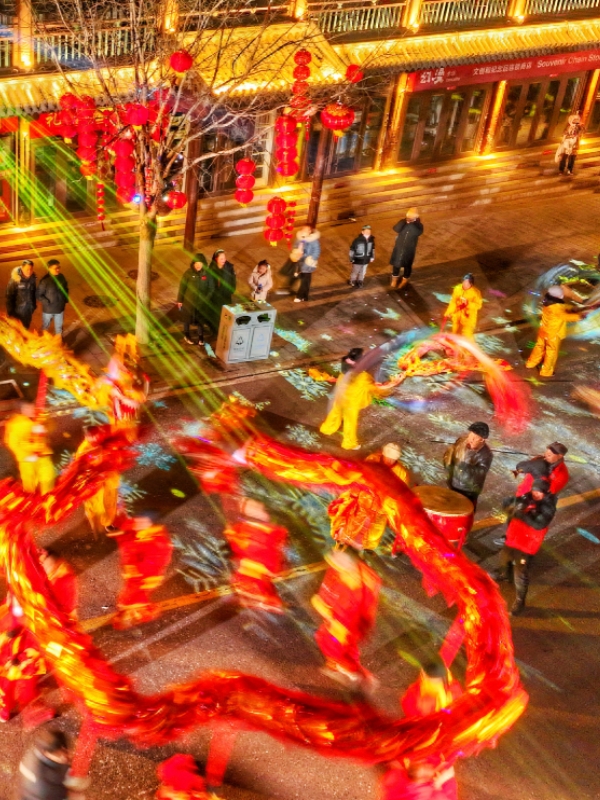
- Badaling Great Wall Night Festival
-
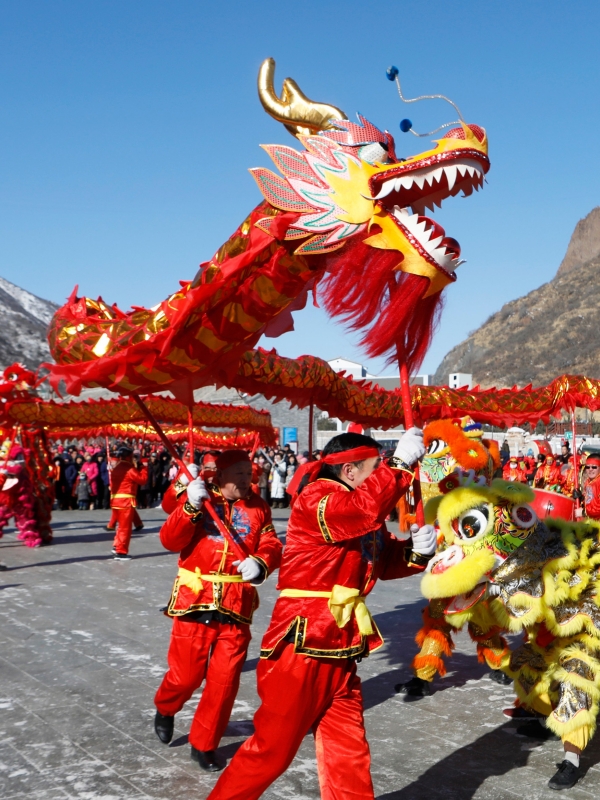
- Badaling Great Wall Festival
-
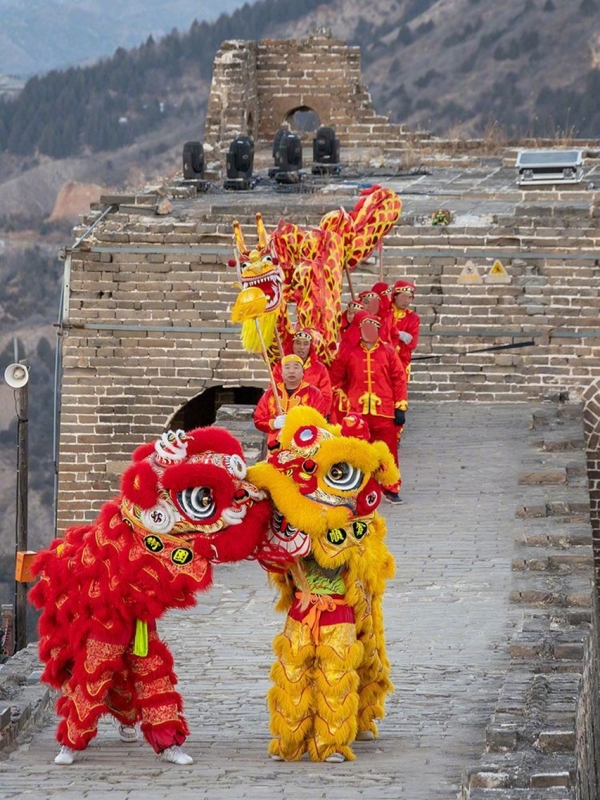
- Badaling Great Wall
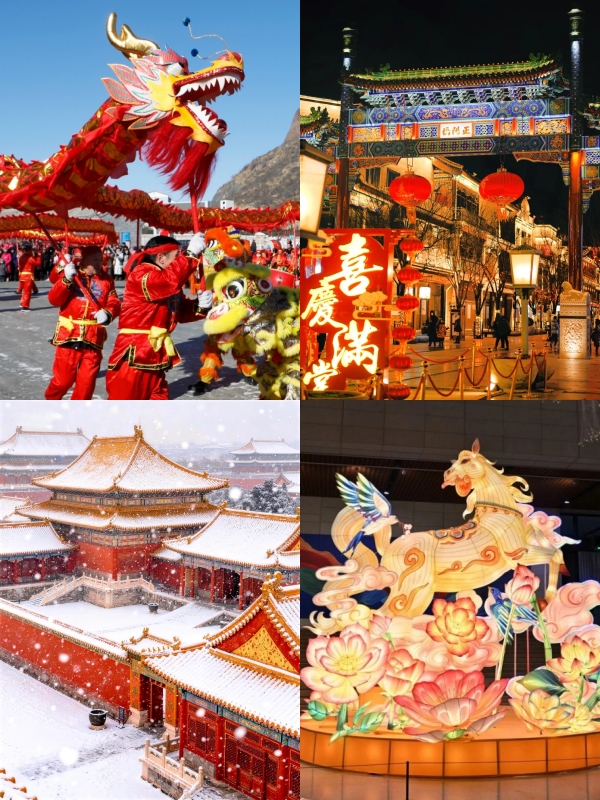
When sunset falls upon Badaling Great Wall, the UNESCO World Heritage site transforms into a Spring Festival wonderland. From 6:10 PM to 8:30 PM, the Badaling venue becomes a living gallery of intangible heritage performances - thunderous waist drum bands, boisterous dragon and lion dance, costume-clad yangko folk dancers, and elaborate local land boat parade.
As dusk descends, the real fun begins with the light show powered by lanterns millions of Chinese across the globe use to celebrate the New Year.
Red lantern walls providing photo backdrops, riddle zones you would be challenged to match your wits upon, and rolling product promotions are gracefully merged into the Hanfu Ceremony Light Show, filling the illuminated ramparts with silk-robed performers making modern interpretations of age-old legends. It is truly mind-blowing to see the 2,000 year old fortifications glow red and shimmering gold while echoed folk music is bounced off the mountains!
Hands-on heritage stations let you craft flower-shaped steamed buns, watch sugar artists blow molten sugar into zodiac animals, and try traditional "hydrangea tossing" games. Badaling Hotel's "Family Reunion Dinner" packages (¥1,288+) require advance reservations. Free perks include themed postcards with prepaid postage and photo studio discounts.
Tips:
- 🚌 Transport: Night shuttle—Qianmen 3:55 PM, Beitucheng Metro 4:25 PM, return 8:50 PM (hotline: 18519352659)
- ⏰ Schedule: Feb 15–22, night session 6-9 PM (site clears 9:30 PM, lights off 10 PM)
- 💰 Pricing: ¥80 night admission | Reunion dinner from ¥1,288/table | Heritage activities ¥20-50
- 🧥 Critical: Night temps drop 10°C+—bring down jacket, scarf, gloves, insulated boots
- 👟 Safety: Many steep stairs need athletic shoes with traction | Self-drive parking extremely limited
3. Ditan Temple Fair: Qing Dynasty Earth Worship and Old Beijing Street Food
-
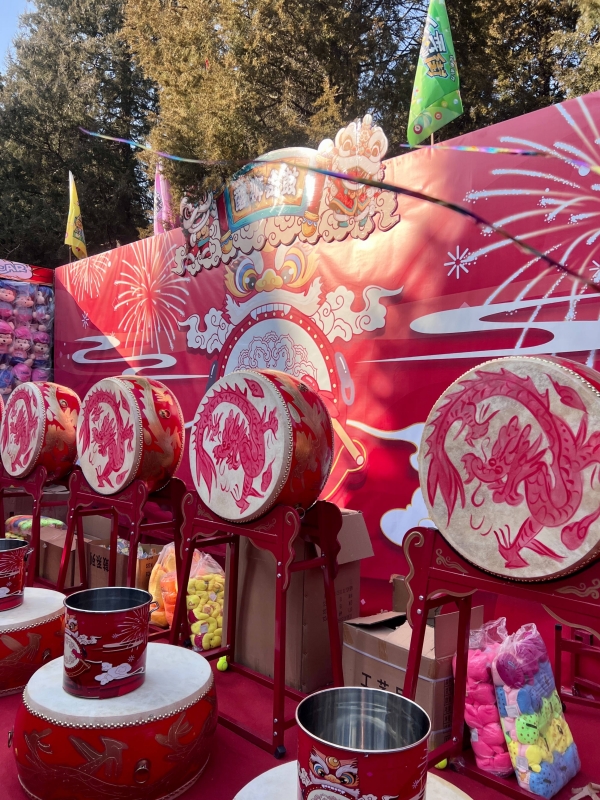
- Ditan Temple Fair
-
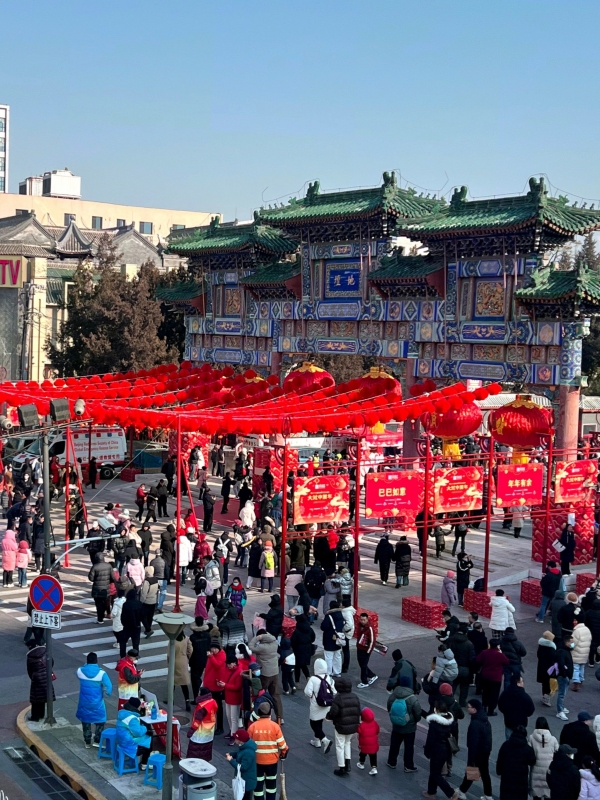
- Ditan Temple Fair
-
- Ditan Temple Fair
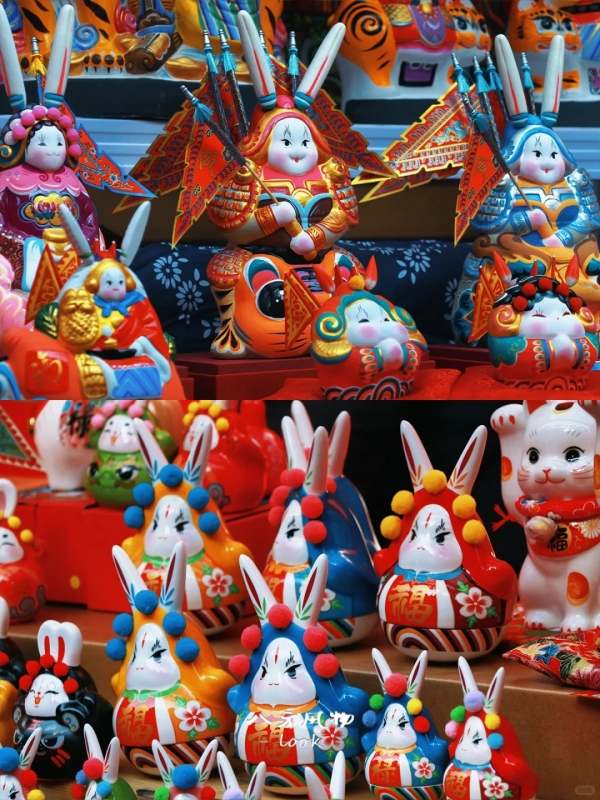
Ditan Temple Fair is number one on our Dianping list because it serves up the closest marriage of imperial ceremony and folk festivity. The main event takes place every day at 10 AM—the Qing Dynasty Earth Worship Reenactment, which sees performers in period costume re-enacting the solemn ritual emperors performed at this location along with a bilingual explanation boards.
All-day folk performances vary, from bustling dragon dances with more than 10 performers as they hold up a thirty-foot fabric-scaled serpent to foot-stomping lion dances where lions perform acrobatic leaps, yangko folk dancing to infectious drumming, shadow puppetry of classic tales, and marionette shows; the 2026 addition Horse Year Flower Parade fills the fairgrounds up with performers dressed as auspicious “Galloping Steed” figures.
Ten-plus intangible heritage booths let you watch masters create art in real-time while old Beijing street food defines the experience: donkey roll, ai wo wo, candied hawthorn on sticks, braised offal, quick-fried tripe, sour plum drinks, and Beijing-style yogurt in returnable ceramic jars. Folk game zones offer riddle guessing, ring toss, and balloon darts.
Tips:
- 🚇 Transport: Metro Line 2 to Andingmen, 10-min walk | Buses 18/20/30 to Ditan West Gate
- ⏰ Schedule: Feb 16–23, 9 AM–5 PM (last entry 4:30 PM)
- 💰 Pricing: ¥10/person on-site (WeChat/Alipay OK) | Games ¥5-20 | Snacks ¥15-50
- 📅 Beat Crowds: Visit 9-10:30 AM or after 3 PM | Weekdays less packed than weekends
- 🔒 Safety: Guard belongings in dense crowds | Watch for pickpockets | Pace food sampling
4. Temple of Heaven Heritage Festival: Zodiac Wheel and Woodblock Fu Printing
Temple of Heaven
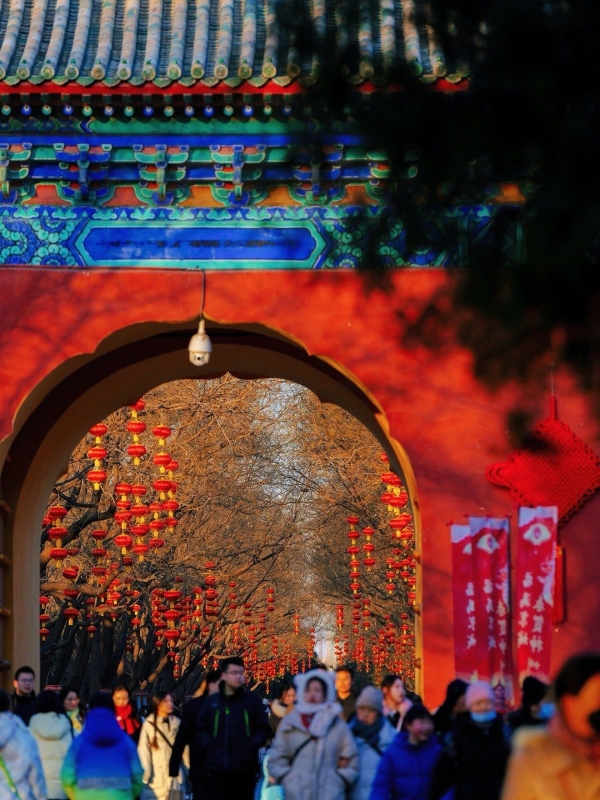
China’s largest surviving sacrificial locale combines religious prayer with an all-encompassing cultural experience at Spring Festival. The “Twelve Zodiac Wheel” display is bilingual, letting you take a photo with the Horse Year symbol and then claim stickers describing personality traits of the zodiac animal corresponding to the year you were born, according to Chinese astrology.
The woodblock Fu character also might be the activity you’ve most eagerly wanted to do—employee staff members teach you how to apply ink to carved blocks, press rice paper, and peel away to reveal your hand-printed character, a positive token for the New Year. The intangible heritage market is where at least 10 different craft traditions are showcased and best of all, the special on the Lantern Festival, February 28, concert series with links to catch the shows online, plus offline broadcast points around the country.
Danbi Bridge displays 100+ ceremonial instruments used in ancient heaven-worship with bilingual explanations detailing how bronze bells produced specific pitches. Fixed-time imperial sacrifice reenactments show exactly how emperors approached the Circular Mound Altar. Red lanterns decorate the entire park while the prayer wall invites you to write 2026 wishes on cards that staff ceremonially burn.
Tips:
- 🚇 Transport: Metro Line 5 to Tiantan East Gate Station
- ⏰ Schedule: Feb 17–28, 6 AM–10 PM | Heritage 9 AM–4:30 PM | Lantern concert Feb 28, 7-8:30 PM
- 💰 Tickets: Park ¥15, combo ¥34 (Prayer Hall/Circular Mound/Echo Wall) | Heritage free (materials ¥10)
- 🚪 Entry Tip: South Gate = quickest access | Park is vast—wear comfortable shoes
- 📸 Photo Gold: Prayer Hall 9-11 AM optimal lighting | Feb 28 massive crowds—arrive early
5. Forbidden City Imperial Exhibitions: Golden Neighbors and Workshop Archaeology
-
- Forbidden City
-
- Forbidden City
-
- Forbidden City
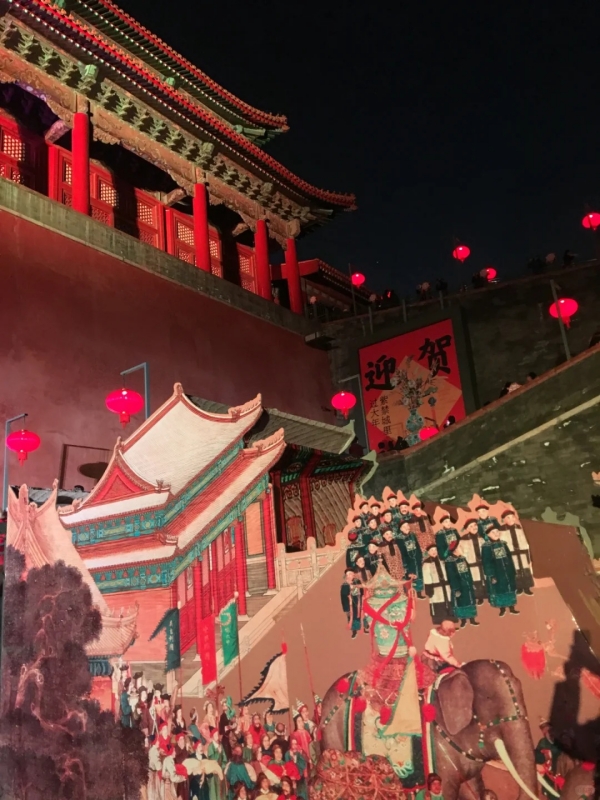
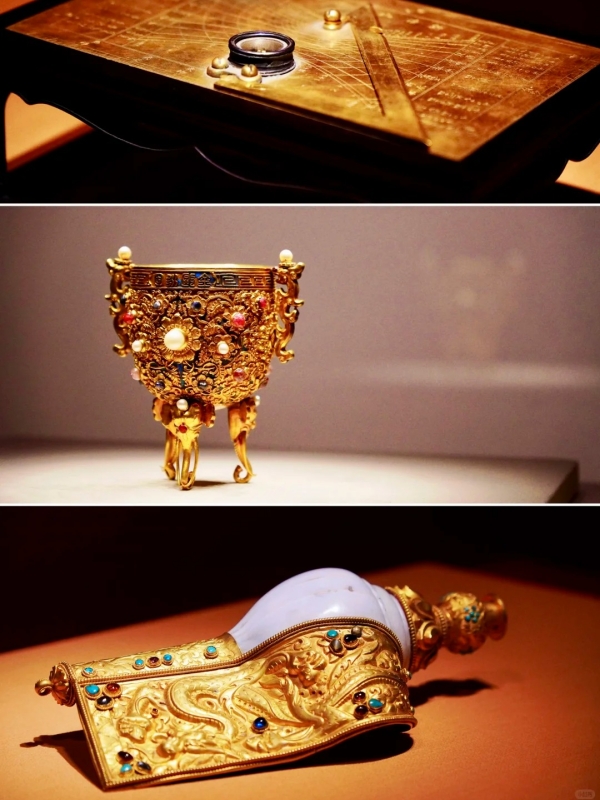
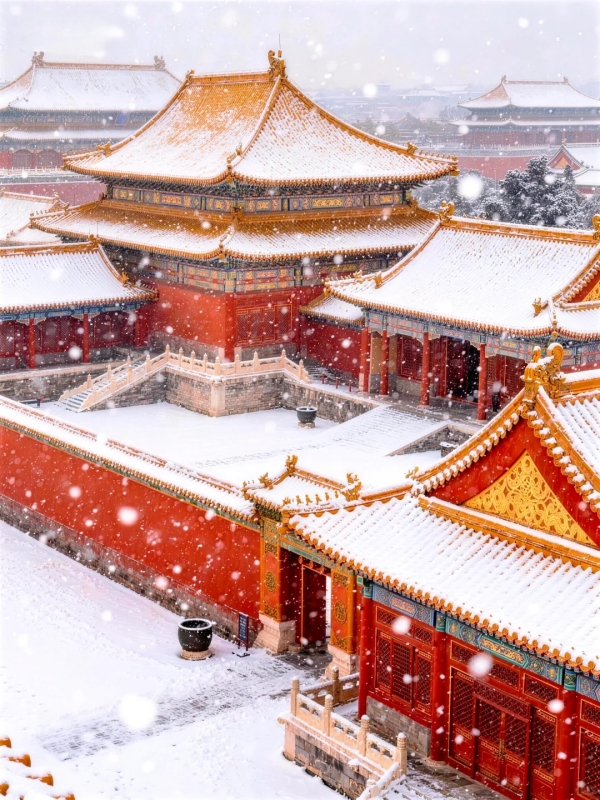
China's ultimate palace experience reaches peak magnificence during Spring Festival with two blockbuster exhibitions. The Wenhua Hall's "Golden Neighbors Shine Together" celebrates 50 years of China-Thailand relations through rare artifacts with bilingual explanations. The Yongshou Palace's "Nine Depths Below" reveals archaeological discoveries from the Imperial Workshop's underground ruins.
The palace's Central Axis gets dressed for Spring Festival with traditional red lanterns creating Instagram-perfect corridors where crimson contrasts against yellow glazed roof tiles and white marble. Taihe Hall and Qianqing Palace courtyards feature themed floral arrangements and zodiac sculptures. Shenwu Gate Square hosts a cultural market selling Forbidden City-branded Horse Year items.
Bilingual signage ensures you understand what you're seeing, but renting multi-language electronic audio guides (¥40) adds invaluable depth. Free guided tours in Chinese and English run at fixed times, covering imperial Spring Festival customs and artifact histories, but you must book via the official website at least three days in advance.
Tips:
- 🚇 Location: Dongcheng District, Jingshan Front St 4 | Metro Line 1 to Tiananmen East/West
- ⏰ Hours: Feb 16–23, 8:30 AM–5 PM (last entry 4 PM) | "Golden Neighbors" through Feb 24
- 💰 Tickets: ¥60 peak season (advance booking required) | Audio guide ¥40 | Exhibitions free with admission
- 📱 Booking War: Tickets release 7 days prior at 8 PM on "故宫博物院" WeChat Mini Program
- 🚪 Exit Smart: Leave via Donghua/Shenwu Gate to bypass Tiananmen crowds | No flash/eating/smoking
6. Qianmen Street Guochao Celebration: Century-Old Shops and Peking Opera Camps
-
- Qianmen Street
-
- Qianmen Street
-
- Qianmen Street
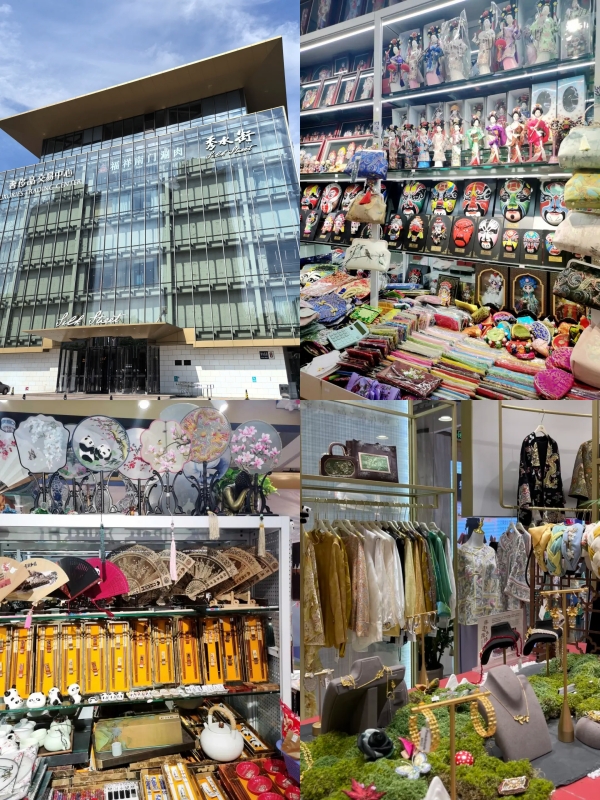
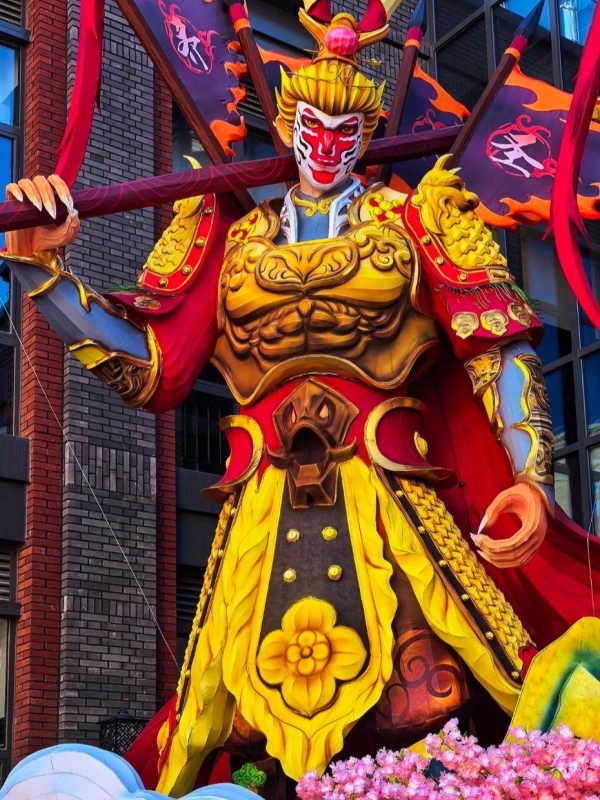
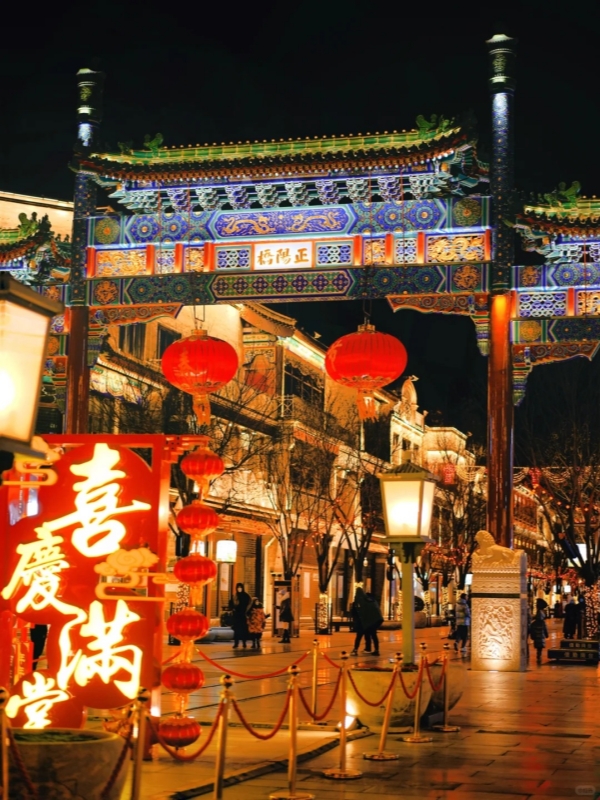
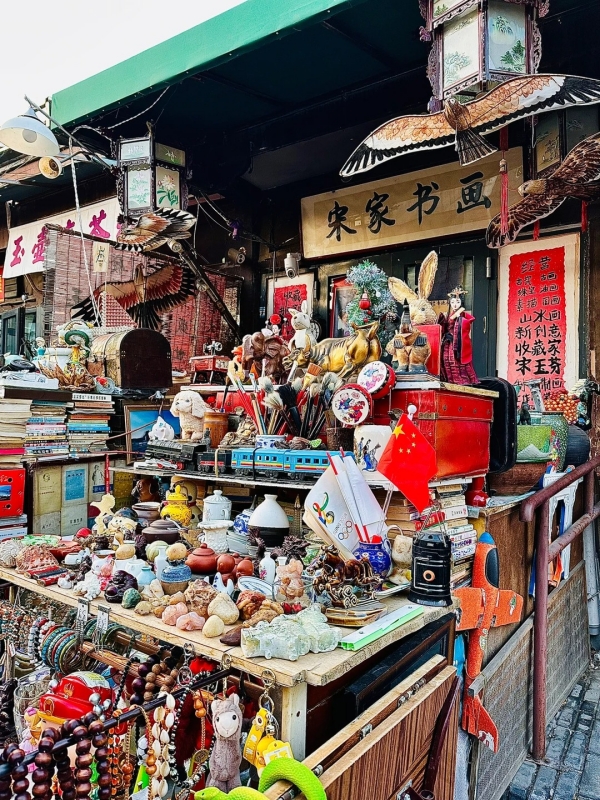
Qianmen Street's "Guochao Qianmen · Horse Welcomes Spring" series transforms this Central Axis corridor into a collision zone where century-old silk shops share space with viral brands. The national trend market features Ruifuxiang silk merchant (founded 1893) alongside streetwear designers printing Chinese characters on hoodies, and Neiliansheng cloth shoe shop (since 1853) next to artists creating Horse Year sneaker customs.
Rongbaozhai art store organises exhibitions of woodblock watercolour prints, plus a public spring calligraphy service from master calligraphers. Parents and kids can delve into tranditional culture activities at Yanliao Guild Hall, including learning quyi balld singing, playing shadow puppetry, Peking opera get-up make-up tutorials and making mortise-and-tenon blocks. Liangxiang Tianyuan theatre has “National Essence Journey” Peking Opera with English subtitles.
Northeastern Chinese comedy kicks off Day 3 at Liu Laogen Theater with Zhao Family Comedy troupe’s torrent of leviathian, hysdelc humour. Qi Dongdong takes on the street as the mascot robot out for selfies. Street installations feature artists’ designs of "Galloping Steed" murals. Buildings new and renovated like Yanliao Hall incorporating Ming-style facades while featured installations are also made of mural elements.
Tips:
- 🚇 Transport: Metro Line 2 to Qianmen Station, immediate walk-up access
- ⏰ Hours: Feb 10–28, 10 AM–9 PM | Opera 2-4 PM, 7-9 PM | Liu Laogen 7:30-10 PM (Day 3+)
- 💰 Pricing: Street free | Opera ¥88 (¥158 parent-child) | Liu Laogen ¥180-880 | Heritage ¥20-50
- 📱 Booking: Opera/comedy need advance purchase via WeChat or Dianping
- 🍽️ Dining: Viral restaurants here—grab queue numbers early for dinner
7. CCTV Spring Festival Gala: 700 Million Viewers and English Subtitle Access
-
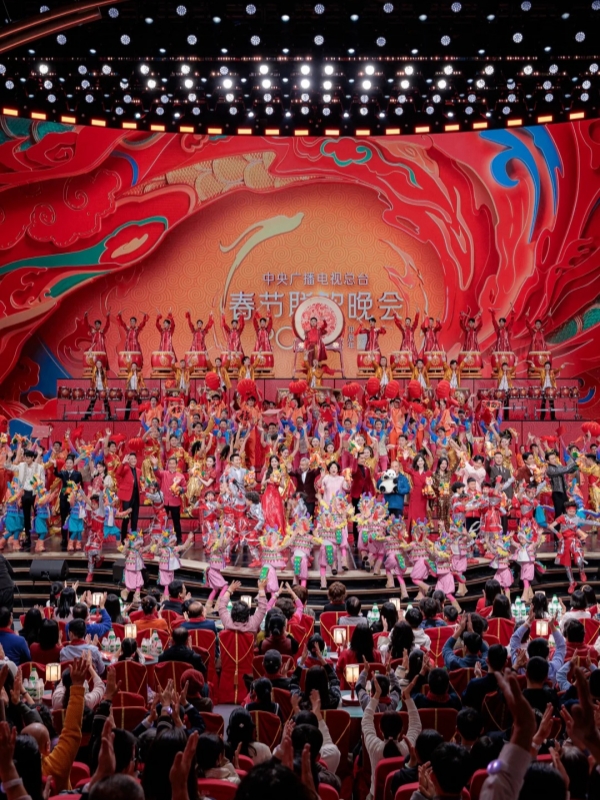
- CCTV Spring Festival Gala
-
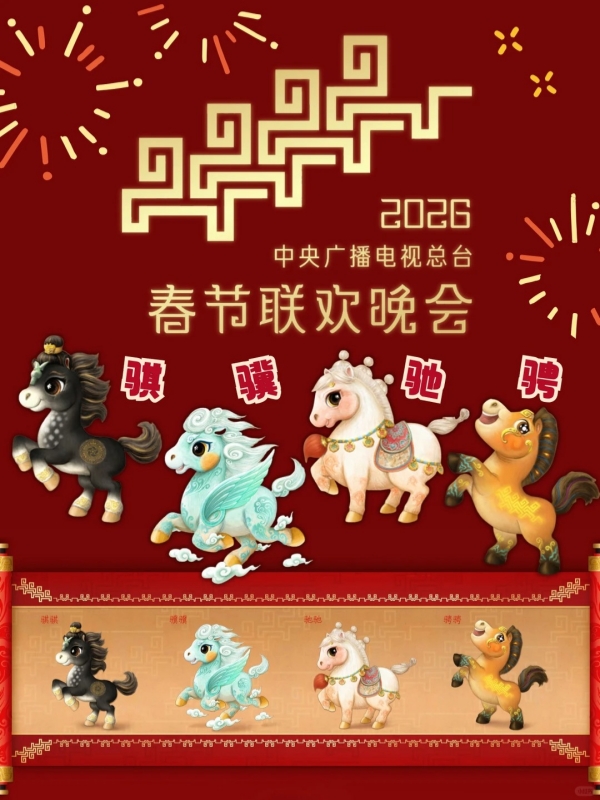
- Year of the Horse Chunwan Mascot
The Spring Festival Gala is to Chinese New Year what Times Square is to American New Year's Eve—except 700 million people watch it simultaneously, making it the world's most-viewed television broadcast. This 40-year tradition holds the cultural key to understanding modern China, and 2026's theme "Galloping Steeds, Unstoppable Momentum" draws from ancient poetry while punning on the word "miracle" in Mandarin.
You’ll see song-and-dance numbers in minority ethnic costumes; comedy sketches of daily Chinese life; excerpts from traditional opera; heart-stopping acrobatics; and magic tricks. The breakthrough for foreign visitors: CCTV’s streaming services are now equipped with an English subtitle option. You can stream through the CCTV News app and CCTV Video app on your phone or laptop.
Hotels and guesthouses all around Beijing offer “Spring Gala viewing dinners” where you’ll watch with Chinese families. Search “春晚主题聚餐” (chunwan z主题聚餐) on Dianping to find these communal gatherings, and the official “Cultural Universe” merchandise line (¥59-599) means you can take home everything from stationery to home décor featuring the year’s mascot.
Tips:
- 📺 Viewing: Studio tickets nearly impossible | Recommend streaming or hotel viewing parties
- ⏰ Schedule: Feb 16 (CNY Eve) 8 PM–12:30 AM
- 💰 Cost: Streaming free | Merchandise ¥59-599
- 🔤 Subtitles: Enable English captions in playback settings before show starts
- 🚫 Avoid: Don't travel to CCTV Tower area CNY Eve—traffic controls create gridlock
8. Beijing Orchid Carnival: 10,000 Blooms and Traditional Culture Classes
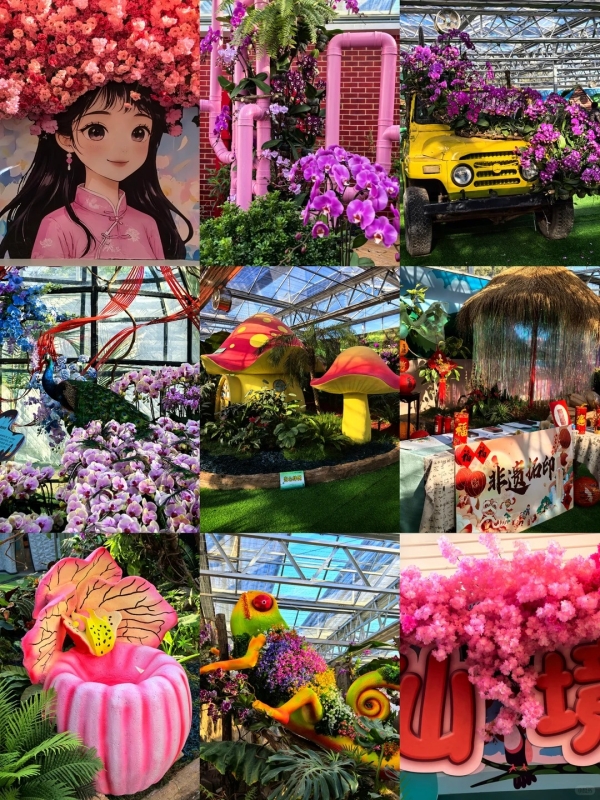
Beijing Orchid Carnival
When Beijing's winter bites hardest, the Orchid Carnival offers a tropical microclimate filled with 10,000 orchids across five themed halls. Phalaenopsis, cymbidium, and jianlan varieties bloom in arrangements integrating red lanterns and Chinese knots, creating immersive photo environments where flowers frame you instead of acting as static backgrounds.
In the traditional culture classes, you’ll learn some calligraphy fundamentals—you’ll practice brush strokes typing out “春” (spring) and “福” (fortune) and take home your rice paper attempts. In Chinese painting introductions, you’ll see how to load your bamboo brushes to paint plum blossoms. The parent-and-child play space has a pitch pot where you get to toss arrows into vases from three meters away, plus ring toss and other traditional games.
NPC actors in traditional dress will run trivia challenges and scavenger hunts to grab gifts. Folk performances are scheduled for lion dances and yangko in the greenhouse environment. Surprise raffles give out orchid-themed products while the cultural merch area sells scarves, new year decorative items, and dried flower arrangements.
Tips:
- 🚗 Transport: Jingbei Flower World, Shunyi District | Self-drive recommended (free parking available)
- ⏰ Schedule: Jan 1–Mar 8, 9 AM–5:30 PM (last entry 5 PM)
- 💰 Tickets: Early bird ¥19.9 | Family 3-pack ¥45 (¥15 avg) | On-site ¥29.9 | Activities ¥10-30
- 🎫 Early Bird: Purchase ahead on Douyin/Meituan, check usage restrictions
- 👕 Climate: Indoor moderate temps (light layers) | Outdoor cold (bring jacket) | Reserve 3-4 hours
Unlocking Beijing's Spring Festival Treasures Beyond Tourist Routes
-
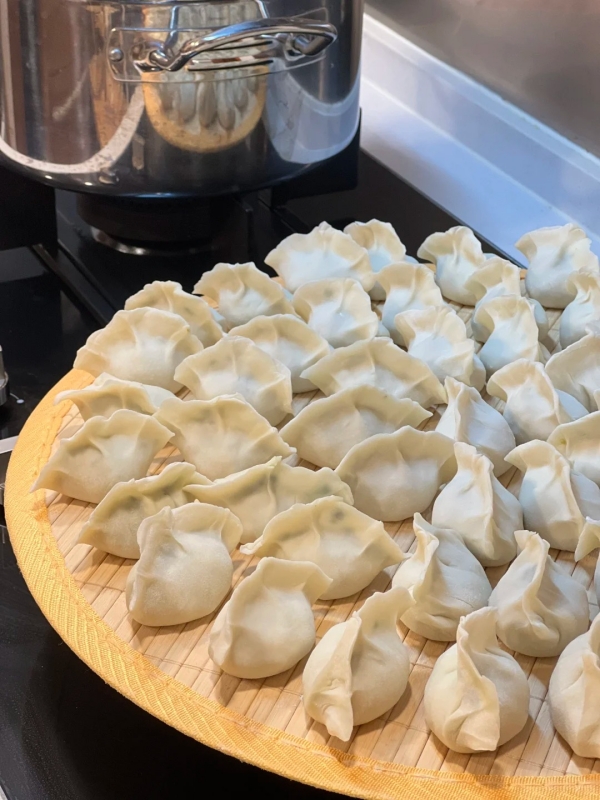
- Dumplings
-
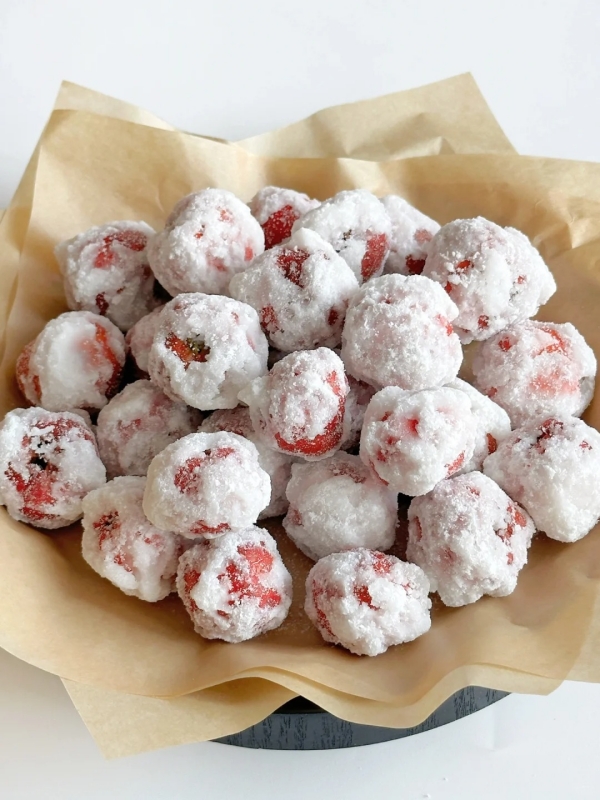
- Temple Fair Candied Hawthorn
-
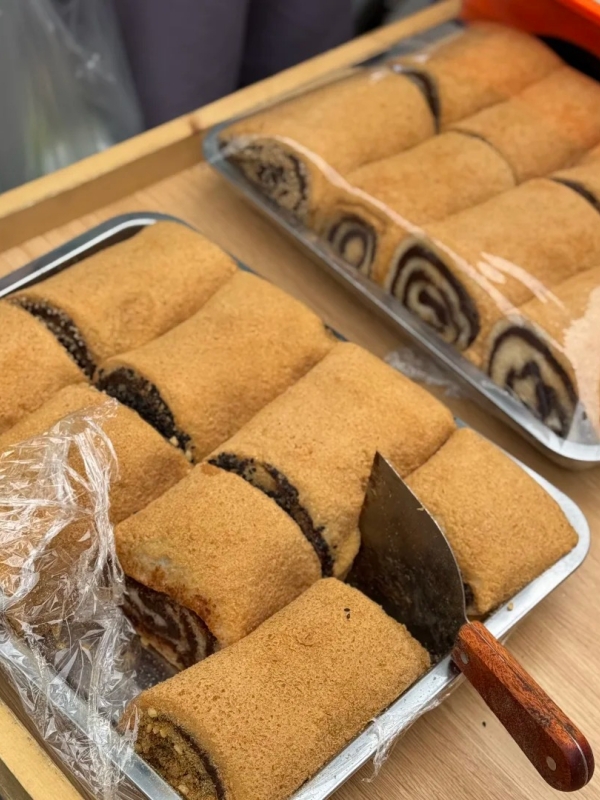
- Donkey Roll
Reunion Dinner Symbolism and Temple Fair Food Reveal Beijing's Culinary Heritage
Reunion dinner fish must be served with leftovers For to sound like fish is surplus meaning the wealth we share for another year it is carried forward. Dumpling like gold ingots you can eat 40plus persons, and one hides a coin and whoever gets the coin becomes lucky. Rice cake the words “nian gao” mean year higher, which signalizes success. Get them in the Baiji Nianggao shop of 1891.
Temple fair candied hawthorn ¥10-15 is sweet, and underneath tastes like sweet crunchy covering. Donkey roll ¥15-20 concealed rice and covered withesoybean powder. Braised offal ¥25-35 mix it with chilies and garlic paste. Quick-fried tripe with sesame sauce ¥30-50 has chewy texture. Old Beijing yogurt ¥8-12 in ceramic jar has a returns of ¥2. You eat a lot of everything despite portion being large, so make sure of popular stalls, which mean fresh stalls, and keep ¥10 and ¥20 bills, oh, yes small coins.
5 Overlooked Activities Connect Travelers to Beijing's Real Spring Festival Spirit
Local family reunion dinners through Couchsurfing or hostel intro give access to 8-12 symbolic dishes, Spring Gala, and duke-edited midnight celebrations. Pack country thirst-quenchers. Day 1 Tiananmen daily flag-raising at 7:17 AM is a pilgrimage made by thousands that will create one of those goosebumps moments watching the national anthem played on the majesty shimmer with the sun on it.
Neighborhood community celebrations in Dongcheng and Xicheng courtyard areas yield free dumplings, and 0% tourists. Little New Year hutong spring couplet posting on Feb 10 let you idly watch calligraphers turning on personalized banners while neighbors catch up. Lao She Teahouse variety shows create nightlife to condense a 90 minutes acrobatics, opera, and folk music set into nightly formats starting at 7:50 PM with popular, unlimited tea service.
Instagram-Worthy Beijing Chinese New Year Shots Demand Precise Timing Not Just Luck
Nanluoguxiang dusk 5.30-6.30pm from south entrance captures lighted lanterns and leading lines of the blue hour beyond. Forbidden City from Jingshan summit, you'll want to arrive at 6am to catch the sun emerging, as the gates won't be open until 7. Longtan Lake ice lanterns after dark, ISO 800, f/2.8 and a slower shutter speed for light trails—make sure you get really low for the reflections in the ice at 7-8pm.
Temple of Heaven Prayer Hall, 9-11am (from south side) with a wide enough lens for the pines at play that represent prosperity. Ditan Earth Worship ceremony at 10am, for front centremost viewing, get there 20 mins early, and shoot in continuous mode. Qianmen Street at night, 8-9pm for the archway plus streetcar plus glowing lanterns (use a tripod). In finale, enhance reds and golds in post, but retain natural skin tones.
Business Closures Peak During Chinese New Year But Strategic Planning Prevents Hunger
Eighty percent of local businesses shut New Year's Eve through Day 3, but international hotel restaurants at Hilton and Marriott operate 365 days with buffets available. Seven-Eleven and FamilyMart maintain 24-hour schedules stocking instant meals. Museums stay open unlike commercial businesses. Metro runs normally but expect crowds. Download Dianping to check real-time hours, book New Year's Eve dinner by late January, and keep emergency cash for vendors accepting only bills.
3 Budget Tiers Reveal Beijing Chinese New Year's True Costs Across Traveler Types
Budget travelers spend ¥3,500 total with youth hostels ¥200/night, street food ¥150/day, Metro ¥100/week, and free attractions. Mid-range explorers spend ¥10,000 with four-star hotels ¥600/night, mixed dining ¥400/day, and ticketed attractions. Luxury experiences cost ¥35,000 with Waldorf Astoria ¥2,000/night, fine dining ¥1,000/day, and VIP tours. Save money using museum free days, sharing temple fair food, and buying family tickets saving 20-30%.
Chunyun Migration Chaos Demands Strategic Timing for Beijing Chinese New Year Travel
China's 40-day Spring Festival generates 3+ billion trips making Beijing Railway Station absolute chaos February 12-16 and 22-25 with airports seeing 2-3 hour security queues. Fly into Beijing by February 12 before rush or after February 25 when traffic clears. Use Metro since buses get stuck. Daxing Airport handles fewer passengers than Capital Airport. Download 12306 app for English train schedules. Staying put Days 1-5 means getting the city to yourself.
Cultural Etiquette Mastery Transforms Beijing Chinese New Year Tourists into Respected Guests
Give service staff ¥50-100 red envelopes but never random kids. Avoid amounts containing "4" (sounds like death). Use lucky numbers ¥88, ¥188, or ¥888. Dress respectfully at temples covering shoulders. Don't touch artifacts or point feet at Buddha statues. Try all food offered showing politeness, leave small amounts on plates. Never stick chopsticks vertically in rice resembling funeral rituals. Toast elders with both hands.
February's Dry Cold Requires Layering Systems Not Single Heavy Coats for Beijing
Beijing's February brings -5°C to 5°C dry cold with sunny mornings feeling tolerable but windy afternoons freezing. Layer thermal underwear, fleece vest, and windproof puffer jacket rated -10°C. Protect extremities with warm hat covering ears, touchscreen gloves for phone use, wool socks plus insulated boots. Pack power bank since cold drains batteries, hand warmers from Seven-Eleven, and moisturizer for extreme dryness. Buildings overheat to 25°C forcing 10+ daily layer adjustments.
FAQs: 12 Critical Questions First-Time Visitors Ask About Chinese New Year in Beijing
Q: Is Beijing safe for solo travelers during Chinese New Year?
Beijing Chinese New Year is extremely safe for solo travelers since Spring Festival means family reunion time, not crime time. The main concern involves pickpockets in crowded temple fairs rather than violent crime. Beijing maintains heavy police presence at tourist sites. Keep valuables in interior pockets and stay aware in dense crowds.
Q: Can non-Chinese speakers enjoy CNY without a translator?
Non-Chinese speakers navigate Beijing Chinese New Year successfully with major attractions providing English signage and audio guides. Translation apps like Google Translate offline mode and Pleco dictionary serve as digital interpreters. Younger Beijingers often speak English, and gestures plus smiles create universal language when words fail.
Q: Which experience captures CNY essence best?
Sharing reunion dinner with a local family captures Beijing Chinese New Year's essence since the meal represents why Chinese people travel thousands of miles to reunite. If unavailable, Ditan Temple Fair on Days 2-3 delivers ideal balance between atmosphere and accessibility with imperial ceremonies, folk performances, and manageable crowds.
Q: Where can foreigners watch fireworks despite city ban?
Beijing Chinese New Year fireworks happen in suburban Daxing and Fangshan districts where locals know exact permitted locations. Badaling Great Wall's night event includes controlled displays, while Gubei Water Town offers legal spectacular shows. New Year's Eve midnight brings sneak-launched fireworks you'll hear from a distance despite the ban.
Q: Do vegetarian travelers survive meat-heavy CNY cuisine?
Vegetarian travelers survive Beijing Chinese New Year by downloading HappyCow app to locate vegetarian restaurants and learning "wǒ chī sù" (I'm vegetarian). Temple fairs offer jianbing crepes and vegetable baozi buns. The challenge involves avoiding meat broths in seemingly vegetarian dishes, so communicate clearly and consider bringing translated dietary cards.
Q: How much cash needed in digital payment economy?
Carry ¥1,000-2,000 cash for Beijing Chinese New Year despite China's 95% cashless economy. Small temple fair vendors sometimes accept only cash, phone dying creates emergencies requiring backup, red envelopes need crisp bills from banks, and rural areas show lower digital adoption. ATMs charge ¥15-20 per transaction.
Q: Does CNY reveal authentic culture or tourist circus?
Beijing Chinese New Year reveals the most authentic Chinese culture foreigners can access since you witness actively practiced traditions rather than museum exhibits. The tradeoff involves crowded sites and closed businesses, but this delivers cultural immersion impossible during normal periods. You're seeing what real families do, not tourist performances.
Q: What temperature beyond "cold" clichés?
Beijing Chinese New Year brings -5°C to 5°C dry cold that feels tolerable in sunlight but freezing in wind. This isn't Canadian winter brutality, but unprepared tourists suffer since indoor spaces overheat to 25°C creating constant layering adjustments. Snow remains rare but possible, creating magical winter wonderlands for photos.
Q: Can travelers access Google and Instagram?
China's Great Firewall blocks Google and Instagram during Beijing Chinese New Year. Install VPN before arrival—ExpressVPN and NordVPN sometimes work though success rates vary. Chinese alternatives include WeChat replacing Facebook, Weibo for Twitter, and Xiaohongshu for Instagram. Some five-star hotels provide special access to blocked sites.
Q: What's the #1 tourist scam?
The "tea ceremony" scam represents Beijing Chinese New Year's most common trap—friendly locals invite foreigners to "traditional tea houses" then present ¥500+ bills for ordinary tea. Related scams include "art students" selling overpriced paintings and taxi drivers refusing meters. Use Didi app instead of street taxis and decline unsolicited invitations.
Q: Where do Jewish and Muslim travelers find kosher/halal food?
Beijing Chinese New Year accommodates dietary restrictions with Niujie mosque area forming a halal restaurant row in Uyghur and Hui neighborhoods—use Zabihah app to locate restaurants. Kosher options include Chabad of Beijing offering Shabbat dinners with advance notice and Home Plate BBQ serving kosher-style food throughout the festival.
Q: Should travelers book tours or explore independently?
Mix guided tours with independent exploration for optimal Beijing Chinese New Year experiences. Book tours for Great Wall day trips simplifying logistics and cultural experiences with language barriers like cooking classes or opera shows. Explore independently at temple fairs and museums proving straightforward, or hire private guides ¥500-800 daily.