Things to Buy While in China
China produces more of the world's consumer goods than any other country, and visitors who know where to look can walk away with quality items at prices that rarely exist back home. The trick is knowing which categories actually offer savings — and which are tourist traps dressed up to look like a deal. This guide covers traditional crafts, Chinese beauty brands, tech and gadgets, and the practical side of paying, bargaining, and shipping, all with current USD-first price ranges.
Whether you have two hours in Beijing or two weeks touring the country, the shopping equation is the same: focus on goods with Chinese origins, buy from venues where locals shop, and skip anything stamped with a foreign luxury name at a Chinese mall.
Quick Facts
Traditional Chinese Crafts & Souvenirs
Tea, silk, porcelain, jade, and calligraphy form the backbone of what most visitors come home with. These five categories carry clear Made-in-China provenance, they are sold through established market channels, and they hold their value as keepsakes better than a branded keychain ever will. Each has a distinct price band and a city where the goods are genuinely sourced rather than shipped in for tourists.
Chinese Tea and Tea Sets
Things to Buy While in China
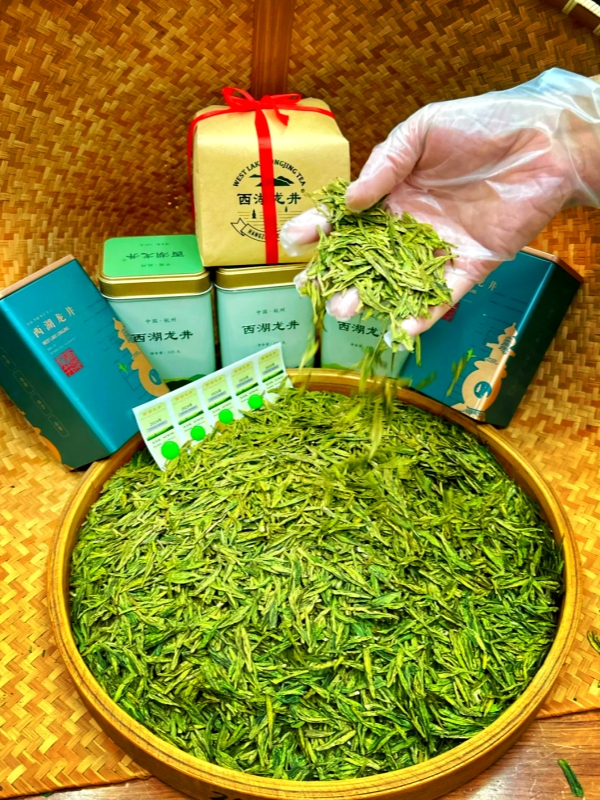
Tea is the single most reliable purchase in China. Longjing (Dragon Well) from Hangzhou and Pu-erh from Yunnan both carry distinct regional identities that justify buying them at source. A genuine 250g bag of named-origin Longjing costs about $14–$42 (¥100–300) at Maliandao Tea Street in Beijing or the Hangzhou tea markets. Aged Pu-erh blocks run $42–$84 (¥300–600) for a 357g cake of reasonable vintage. Yixing Zisha teapots — the clay pots prized by serious tea drinkers — start around $28 (¥200) for a small entry-level piece and reach $140 (¥1,000) for a hand-crafted single pot. The short version: smell the dry leaf before buying, look for whole intact leaves rather than dust or broken pieces, and ask for a sample brew.
- Longjing (Dragon Well): $14–$42 (¥100–300) per 250g; buy at Maliandao Tea Street (Beijing) or Hangzhou tea markets
- Pu-erh cakes: $42–$84 (¥300–600) per 357g cake; source from Yunnan specialty shops or Hangzhou export counters
- Yixing Zisha teapot: $28–$140 (¥200–1,000); small entry-level to hand-crafted single pot
- Tea set bundle: $42–$140 (¥300–1,000) for a complete gaiwan, cup set, and公道杯 (fairness pitcher)
Silk, Embroidery & Scarves
Things to Buy While in China
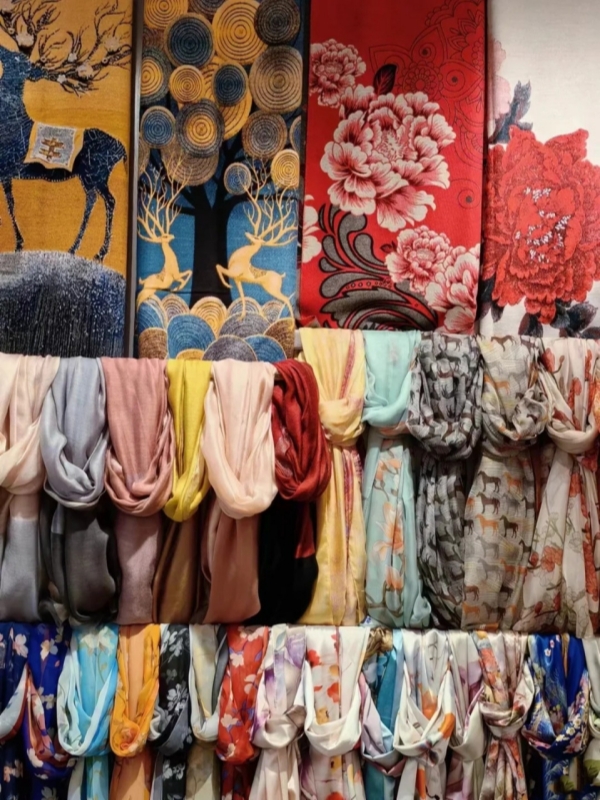
China produces roughly 60% of the world's raw silk, and Suzhou and Hangzhou have been central to that supply chain for centuries. A plain-woven silk scarf with hand-rolled edges runs $14–$42 (¥100–300) at the Suzhou Silk Museum shop or Hangzhou's He Fang Street market. A sample qipao (cheongsam) in silk with embroidery — not made-to-measure, but a properly fitted off-the-rack piece — costs $70–$280 (¥500–2,000). The key authenticity marker is the Silk Mark label, a woven tag that reputable vendors attach to finished goods. Without it, assume the fibre is a silk-cotton blend at best.
- Silk scarf, hand-rolled: $14–$42 (¥100–300); Suzhou Silk Museum shop or Hangzhou He Fang Street
- Silk qipao sample: $70–$280 (¥500–2,000); Hangzhou Silk Market (off-the-rack, not made-to-measure)
- Embroidery panel (Suzhou style): $28–$70 (¥200–500); Suzhou Silk Museum or craft shops on Pingyao old street
- Silk Mark label: look for this on any scarf or garment priced above $14 — the absence is a red flag
⛩️ Pick Up Capital Specialty Goods: If your travels take you through Beijing, explore top traditional markets and authentic keepsakes in our guide to Things to Buy in Beijing.
Porcelain, Ceramics & Pottery
Things to Buy While in China
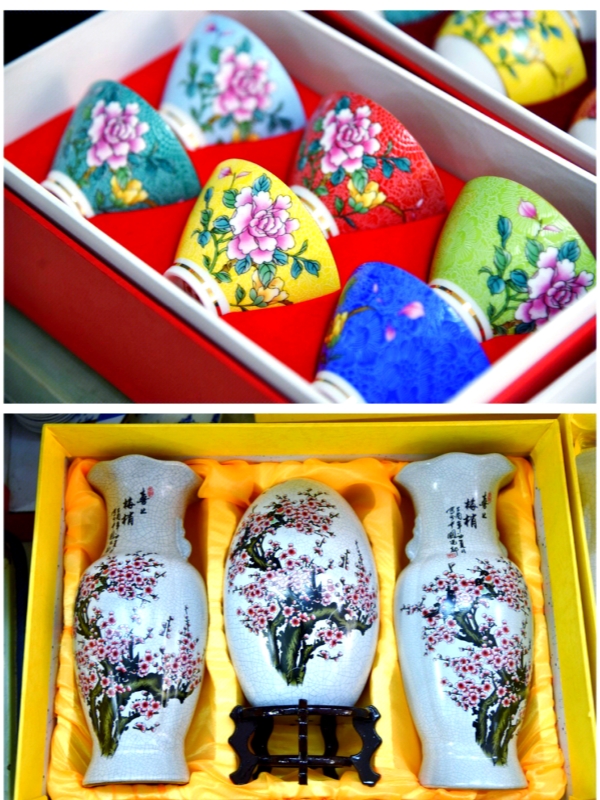
Jingdezhen in Jiangxi province is the porcelain capital of the world. The city has operated imperial kilns since the Song dynasty, and its markets are open to visitors year-round. A small teacup or bowl in traditional blue-and-white costs $7–$28 (¥50–200). A mid-range decorative piece with hand-painted motifs runs $28–$140 (¥200–1,000). A collector-grade vase with kiln marks and provenance documentation reaches $140–$700 (¥1,000–5,000). Beijing's Panjiayuan antique market and Shanghai's Fuzhou Road also carry ceramics, though the selection skews toward reproductions rather than kiln-certified pieces. For anything priced above $140, ask for a certificate of authenticity and a written provenance note.
- Jingdezhen teacup, blue-and-white: $7–$28 (¥50–200); Jingdezhen porcelain markets or Panjiayuan (Beijing)
- Decorative bowl with painted motif: $28–$140 (¥200–1,000); Jingdezhen markets, Shanghai Fuzhou Road
- Collector vase with certificate: $140–$700 (¥1,000–5,000); Jingdezhen factory shops or reputable dealers with export paperwork
- Packability note: wrap in clothing; most markets offer foam packing for about $1–$3 (¥10–20)
Jade and Jewelry
Things to Buy While in China
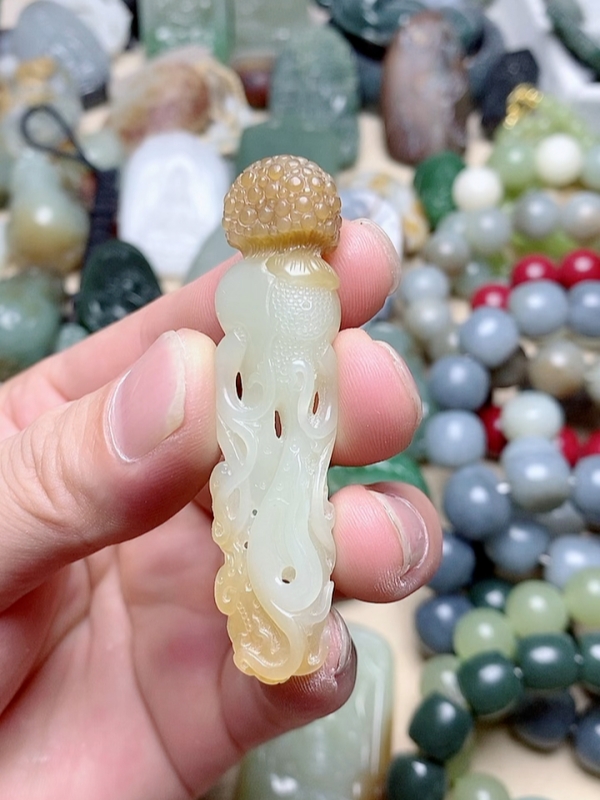
Hetian jade from Xinjiang — white or green nephrite — is the most prized variety. A simple polished bangle starts around $70 (¥500). A carved pendant with decent translucency runs $140–$420 (¥1,000–3,000). Pieces priced below $70 tend to be treated stone or resin composites. If a street vendor in a tourist area offers a "jade" bracelet for $14, it is costume jewelry. Buy jade at established venues such as Hongqiao Market in Beijing or Yuyuan Bazaar in Shanghai, and ask for a written certificate if spending above $140. Treated jade (bleached, dyed, or polymer-infused) is legal to sell but must be disclosed at the point of sale — reputable dealers will state it clearly.
- Hetian jade bangle, simple polish: $70–$140 (¥500–1,000); Hongqiao Market (Beijing) or Yuyuan Bazaar (Shanghai)
- Carved jade pendant, decent translucency: $140–$420 (¥1,000–3,000); reputable dealers with certificates
- Sub-$70 "jade": treat as costume — the price signals the material
- Authenticity: ask for a written certificate above $140; reputable dealers provide one without being asked
Calligraphy, Fans & Paper Crafts
Things to Buy While in China
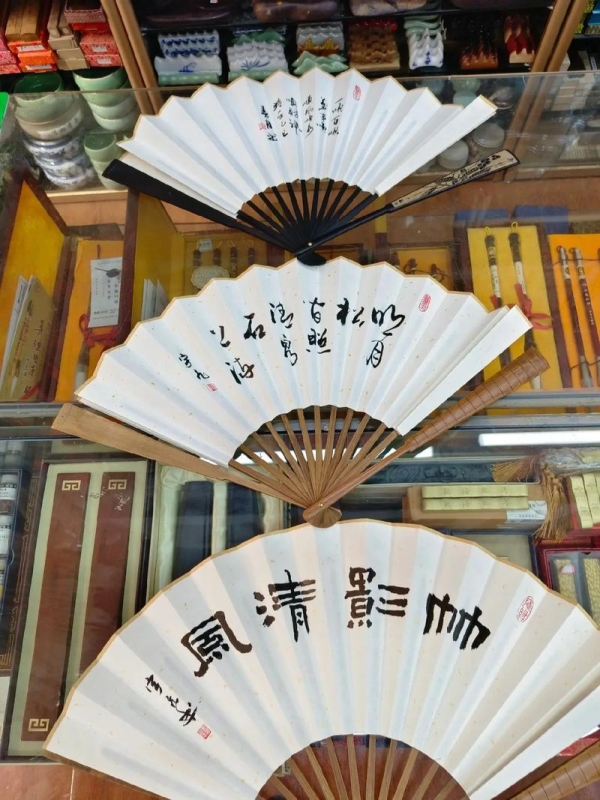
Calligraphy scrolls, hand-painted folding fans, and paper-cut art make lightweight, carry-on-friendly souvenirs. A mounted calligraphy scroll with a standard inscription runs $14–$42 (¥100–300) at Panjiayuan Market in Beijing. Handwritten custom pieces cost $42–$70 (¥300–500) depending on length and calligrapher. Folding fans with painted bamboo and paper range $3–$14 (¥20–100). Paper-cut art in a protective sleeve starts under $7 (¥50). Shanghai's Fuzhou Road has a cluster of established calligraphy shops alongside the antique dealers. Rolled scrolls travel better than framed pieces — pack them in the middle of a suitcase surrounded by clothing.
- Mounted calligraphy scroll, standard inscription: $14–$42 (¥100–300); Panjiayuan Market (Beijing) or Fuzhou Road (Shanghai)
- Custom written scroll: $42–$70 (¥300–500); allow 1–2 days for the calligrapher
- Painted folding fan: $3–$14 (¥20–100); Panjiayuan, Fuzhou Road, most tourist markets
- Paper-cut art: under $7 (¥50) for a small framed piece; paper-cut bookmarks $1–$3 (¥10–20)
🏙️ Shop Shanghai's Unique Gifts: Discover local specialty products, traditional skincare brands, and memorable keepsakes from East China's retail capital in our guide to the Best Things to Buy in Shanghai.
Beauty, Skincare & Chinese Fashion
China is simultaneously the world's largest cosmetics factory and a fast-growing origin market for skincare brands that are now competitive globally. Prices for local C-beauty brands and China-manufactured international labels sit 30–60% below overseas retail, and the range is wide enough to cover both heritage-style lipsticks and factory-direct skincare tools.
C-Beauty & Heritage Skincare
Things to Buy While in China
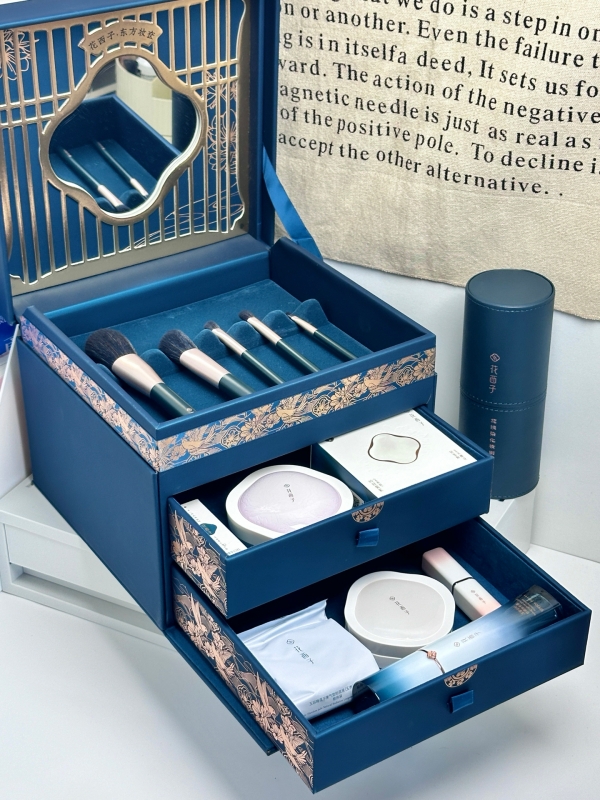
The most internationally recognized C-beauty brand is Florasis (Huaxizi), which positions itself as a heritage cosmetics house — its lipsticks and eye-shadow palettes retail $14–$56 (¥100–400). The packaging draws on Song dynasty aesthetics, and the formulas are designed for deeper skin tones. Herborist and Proya are the main herbal skincare lines, with serums and moisturizers in the $14–$42 (¥100–300) range. SK-II's Facial Treatment Essence is manufactured in China — a 230ml bottle costs about $185–$210 (¥1,300–1,500) in Shanghai or Beijing, compared with $280 or more in the United States. Estée Lauder and Lancôme are also produced domestically at lower retail prices than their overseas counterparts.
- Florasis (Huaxizi) lipstick / palette: $14–$56 (¥100–400); Tmall flagship stores, departure-area DFS shops
- Herborist / Proya serum: $14–$42 (¥100–300); Herborist counters in major malls, Proya Tmall flagship
- SK-II Facial Treatment Essence 230ml: $185–$210 (¥1,300–1,500); duty-free shops in Shanghai and Beijing airports, major mall counters
- Estée Lauder / Lancôme (China-made): 20–30% below US retail; purchase at designated duty-free stores
🎁 Get the Ultimate Gift Guide: From silk and tea to hand-carved jade and regional artwork, explore top keepsake ideas and buying tips in our guide to the Top 24 China Souvenirs to Buy.
Makeup, Tools & Spa Buys
Things to Buy While in China
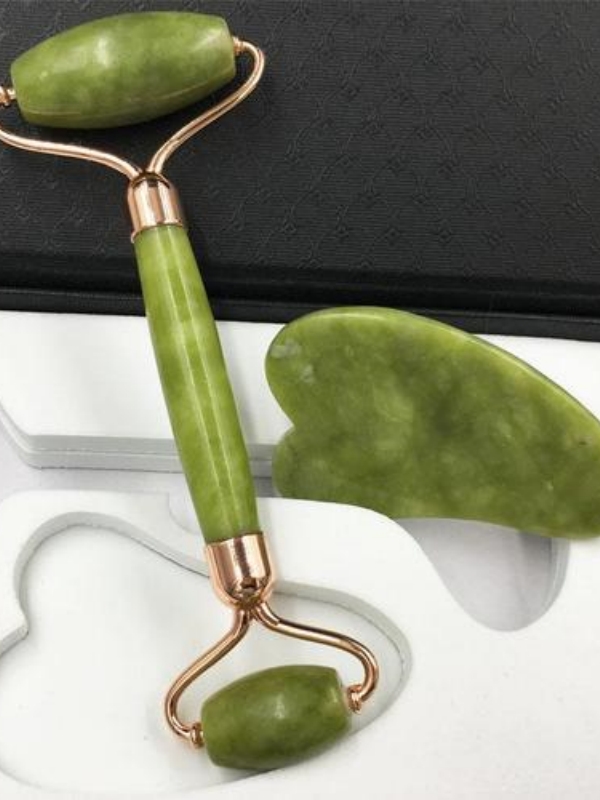
Jade rollers and gua sha tools have become global skincare staples, and China is where they originate at factory prices. A polished jade roller and matching gua sha board as a set costs $3–$14 (¥20–100) at markets in Guangzhou or Shenzhen. Radio-frequency tools from the same Shenzhen supply chain that services global brands retail $28–$140 (¥200–1,000) for a TriPollar-style home device — about half the US retail price of the equivalent branded model. Sheet mask multi-packs are one of the easiest carry-on buys: a 10-pack of named-brand hydrating or brightening masks runs $7–$21 (¥50–150).
- Jade roller + gua sha set: $3–$14 (¥20–100); Shenzhen and Guangzhou markets, Taobao via agent
- RF home device (Shenzhen supply chain equivalent): $28–$140 (¥200–1,000); check compatibility with home voltage before purchase
- Sheet mask 10-pack: $7–$21 (¥50–150); My Beauty Diary, Mediheal, and other named brands at pharmacy chains and Tmall
- Mini portable fan / handheld steamer: $3–$7 (¥20–50); Miniso, Xiaomi ecosystem stores
Chinese Sneakers & Streetwear
Things to Buy While in China
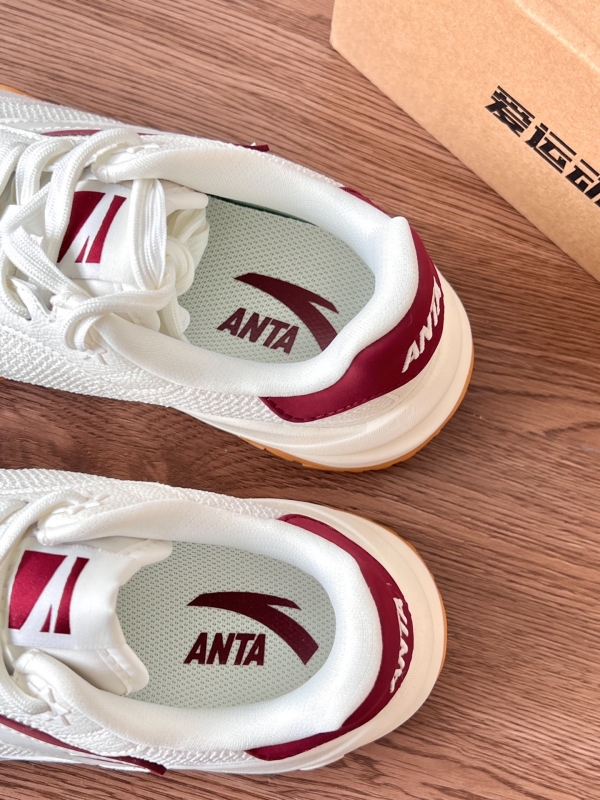
Li-Ning, Anta, and a cluster of domestic basketball and running brands are priced well below comparable Nike or Adidas models in China. Li-Ning's WADE signature line and the "Xin Hua" retro basketball shoe retail $55–$140 (¥399–999). Anta's Klay Thompson (KT) line and standard basketball and running models sit $42–$140 (¥299–999). Warrior (Hongdou), 361°, and Peak serve the budget end under $42 (¥299). The hard rule: China-made Nike and Adidas shoes are not cheaper in China. They cost roughly the same as at home, and the selection of exclusive China colorways is shrinking as global pricing converges.
- Li-Ning WADE / Xin Hua retro: $55–$140 (¥399–999); Li-Ning flagship stores, Taikoo Li and MixC counters
- Anta KT / Anta running: $42–$140 (¥299–999); Anta stores in major malls, JD.com for range
- Warrior / 361° / Peak budget runner: under $42 (¥299); sports markets, JD.com
- Skip China-made Nike / Adidas: priced the same as at home; exclusive colorways are harder to find
👗 Discover Wholesale Markets & Fashion Hubs: If you are visiting South China, Guangzhou offers massive apparel markets, traditional tea markets, and historic commercial streets. Plan your shopping trip with our guide to Shopping in Guangzhou.
Tech & Gadgets Worth Buying
Chinese electronics brands dominate the global consumer-drone and smartphone market, and domestic retail prices reflect that factory proximity. Visitors familiar with flagship specs can reliably save 25–45% compared with home-country pricing on the items in this section.
Smartphones — Xiaomi vs Huawei
Things to Buy While in China
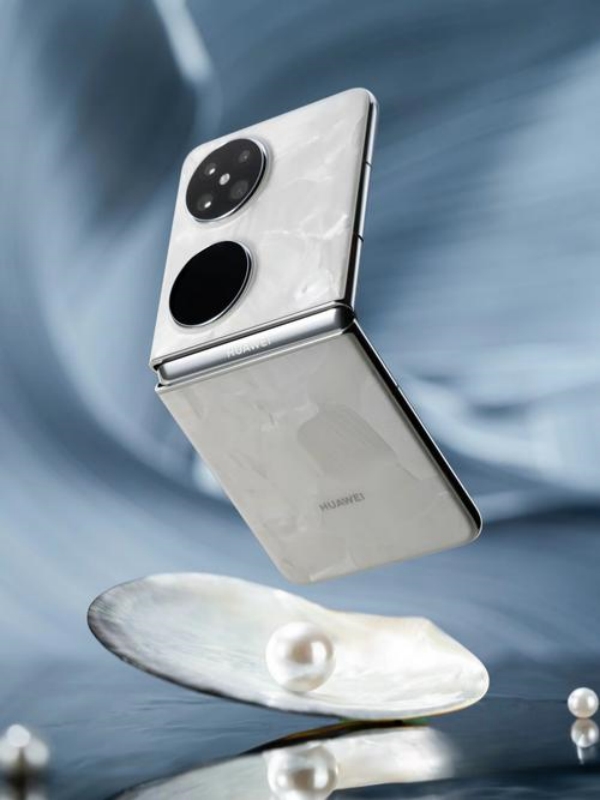
Xiaomi and Huawei occupy different ends of the Android market in China. Xiaomi leans toward performance-to-price value; Huawei invests heavily in camera hardware and proprietary HarmonyOS. Both brands ship Chinese-market builds without Google Mobile Services — this is the key practical issue for visitors who rely on Google Maps or Gmail. Check the specific SKU before purchase and confirm whether Google services can be installed on that build.
Drones, Cameras & Action Cams
Things to Buy While in China
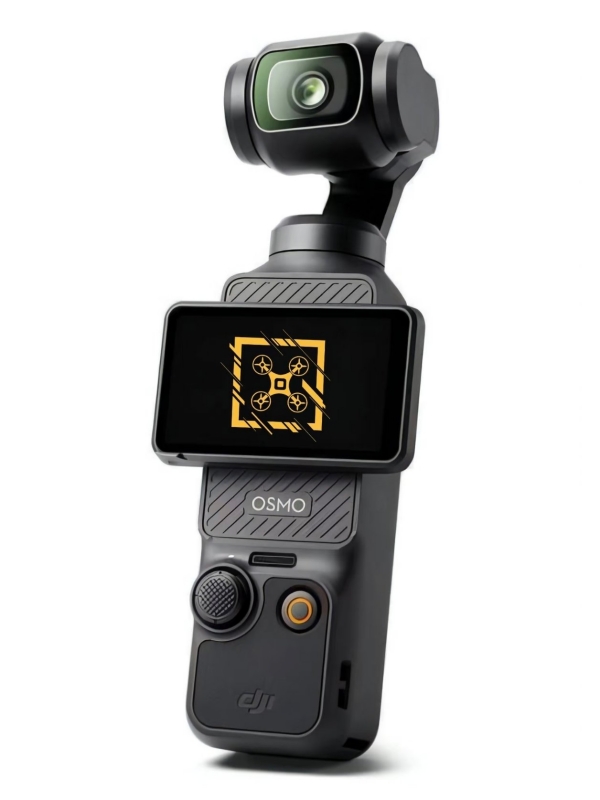
DJI, the world's leading consumer drone maker, is a Chinese company selling at domestic prices. The DJI Mini 4 Pro — a sub-250g camera drone with 4K/60fps — retails $420–$760 (¥3,000–5,400) depending on bundle and retailer. The DJI Osmo Pocket 3, a stabilized 1-inch sensor camera, runs $420–$520 (¥3,000–3,700). Insta360's X4 360-degree action camera retails $420 (¥2,998). GoPro, also manufactured in China, tends to be cheaper in the United States and Europe due to regional pricing and promotional cycles — buy GoPro at home instead.
- DJI Mini 4 Pro (sub-250g): $420–$760 (¥3,000–5,400); DJI stores, JD.com, Shenzhen electronics markets
- DJI Osmo Pocket 3: $420–$520 (¥3,000–3,700); DJI stores, electronics retailers
- Insta360 X4: $420 (¥2,998); Insta360 flagship stores, JD.com
- Skip GoPro: same price or more expensive in China; buy in the US or Europe
Power Banks, Earbuds & Accessories
Things to Buy While in China
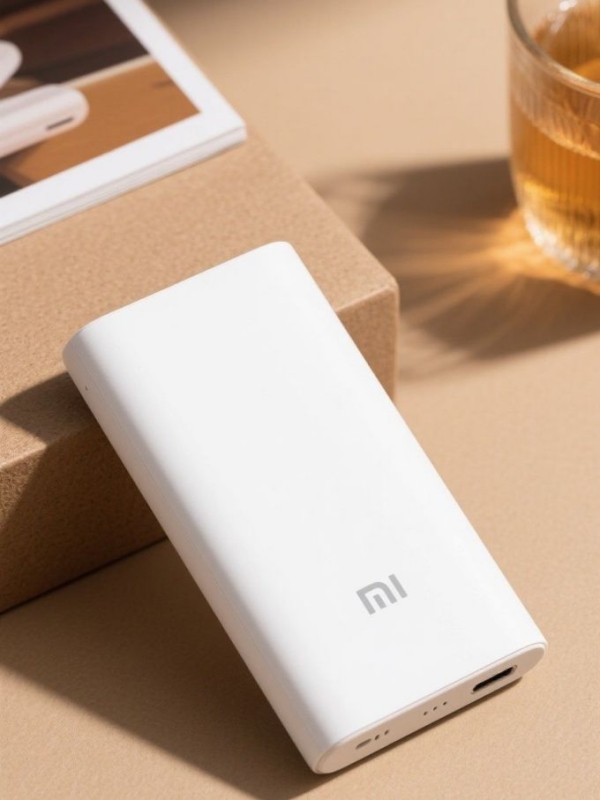
Xiaomi's ecosystem of accessories sets the benchmark for price-to-performance in this category. A 20,000 mAh power bank with dual USB-C ports retails $14–$21 (¥99–149) — roughly a third of the Anker equivalent's price in other markets. Redmi Buds (the budget Xiaomi audio line) cost around $14 (¥99) for a basic true-wireless pair with active noise cancellation on the mid-range model. Anker and Baseus both have strong presence in Chinese malls at comparable or lower prices than their international listings.
- Xiaomi 20,000 mAh power bank, dual USB-C: $14–$21 (¥99–149); Xiaomi stores, JD.com
- Redmi Buds 6 ANC: $14–$21 (¥99–149); Xiaomi stores, Tmall flagship
- Anker / Baseus accessory bundle: $7–$28 (¥49–199); electronics malls, JD.com
- Magnetic phone mount (car): $3–$7 (¥20–50); Miniso, Xiaomi ecosystem stores
Stationery, Miniso & Fun Gadgets
Things to Buy While in China
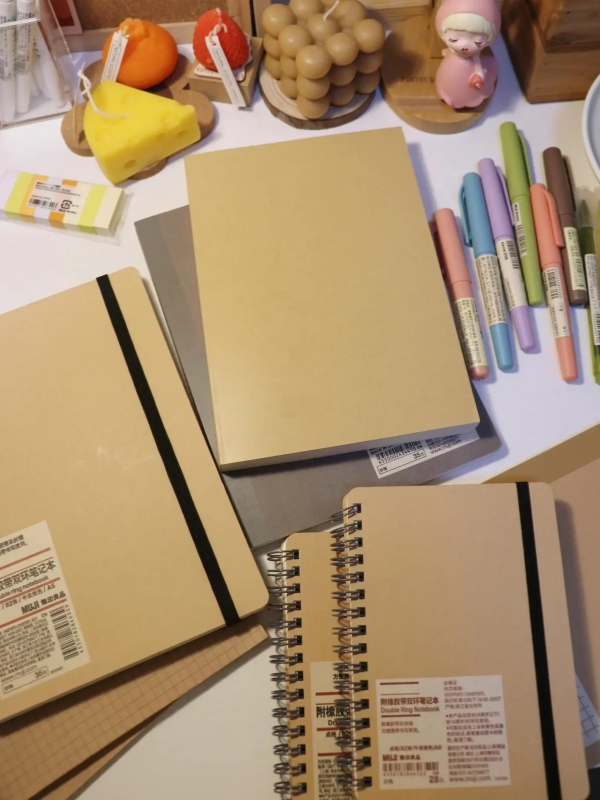
Stationery and small lifestyle gadgets are the easiest category for last-minute souvenir buys — everything fits in a carry-on, nothing requires authentication, and the price point is low enough that a wrong decision costs under $14. Miniso's themed stores carry character-collaboration items (cute stationery, phone accessories, small organizers) priced $1–$7 (¥10–50). Muji's minimalist notebooks and travel organizers are priced at roughly 40–50% of their overseas retail, making them reliable mid-range gifts. Mini portable fans, foldable chopstick sets, and reusable water bottles with Chinese motifs round out the sub-$14 range.
- Muji notebook / travel organizer: $7–$14 (¥50–100); Muji stores in major malls
- Miniso character stationery bundle: $1–$7 (¥10–50); Miniso stores nationwide
- Mini portable fan / chopstick set: $1–$7 (¥10–50); Miniso, Xiaomi stores, airport gift shops
- Key takeaway: this category is gift-friendly and luggage-friendly — buy at the airport on departure day
🛍️ Explore Southwest Commercial Hubs: From multi-level underground plazas to vibrant pedestrian streets lined with regional snacks and local crafts, discover top markets in our guide to Shopping in Chongqing.
What Things Cost in China — Price Breakdown
Savings in China are real but uneven. Some categories carry 50% discounts against overseas retail; others are priced the same or higher. The table below maps USD-first price ranges across the categories visitors buy most, so the decision becomes straightforward: pick the rows where entry-level beats home-country mid-range, and skip the rows where the numbers don't add up.
Price Ranges by Category
Where the Savings Come From
The price gaps are structural, not accidental. Four main factors drive lower retail prices in China for domestic goods.
- No layered retail sales tax: China levies VAT which is embedded in shelf prices; what visitors see is what they pay, with a portion refundable at departure for non-residents.
- Domestic distribution: Chinese-brand goods sold within China bypass international shipping, import duties, and multi-tier distributor margins that inflate prices in overseas markets.
- Factory-adjacent retail: Shenzhen and Yiwu function as factory-direct and wholesale hubs. Electronics from Shenzhen and consumer goods from Yiwu's wholesale market sit one step from the production line.
- Grey-market parallel imports: some electronics (DJI, Xiaomi accessories) enter China through channels that avoid standard distributor margins, keeping domestic retail below the brand's recommended international pricing.
Items to Skip Buying in China
Four categories commonly fool visitors into believing they are getting a deal.
- Apple iPhones: priced the same or higher than in the US and Europe; regional pricing has largely closed the gap, and Chinese warranty does not cover foreign-purchased devices.
- Luxury European watches and bags: global luxury brands maintain MSRP pricing worldwide; tourist-mall versions of "Rolex" or "Gucci" are almost always counterfeits.
- Foreign-brand cosmetics in tourist malls: SK-II and Estée Lauder at designated duty-free shops are worth buying; the same brands sold at hotel-mall counters with inflated "tourist prices" are not.
- "Antiques" without export paperwork: any piece claiming to be an antique — porcelain, jade, calligraphy — sold without official export documentation cannot legally leave China as an antique; treat it as a reproduction.
Shopping Online as a Foreigner in China
Taobao, JD, Tmall, and 1688 are usable by visitors with the right setup. The platforms themselves are not restricted to Chinese nationals, but payment, address verification, and language require a specific configuration that most visitors don't know about before arrival. Getting those three things right unlocks a broader range of goods — often at better prices than the physical markets.
Taobao for Tourists
Taobao is the largest consumer-to-consumer marketplace in the world. Foreign visitors can access it by following a specific setup sequence.
- Data connectivity: install a China-compatible eSIM (Airalo, Nomad) or purchase a local prepaid SIM before arriving — Taobao's interface and CAPTCHA require a mainland IP for account registration.
- Payment: link an international Visa or Mastercard to Alipay through the "Tour Pass" function, or use the Alipay international app with a foreign card; both methods work for purchases without a Chinese bank account.
- Language: toggle the Taobao app or desktop site to English via the settings menu — the interface defaults to Chinese but the English mode covers enough for search and checkout.
- Address and shipping: use a package-forwarding service such as Superbuy, CSSBuy, or PandaBuy as your shipping address — these agents receive parcels at a Chinese warehouse, consolidate them, and ship internationally.
- Common basket items: Li-Ning and Anta sneakers (many China-exclusive colorways), Muji and Miniso stationery bundles, electronics accessories, and homewares that are difficult to find in physical markets.
JD, Tmall & 1688 Compared
The three platforms serve different buyer profiles. Choose based on what you are buying and whether you have an agent set up.
- JD.com: authentic electronics with the fastest domestic delivery; reliable for Xiaomi phones, DJI accessories, and Anker products; some English interface support; most major stores ship to Superbuy-type agents.
- Tmall: brand flagship stores with the most English-friendly interface; best for Florasis, Proya, and skincare brands where authenticity is a concern; most Tmall flagship stores ship internationally through their own channels at checkout.
- 1688.com: wholesale and factory-pricing platform; prices run 30–50% below Taobao on identical goods; requires a Taobao account to log in and almost always requires a forwarding agent for international shipping; best for bulk buys (multiple sneakers, multiple gadgets).
Shipping, Customs & Returns
International shipping adds a layer of cost and complexity that changes the buy-or-skip calculation. The numbers matter: air shipping from a Chinese agent to most Asian destinations runs $3–$7 (¥20–50) per kilogram; to the US or Europe the rate is $14–$28 (¥100–200) per kilogram. Bundle multiple items into one shipment to spread the per-kilogram cost across higher value goods. Customs duty applies to electronics and goods above the de minimis threshold — for the US the limit is $800 per person per day; for the EU it varies by category. Most agents offer a de minimis calculation at the time of shipment. A critical practical point: goods shipped internationally from China are generally non-returnable once dispatched. Confirm the item is correct before authorizing the forwarder's shipment.
- Air shipping to Asia: $3–$7 (¥20–50) per kg; 7–10 days transit
- Air shipping to US / Europe: $14–$28 (¥100–200) per kg; 10–14 days transit
- De minimis: check current threshold for your home country before ordering high-value electronics
- Returns: no returns once shipped internationally; confirm specs, voltage compatibility, and language version before shipping
- Recommended bundle: group 2–3 items per shipment to spread the per-kilogram cost
Where to Shop & Practical Tips
The physical shopping map in China runs from high-end mall counters to open-air street markets, and the rules of engagement differ sharply between them. Knowing which venue uses which rule set prevents overpaying in a department store or getting duped in a market.
Famous Markets and Streets
Five destinations cover most visitor shopping itineraries, each with a distinct specialty.
- Wangfujing (Beijing): Beijing's premier shopping street; teahouses, silk counters, and a broad mix of mainstream retail; fixed-price stores on the main drag, open-air snack street at the southern end
- Nanjing Road (Shanghai): Shanghai's main pedestrian shopping artery; international brands, Chinese cosmetics counters, and electronics stores; prices tend to be at retail MSRP — not the place to bargain
- Chunxi Road (Chengdu): Chengdu's upscale shopping district; good for C-beauty brands, silk shops, and tea retailers catering to tourists; more relaxed pricing than Beijing or Shanghai
- Panjiayuan Antiques Market (Beijing): the largest antiques and crafts market in Asia; calligraphy scrolls, porcelain reproductions, jade jewelry, and paper-cut art; bargaining is expected and starts at 40–60% below the opening ask
- Yuyuan Bazaar (Shanghai): a covered market adjacent to the classical garden; jade, silk, tea sets, and souvenirs; tourist-facing but with better quality control than unmarked street stalls; confirm authenticity certificates before spending above $70
Malls and Department Stores
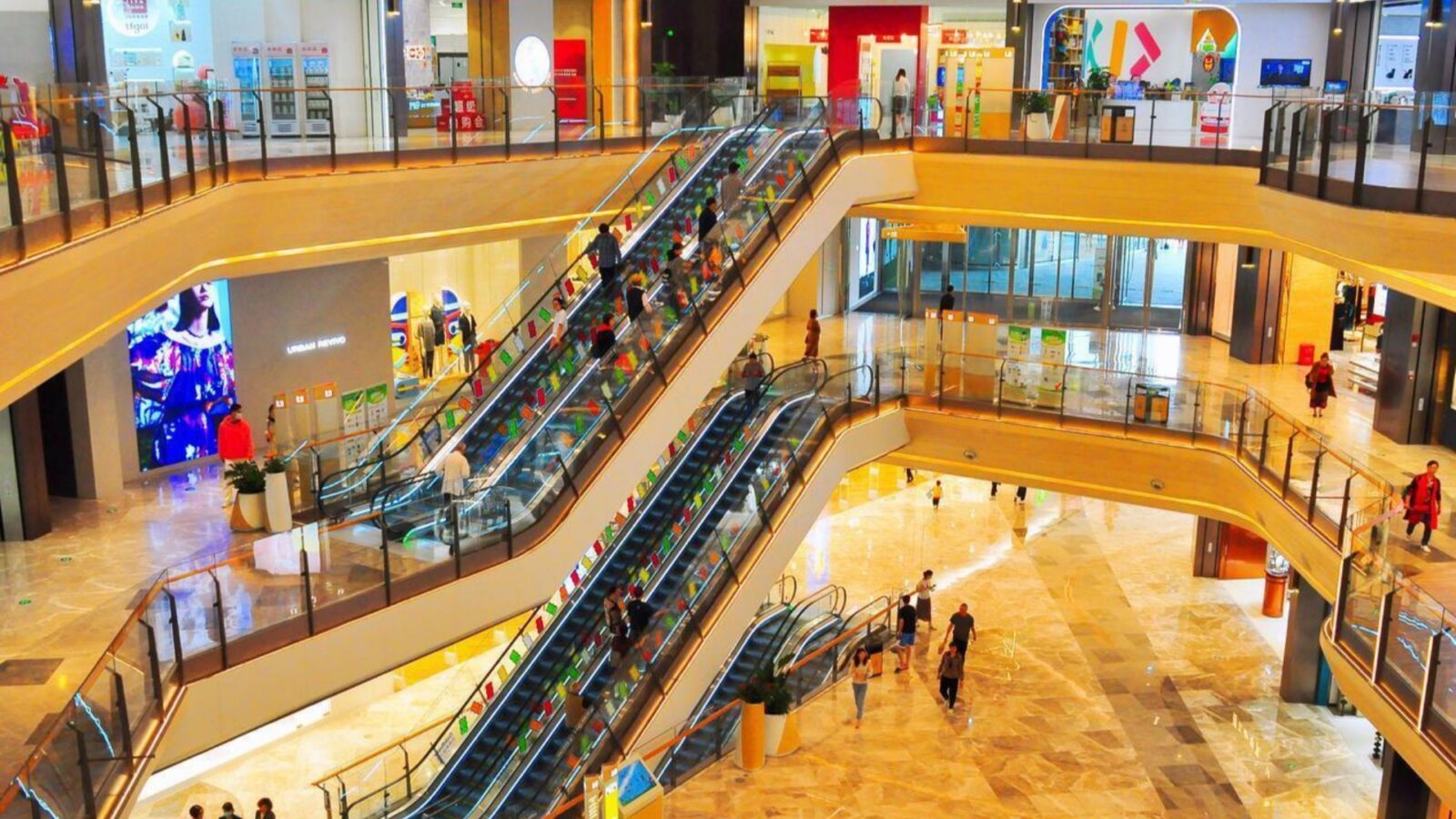
Major malls offer fixed prices, foreign-card payment terminals, and tax-refund services in a single visit. They are the most convenient option for visitors with limited time.
- Taikoo Li (Beijing / Chengdu): mixed-use retail developments with brand flagship stores, C-beauty counters, and tea-house concessions; tax-refund service available at participating stores
- IFC Mall (Shanghai): high-end international and domestic brands; SK-II, Florasis, and Proya counters with English-speaking staff; payment via foreign card accepted
- The MixC (nationwide): one of the largest domestic mall chains; strong Li-Ning and Anta sports sections, electronics counters, and silk boutiques; MixC stores in most major cities
Bargaining, Payment & Tax Refund
The practical rules vary by venue type. Understanding the difference before you start negotiating saves face and saves money.
- Bargaining: expected in open markets (Panjiayuan, Yuyuan Bazaar, street stalls) — open at 30–40% of the asking price and meet somewhere between 50–65%; fixed in malls, department stores, and brand flagship stores — never bargain at these venues
- Alipay / WeChat Pay: the default payment method for every urban retailer; set up via the international version of each app with a foreign card, or use Alipay Tour Pass
- Foreign Visa / Mastercard via POS: now accepted at most major chain stores, malls, and brand counters; still unreliable at street stalls and small vendors — carry RMB cash for those
- Tax refund steps: purchase at a designated Tax Free Shopping store — look for the退税标志; spend a minimum ¥500 in a single store on the same day; ask the cashier for the Tax Free Shopping form and a receipt; present the form, receipt, passport, and unused goods at the airport tax refund counter before checking in; the effective refund rate is approximately 11%
Spotting Fakes & Customs Rules
Five categories attract the most counterfeit activity in tourist-facing markets. Four rules cover the customs side.
- Jade: below $70 (¥500) for a bangle or pendant — treat as treated stone or resin; buy at established venues with certificates above that price
- Silk: Silk Mark label is mandatory on genuine silk goods; a vendor who cannot produce it is selling a blend or synthetic
- Tea: smell before buying; fakes use pressed sawdust or flavouring; named-origin Longjing and Pu-erh should have a producer's name on the packaging
- Sneakers: domestic brands (Li-Ning, Anta) fakes exist but are less common than counterfeit international brands; buy from brand stores or authorized resellers
- Tea sets / porcelain: "antique" markings on low-priced items are a red flag; ask for kiln marks or provenance documentation
- Exporting jade and porcelain: pieces above a certain age (determined by official appraisal) require an export permit; without it, customs may confiscate the item at departure
- Bringing goods into your home country: check current de minimis threshold and duty rates for electronics, cosmetics, and food items before purchasing
- Food and medicine: packaged food for personal use is generally fine; traditional Chinese medicines with plant or animal ingredients may be restricted or prohibited by your destination country's import rules — check before buying
- Keep all receipts: receipts serve as proof of purchase for customs and for tax refund claims; a photo on your phone is sufficient backup
Frequently Asked Questions
Q: What are the best things to buy while in China?
The strongest value categories are Chinese tea (Longjing and Pu-erh), Jingdezhen porcelain, Suzhou or Hangzhou silk, DJI drones, Li-Ning sneakers, SK-II and Florasis skincare, and Hetian jade purchased from established dealers with certificates. These items either carry significant savings against overseas retail or are simply better sourced at origin.
Q: Are things actually cheaper to buy while in China for tourists?
Yes for Chinese-brand goods: tea, silk, porcelain, jade, smartphones, drones, C-beauty brands, and domestic sportswear consistently price below overseas retail. No for Apple iPhones, European luxury goods, and foreign-brand cosmetics sold at tourist-mall counters — those are not meaningfully cheaper and may carry counterfeit risk.
Q: Can a foreigner use Taobao without a Chinese phone number?
Yes. Set up Alipay Tour Pass or link an international Visa/Mastercard to a standard Alipay account, install a China-compatible eSIM for the IP address requirement, toggle the interface to English, and use a package-forwarding agent (Superbuy, CSSBuy, or PandaBuy) as your delivery address. This combination removes all three barriers for foreign visitors.
Q: How do I pay in Chinese shops?
Alipay and WeChat Pay cover almost every urban retailer. Set up the international version of either app with a foreign card before arrival, or use Alipay Tour Pass for a streamlined tourist account. Foreign Visa and Mastercard via POS now work at most malls, brand stores, and large chains. Cash in RMB remains necessary at small street stalls, some markets, and rural vendors.
Q: Can tourists get a VAT refund in China?
Yes. Non-resident visitors can claim a VAT refund at designated Tax Free Shopping stores with a minimum single-store purchase of ¥500. Ask for the Tax Free Shopping form and keep the receipt. Present the form, your passport, and unused goods at the airport refund counter before checking in for your departure flight. The effective refund rate is approximately 11%.
Q: What should I avoid buying in China?
Anything claiming to be antique without official export paperwork. Moutai baijiu priced below $100 (likely counterfeit). Jade under $70 (treated stone or resin). Unbranded traditional medicines with undisclosed ingredients (import restrictions apply in most countries). Ivory or any product derived from protected animals (strictly illegal to export).
Q: What are good small souvenirs to bring home?
Tea sachets and miniPu-erh bricks ($3–$14), paper-cut bookmarks ($1–$3), panda keychains ($1–$7), folding fans ($3–$14), miniature porcelain cups ($7–$14), and Miniso or Muji notebooks ($3–$14). All fit in a carry-on bag, require no authentication, and cost under $14 each.
Q: Is it safe to buy jade, silk, or tea as a foreigner?
Safer at established venues than at unmarked tourist stalls. Buy silk at the Suzhou Silk Museum shop or Hangzhou Silk Market with a Silk Mark label. Buy tea at Maliandao Tea Street in Beijing or recognized Hangzhou tea houses. And Buy jade at Hongqiao Market or Yuyuan Bazaar with a written authenticity certificate for pieces above $140. At markets, ask for certificates and walk away from any vendor who cannot produce one for a priced jade or porcelain piece.