Shenzhen Railway Station
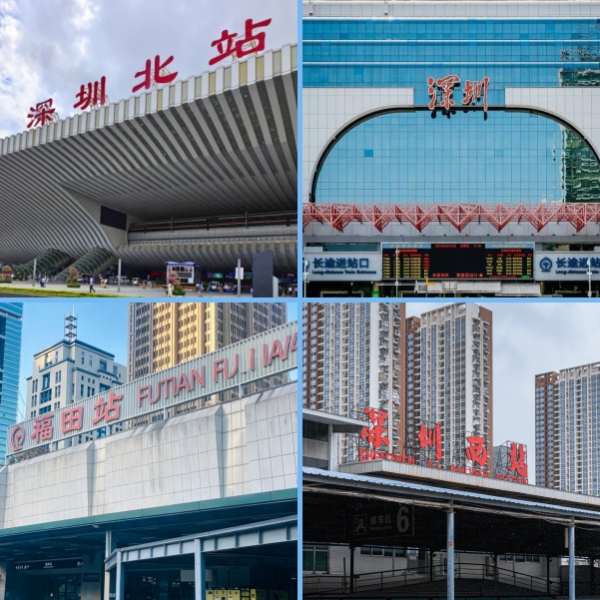
Step out at the wrong Shenzhen railway station and you’ve got a real problem — the city has more than six, in districts that can be 45 minutes apart by metro. For most foreign visitors three are all that count: Shenzhen North for bullet trains to Beijing, Shanghai, etc.; Futian, the destination of the new 14-minute high speed ride to Hong Kong; and Shenzhen Railway Station at Luohu for Guangzhou intercity trains and the Lo Wu border post. Here’s your guide to each shenzhen railway station, with practical details of location, metro access, ticket buying with a foreign passport, and the routes that really count.
Shenzhen's Main Train Stations at a Glance
Six main railway stations serve passengers in Shenzhen, and their English names are confusingly similar. The table below matches each shenzhen railway station to the route it covers — choosing the wrong one adds a 30-to-40-minute metro detour to your journey.
Three of the above handle almost all foreign traveler traffic. Shenzhen North is the city's primary shenzhen high speed rail hub — listed by Shenzhen Government Online as Shenzhen's largest and most comprehensive railway hub, it processes roughly 100 million passengers a year and connects to every major city in China. Futian, by contrast, serves almost exclusively the Guangzhou-Shenzhen-Hong Kong Express Rail Link, with trains reaching Hong Kong West Kowloon in 14 minutes and Guangzhou South in around 35. Shenzhen Railway Station at Luohu, meanwhile, is older and primarily operates intercity trains to Guangzhou East, but its real draw is location: it sits a two-minute walk from the Lo Wu border crossing into Hong Kong.
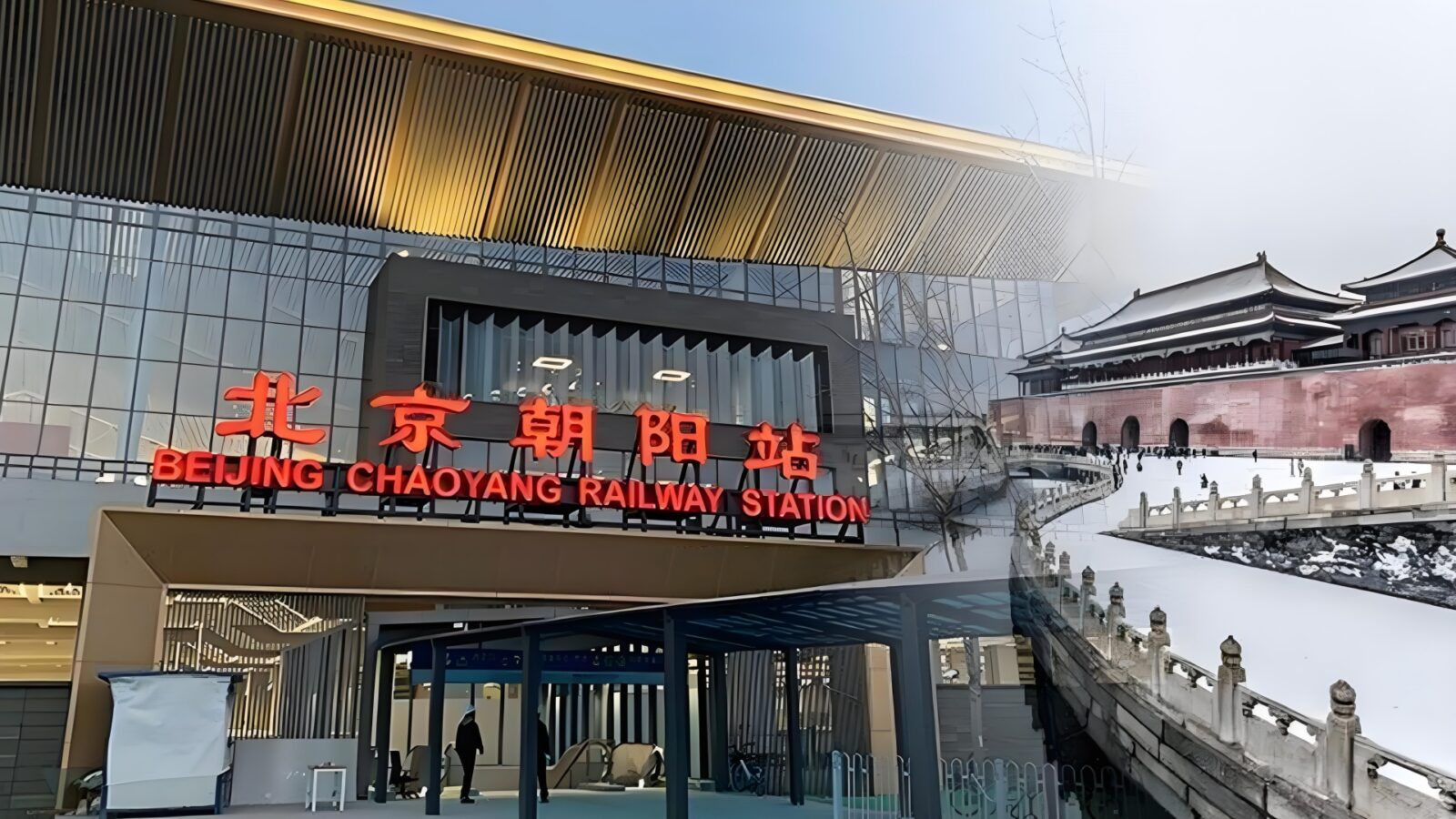
🚅 Navigating Beijing's Rail Hubs: If your high-speed train from Shenzhen connects through or arrives at the capital's modern northeastern rail terminal, check out our guide to Beijing Chaoyang Railway Station.
Shenzhen North Station
Location and Metro Access
-
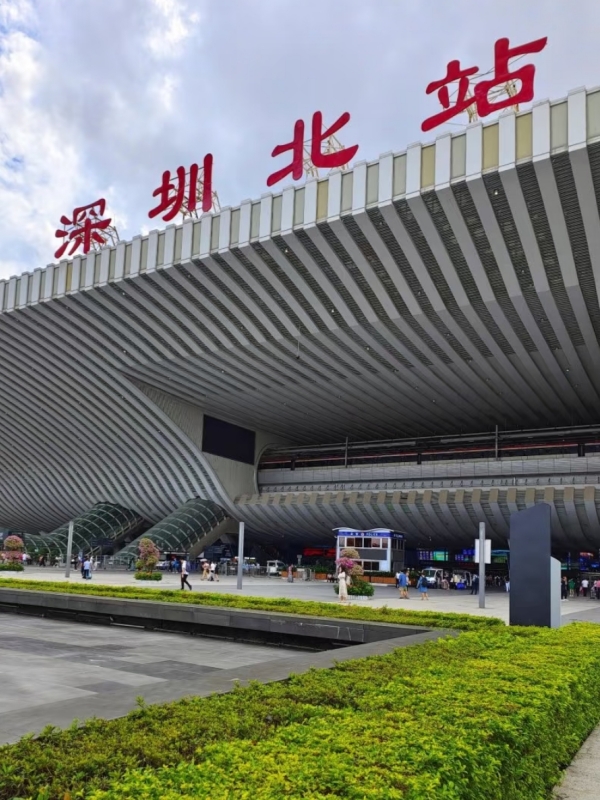

- Shenzhen North Station
-
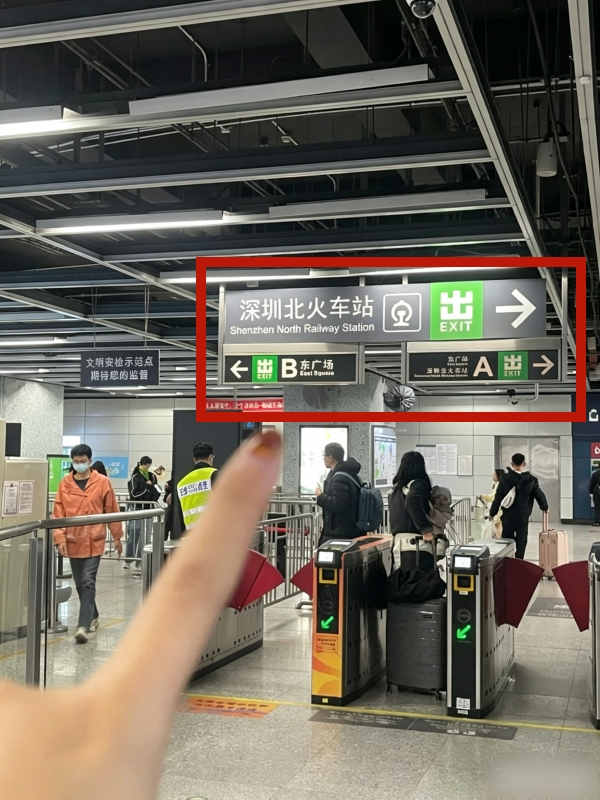
- Line 6 to Shenzhen North
Shenzhen North Railway Station (深圳北站) is located in Longhua District, around 9.3 km north of the city centre – but the subway ride from central Futian is just 15 minutes away, so the distance isn’t as far as it sounds. The full address is 28 Zhiyuan Middle Road, Minzhi Subdistrict, Longhua District (龙华区致远中路28号深圳北站).
Three metro lines converge here, and choosing the right one saves time:
- Line 4 (Longhua Line): The most useful for visitors. It runs directly through Futian's commercial core — stopping at Convention & Exhibition Center, Civic Center, and Lianhua North — before terminating at Shenzhen North. Exit A or B delivers you to the East Square; Exit C leads to the West Square and the long-distance bus terminal.
- Line 5 (Huanzhong Line): Loops through eastern and western districts. Useful if you're coming from OCT, Huaqiangbei, or Buji.
- Line 6 (Guangming Line): Runs northeast toward Science City and Guangming District — less relevant for most tourists.
By taxi or Didi, expect 25-35 minutes from the Futian area in normal traffic, and up to 50 minutes during morning rush hour. Taxis queue reliably at both the East and West squares around the clock.
High-Speed Trains and Destinations
-
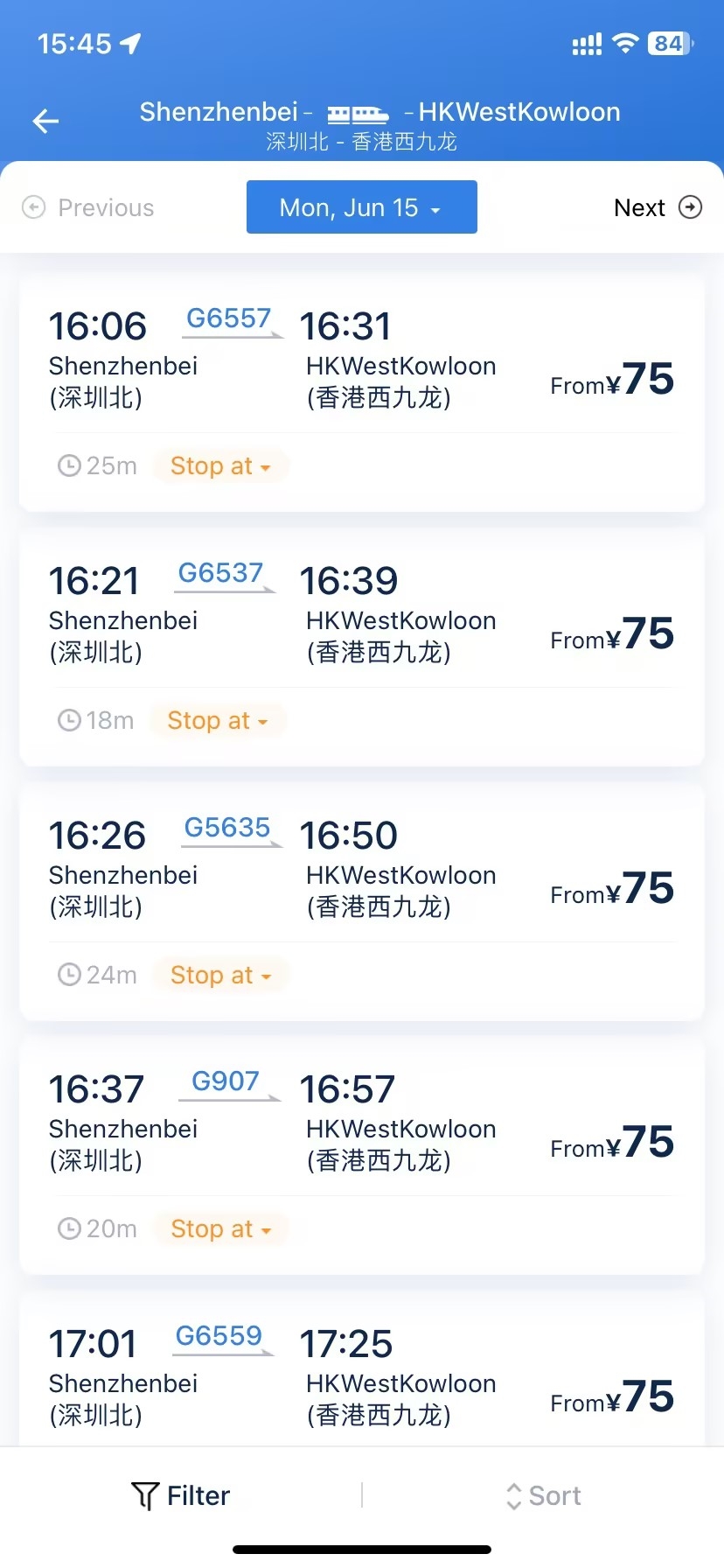

- Shenzhen North Station to Hongkong
-
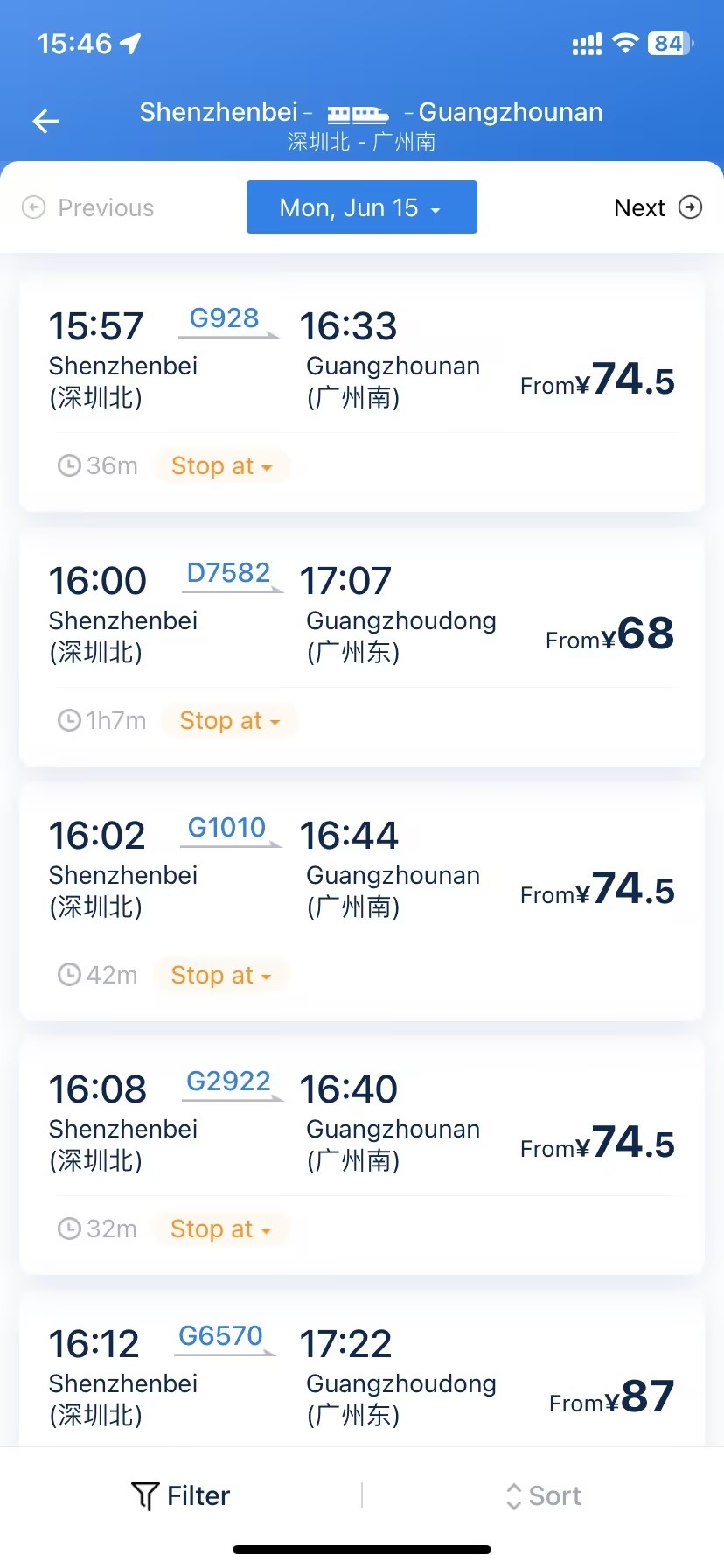
- Shenzhen North Station to Guangzhou
-
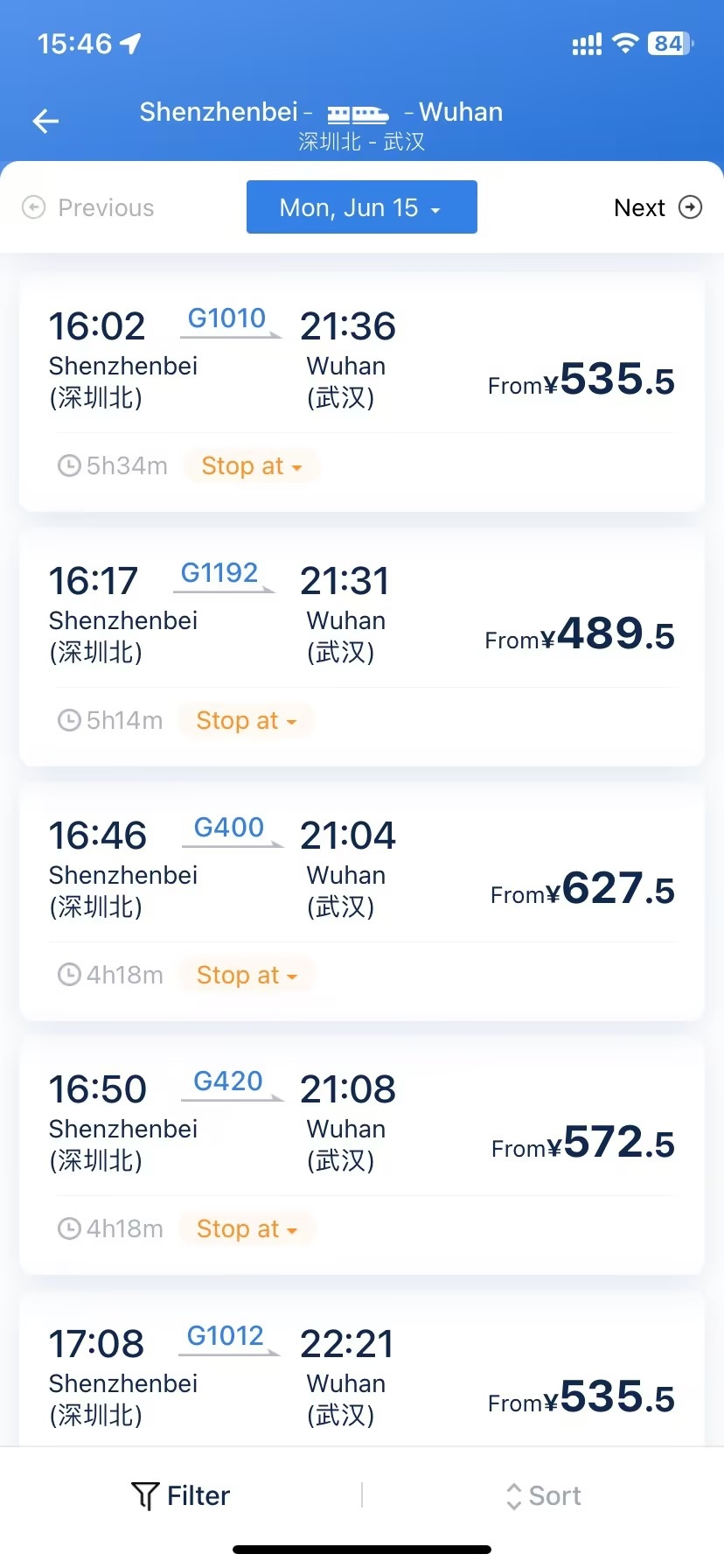
- Shenzhen North Station to Wuhan
Shenzhen North is the convergence point of Shenzhen's shenzhen high speed rail network in the south. Served by three major lines, the Guangzhou-Shenzhen-Hong Kong Express Rail Link, the Xiamen-Shenzhen Railway, and the Ganzhou-Shenzhen Railway, it is the only shenzhen railway station from which you could board a G-train to pretty much anywhere else in mainland China or Hong Kong.
Key routes and approximate journey times from Shenzhen North Railway Station:
The station operates over 700 high-speed train pairs daily under the current national schedule. Tickets to Hong Kong West Kowloon sell out fastest — booking at least three days ahead is advisable for weekend travel, and two weeks ahead during Golden Week or the Spring Festival period.
Station Layout and Arrival Tips
-
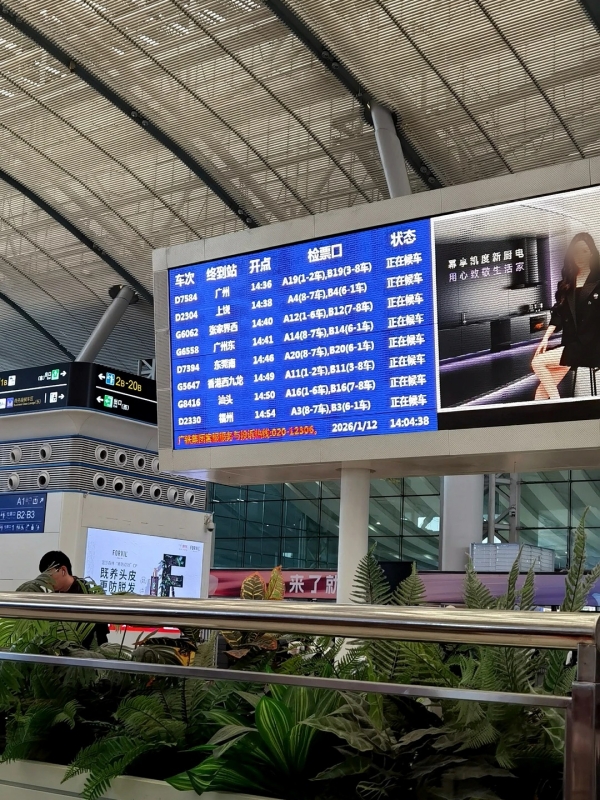
- Passenger Information Display
-
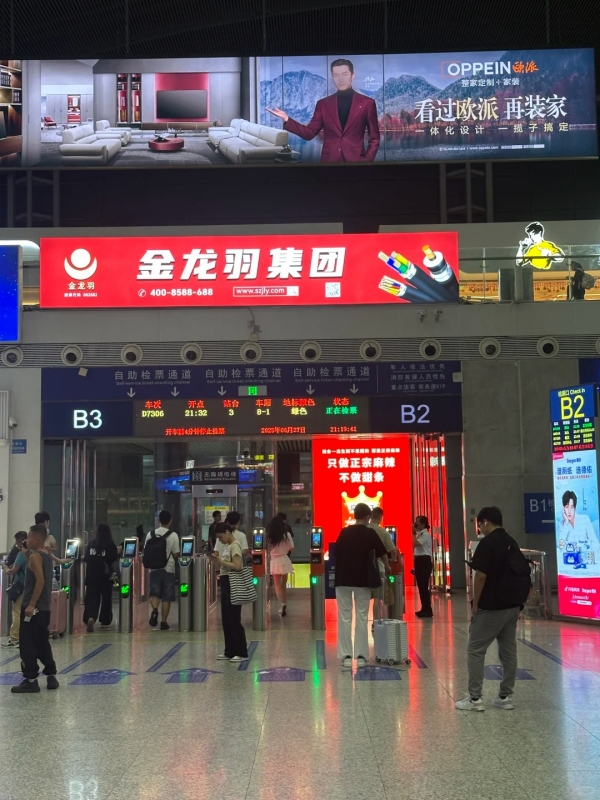
- SZ North Check-in Gates
Shenzhen North is laid out over four floors. F1 handles arrivals and metro transfers; F3 is the ticket hall, with 63 windows staffed between 6:30 am and 11:30 pm every day; F4 is the departure waiting hall where the numbered number-boarding gates correspond to the platform numbers on your ticket. English signage covers every floor, and in my experience traversing the station over several visits, it’s genuinely okay without any Chinese!
For timing your arrival:
- With tickets in hand: Arrive 45-60 minutes before departure. Security checks at the main entrance can add 10-15 minutes on busy days.
- Buying at the window: Allow 90 minutes. The service counter adjacent to the F3 ticket hall handles foreign passport queries, and English-speaking staff have been available on every visit I have made since 2023.
- Peak periods (Golden Week, Spring Festival): Add a further 30 minutes to both estimates — the F4 waiting hall fills quickly and boarding gates open only 15-20 minutes before departure.
Left-luggage storage is at the F1 east exit, priced at CNY 10-30 per bag per day. A Starbucks and McDonald's operate on F3 if you need to settle in while you wait.
🚆 Upgrade Your Rail Experience: If you are booking overnight routes from Shenzhen to distant major cities, consider upgrading to premium sleeper options with fully reclining beds. Learn more in our guide to Lie Flat First Class China Trains.
Futian Railway Station
Getting to Futian Station
-
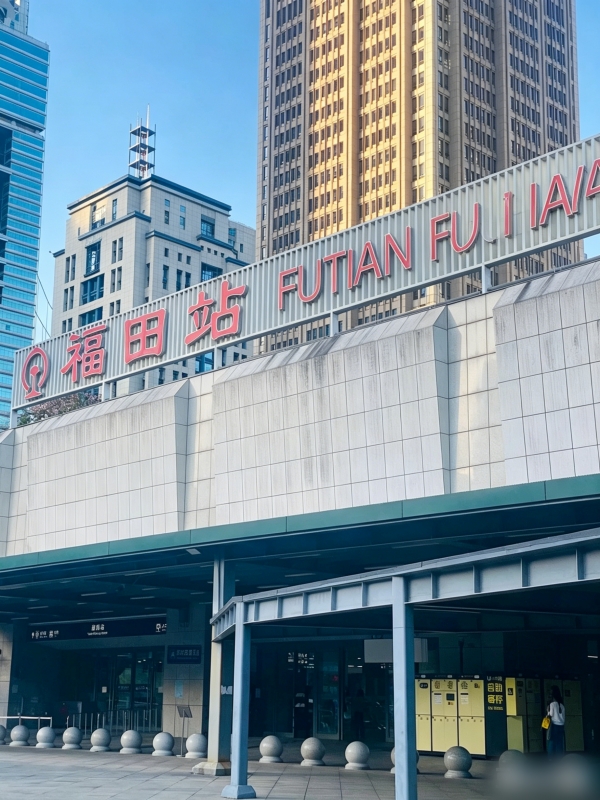
- Futian Railway Station
-
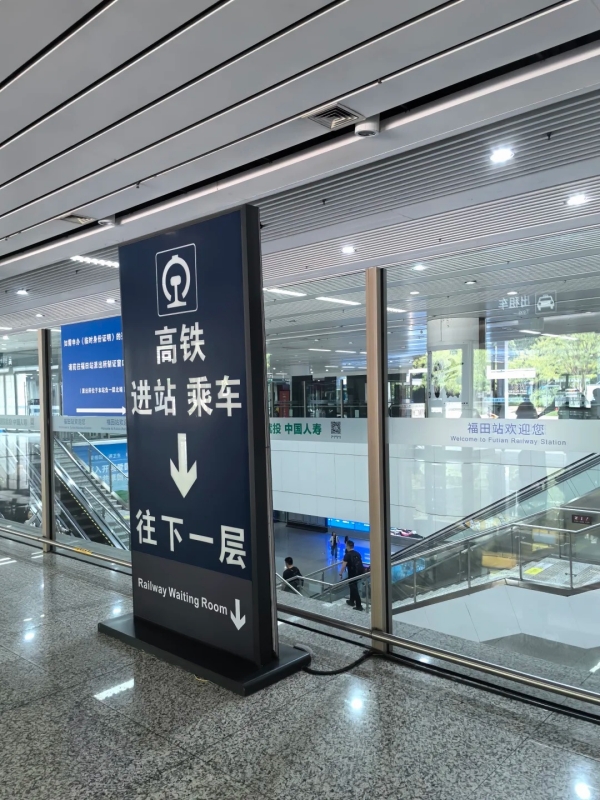
- Station Entrance Sign
Futian Railway Station is the most centrally located shenzhen railway station for visitors staying in Futian or Nanshan. The entrance sits beneath the intersection of Yitian Road and Fuhua Road 1 (福田区福华一路与益田路交叉口福田站), with 21 entrances and exits distributed across the surrounding blocks — in practice, you are unlikely to walk more than a minute to find one.
The station runs entirely underground across three floors:
- GF1: Transfer hall and metro connections to Lines 2, 3, and 11
- GF2: Concourse and waiting area — over 1,200 seats, with capacity for 3,000 passengers simultaneously
- GF3: Four platforms and eight tracks
For metro access, line 3 from Huaqiangbei or Luohu is the quickest route for most people, while line 11 connects Futian and Shenzhen Bao’an Airport directly—a useful tip if you’re flying in and heading straight to Hong Kong. Futian is 147,000 sq m and the second-largest underground rail station in Asia after Hong Kong West Kowloon. It’s hard not to grasp that epic scale as you step off the escalator into the cavernous concourse; thankfully, signs are in English too, and the layout is easy to navigate once you learn which floor deals with departures.
Trains to Hong Kong and Guangzhou
-
- Shenzhen North Station to Hongkong
-
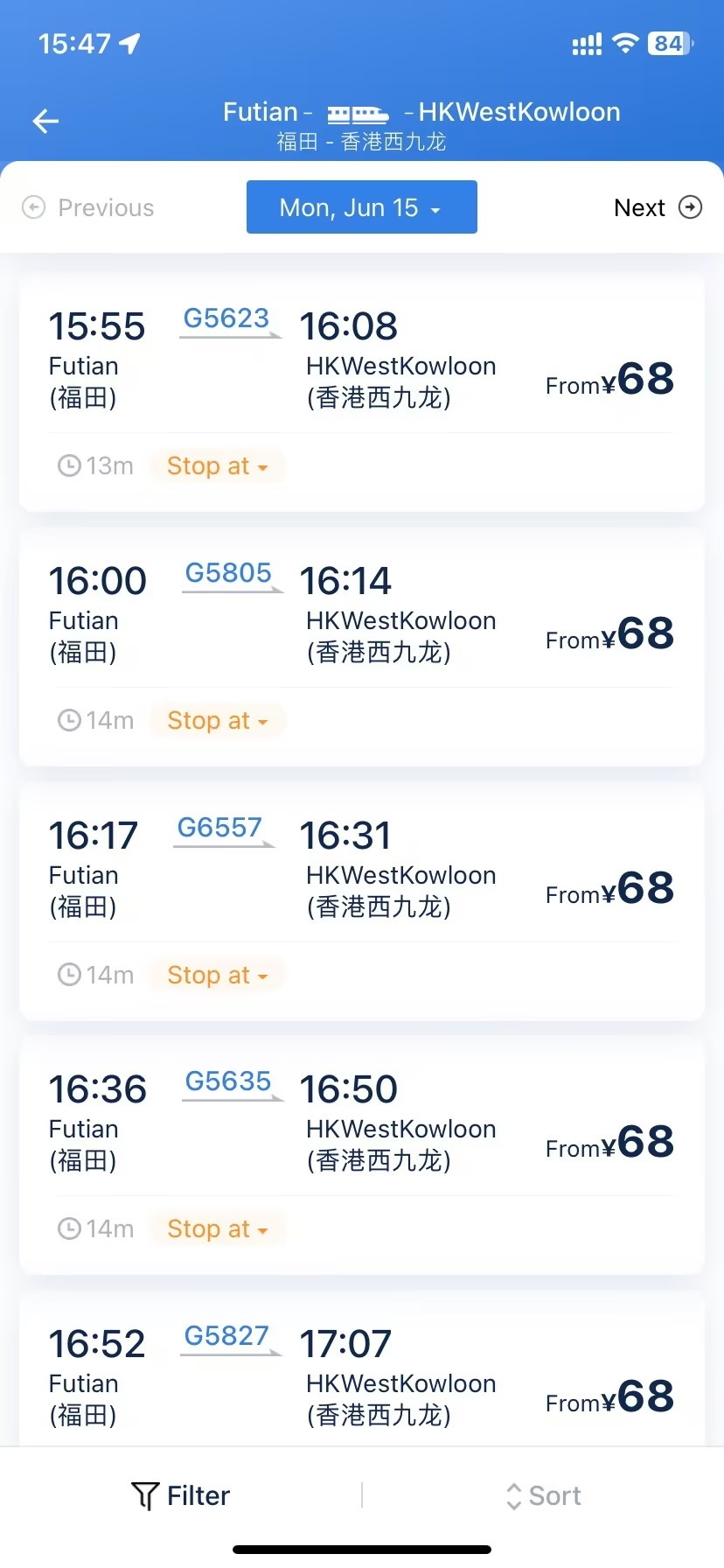
- Futian Railway Station to Hongkong
Futian railway station serves only the Guangzhou–Shenzhen–Hong Kong Express Rail Link (XRL), so every departure is a G-series high-speed service. Most convenient for foreign visitors is the shenzhen railway station to hong kong run from Futian. No long metro ride to an outer district, no need hop on a conventional-speed train.
Hong Kong West Kowloon: The journey takes 14 minutes. Trains run from approximately 7:00 am to 10:00 pm, with departures every 15-30 minutes off-peak and more frequently during morning and evening rush hours. Second-class tickets cost HKD 200-270 (approximately CNY 165-225), as listed on the MTR High Speed Rail official website. Your foreign passport serves as your boarding document — immigration clearance takes place on the Hong Kong side after arrival, not at the Futian departure gate, so the boarding process itself is quick.
Guangzhou South: G-trains cover the 35-40-minute journey for approximately CNY 74-100 in second class. However, if your destination is central Guangzhou rather than the southern Panyu area near Guangzhou South Station, the Guangzhou East intercity trains from Shenzhen Railway Station at Luohu may drop you considerably closer to where you need to be.
For the shenzhen railway station to hong kong route specifically, book at least three to five days ahead for weekend and public holiday departures. These are consistently the fastest-selling tickets at Futian, and last-minute availability is rarely guaranteed on busy Saturdays or the day before a Chinese public holiday.
Shenzhen Railway Station (Luohu)
Location Near the Hong Kong Border
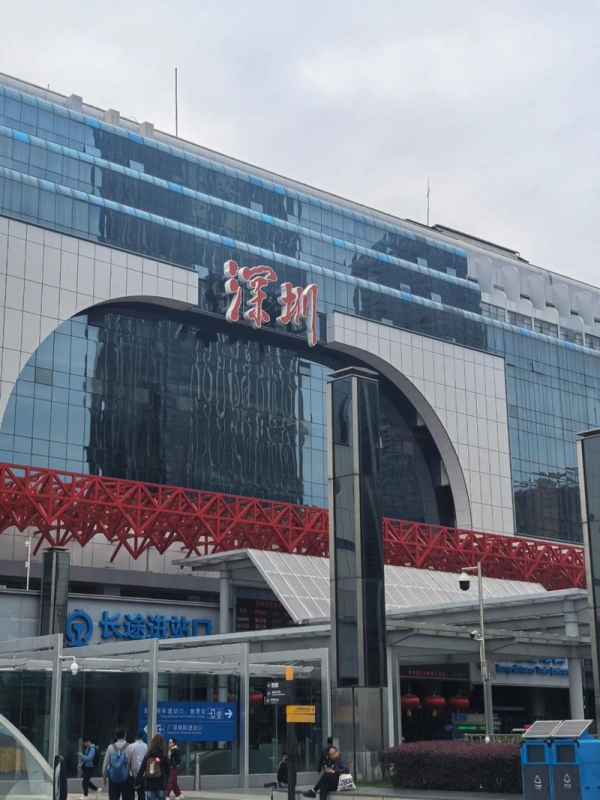
Shenzhen Railway Station (Luohu)
Note the Chinese name of this station — 深圳站 (Shēnzhèn Zhàn) — before you book: it’s a completely different shenzhen railway station from Shenzhen North, despite the similar English designation. Address: 1003 Jianshe Road, Luohu District (罗湖区建设路1003号). First opened in 1911 and rebuilt in the current form in 1991, it occupies 90,000 square metres and sees over 100 train movements a day.
Metro Line 1 terminates at Luohu Station directly beneath the main east square; Line 9 stops at Renmin South, a short walk to the west. The station's real draw for visitors, however, is location. The Luohu Checkpoint — the busiest land border crossing between mainland China and Hong Kong — is a two-to-three-minute walk south of the main exit. For crossing procedures and a full account of what the area offers, our Luohu district guide covers both sides of the border in detail.
Guangzhou Trains from Luohu
-
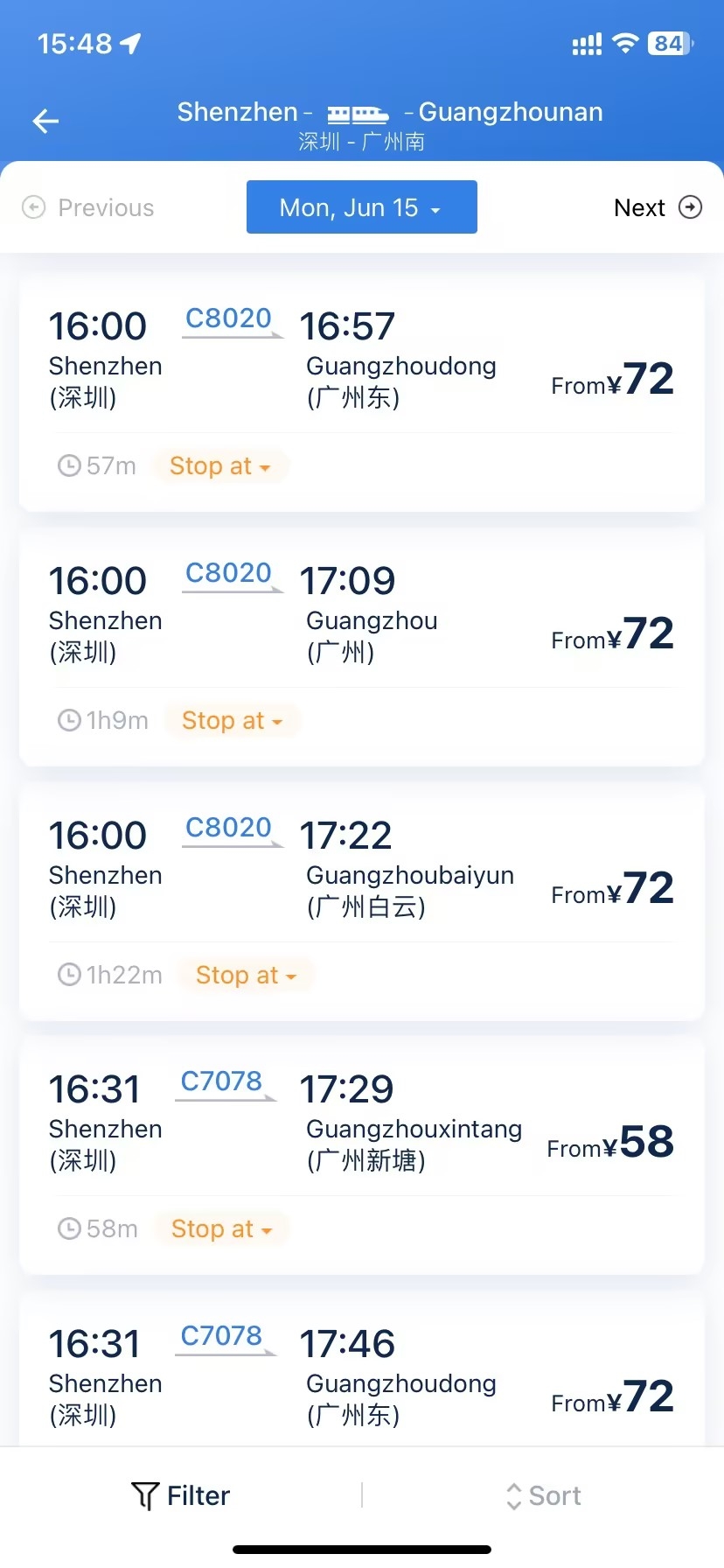
- Shenzhen Railway Station to Guangzhou
-
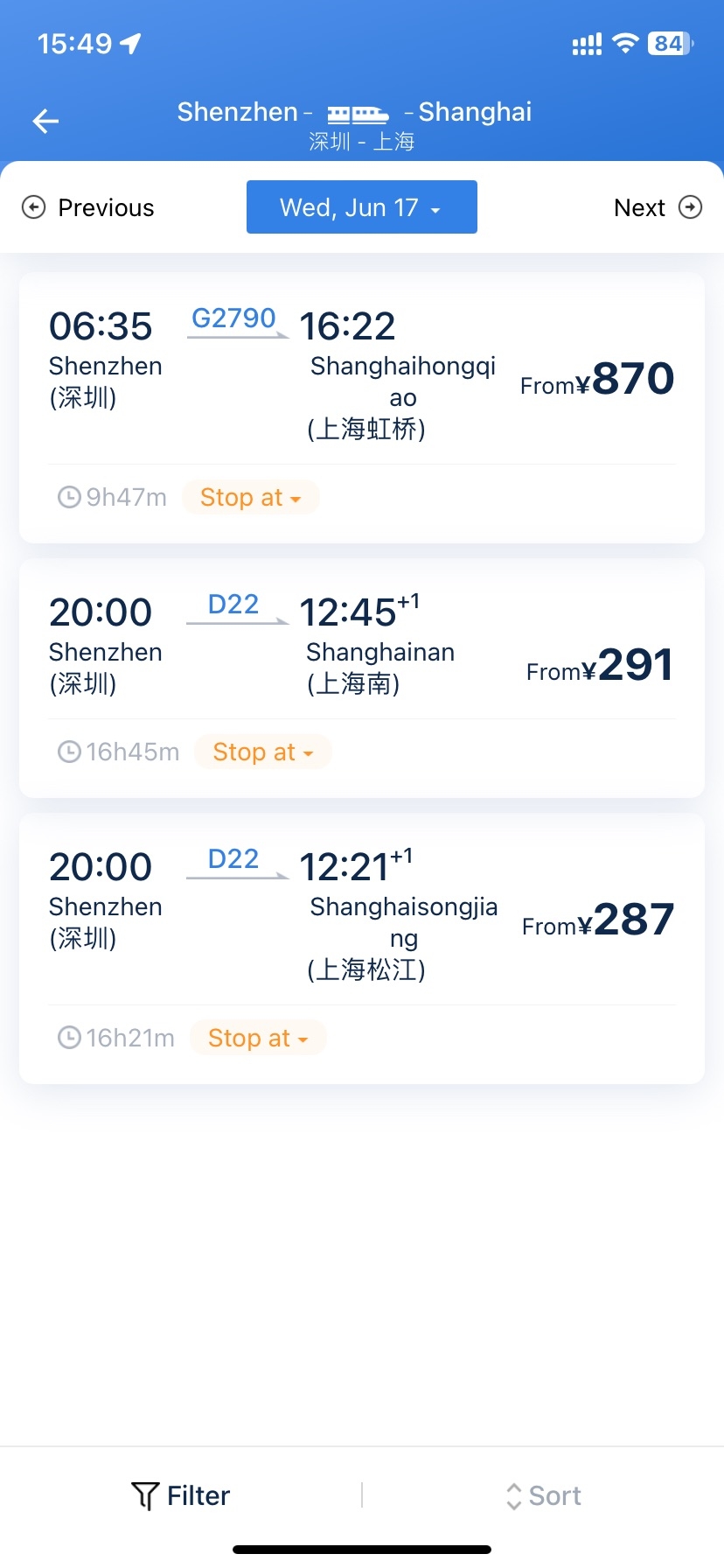
- Shenzhen Railway Station to Shanghai
-
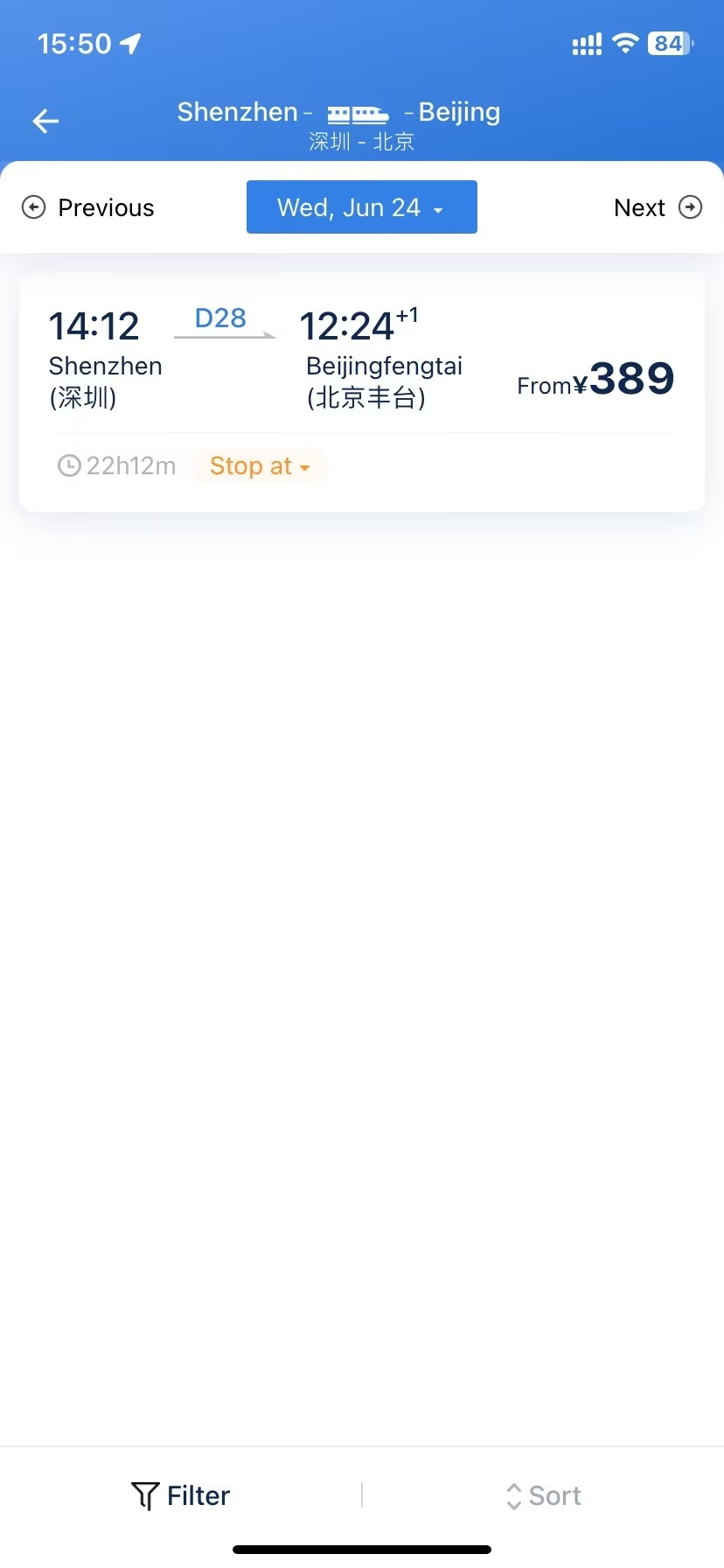
- Shenzhen Railway Station to Beijing
The Shenzhen Railway Station operates around 52 pairs of C-series intercity trains bound for Guangzhou East Station each day, from around 6:24 am to 10:30 pm, stopping approximately every 30-45 minutes at most hours, and every five minutes at rush hour. The ride takes 90 minutes, and a second-class seat will set you back around CNY 75-120.
The destination matters. Guangzhou East Station sits in Tianhe District — central Guangzhou — which gives this route a practical edge over the faster G-trains from Shenzhen North to Guangzhou South. Guangzhou South is in Panyu, far from most hotels and tourist areas, and the additional metro ride from there can easily cancel out the time saved on the train itself. For visitors heading to the city center, the door-to-door comparison is often much closer than it first appears. For what is worth doing once you arrive, our Guangzhou travel guide covers key attractions and neighborhoods across the city.
The station also handles a small number of overnight T- and K-series sleeper trains to Shanghai and Beijing — a cheaper alternative to G-trains from Shenzhen North for travelers happy to journey overnight and save on one night's accommodation.
Buying Train Tickets in Shenzhen
Online Tickets for Foreign Passport Holders
With the real-name system on China’s railways, every ticket is associated with the ID document used to buy it. For foreigners, that document is your passport, and the good news is that the system handles foreign passports reliably at the gates to all major shenzhen railway stations. Your passport will be scanned at the turnstile; no printed ticket is necessary.
Two platforms are worth knowing:
- 12306.cn (official): China's national rail booking site. Registration requires selecting "Overseas Passport" and entering your passport number, nationality, and an email address. Payment accepts Visa and Mastercard. The interface has an English version, though some steps revert to Chinese during checkout — having a translation app open helps. Tickets open 60 days before departure and can be purchased up to 30 minutes before the train leaves.
- Trip.com (recommended for most foreign visitors): Fully English interface, accepts international credit cards without a Chinese phone number, and displays real-time availability. Prices match 12306 exactly — Trip.com charges a small service fee on some routes, typically CNY 5-15, but removes the friction of the 12306 registration process entirely.
Book ahead for these routes: Hong Kong West Kowloon departures from Futian and Shenzhen North sell out consistently on Friday evenings and weekend mornings. For Golden Week or Spring Festival travel, booking the moment the 60-day window opens is not excessive caution — it is standard practice among regular travelers on this corridor.
Station Ticket Windows and Kiosks
All major stations in Shenzhen have ticket counters manned by staff, as well as self-service kiosks. Shenzhen North Railway Station has 63 windows on Floor 3, open from 6:30 am to 11:30 pm, and Futian has a foreign-language assistance window near the main concourse - look for the bilingual writing on the wall above the head of the counter.
Self-service kiosks at both stations read foreign passport chips and barcodes. The process runs as follows:
- Select "Foreign Passport" on the kiosk touchscreen
- Scan the passport data page face-down on the reader
- Confirm your booking details and collect the ticket card
In practice, the kiosk process takes under two minutes when the machine reads your passport cleanly. Older passport booklets occasionally require a second scan; if the kiosk fails twice, the staffed windows handle the same transaction without issue. For the shenzhen railway station ticket office at Shenzhen North specifically, the queue is shortest on weekday mornings before 10:00 am — I have cleared the window in under five minutes at that hour, compared to 25-30 minutes on a Saturday afternoon.
Security Check and Waiting Room Flow
Every shenzhen railway station entrance offers an airport-style security check: bags through the X-ray scanner, passengers through the arch metal detector. The checking usually adds 5-10 minutes to your wait at Shenzhen North and Futian during quieter times, but leave up to 20 minutes for especially busy days when most people are leaving, such as the beginning and end of holidays. You can take liquids in your carry-on bags with no restrictions — unlike at the airport, there’s no 100ml rule on the Chinese rail network.
Once through security, the procedure is straightforward:
- Find your boarding gate: The gate number is printed on your ticket or visible in the Trip.com or 12306 app. Gates at Shenzhen North are arranged along both sides of the F4 waiting hall, numbered sequentially.
- Wait for the gate to open: Gates open 15-30 minutes before departure. The departure board above each gate updates in real time; the announcement is made in Mandarin and English.
- Board promptly: Chinese high-speed trains depart on time to the minute. Once the gate closes — typically two minutes before departure — you will not be allowed through regardless of circumstances.
Luggage overhead racks accommodate standard carry-on bags. There is no checked baggage service on G- or C-series trains; for larger items, left-luggage storage at the station's F1 level is the practical alternative.
Other Shenzhen Train Stations
East, West, Pingshan, and Airport Stations
-
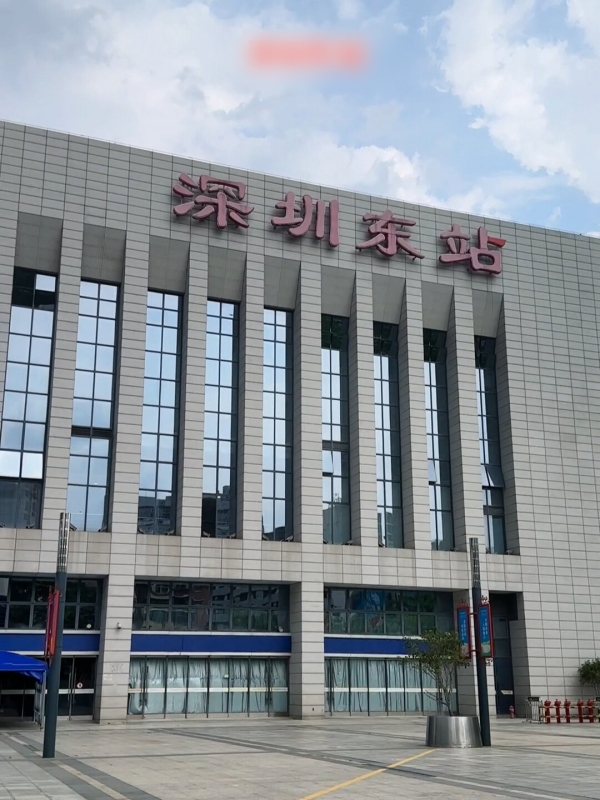
- Shenzhen East
-
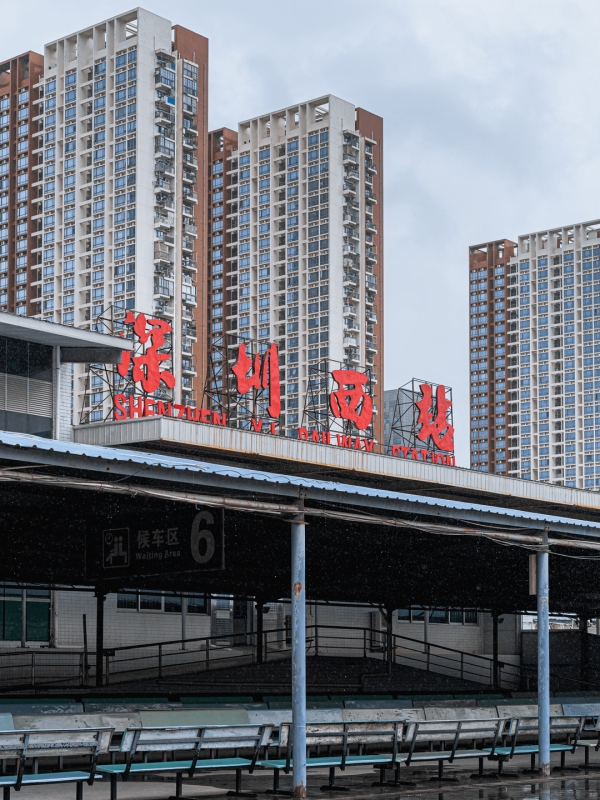
- Shenzhen West
The four stations below handle a smaller share of foreign visitor traffic, but each serves a specific purpose. If your itinerary takes you toward eastern Guangdong, the airport, or long-distance budget travel, one of them may be relevant.
Shenzhen East is the city's main shenzhen railway station for conventional long-distance services that do not operate from Luohu. The Beijing-Kowloon Railway and Guangzhou-Kowloon Railway both call here, making it the departure point for K- and T-series trains to northern and central China. The station reopened under its current name in December 2012 following a full renovation and covers 127,000 square meters across two plazas. For most tourists, however, it is not a first choice — G-trains from Shenzhen North reach the same destinations faster.
Shenzhen West is the least-visited of the main stations. Its facilities are older, the waiting hall lacks reliable air conditioning in summer, and the train selection is limited to slower K-series services. That said, fares are noticeably cheaper than equivalent G-train tickets, and for budget-conscious travelers with flexible schedules heading to cities like Lanzhou, Tianjin, or Chengdu, it remains a functional option. Liyumen Station on Metro Line 1 is 200 meters north — a short walk with luggage.
Pingshan serves the eastern end of the Xiamen-Shenzhen Railway, making it useful if you are heading toward Xiamen, Shantou, or Chaozhou from the eastern side of the city. At 9,992 square meters it is compact by Shenzhen standards, and Metro Line 16 connects it to the broader network. For visitors based in central Shenzhen, however, the same Xiamen-bound G-trains also depart from Shenzhen North — so the extra journey to Pingshan is rarely worth it unless you happen to be staying nearby.
Shenzhen Airport Station, located at B1 of Terminal 3, opened in December 2019. It runs Guangzhou-Dongguan-Shenzhen intercity trains — a convenient option if you land at Bao'an and want to reach Guangzhou without transferring through the city center first. Metro Line 11 connects the airport station directly into Shenzhen's urban network.
Frequently Asked Questions
Q: How many railway stations are in Shenzhen?
Shenzhen has over ten railway stations for passenger services. Six handle the majority of travelers: Shenzhen North, Futian, Shenzhen Railway Station at Luohu, Shenzhen East, Shenzhen West, and Pingshan. The airport area adds two further intercity stations at Terminal 3 and the airport's north side. Most foreign visitors only need Shenzhen North, Futian, or Luohu — the remaining stations serve specific routes that rarely align with typical tourist itineraries.
Q: Which Shenzhen train station is best for Hong Kong?
For most visitors staying in central Shenzhen, Futian is the most practical shenzhen railway station to hong kong option — it sits in Futian District, connects directly to Metro Lines 2, 3, and 11, and reaches Hong Kong West Kowloon in 14 minutes. Shenzhen North offers more frequent daily departures and suits travelers already in Longhua or arriving from another Chinese city. Both reach West Kowloon at the same speed; the choice depends on where you are staying.
Q: Can foreigners easily use China's high-speed rail?
Yes. Both Shenzhen North and Futian have full English signage and passport-compatible turnstiles. Book on Trip.com without a Chinese phone number, and your foreign passport scans directly at the boarding gate — no printed ticket required. The main adjustment for first-time users is the waiting room system: you board through a numbered gate that opens 15-30 minutes before departure rather than proceeding directly to the platform. Allow extra time on your first trip.
Q: How long is the train from Shenzhen North to Hong Kong?
The G-train from Shenzhen North Railway Station to Hong Kong West Kowloon takes 14-20 minutes depending on the service. From Futian, the journey is also 14 minutes on the fastest departures. Trains run from roughly 7:00 am to 10:00 pm throughout the day. Second-class tickets cost HKD 200-270 (approximately CNY 165-225), as published on the MTR High Speed Rail official website. Book several days ahead for weekend travel.
Q: Which is the largest train station in Shenzhen?
Shenzhen North Railway Station is the largest, with 11 platforms, 20 tracks, and a total area of 400,000 square meters. It handles roughly 100 million passengers annually and holds a Top Class classification from China Railway. Futian is the largest underground station in the city — and the second-largest underground railway station in Asia at 147,000 square meters, behind only Hong Kong West Kowloon Station.
Q: How do I get to Shenzhen North Station by metro?
Take Metro Line 4 to Shenzhen North Station (深圳北站). Line 4 runs directly through central Futian — stopping at Convention & Exhibition Center, Civic Center, and Lianhua North — and reaches the station in around 15 minutes from the Futian area. Lines 5 and 6 also serve Shenzhen North for connections from Longhua, Guangming, and eastern districts. Exit A or B leads to the East Square; Exit C leads to the West Square and long-distance bus terminal.
Q: What is the Chinese name for Shenzhen Railway Station?
The main station in Luohu is 深圳站 (Shēnzhèn Zhàn). Shenzhen North is 深圳北站 (Shēnzhèn Běi Zhàn). Futian is 福田站 (Fútián Zhàn). Knowing the Chinese names matters for 12306 bookings and for showing taxi drivers your destination — the English names are similar enough to cause genuine confusion. In English, "Shenzhen Railway Station" refers specifically to the Luohu station, not the city's entire shenzhen railway station network.
Q: How early should I arrive before my train departs?
Arrive at least 45-60 minutes before departure if you already have your ticket, to allow time for the security check and locating your boarding gate. If you need to collect or buy a ticket at the window, allow 90 minutes. During Chinese national holidays — Golden Week and the Spring Festival in particular — add a further 30 minutes to both estimates. Missing your scheduled departure is treated as a no-show; changes must be requested in advance through 12306 or Trip.com.