Chongming Island in Shanghai
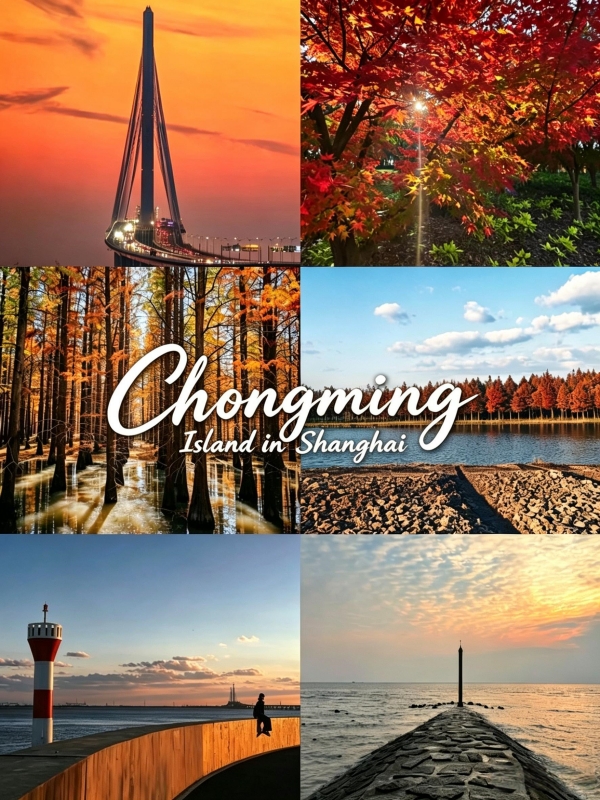
Chongming Island is the third-largest island of China — and of Shanghai, too—landing at the mouth of one of the world’s great rivers, the Yangtze, where it flows out to the East China Sea. Straddling the Yangtze, this 1,267 square kilometre chunk of flat low lying land has been receiving silt washed out of the great river for the last 1,400 years and constitutes the most northern point of the municipality of Shanghai. It is not some exotic Shangri-La within China. It is as much Shanghai, Shanghai proper, yet most visitors do not get to see it.
The first thing you smell when you come here is the rice paddy soil, the faint salt of the river. No skyline. No Bund. No duty-free. What is here instead is one of East Asia’s most important migratory bird wetlands, over 200 km of flat cycling greenways, and the hairy crab — the freshwater delicacy that the Chinese food world quietly obsesses over every autumn. This is how to get here from Shanghai, what to do, what to eat and the things you only learn by coming.
Chongming Island at a Glance
| Item | Details |
|---|---|
| 📍 Location | Mouth of the Yangtze River, East China Sea — northernmost point of Shanghai Municipality |
| 📐 Area | 1,267 km² (China's 3rd largest island, after Taiwan and Hainan) |
| ⬆️ Elevation | Average 1.6–2.6 m above sea level — almost entirely flat |
| 🏙️ Admin | Chongming District, Shanghai. Three islands: Chongming (main), Changxing, and Hengsha |
| 👥 Population | Approx. 600,000 on the main island (2010 census: 660,000) |
| 🚗 Distance | ~75 km from People's Square — 60 to 90 min by car |
| ⭐ Top Scenic Rating | Xisha Mingzhu Lake Scenic Area — 5A (China's highest classification) |
| 🐦 Nature | Dongtan National Nature Reserve · East Asian–Australasian Flyway · Ramsar-listed wetland |
| 🚲 Cycling | 200+ km of dedicated greenways · Annual UCI Women's WorldTour host |
| 🦀 Seasonal Highlights | Hairy crab: Sep–Nov · Birdwatching: Oct–Mar · Spring flowers: Mar–Apr |
| 💴 Budget Guide | Day trip: ¥100–300 per person · Overnight hotel: ¥500–1,800 per room |
| 🗺️ Three Zones | East: Dongtan wetland · Central: Dongping forest · West: Xisha & Mingzhu Lake |
Forest Blooms and Yangtze Sunsets (One-Day Trip)
Dongping Forest Park: Flowers and Tea
Dongping Forest Park
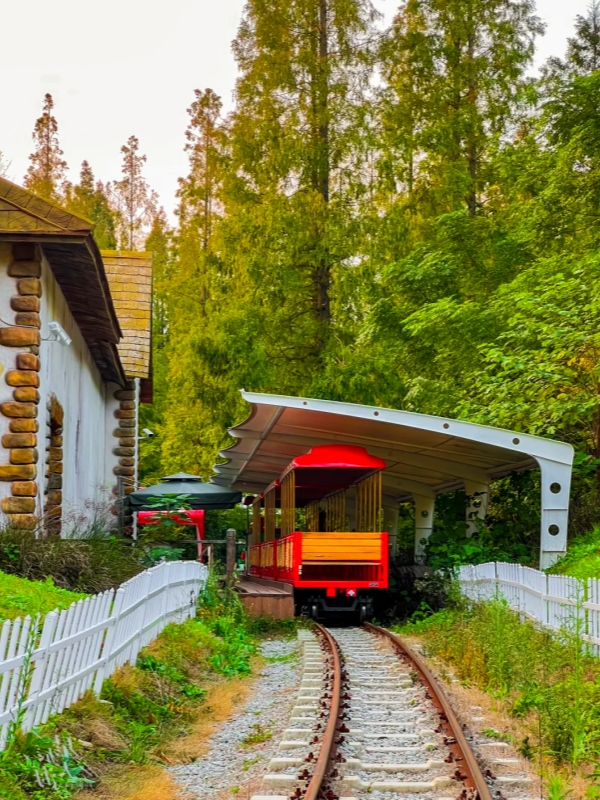
IIf you’re visiting in mid-March, the rapeseed flowers will be in full bloom – fields of gold offset by the soft violet of the February orchids in a visual impact that’s almost dizzying against the backdrop of flat horizon. Dongping National Forest Park encompasses 3.55 square kilometers of planted forests (national park since 1993, Shanghai’s largest by area) and the sequence of blossoms in spring is traditional: rapeseed in early March, cherry blossom mid-March, tulips in April. The peacock enclosure has two displays daily, at 10:00am and 2:30pm; arrive ten minutes early. In the Baiying Forest area come spring guests can scour for wild vegetables and then hand-make Chongming style herb pancakes under staff supervision – a local tradition not often mentioned in other guides. Chongming's cultural appeal is very different from, say, the colonial-era architecture of Shamian Island in Guangzhou; what you get here is living rural heritage rather than preserved facades.
For lunch, the Forest Food Plaza offers Chongming rice cakes and crispy chicken bites for around ¥30–50 per person. The better option is Linye Tea House — tucked so deep into the trees that first-time visitors consistently walk past it. Ask a staff member for directions. The tea and coffee are good, the forest setting is exceptional, and on a weekday the place is almost always quiet.
Island Cycling: 200km of Flat Trails
Chongming Island Cycling Escape
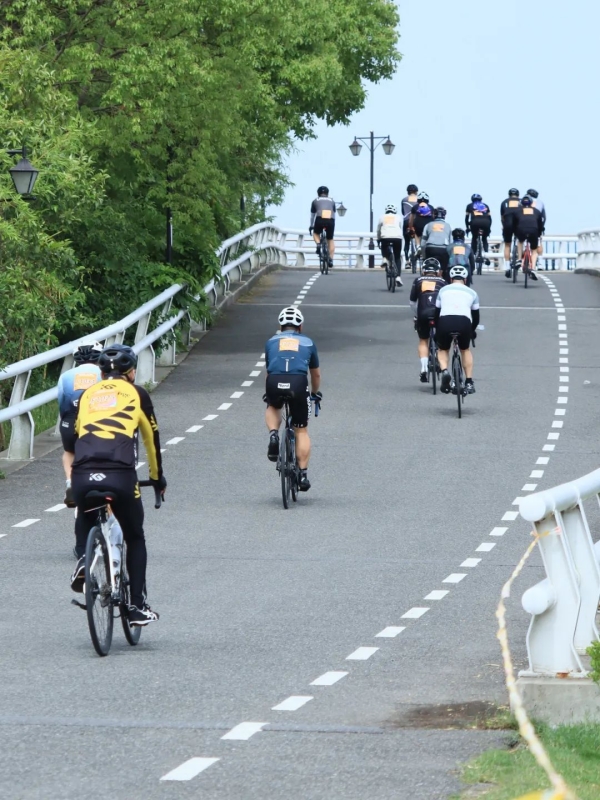
Chongming’s flatness is not merely pleasant, it’s structural. The island averages between 1.6 and 2.6 m above the sea, the direct product of Yangtze alluvial deposits, and that contour profile means there’s precious little gradient anywhere. In October 2025 the UCI Women’s WorldTour held its Tour of Chongming Island stage race here, confirming what locals know: a couple of hundred kilometers of greenways for dedicated cycling be as beautifully surfaced as well-constructed cycling infrastructure.
Three routes suit different levels of commitment:
- Dongping Forest loop (half-day, ~30 km): Start at the park's south gate, follow the greenway east toward Chenhai Highway, then loop back north. Flat, shaded in sections, good for beginners or anyone wanting cycling as a side activity rather than the main event.
- North shore route (half to full day, ~50 km): Follow Beiyan Highway east along the Yangtze bank. The road is exposed and windy, which makes it harder in one direction and effortless in the other. The reward is unobstructed views across a river that is six or more kilometers wide — a scale that feels closer to a sea crossing than a riverside ride.
- Full island circuit (~180 km): Combines Beiyan and Chenhai highways in a complete loop. Suitable for trained cyclists only; plan for a full day with an overnight stay.
Bike rental is available at Nanmen Port ferry terminal in Chengqiao Town and at most major hotels. On spring and autumn weekends, rental stock runs out by mid-morning — reserve the night before if you can. Spring (March to May) and autumn (September to November) are the best cycling seasons; summer heat and humidity make midday riding uncomfortable.
Yangtze Estuary: Sunset River Views
Sunset at the Yangtze River Estuary
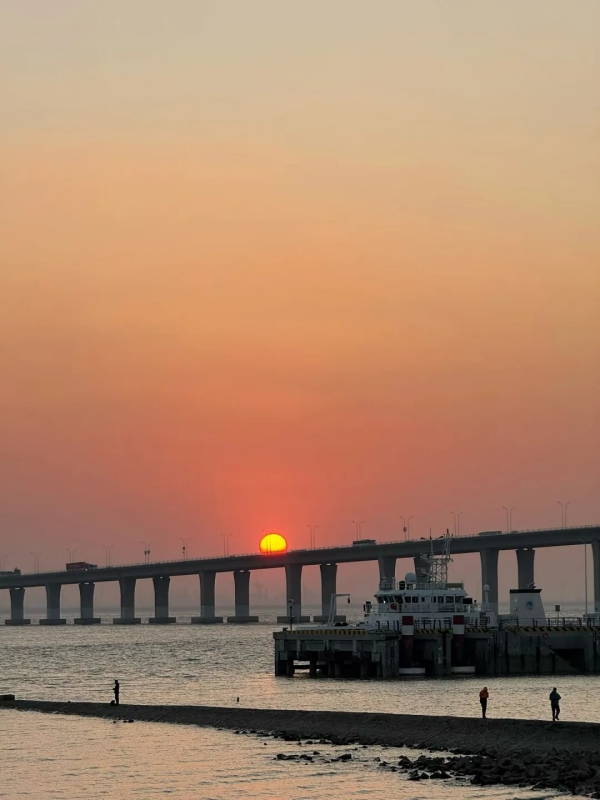
It’s no longer a river by the time it gets to Chongming. At the eastern end of the island’s north shore, the river mouth is over six kilometers across—the other bank barely come into view on a hazy day—and at sunset, when container ships are dark wraiths cutting across a piercing orange glow, the scale of it dawns. It’s one of the great cargo rivers of the world and you’re watching mountains of ocean stuff empty itself into the sea from a quiet embankment where there’s hardly anybody else.
The best viewing point is the eastern stretch of Beiyan Highway, particularly near Haishang Starry Sky Camp in Yingdong Village. October and November offer the clearest skies — summer haze significantly degrades the view. The natural pairing for a one-day visit is to cycle the north shore route in the afternoon, finishing at a riverside viewpoint for golden hour, then return by road before dark.
Wetlands, Birds, and the Crab Coast (Two-Day Trip)
Dongtan Wetland: Birds and Kayaking
Dongtan Wetland Park
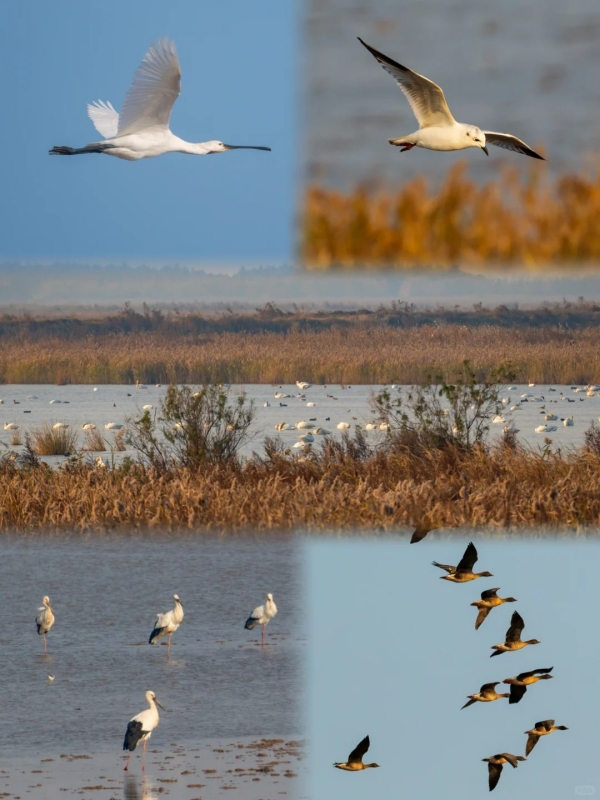
Get to Dongtan in October and the first thing to hit you is the noise — tens of thousands of shorebirds feeding across the shallow mud before you see them. Part of the East Asian–Australasian Flyway, the Chongming Dongtan Birds National Nature Reserve is a Ramsar wetland covering 241.55 km² of tidal flat, reed marsh and open water that was added to the UNESCO World Natural Heritage tentative list in 2024. The core zone is closed to the public; there is a “Dongtan Wetland Park,” the visitor-facing piece, a wilder place where you can walk, kayak, fish, barbecue, visit the insect hotel etc without disturbing nesting habitat.
For a more immersive experience, Manyu Water Camp operates a water-based birdwatching tour — kayaking through reed channels with a guide who identifies species and explains the flyway ecology. This requires advance reservation: call 132-6228-2141. Foreign visitors without Mandarin should ask their Shanghai hotel front desk to call the day before. Key species by season:
- October to November (southbound migration): Peak shorebird numbers, including Dunlin, Red-necked Stint, and Kentish Plover. The mudflats are at their most active.
- November to February (wintering): Best window for Black-faced Spoonbill — a globally near-threatened species that winters in the Yangtze estuary. Bring binoculars; early morning visits are significantly more productive than afternoons.
- March to May (northbound migration): Returning migrants heading to Siberia and Northeast Asia. Numbers are lower than autumn but species diversity is often higher.
🌿 Discover More Historic Waterways & Wetlands: If you enjoy peaceful reed channels, rich birdlife, and serene kayaking, East China is home to another legendary wetland ecosystem that uniquely blends natural scenery with traditional Jiangnan water town heritage. Explore our complete guide to Xixi Wetland.
Crab Culture: Museums and Local Feasts
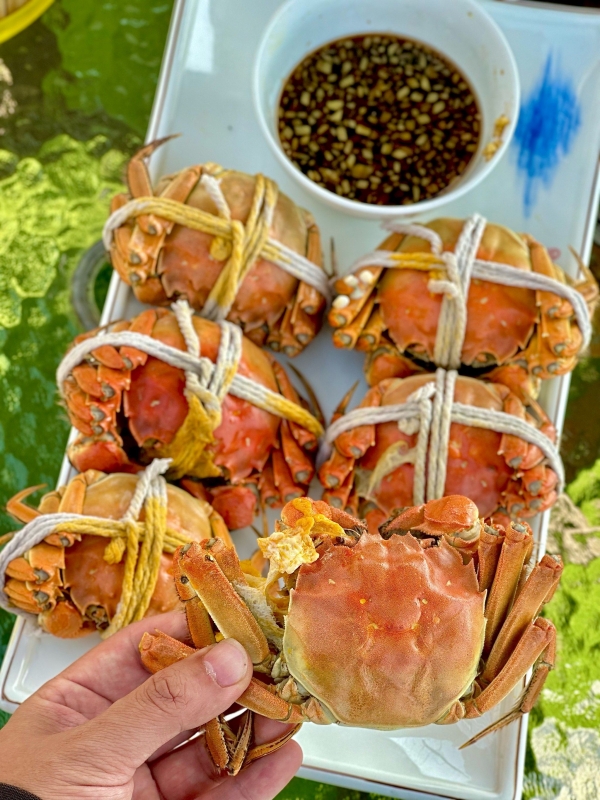
Chongming Hairy Crab
Chongming’s hairy crab — delectably messy freshwater treats called 大闸蟹 (dazha xie) in Chinese — are at their most scrumptious from September to November, when the roe and fat inside the shells are voluptuous. The island has been home to less-scaly crabberies for hundreds of years (check out the Crab Culture Museum in Greenport Scenic Area for exhibits on getting crabs the old school way, and for more on the nature that makes waters brackish enough for Chongming’s crustaceans).
Riverside crabbing requires no equipment. A wooden stick and a piece of raw shrimp is all you need — dip the shrimp in the water near any slow-moving channel on the island and wait. The crabs come to investigate. Local families do this on weekend afternoons, and children find it absorbing enough to occupy an entire afternoon without any other entertainment.
For a serious crab meal, Baodao Crab Manor specializes in Chongming freshwater crab preparations that go well beyond the plain steamed whole crab you find in Shanghai restaurants:
- Crab roe steamed egg (蟹黄蒸蛋): Silky steamed egg topped with vivid orange roe — the most requested dish and a good benchmark for any crab restaurant's quality.
- Crab meat codfish (蟹肉鳕鱼): Mild white fish with picked crab meat folded through — a lighter option that lets the crab flavor lead without the work of shell-cracking.
- Battered fried crab (油炸蟹): Crisp, salty, eaten whole — the street-food preparation that locals prefer over more elaborate dishes.
October is peak season and peak demand. Reserve at least one week ahead for weekend dinners in October. Budget: ¥150–300 per person for a full crab meal. If you want to taste crab without the full restaurant price, most island eateries serve crab roe rice cakes (蟹粉年糕) for around ¥15–20.
Xisha Wetland: Water Forests and Geese
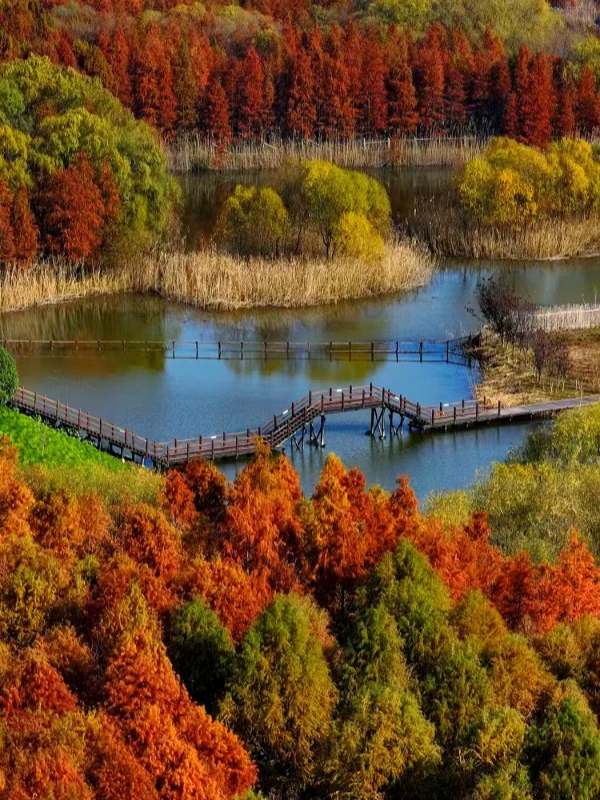
Xisha Mingzhu Lake Scenic Area
5A and represent China’s highest level rating to only 13 places in Shanghai Municipality outside of 4A’s, Xisha Mingzhu Lake Scenic Area. More informally known as Water Forest, Xisha Wetland is reached by a forested tributary 2,000 meters long traversed by metasequoia, weeping willow, and water cypress with their roots in seemingly black water, variously dyed by seasons. Little rentals on water float the short drift through the avenue of trees; mornings produce the best chances for quiet discovery of the island. The second half of the island, Mingzhu Lake was announced as possibly the signature display of the island, a wild goose release show (check on arrival for show times), interactive feeding and rides on amphibious gear, and boats bobs about when the weather is clement.
The Mingzhu Lake Floating Restaurant serves organic fish pulled from the lake — order the fish hotpot or the wood-fired whole fish stew. A practical half-day flow: morning boat ride at Xisha Wetland (1.5 hours), sightseeing cart or bicycle to the Floating Restaurant for lunch, then the afternoon on Mingzhu Lake for the goose show and water activities.
Starry Skies and Farm-to-Table Experiences (Two-Day Trip)
Starry Sky Camp: Glamping and Stars
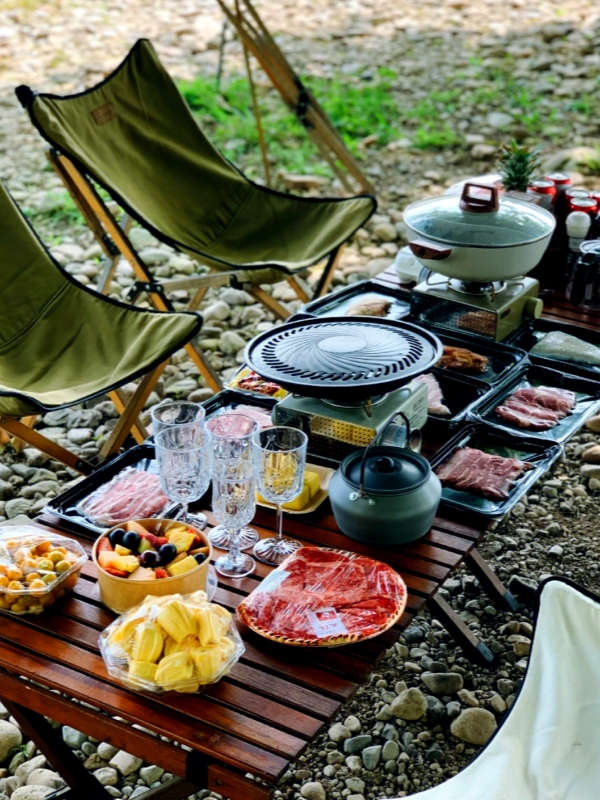
Starry Sky Camping on Chongming Island
Located in Yingdong Village near Yangtze River Bridge, Haishang Starry Sky Camp provides two accommodation modes: space capsule lodges with vista windows; and sailboat-style “starry sky” tents on platforms over the reeds. Activities include ATV and UTV circuits, horseback riding, kayaking, live-action CS battles, archery, and cycling paths that join the main island greenway — all a little roughshod, but run with true vitality. Visitors looking to compare glamping options across the Shanghai region will find the full Shanghai camping guide useful context before committing.
The reason most visitors come back is the sky. Far enough from Shanghai's light dome, the Milky Way is visible on clear October and November nights; autumn meteor showers are a reliable draw. Sunrise over the Yangtze estuary from the north-facing platforms is worth an early alarm. Book through Trip.com or the camp's official WeChat account — autumn weekends sell out two to three weeks ahead.
Sanmin Village: Crafts and Art
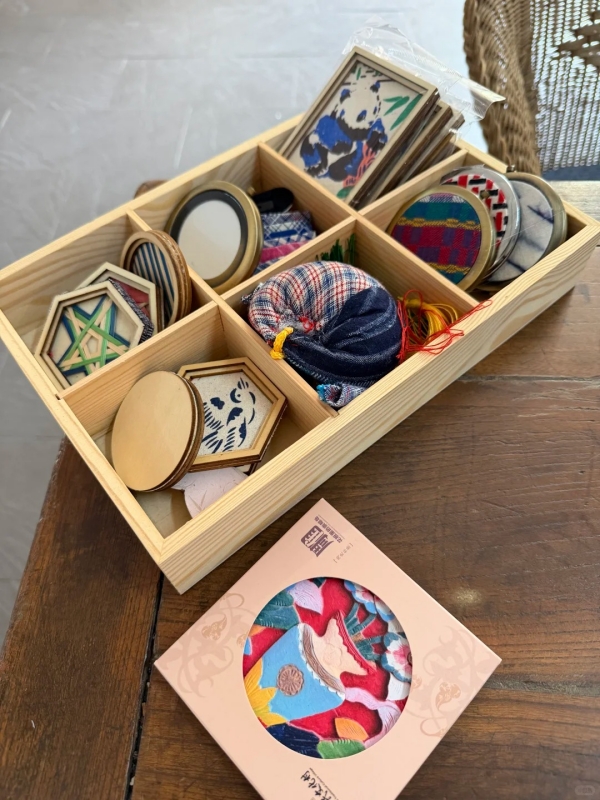
Intangible Cultural Heritage Art of Sanmin Cultural Village
Sanmin Cultural Village contains two things that reward the detour: a working demonstration of homespun textile technique (土布纳织, tubu fangzhi), Chongming tradition of zero-waste weaving recognized as national intangible cultural heritage — sit at an original loom and try a few passes — and the Poetic Root Art Museum, the labor of love of Fan Jinggui (范景贵) who for thirty years scoured the island for some 300 tree-root sculptures of sizes, styles, and intentions from totable still lifes to room-filling installations. The two together take about two hours and consistently surprise visitors who arrive expecting only an outdoor island. Chongming's cultural identity is entirely different from a tropical destination like Hainan Island — the appeal here is living rural craft, not beach resorts.
Two more stops complete a cultural half-day. Oxygen Land runs seasonal rice planting and harvesting experiences grounded in China's traditional agricultural calendar — more substantive than a typical tourist farm activity. Yingzhou Ceramics Center offers hands-on pottery workshops alongside a permanent kiln exhibition; reservations required — call 400-809-1717, or ask your hotel to book. Both pair naturally with the Farmer's Paradise farm experiences: fireplace tea, seasonal picking, animal interactions, and DIY barbecue.
Farmhouse Dining: Fresh Local Food
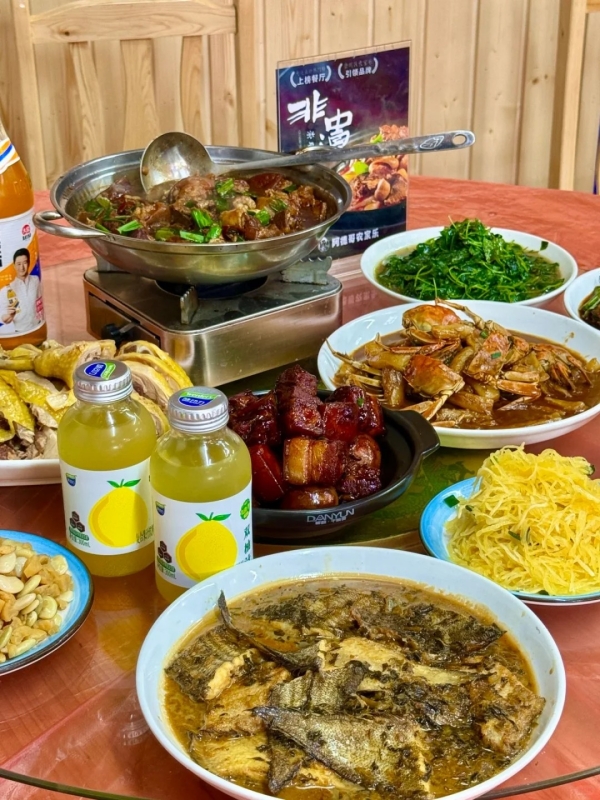
Farmhouse Cuisine
Guanhai Tower is the best place to stop for lunch if you want good food without needing to sign up for the crab feast: crystal white-cut chicken, smoked fish with bean paste, and three-delicacy stew, all from farms on the island, for ¥80–120 per person. Call a day ahead to make a reservation. Day 2 is Changxing Island Country Park — beware: this is not Chongming Island, but rather its smaller neighbour; the crossing adds on around 30 minutes each way by river ferry or tunnel. Here you can kayak through a stream-funnelled wood of trees, wander a rose garden, or pick your fill from the orchard and the lotus garden (whose water is also good for a foot-soak!) if you have two full days.
Farmhouse Canteen closes the route with the most grounded meal of the itinerary: Chongming free-range chicken, shredded pumpkin, and rice cakes cooked over a wood-fired stove in a building designed to look exactly the way its food tastes. Farmer's Paradise adjacent offers DIY barbecue and a petting area before the return crossing.
When to Go: Best Times to Visit
Seasonal Picks: Flowers, Birds, and Crab Feasts
| Season | Temp | Highlights | Crowds | Rating |
|---|---|---|---|---|
| Spring Mar–May | 12–22°C | Rapeseed, cherry blossom and tulips at Dongping. Northbound bird migration Apr–May. Best cycling weather. | Low to moderate | ★★★★ |
| Summer Jun–Sep | 27–34°C | Lush greenery. Typhoon risk Jul–Sep (ferry cancellations possible). Indoor attractions unaffected. Hotel prices lowest. | Low | ★★★ |
| Autumn Oct–Nov | 15–25°C | Hairy crab season. Southbound bird migration. UCI cycling race (Oct). Clear skies for stargazing and sunset photography. | Moderate (peak season) | ★★★★★ |
| Winter Dec–Feb | 4–10°C | Chongming narcissus in bloom (Spring Festival symbol). White goat dishes at their best. Very few tourists. Waterfowl wintering at Dongtan. | Very low | ★★★★ |
Busy Times: How to Avoid Holiday Crowds
Two holiday periods are worth actively avoiding. National Day Golden Week (October 1–7) fills the island's tunnel road with gridlocked traffic — depart before 7am or after 8pm, or take the ferry as an alternative. Farmhouse accommodations and popular restaurants are fully booked three to four weeks ahead of the holiday. The second to avoid is May Day (May 1–5), which produces similar dynamics at smaller scale.
The counterintuitive recommendation: Chinese New Year (late January or early February) is one of the most rewarding times to visit Chongming. The island is significantly quieter than Shanghai's urban core during the holiday. Chongming narcissus — the flower that locals buy at the start of every lunar new year as a domestic symbol of the season — is in full bloom. White goat is at peak eating condition. Farmhouse guesthouses offer CNY special menus. Weekdays (Monday through Thursday) outside of all holiday periods are when Chongming shows its best face — Dongping National Forest Park can be nearly empty on a Tuesday morning in November. For a completely different take on a Chinese island in winter, Sun Island in Harbin offers snow sculpture festivals and frozen-river landscapes at the opposite end of the country's climate spectrum.
Getting Around: Travel and Staying Tips
Ways to Get There: Tunnels, Ferries, and Buses
| Method | Journey Time | Cost | Practical Notes | Best For |
|---|---|---|---|---|
| Car via G40 Tunnel-Bridge | 60–90 min | Toll varies by vehicle | Most flexible option. Golden Week: depart before 7am or after 8pm to avoid gridlock. | Self-drive visitors, cyclists bringing bikes |
| Ferry from Nanmen Port | 40 min (water) + port transit | Approx. ¥20–50 per person | Scenic Yangtze crossing; can carry vehicles. Typhoon and heavy fog cause cancellations. Book ahead during Golden Week. | Day-trippers wanting the river experience |
| Public bus from Wuqi Terminal | ~2 hours | ¥30–50 | Cheapest option but island-side connections are limited (some routes run 2–3x daily). Not recommended for one-day trips. | Budget overnight visitors |
Before you cross: five things to set up in Shanghai
- Alipay with a foreign card: Link your Visa or Mastercard before entering China — the identity verification step is significantly smoother outside the mainland. Alipay is accepted at all major attractions and most restaurants on Chongming.
- Amap (Gaode Maps) with offline data: More accurate than Google Maps for rural island roads. Download the Chongming offline map before crossing — island WiFi is unreliable away from hotels.
- VPN, installed and tested: The same mainland internet restrictions apply on Chongming. Install and test before leaving Shanghai — free VPNs fail consistently on Chinese networks.
- ¥200–300 cash: Farmhouse restaurants, market stalls, and some smaller scenic spots are cash-only. ATMs are concentrated in Chengqiao Town center but not reliably elsewhere — withdraw before you cross or in Chengqiao on arrival.
- DiDi: Usable on the island but the driver pool is thin. Expect 20–30 minute wait times in rural areas. Self-driving or cycling is more reliable for inter-attraction movement.
Where to Stay: Hotels, Farmhouses, and Camps
International chain hotels are the safest option for foreign visitors:
- Sheraton Shanghai Chongming: Indoor and outdoor children's playgrounds, heated pool with a 0.6-meter-deep children's section, fitness center and game room. Best for families with young children. ¥900–1,600/night.
- Hyatt Regency Chongming Shanghai: In-room tent installations, slides, dedicated kid-themed rooms, heated pool and English-language service. ¥1,000–1,800/night.
- Holiday Inn Express Shanghai Chongming: More affordable IHG option with standard international amenities. ¥500–900/night.
Farmhouse stays and boutique camps offer atmosphere that no chain hotel can match — but foreign visitors face a specific risk that no official source mentions:
Quick Tips: Money, Language, and How to Book
Payment: Alipay covers major scenic areas and most sit-down restaurants. Bring ¥200–300 in cash for farmhouse meals, market stalls, and small scenic entrances. International credit cards are accepted only at the Sheraton and Hyatt. ATMs are available in Chengqiao Town center but not reliably elsewhere on the island — withdraw before you cross or immediately on arrival in town.
Language: English is negligible outside the Sheraton and Hyatt. Google Translate's offline camera mode handles menus, signs, and ticket windows effectively — download the Chinese language pack before leaving Shanghai. Staff at international hotels are helpful for reservation calls; if you need to book at a Chinese-language attraction, ask your hotel front desk to call on your behalf.
Advance booking requirements:
| Attraction | Booking Required? | Contact | Foreign Visitor Note |
|---|---|---|---|
| Manyu Water Camp birdwatching kayak | Yes — mandatory | Call 132-6228-2141 | Ask hotel to call; no English line |
| Yingzhou Ceramics Center workshop | Recommended | Call 400-809-1717 | Ask hotel to call |
| Haishang Starry Sky Camp | Yes — book ahead | Trip.com or WeChat | English interface on Trip.com |
| Sheraton / Hyatt Chongming | Yes — 2+ weeks for peak season | Booking.com or hotel website | Smooth foreign passport check-in |
| Dongping National Forest Park | Walk-in fine | — | No reservation needed |
| Xisha Wetland & Mingzhu Lake | Walk-in fine for most activities | — | Goose show times: confirm on arrival |
| Sanmin Cultural Village | Walk-in fine | — | No reservation needed |
FAQs: Common Questions about Chongming Island
Q: Is Chongming Island worth visiting?
Yes — Shanghai Chongming Island is exceptional for birdwatchers, cyclists, hairy crab enthusiasts, and families seeking outdoor space away from the city. Not the right choice if you want historic architecture, nightlife, or a skyline experience. Set the right expectation and it consistently exceeds it.
Q: What is Shanghai Chongming Island known for?
Shanghai Chongming Island is known for three things: Dongtan, one of East Asia's most critical migratory bird wetlands on the East Asian–Australasian Flyway; 200+ km of flat cycling greenways hosting the UCI Women's WorldTour; and Chongming hairy crab, considered among China's finest freshwater crabs, harvested every autumn.
Q: What is the population of Shanghai Chongming Island?
Shanghai Chongming Island had approximately 660,000 residents at the 2010 census; the current estimate is around 600,000 as urbanization draws people to the mainland. Population density is roughly 475 per km² — a fraction of Shanghai's urban core, which explains why the island genuinely feels rural.
Q: What are China's two major islands?
Taiwan Island (35,882 km²) and Hainan Island (33,920 km²). Shanghai Chongming Island ranks third at 1,267 km² — the only one of the three reachable as a day trip from a major city, and uniquely formed by Yangtze river deposition rather than tectonic or volcanic processes.
Q: How long does it take to get to Chongming Island from Shanghai?
Getting to Shanghai Chongming Island takes 60–90 minutes by car via the Yangtze Tunnel-Bridge, 40 minutes by ferry from Nanmen Port plus port transit, or approximately 2 hours by public bus. On Golden Week and May Day, self-drive times can extend significantly at the tunnel entrance.
Q: Is Shanghai Chongming Island good for cycling?
Shanghai Chongming Island is among China's best cycling destinations: nearly flat island-wide (under 2.6 m elevation), 200+ km of dedicated greenways, and home to the annual UCI Women's WorldTour race. Rental bikes available at Nanmen Port and major hotels. Best seasons: spring and autumn.
Q: When is the best time to visit for birdwatching?
Shanghai Chongming Island's Dongtan wetland is most productive October to March, covering southbound migration (Oct–Nov), wintering birds (Dec–Feb), and northbound migration (Mar–May). October is the single best month overall — peak shorebirds, open crab season, and ideal cycling weather. Black-faced Spoonbill peaks November–February.
Q: Can foreign visitors travel to Chongming Island independently?
Yes. Visiting Shanghai Chongming Island independently requires Alipay set up before entering China, Amap with offline maps, a tested VPN, and ¥200–300 cash. Self-driving is most flexible. English is rare outside the Sheraton and Hyatt; ask your Shanghai hotel front desk to handle Chinese-language attraction reservations.