Shanghai CBD Map
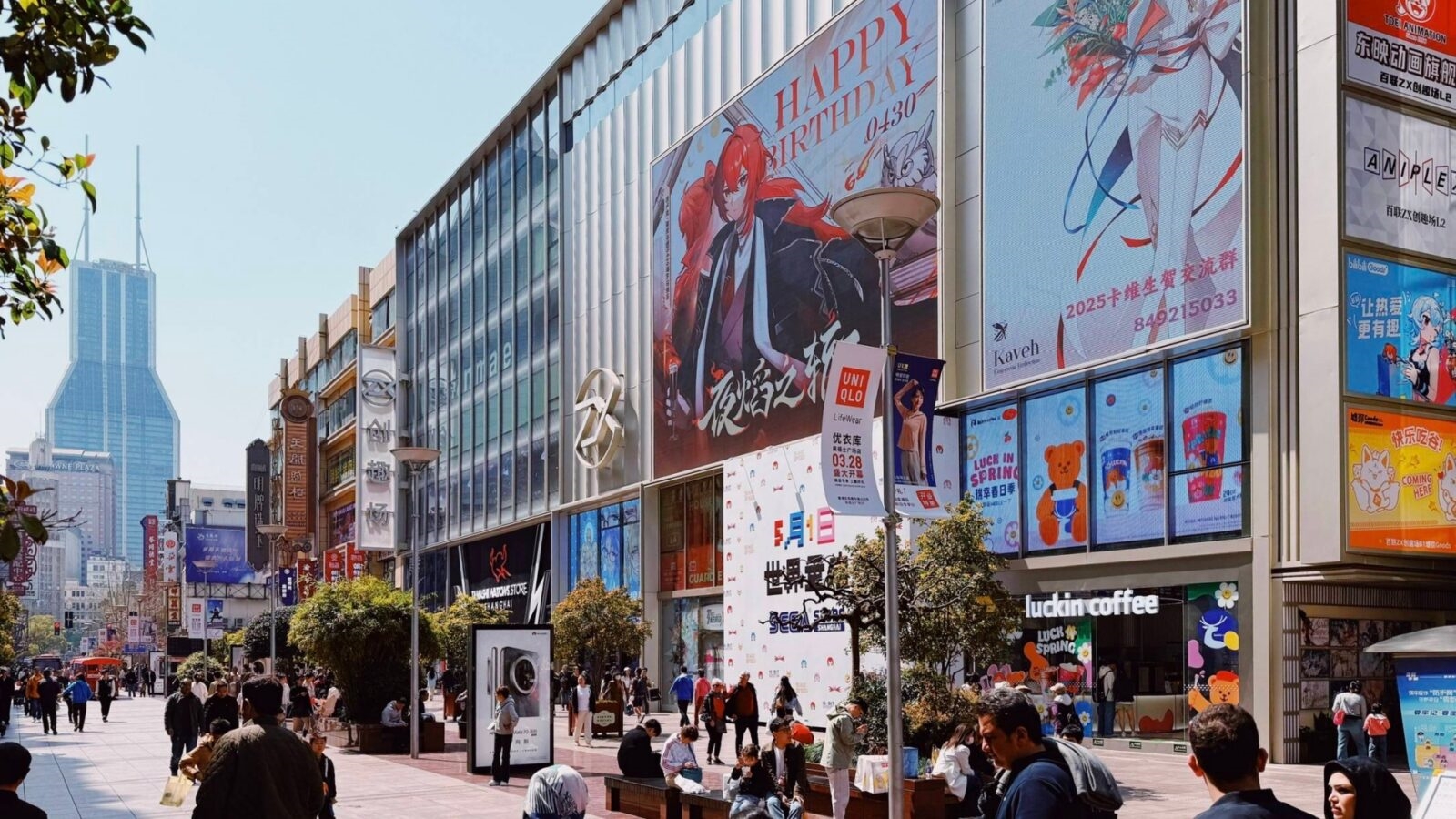
A Shanghai CBD map reads less like a single square on a city plan and more like three separate cities stitched together by metro lines. Lujiazui rises on the east bank of the Huangpu River, Hongqiao stretches along the west near the airport, and Xujiahui anchors the south-west arc between them. This guide puts all three onto one page — what each district actually does day to day, what it costs to move between them, and where to base yourself so the geography stops feeling abstract and starts reading like a route.
The three districts serve fundamentally different purposes. Lujiazui is Shanghai's financial flagship, home to the skyline that appears on every postcard. Hongqiao is the transit spine — airport, high-speed rail, and exhibition halls bundled under one roof. Xujiahui is the balance stop: real shopping, surviving heritage, and some of the best local food in the city.
Quick Facts
Lujiazui CBD — Pudong's Financial Skyline
-

- Shanghai Lujiazui CBD
-
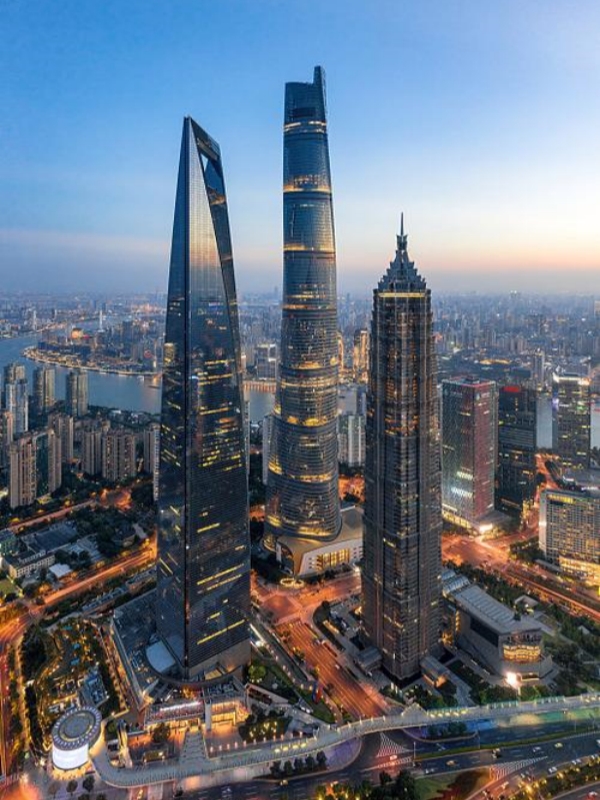
- Lujiazui CBD
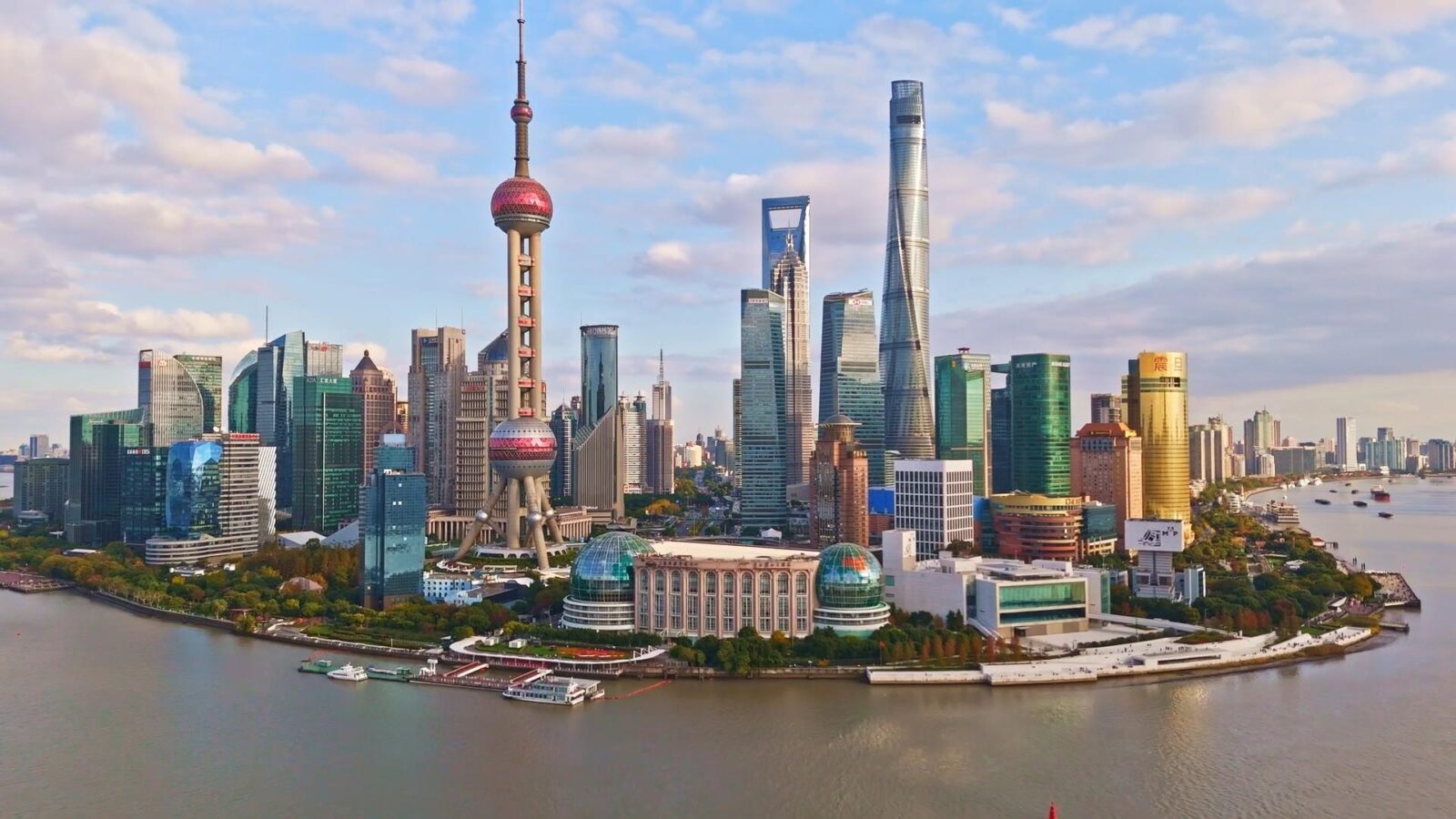
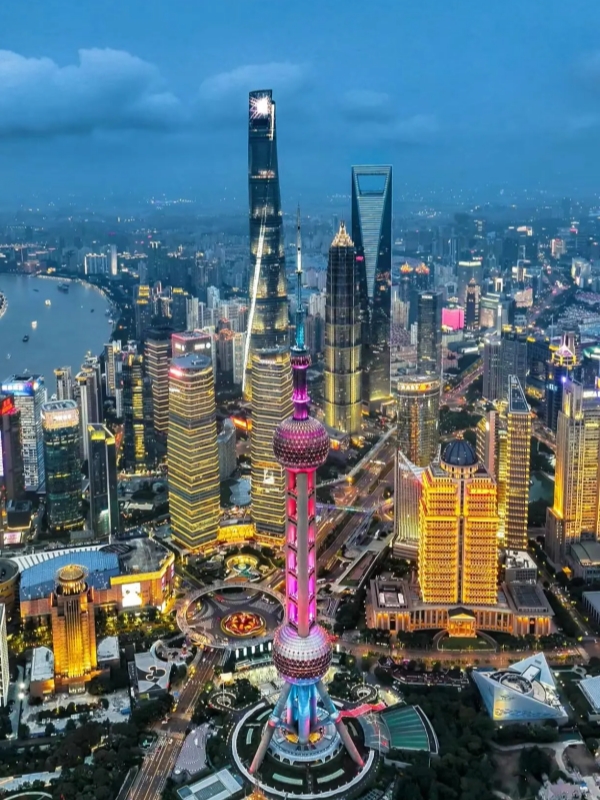
Shanghai's flagship financial district occupies the east bank of the Huangpu River, directly across the water from the Bund. The cluster was largely built between 1999 and 2015 on reclaimed land. Most visitors land here first because the skyline is the most photographed in mainland China — four towers competing for height against a river backdrop.
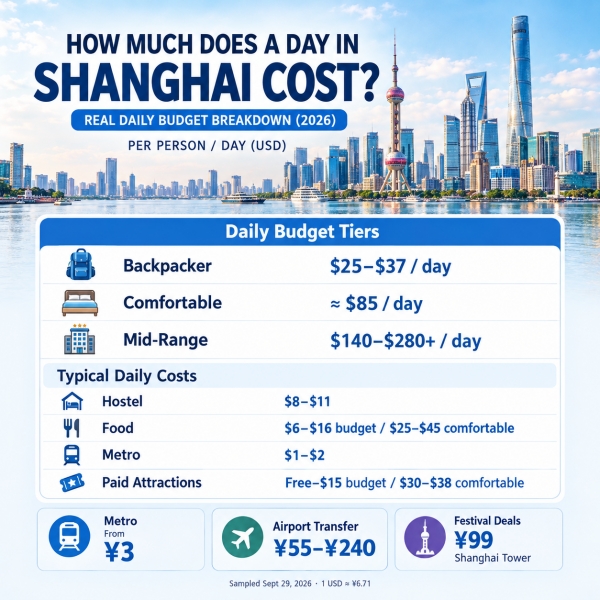
The practical centre of Lujiazui is small enough to walk. The ring road between Lujiazui metro and Dongchang Road station covers roughly 45 minutes at a moderate pace. A pedestrian tunnel runs beneath the river to the Bund, but the faster option is the Bund Sightseeing Tunnel — a novelty ride that takes about 5 minutes underground and costs about $7 (¥50) one way.
Key Towers and Observation Decks
The Shanghai CBD map is not complete without the observation deck question. Four paid decks dominate the circuit, each with its own ticket booth. All accept Trip.com and Klook e-vouchers. Confirm opening status before visiting — typhoon season and the Spring Festival window bring closures without notice.
- Shanghai Tower 118F: Highest point, ~632 m total height, observation deck ~$25 (¥180), best for clear-sky panoramas.
- Shanghai World Financial Center Sky Walk 100F: "Bottle opener" shape, observation ~$22 (¥160), strong sightlines west toward the Bund.
- Oriental Pearl TV Tower: Most recognisable silhouette, upper sphere ~$20 (¥160), red-and-white striping visible across Pudong.
- Jin Mao Tower 88F: Art Deco-style crown, observation ~$20 (¥150), slightly lower than the others but less crowded on weekdays.
What to Do Around Lujiazui
Below the towers, Lujiazui offers a tight cluster of paid attractions and retail. IFC Mall anchors the western edge — it houses a flagship Apple store and luxury brands. The Shanghai Ocean Aquarium costs about $28 (¥198) for an adult ticket and sits a short walk from the mall. Lujiazui Central Green Park is the free counterweight, a thin strip of lawn good for skyline photographs from ground level.
- IFC Mall: Luxury retail, Apple flagship, food court in basement.
- Shanghai Ocean Aquarium: ~$28 (¥198) adult, allow 90 minutes.
- Lujiazui Central Green Park: Free entry, open dawn to dusk.
- Bund Sightseeing Tunnel: ~$7 (¥50) one way, 5-minute river crossing, novelty value.
For souvenirs, take the metro about 20 minutes east to Pearl Market — also known as Huanpu wholesale market. It stocks everything from silk to electronics at prices that reward bargaining.
🛍️ Compare Iconic Retail Hubs: While Shanghai’s CBDs offer world-class retail and dining, travelers visiting Beijing can experience a similarly impressive premier shopping and lifestyle complex. Explore our visitor's guide to the China World Shopping Mall.
Hongqiao CBD — West Shanghai's Transport Hub
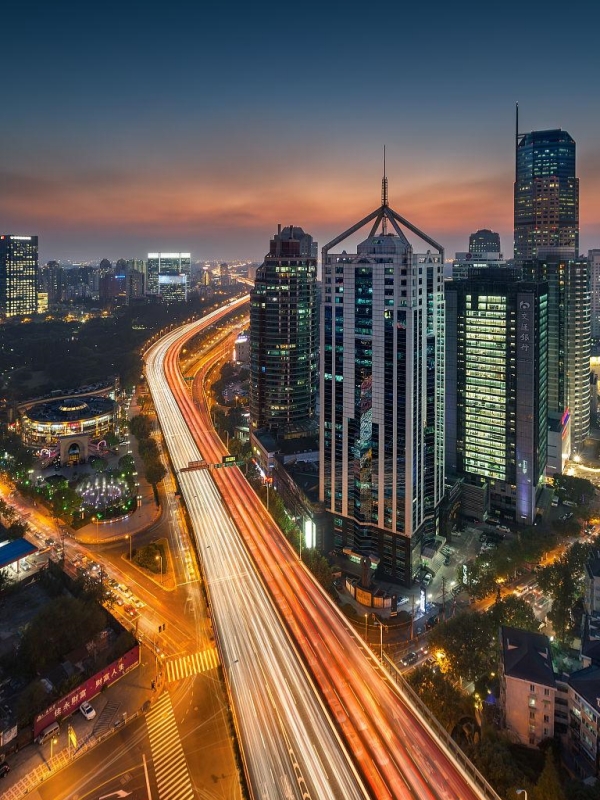
Hongqiao CBD
Hongqiao sits roughly 15 km west of People's Square. The district combines an international airport, a high-speed railway station, and a dense exhibition-and-business zone under one management. Unlike Lujiazui, it is not primarily a tourist destination — most visitors pass through rather than stay. The exception is trade-show attendees and overnight layovers, where the hotel rates run noticeably lower than Pudong.
The Hongqiao Transportation Hub links Terminal 2, the HSR station, and three metro lines (Lines 2, 10, 17) under one roof. Walking between modes takes 5–15 minutes depending on which gate you exit. Paid attractions near the hub are limited but include the National Exhibition and Convention Center — worth checking only if a major trade show is running. Hongqiao Tiandi, a mall complex directly above the HSR station, has a rooftop garden and a wide selection of restaurants, making it the most practical stop for a meal between trains.
Hongqiao Station and Airport Links
The most common confusion for visitors involves connections to and from Hongqiao. Several assumptions are wrong.
- Metro Line 2: Runs from Lujiazui through People's Square to Hongqiao Railway Station and Hongqiao Airport T2. No direct connection from Pudong Airport — transfer at Guanglan Road.
- Walking from Airport to HSR: Hongqiao Airport T2 connects to Hongqiao Railway Station in about 10 minutes on foot via a covered walkway.
- Line 17 to Disney: Line 17 runs from Hongqiao Railway Station to Oriental Land (Disney Shanghai) in about 30 minutes — useful if combining theme park visits with a transit stop.
- MagLev does not serve Hongqiao: The MagLev runs only between Pudong Airport and Longyang Road. It does not go to or from Hongqiao under any circumstances.
Hongqiao Business District
The paid attractions within the Hongqiao CBD itself are few but distinct. Four spots are worth noting for different reasons.
- Hongqiao Tiandi: Mall directly above the HSR station, rooftop garden, wide restaurant selection, free entry.
- NECC (National Exhibition and Convention Center): One of the largest exhibition venues in Asia. Check the event calendar before visiting — the site is a ghost town without a show running.
- Shanghai Hongqiao International Pearl City: Wholesale jade and pearl market, pieces range ~$5–50 (¥35–350). Bargaining expected.
- Hongqiao Central Park: Small green space, free entry, useful for a break between transit legs.
Xujiahui CBD — Shopping and Heritage Heart
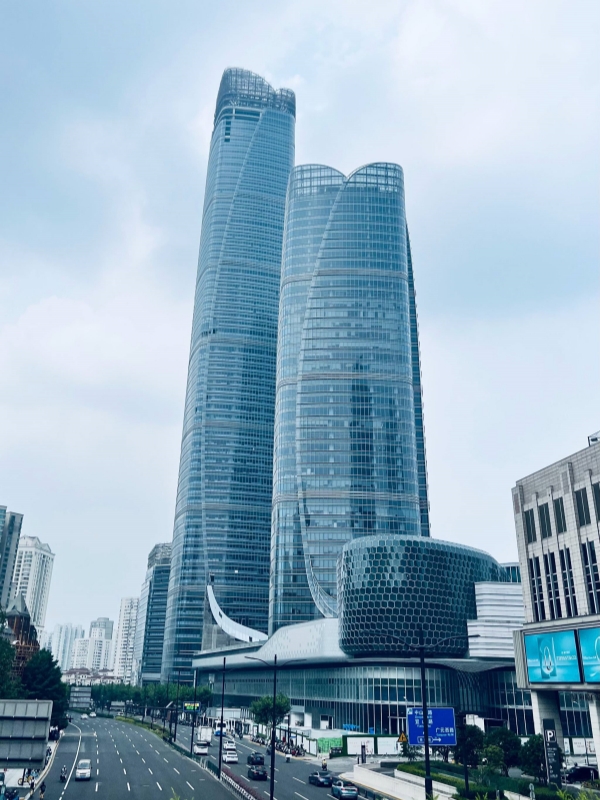
Xujiahui CBD
Xujiahui is the most balanced stop on the Shanghai CBD map. It combines a working commercial district with surviving heritage architecture — a combination that is genuinely rare in central Shanghai. Metro Lines 1, 9, and 11 intersect at Xujiahui station, making it one of the three most-connected nodes in the city. That connectivity is the practical anchor: from here you can reach Lujiazui in 45 minutes, Hongqiao in 50 minutes, and the old city in under 30.
The shopping cluster centres on four malls within a 10-minute walk of each other. The food anchors are different again — Lao Zheng Xing for Shanghainese classics and Yang's Dumpling for xiaolongbao are both within walking distance of the metro station. Heritage sites are scattered but walkable: the Xujiahui Catholic Cathedral, the Shanghai Museum of Natural History, and a short detour to Wukang Mansion on Line 10.
Shopping and Malls
The four-mall circuit around Xujiahui station covers a wide price range. Each mall has a distinct character and a different target customer.
- Grand Gateway: 10-floor mass-market mall at the metro exit. Electronics, fast fashion, and a large food court. Per-person food court spend: ~$8–14 (¥60–100).
- iapm Mall: High-end retail, extended evening hours until 22:00 or later — the only mall of the four with reliable late-night openings.
- Metro City: Electronics and anime goods. Strong for accessories and gadgets; less relevant for general shopping.
- Pacific Department Store: Heritage building with mid-range pricing. The architecture dates the visit more than the merchandise.
Heritage Sites Near Xujiahui
Four heritage anchors sit within walking distance of the Xujiahui shopping cluster. The most significant is also the most temperamental to visit.
- Xujiahui Catholic Cathedral: Built 1910, free entry. Check opening status before arriving — restoration closures are common and unpredictable.
- Shanghai Museum of Natural History: ~$4 (¥30) adult, good for families, modern building near the shopping district.
- Zhao Pingguo Former Residence: Small free site, irregular opening hours. Low priority unless you are specifically tracing local history.
- Wukang Mansion: Former Normandie Apartments, 1924. A 5-minute walk from Wukang Road metro on Line 10 — technically not Xujiahui but the closest heritage detour from the shopping circuit.
Getting Between Shanghai's CBDs
This section turns the Shanghai CBD map into an actual route. Three transport modes cover most visitor needs: metro, DiDi or taxi, and the MagLev — though the MagLev has a narrow use case. The practical rule is simple: metro within any single CBD, metro or DiDi between CBDs.
Metro fares are distance-based, running roughly $0.40–1.20 (¥3–9) per ride. Single-journey tokens are available at every station. The main peak-hour hazard is the 17:00–19:00 window — DiDi surges and taxis crawl. Metro is reliably faster during this period.
DiDi is the cheapest ride-hail option if the China-version app is pre-installed. The English-language DiDi app works on international credit cards but at a slightly higher base rate. For visitors without a Chinese number, the English app is the default entry point. Taxis use the same meter system as DiDi with a ~$0.40 (¥3) flag-fall and ~$1 (¥7) per kilometre thereafter.
Metro Lines Linking the CBDs
Three line pairings cover the most common cross-CBD movements. The MagLev adds a fourth option for Pudong Airport arrivals.
Taxi, MagLev and DiDi Fares
Four fare and payment points cover the most common questions.
- Taxi: Flag-fall ~$0.40 (¥3), ~$1 (¥7) per km thereafter. Short CBD trips rarely exceed $5 (¥35).
- DiDi English app: Accepts Visa and Mastercard directly. The China-version app offers lower prices but requires a Chinese number to register.
- MagLev single trip: ~$8 (¥50) one way, ~$13 (¥80) round-trip, ~$5 (¥35) child ticket. Only runs between Pudong Airport and Longyang Road.
- Pudong Airport to Lujiazui by taxi: ~$15–20 (¥100–150), ~45 minutes in light traffic. The MagLev-plus-metro combination is cheaper at ~$8.80 (¥63) total but slower.
Where to Stay and Eat by CBD
Hotel rates across the three CBDs cluster around a mid-range band, with notable variation driven by view and transit access rather than room quality. Lujiazui commands a premium for skyline proximity. Hongqiao is cheapest, driven by conference demand rather than scenery. Xujiahui sits in the middle — repeat visitors who prioritise local food and metro connectivity often prefer it over Pudong.
Per-person food costs run roughly $15–25 (¥100–180) at a mid-range restaurant across all three districts. The difference is cuisine type: Lujiazui skews international, Hongqiao skews Chinese chain restaurants near the station, and Xujiahui offers the most local Shanghainese options within walking distance.
Staying Near Lujiazui
Three properties anchor the Pudong end of the Shanghai CBD map. All are within walking distance of the observation deck circuit and the IFC Mall.
- InterContinental Shanghai Pudong: ~$140 (¥1,000)/night, 5-minute walk to Lujiazui metro. Reliable international standard.
- IFC Residence: ~$180 (¥1,300)/night, serviced apartments with river view. Best for longer stays requiring kitchen facilities.
- Park Hyatt Shanghai: ~$280 (¥2,000)/night, located inside the Shanghai World Financial Center. Top-end choice for skyline proximity.
Budget alternative: Atour Hotel Lujiazui runs about $80 (¥580)/night for a solid mid-range option without the premium positioning.
Staying Near Hongqiao
The Hongqiao cluster suits overnight layovers and trade-show attendees. All three recommended hotels have direct airport transfer options.
- Sofitel Shanghai Hongqiao: ~$120 (¥860)/night, connected to the NECC. Best for exhibition centre visitors.
- Cordis Hongqiao: ~$110 (¥790)/night, walking distance to the HSR station. Good balance of comfort and transit access.
- Hyatt House Hongqiao CBD: ~$95 (¥680)/night, longer-stay friendly with kitchen facilities. Best value of the three for stays beyond one night.
Staying Near Xujiahui
Xujiahui attracts a mix of repeat visitors and those prioritising local food over skyline views. The hotel options range from heritage character to straightforward mid-range.
- Andaz Xintiandi: Technically in Xintiandi but close to Xujiahui metro, ~$160 (¥1,150)/night. Design-forward property with strong food and bar scene.
- Hengshan Picardie Hotel: ~$110 (¥790)/night, heritage Art Deco tower with character. One of the more distinctive stays in the area.
- Ji Hotel Shanghai Xujiahui: ~$70 (¥500)/night, clean mid-range option with solid metro access. Best for budget-conscious visitors.
For food anchors near Xujiahui, Lao Zheng Xing delivers Shanghainese classics within walking distance of the shopping circuit. Yang's Dumpling, specialising in xiaolongbao, is another short walk from the metro station.
Frequently Asked Questions
Q: How far apart are Shanghai's three CBDs?
Lujiazui sits about 5 km east of People's Square, Xujiahui about 7 km south-west, and Hongqiao about 15 km west. Direct cross-district distances: Lujiazui to Xujiahui is roughly 12 km, Lujiazui to Hongqiao roughly 20 km, and Xujiahui to Hongqiao roughly 10 km. On metro, the longest single ride is Lujiazui to Hongqiao at about 75 minutes on Line 2.
Q: Which CBD is best for first-time visitors?
Lujiazui is the primary recommendation. It offers the iconic skyline, the Bund directly across the river, the densest cluster of observation decks, and the easiest metro access via Line 2. Xujiahui is a strong secondary choice if your priorities are local food, shopping, and heritage rather than skyline photographs.
Q: How do I get from Pudong Airport to Lujiazui?
Three options exist. The MagLev to Longyang Road then Metro Line 2 is fastest at roughly 22 minutes total and costs about $8.80 (¥63). The Metro Line 2 direct from Pudong Airport takes about 60 minutes at $0.70 (¥5). A taxi runs about 45 minutes in light traffic for roughly $15–20 (¥100–150) — the fastest option during off-peak hours but the slowest during rush.
Q: Is the Shanghai MagLev worth taking?
Yes for the novelty and for Pudong Airport to Longyang Road travel. The top speed of 431 km/h makes the 7-minute journey genuinely fast. The "no" case applies only if you are not going to or from Pudong Airport — the MagLev operates on that single corridor only and does not serve Hongqiao or any other district.
Q: Can foreigners pay with Alipay or WeChat Pay in Shanghai?
Yes. Both apps support international payment methods including Visa, Mastercard and Apple Pay through their "Tour Card" or international wallet functions, a change that took effect in 2024. Cash is still accepted but increasingly rare in CBD areas. For metro QR-code entry and DiDi, a linked payment method is essential — the single-journey token counter exists but queues can be long.
Q: Which metro line connects Lujiazui and Hongqiao?
Line 2 runs the entire route from Lujiazui through People's Square to Hongqiao Railway Station and Hongqiao Airport Terminal 2. The end-to-end journey takes roughly 75 minutes. No transfer is required. This is also the line that serves the Bund, making it the most useful single line for visitors covering both the east-bank skyline and the west-end transit hub.
Q: Do I need a Chinese SIM card or VPN in Shanghai?
A local SIM is recommended for DiDi and metro QR-code entry. eSIMs purchased before arrival through services like Airalo or Holafly work on arrival and avoid the need for a physical SIM. VPN is not required for any Shanghai CBD map or travel-planning site — Google Maps, booking platforms and translation tools accessible without a VPN are sufficient. VPN is required for Google, Instagram and WhatsApp — install and test before arriving, as VPN availability inside China varies.