Qing Cheng Mountain China
Qingcheng Mountain — 青城山, the "Green City" mountain — sits about 70 km west of Chengdu in Sichuan province. It is one of the founding mountains of religious Taoism and, together with the Dujiangyan Irrigation System downstream, was inscribed as a UNESCO World Heritage Site in 2000. Foreign and Chinese visitors alike come for the quiet forested ridges, the long-standing Taoist temples, and the contrast with the busier giant-panda and Dujiangyan sites nearby. As a day trip from Chengdu it pairs well with a morning of hiking and an afternoon by the river; from further afield, the Guangzhou–Chengdu flight or rail leg is the first move.
Quick Facts
Why Visit Qingcheng Mountain
Qing Cheng Mountain China
The name "Qingcheng" literally means "Green City," and the mountain earns that label from its year-round canopy and frequent mist. Unlike the steeper, more dramatic peaks further south, this is a place of quiet ridges and forested slopes. It holds a specific place in Taoist history: Zhang Daoling traditionally founded the Way of the Celestial Masters here during the Eastern Han dynasty, around 142 CE, making it one of the religion's birthplaces. The Shangqing and Laozi lineages later developed here, and the temples retain that accumulated weight of practice. UNESCO inscribed Qingcheng and the Dujiangyan Irrigation System together in 2000 as a combined cultural and natural entry, a pairing that reflects how the landscape and the irrigation system are inseparable parts of one regional story.
The Green City and Its Taoist Roots
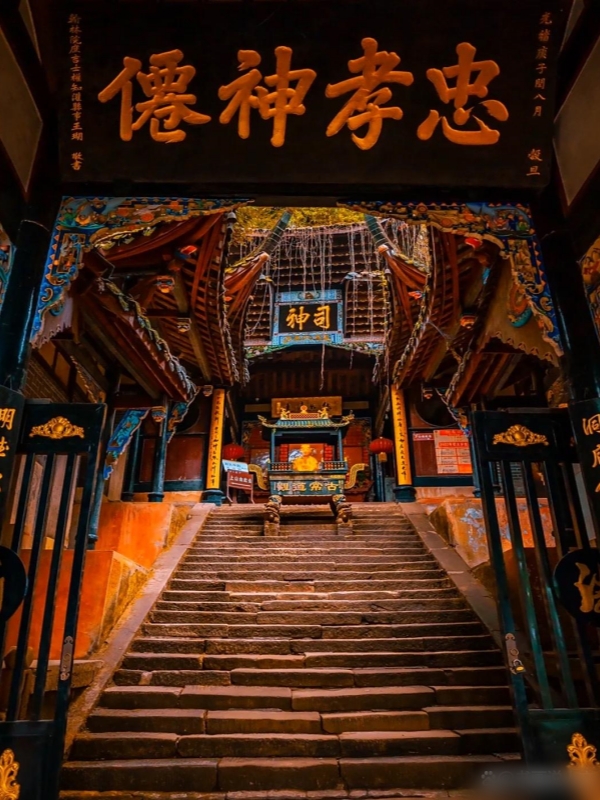
The mountain's reputation as a center of Taoist learning dates to the Eastern Han period when Zhang Daoling is traditionally credited with founding the Way of the Celestial Masters here. Over subsequent centuries the mountain attracted successive Taoist lineages — Shangqing, then Laozi-based — building a network of temples and retreat sites across both peaks. Most temple architecture visible today dates to Ming and Qing dynasties with later restoration. The combination of continuous religious use and a preserved natural setting is what drew the UNESCO designation alongside Dujiangyan.
Front Mountain or Back Mountain
First-time visitors typically choose Front Mountain, known as Qianshan, which offers a paved trail connecting a string of Taoist temples with a cable car option for the steeper sections. The walk from gate to summit takes four to six hours with stops. Back Mountain, or Houshan, is the wilder counterpart: longer hikes, waterfalls, mountain villages, and a more weather-sensitive trail network. It requires a full day and more preparation. The two sides are distinct enough that many visitors return specifically for the one they missed first time.
Front Mountain Route and Taoist Temples
Qing Cheng Mountain China
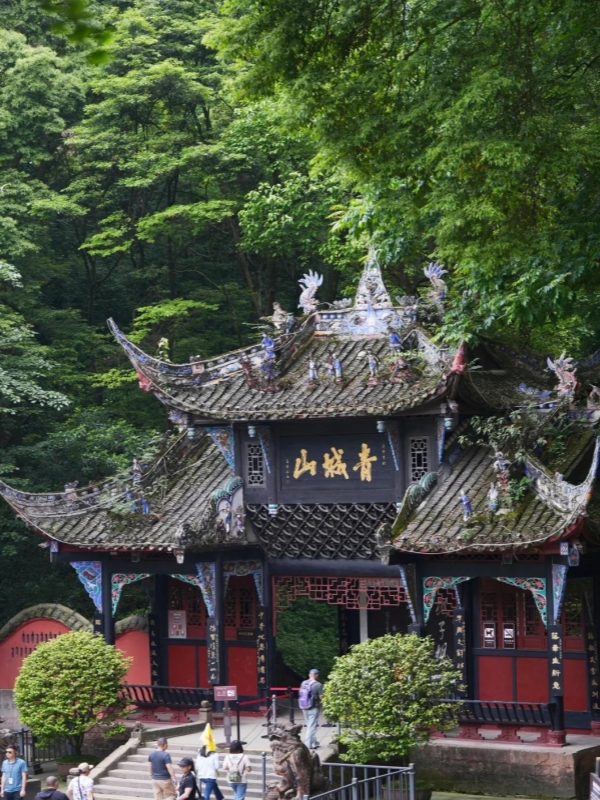
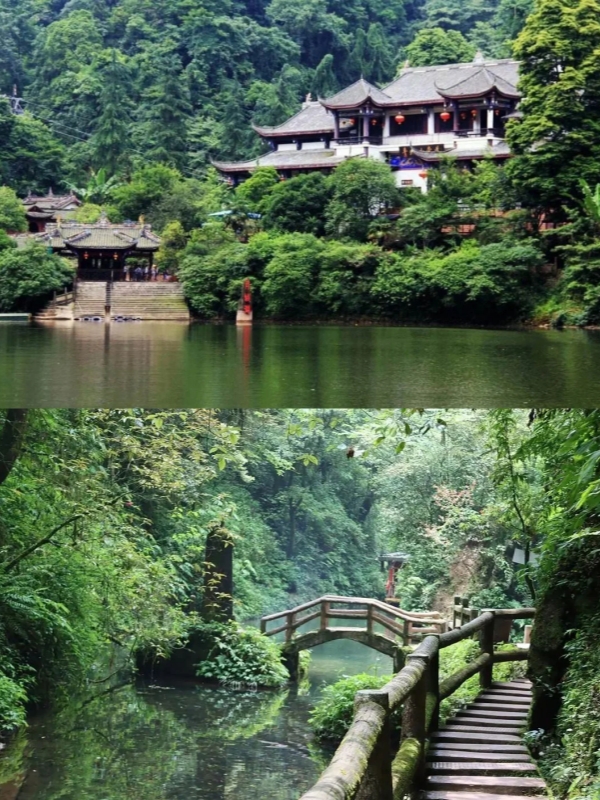
Front Mountain, or Qianshan, is the conventional first visit. Enter near Jianfu Palace, then climb past the Natural Picture scenic platform on foot or by the Yuecheng cable car. From there, the stone path winds through Tianshi Cave and Zushi Hall before reaching Shangqing Palace near the summit, with Laojun Pavilion as the high point at roughly 1,260 meters. The whole route is paved and clearly signed, though steep in places. Most visitors allow four to six hours including stops. The cable car cuts the climb roughly in half, but it misses the middle section of temples — many riders go up by cable car and walk down instead.
Suggested Walking Order
The standard sequence follows the mountain's natural slope from gate to summit. Start at the main gate, visit Jianfu Palace near the entrance, then proceed to the Natural Picture scenic platform. From there, choose the cable car or the stone stairs upward. The walking route continues past Tianshi Cave and Zushi Hall before reaching Shangqing Palace, then on to Laojun Pavilion at the summit. The return can follow the same path or use the cable car on the way down. This order keeps the steepest ascent at the beginning when energy is highest.
Key Temples Along the Route
Five temples define the Front Mountain experience. Jianfu Palace, closest to the entrance, is the oldest extant complex and marks the trailhead. Higher up, Tianshi Cave is a cave complex traditionally associated with Zhang Daoling's original retreat, with Zushi Hall sitting within the same complex. Shangqing Palace, near the upper reaches, represents the mountain's later Taoist development. Laojun Pavilion at the summit honors Laozi and provides the clearest views on clear days. When visiting, walk around altars clockwise, avoid flash photography of statues, and keep voices low. Incense is provided at designated burners — use it sparingly.
🍵 Sacred Taoist Peaks: Plan your pilgrimage to ancient forested temples with Mount Qingcheng.
Back Mountain Hiking, Waterfalls and Villages
Qing Cheng Mountain China
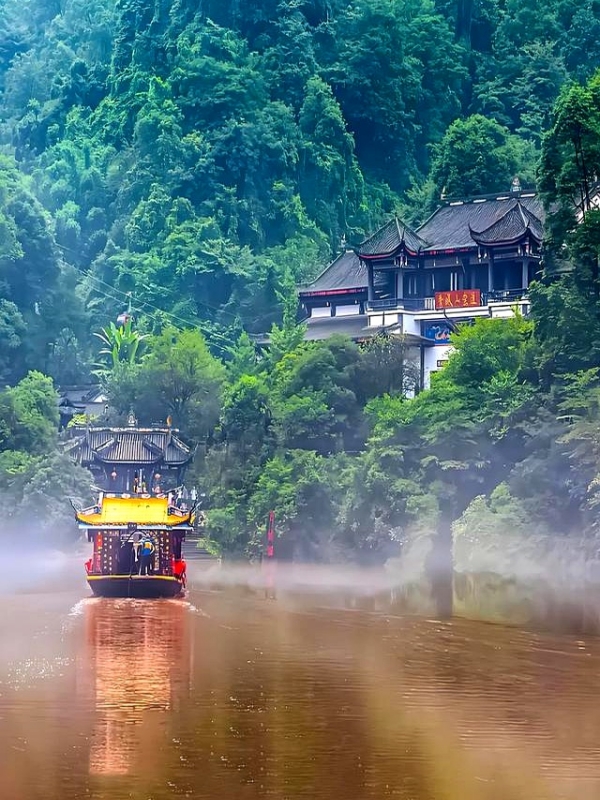
Back Mountain, or Houshan, is the wilder side of Qingcheng. Most visitors enter through Taian Ancient Town at the foot and follow Wulong Gorge upstream through a succession of waterfalls. The Wulong cable car short-cuts the steepest section for those who want it. A full round-trip on foot takes six to eight hours and is best started early. The trail is partly paved but rougher than Front Mountain, with slick stone surfaces after rain. Proper hiking shoes are strongly recommended. Back Mountain is more popular with Chinese domestic visitors on weekends and considerably quieter on weekday mornings.
- Taian Ancient Town: Gateway village at the foot with food stalls and basic facilities — a natural starting and ending point.
- Wulong Gorge: The main valley trail with successive waterfalls; the defining landscape of Back Mountain.
- Flying Sand Waterfall: One of the named cataracts along the Wulong Gorge trail — the cascade is visible from the main path.
- Cuiying Lake: A small mountain lake reachable by a short side path; quieter than the main gorge.
- Shiyang and Hundred Flowers Lake: Higher elevations with scattered temples and lakes; requires the most time to reach from the base.
Route Overview and Time Needed
The Back Mountain circuit from Taian Ancient Town through Wulong Gorge to the upper lakes and temples typically requires six to eight hours at a moderate pace. Starting before 08:00 is advisable to finish before the afternoon thunderstorms common in summer. Back Mountain closes earlier than Front Mountain — often by 16:30 — and cable cars suspend during electrical storms. Wear grippy hiking shoes; the stone steps become slippery quickly after rain.
Named Waterfalls and Villages
The named landmarks along Back Mountain are clustered along the Wulong Gorge valley and the higher trails. Taian Ancient Town serves as the entry and exit point with basic refreshment options. The gorge itself carries the main trail, with Flying Sand Waterfall marking one of the more prominent cataracts. Cuiying Lake offers a quieter offshoot, while Shiyang and the Hundred Flowers Lake area sit higher up and require additional time. Baiyun Temple and the upper lake network extend the trail for those with a full day.
🚡 Southern Scenic Escapes: Ascend lush green hills overlooking Guangzhou at Baiyun Mountain.
Getting to Qingcheng from Chengdu and Guangzhou
Qing Cheng Mountain China
Getting to Qingcheng from Chengdu is straightforward by high-speed rail. From Guangzhou, the first leg is the flight or train into Chengdu, then the same onward connection. The HSR network makes the mountain accessible as a day trip without an overnight stop.
- Chengdu to Qingcheng: HSR from Chengdu Xipu or Chengdu South to Qingchengshan Station takes roughly 30 minutes and costs about $2–4 (¥15–25) second class. Some trains terminate at Dujiangyan Station, one stop further, which still works but adds 10–15 minutes. From Qingchengshan Station, a taxi or tourist shuttle reaches the Front Mountain gate in around 10 minutes for about $2–3 (¥15–20).
- DiDi or private car: Booking a private car or using DiDi from central Chengdu takes roughly 1.5 hours and costs about $28–42 (¥200–300). This option suits early starts or groups.
- Tourist coach: Direct tourist coaches from Chadianzi Bus Station have become infrequent. Checking current schedules ahead of time is essential if this is the preferred option.
- Guangzhou to Chengdu by air: Nonstop flights from Guangzhou Baiyun to Chengdu Shuangliu or Chengdu Tianfu take 2 hr 30 min to 3 hours. Economy fares typically range from $140–250 (¥1,000–1,800) one-way across multiple carriers.
- Guangzhou to Chengdu by rail: High-speed trains from Guangzhou South to Chengdu East run 7–8 hours via Guiyang, with second-class fares around $110–140 (¥800–1,000).
From Chengdu by Train, Bus or Car
The Chengdu–Dujiangyan HSR line is the cleanest option. Board at Chengdu Xipu or Chengdu South and ride to Qingchengshan Station. A taxi or shuttle from the station to the scenic gate takes roughly 10 minutes. If arriving on a train that only goes to Dujiangyan Station, continue by local shuttle or taxi — it is not far. Private car or DiDi from downtown Chengdu suits those starting early or returning late, with a typical journey time of 1.5 hours door to gate.
From Guangzhou to Chengdu
Guangzhou-based travelers have two realistic options: fly into Chengdu Shuangliu or Tianfu, or take the high-speed rail. A morning flight arriving by 09:00 allows enough time to reach Qingchengshan by 11:00, hike until 17:00, and be back in Chengdu by 19:00. The rail option takes 7–8 hours and is viable for travelers who prefer not to fly, though it compresses the available mountain time significantly on a single day.
🏙️ Skyline Views & Foggy Peaks: Explore the rugged, misty landscapes surrounding the mega-city at Chongqing Mountains.
Tickets, Opening Hours and On-Site Transport
Front Mountain and Back Mountain have separate tickets with distinct pricing. Cable cars on both sides shorten the climbs substantially but carry their own fees. Hours shift between seasons, and cable cars suspend during thunderstorms — confirming status at the gate on the day is standard practice.
Ticket Tiers by Area
The tiered pricing reflects the distinction between the developed Front Mountain with its temple circuit and the wilder Back Mountain. The combined ticket offers savings for visitors planning to explore both sides. High and low season prices apply to Front Mountain; Back Mountain pricing stays flat year-round. Foreign visitors can purchase Front Mountain tickets in advance through Trip.com and Klook, which simplifies entry during peak periods.
Cable Car and Shuttle Bus
Cable cars on both mountains charge similar rates. The Yuecheng line on Front Mountain and the Wulong line on Back Mountain both suspend during thunderstorms — checking status at the gate before boarding is the standard approach. Height restrictions may apply on certain cable car segments; confirm before boarding with children. Shuttle buses cover short connecting distances within the scenic area for a modest fee.
Best Time to Visit and Rainy Season Tips
April through May and September through October offer the most reliable conditions: warm but not hot, low risk of trail closures, and clear summit views on fine days. These shoulder seasons also avoid the peak domestic crowds that arrive during Chinese national holidays. The Sichuan Basin monsoon runs from June into August, bringing persistent rain, mountain fog, slippery stone steps, and occasional trail closures. Cable cars on both mountains suspend when thunderstorms pass through. Summer visits are workable — Front Mountain temples and the cable car remain partly operational, and mid-week crowds are thin — but Back Mountain hiking becomes genuinely risky in heavy rain. Winter brings cold at the summit, occasional light frost, and far fewer visitors. During Labor Day and National Day holiday weeks, arrive at the gate before 08:00 or wait until after 14:00 to avoid the worst queues.
- Spring (April–May): Comfortable temperatures, clear views, low trail risk — the most reliable window.
- Summer (June–August): Monsoon rains, fog at summit, slippery trails, possible cable-car suspensions — thinner crowds mid-week.
- Autumn (September–October): Second ideal window; warm days, crisp air, stable trail conditions.
- Winter (December–February): Quiet, cold at summit, occasional frost — reduced hours, fewer facilities.
- Holiday timing: Arrive early or late on Labor Day and National Day weeks; Front Mountain before 08:00 or after 14:00.
Frequently Asked Questions
Q: Is Qingcheng Mountain the same as Emei Shan?
No. Qingcheng is Taoist, lower in elevation at around 1,260 meters, and has a gentle forested ridge suited to a half-day visit. Emei Shan is Buddhist, rises to 3,099 meters, is steeper, and typically requires more than one day to explore properly. Many visitors do both, but the two mountains feel quite different.
Q: How much time do I need at Qingcheng?
Front Mountain alone takes four to six hours. Adding Back Mountain requires a full additional day. From Chengdu as a day trip, Front Mountain with the cable car fits comfortably in a single day. Those who want to explore both sides should plan two days on-site.
Q: Can I visit Qingcheng in the rainy season?
Yes for Front Mountain. Bring a rain jacket, expect fog at the summit, and confirm cable-car status at the gate before boarding. Back Mountain is considerably riskier in heavy rain — trails close and cable cars suspend. Avoid days with active thunderstorm warnings.
Q: Can Qingcheng be combined with Dujiangyan or the panda base?
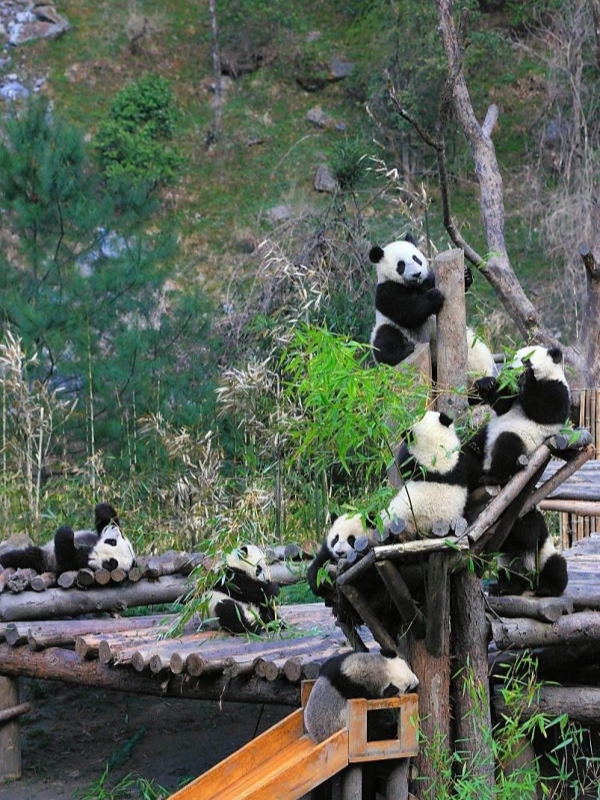
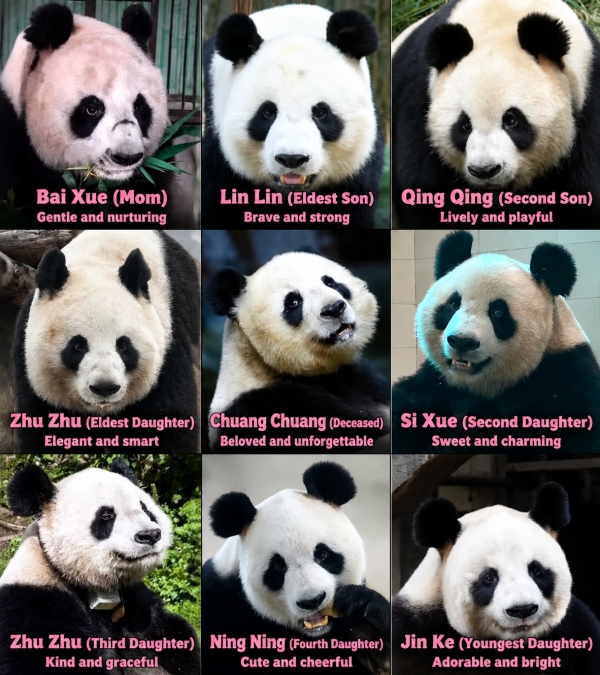
Yes. Dujiangyan Irrigation System and the nearby Dujiangyan Panda Base sit in the same corridor. A common itinerary is HSR to Qingchengshan in the morning, afternoon at the panda base or Dujiangyan park, and return to Chengdu by evening.
Q: Do I need to follow Taoist etiquette in the temples?
Dress modestly, keep voices low, and avoid flash photography of statues. Walk around altars clockwise and step over — not on — the raised wooden thresholds at hall entrances. Incense is provided at designated burners; use it sparingly.
Q: Is English spoken at Qingcheng Mountain?
Partially. Major signs on Front Mountain are bilingual, and ticket staff at the main gate usually manage basic English. Temple halls and Back Mountain trail staff may not. A translation app covers the gap comfortably.
Q: Where should I stay — Dujiangyan or Chengdu?
Stay in Chengdu for the standard day trip — better flight and HSR connections, more English-speaking hotel staff. Stay in Dujiangyan only if you want a pre-dawn start for Back Mountain, or plan to combine the panda base with an early-morning visit.