Panda Bear Names
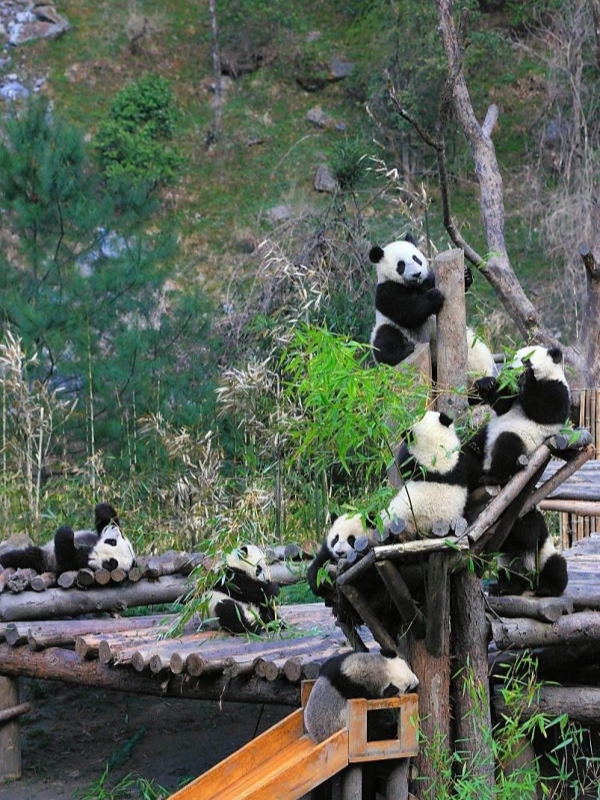
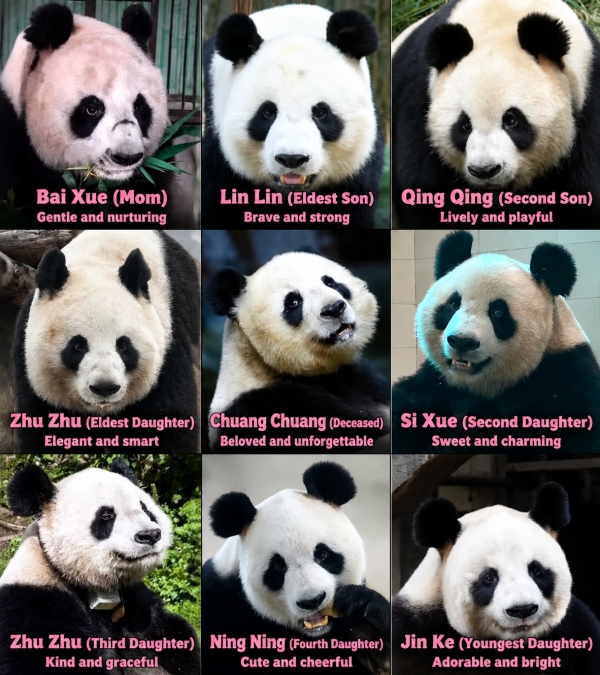
China's giant pandas carry meaningful panda bear names that blend ancient symbolism with modern diplomacy. Some honor centuries-old traditions, while others mark international friendships or celebrate milestones in the world's most ambitious wildlife conservation program. Every captive-born cub receives a name at a public ceremony roughly 100 days after birth, making the naming itself a celebrated event. Beyond the research bases and nature reserves of Sichuan and Shaanxi, pandas under China's loan program have become celebrity ambassadors at zoos across the United States, Europe, and Asia. This guide covers how pandas receive their names, the stories behind the most famous individuals, and practical advice for foreign visitors hoping to see them up close.
Quick Facts
How Pandas Get Their Names
The giant panda's scientific name tells its own story. Ailuropoda melanoleuca translates literally to "cat-footed black-and-white bear," a nod to the animal's unusual radial sesamoid bone that works like an opposable thumb and its vertical pupils. The Chinese name 大熊猫 dà xióngmāo means "big bear-cat," reflecting those feline facial features. The English word "panda" itself arrived via French from the Nepali term "poonya," originally describing the red panda.
Wild pandas do not receive individual names. Only captive-bred animals enrolled in the research program carry personal identifiers. Most cubs born at breeding centers are officially named at a public ceremony held around 100 days after birth. The 100-day milestone matters because newborn panda cubs typically take about a month to open their eyes, so the ceremony marks a developmental turning point. Names combine auspicious meanings—treasure, harmony, reunion, peace—and diplomatic symbolism when pandas are loaned overseas.
Inside the 100-Day Naming Ceremony
Chinese conservation centers hold public naming events for cubs born in their breeding programs. The ceremonies often feature keepers, zoo directors, and occasionally celebrity godparents. Jackie Chan has served as godparent for select births. The public can suggest names through online polls administered by the breeding center. Representative past names with their meanings:
- Bao Bao: "precious treasure"
- Mei Xiang: "beautiful fragrance"
- Hua Mei: "China-US" (marking the U.S. birthplace)
- Yuan Yuan: "reunion" or "round"
- Tai Shan: "peaceful mountain"
Famous Giant Panda Bear Names in China
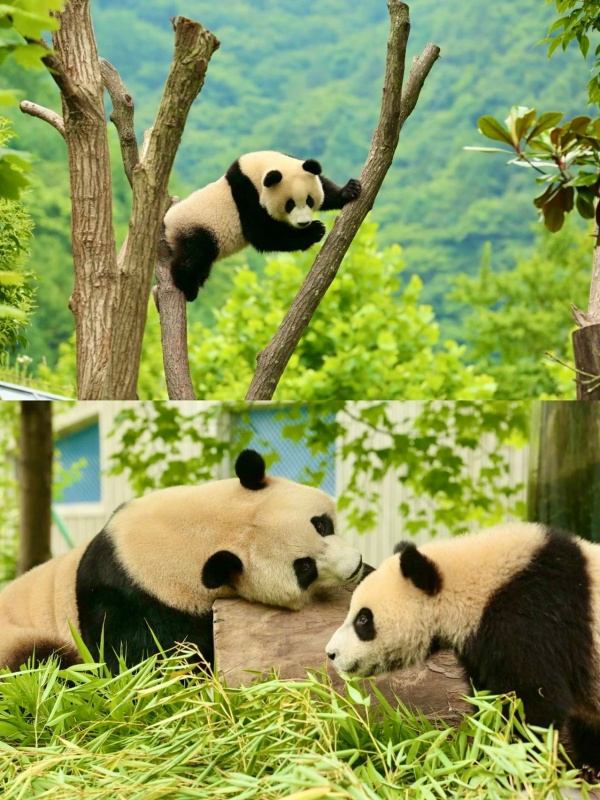
Map of Panda in China
China's breeding centers have produced several record-setting individuals whose names are widely recognized in conservation circles and beyond. These pandas represent milestones in the breeding program, diplomatic exchanges, and international conservation research.
- Pan Pan (潘潘): Recognized as the oldest male giant panda on record, lived at the China Conservation and Research Center for the Giant Panda at Wolong, died 2016 at 31 years old
- Jia Jia (佳佳): Guinness World Records recognized the oldest giant panda ever recorded, resided at Ocean Park Hong Kong, died 2016 at 38 years old
- Basi (巴斯): Fuzhou Zoo ambassador panda who modeled for the 1990 World Bank panda coin series, died 2017 at approximately 37 years old
- Qi Zai (七仔): The documented brown-and-white giant panda at Shaanxi Foping reserve in the Qinling mountains, born 2009
- Ya Ya (雅雅) and Le Le (乐乐): The Memphis Zoo pair; Le Le died February 2023, Ya Ya returned to China April 2023
Record-Setting Pandas and Their Stories
Jia Jia held the Guinness World Record as the oldest giant panda ever documented. Her long life at Ocean Park Hong Kong made her a celebrated figure in the city before her death in 2016. Basi, meanwhile, achieved international recognition beyond China when her image appeared on the 1990 World Bank panda coin—a rare distinction that placed her among the most widely reproduced panda images globally. Qi Zai stands apart from other captive pandas due to his rare brown-and-white coloration, a genetic trait documented in the Qinling mountain population. His existence in the Foping reserve provides researchers with ongoing data about this unusual phenotype. Ya Ya's 2023 return to China marked the end of a loan period that had spanned more than two decades, drawing renewed attention to the panda loan program and its finite timeline.
Where to Meet Giant Pandas in China
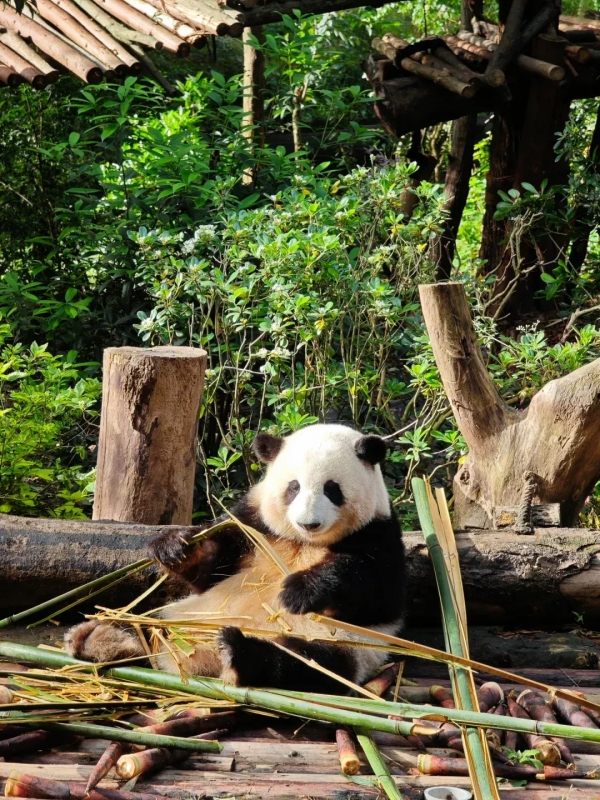
Giant Pandas of Chengdu
Foreign visitors can access several government-approved panda viewing sites, with the most popular concentrated in Sichuan Province. Chengdu remains the primary hub, offering the most developed tourist infrastructure and English-language support. Beyond Chengdu, panda bases in Ya'an, Wolong, Dujiangyan, and Shaanxi's Qinling mountains each provide distinct experiences, from modern research-focused enclosures to more remote nature reserve settings.
Top Panda Bases at a Glance
Booking and On-Site Tips for Foreign Visitors
Giant pandas are most active during cooler morning hours before their midday rest period. Planning your visit around this pattern significantly improves sighting quality. Most bases adjust enclosure access during the hottest parts of the day, which can limit what visitors can see in the early afternoon.
- Book ahead: reserve skip-the-line tickets on Trip.com the day before your visit to Chengdu Research Base
- Arrive early: aim to enter before 9am when pandas are feeding and moving rather than sleeping
- Carry cash: souvenir stalls at some sites may not accept international cards
- Combine Wolong or Bifengxia with a tour: these bases require vehicle transfers from Chengdu, so a guided day trip handles logistics
- Photography rules: the panda cub nursery is viewable behind glass only; flash photography is prohibited throughout all enclosures
- Respect feeding protocols: visitors are not permitted to feed pandas under the official conservation program
📍 Locate Panda Habitats & Reserves Across China: If you are planning a trip to see these iconic animals in person, explore where research bases, wild habitats, and top sanctuaries are situated with our Map of Panda habitats.
Overseas Celebrity Pandas
China's panda loan program places adult pandas at partner zoos worldwide under research and conservation agreements. These animals become flagship conservation ambassadors, and their naming often reflects the diplomatic context of their placement. Cubs born abroad return to China by age 3–4 to join the domestic breeding program.
- San Diego Zoo: Bai Yun (白云, "white cloud") and Xiao Liwu (小小, "little gift") represent the last U.S.-born generation; the original giant pandas returned to China in 2019; a new agreement was announced in 2024
- Smithsonian's National Zoo, Washington DC: Current residents include Xiao Qi Ji (小奇迹, "little miracle"); Bao Li (宝力) and Qing Bao (青宝) arrived as a new pair in 2024
- Edinburgh Zoo, Scotland: Tian Tian (添添, "more and more") and Yang Guang (阳光, "sunlight") were returned to China late 2024
- Everland Zoo, South Korea: Ai Bao (爱宝, "love treasure") and Le Bao (乐宝, "happy treasure") with cub Fu Bao (福宝, "fortune treasure"); Fu Bao returned to China in 2024
Pandas at Zoos Outside China
How Panda Loan Agreements Work
China's panda loan program operates under contracts managed by the China Wildlife Conservation Association and the China Association of Zoological Gardens. The framework governs research collaboration, breeding data sharing, and the eventual return of animals to China.
- Contract term: typically 10 years, renewable by mutual agreement between the Chinese authority and the host zoo
- Annual loan fee: the borrowing zoo pays a fee that funds conservation efforts at Chinese breeding centers
- Research data sharing: breeding and health records from the host institution are shared with Chinese researchers
- Cub return requirement: any cub born abroad must return to China by age 3–4 to participate in the domestic breeding program
- End-of-life provisions: when an adult panda dies abroad, necropsy and remains are handled according to the contractual agreement with Chinese authorities
Names for Pet and Plush Panda Bears
Map of Panda in China
These naming ideas work well for plush pandas and stuffed animals. Giant pandas are protected wildlife and cannot be kept as personal pets.
Cute and Chinese-Style Names
Chinese names commonly appear in pinyin alongside their English meaning. These work equally well for male, female, or unisex plush pandas.
- Bao: "treasure" in Chinese; a short, affectionate choice
- Mei: "beautiful" or "fragrant"
- Nuan Nuan: "warm and warm" — conveys coziness
- Jia Jia: "beautiful and beautiful" — commonly used name for panda residents in Hong Kong and Singapore
- Mo Mo: "quiet and quiet" — a calm, gentle option
- Yi Yi: "first and first" or "one and one"
- Wei Wei: "great and great"
- Yuan Yuan: "reunion" or "round and round"
Funny and Mythology-Inspired Names
For plush pandas with playful personalities or for fans of Chinese culture, these options offer something lighter or more specific.
- Bamboozle: plays on the panda's signature food
- Pandalope: a portmanteau with a woodland creature
- Noodle: playful and informal
- Chubby: descriptive and endearing
- Burrito: a warm, round reference
- Floof: emphasizes the fluffy texture
- Fu Long: "lucky dragon" — mythology-inspired with auspicious meaning
- Mei Mei: "little sister" — a term of endearment
- Li Bai: named for the Tang dynasty poet known for nature verse
- Zhu Zhu: "bamboo bamboo" — directly echoes the panda's food source
Frequently Asked Questions
Q: What is the scientific name for a giant panda?
The giant panda's scientific name is Ailuropoda melanoleuca, which translates literally to "cat-footed black-and-white bear." The giant panda belongs to family Ursidae, the bear family, a classification established in the early 20th century.
Q: What is the panda's name in We Bare Bears?
The panda character in the Cartoon Network series We Bare Bears is simply named Panda. The character is voiced by Bobby Moynihan and is sometimes nicknamed Pan-Pan by his brothers Grizzly and Ice Bear.
Q: Who is the oldest giant panda on record?
Jia Jia (佳佳), a female giant panda at Ocean Park Hong Kong, held the Guinness World Record as the oldest giant panda ever recorded. She reached the age of 38 before her death in 2016.
Q: How are captive panda cubs named?
Captive-born panda cubs receive names at a public naming ceremony held approximately 100 days after birth. Names commonly combine auspicious meanings such as treasure, reunion, or harmony, and may also reflect donor or diplomatic recognition.
Q: Why do foreign-zoo pandas eventually return to China?
Under the standard loan agreement managed by the China Wildlife Conservation Association and the China Association of Zoological Gardens, cubs born abroad must return to China by age 3–4 to join the domestic breeding program. Adult pandas also return when their loan contract ends, typically after 10 years.
Q: What does the Chinese name dà xióngmāo mean?
大熊猫 dà xióngmāo literally translates to "big bear-cat." The name reflects the giant panda's unusually feline facial features, including its vertical pupils and the enlarged radial sesamoid bone that functions like an opposable thumb for gripping bamboo.
Q: What's the difference between a giant panda and a red panda?
Despite sharing a name, giant pandas and red pandas are two distinct species with no direct taxonomic relationship. The giant panda is Ailuropoda melanoleuca, a member of family Ursidae. The red panda is Ailurus fulgens, the sole living member of family Ailuridae. Both species eat bamboo but evolved this diet independently.
Q: Can plush pandas share the names of real pandas?
Yes, plush panda naming conventions frequently reuse real giant-panda names such as Bao Bao, Mei Xiang, Tian Tian, Jia Jia, and Pan Pan. There is no naming rights or restriction on using these names, and mascots, plush toys, and brand characters commonly adopt the same Chinese-rooted names as their real counterparts.