The Ming Tombs of Beijing
The Late Ming spans roughly seven decades — 1572 to 1644 — and ends with the Chongzhen Emperor hanging himself on Jingshan Hill as rebel forces entered Beijing. In between, the dynasty built the watchtowers you climb at Mutianyu, filled the marble halls of Dingling, and sustained a silver-fueled trade network that connected Fujian ports to Manila galleons. These are not ruins in a textbook. The walls, tombs, and palace halls are still in the ground, open to visitors, and reachable from Beijing on a weekend.
This guide gives you the Late Ming timeline first, then maps the sites by travel value. The goal is to stand at a 1570s watchtower or walk the underground chambers of the Wanli Emperor's tomb with enough context to understand what you are looking at.
Quick Facts
Late Ming China: Era, Emperors & Fall
Late Ming China (1572–1644)
When "Late Ming" Begins and Ends
Historians mark the Late Ming as 1572 to 1644. The lower boundary is Wanli's accession; the upper is the Chongzhen Emperor's death and the fall of Beijing to Li Zicheng's Shun forces. Some scholars push the start back to the 1550s, citing the Jiajing Emperor's long reign and the first silver surges. The broader Ming Dynasty ran from 1368 to 1644 — so Late Ming represents the final quarter of the dynasty's life.
The Wanli Reign (1572–1620)
Wanli — Zhu Yijun — took the throne at age nine. Grand Secretary Zhang Juzheng ran the government through the Single Whip tax reform, which consolidated payments in silver and stabilized the revenue base. Zhang died in 1582, and Wanli gradually withdrew from court duties. After 1589, he stopped holding audiences for years, creating a paralysis in official appointments.
Despite the administrative drift, the Wanli era oversaw major construction. The Dingling tomb complex was built between 1584 and 1590. The court also funded the Imjin War campaigns against Japan in Korea (1592–1598), financed partly through the silver flowing in via Manila galleons. At 48 years, Wanli's reign is the longest of any Ming emperor.
Tianqi, Chongzhen and the Fall of 1644
The Taichang Emperor ruled for one month in 1620 before his death. His successor, the Tianqi Emperor (1620–1627), fell under the influence of eunuch Wei Zhongxian, who purged political opponents and consolidated power. When the Tianqi Emperor died, his brother took the throne as the Chongzhen Emperor (1627–1644).
Chongzhen inherited a depleted treasury, empty official ranks from Wanli's long absenteeism, and multiple regional rebellions. In April 1644, Li Zicheng's forces took Beijing. Chongzhen hanged himself on Jingshan — Coal Hill — the hill visible from the north side of the Forbidden City. The Shanhaiguan garrison commander Wu Sangui then opened the pass to Manchu (Qing) forces, ending the Ming.
Late Ming Trade, Silver & Global Reach
Late Ming China was the world's largest silver importer. Estimates suggest up to half of global silver production flowed through Manila galleon routes between the Americas and Asia during the peak period of roughly 1580–1640. Canton and Fujian ports handled much of this maritime trade, creating a commercial economy that circulated silver through provincial markets.
The period also brought Matteo Ricci to Beijing in 1582, where he lived until 1610. Ricci's presence marks the first sustained Jesuit mission in the imperial capital, establishing a small but significant foothold for European knowledge exchange during the Late Ming.
The Great Wall in the Late Ming Era
-
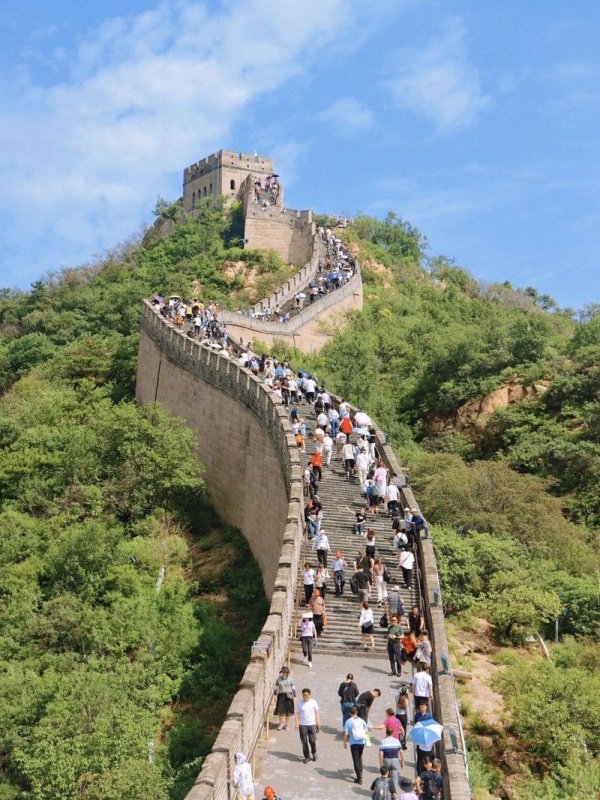

- Beijing to Badaling Great Wall
-
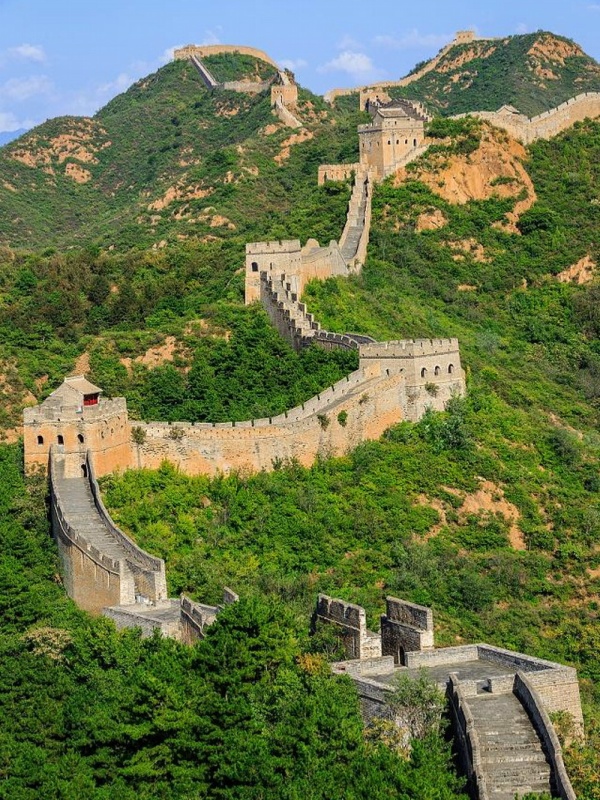
- Beijing to Badaling Great Wall
The Great Wall as visitors know it today is overwhelmingly a Late Ming construction. Between 1567 and 1576, General Qi Jiguang was appointed Commander of the Ji Town defenses and rebuilt or standardized the Wall from Jinshanling westward through Mutianyu, Gubeikou, and beyond. His reforms introduced the hollow signal-watchtower design with multiple gun decks and lodging — the towers you walk through at Mutianyu.
- Qi's hollow watchtower standard: The two-story brick towers with gun ports and storage rooms are Qi Jiguang's architectural signature across the Huairou and Luan County sections.
- Three most-climbed Late Ming sections: Mutianyu, Jinshanling, and Simatai account for the majority of foreign visitor footfall on the Wall today.
- Restoration scale varies: Mutianyu is the most rebuilt and the most accessible. Jinshanling preserves more original brickwork. Simatai retains the most unrestored Late Ming masonry on steep ridges.
Qi Jiguang and the Ming Wall Reform
Qi Jiguang (1528–1588) arrived at the Ji Town command in 1567 with a mandate to fix a fragmented border defense. His solution was systematic reconstruction: standardized brick towers, integrated signaling systems, and garrisons trained for coordinated defense. The work stretched from Jinshanling through Mutianyu and Gubeikou, creating the fortified ridge that still stands.
Travelers who climb Mutianyu or Jinshanling are walking on a 1570s construction project in its original or lightly restored form. Qi's towers are identifiable by their hollow interior, brick facings, and the regularity of their spacing along the ridge.
Mutianyu Great Wall
Mutianyu lies in Huairou District, roughly 75 kilometers north of central Beijing. The maintained section spans 2.5 kilometers with approximately 22 watchtowers, rebuilt under Qi Jiguang between 1569 and 1571. This is the section most first-time visitors and families choose.
The restored surface makes it manageable for children and older travelers. The cable car carries passengers to the wall top; the toboggan offers a controlled descent on a steel track. Ticket prices run about $8–12 (¥55–65) for entrance, with cable car round trip around $15–22 (¥105–150) and toboggan roughly $5–8 (¥35–55). Hours shift between 7:30–17:30 in winter and 8:00–18:00 in summer. A tourist bus from Dongzhimen costs roughly $5–9 (¥35–60) one way; a private car runs $35–60 (¥250–400).
Jinshanling Great Wall
Jinshanling sits in Luan County, Chengde, roughly 120 kilometers northeast of Beijing. The section was rebuilt between 1567 and 1570 under Qi's direct supervision, featuring brick-faced towers and crenellations that set the standard for the Ji Town stretch. It is the preferred section for visitors who want a genuine hiking experience.
The 10.5-kilometer through-hike from Jinshanling to Simatai is the classic multi-section route. Jinshanling is the more accessible starting point with a cable car; Simatai is the more rugged finish with steep, original stonework. Entrance tickets cost about $10–15 (¥65–95); the cable car one-way runs roughly $10–15 (¥65–95).
Simatai Great Wall
Simatai lies in Miyun District, approximately 110 kilometers northeast of central Beijing, paired with Gubei Water Town at its base. The section preserves late Ming towers in largely unrestored condition across steep ridges — a harder climb but more atmospheric for visitors who want to see original masonry.
Some lower segments have historically offered night tours; access has shifted with policy, so confirm on the day. Ticket prices run about $11–14 (¥65–90); the cable car to the mid-section costs roughly $5–9 (¥35–60). The combination with an overnight at Gubei Water Town is practical — the town is a 10-minute shuttle from the wall entrance.
🧱 Book Your Wall Excursion: Want to hike the stone ramparts built during the Late Ming era? Compare private transfers, cable car passes, and section routes in Great Wall of China Tours from Beijing.
The Ming Tombs of Beijing & Dingling
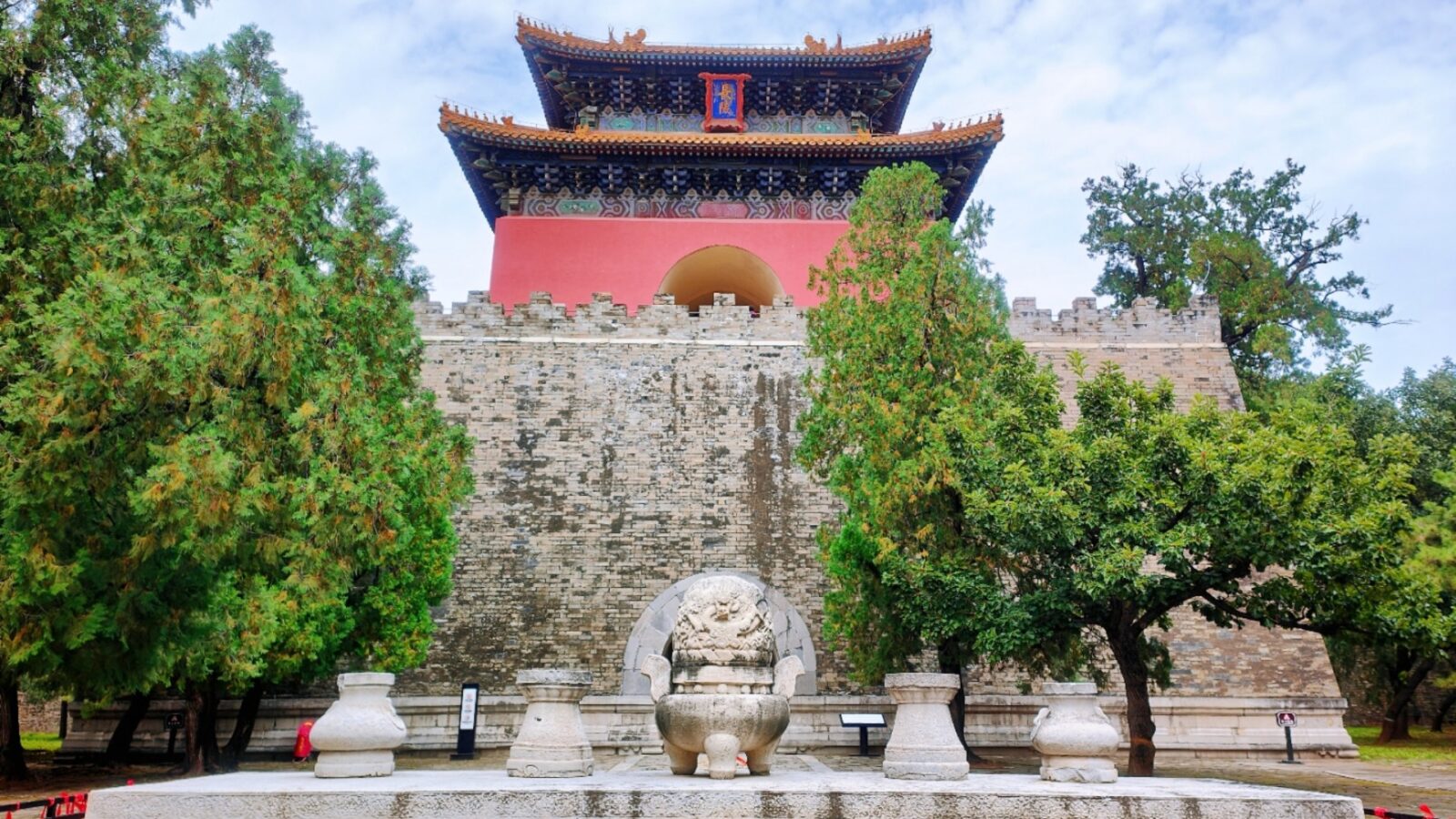
Ming Tombs
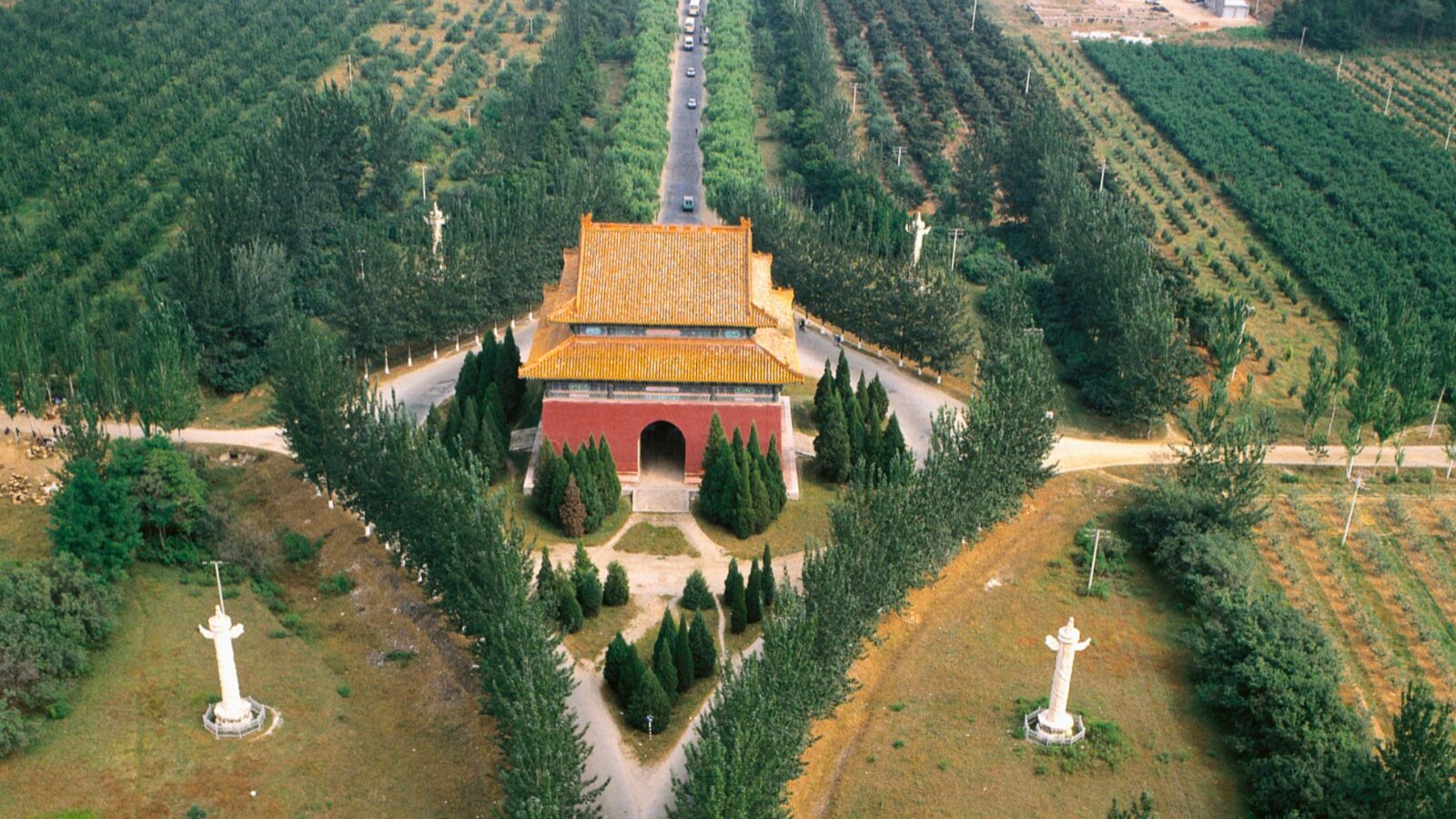
The Thirteen Ming Tombs form the single most concentrated cluster of Late Ming sites you can visit on one ticket. The burial ground in Changping District holds 13 of the 16 Ming emperors who reigned after the capital moved to Beijing in 1420. Construction stretched from 1409 to 1644, covering the entire Ming-imperial period. Three tombs — Chang Ling, Ding Ling, and Zhao Ling — are open to visitors, along with the Sacred Way and an on-site museum.
- Thirteen emperors in one valley: The tomb complex covers a defensible hillside, each emperor assigned a separate mound with its own spirit way and hall.
- Changping access: The Changping Subway Line terminates near the complex, making it one of the most straightforward Beijing day trips by public transport.
- Three tomb halls you can enter: Chang Ling (Yongle-era, the oldest), Ding Ling (Wanli), and Zhao Ling (Chongzhen).
The Thirteen Ming Tombs (Shisan Ling)
The Ming Tombs site occupies a roughly 40-kilometer drive northwest of central Beijing. The tomb complex developed over two centuries, with each emperor selecting a location within the valley, then building his burial mound and memorial hall. The site choice followed feng shui principles — a protected valley with hills on three sides and a stream at the base.
Of the 13 emperors buried here, three are open to visitors. Chang Ling holds the Yongle Emperor, built first in 1409. Ding Ling holds Wanli, built 1584–1590. Zhao Ling holds Chongzhen, the last Ming emperor, completed posthumously in 1644 after the dynasty fell. The remaining tomb mounds are closed above ground but visible as earth-covered structures behind the visitor areas.
Dingling – Wanli Emperor's Excavated Tomb
Dingling is the only Ming imperial tomb to have been archaeologically excavated. The project opened in 1956 and revealed the three marble halls — the antechamber, the central chamber, and the rear chamber — with the original Wanli-era throne still in place. The underground chambers were built between 1584 and 1590 for the Wanli Emperor and his two empresses.
The original coffins were lost in 1966; the current replicas sit on the stone platforms as visitors see them. The excavation produced a large collection of Wanli-period artifacts now displayed in the on-site museum. Ticket prices run about $11–15 (¥70–100) for Dingling alone; the combo ticket covering the Sacred Way, Dingling, Chang Ling, and the museum costs roughly $25–35 (¥170–240).
The Sacred Way (Spirit Way)
The Sacred Way is the 700-meter ceremonial approach to the tomb complex. It runs straight through a gate of yuan bao-shaped pillars, then past 18 pairs of monumental stone figures — civil officials, military officers, horses, camels, lions, and mythological beasts. Construction of the path and statuary occurred in stages across the late 15th and early 17th centuries.
This was the route of the imperial funeral procession, including Wanli's in 1620. The standalone Sacred Way ticket costs roughly $5–7 (¥35–45); it is included in the combo ticket. Morning visits avoid the tour bus groups that arrive from mid-morning onward.
👑 Explore Imperial Mausoleums: To delve deeper into the sacred resting places of thirteen emperors—including the excavated Dingling Underground Palace—check out our detailed visitor guide to the Ming Tombs.
Beyond Beijing: Other Ming-Era Sites You Can Visit

Forbidden City
The Forbidden City – Late Ming Imperial Residence
The Forbidden City was built between 1406 and 1420 under the Yongle Emperor — early Ming by construction date. However, it served as the seat of government for the Wanli, Tianqi, and Chongzhen emperors, making it the functional Late Ming imperial palace by the time of its most significant occupants. The complex covers 72 hectares, with 980 surviving buildings behind 10-meter walls.
Base admission runs roughly $9–13 (¥60–85). The Treasure Gallery and the Clock Gallery each add $3–5 (¥20–30). Tickets must be booked online up to seven days in advance through the official channel or via Trip.com; afternoon entries and north-to-south routes through the complex tend to be less crowded than morning slots.
🏯 Step Inside the Imperial Palace: The seat of power for both Ming and Qing emperors houses endless halls and treasures. Plan your reservation and route with our guide to the Forbidden City: The Palace Museum.
Nanjing City Wall – The Early Ming Capital
Nanjing's city wall was built between 1366 and 1393 under the Hongwu Emperor, making it the earliest Ming construction in the dataset. The surviving wall stretches approximately 25 kilometers — the longest surviving Ming city wall in China. The Southern Ming court briefly restored Nanjing as the imperial seat under the Hongguang Emperor in 1644–1645 before the city fell to Qing forces.
The most visitable segment is Zhonghua Gate, the massive gatehouse and fortification complex near the Confucius Temple area. Admission runs about $5–7 (¥35–50). The Ming Xiaoling Mausoleum, the Hongwu Emperor's tomb, lies nearby and is often combined with a Nanjing wall visit in a single day.
Wuyuan & Anhui Ming-Era Villages
The Jiangnan region — Jiangxi Wuyuan and Anhui Shexian — preserves the largest concentration of surviving Ming and early Qing vernacular architecture in Huizhou merchant style. Stone archways, ancestral halls, scholars' residences, and water-gate villages survive in near-continuous use. Key sites include Likeng and Wangkou in Wuyuan, the Tangyue Memorial Arches near Shexian, and Chengkan in Huizhou.
Most villages charge no admission; the archway groups charge roughly $5–7 (¥30–50). Hours typically run 8:00–17:00. The surviving fabric dates largely from late Ming through early Qing — not pure late Ming by construction, but the architectural style reflects the peak of Huizhou merchant-period building, which coincides with the Late Ming decades.
🌾 Discover Hui-Style Ming Heritage: Beyond the capital, Late Ming architecture flourishes in southern regions known for white-walled villages and ancestral halls. Discover the countryside in Wuyuan.
Planning Your Late Ming China Trip
Practical logistics cover tickets, transport, and itinerary templates. The core principle: book the Forbidden City early, choose your Wall section based on fitness, and pair the Ming Tombs with transport logistics that make sense from Changping rather than fighting Beijing traffic twice.
Tickets, Hours & Booking
Getting There: Beijing, Wall & Ming Tombs Transport
Five routes cover the primary Late Ming sites from central Beijing. Each uses public transport or bookable tourist services available to foreign visitors through Trip.com or Klook.
- Subway to Ming Tombs: Line 2 or 5 to Changping Line terminus at Changping Fuyuan, then Special Line 1 bus to the tomb complex. Total journey roughly 90 minutes; fare about $1.50 (¥10).
- Dongzhimen to Mutianyu tourist bus: Subway Line 2 to Dongzhimen, exit A. The tourist bus departs from the east side of Dongzhimen transport hub. Journey about 1.5 hours; fare roughly $5–9 (¥35–60) one way.
- Dongzhimen to Jinshanling tour bus: Same departure hub, same tourist bus service. Journey roughly 2–2.5 hours; private car one-way runs $55–80 (¥400–580).
- Bus to Simatai or Gubei Water Town: Tourist bus from Dongzhimen or a dedicated shuttle from Miyun town. Gubei Water Town also operates its own shuttle from designated Beijing pickup points.
- Beijing to Nanjing (high-speed rail or flight): HSR Beijing South to Nanjing takes about 3.5 hours at roughly $45–70 (¥320–500) one way. Domestic flights take 1.5 hours at roughly $80–140 (¥580–1000).
Suggested Two- and Three-Day Itineraries
Three templates cover the most common combinations. All times are realistic for a fit visitor; families with children should add buffer for cable car use on the Wall.
- Day Trip — Beijing Best Of: Morning: Subway Changping Line to Ming Tombs, walk the Sacred Way, visit Dingling underground chambers. Afternoon: Subway back, visit Forbidden City (pre-booked ticket required).
- Two-Day Wall + Palace: Day 1: Morning Mutianyu via tourist bus, afternoon climb and toboggan descent. Evening: Return to city, pre-booked Forbidden City for Day 2 morning. Day 2: Early entry to Forbidden City, finish by early afternoon.
- Three-Day Grand Circuit: Day 1: Ming Tombs morning, Forbidden City afternoon. Day 2: Jinshanling morning hike, optional through-hike to Simatai. Day 3: Rest day in city, or day trip to Juyongguan (the Late Ming fort closest to Beijing) or Wuyuan/Anhui by short flight.
Before you set out, keep these guardrails in mind:
- Book the Forbidden City 7 days ahead: same-day tickets cannot be relied on, especially in peak season.
- Take the early subway to Ming Tombs: the Changping Line fills quickly; arriving before 9:00 beats the tour groups.
- Confirm cable car status on the Wall: maintenance days close cable operations at Mutianyu and Jinshanling without notice.
- Check weather for winter Wall visits: snow and ice close steep sections at Simatai; Mutianyu stays most accessible.
Frequently Asked Questions
Q: When does the Late Ming period begin and end?
The most common scholarly definition runs from 1572 (Wanli's accession) to 1644 (Chongzhen's death and the fall of Beijing). Some historians push the start to the 1550s. The Ming Dynasty as a whole lasted 1368–1644, so Late Ming represents roughly the final quarter.
Q: What defined the Wanli Emperor's reign?
Wanli ruled for 48 years — the longest Ming reign. The early years saw Grand Secretary Zhang Juzheng manage the Single Whip tax reform. After Zhang's death in 1582, Wanli gradually withdrew from court, leaving official posts unfilled. His Dingling tomb was built 1584–1590, and he funded the Imjin War in Korea (1592–1598) through silver revenues.
Q: Why did the Late Ming dynasty fall in 1644?
Multiple pressures converged: treasury depletion from decades of military campaigns, eunuch corruption under Wei Zhongxian, Wanli's vacancy of court officials, Li Zicheng's rebel armies in the 1630s, and the final act of Shanhaiguan commander Wu Sangui opening the pass to Manchu forces. Chongzhen hanged himself on Jingshan in April 1644.
Q: Which Late Ming sites can travelers still visit today?
The Beijing cluster covers the most ground: the Ming Tombs and Dingling, Mutianyu, Jinshanling, Simatai, and the Forbidden City. Outside Beijing, Nanjing offers the Ming City Wall and Zhonghua Gate, plus the Ming Xiaoling Mausoleum nearby. Jiangnan adds Wuyuan and Anhui Huizhou-era villages with Ming-period ancestral halls and archways.
Q: How much does a Ming Tombs ticket cost?
Dingling alone costs about $11–15 (¥75–100). The combo ticket covering the Sacred Way, Dingling, Chang Ling, and the on-site museum runs roughly $25–35 (¥170–240). Both are available at ticket counters and through Trip.com and Klook.
Q: Can I visit Mutianyu and Ming Tombs in one day?
Tight but doable. The tourist bus from Dongzhimen to Mutianyu takes about 1.5 hours; allow 2–3 hours at the wall. Return by bus, transfer to the subway Changping Line, and reach the Ming Tombs in time for a 17:30 closing. This is not recommended on weekends or public holidays.
Q: Is Jinshanling harder to hike than Mutianyu?
Yes. Jinshanling has unrestored stone steps, steeper pitches, and the optional 10.5-kilometer through-hike to Simatai. Mutianyu is well restored with a cable car and toboggan, making it accessible for families and less mobile visitors. Choose Jinshanling for a serious hike; choose Mutianyu for the iconic photo without the strain.
Q: Do I need to book Forbidden City tickets in advance?
Yes. Booking opens seven days ahead on the official website or via Trip.com. Same-day tickets occasionally appear mid-morning but are unreliable. The Treasure Gallery and Clock Gallery often sell out separately from the base ticket — book all three together if you want the full experience.
Q: What's the best season for Late Ming sites?
April through May and September through October offer the most reliable weather and moderate temperatures. Winter climbs are scenic but cold, with shorter site hours. Summer brings the highest crowds and afternoon thunderstorms that can interrupt Mutianyu visits without warning.
Q: How long should I spend at the Ming Tombs?
The Sacred Way takes about one hour. Dingling's underground chambers and museum need 1.5–2 hours. Chang Ling and the adjacent exhibits add another 1–1.5 hours. A full combo visit including travel from central Beijing takes 4–5 hours. Pair the morning visit with the afternoon Forbidden City on the same day rather than stretching a single day across three sites.