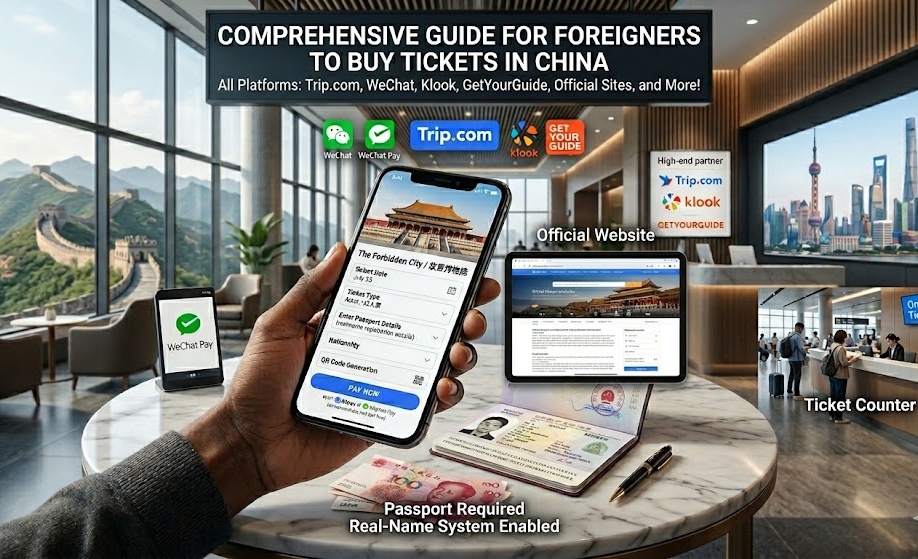
Ticket Booking in China:From Trip.com to Official Websites
Knowing how to buy attraction tickets in China before you land can make or break your itinerary. Unlike most other countries, the majority of popular sites sell out days in advance, and walk-up entry does not exist at busy attractions. Every booking method ties your ticket to your passport number — bring the physical document to every attraction without fail.
The only solution to this maddening puzzle is that there is no platform that covers them all. The Forbidden City won’t be on Klook, Trip.com misses some local attractions, and other venues only sell through their own official channels. The only thing to do? Follow the sequence, then try each method in turn, moving on to the next if the last one failed.
Try each method in this order: Trip.com → International OTA Platforms → WeChat Mini-Program → Official Website → On-Site Counter → Hotel Concierge
Method 1: Trip.com (Widest English Platform Reach)
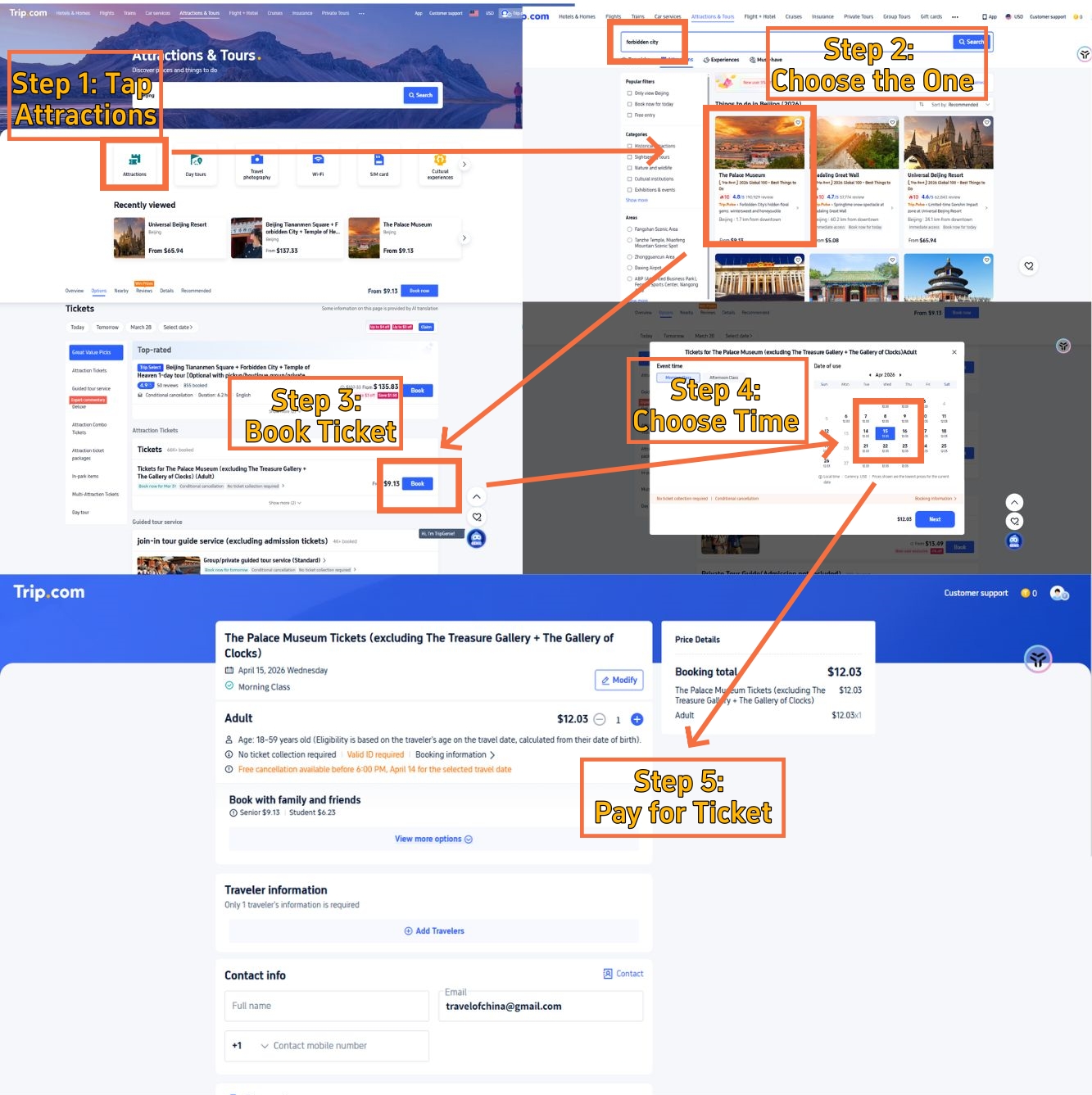
Buy Ticket through Trip.com
Trip.com is generally your best first stop of most foreigners. It covers around 90% of popular China attractions in full English. It accepts international Visa, Mastercard, Amex — no Chinese bank account / phone number required. No VPN needed either. It sells standalone entry tickets, which Klook, GetYourGuide, Viator, and TripAdvisor generally don’t do.
How to book on Trip.com
- Step 1. Search your attraction and select a date.
- Go to trip.com, type the attraction name in English, and select Attractions & Tickets.
- Black calendar dates are available. Grey dates are sold out — most tickets are date-specific and non-transferable.
- Step 2. Choose your ticket type and time slot.
- Select adult, student, or child. Some high-demand sites use timed entry — pick your window carefully.
- You cannot change the date after purchase at most attractions.
- Step 3. Enter your passport details.
- China's real-name system (实名制) links every ticket to your passport — enter your full name and number exactly as printed.
- Even a one-character mismatch can mean denied entry with no refund.
- Step 4. Pay and save your QR code.
- Trip.com accepts Visa, Mastercard, and Amex. Your e-ticket arrives by email and in the app immediately.
- Screenshot the QR code before you leave — connectivity near major sites is often unreliable.
What to enter for real-name registration:
- Full name: Exactly as printed on your passport, including middle names.
- Passport number: All letters and digits (e.g. A12345678). Copy it directly.
- Nationality: Full country name — for example, "United Kingdom," not "UK."
- Date of birth: Match the format shown on the booking form exactly.
🗺️ Planning your full China trip with Trip.com? Our complete walkthrough covers everything from search filters to payment — read the complete Trip.com China guide for foreign travelers before you book.
Method 2: Global OTAs (Best for Tours and Bundles)
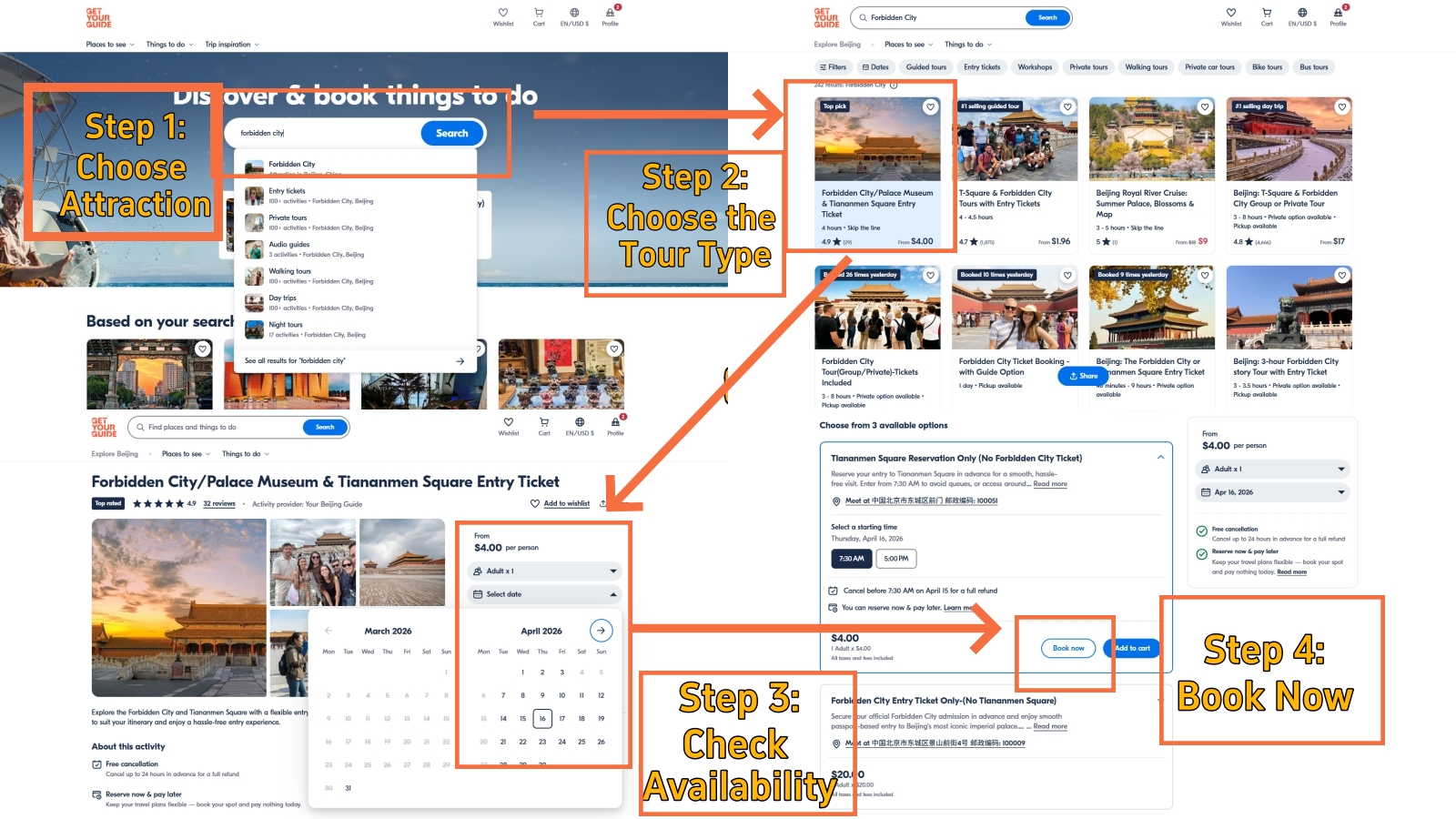
Buy Tickets on GetYourGuide
If you want a guide to give you the skinny and/or want transportation or a packaged day trip thrown in, there are four international platforms that cover China well. None of these are replacements for Trip.com to buy tickets–use them when you want a guide, transport, and/or a curated day trip bundled in. Here's how they compare.
Klook
Klook is the strongest international OTA for China. It covers a wide range of attractions and offers both standalone tickets and combo packages.
How to book on Klook:
- → Go to klook.com and search your attraction name or destination city.
- → Select your ticket type — standalone entry or a combo package (entry + cable car + shuttle). Choose your date and time slot.
- → Enter your passport details and traveler count. Read the cancellation policy before confirming — many Klook tickets are non-refundable.
- → Pay with Visa, Mastercard, Amex, PayPal, or Apple Pay. Your e-ticket arrives by email and in the Klook app — screenshot the QR code before arrival.
How about the Klook:
- Pros:
- Standalone entry tickets available — rare among international OTAs.
- Accessible in mainland China without a VPN.
- Cons:
- Many tickets are non-refundable — check cancellation terms carefully.
- Does not list every attraction, notably not the Forbidden City.
GetYourGuide
GetYourGuide focuses on curated guided tours with licensed English-speaking guides.
How to book on GetYourGuide:
- → Visit getyourguide.com and search your destination or attraction name.
- → Filter by activity type and select an English-guided tour. Check group size — most China listings are under 12 people.
- → Enter your traveler details and select your preferred date. Confirm that free cancellation is available — most tours allow cancellation up to 24 hours before.
- → Pay with your international card. Confirmation is sent by email immediately after booking.
How about the GetYourGuide:
- Pros:
- Small group sizes with free cancellation up to 24 hours before.
- Familiar booking experience from other international destinations.
- Cons:
- No standalone entry tickets for most Chinese attractions.
- China coverage is narrower than Trip.com or Klook.
Viator
Viator — part of the TripAdvisor group — specialises in large-format day tours and managed excursions.
How to book on Viator:
- → Go to viator.com and search your departure city or attraction.
- → Select a full-day excursion or managed tour. Review the itinerary and inclusions carefully — entry tickets are typically bundled, not sold separately.
- → Filter recent reviews (last 3 months) to check guide quality and punctuality before confirming.
- → Enter traveler details and pay with your international card. Your booking confirmation includes a voucher to present on the day.
How about the Viator:
- Pros:
- Strong selection of full-day excursions from Beijing and Shanghai.
- Large-group format is typically cheaper per person than small-group alternatives.
- Cons:
- Tours only — no standalone entry tickets. Large groups reduce flexibility at many sites.
- China coverage is more limited than Trip.com or Klook.
TripAdvisor Experiences
TripAdvisor Experiences offers a similar product range to GetYourGuide and Viator. However, its real advantage is review depth.
How to book on TripAdvisor Experiences:
- → Visit tripadvisor.com/Experiences and search your destination.
- → Filter reviews to the most recent 3 months — operator quality for China tours changes frequently, and older reviews may not reflect current standards.
- → Select your tour, choose a date, and enter your traveler details. Confirm inclusion of entry tickets if that matters for your itinerary.
- → Pay with your international card. E-confirmation is sent immediately — save the voucher to your phone before travel.
How about the TripAdvisor:
- Pros:
- Hundreds of verified reviews per listing, filterable by date and traveler type.
- Useful for vetting operator quality before committing — especially important in China.
- Cons:
- No standalone entry tickets for most Chinese attractions.
- Coverage is limited compared to Trip.com and Klook.
All four platforms accept Visa, Mastercard, Amex, and PayPal. None require a Chinese phone number or bank account. All work in mainland China without a VPN.
Method 3: WeChat Apps (For Niche Local Attractions)
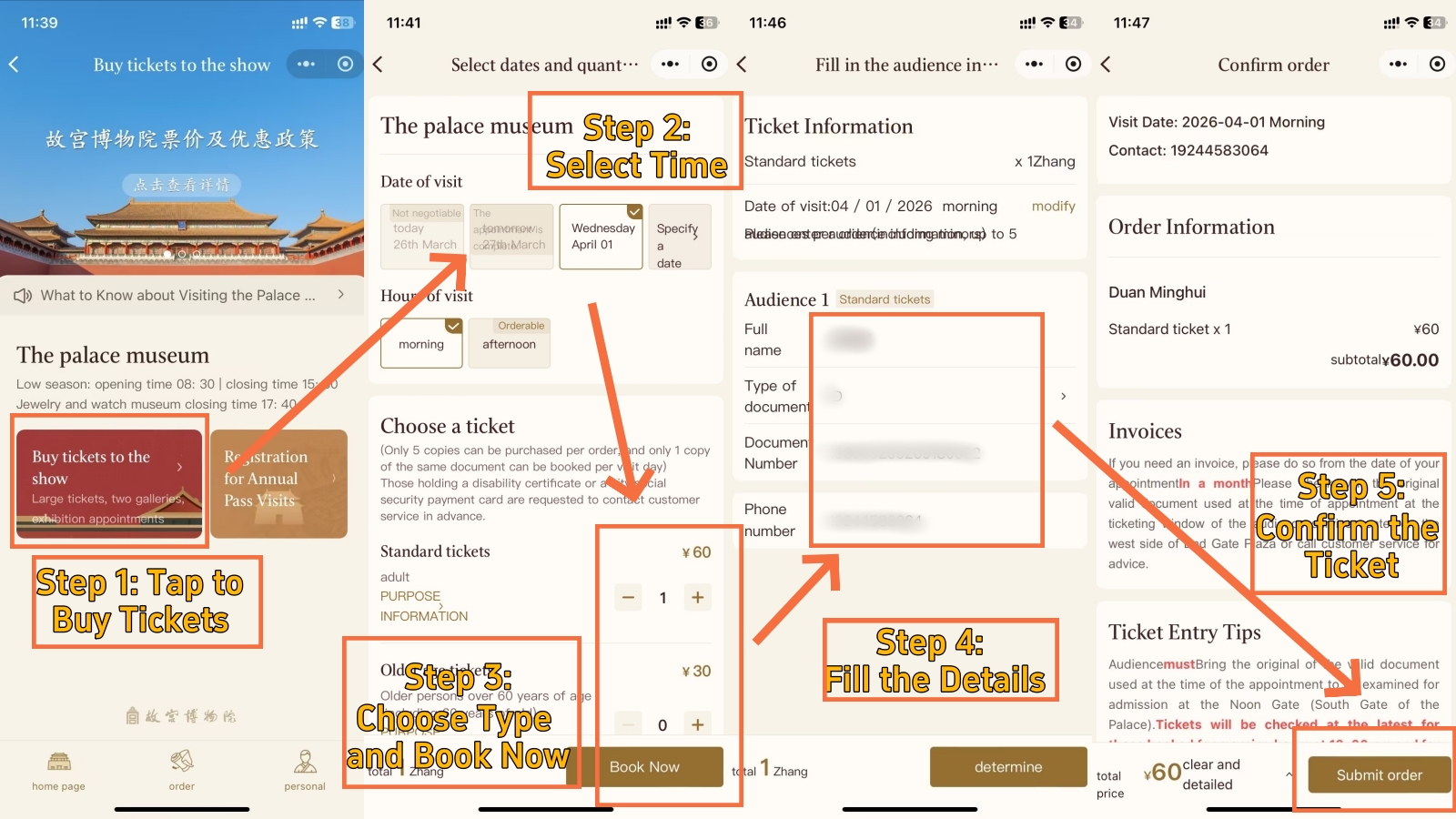
Buy Ticket on WeChat Mini Program
Some of the smaller parks, heritage sites, and nature reserves only sell tickets through their WeChat Mini-Program. There is no international platform listing them. However, since 2023 WeChat Pay supports international Visa and Mastercard officially, so this method really is doable. Set everything up before you leave home: trying to do it outside an attraction on the spot is stressful and often slower.
How to set up and use WeChat Mini-Programs
- Step 1. Download WeChat and link your card.
- Download WeChat, register with your international phone number, then go to Me → Pay → Wallet → Bank Cards → Add Card.
- Do this at home — card verification is slower on a Chinese network.
- Step 2. Find the attraction's Mini-Program.
- Tap the search icon inside WeChat, type the attraction name, and look for the blue Mini-Program icon (小程序) in the results.
- Most Mini-Programs are Chinese-only — use Google Translate in camera mode for real-time translation. Download the offline Chinese pack before travel.
- Step 3. Book and screenshot your confirmation.
- Enter your full name and passport number as printed. Pay via WeChat Pay.
- Screenshot the QR code immediately and save to your camera roll — Mini-Program bookings are hard to relocate later.
Once WeChat Pay is set up, it also works at restaurants, transport, shops, and street markets. So the setup effort pays off well beyond just attraction tickets.
📱 WeChat Mini-Programs can be confusing the first time — our step-by-step breakdown shows exactly how to navigate them, even without Chinese. Get the full picture in our complete guide to using WeChat Mini-Programs in China as a foreigner.
Method 4: Official Sites (Key for Major Landmarks)
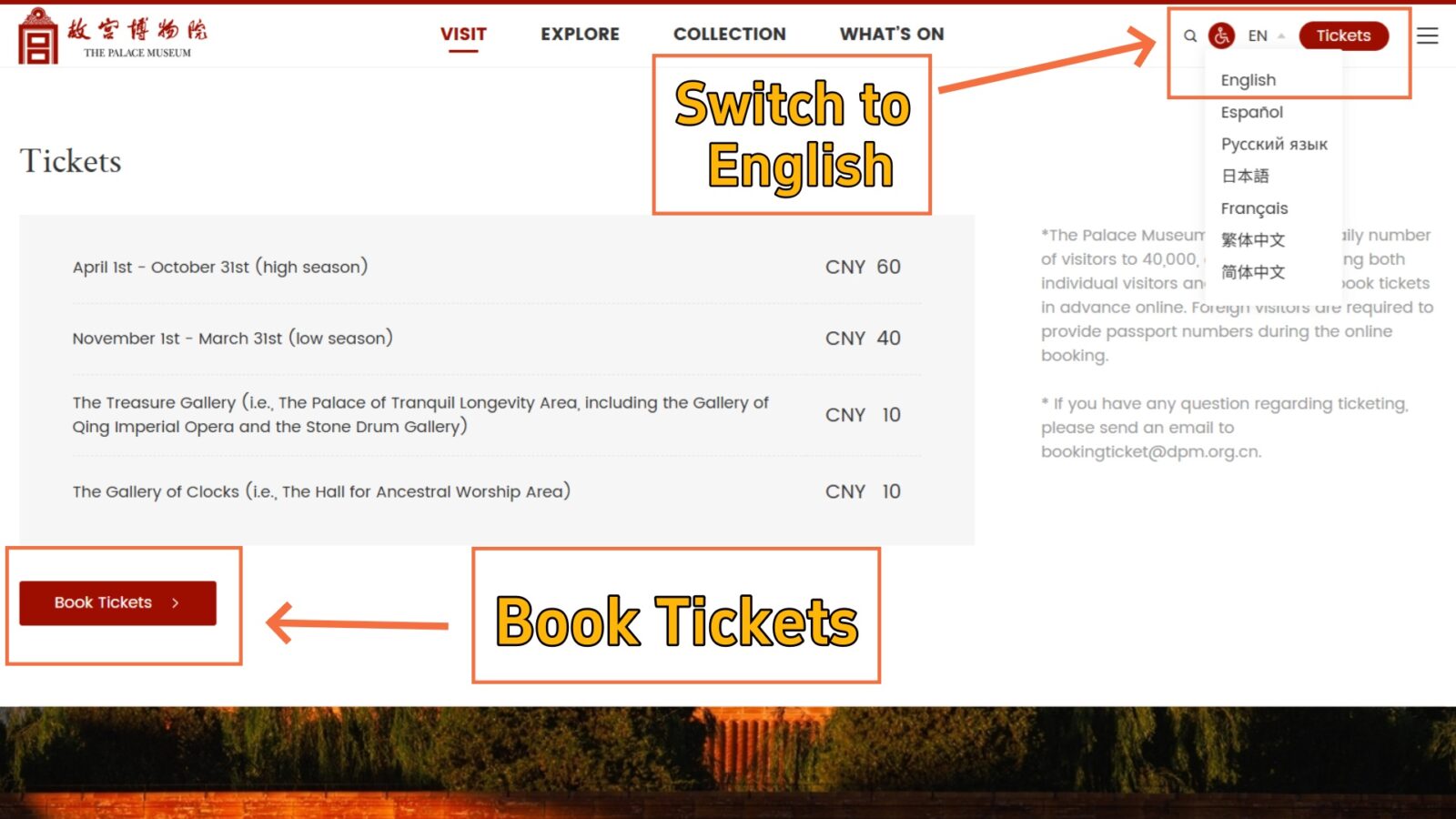
Buy Tickets on Official Website
Some of China’s most famous attractions sell tickets only through their own portals. The Forbidden City is the biggest example — Not on Trip.com, not on Klook, not on Alipay or other platforms. The only legit source is ticket.dpm.org.cn. Potala Palace, Jiuzhaigou, Mogao Caves, National Museum of China - all materialize tickets via their own systems.
How to book the Forbidden City (Palace Museum)
- Step 1. Go to the official site and time your booking.
- Visit ticket.dpm.org.cn and use the English toggle in the top right corner.
- Tickets release exactly 7 days before entry at midnight Beijing Time — during Golden Week, inventory disappears in under 5 minutes.
- Step 2. Enter your details and pay via Alipay.
- Enter your passport number and full name as printed. The site does not accept international cards directly.
- Pay via Alipay linked to an overseas Visa or Mastercard, then screenshot your QR code.
For other official sites: Search the attraction name plus "official ticket booking." However, be cautious — unofficial-looking sites rank high in search results. When in doubt, cross-check the URL with the attraction's official social media or ask your hotel concierge.
Method 5: Ticket Counters (Manual Emergency Backup)

The Palace Museum Ticket Counter
Walk-up counters still exist at most mid-tier parks and local temples. For China’s headline sites though — the Forbidden City, Zhangjiajie, Jiuzhaigou, Potala Palace — walk-up tickets are either non-existent or sold out well before peak, so treating this as a backup is folly.
When on-site counters actually work:
- Smaller city parks, local temples, and lesser-known scenic spots — most still sell at the gate.
- Weekday mornings in spring or autumn — best walk-up availability even at mid-tier sites.
- If your online booking fell through — arrive at gate opening (8–9am). Some sites release a small same-day batch.
- Low-season months: January, February (outside CNY), and November.
What to bring: Your original passport (not a photocopy), cash in RMB, and Google Translate in camera mode. International credit cards are not reliably accepted at counters — UnionPay is preferred. For instance, ICBC, Bank of China, and Agricultural Bank ATMs accept most international debit cards. Daily withdrawal limits typically range from ¥2,000 to ¥5,000.
Method 6: Hotel Concierge (The Reliable Last Resort)
If everything else has failed, your hotel concierge might be able to help. Many hotels in major Chinese cities have staff with a good understanding of local booking systems. They may charge a service fee, and will definitely need your passport details. This isn’t a first-line approach though — concierges cannot magic tickets that are sold out. They’re most useful for things that are tricky to book locally, or where a Chinese phone number is needed to verify use of the Mini-Program.
When to Reserve Your Spot
| Attraction Type | Normal Season | Golden Week / CNY | Examples |
|---|---|---|---|
| Tier 1 — Capacity-controlled | 7–14 days ahead | 30+ days ahead | Forbidden City, Jiuzhaigou, Potala Palace, Mogao Caves |
| Tier 2 — Popular sites | 3–5 days ahead | 14–21 days ahead | Great Wall, West Lake, Summer Palace, Terracotta Warriors |
| Tier 3 — General attractions | 1–2 days or same-day | 3–5 days ahead | City parks, most museums, local temples |
| Theme parks | 5–7 days ahead | 14–21 days ahead | Shanghai Disneyland, Universal Beijing |
During Golden Week and Chinese New Year, add at least two extra weeks to every window above. Domestic demand alone overwhelms most booking systems during these periods.
What Happens at the Gates
-


- Ticket Entrance
-
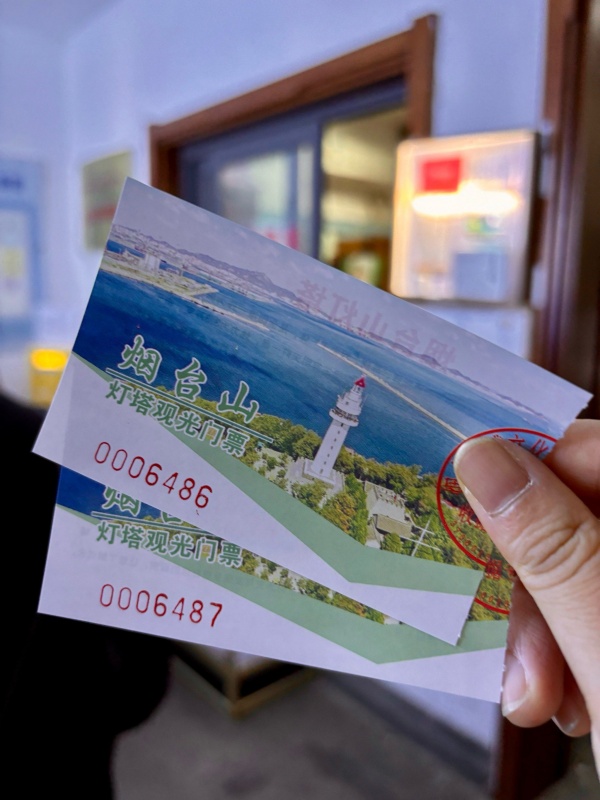
- Paper Ticket
The gate process is consistent across most major China attractions. So once you understand it once, it applies everywhere.
Present your QR code and physical passport to staff, who will scan the code and verify it against your passport. At some locations, you’ll need to pick up a paper ticket from a separate counter before joining the entry queue: look for signs or ask staff when you arrive.
If there is a problem at the gate, go straight to the ticket counter — not the entry queue. Entry gate staff cannot fix booking problems, but ticket counter staff usually can, especially if you have your booking confirmation and passport.
Key reminders before you go:
- Show your QR code and your physical passport simultaneously — staff will scan both at the gate. A screenshot of your QR code is more reliable than loading it live, as connectivity near major sites is often poor.
- At some attractions, you must collect a paper ticket from a separate counter before joining the entry queue. Look for signs when you arrive, or ask gate staff — do not join the main queue without checking first.
- Your QR code is personal and non-transferable. The real-name system links every ticket to your passport — if the name on the ticket does not match your document, you will be denied entry with no refund.
🚄 Getting between cities is as important as booking the attraction. If you're planning train travel alongside your trip, our guide on how to book train tickets in China as a foreigner walks through every step — from platform selection to seat classes.
Common Ticket Scams Today
Unofficial resellers work right next to the entrance gates of most major attractions in China. A lot of their tickets are fake or for the wrong date, they’re often way too expensive, and once you hand over cash, you’re screwed. So if someone approaches you at a gate and offers to “help you get” a ticket, walk past.
Use Trip.com, the official attraction website, Klook, GetYourGuide, Viator, TripAdvisor Experiences, or a counter that is physically part of the attraction. If you have even a small doubt about a website being legitimate, please don’t pay through it.
Frequently Asked Questions About Expert Answers
Q: How do foreigners buy attraction tickets in China?
The clearest way to buy attraction tickets in China is to follow the decision path: start with Trip.com, then official sites. Trip.com covers about 90% of popular attractions with full English support and international card payment. No Chinese account is needed.
Q: Does Trip.com work in China?
Yes. Trip.com is the most reliable platform for foreigners who want to buy attraction tickets in China independently. It works worldwide without a VPN, accepts Visa, Mastercard, and Amex, and requires only an email address to register. No Chinese phone number is needed.
Q: Can I use a credit card to buy attraction tickets in China?
Yes, on international platforms. Trip.com, Klook, GetYourGuide, Viator, and TripAdvisor all accept international cards directly. For buying attraction tickets in China via Alipay or WeChat Pay, link your overseas Visa or Mastercard first — both apps have supported international cards since 2023.
Q: Do I need a Chinese phone number to buy attraction tickets in China?
No. The main platforms for buying attraction tickets in China — Trip.com, Klook, GetYourGuide, Viator — only require an email to register. Alipay and WeChat both accept international phone numbers. However, a small number of WeChat Mini-Programs do require Chinese verification for specific sites.
Q: What is 实名制 and why does it matter?
实名制 means real-name registration. When you buy attraction tickets in China, every platform links your ticket to your passport number. At the gate, staff verify this against your physical passport. Therefore, enter your details exactly as printed — even a minor mismatch can mean denied entry with no refund.
Q: How do I book Forbidden City tickets as a foreigner?
The Forbidden City is not available on any third-party platform. To buy attraction tickets in China for this site, go directly to ticket.dpm.org.cn. Tickets release 7 days before entry at midnight Beijing Time. During peak season, inventory sells out in minutes — log in before midnight and pay via Alipay.
Q: Can I buy Great Wall tickets on-site?
It depends on the section. Badaling enforces strict capacity limits — walk-up tickets are often gone by mid-morning. Mutianyu has slightly more gate availability on weekdays. For most visitors wanting to buy attraction tickets in China for the Great Wall, Trip.com or Klook is the safer and more reliable approach.
Q: How far in advance should I book China attraction tickets?
For Tier 1 sites, book 7–14 days ahead in normal season and 30+ days during Golden Week. For popular sites, 3–5 days is usually enough. The golden rule when you buy attraction tickets in China: book earlier than you think necessary — domestic demand moves much faster than in comparable destinations.
Q: Is it safe to buy tickets from sellers near the attraction?
No. Street resellers are a well-documented scam across China. The only safe way to buy attraction tickets in China is through Trip.com, Alipay, official sites, Klook, GetYourGuide, Viator, TripAdvisor Experiences, or the attraction's own counter. Reseller tickets are frequently fake or issued for wrong dates.
Q: How do foreigners pay for things in China?
For buying attraction tickets in China on international platforms, your regular credit card works without any setup. For Alipay and WeChat Pay, link your Visa or Mastercard inside the app before arrival. Cash (RMB) is the most reliable backup for on-site counters. Carry a mix of both — it covers every scenario.
Q: What translation app should I use for Chinese ticketing systems?
Google Translate's camera mode is the most practical tool for navigating Chinese-only ticketing systems. Download the offline Chinese pack before travel — you won't always have reliable data. When buying attraction tickets in China via WeChat Mini-Programs, enable WeChat's built-in translation as a first layer too.