China Stamp Sun Yat Sen
China Stamp Sun Yat Sen features Sun Yat-sen, who has appeared on Chinese stamps almost continuously since 1912 — first under his own government, then through Republic of China issues in the 1930s-40s, and now on PRC commemoratives that still mark his birthday in November. The philatelic angle is well covered by collector sites and auction listings. This guide instead answers the travel version of the same question: where do you go in China to actually see the man behind the stamps?
The two main answers are the Sun Yat-sen Memorial Hall in Guangzhou and the Sun Yat-sen Mausoleum complex on Purple Mountain in Nanjing — both open to the public, both anchored by major monuments, and both walkable from standard tourist routes. Below: what to see inside, USD-and-RMB ticket figures, how to get in, and the lesser-known Sun Yat-sen sites across the rest of China.
Quick Facts
Sun Yat-sen on China Stamps and Memorial Halls
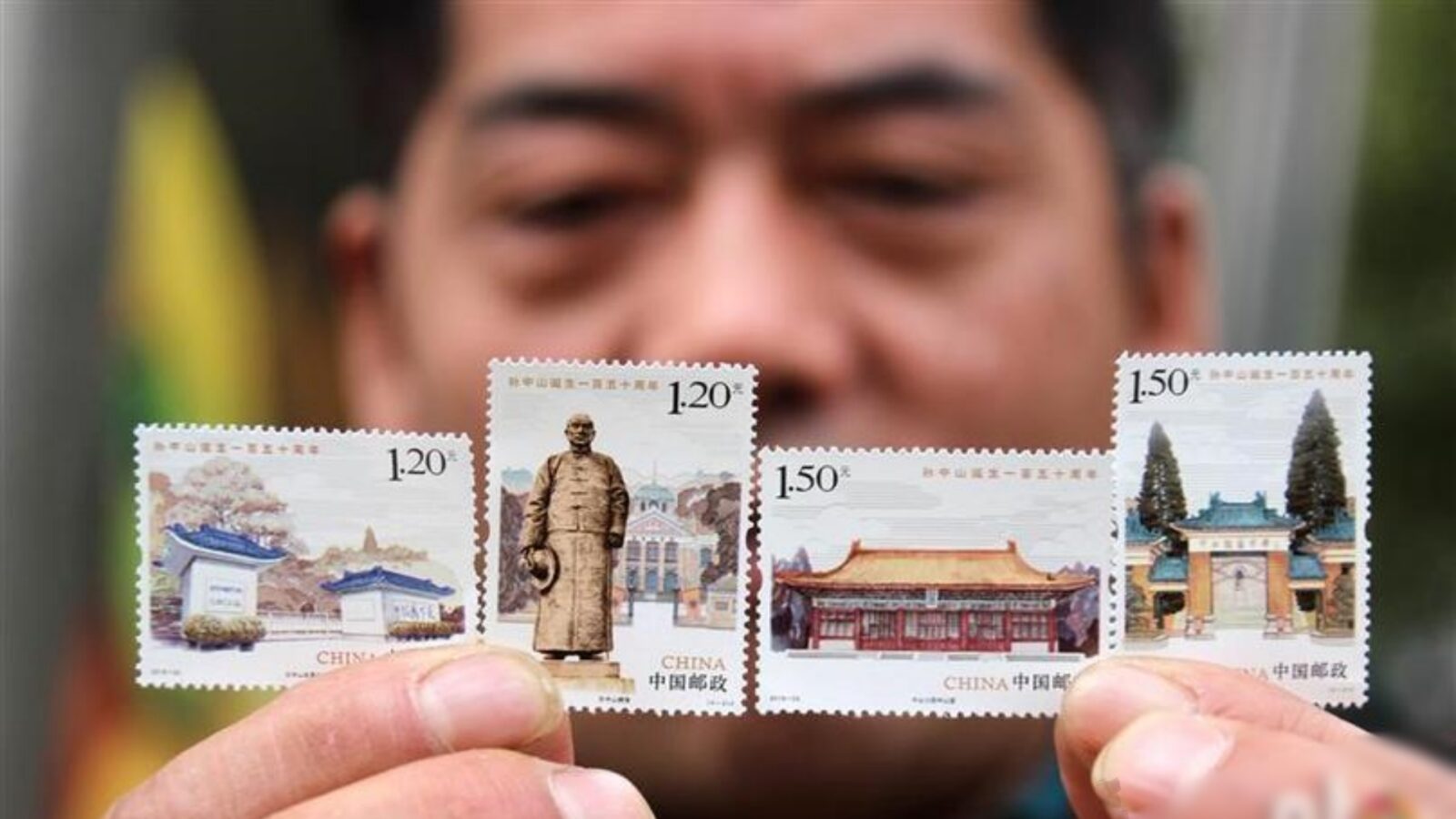
Sun Yat-sen on China Stamps
Sun Yat-sen's portrait has appeared on Chinese stamps almost continuously since 1912. Republic of China issues featured him during his own presidency; Kuomintang commemoratives followed through the 1930s-40s. From 1949 onward, the PRC has issued Sun Yat-sen stamps on his birthday (November 12) and on the 50th, 100th, and 150th anniversaries of his birth (1966, 1986, 2016). Anniversary sets also mark the Xinhai Revolution, which overthrew the Qing dynasty in 1911 and installed Sun Yat-sen as provisional president.
Sun Yat-sen (1866-1925) remains officially designated by the PRC as "the forerunner of the democratic revolution." The memorial halls and the mausoleum were built to honour that role and to house artifacts from the revolutionary period. For anyone whose interest in Sun Yat-sen starts with stamps, these sites are the natural destination — they take the philatelic record and give it physical substance.
A Century of Sun Yat-sen Commemorative Stamps
The first Sun Yat-sen stamps were issued by the Republic of China in 1912. The PRC's first commemorative appeared in the early 1950s. The major anniversary sets came in 1966 (100th birth anniversary), 1986 (120th), and 2016 (150th). Xinhai Revolution anniversaries have also produced dedicated issues: the 60th in 1971, 70th in 1981, and 100th in 2011. Both the ROC and PRC have treated Sun Yat-sen as a figure of enduring national significance, and the stamps reflect that consensus across political ruptures.
From Philately to the Memorial Halls
The same Sun Yat-sen celebrated on stamps is commemorated by three principal mainland sites. The Guangzhou Sun Yat-sen Memorial Hall (1931) is the largest 纪念馆 dedicated to him. The Nanjing Sun Yat-sen Mausoleum complex on Purple Mountain (1929) is the most visited. Smaller residence-and-birthplace museums at Cuiheng Village and Shanghai round out the trail. The two main buildings give visitors far more historical substance than any auction listing — a visit grounds the stamp collector's knowledge in the places where Sun Yat-sen actually lived and was mourned.
Guangzhou Sun Yat-sen Memorial Hall
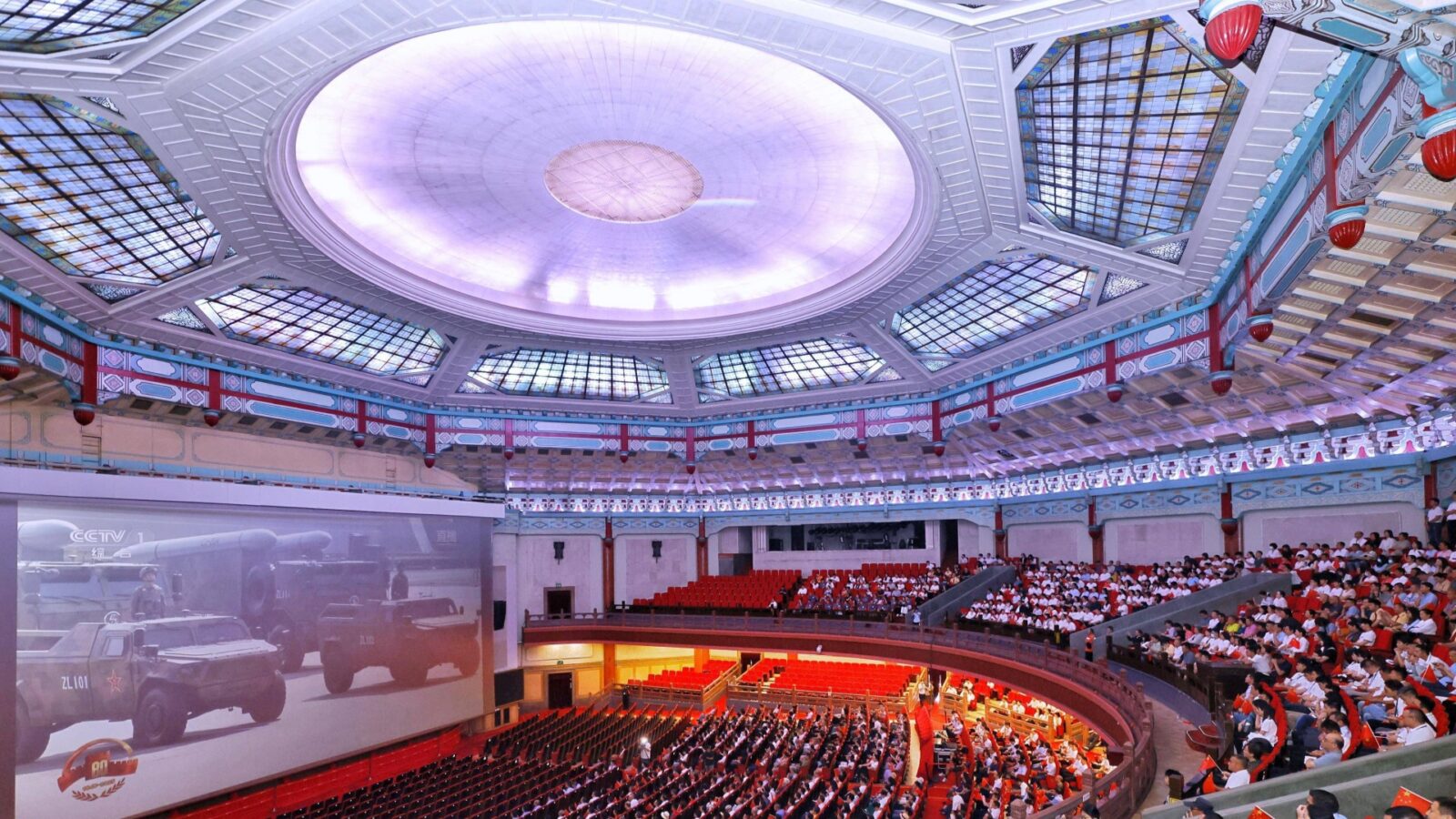
Guangzhou Sun Yat-sen Memorial Hall
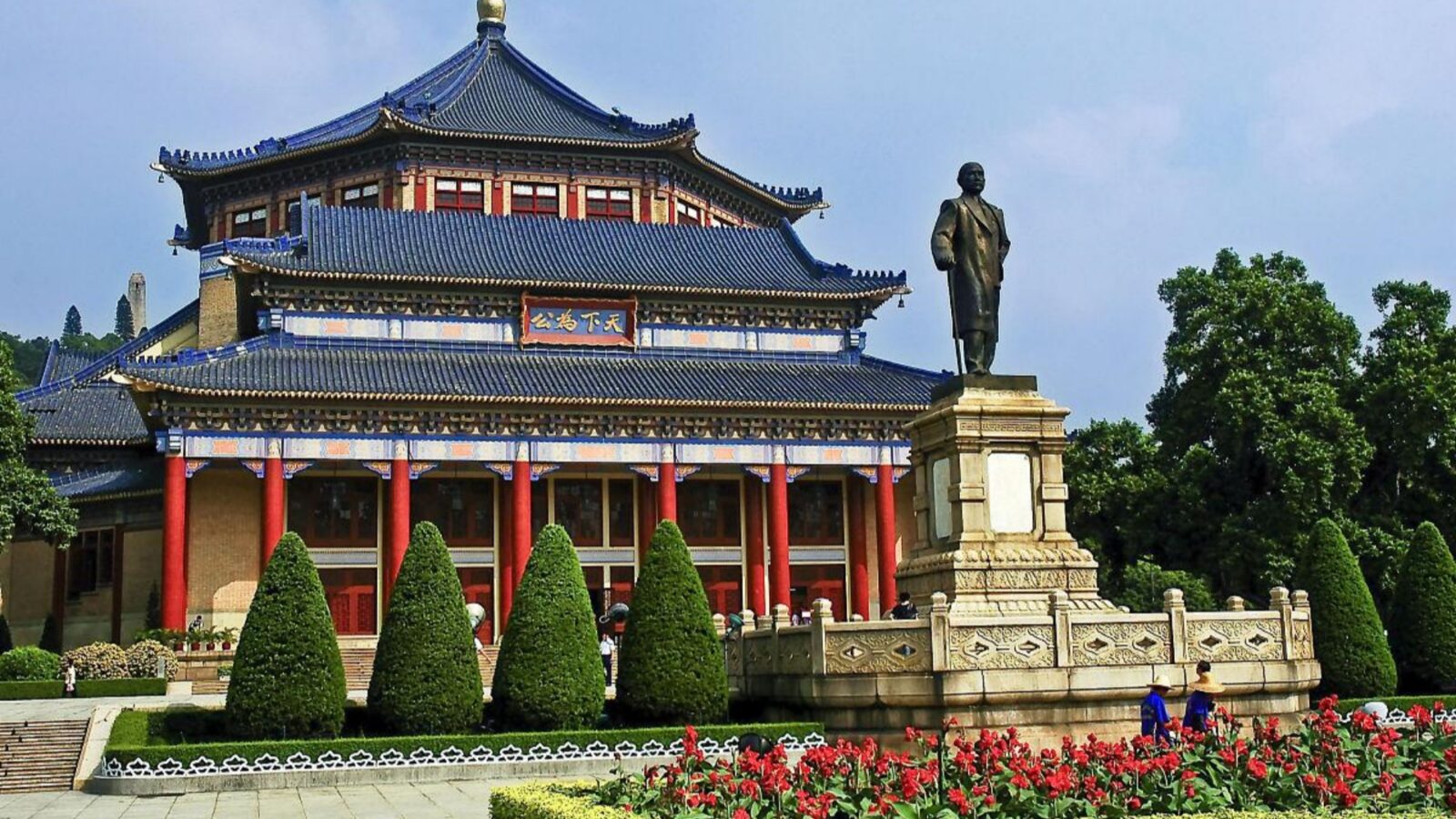
Inside Yuexiu Park in central Guangzhou, the Sun Yat-sen Memorial Hall (广州中山纪念堂) is the largest of the mainland 纪念馆 built to honour Sun Yat-sen. Designed by architect Lü Yanzhi (吕彦直) and completed in 1931, it seats roughly 3,200 people. The design follows a Chinese-palace octagonal form — blue-glazed-tile roof, white granite base, vermilion columns. It occupies the site of the old presidential compound of the early Republic and is listed as a national key cultural relic protection unit (designated 1988). The hall now functions as a performing-arts and exhibition venue. Yuexiu Park itself is a 5A scenic area, and the Five Rams Sculpture, Zhenhai Tower, and a stretch of Ming-era city wall are all within walking distance.
Architecture and Design
The octagonal plan draws on imperial-palace architecture. The hip-and-gable roof is finished in blue-glazed tiles; the base is white granite with red columns. The main hall spans roughly 49 meters across. Lü Yanzhi was also the architect of the Nanjing Sun Yat-sen Mausoleum — the two buildings are the twin monuments of Sun Yat-sen commemoration on the mainland. The hall sustained damage in WWII air raids and was restored after 1949. The 1988 national-cultural-relic designation covers both the exterior and the main interior.
What to See Inside
The main features to look for inside and immediately around the hall:
- The central statue: A 5-meter white-marble seated figure of Sun Yat-sen occupies the central stage.
- The ceiling: The octagonal blue-tile ceiling is modelled on traditional palace design.
- The exhibition halls: Two flanking spaces host rotating displays on the Xinhai Revolution and the early Republic.
- The commemorative steles: Several steles stand outside, including one inscribed by Sun Ke, Sun Yat-sen's son.
- Yuexiu Park: The Five Rams Sculpture, Zhenhai Tower, and Ming city wall are a short walk from the hall.
How to Get There
Transport, tickets, and timing for the Guangzhou visit:
- Metro: Guangzhou Metro Line 2 to Yuexiu Park Station, Exit A. The hall is a 5-minute walk inside the park.
- Ticket: Park entry ~$1.40 (¥10), memorial hall interior ~$1.40-2.80 (¥10-20), Yuexiu 5A combo ~$2.80-4.20 (¥20-30).
- Timing: The hall alone takes 1.5-2 h. A full park loop — Five Rams Sculpture, Zhenhai Tower, city wall — requires 3 h.
Nanjing Sun Yat-sen Mausoleum and Memorial Hall
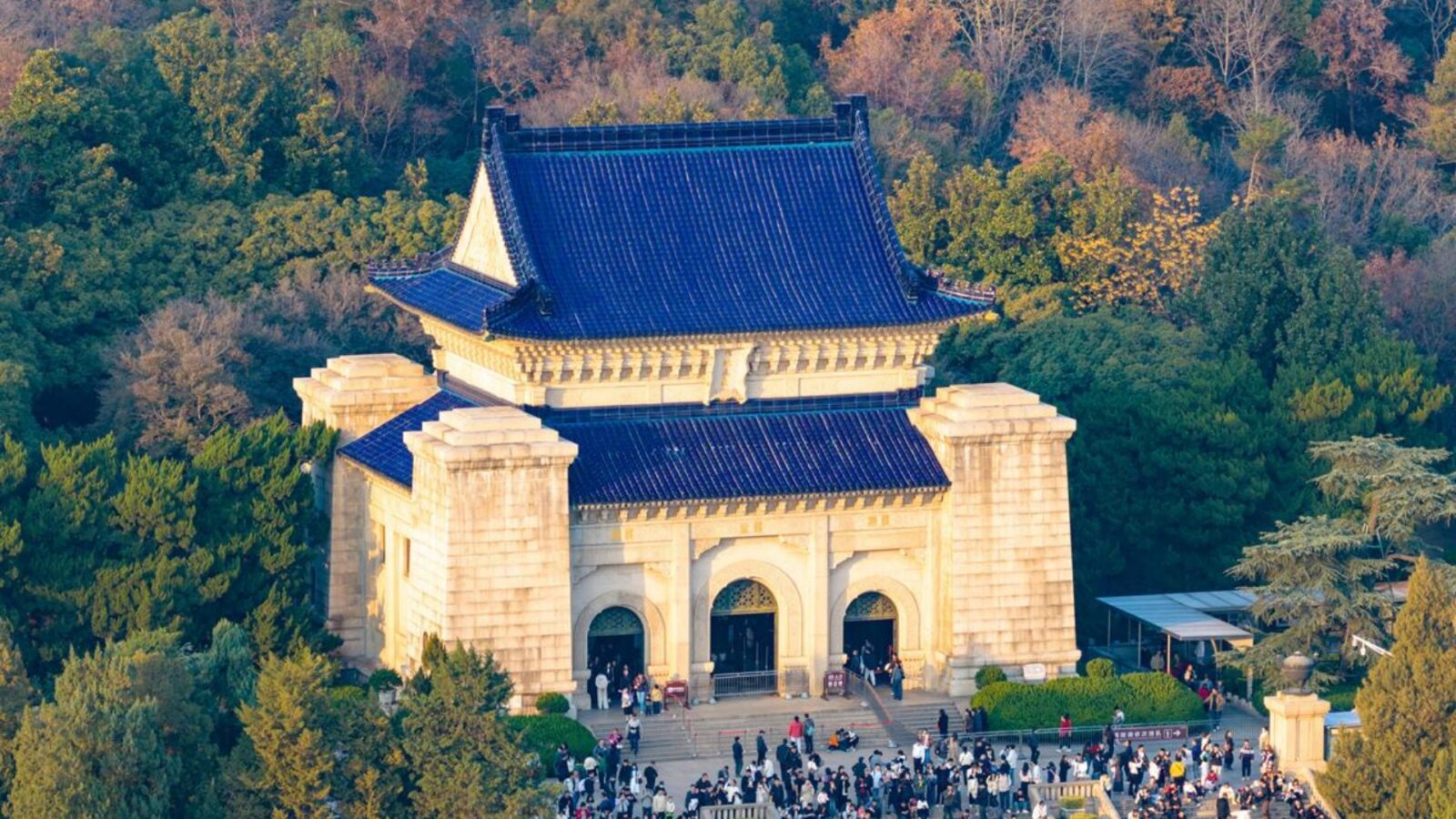
Nanjing Sun Yat-sen Mausoleum
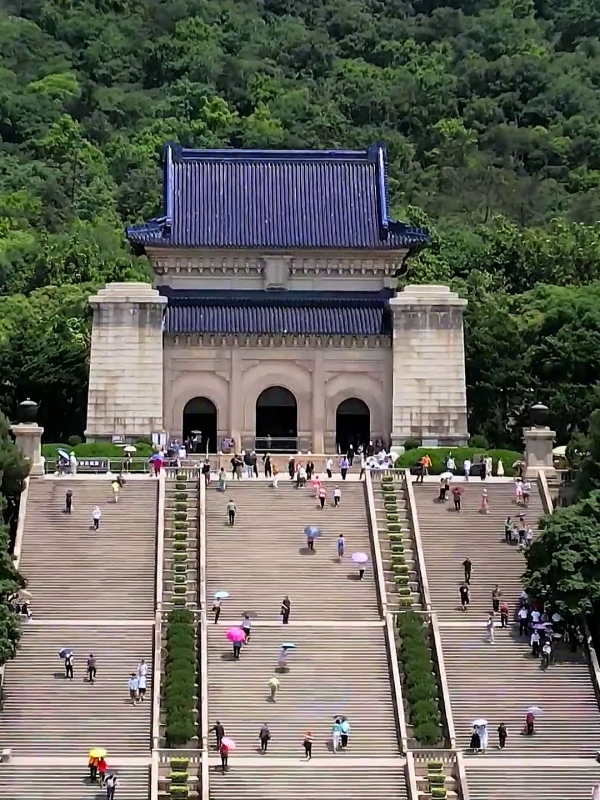
The Nanjing Sun Yat-sen Mausoleum (中山陵) on the southern slope of Purple Mountain (Zijin Shan) is the most-visited Sun Yat-sen site in the country and a national 5A scenic spot. Construction began in 1926; the structure was substantially complete by 1929, when Sun Yat-sen's remains were transferred here from Beijing. Visitors climb 392 granite steps — representing China's population of roughly 400 million at the time — to the white-marble sacrificial hall at the top. The adjacent Sun Yat-sen Memorial Hall (中山纪念馆) is a separate exhibition building at the foot of the mountain. It provides the historical context that the mausoleum's symbolism leaves implicit.
The Mausoleum on Purple Mountain
The mausoleum occupies roughly 8 hectares on Purple Mountain's southern slope in Xuanwu District. The ascent passes through a stone memorial archway, a granite-paved way lined with plane trees, and three flights of stone stairs — front, middle, and rear. The step count is 392, a figure repeatedly cited in visitor references as representing China's roughly 400 million people at the time of construction. At the summit is the white-marble sacrificial hall with a seated white-marble statue of Sun Yat-sen; the crypt lies below. Lü Yanzhi, the architect, is also interred on site.
The Adjacent Sun Yat-sen Memorial Hall
A separate exhibition building within the Nanjing Sun Yat-sen Scenic Area displays photographs, calligraphy, gifts, and artifacts related to Sun Yat-sen's life and the Xinhai Revolution. It is generally less crowded than the mausoleum itself and a useful place to read the historical context before or after the climb. The hall fills in the political and personal details that the mausoleum's architectural symbolism does not spell out.
How to Get There
Transport, tickets, and timing for the Nanjing visit:
- Metro: Nanjing Metro Line 2 to Muxuyuan Station. The scenic-area main entrance is a short ride or walk from the metro.
- Ticket: Nanjing Sun Yat-sen Scenic Area combo ~$7 (¥50); mausoleum typically ~$3.50-4.20 (¥25-30), memorial hall often free or ~$1.40 (¥10). Allow 2-3 h for the full visit.
- Best months: April-May and September-October. Avoid Qingming Festival (early April) and the October 1-7 National Day Golden Week, when the stairs can be shoulder-to-shoulder.
🏛️ Imperial & Republican Architecture: Plan your visit to Purple Mountain's grand monument with our complete visitor guide to Dr Sun Yat Sen Mausoleum Nanjing.
Other Sun Yat-sen Memorial Sites Across China
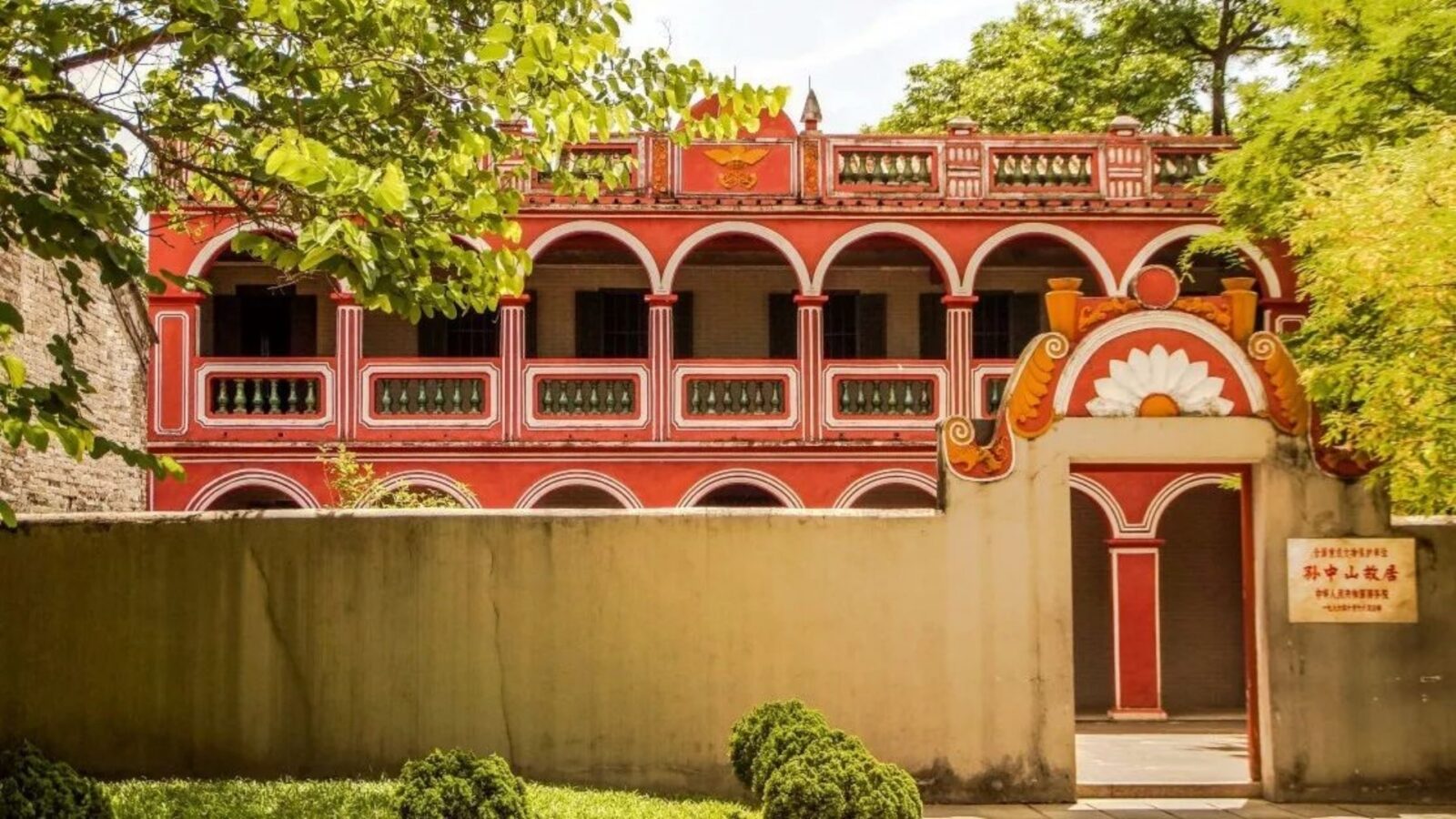
Shanghai Former Residence, Xuhui District
Beyond Guangzhou and Nanjing, three additional sites carry the Sun Yat-sen trail on the mainland. These secondary locations are worth a detour if your itinerary passes through their respective cities.
- Cuiheng Village, Zhongshan: Sun Yat-sen was born here in 1866. The village preserves his Qing-era family home and a memorial museum opened in 2016 for the 150th birth anniversary. About 1.5 h by road from Guangzhou — combine with a day trip.
- Shanghai Former Residence, Xuhui District: 7 Xiangshan Road in the former French Concession. Sun Yat-sen lived here 1918-1924 with his wife Soong Ching-ling. Two-storey European-style house with period furniture and exhibits on the early Kuomintang. Open Tue-Sun; ticket ~$1.40-2.10 (¥10-15).
- Wuchang Uprising Memorial, Wuhan: The Wuchang Uprising of 10 October 1911 was the spark for the Xinhai Revolution and Sun Yat-sen's elevation to provisional president. The memorial is housed in the former Red Building headquarters in Wuchang District. Combine with the Sun Yat-sen Memorial on Guishan (Tortoise Mountain) and views across the Yangtze River.
Cuiheng Village Birthplace
Cuiheng Village, Zhongshan city, is about 1.5 h from Guangzhou by coach. The Sun Yat-sen Former Residence Museum (孙中山故居纪念馆) preserves the original Qing-era brick-and-stone house he grew up in, plus a larger memorial hall opened in 2016 for the 150th birth anniversary. The site is well-signposted in English and makes a straightforward half-day trip from Guangzhou.
Shanghai Former Residence
7 Xiangshan Road (香山路7号) in Xuhui District, formerly the French Concession. A two-storey European-style residence where Sun Yat-sen lived 1918-1924 with his wife Soong Ching-ling. The house contains period furniture, gifts from Soviet envoys, and exhibits on the early Kuomintang. Open Tuesday through Sunday; ticket ~$1.40-2.10 (¥10-15). Plan for roughly 1 h on site.
Wuhan and the Wuchang Uprising Sites
The Wuchang Uprising of 10 October 1911 was the spark for the Xinhai Revolution and Sun Yat-sen's elevation to provisional president. The Wuchang Uprising Memorial (辛亥革命武昌起义纪念馆) occupies the former Red Building headquarters in Wuchang District, Wuhan. The Sun Yat-sen Memorial on Guishan (Tortoise Mountain) and the Yangtze River Bridge are visible from the same Wuchang waterfront. The two sites can be combined in a single afternoon.
🏛️ Historical Sites in Nanjing: Explore iconic landmarks and historic heritage across the former capital with our essential overview of the Nanjing Memorial Hall.
Planning Your Visit
Practical pointers for foreign visitors across five axes — best season, transport, tickets, accessibility, and how to combine the two main cities. Guangzhou and Nanjing are not on the same high-speed line and are best visited as separate legs of a China trip.
Best Time of Year
April-May and September-October are the optimal windows at both sites. Weather is comfortable and outdoor sightseeing is pleasant. The trade-offs to avoid:
- Qingming Festival (early April): major domestic travel surge; the mausoleum stairs fill up fast.
- National Day Golden Week (October 1-7): the busiest holiday period in China; expect very long queues at both sites.
- Other public holidays: check the Chinese public holiday calendar before booking.
- Winter: Guangzhou is mild; Nanjing can be cold, and the mausoleum stairs are exposed.
Getting to the Sites
Transport options for both cities:
- Guangzhou: Metro Line 2 to Yuexiu Park Station, Exit A. The hall is a 5-minute walk inside the park.
- Nanjing: Metro Line 2 to Muxuyuan Station. The scenic-area main entrance is a short ride away.
- Both cities: Taxi or Didi from a downtown hotel to either site entrance typically runs ~$2.80-4.20 (¥20-30).
Tickets, Hours, and Booking
Compare the two main sites on cost and timing:
- Guangzhou: Park entry ~$1.40 (¥10), memorial hall interior ~$1.40-2.80 (¥10-20), Yuexiu 5A combo ~$2.80-4.20 (¥20-30). Park 6:00-22:00; hall 8:00-18:00.
- Nanjing: Scenic-area combo ~$7 (¥50); individual sites typically ~$3-4 (¥20-30); mausoleum ~$3.50-4.20 (¥25-30); memorial hall often free or ~$1.40 (¥10). Hours 8:30-17:00 with seasonal variation; some sub-sites closed Mondays.
- Booking: Both sites are bookable through Trip.com and Klook for foreign visitors who do not have a mainland phone or WeChat Pay.
Accessibility
The contrast between the two main sites on mobility is significant:
- Guangzhou: Wheelchair-friendly. Ramps lead to the main hall and the two flanking exhibition halls. No step-free issues inside the building.
- Nanjing: The 392-step ascent is not wheelchair-accessible. The lower plaza, exhibition areas, and the separate memorial hall are accessible. A scenic-area electric shuttle can carry visitors part-way up the slope. Confirm at the entrance on the day.
Combining Guangzhou and Nanjing
Guangzhou and Nanjing are far apart and not on a single high-speed line. Combining both in one trip requires a domestic flight and at least 6 days. A more practical approach for most visitors:
- Guangzhou leg: Pair with Cuiheng (Zhongshan) and the Pearl River Delta loop — Hong Kong, Macau, or Shenzhen.
- Nanjing leg: Pair with Shanghai and the Yangtze Delta — Suzhou and Hangzhou are both on the high-speed network from Nanjing.
Frequently Asked Questions
Q: What is the main Sun Yat-sen Memorial Hall in China?
Two principal sites stand out. The Guangzhou Sun Yat-sen Memorial Hall — octagonal palace design, completed 1931, inside Yuexiu Park — and the Nanjing Sun Yat-sen Mausoleum complex on Purple Mountain (1929).
Q: Do you need a ticket for Sun Yat-sen Memorial Hall?
Yes. Yuexiu Park entry is ~$1.40 (¥10) and the Guangzhou Memorial Hall interior runs ~$1.40-2.80 (¥10-20). Nanjing's scenic-area combo is ~$7 (¥50), with individual sites typically ~$3-4 (¥20-30). All tickets are bookable through Trip.com or Klook for foreign visitors.
Q: How long does a visit take?
The Guangzhou Memorial Hall alone takes 1.5-2 h (3 h with the rest of Yuexiu Park). The Nanjing Mausoleum plus Memorial Hall takes 2-3 h. Cuiheng Village requires about 2 h. The Shanghai Former Residence takes roughly 1 h.
Q: Is there English signage and an English-speaking guide?
The Guangzhou Memorial Hall has English signage and an English audio guide for ~$1.40 (¥10). The Nanjing Mausoleum provides a basic English leaflet; English-speaking guides are bookable through Trip.com or hotel concierge a day in advance. The Shanghai Former Residence has English signage.
Q: Why does Sun Yat-sen appear on Chinese stamps?
Sun Yat-sen (1866-1925) is the founding father of the Republic of China and the leader of the 1911 Xinhai Revolution that overthrew the Qing. Both the Republic of China (1912-1949) and the PRC (1949-present) have issued commemorative stamps for him. The PRC still issues Sun Yat-sen commemoratives on his birthday (12 November) and on Xinhai Revolution anniversaries.
Q: Can you visit both the Guangzhou and Nanjing Sun Yat-sen sites in one trip?
Practically, no — Guangzhou and Nanjing are far apart and not on a single high-speed line. The more practical approach is two separate trips: Guangzhou paired with Cuiheng (Zhongshan) and a Pearl River Delta loop; Nanjing paired with Shanghai and a Yangtze Delta loop. Allow at least 6 days if combining both cities.
Q: Is the Nanjing Sun Yat-sen Mausoleum wheelchair accessible?
The 392-step ascent is not accessible by wheelchair. The lower plaza, exhibition areas, and the adjacent memorial hall are accessible, and a scenic-area electric shuttle can carry visitors part-way up the slope. Confirm current options at the entrance on the day of your visit.
Q: When is the best time of year to visit?
April-May and September-October are the best windows at both sites. Avoid Qingming Festival (early April), the October 1-7 National Day Golden Week, and major public holidays — these are peak domestic travel periods and both sites draw very large crowds.