Best Area to Stay in Beijing, China
Beijing unfolds in concentric ring‑shaped zones, and your accommodation choice heavily shapes how much of your trip will be spent riding the metro — best area to stay in beijing china. The city divides cleanly into two halves: the historic east — Forbidden City, Tiananmen, the hutongs — and the modern west — business towers, shopping malls, embassy districts. This guide maps eight neighborhoods to three filters: your traveler type, your budget, and whether you want to walk to the palace gates rather than queue for a train. Pick the right base and you save two to three metro rides a day.
Quick Facts
Best Area at a Glance: By Traveler, Budget & Walks
Use this matrix to match your travel profile to the right base. The Top Pick column assumes you want the best balance of location and vibe; the Budget Option column gives the cheapest practical choice in that neighborhood.
Where to Stay Near the Forbidden City
Wangfujing and Qianmen are the only two neighborhoods within a 20-minute walk of the Forbidden City and Tiananmen Square. Both sit on major metro lines, which makes them the natural anchor for first-timers and history-focused travelers. Every other area in this guide requires a metro ride of at least 15 minutes to reach the palace gates.
Wangfujing
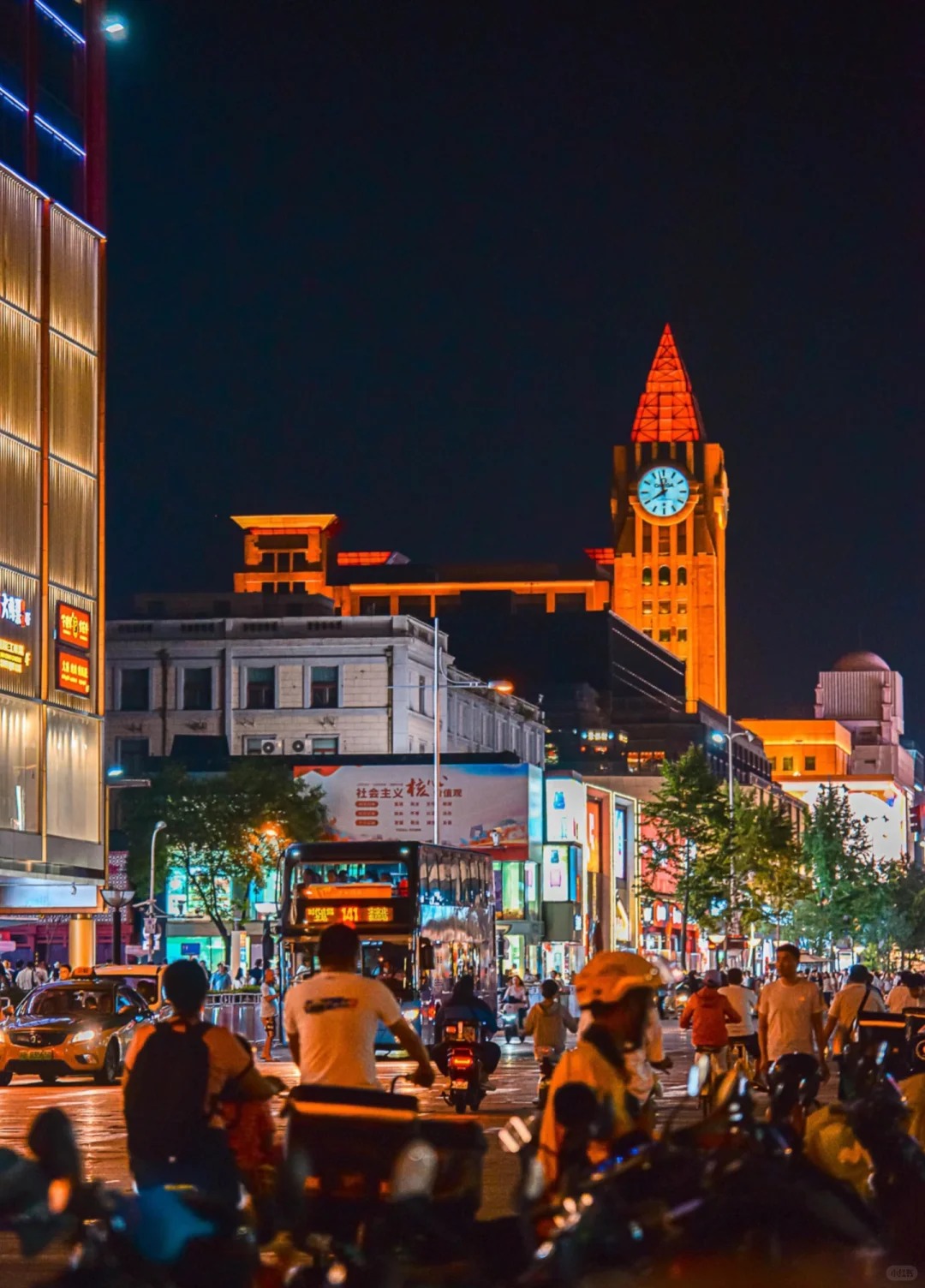
Wangfujing Snack Street
Beijing's most famous shopping street lies roughly 1 kilometer east of the Forbidden City moat. The pedestrianized core holds Wangfujing Snack Street, St. Joseph's Church — a rare Gothic cathedral in central Beijing — and the flagship Wangfujing Bookstore. The National Museum of China sits just north along Chang avenue. Dengshikou Station on Line 5 and Wangfujing Station on Line 1 are both within a 5-minute walk of the hotel district.
- Pros: Shortest walk to the Forbidden City (10–15 min); two metro lines; widest range of hotel tiers; safe and well-lit at night
- Cons: Heavy tourist traffic on the main street; very commercial — little local hutong atmosphere; peak-season crowds can feel overwhelming
- Luxury ($350–700, ¥2,500–5,000): The Peninsula Beijing — rooftop pool, palace-view rooms, butler service
- Mid-range ($130–300, ¥930–2,150): Hilton Beijing Wangfujing — reliable international chain, central location
- Budget ($90–150, ¥640–1,070): Stey Beijing Wangfujing — design-led micro-hotel, compact but well-located
Qianmen
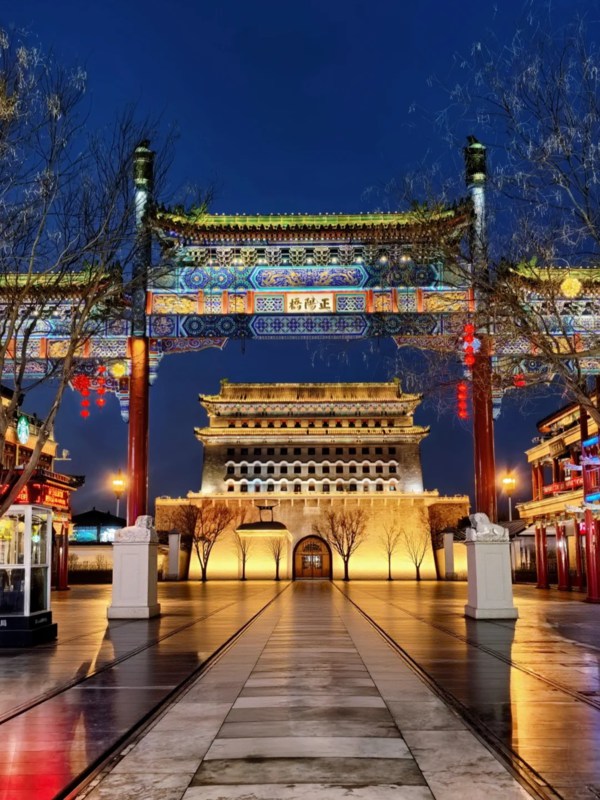
Qianmen Avenue Beijing
The restored pedestrian avenue south of Tiananmen Square preserves Ming and Qing-era shopfront facades along a 600-meter boulevard. The side hutongs branching off the main drag are quieter and more locally rooted than the Wangfujing strip. Tiananmen Square is a 10-minute walk; the Forbidden City is 15–20 minutes on foot. The Temple of Heaven sits roughly 15–20 minutes south by foot or a single metro stop on Line 2.
- Pros: Closest walkable access to Tiananmen and Temple of Heaven; photogenic historic streetscape; quieter than Wangfujing after dark
- Cons: Fewer metro line options (Line 2 only); some streets feel overly restored and tourist-oriented; limited late-night dining
- Luxury ($180–400, ¥1,290–2,860): Beijing Xiaofengxian Former Residence — converted courtyard with period details
- Mid-range ($90–200, ¥640–1,430): M Hotel (Tiananmen Square Qianmen Subway Station) — functional base, 2-minute walk to metro
- Budget ($50–120, ¥360–860): Qianmen Courtyard Hotel — simple courtyard rooms, unbeatable location
Where to Stay in Beijing's Hutongs
The three hutong-anchored neighborhoods — Nanluoguxiang, Gulou and Houhai, and Beixinqiao — offer a low-rise, locally rooted contrast to the shopping districts. Streets are narrower, buildings are older, and the food scene runs deeper. You trade metro convenience for atmosphere.
Nanluoguxiang
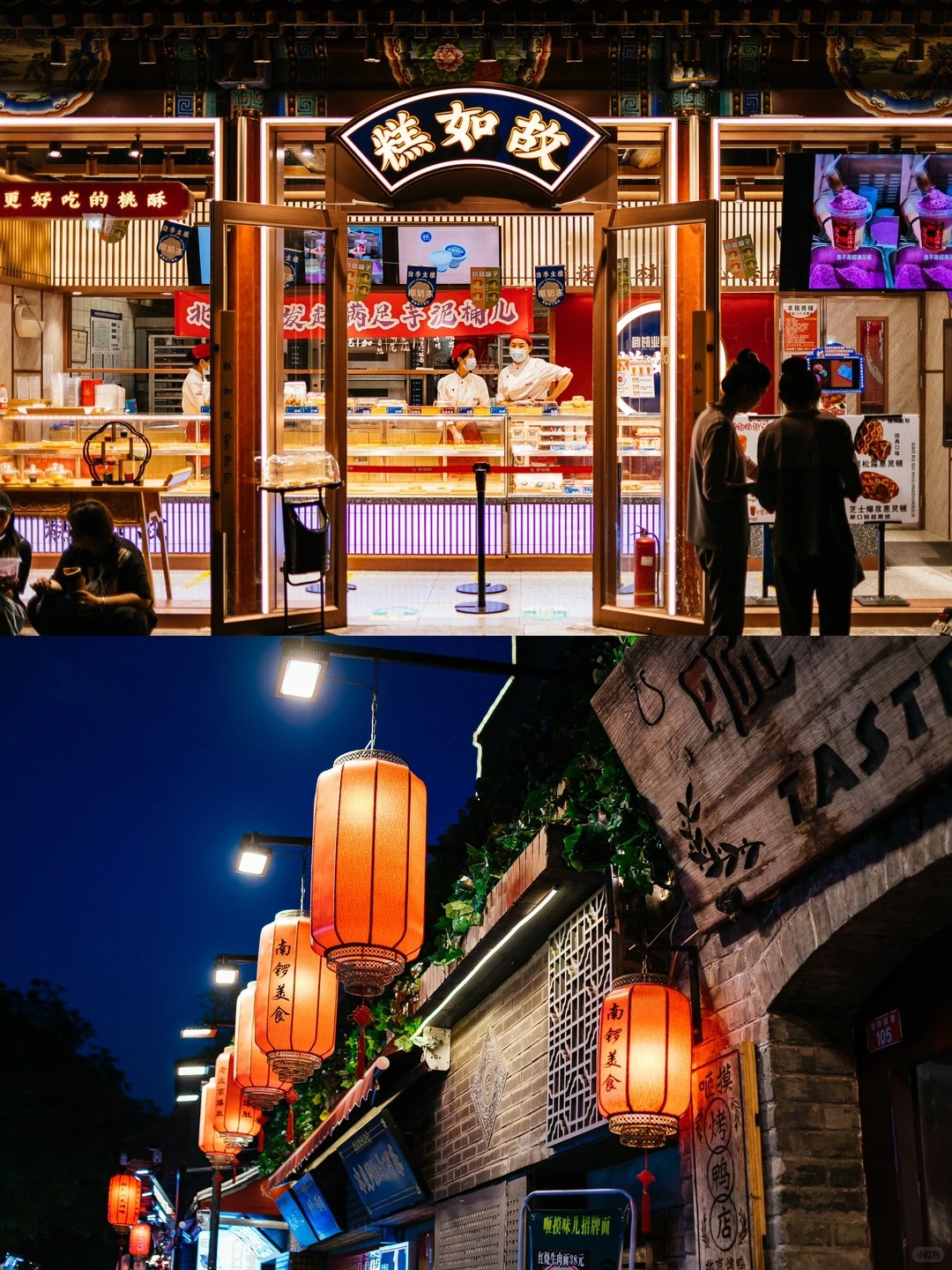
Nanluoguxiang
A 700-year-old pedestrian alley runs roughly 800 meters from south to north, packed with independent cafés, cold-beer stands, and souvenir boutiques. The central section between Nanluoguxiang Station and the Drum Tower is the liveliest — and noisiest — stretch. Late-night crowds can persist until well past midnight on weekends. From here, the Drum and Bell Towers are a 25-minute walk north; Houhai Lake is 20 minutes west.
- Pros: Authentic hutong atmosphere; walkable to Drum and Bell Towers; Nanluoguxiang Station (Line 6) at the south end; good café and bar density
- Cons: Central section noisy and crowded after dark; not walkable to the Forbidden City; some streets lack English signage
- Luxury ($130–440, ¥930–3,150): Beijing Lezai Nanluo Courtyard — converted courtyard with traditional rooms
- Mid-range ($75–200, ¥540–1,430): Beijing Gu Xiang 20 Hutong Culture Hotel — boutique feel, authentic setting
- Budget ($60–180, ¥430–1,290): Beijing Downtown Travelotel — simple, functional, close to the alley's south gate
Gulou & Houhai
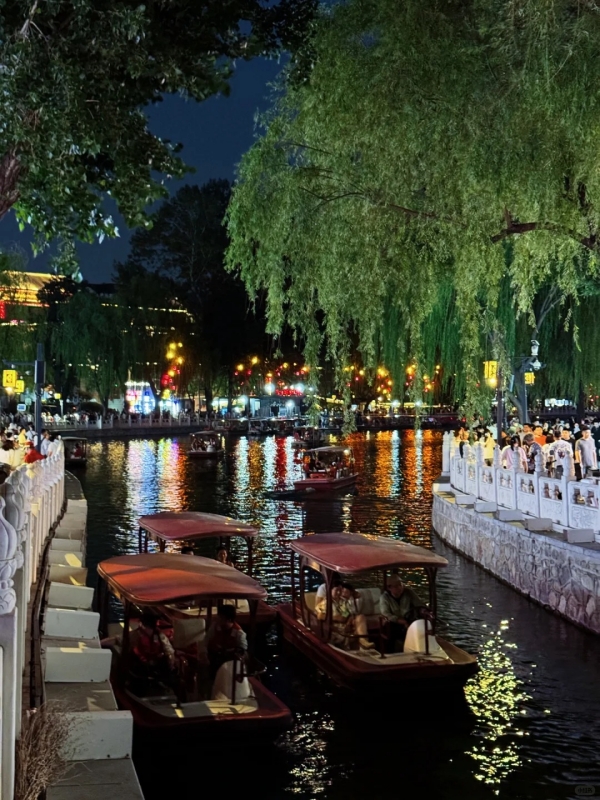
Houhai in Beijing
The area around the Drum and Bell Towers centers on Houhai Lake, a trio of connected ponds with a waterfront promenade. Summer brings paddleboats; winter turns the surface into an informal ice rink. The bars facing the lake stay open until the early hours, drawing a younger international crowd. Prince Gong's Mansion is a 10-minute walk northeast; Beihai Park is 20 minutes east.
- Pros: Lakeside evening atmosphere; best nightlife scene near the historic core; walking distance to Nanluoguxiang and Prince Gong's Mansion
- Cons: Noisy on weekends; fewer international-chain hotel options; foot traffic dies down in deep winter
- Mid-range ($90–300, ¥640–2,150): Rong Hotel (Nanluoguxiang Branch) — clean rooms, short walk to Houhai
- Budget ($80–130, ¥575–930): Beijing Shichahai Shadow Art Performance Courtyard — cultural programming, courtyard setting
Beixinqiao
This younger, foodie-anchored strip runs along the hutong grid near the Lama Temple. Its most famous draw is Ghost Street (Guijie), a 1.5-kilometer stretch of red lanterns and late-night hotpot stands open 24 hours. The neighborhood sits on Line 5 with a direct metro link to the Temple of Heaven and a transfer at Dengshikou to Line 1 for the Forbidden City — roughly 30 minutes total door to gate.
- Pros: Best late-night food options in the city; affordable restaurants; Line 5 connects to two UNESCO sites; less tourist-heavy than Nanluoguxiang
- Cons: Not walkable to the Forbidden City; can feel gritty compared to polished Wangfujing; limited luxury hotel options
- Luxury ($170–380, ¥1,220–2,720): Ascott Raffles City Beijing — serviced apartments with kitchen facilities
- Mid-range ($100–280, ¥715–2,000): SSAW Garden Hotel Beijing — reliable mid-tier chain, good transit links
- Budget ($95–260, ¥680–1,860): Beijing Qianyuan Hotel — straightforward rooms, strong local food scene nearby
Where to Stay in Modern Beijing
Sanlitun, Chaoyang CBD (Guomao), and Xidan cover the contemporary, business-and-shopping half of the city. The embassy district, luxury malls, and modern hotel infrastructure define these areas. They are not walkable to the Forbidden City, but they offer cleaner rooms, better international dining, and easier logistics for travelers spending multiple days in the city.
Sanlitun
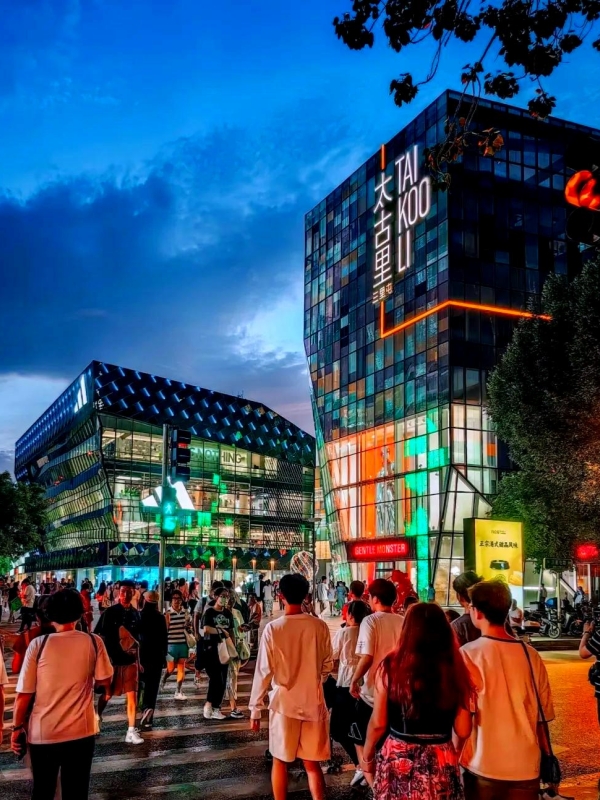
Sanlitun Night View
Beijing's nightlife hub revolves around Sanlitun Bar Street — a narrow alley of rooftop bars, craft beer joints, and Western restaurants — and the Taikoo Li open-air mall. A large expat and embassy community means English is widely spoken. The Taikoo Li South area and North area mix global brands with local design stores. Tuanjiehu Station on Line 10 and the Dongzhimen interchange hub are both nearby, but the nearest major monument is at least 30 minutes away by metro.
- Pros: Best nightlife in Beijing; wide international dining; strong expat community; Taikoo Li shopping
- Cons: Far from any major historic sight (30+ min by metro); Bar Street gets very loud; not ideal for early-riser sightseers
- Luxury ($200–600, ¥1,430–4,300): CHAO Sanlitun Beijing — design hotel with rooftop bar and art programming
- Mid-range ($280–850, ¥2,000–6,070): InterContinental Beijing Sanlitun — large international brand, solid service
- Budget ($70–140, ¥500–1,000): Holiday Inn Express Beijing Dongzhimen — basic but clean, close to transit hub
Chaoyang CBD (Guomao)
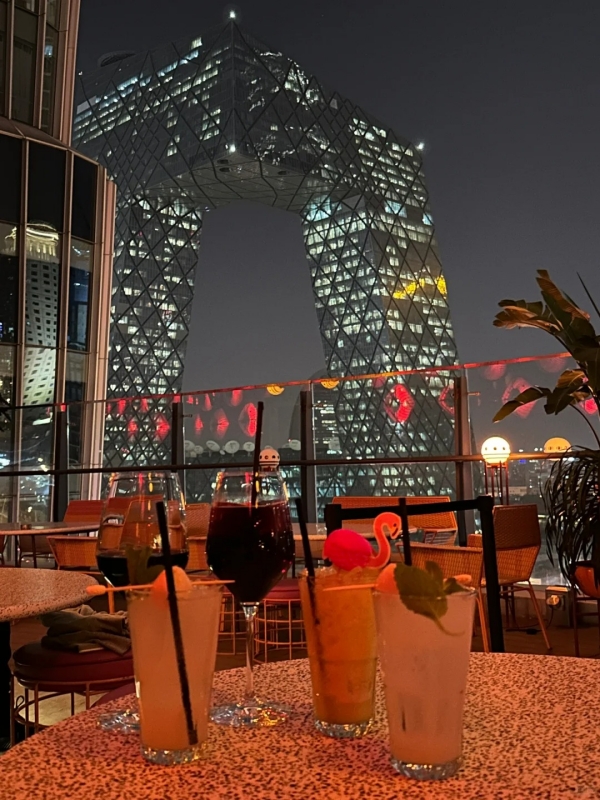
Guomao's Rooftop Bars in Beijing
Beijing's central business district clusters around the China World Trade Center towers and the Guomao interchange where Lines 1 and 10 cross. The CCTV Headquarters building — the twisted loop of concrete on the skyline — anchors the district's modern silhouette. China World Mall offers luxury retail; Ritan Park preserves a Ming-era altar and is quieter than the tourist-heavy parks closer to the palace.
- Pros: Premier business and luxury hotel district; excellent metro connectivity; CCTV landmark for architecture fans; near embassy area
- Cons: Not walkable to the Forbidden City; neighborhood feels corporate rather than atmospheric; Ritan Park is the only major sight within reasonable distance
- Luxury ($230–650, ¥1,640–4,650): China World Summit Wing — premium rooms in the CWTC complex
- Mid-range ($130–500, ¥930–3,575): JEN Beijing by Shangri-La — strong family offerings and central location
- Budget ($125–400, ¥895–2,860): Fairmont Beijing — reliable luxury brand at a competitive rate
Xidan
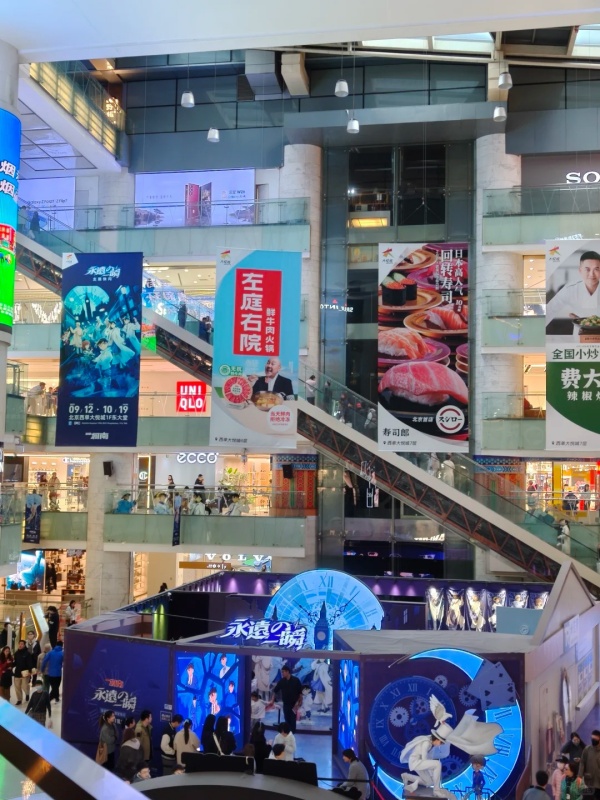
Xidan
This bustling commercial district sits just west of the Forbidden City, anchored by Xidan Joy City — a mid-range mall with family-friendly restaurants — and the older Hanguang Department Store. Three metro lines converge here (Lines 1, 2, and 4), which makes Xidan one of the best-connected bases for reaching sights across the city without changing trains. Families and travelers who prioritize convenience over atmosphere tend to appreciate Xidan most.
- Pros: Excellent metro access (three lines); good shopping and dining; quieter than Wangfujing; practical base for ring-rail travel
- Cons: Lacks historic charm; not walkable to the palace gates; area feels generic compared to hutong neighborhoods
- Luxury ($210–580, ¥1,500–4,150): The Ritz-Carlton Beijing, Financial Street — premium property west of the center
- Mid-range ($130–300, ¥930–2,150): Pan Pacific Beijing — efficient business hotel with strong service
- Budget ($90–180, ¥640–1,290): Grand Mercure Beijing Central — reliable mid-tier with central location
Where to Stay for Walking to Top Sights
Beijing's subway is fast and cheap, but each round-trip costs you 30–60 minutes when you factor in stairs, crowds, and the walk from the station to the sight. For first-timers covering the palace and Tiananmen, a walkable base cuts two to three metro rides from your daily total. Use the table below to find which neighborhood minimizes your commute to the sights that matter most.
The Aman Summer Palace deserves a special mention: it is the only hotel in Beijing with private, after-hours access to the Summer Palace grounds. Guests enter through a dedicated gate, bypassing the daytime crowds entirely. This is the only base in the city where an early-morning walk around Kunming Lake is a genuine walk rather than a commute.
- For early-morning Temple of Heaven tai chi: Qianmen is the only walkable base — the south gate is a 15-minute walk from the hotel district
- For palace and Tiananmen in one morning: Wangfujing or Qianmen; both put you at the gates before the ticketed-entry queues form
- For Summer Palace as a day trip: Chaoyang CBD or Sanlitun have the fastest metro connections on Line 1 to the Xizhimen interchange
- For Lama Temple first thing: Beixinqiao is a 20-minute walk from the temple's east gate
Booking Tips & Areas to Avoid
Beijing's hotel market is deep, but foreign visitors face specific friction points around payment, booking windows, and location. These tips target those friction points directly.
Best booking channels for foreign visitors: Trip.com and Klook carry the widest selection of Chinese properties and support international credit cards and PayPal. Booking.com works for most international chains and some larger local hotels. Agoda is useful for comparing rates across platforms. Avoid Meituan and Dianping — both require a mainland phone number and Chinese payment methods.
- Booking window: 3–4 months ahead for April–May and September–October; 4–6 months for Golden Week (October 1–7) and Chinese New Year; 2–4 weeks is sufficient for winter visits (November–March), when hotel rates drop 20–40%
- Price tiers: Budget $40–80 per night (¥290–580), mid-range $80–150 (¥580–1,070), luxury $200+ (¥1,430+); Aman Summer Palace runs $1,500–3,000 (¥10,700–21,500)
- Payment reality: International credit cards are accepted at most 4–5 star hotels and all international chains; smaller boutique and hutong properties may require WeChat Pay or Alipay — set up Alipay Tour Pass before arrival to avoid a payment crisis at check-in
- Print your Chinese hotel address: Hotel confirmation pages in English often omit the district name; screenshot or print the address in Chinese characters — show this to any taxi or Didi driver
Areas to avoid or approach with caution:
- Shunyi (airport area): The air-hotel strip near Terminal 3 is 60+ minutes from the city center with nothing to see or eat; stay here only for an early-morning flight, not as a sightseeing base
- Fengtai and Tongzhou: Outer business districts with long commutes and minimal tourist infrastructure; avoid unless your itinerary is specifically tied to those areas
- Peripheral Qianmen streets: A few streets east of Qianmen's restored core feel transitional at night — stick to the main boulevard and well-lit side hutongs
Frequently Asked Questions
Q: What is the best area to stay in Beijing for first-time visitors?
Wangfujing is the strongest choice for first-timers. It sits 10–15 minutes on foot from the Forbidden City and Tiananmen Square, and Lines 1 and 5 connect directly to almost every major sight. Chaoyang CBD (Guomao) is a workable alternative if you prioritize modern comfort over walking distance. Both areas have international-chain hotels that make check-in straightforward for non-Chinese speakers.
Q: Which Beijing neighborhood is best for families with kids?
Sanlitun and Chaoyang CBD both offer international-chain hotels with family rooms and kids' clubs — the Kerry Hotel in Sanlitun is particularly well-regarded for younger guests. Xidan is a quieter alternative centered on Xidan Joy City, which has family dining and entertainment options. All three neighborhoods connect to the metro network without transfers, which simplifies getting around with children.
Q: What is the best area in Beijing for walking to the Forbidden City?
Wangfujing (10–15 min walk) and Qianmen (15–20 min walk) are the only neighborhoods within comfortable walking distance of the palace gates. Every other area listed here requires a metro ride of 15–30 minutes. If you want to reach the Forbidden City before the entry queues build, either of these two areas is the right base.
Q: How much does a hotel in Beijing cost per night?
Budget rooms start at about $40–80 per night (¥290–580). Mid-range properties run $80–150 (¥580–1,070). Luxury hotels charge $200–700+ (¥1,430–5,000+). The Aman Summer Palace occupies a separate tier at $1,500–3,000 (¥10,700–21,500) per night. Winter from November through March is the cheapest season; rates at the same property can be 30–40% lower than in peak autumn.
Q: When should I book hotels in Beijing?
Three to four months ahead for spring (April–May) and autumn (September–October), when weather is ideal and tourist volumes peak. Four to six months ahead for Golden Week (October 1–7) and Chinese New Year — these two periods see the highest domestic travel demand in the year. Two to four weeks is enough for winter visits, when hotels compete aggressively for fewer guests.
Q: Do Beijing hotels accept international credit cards?
Most 4–5 star hotels and all international chain properties accept Visa, Mastercard, and Amex at check-in. Smaller boutique hotels, courtyard guesthouses, and budget properties near the hutongs frequently require WeChat Pay or Alipay. Setting up Alipay Tour Pass before departure covers most payment scenarios without needing a mainland bank account.
Q: Which area of Beijing has the best nightlife?
Sanlitun — specifically Sanlitun Bar Street and the Taikoo Li area — draws the most cosmopolitan crowd with bars open until 2–4 a.m. Gulou and Houhai offer a different feel: relaxed lakeside bars with paddleboat views in summer and a younger, less corporate atmosphere. Both neighborhoods stay active well past midnight on weekends.
Q: Is it safe to stay in Beijing as a tourist?
Beijing is very safe by global capital-city standards. Violent crime targeting tourists is extremely rare. The standard watch-outs are common to any major tourist destination: tea-ceremony scams and "art student" pitches near major sights, overcharging by some unregistered taxis, and aggressive souvenir vendors in crowded pedestrian areas. Women traveling solo report no particular safety concerns in any of the neighborhoods listed here.