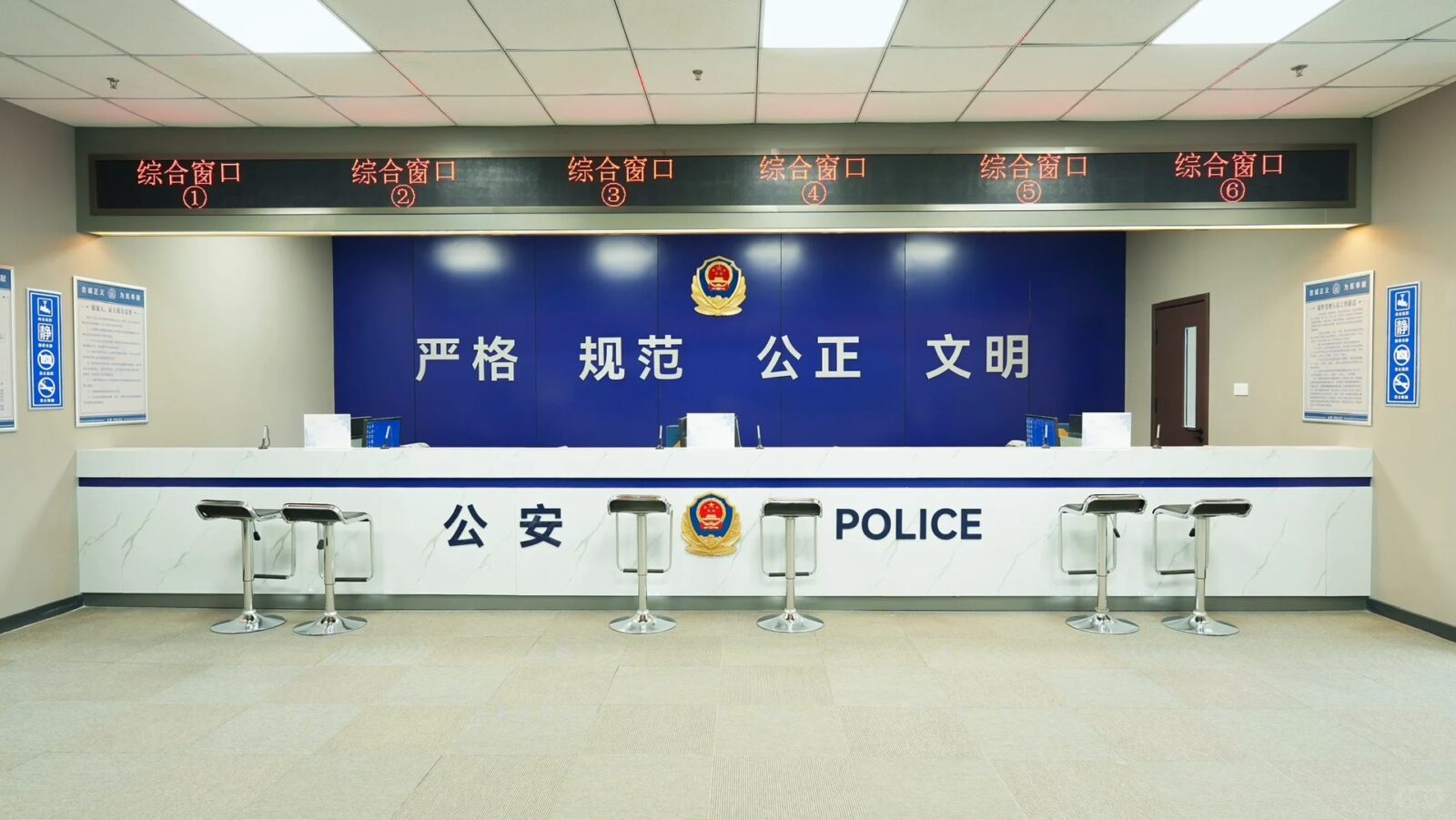
110 in China
A lot of people don’t think about emergency numbers until something feels off. Maybe your phone disappears in a crowded subway, or a driver starts arguing over the fare late at night. That’s usually when someone asks, “Do I call 110 in China, or is there another number?”If you want a broader rundown of survival tips for traveling in China, check out this detailed guide - China Survival Guide on TravelOfChina.
110 in China is the main police number, but using it in real life isn’t always as straightforward as it sounds. The noise, the language gap, and the pressure to explain quickly can make things confusing. It helps to know what actually happens before you ever need to dial it.
When You Actually Need 110 and Situations Tourists Often Face
Common situations where 110 is the right number
All issues do not require the police but there are cases when it is obvious that it is necessary. In large urban centers such as Shanghai or Guangzhou, the situation may get out of control rather fast, particularly in the densely populated locations.
The ability to know when to apply 110 in China saves time and eliminates unnecessary stress:
- Theft / pickpocketing:
This normally occurs in crowded areas such as subways at peak time, tourist streets, or night markets. You may not realize it at all. When you lose your phone or wallet and you feel that someone has stolen it you should do the right thing and dial the police in china. Officers will repeatedly question about the location of it and what was stolen, thus attempt to remember the last place.
- Lost passport:
This is small, and then serious at the same time. Hotels will most likely tell you to submit it to the police and then call your embassy. Here, 110 in China can link you to the local police where you can take a loss report which will come in handy in the future.
- Violence or disorder in the street:
The verbal fights may get violent, particularly at late hours around pubs. It is better to call even when you are not involved. Locals do this rather fast, thus there is no reason to hesitate in case things appear to be getting out of control.
- Taxi scams / disputes:
Not ubiquitous, but still it occurs. When a driver will not stop, overcharges, or lock the door (it happens rare, but has been reported), one can call 110 in China. The mere dialing of the number alters the attitude of the driver at times.
Situations where 110 is NOT the best option
It’s easy to assume 110 covers everything, but that’s not how the system works here. Calling the wrong number can slow things down:
- Medical emergency → 120:
If someone faints, gets injured, or has breathing issues, skip the police. Call 120 in China, which is the ambulance service. Response time can vary depending on the city. If you want to know how to book medical services or checkups while in China, take a look at this step-by-step guide - How to Book a Medical Checkup in China.
- Fire → 119:
For smoke, fire, or gas leaks, 119 is the correct line. They respond faster than routing through 110.
- Minor complaints:
Noise from neighbors, small service issues, or restaurant disputes usually don’t need police. Staff or local management often handle these faster.
A quick real-life scenario travelers often mention
There is one scenario that appears frequently in the review. A tourist in a Chengdu night market noticed that his phone was gone after purchasing skewers those smoky barbecue vendors where everything stinks of chili oil. He scanned the area, questioned some of the people, yet nothing was found.
He made a call at that time to 110 in China. The operator was not much of a talker in English, though shop owners that were close by came to assist in translation. It was around 10-15 minutes (that is what he estimated) before the arrival of police. They made a note, requested the copy of the passport and directed him to a station, where he was to make an official report.
It did not fix all immediately, but it provided him with a good second step, which is what you need the most at that point.
Is 110 Like 911 or Something Different You Should Know
-
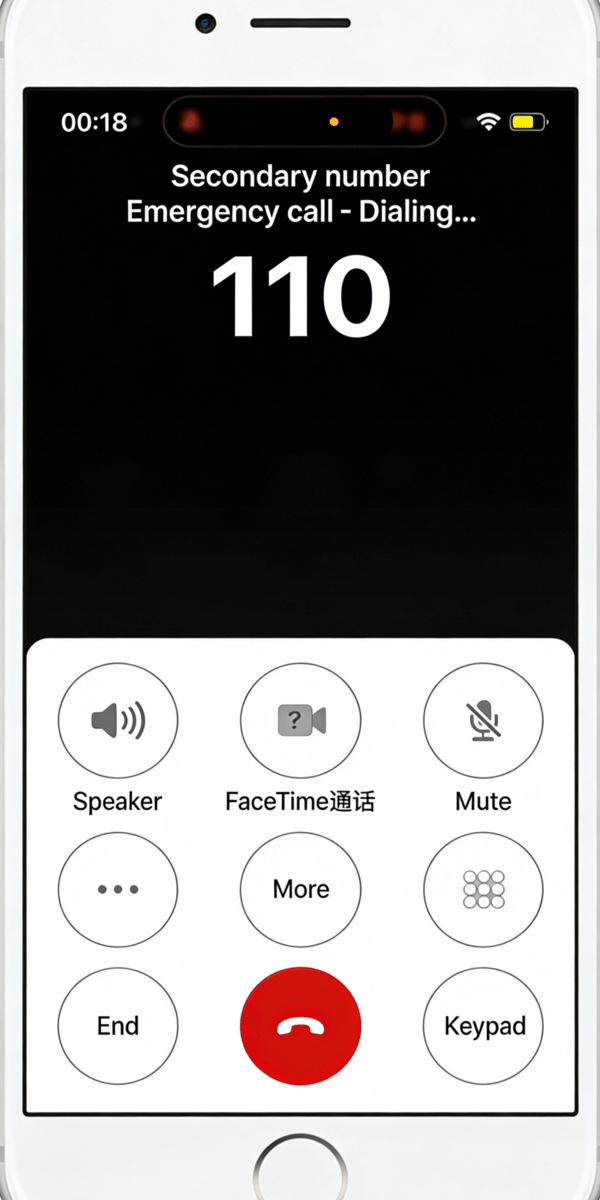

- Dialing Interface
-
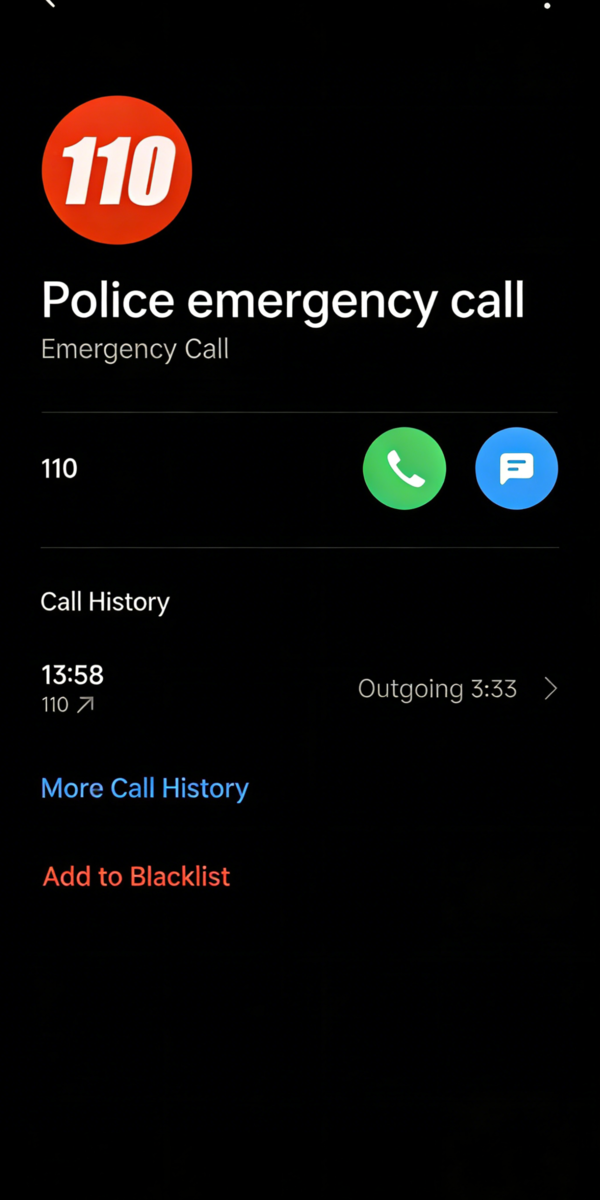
- 110 Call Records
Key similarities between 110 and 911
On the simplest level, the system is a familiar one.
You will not entirely be lost in case you have used 911 previously. But these resemblances go no deeper:
- Cost: free call:
Dialing 110 doesn’t charge you. The call is free regardless of whether you are on a local SIM or even hotel landline. This is among the reasons why people use 110 in China in times when there is an emergency. If you’re curious about handling payments while traveling in China, including transferring money from PayPal to Alipay, check out this detailed guide.
- Coverage: nationwide access:
There is no need to figure out local police numbers. 110 operates in cities, such as Beijing as well as in smaller towns. The call will automatically be transferred to the closest police dispatch center.
- Function: emergency dispatching:
Similar to 911, operators take a basic information, such as location, situation, urgency and dispatch officers as needed. This process is rather formalized in most big cities, although it may seem to be slower than it should be.
This being said, as soon as you get past these fundamentals, the differences are more pronounced.
Important differences that can affect tourists
That is the place when the expectations may not match the reality slightly, particularly in the case of the first-time visitors:
- Language: minimal support of English:
In large cities, there are operators who know a little English but this is not an assurance. Communication is not easy in the smaller cities. This is likely to be the largest contrast to that of 911.
- Process: more place oriented questions:
Where you are, operators are usually preoccupied with that. When you are not able to explain your whereabouts, the speed drops. A screened shot of a map or close aspect of the area is more than a long description.
- Role: level of police involvement:
Not all calls result into immediate action. In minor cases, the police can refer you to do it at your own place or come to a station rather. China emergency number 110 is not necessarily concerning direct intervention, but reporting and documentation.
One detail many first-time visitors misunderstand
The general thought is that 110 is acting like a one stop crisis line. It doesn’t.
The police are largely covered in 110 in China, not all form of emergencies. There are separate numbers on medical cases, fire cases and even accidents. You can call 110 and get redirected or lose time, when calling everything.
That little misconception does not appear that big, until you are at a crowded street, and you want to know why you were not getting the help as quickly as you thought.
How to Call 110 in China Step by Step Without Panic
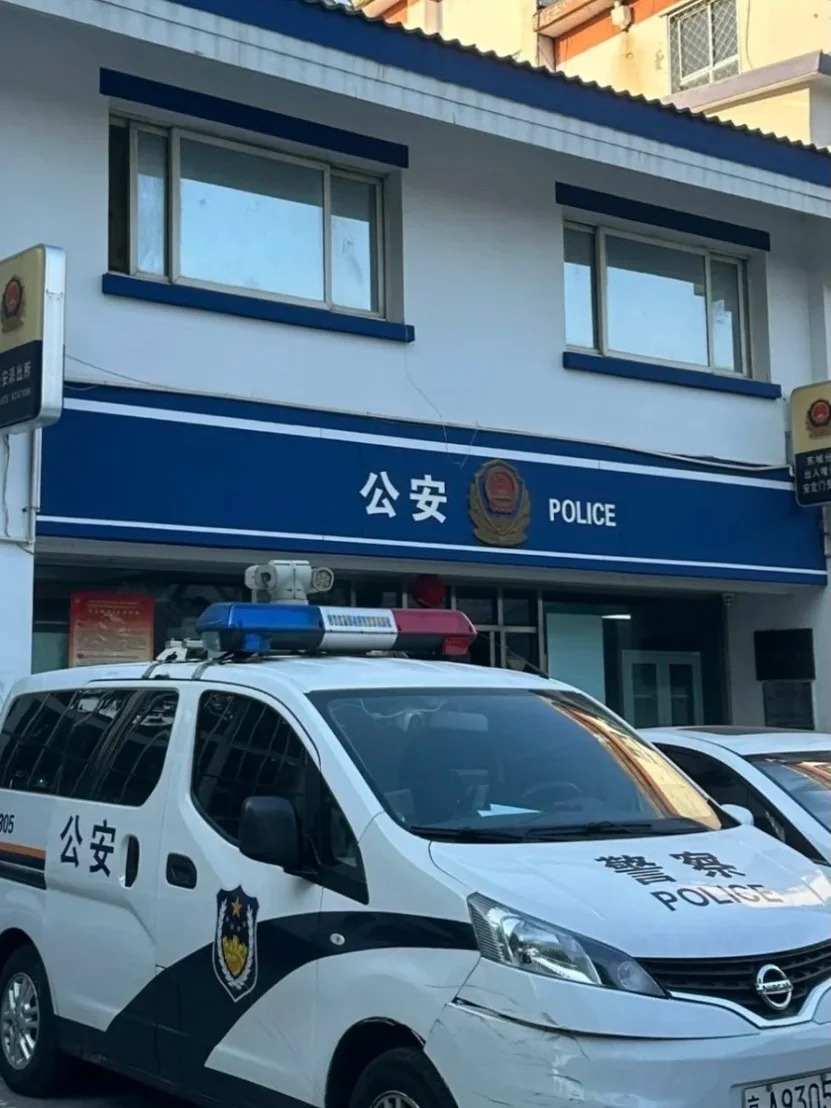
Police Office
Step 1 dialing 110 from a local phone or SIM
The first step is simple, but people still hesitate when something actually happens. You don’t need any prefix, country code, or special format. Just type 110 and press call. It works on Chinese SIM cards, and in many cases even without a SIM if your phone still has signal access.
Most people use their mobile, but hotel room phones usually work too. I’ve seen some hotels with an emergency shortcut button, though it’s not always obvious. One thing that does matter is signal—if you’re underground in a subway or deep inside a mall, the call may fail or drop. In that case, move closer to an exit or street level before dialing 110 in China.
Step 2 what the operator will usually ask you
After making the call, the operator tends to use a pattern. The structure remains the same even though the level of English may differ. The question of where you are comes first almost always. You had better not stay here too long or the whole business is stalled.
Then they will inquire about what has happened. Keep your words concise and to the point, the following descriptions are more effective than a protracted conversation: phone stolen, lost passport, or taxi trouble. Then comes urgency. They can enquire whether anybody is injured or in peril and this influences the speed of the police response.
Foreigners do not have their own number of china police hence speaking to them is based on how well you can make important points. It does not require being flawless English, it merely needs to be straight forward.
Step 3 how to share your location quickly
This is where the majority have a hard time. The names of the streets are difficult to pronounce and you do not even know where you are at times. It is often quicker to leave everything to tools instead of attempting to explain everything.
Open a map application such as Apple Maps or Amap and see the closest landmark. Meaningful names of metro stations or shopping malls or popular brands are better than complete addresses. It is likely to be interpreted quicker saying something like: near IFC Mall or next to Line 2 subway station.
Having a picture of where you are or where you are going is even better. In China, detail is not important when making a call to 110. They can get along with a crass yet familiar place.
Step 4 what to do if the call disconnects
Dropped calls happen more often than people expect, especially in crowded areas or places with weak signal. If that happens, just call again immediately. There’s no issue with redialing, and operators are used to repeated calls in urgent situations.
If communication feels stuck, look around and ask for help. Shop staff, security guards, or even other customers often step in and speak directly to the operator. This happens quite naturally in China, especially in busy public places.
Sometimes the issue isn’t the signal but the environment—too noisy, too chaotic. Moving a few meters away to a quieter spot can make a noticeable difference.
What to Say When Calling 110 If You Don’t Speak Chinese
Simple English phrases that usually work
You do not need impeccable sentences in order to receive assistance. Clear and concise versions are most effective, as not all of the operators know much English. Start with the I need police help- this will make one realize he is in a position of urgency when he calls 110 in China. It should be followed by a simple where-abouts, such as, I am at [hotel name or metro station] and a quick statement of the issue, such as, my phone is stolen or I lost my passport. Do not write lengthy explanations as this will be confusing to the operator.
You may also question to check whether it will be easy to communicate through asking a question: Can you speak English? Even in a country that does not have a special chinese police number of foreigners, such expressions tend to initiate the process. This may be uncomfortable initially, yet there is no bigger thing than clarity over grammatical correctness.
Key Chinese words that can help in urgent moments
You don’t need to learn full sentences, but a few words can make a difference.
Pronunciation doesn’t have to be perfect—just recognizable:
- 报警 (bao jing): call the police
Saying “bao jing” immediately signals what you need. Many travelers remember just this one word.
- 地址 (di zhi): address
If the operator says something you don’t understand, you might hear this word. It usually means they are asking where you are.
- 手机 (shou ji): phone
Useful if your phone is lost or stolen. Even saying “shou ji, no” can help explain the situation.
These small words act like shortcuts. When calling 110 in China, even one correct word can speed things up more than a full English sentence.
Using translation apps when calling 110 in China
Translation applications will be a handy solution when English is not helpful, but they are not suitable in live calls. Google Translate is suitable in the case of typed messages, where you can prepare a short phrase such as my passport is lost to be read out loud or displayed to a person around you.
The voice feature of Apple Translate is able to translate speech, however, the delay is sometimes minimal, and the noise in the background can disrupt it. Most of the travelers write the message and read it aloud slowly or hold the phone to a helper nearby to read it out to the operator. Even when being used with apps, short concise phrases are quicker and more dependable with 110 in China.
Other Emergency Numbers in China You Should Save Before Your Trip
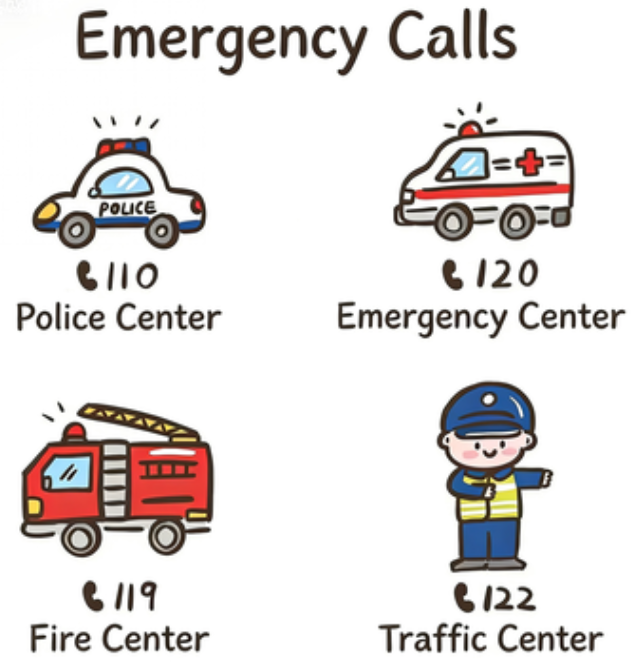
Emergency Calls
120 in China ambulance services explained
In China, 120 handles the medical emergencies. This is the address to call in cases whereby one is seriously injured, is in an ailment or requires urgent transport to hospital. It dispatches paramedics directly, as opposed to 110 which is delivered to police affairs in China. The turnaround time will depend on where it is located, urban areas tend to experience ambulance within 10-20 minutes and in rural areas, it may take more time. You can also keep your hotel name or a clear address in Chinese where operators may be either not very conversant with English.
119 in China fire emergency number
For fires, 119 in China connects you to the local fire department. Residential, commercial, and even small street fires are handled through this line. Firefighters can arrive quickly in cities but might take longer in more remote areas. Remember, 119 is strictly for fire and related rescue situations, so don’t call for medical emergencies or minor safety issues.
122 for traffic accidents
Traffic accidents, including collisions, pedestrian injuries, or road hazards, are reported to 122. This number alerts local traffic police, who can manage the scene, document the incident, and assist victims. Tourists often confuse this with 110 in China, but 110 primarily handles criminal matters and public safety. Having a local address or nearby landmark ready makes the process smoother.
12110 SMS police option when you cannot call
If you are in a situation where calling is difficult—loud environment, no signal, or fear of attention—China also provides 12110, an SMS-based police contact. You can send your location and a brief description of the issue. It’s not as immediate as a voice call but can serve as a backup.
96110 anti-fraud hotline
To report scams or financial fraud, especially those targeting foreigners, dial 96110. Operators provide guidance on reporting methods and potential follow-up actions. This hotline is particularly relevant in tourist-heavy areas where fake services or overpriced goods might be an issue.
Having a list of china emergency numbers saved on your phone or printed ensures that no matter the situation—health, fire, traffic, or fraud—you’re prepared. Keeping both digital and physical copies can save crucial time during an emergency. It’s a small step that adds a lot of security to your trip.
FAQ About 110 in China
Q: What is 110 in China used for?
110 in China is the nationwide police emergency line for situations requiring law enforcement, including theft, pickpocketing, fights, public disturbances, and taxi disputes. It is not a medical or fire hotline, so calling 120 for ambulance services or 119 for fires is necessary in those cases. Tourists sometimes confuse it with 911, but it strictly covers police matters. Having your location ready in Chinese or showing a screenshot to the operator can save valuable time during an emergency.
Q: Can I call 110 in China from a foreign SIM card?
Yes, most international SIM cards can reach 110 in China, but network reliability may vary. Using a local SIM or hotel phone often improves response speed. It’s highly recommended to keep your hotel address or a nearby landmark saved in Chinese characters. Even if the operator understands minimal English, providing a clear, recognizable location ensures help arrives faster. Some travelers have reported needing to show an address screenshot or point to a map when communication is difficult, which can prevent delays.
Q: How can I communicate effectively with 110 operators if I don’t speak Chinese?
Communication can be challenging, as many 110 in China operators speak limited English. Short, clear phrases like “I need police help” and stating your location work best. Using a few key Chinese words such as 报警 (bao jing) for police and 地址 (di zhi) for address is often sufficient. Translation apps like Google Translate can assist, but they have slight delays. Preparing screenshots of your hotel or current location can also help, providing a reliable reference for the operator and speeding up the response in urgent situations.
Q: What is the difference between 110, 120, and 119 in China?
110 in China handles police emergencies, 120 in China is for medical emergencies, and 119 in China is strictly for fires. Each number is free and covers all regions, but they operate independently. Calling the wrong number can delay help. For example, dialing 110 for a heart attack may waste precious time. Travelers should save all three numbers and understand their purposes. Clear identification of your emergency type, combined with concise communication, ensures authorities respond correctly and efficiently without confusion.
Q: How do I report traffic accidents or roadside incidents?
Traffic accidents should be reported to 122, which connects you to the traffic police. This line handles collisions, pedestrian injuries, and road hazards. Unlike 110 in China, it focuses on traffic regulation, documentation, and assistance for victims. Having the exact location in Chinese or pointing to a nearby landmark is important for a fast response. Tourists sometimes confuse 122 with 110, but calling the wrong number can cause delays. In minor accidents, exchanging contact details and taking photos is also recommended alongside reporting.
Q: Is there a way to contact the police via SMS in China?
Yes, 12110 allows SMS contact for situations where a voice call is difficult or unsafe. You can send your location and describe the issue briefly. This service is useful in noisy areas, crowded streets, or when discreet communication is needed. While the response may not be as fast as a phone call, it ensures the authorities are alerted. Tourists often combine this with screenshots of addresses or landmarks to provide clarity, which increases the chances of a timely and accurate response when calling 110 in China is not feasible.
Q: What hotline should I use for fraud or scams targeting tourists?
Dial 96110, the national anti-fraud hotline, to report scams, fake services, or financial fraud. This line provides guidance on filing reports and possible follow-up actions. Tourist areas like Beijing, Shanghai, or Xi’an often see scams targeting foreigners. Having this number saved alongside china emergency numbers is crucial for avoiding losses. Some travelers also use it to verify suspicious offers or rental deals. Combining vigilance with access to this hotline gives foreign visitors an extra layer of protection against fraud.
Q: Should I save all the key emergency numbers before traveling to China?
Absolutely. Saving a list of china emergency numbers on your phone or carrying a printed copy is highly recommended. Include 110 in China, 120 in China, 119 in China, 122, 12110, and 96110. Having both digital and physical copies ensures quick access in any situation, from medical emergencies to theft, fire, traffic accidents, or fraud. Preparation reduces panic, ensures faster help, and gives tourists confidence navigating unfamiliar areas. Even a single number saved can make the difference between a smooth response and a chaotic delay.