Tiantan Hospital in Beijing
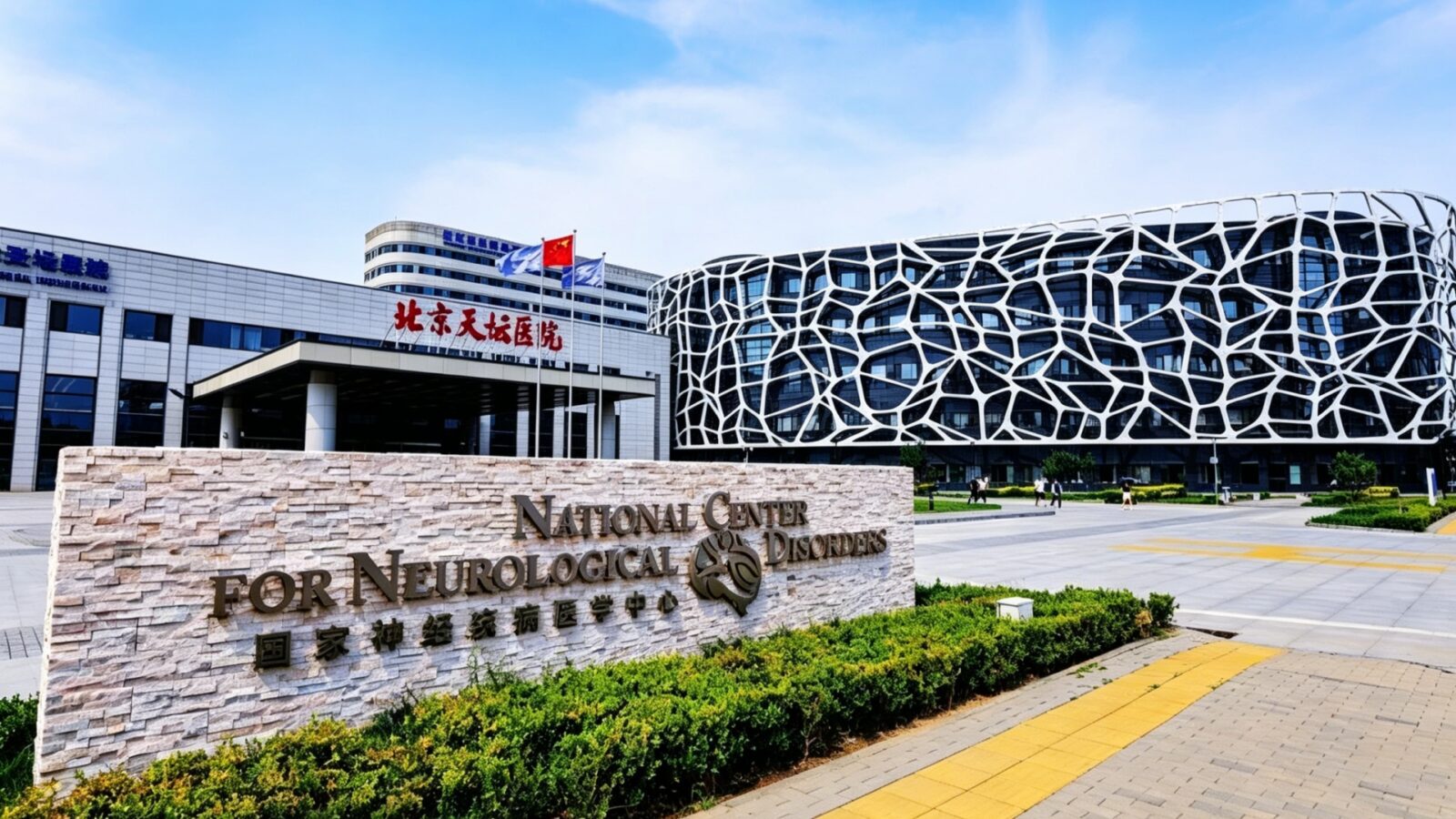
BJTTH - Beijing Tiantan Hospital (BJTTH) is the capital’s leading neurological sciences facility and home to the largest neurological medical complex in Asia. The hospital sees patients from more than 60 countries each year. An affiliated hospital of Capital Medical University, BJTTH is at the center of China’s national brain research, and has usurped the title of best neurosurgeon hospital for thirteen years in a row. Before you start booking flights: the original site located next to the Temple of Heaven Park has closed as of October 2018 and all clinical services are only available at 119 South Fourth Ring West Road - do not navigate to the old address.
Essential Information of BJTTH
| Category | Item | Details |
|---|---|---|
| 🏥 General Information | Institution Name | Beijing Tiantan Hospital, Capital Medical University (首都医科大学附属北京天坛医院) |
| Acronym | BJTTH | |
| Address | No. 119, South Fourth Ring West Road, Fengtai District, Beijing 100070, China | |
| 📞 Contact Data | General Line | +86-10-59976611 |
| 24-Hour Service Hotline | +86-10-59978585 | |
| Official Website | www.bjtth.org | |
| Service Languages | English, French, Japanese, Russian | |
| 📅 Appointment & Emergencies | Outpatient Appointment | Install the official "Beijing Tiantan Hospital" App, or follow the WeChat official account「北京天坛医院」 |
| Emergency Services | Available 24/7 — proceed directly to the main Emergency Department |
Three Core Strengths
1. Clinical Pioneering:
- Tiantan Protocol — awake glioma surgery in 33 countries; language preservation rate 98.2%
- Elective surgery mortality 0.2%, matching North American and Western European benchmarks
2. National Platforms:
- Leads China's National Clinical Research Center for Neurological Diseases and the Brain Initiative
- Human Brain Bank — 10,000+ specimens; core IBBN member
3. Research Milestones:
- CHANCE-3 Trial (NEJM, 2024) — now embedded in AHA and ESO global stroke guidelines
- BCI Rehabilitation System — 47.5% motor improvement in hemiplegic patients
If you are weighing BJTTH against other leading hospitals in Beijing, our guide to the best hospitals in China maps the top institutions by specialty and international patient services — a useful starting point before you commit.
BJTTH Department Overview and Leading Specialties
Beijing Tiantan Hospital runs multiple nationally ranked departments, but three stand out for international patients seeking neurological care. The overview table below maps every major department across the campus. All rankings are sourced from the Fudan University Hospital Specialty Reputation Ranking, 2024 edition.
Complete Department Directory at Beijing Tiantan Hospital
| Department / Center | Main Services | Floor / Location |
|---|---|---|
| ⭐ Neurosurgery (神经外科) | Brain tumors (glioma, meningioma, pituitary adenoma), cerebrovascular surgery (aneurysm, AVM, hemorrhage), TBI, functional neurosurgery (epilepsy, DBS, trigeminal neuralgia), 24h emergency response | Inpatient Bldg, Fl. 5–8 |
| ⭐ Neurology (神经内科) | Stroke (acute & secondary prevention), Parkinson's disease, epilepsy, neurodegenerative disease (Alzheimer's, MSA), neuroimmune disorders (MS, NMOSD), headache / dizziness / sleep clinics | Outpatient Bldg, Fl. 2–4 |
| ⭐ Neurointervention Center (神经介入中心) | Intracranial aneurysm (coil/flow diverter), mechanical thrombectomy for acute stroke, AVM embolization, carotid stenting (CAS), dAVF embolization | Interventional Suite, Bldg 3 |
| Neuro-Oncology (神经肿瘤科) | Malignant brain tumor chemotherapy, radiotherapy coordination, targeted therapy, nervous system tumor diagnosis | Outpatient Bldg, Fl. 6 |
| Neuroimaging (神经影像科) | MRI (including intraoperative), CT, DSA, PET/MR, PET/CT, angiography — diagnostic support for all neurology and neurosurgery cases | Imaging Center, Bldg 2 |
| Neuro-Intensive Care (神经重症科 / NICU) | Post-operative neurological monitoring, mechanical ventilation, ICP management, multi-organ support for critically ill neuro patients | ICU Floor, Bldg 1 |
| Neurology Rehabilitation (神经康复科) | Post-stroke motor rehabilitation, BCI-assisted therapy, aphasia recovery, Parkinson's physiotherapy, cognitive rehabilitation | Rehabilitation Bldg, Fl. 2–3 |
| Spine Surgery (脊柱外科) | Cervical / lumbar disc disease, spinal cord tumors, spinal deformity correction, minimally invasive spine surgery | Inpatient Bldg, Fl. 3–4 |
| Functional Neurosurgery (功能神经外科) | Deep brain stimulation (DBS), vagus nerve stimulation, pain management surgery, movement disorders surgical intervention | Outpatient Bldg, Fl. 7 |
| Endocrinology (内分泌科) | Pituitary tumors, craniopharyngioma, neuro-endocrine disorders, diabetes management for surgical patients | Outpatient Bldg, Fl. 5 |
| Emergency Medicine (急诊科) | 24-hour neurological and general emergency care, stroke green pathway, trauma triage | Emergency Bldg, Fl. 1 |
| International Medical Center (国际医疗部 — IMC) | English / French / Japanese / Russian outpatient services, IMC-coordinated MDT consultations, online follow-up | Outpatient Bldg No.1, Fl. 5 |
NO. 1 Neurosurgery: China's #1 Brain Surgery Center for 13 Consecutive Years
Ranked #1 in China (Fudan 2024, 13 consecutive years) | ~23,000 procedures/year | Elective mortality 0.2% | WHO Collaborating Center for Stroke Surgery
BJTTH's neurosurgery department is in a category of its own within China.
The sheer volume alone — nearly 23,000 procedures a year — necessitates an intensity of systems accuracy that most hospitals never acquire. Elective surgery mortality is 0.2%, comparable to the best programmes in North America and Western Europe. The WHO designated it as a Collaborating Center for Stroke Surgery, one of only a few in Asia.
The department's signature innovation is the Tiantan Protocol for awake craniotomy in glioma resection — language function preserved in 98.2% of cases, now used by surgical teams in 33 countries. AI-assisted robotic navigation and a 68,000-case aneurysm database complete the picture of a department that genuinely operates at the frontier.
Core treatment areas:
- Brain tumors — gliomas, meningiomas, pituitary adenomas, with advanced intraoperative imaging
- Cerebrovascular disease — aneurysm clipping, AVM resection, cerebral hemorrhage
- Traumatic brain injury — emergency craniotomy, skull repair, decompression
- Functional neurosurgery — epilepsy surgery, Parkinson's DBS, trigeminal neuralgia
- 24-hour emergency neurosurgical response
Representative specialists:
Academician Zhao Jizong (赵继宗) — Member of the Chinese Academy of Sciences, Chief Physician, Professor. Pioneered flow diversion stent technology for giant aneurysms; author of 200+ peer-reviewed international papers.
Academician Jiang Tao (江涛) — Member of the Chinese Academy of Engineering, Chief Physician, Professor, Doctoral Supervisor, Director of the Neurosurgery Center. Global pioneer in liquid biopsy for brain tumor diagnosis; reshaped how glioma is monitored and treated worldwide.
Patient Experience:
David M., 52, United Kingdom — Glioblastoma, 2024. With a left-hemisphere GBM in proximity to Broca’s area, David’s oncologist in London warned him that surgery could result in permanent loss of speech. The Academician Jiang Tao team conducted a five-hour awake craniotomy using the Tiantan Protocol—surgeons were encouraged to speak with him in English to test language function real-time throughout surgery. Gross total resection was achieved, and David was conversing fluently the morning after surgery. “I figured I would lose my voice. Instead I lost the tumor.”
NO. 2 Neurology: National Leader in Stroke Research with Global Clinical Impact
Ranked #2 in China (Fudan 2024) | Core of the National Clinical Research Center for Neurological Diseases | Founded China's first standardized stroke unit in 2001
Second place in China's national neurology ranking is not a consolation prize.
It means that the neurology department of Beijing Tiantan Hospital is literally next door to Peking Union Medical College Hospital—and for stroke, BJTTH makes the stronger argument. In 2001 it set up China’s first stroke unit and spent the next 20 years pushing that idea into hospitals. If you are weighing options, Peking Union Medical College Hospital remains the benchmark for rare multi-system diagnostics — for dedicated neurological care and stroke, BJTTH's depth gives it a distinct edge.
The CHANCE-3 Trial, published in the New England Journal of Medicine in 2024, now informs stroke prevention protocols in dozens of countries. Research that changes global practice does not come from ordinary institutions.
Core treatment areas:
- Cerebrovascular disease — acute ischemic stroke, hemorrhagic stroke, secondary prevention
- Parkinson's disease — comprehensive motor disorder management, DBS pathway with neurosurgery
- Epilepsy — drug-resistant evaluation, pre-surgical assessment, surgical referral
- Neurodegenerative diseases — Alzheimer's, multiple system atrophy, frontotemporal dementia
- Neuroimmune disorders — multiple sclerosis, NMOSD
- Specialist clinics — headache, dizziness, sleep disorders
Representative specialist:
Professor Wang Yongjun (王拥军) — President of BJTTH, Chief Physician, Professor, Doctoral Supervisor. Principal investigator of the CHANCE trial series; one of Asia's most cited stroke clinicians. His research directly shaped American Heart Association and European Stroke Organisation guidelines.
Patient Experience:
Kenji T., 61, Japan — Recurrent TIA, 2025. After two TIAs in three months left his Osaka physicians at a loss for the source, his daughter requested an IMC consultation at BJTTH. Our neurology team saw him in person for a review, ordering vessel wall MRI and a 72-hour cardiac monitor within 48 hours—testing not available locally—and found a vulnerable plaque in the left MCA. He was placed on dual antiplatelet therapy per the CHANCE-3 protocol and had no further events in 12 months of video follow-up. "Came for a second opinion, got a first answer."
NO. 3 Neurointervention Center: 5,000+ Annual Procedures Backed by AI-Guided Precision
One of China's earliest neurointervention centers | 5,000+ mechanical thrombectomies/year | AI-assisted aneurysm rupture prediction at 96.8% accuracy
When medication cannot reach the problem and open surgery carries too much risk, neurointervention is the answer.
BJTTH's Neurointervention Center was one of the earliest in China to start. The experience has told - 5000+ mechanical thrombectomies a year, and the outcomes hold up well internationally. AI aided rupture risk prediction, accurate 96.8% of the time, helps guide triaged patients through the door onto the table before the catheter is even in the room. Real-time intraop imaging DSA + cone-beam CT fusion navigation help avoid guesswork in the most critical parts of the procedure.
When the best solution sits at the boundary of endovascular and open surgery, the team builds an individualized plan together with BJTTH's neurosurgeons — rather than defaulting to one modality.
Core treatment areas:
- Intracranial aneurysms — coil embolization and flow diverter placement (Pipeline, Tubridge)
- Acute ischemic stroke — mechanical thrombectomy via 24-hour green pathway
- Arteriovenous malformations (AVM) — endovascular embolization, combined with radiosurgery or open surgery
- Carotid artery stenosis — stent-assisted angioplasty (CAS) with cerebral protection
- Dural arteriovenous fistula (dAVF) — transvenous and transarterial embolization
Patient Experience:
Maria S., 44, Germany — Unruptured Intracranial Aneurysm, 2024. After consulting with two German centers that offered conflicting views — one advised clipping, the other “watchful waiting” — Maria sought yet another opinion, this time from BJTTH’s Neurointervention Center. The team reviewed her imaging, recommended flow diverter placement appropriate for the aneurysm’s necklace morphology and discharged her three days after a 90-minute procedure. Six-month angiogram: complete occlusion.. “Only one team took the time to explain why they thought what they thought.”
International Medical Center Capabilities and Services
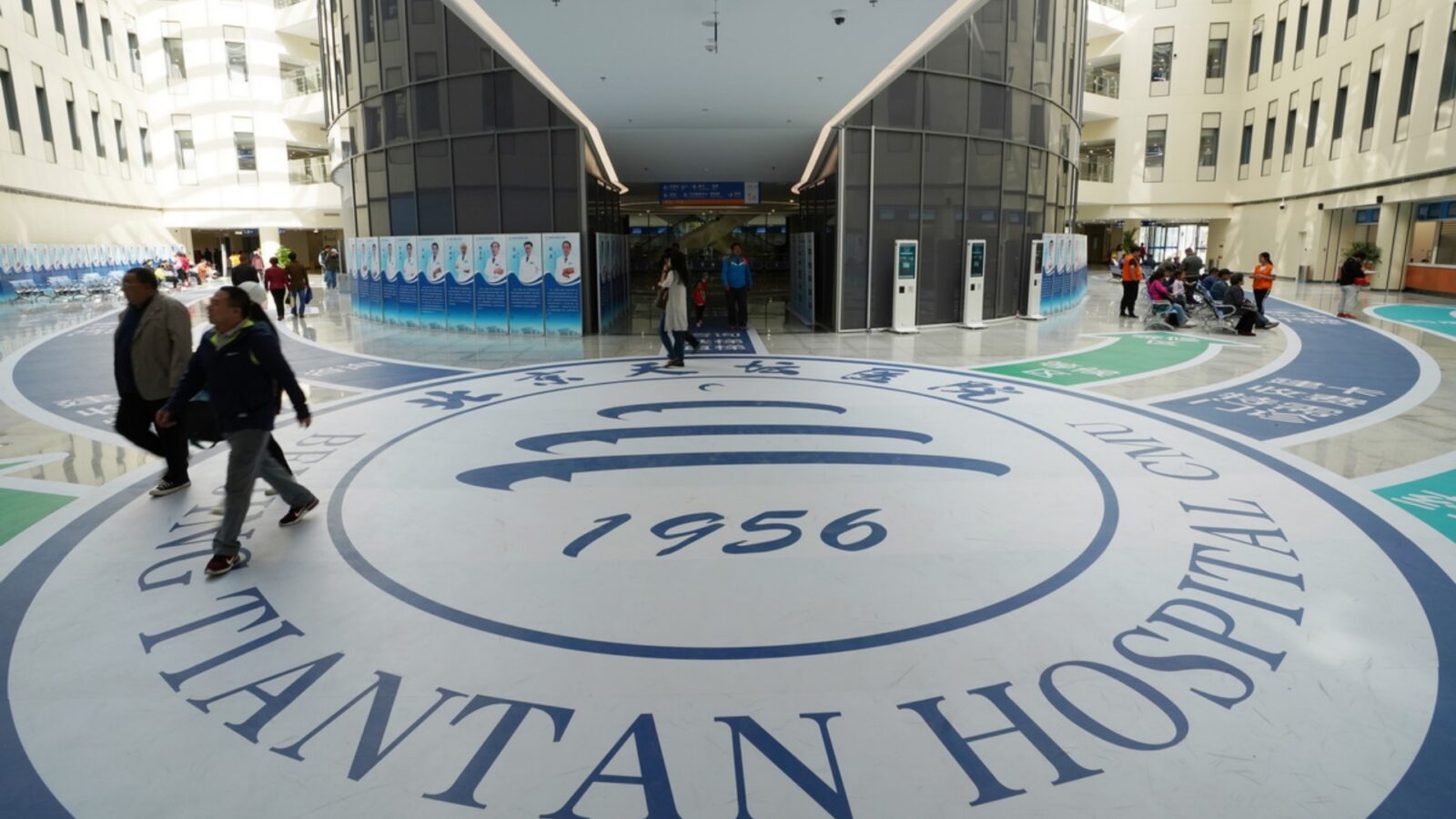
International Medical Center at BJTTH
The IMC is not a translation service tagged on to the usual clinic. It’s a wholly separate department with its own registration desk, a team of coordinators and a patient pathway, all built from the ground up with people who speak very little Mandarin and who do not know how Chinese public hospitals work. Orientating yourself here on day one will save you huge amounts of exasperation further down the road.
IMC Location and Hours
The IMC sits on Floor 5 of Outpatient Building No. 1. Take Elevator 4 or 5 from the ground floor lobby — do not follow signs for the general outpatient department on the lower floors, which handles domestic patients and operates under entirely different queuing logic.
Here are the essentials to save before you leave home:
- Address: No. 119, South Fourth Ring West Road, Fengtai District, Beijing 100070
- IMC direct line: 010-59978585 (weekdays, 08:00–17:00)
- Hospital switchboard: 010-59976611
- Languages served: English, French, Japanese, Russian + professional medical interpreters
- Operating hours: Monday–Friday, 08:00–17:00
On your first visit, go straight to the IMC front desk — not the general registration counters downstairs. The coordinator will handle your registration (passport required, no substitutes), walk you to the relevant specialist floor, explain the payment process, and escort you to the pharmacy. Navigating a hospital with 1,650+ beds without that guidance is not something you want to improvise.
Services and Emergency Limitations
The IMC operate a wide variety of outpatient clinics covering neurosurgery, neurology, neuropsychology, neurointervention, and so forth. For particularly difficult cases needing multidisciplinary input MDT consultations can also be arranged. If you’ve already been treated by BJTTH and are looking for follow up advice from abroad post flying back they also have an online follow up function on their WeChat Official Account ("北京天坛医院") for prescription renewals / checking progress etc.
⚠️ Emergency notice — read this before anything else:
The IMC does not provide emergency services of any kind. If you or someone you are traveling with faces an acute medical situation, go directly to the main hospital's 24-hour Emergency Department (ground level, Building 1). At the same time, call the IMC direct line at 010-59978585 — a coordinator will come to the emergency department to assist with communication and handle international patient paperwork. For emergencies outside the hospital, call China's ambulance service: 120.
Insurance and Direct Billing
BJTTH's IMC works with major international insurers including Bupa, Allianz, and Cigna Global, among others. The process is straightforward if you prepare correctly:
- Step 1 — Before your visit: Contact your insurer and request pre-authorization for your planned treatment.
- Step 2 — Get your GOP: Your insurer will issue a written Guarantee of Payment (GOP) confirming coverage.
- Step 3 — Present at IMC finance: Hand the GOP to the IMC finance desk on arrival. The hospital will bill your insurer directly.
- Reimbursement route: If direct billing is not available with your specific provider, keep every invoice, receipt, and medical report. Submit them to your insurer on return for reimbursement.
Missing the pre-authorization step is the single most common insurance error foreign patients make. Do it before you book your flights.
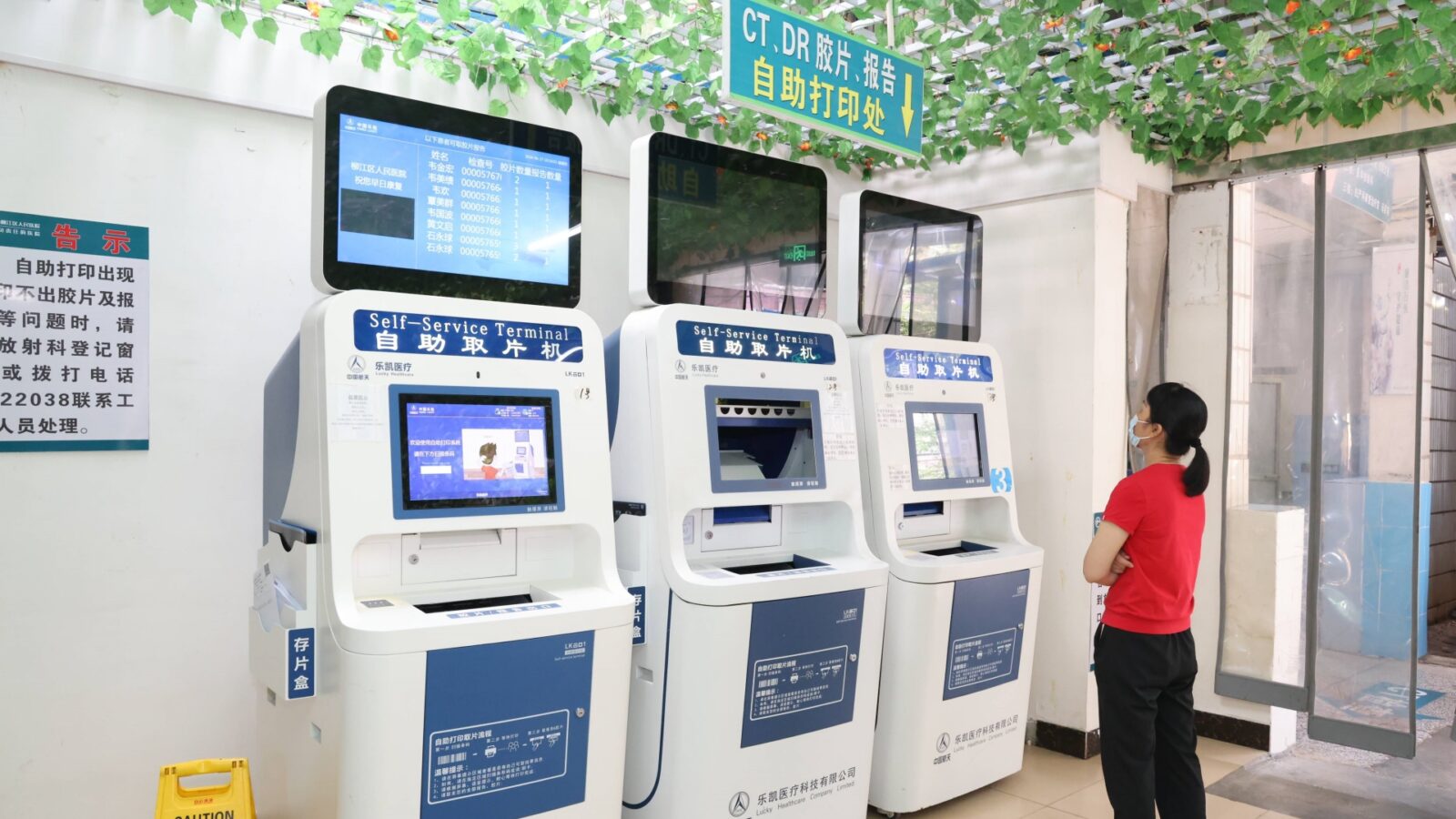
Self-Service Film Printing at Beijing Tiantan Hospital
Walk-in registration no longer exists at BJTTH. The hospital moved to a fully online booking system, and there are no exceptions — you cannot queue at the hospital on the day. Appointment slots for the following 8 days open each day at 13:00. Specialist appointments with senior physicians fill within minutes. Plan accordingly.
WeChat Appointment Booking
WeChat's official account system is BJTTH's most reliable booking channel, and — crucially — it supports passport-based registration. You do not need a Chinese phone number to complete the process. Here is exactly what to do:
- Open WeChat and search for the official account 「北京天坛医院」 — look for the blue verified checkmark.
- Follow the account, then tap 「预约挂号」 (Appointment Registration) in the menu.
- At the registration step, select 「护照 (Passport)」 as your ID type and enter your details.
- Return each day at 12:55 and have the booking page open and ready. Tap through at exactly 13:00.
- Select the IMC outpatient clinic or the relevant specialist department, confirm your slot, and pay.
Save your booking confirmation screenshot. The hospital does not send SMS confirmations to non-Chinese numbers.
Official BJTTH Application
For patients who prefer a standalone app over WeChat, the official BJTTH application covers the same ground:
- Search for 「北京天坛医院」 in the App Store or Google Play and download the official version.
- Register using your passport — the flow mirrors the WeChat account process exactly.
- Use the online follow-up consultation (在线随访) feature for remote check-ins after your initial visit. This is especially practical for international patients managing a chronic condition or recovering from surgery at home.
Registration Alternatives
No Chinese SIM card, no local WeChat number — it happens. You still have options:
- Option A (recommended) — Medical concierge or third-party coordinator: A reputable international medical facilitation service can handle registration, appointment booking, translation, and day-of coordination entirely on your behalf. This is the most reliable path for first-time visitors managing a complex case.
- Option B — 114 appointment hotline: China's national medical appointment platform. Some agents handle basic English inquiries, though success varies. Worth trying if the other options fall through.
- Option C — Call IMC directly: Dial 010-59978585 (weekdays, 08:00–17:00) and explain your situation. Coordinators can often arrange appointments for urgent cases or exceptional circumstances.
Arrival Checklist
Print this section or screenshot it. On the day of your visit, run through all five steps before you leave your accommodation:
- Confirm your booking — Have your appointment screenshot open on your phone.
- Save the IMC contact — Direct line: 010-59978585 / Switchboard: 010-59976611. Store both.
- Pack your documents — Nothing causes more delay than missing paperwork:
- ✅ Original passport (physical document required — no copies or digital images accepted)
- ✅ English translations of all prior medical records (diagnosis letters, operative notes, discharge summaries)
- ✅ Imaging files on CD or DVD (MRI, CT originals — not printouts)
- ✅ Current medication list (generic names + dosages, in English)
- ✅ Insurance Guarantee of Payment (GOP) if using direct billing
- ✅ Sufficient RMB cash + Alipay installed and linked to a payment card
- Go to Floor 5 IMC first — Take Elevator 4 or 5. Do not enter the general outpatient hall on the ground floor. The IMC coordinator will handle registration and guide you through every subsequent step.
- Know the emergency protocol — The IMC is not an emergency room. For any acute situation: go directly to the main 24-hour Emergency Department, and call IMC at 010-59978585 simultaneously so a coordinator can meet you there.
🕐 IMC waiting times are calmer than the general outpatient floors. That said, senior specialists often run late due to surgeries or complex consultations. Block out at least half a day — do not schedule anything time-sensitive afterward.
How Much Does BJTTH Treatment Cost
Cost transparency is one of the most practical things this guide can offer. BJTTH is a public tertiary hospital — pricing is government-regulated, not market-driven. That makes a significant difference.
Cost Comparison
As a Class 3A public hospital, Tiantan will charge roughly 30–50% of what you’d see in the US, UK, Australia, etc. Get a neurosurgical procedure that costs six-figures in America—you’ll see a fraction of that here. Imaging, specialist consults, inpatient stays, they all follow the same principle.
There is not a single price for most complex neurosurgical procedures. Op times, implant devices, and length of hospital stay will all affect the cost. Always ask for a written cost estimate from the IMC finance team before committing to a procedure. That is not binding in every case, but gives a workable figure for planning.
Procedure Price Table
The figures below are reference ranges based on publicly available hospital pricing and patient-reported data as of 2026. Confirm current rates with the IMC before your visit.
| Procedure / Service | Estimated Cost (RMB) | Approx. USD Equivalent | Notes |
|---|---|---|---|
| IMC specialist consultation fee | ¥300 – ¥800 | $40 – $110 | Varies by specialist seniority |
| International ward bed fee (single room) | ¥800 – ¥1,500/night | $110 – $210/night | Per night, IMC international ward |
| MRI (brain, standard sequences) | ¥800 – ¥1,500 | $110 – $210 | Varies by field strength and protocol |
| CT scan | ¥300 – ¥600 | $40 – $85 | Varies by body region |
| Complex neurosurgical procedure | Case-by-case | — | Request written estimate from IMC |
Tip: The pricing information above is for reference only. Actual costs are subject to official hospital receipts.
Payment Methods
Knowing how to pay before you reach the cashier saves real stress. Here is what works, ranked by reliability:
- 💵 Cash (RMB) — The most reliable option at every window and pharmacy. Bring more than you think you need.
- 📱 Alipay (支付宝) — Strongly recommended. Alipay now supports international credit card binding for foreign users. Set it up and test a small transaction before you fly. It works across virtually every payment point in the hospital.
- 💳 UnionPay card — Accepted at most cashier windows. Visa and Mastercard work at select windows only — confirm with the IMC finance desk in advance.
- 📱 WeChat Pay (微信支付) — International version has limited functionality. Use as a backup only.
- 🏥 Insurance direct billing — Requires pre-authorization and GOP (see above section).
⚠️ Critical Chinese hospital payment rule: You pay before you receive — not after. After a consultation, take your prescription or test order to the cashier (收费处), pay, then bring the receipt to the pharmacy or testing centre. Your IMC coordinator will walk you through this on your first visit, but knowing it in advance prevents the confusion that catches most first-time visitors off guard.
How to Reach and Stay Nearby
Hospital Address
There is exactly one active campus. Everything you read about a "historic Tiantan campus" refers to a site that ceased clinical operations in October 2018. The building near Temple of Heaven Park no longer treats patients. Navigate there and you will find nothing useful.
The correct address is:
No. 119, South Fourth Ring West Road, Fengtai District, Beijing 100070 (北京市丰台区南四环西路119号)
Screenshot this address in Chinese before you leave. Show it to your driver if there is any confusion. The hospital's official website is www.bjtth.org, and the official app is listed under「北京天坛医院」in both major app stores.
Subway Transportation
Beijing's subway system is fast and cheap. Two lines serve the hospital well:
- Recommended: Fangshan Line → Huaxiang Dongqiao Station (花乡东桥站), Exit A2 → walk north for approximately 10 minutes to reach the hospital's north gate. This is the most direct route.
- Alternative: Line 10 → Shoujing Mao Station (首经贸站) → rent a shared bicycle for a 5-minute ride, or board Bus 206 which stops directly at the hospital entrance.
Taxi and DiDi Access
Post-surgery or arriving with luggage, DiDi (China's Uber equivalent) is the practical choice. Set your destination to 「北京天坛医院(丰台院区)-北门」 or 「门诊部」 — the north gate drop-off is directly in front of the outpatient building. Have the Chinese address ready as a screenshot:
北京市丰台区南四环西路119号
From Tiananmen Square or Wangfujing, expect 25–40 minutes depending on traffic. During morning rush hour (07:30–09:00) and evening peak (17:30–19:30), add 15–20 minutes.
Airport Routes
| Departure Airport | Recommended Route | Estimated Journey Time | Notes |
|---|---|---|---|
| Daxing International (PKX) | Daxing Airport Line → Caoqiao Station → transfer to Line 10 → Shoujingmao Station | ~40–55 min | Typically faster than Capital Airport |
| Capital International (PEK) | Airport Express → Guomao Station → Line 10 → Shoujingmao Station | ~55–70 min | Or taxi direct (~50–70 min, traffic-dependent) |
If you are arriving with significant luggage or have just flown a long-haul route, the taxi or DiDi from either airport is worth the extra cost — especially if you are coming directly from PKX, where the Daxing Airport Line deposits you very close to Line 10.
Nearby Accommodation
The Fengtai campus sits in a well-serviced district with a range of accommodation options within 2 kilometers. When booking, focus on:
- Hospital transfer service: Ask directly whether the hotel provides airport or hospital pick-up. This matters disproportionately for patients who cannot walk long distances or are recovering from a procedure. Several mid-range business hotels in the area offer it as a paid add-on.
- Serviced apartments for extended stays: Brands like Chenjia Apartments (城家公寓) offer fully equipped kitchens and weekly rates — significantly cheaper than hotels for stays of a week or more, and far more practical for family caregivers who need to cook. Look for units with at least a one-bedroom configuration.
- One thing to avoid: Windowless rooms and basement units are common in the budget guesthouse segment of this neighborhood. They are cheap for a reason — poor ventilation and no natural light are genuinely harmful for patients in recovery. Read listing photos carefully and contact properties directly if room type is ambiguous.
If you are also planning a broader Beijing stay before or after treatment, the Beijing United Family Hospital area near Lido offers international-standard accommodation clusters with established proximity to expatriate-friendly services — a useful reference for families managing a longer medical stay in the city.
FAQs: International Patient Questions at BJTTH
Q: What is Beijing Tiantan Hospital best known for?
Beijing Tiantan Hospital is best known for neurosurgery — ranked #1 in China for 13 consecutive years by the Fudan University Hospital Specialty Reputation Ranking. Beyond that, BJTTH leads nationally in stroke intervention and neurological disease research, serving as China's National Clinical Research Center for Neurological Diseases. It is the destination hospital for complex brain tumor cases, cerebrovascular emergencies, and refractory neurological conditions across Asia.
Q: Does Beijing Tiantan Hospital have English-speaking doctors?
Yes. The International Medical Center (IMC) at Beijing Tiantan Hospital provides consultations in English, French, Japanese, and Russian, supported by professional medical interpreters. You are not working through a general staff member who happens to speak some English — the IMC runs dedicated language coordination as a core service. Call 010-59978585 (weekdays, 08:00–17:00) to speak with a coordinator before your appointment.
Q: Is Beijing Tiantan Hospital the number one neurosurgery hospital in China?
Yes, without qualification. Beijing Tiantan Hospital's neurosurgery department has held the #1 national ranking in the Fudan University Hospital Specialty Reputation Ranking every year since the category was established — 13 consecutive years. It is also a WHO Collaborating Center for Stroke Surgery and performs close to 23,000 neurosurgical procedures annually, with an elective surgery mortality rate of 0.2%.
Q: Can international patients get emergency treatment at BJTTH?
The IMC does not handle emergencies. If you face an acute medical situation at Beijing Tiantan Hospital, proceed directly to the main 24-hour Emergency Department on the ground floor of Building 1. Simultaneously call the IMC at 010-59978585 — a coordinator will come to the emergency department to assist with communication and manage the international patient intake process. For emergencies anywhere in Beijing, dial 120 for ambulance dispatch.
Q: How do I pay for treatment as a foreign patient?
At Beijing Tiantan Hospital, cash (RMB) is the most universally accepted payment method. Most cashier windows support UnionPay cards only — Visa and Mastercard work at a limited number of designated windows, so verify with the IMC finance desk beforehand. Alipay, linked to an international credit card, is the most practical cashless option and should be set up before you arrive. For insured patients, obtain a written Guarantee of Payment from your insurer in advance and present it at the IMC finance desk on arrival.
Q: What is the difference between the Tiantan Campus and the Fengtai Campus?
There is no longer a Tiantan Campus in any operational sense. Beijing Tiantan Hospital's original site near Temple of Heaven Park permanently ceased all medical operations in October 2018. The entire hospital — including the IMC — now operates from a single campus at 119 South Fourth Ring West Road, Fengtai District. Do not navigate to the old Dongcheng address. Save the Fengtai address as a screenshot before you travel.
Q: What does the "pay first, then get your medicine" rule mean in Chinese hospitals?
China's public hospital system uses a sequential, pre-payment model that differs from most Western systems. After your consultation at Beijing Tiantan Hospital, you will receive a prescription or examination order. Take it to the cashier (收费处) and pay. Then bring the receipt to the pharmacy to collect your medication, or to the relevant examination department to check in for your test. It sounds unfamiliar the first time — your IMC coordinator will guide you through it step by step. Keep every receipt: they are required for insurance reimbursement.