Qinghai Province in China
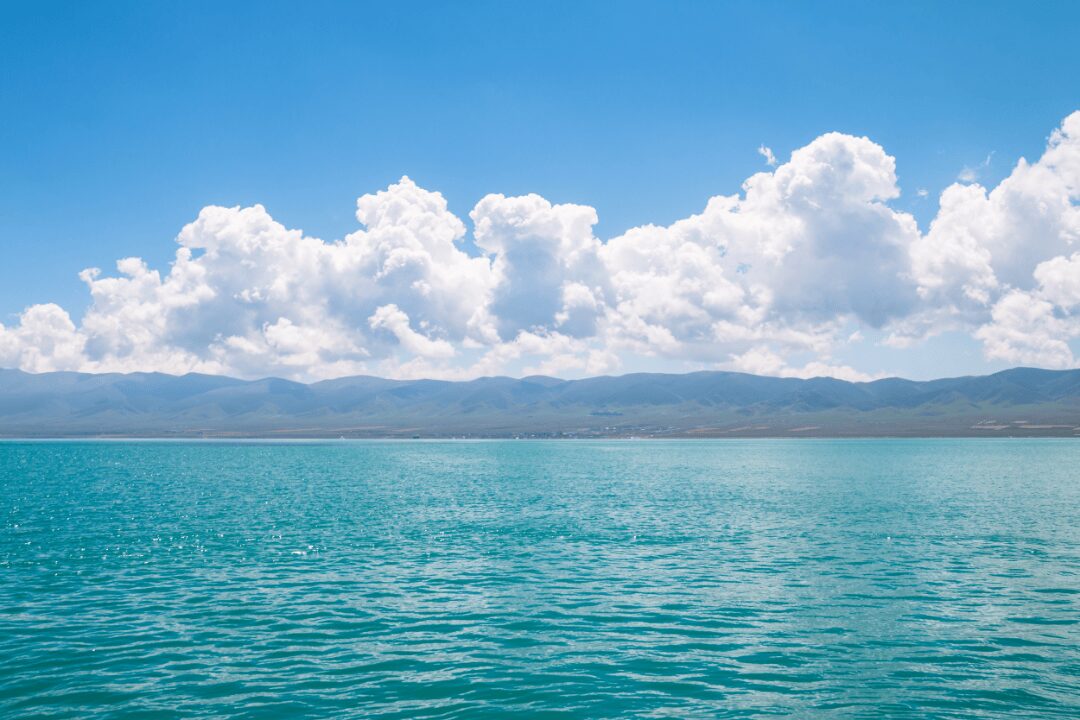
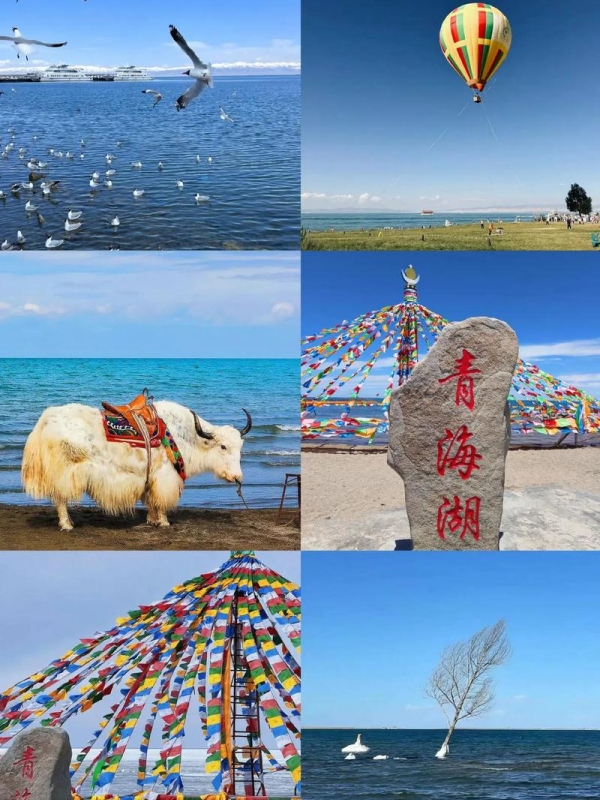
Qinghai Province in China occupies the northern quarter of the Qinghai-Tibet Plateau, a vast high-altitude territory that stretches from the Gobi fringe westward into the Tanggula Ranges. The province takes its name from Qinghai Lake — China's largest saltwater lake — a saline sea of blue that sits at 3,196 meters above sea level. Xining, the provincial capital, anchors the east with a pair of significant religious sites: the 15th-century Ta'er Monastery and the century-old Dongguan Mosque. To the west, the Qinghai-Tibet Railway climbs from Xining to Lhasa, crossing the Tanggula Pass at 5,072 meters — the world's highest rail line in commercial operation. The plateau scenery between these points encompasses salt flats, Tibetan pastoral valleys, and, beyond them, the Qaidam Basin.
🏔️ Explore the Surrounding Plateau: As the gateway to the roof of the world, Qinghai shares deep cultural, religious, and geographical ties with its southern neighbor. Learn more about the unique culture, monasteries, and landscapes in What is Tibet Known For.
Quick Facts
Qinghai Lake and the Plateau's Salt Lakes
Qinghai Lake — China's Largest Saltwater Lake
The Qinghai Lake
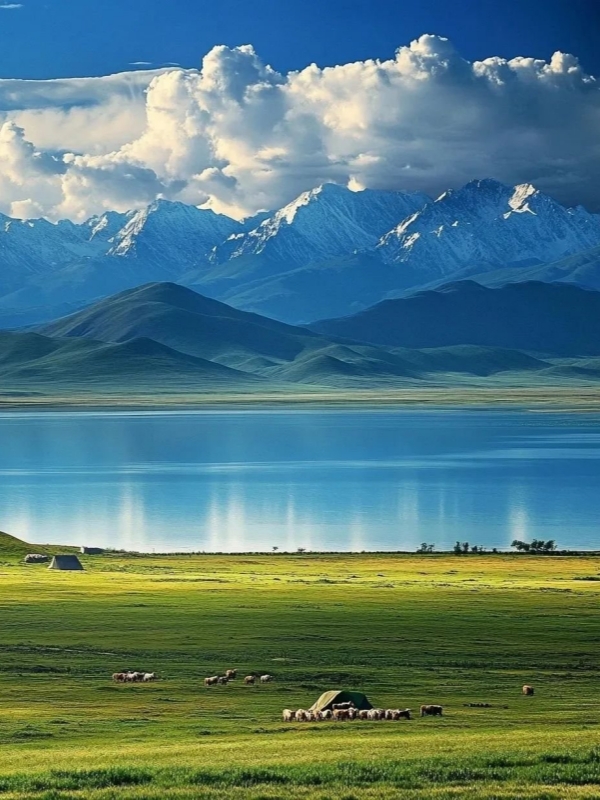
The Qinghai Lake gave Qinghai Province its name. The lake covers approximately 4,500 square kilometers, making it China's largest saltwater lake; its maximum depth reaches about 25 meters, and the water is saline and undrinkable. The eastern shore near the town of Heimahe — roughly 150 kilometers west of Xining — functions as the visitor center for the area. Most travelers enter through Heimahe, where the public lakeshore admission costs about $5–10 (¥30–70) depending on the season and zone.
Cycling the lake is a popular multi-day activity. The full circuit measures roughly 300 kilometers and most riders complete it in two to three days. Bicycle rental in Heimahe costs approximately $7–11 (¥50–80) per day; electric scooter hire is also available during the summer season. The ice-free window typically runs from late May through late November.
🌊 Explore the Crown Jewel: As the namesake of the province, this massive saline sea is famous for its surrounding fields of blooming yellow rapeseed flowers and diverse bird sanctuaries. Plan your lakeside itinerary, transportation options, and best viewpoints in our comprehensive guide to Qinghai Lake.
Birds Island and Plateau Wildlife
The Bird Island
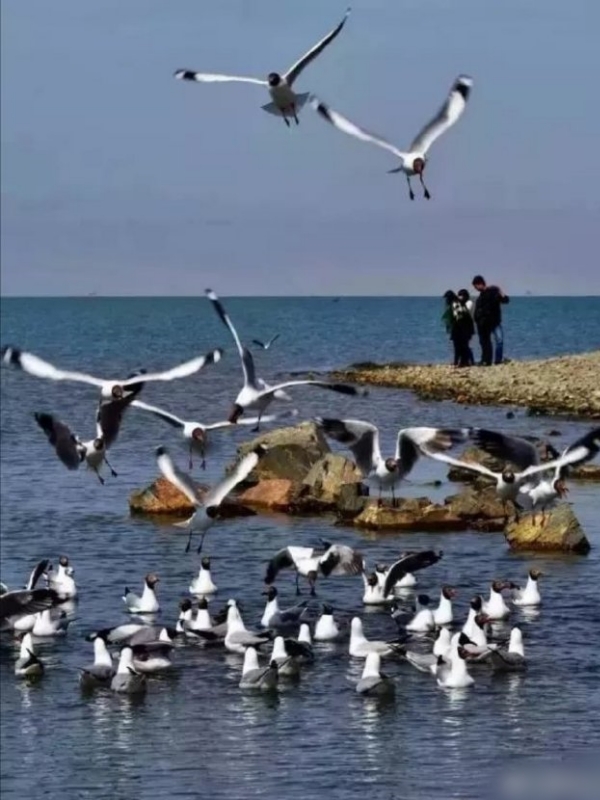
Bird Island sits on the lake's northwest shore and serves as a major migration corridor. Between April and July, bar-headed geese, brown-headed gulls, and cormorants pass through in large numbers. Peak viewing falls in May through early July. Admission costs about $13 (¥90) and includes a return shuttle from Heimahe; the site closes outside migration season, so timing matters.
Beyond the lake, overland routes toward Chaka and the Qaidam Basin offer sightings of Tibetan antelope and wild yak in their high-altitude habitat. Exact wildlife encounter rates vary with season and route.
☀️ An Ideal Summer Escape: Because of its high altitude, this province offers a wonderfully cool retreat when the rest of the country is experiencing intense summer heat. Discover how to plan your high-plateau travels alongside other top seasonal spots in our guide to visiting China in July.
Salt Lakes, Kanbula, and the Qaidam Basin
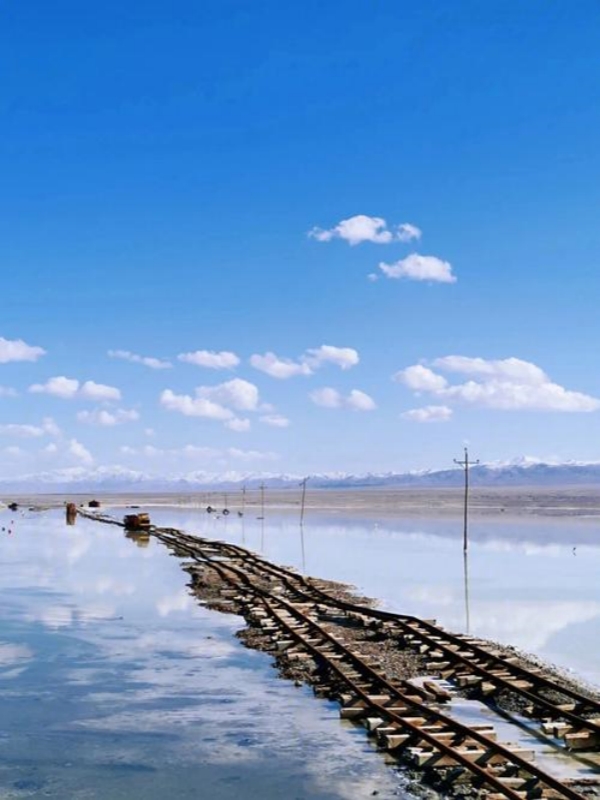
Chaka (Chaerhan) Salt Lake
Chaka (Chaerhan) salt lake lies north of the main lake and draws photographers for its mirror-effect surface in calm weather. Admission runs about $7–11 (¥50–80). Kanbula National Park in Huangnan prefecture, south of Xining, features Danxia cliffs colored by mineral deposits along the Yellow River; admission costs roughly $11 (¥80).
West of Qinghai Lake, the Qaidam Basin in Haixi prefecture contains the province's main sand-and-gravel desert area and inland dune fields. Tourist access is limited; most visitors glimpse it from the Qinghai-Tibet Railway or Highway as they pass through.
Ta'er Monastery and Dongguan Mosque
Ta'er Monastery (Kumbum Monastery)
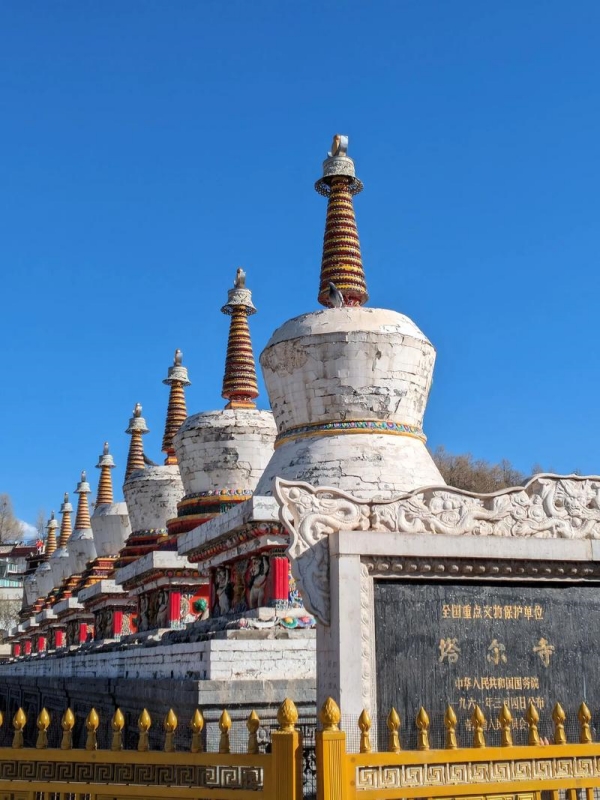
The Ta'er Monastery (Kumbum Monastery)
Ancient Ta'er Monastery, also known as Kumbum Monastery, lies about 25 kilometers south of Xining in Huangzhong County. It is a Gelug-school Tibetan Buddhist monastery founded in 1583, and the eight white stupas at its entrance form the most recognizable silhouette. A bus from Xining's Nianshan or Bayi Bus Station costs roughly $2 (¥15) one-way. Admission is about $8 (¥60) and covers the yak-butter-sculpture hall. Tsongkhapa, founder of the Gelug tradition, was born nearby. Tongren, roughly 175 kilometers from Xining, is a secondary center noted for Thangka painting workshops.
Dongguan Mosque
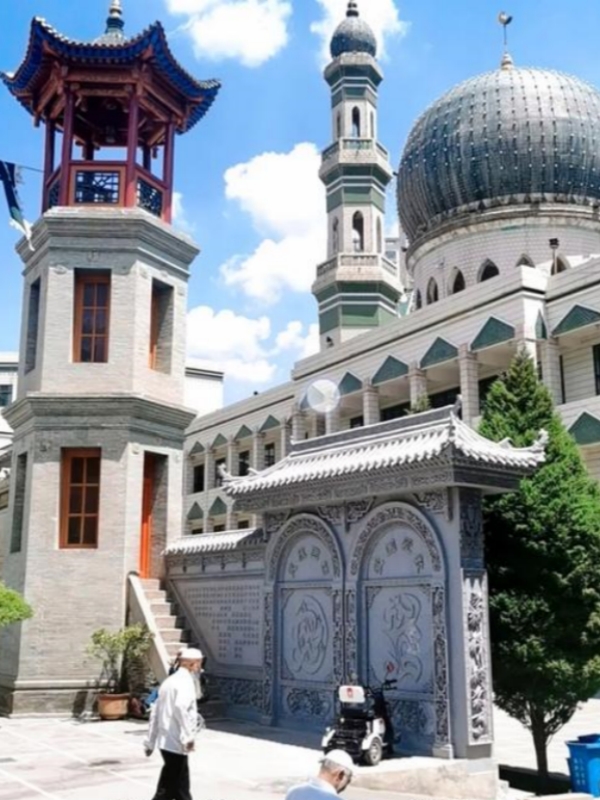
The Dongguan Mosque
Dongguan Mosque occupies Dongguan Street in central Xining and ranks as the largest mosque in northwest China. Friday prayer can draw more than 4,000 worshippers. Non-Muslim visitors are welcome outside prayer times; modest dress is required and admission costs about $3 (¥20). The mosque sits within walking distance of most central Xining hotels, making it easy to combine with the city's Muslim Quarter for an afternoon.
Riding the Qinghai-Tibet Railway
The World's Highest Railway
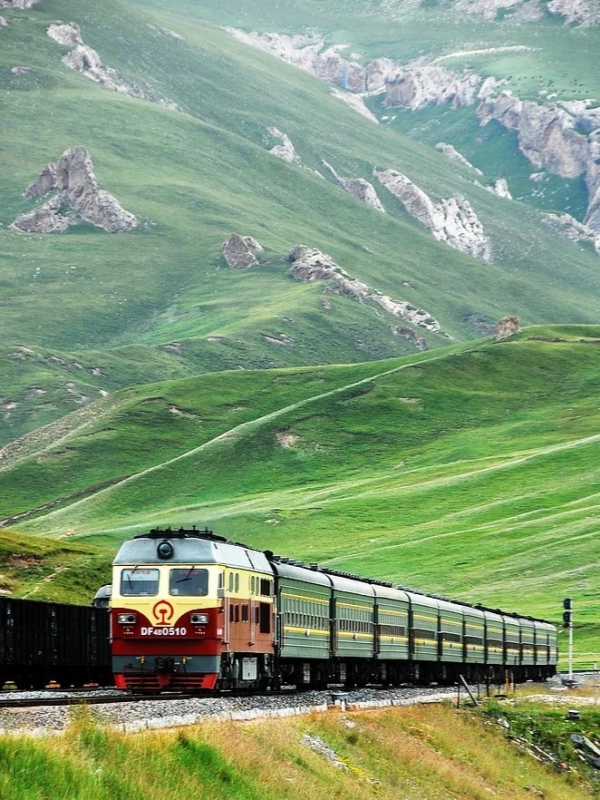
Qinghai-Tibet Railway
The Qinghai-Tibet Railway runs from Xining to Lhasa, a distance of roughly 1,972 kilometers. A direct train covers the route in about 20–22 hours. This is the world's highest railway in commercial operation, and oxygen-supplied, pressure-regulated carriages are standard throughout the high-altitude section. Fares from Xining start at about $28 (¥198) for a hard seat, climb to $42–47 (¥300–336) for a hard sleeper, and reach $67 (¥476) for a soft sleeper. Foreign visitors can book through Trip.com, Klook, or 12306.cn English partner sites. Golmud marks the boundary where the line enters the high-altitude section.
Crossing the Tanggula Pass
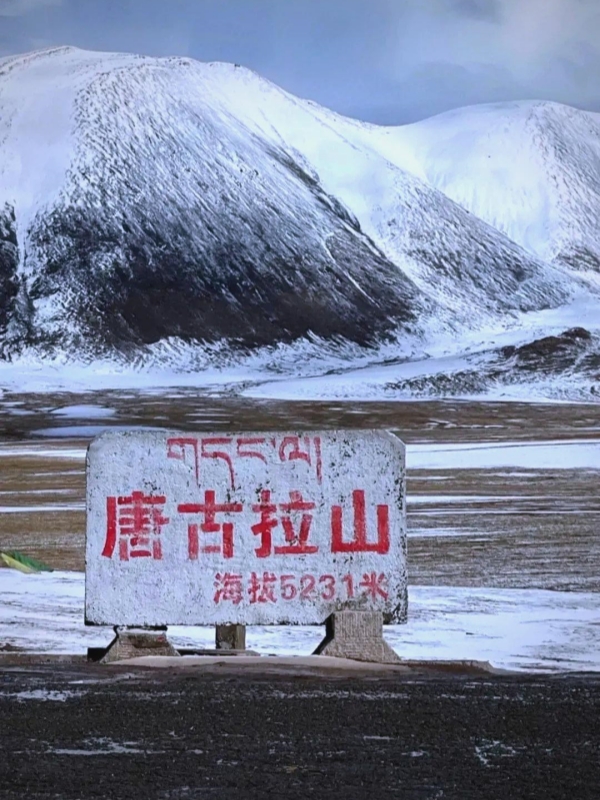
Tanggula Pass
The Tanggula Pass sits at 5,072 meters above sea level — the rail line's highest point. The landscape here is frozen tundra with thin air and snow-capped peaks visible from south-facing windows. Window seats on the left side (heading south) offer the best mountain views. Most travelers break the journey overnight at Anduo or Amdo to acclimatize before continuing. Mangya, an oil-and-gas town in Haixi prefecture, is the last major Qinghai-side stop on the southern road route.
Qinghai Food and Local Specialties
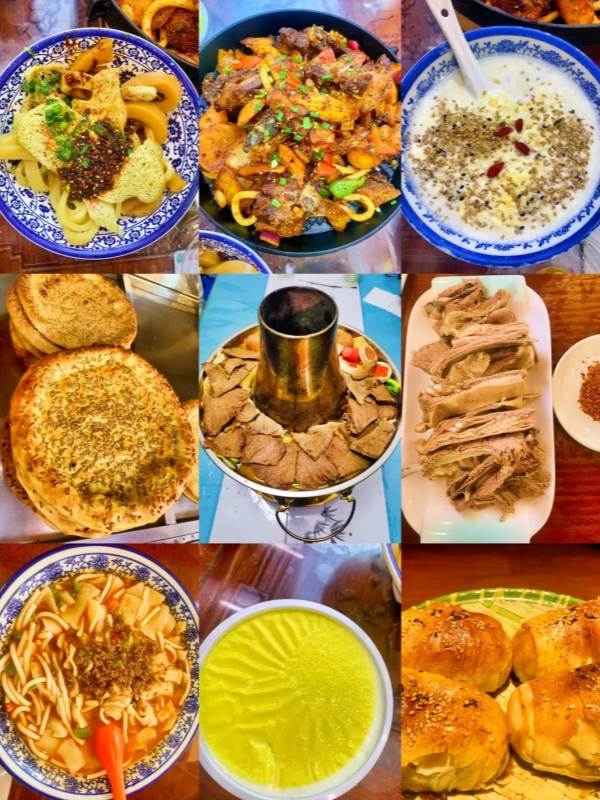
Qinghai Food
Tibetan Staples on the Plateau
Yak-based dishes define the Tibetan plateau diet. A bowl of butter tea — salty, served in cups — costs about $2–3 (¥15–20). Yak hotpot runs roughly $10–15 (¥70–100) per person. Momo, Tibetan dumplings stuffed with yak meat or vegetables, are priced at about $3–5 (¥20–35) per serving. Tsampa, roasted barley flour, is eaten mixed with butter tea or yogurt and is a staple in pastoral areas.
Hui Dishes and Xining Street Food
Xining's Muslim Quarter near Dongguan Mosque offers Hui Muslim cuisine at street level. Lamb skewers, niurou lamian (hand-pulled beef noodles), and gao gan mian (wide cold noodles) are common. A bowl of beef lamian costs about $3 (¥20). Sweet yak yogurt sold at street carts runs $1–2 (¥8–12) per bowl. A full sit-down meal with two or three dishes typically ranges $3–10 (¥20–70) per person depending on venue and portion size.
How to Reach Qinghai and Travel Around
Flights and High-Speed Rail to Xining
Xining Caojiabu Airport (XNN) lies roughly 30 kilometers east of the city center. Direct flights operate from Beijing, Shanghai, Chengdu, Xi'an, Lhasa, Guangzhou, and Shenzhen. A round-trip fare from Beijing costs about $140–180 (¥1,000–1,300); the flight takes roughly 2.5 hours. High-speed rail from Beijing via Xi'an costs about $60–90 (¥430–650) one-way and takes 12–18 hours. A taxi from the airport into Xining runs about $10 (¥70).
Buses, Taxis, and Self-Drive Inside the Province
Long-distance buses depart Xining's bus station for Qinghai Lake (south route to Heimahe), Chaka, and Tongren. A one-way bus to Qinghai Lake costs about $7–10 (¥50–70). A private car with driver — the standard option for the lake circuit — runs $70–120 (¥500–850) per day. Self-driving requires a Chinese driving license or a valid international driving permit plus a temporary Chinese permit obtained locally. Road quality on the Xining-to-Qinghai Lake highway is high. Within Xining, taxis start at roughly $2 (¥15).
Getting Around Qinghai Lake
No rail line serves the lake area; ground transport is required. An organized one- to two-day tour from Xining costs about $70–130 (¥500–900). Independent travelers can rent bicycles in Heimahe for roughly $7–11 (¥50–80) per day. Electric scooter hire is also available in summer. Plan your return to Xining the same day if you have only one night at the lake.
Season Guide and Altitude Tips
Best Months for the Lake and Beyond
Altitude Acclimatization and Packing
Most of Qinghai Province sits above 3,000 meters. Even Xining at roughly 2,200 meters can produce first-night headaches for lowland arrivals. Qinghai Lake at 3,196 meters and the Tanggula Pass at 5,072 meters intensify symptoms. A rest day on arrival, gradual ascent, and hydration — no alcohol on day one — are the standard recommendations. If symptoms persist, descend to a lower elevation.
Pack a windproof shell; summer nights still drop to 5–10 °C. Sunhat, sunscreen, and sunglasses are essential at altitude. Layer your clothing — temperatures swing widely between sun and shade. Some Xining hotels offer in-room oxygen as an optional service; confirm availability when booking.
Frequently Asked Questions
Q: Is Qinghai Part of the North China Plain?
No. Qinghai Province sits on the Qinghai-Tibet Plateau in northwest China and is often grouped with the Western Region. The North China Plain covers Henan, Hebei, Shandong, and parts of Jiangsu and Anhui — all at much lower elevation.
Q: Is There a Desert in Qinghai Province?
Yes. Sand-and-gravel desert covers much of the Qaidam Basin in western Qinghai (Haixi prefecture). Tourist access is limited; most visitors glimpse it from the Qinghai-Tibet Railway or Highway as they pass through the area.
Q: How Long Is the Qinghai-Tibet Railway Journey?
Xining to Lhasa covers roughly 1,972 kilometers and takes about 20–22 hours by direct train. A sleeper berth is recommended for the overnight leg.
Q: Is Mount Baigong Open to Tourists?
Mount Baigong in Delingha (Haixi prefecture) has appeared in fringe coverage about a "pyramid and pipe" site. There is no major tourist attraction or visitor infrastructure there; visits are not part of a standard Qinghai itinerary.
Q: Is Qinghai Safe Without Mandarin?
Xining and the major monasteries have growing English signage. Outside Xining, English is sparse. Carry a translation app, your hotel card with the Chinese address, and some cash — most cards work in Xining hotels but small shops take cash only.
Q: Do Foreigners Need a Special Permit for Qinghai?
A standard Chinese tourist visa (L visa) covers Xining, Qinghai Lake, Kumbum Monastery, and the major cities of Qinghai Province. Travelers heading onward into Tibet proper need a separate Tibet Travel Permit — this is not required to enter Qinghai itself.
Q: How Common Is Altitude Sickness?
Altitude symptoms are common above 3,000 meters. Most visitors feel some headache or fatigue on their first day in Xining (~2,200 m), more strongly at Qinghai Lake (~3,200 m) and the railway's high point (~5,072 m). Hydration, no alcohol on day one, rest, and a gradual ascent reduce symptoms. Descend if they persist.
Q: Where Should I Stay for a Qinghai Lake Trip?
Base in Xining for most itineraries — it offers wider food and hotel choice. For pure lake sunrises, Heimahe town has yurt-style hotels and small Tibetan or Hui-run guesthouses at roughly $20–50 (¥140–350) per night. Plan to return to Xining the same day if you only have one night.