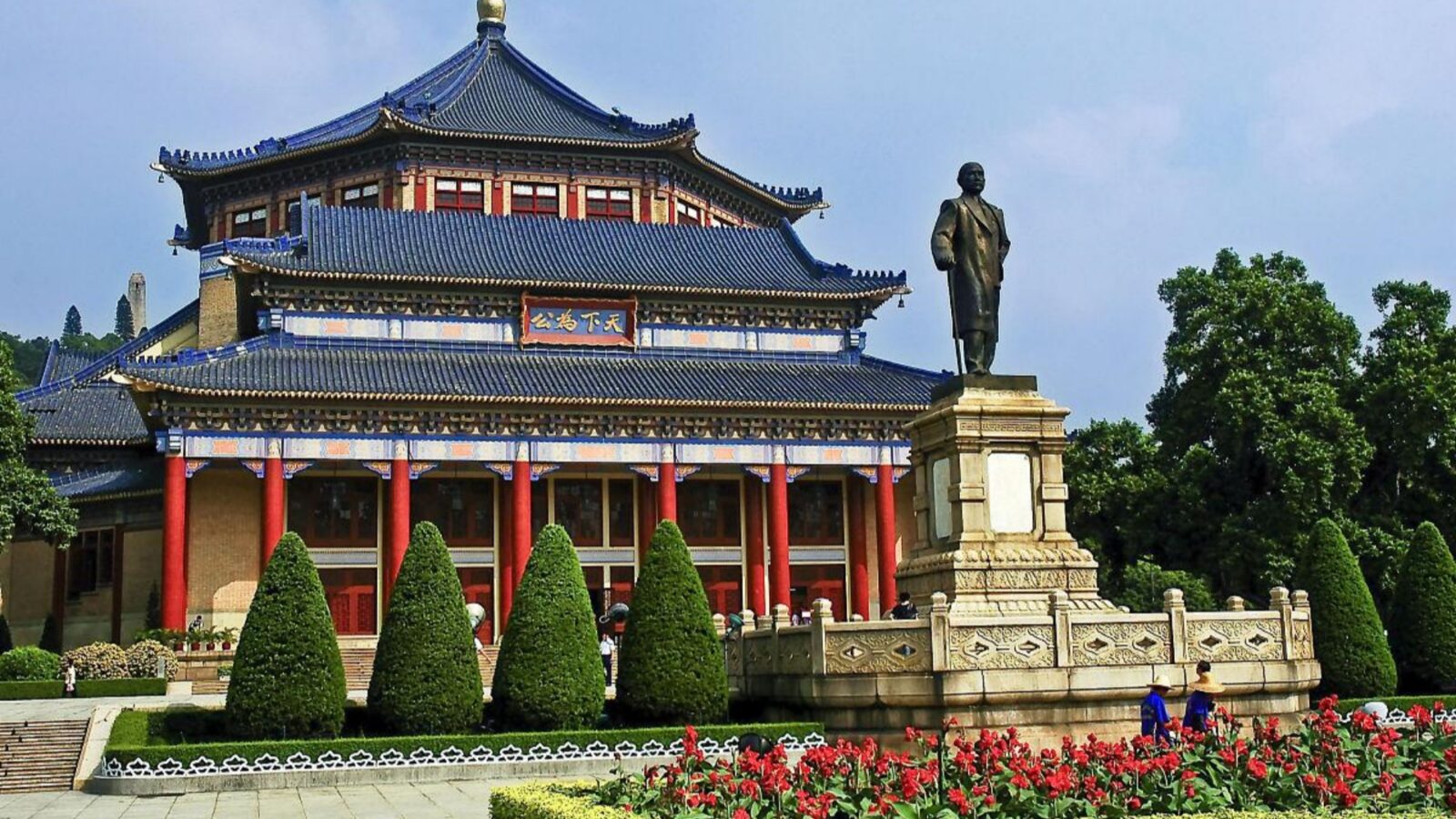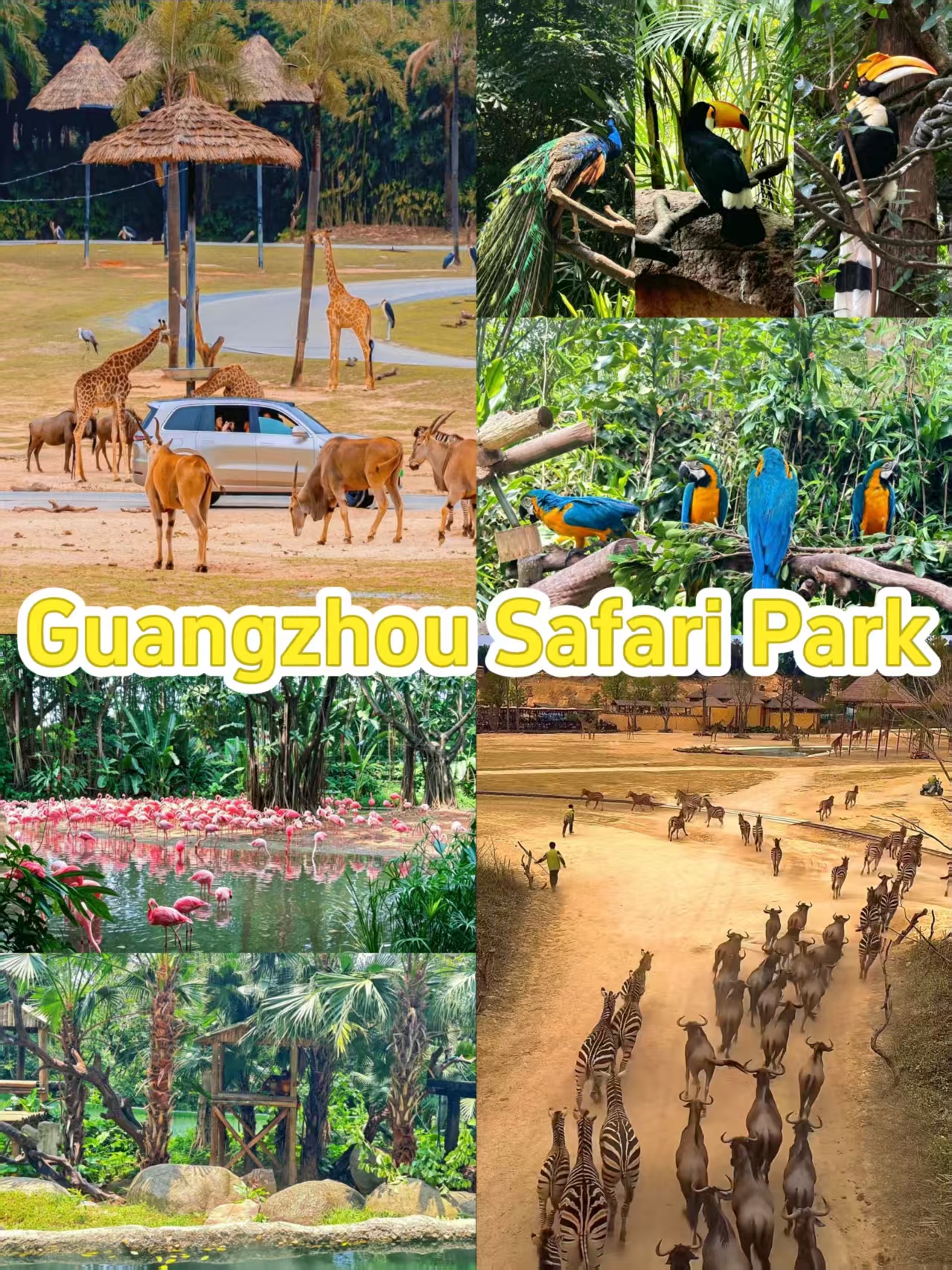
Nansha District, Guangzhou
Nansha District stretches across roughly 803 km² at the southern tip of Guangzhou, where the Pearl River empties into the South China Sea. Most foreign visitors arrive for three reasons: the mangrove wetlands, the Ming-Qing Tianhou Temple on the estuary, and the cruise-port ferries that link to Hong Kong and Macao.
The district has been a state-level Free Trade Zone since 2020, so a single Metro ride from central Guangzhou delivers wetlands, a working deepwater port and aerospace-themed stops in one trip. Expect fewer tourist crowds than central Guangzhou, though English signage is still patchy outside the cruise terminal.
⚓ Explore Guangzhou's Neighborhoods: To better understand how this coastal free trade zone fits into the wider layout of the city and its transport networks, see our comprehensive guide to Guangzhou Districts.
Quick Facts
Where Nansha Sits — and the Nanshan Mix-Up
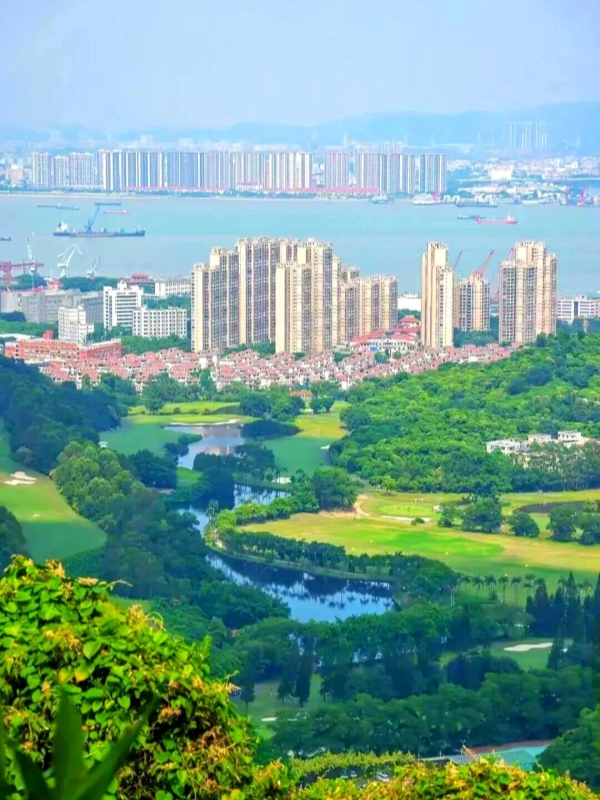
Location of Nansha District
Nansha District is the southernmost district of Guangzhou, in Guangdong Province. It sits where the Pearl River widens into the South China Sea and forms the southern hinge of the Guangdong–Hong Kong–Macao Greater Bay Area. Zhongshan and Dongguan border it on land, with open water on three sides.
Search engines cluster most foreign queries around "Nanshan District Shenzhen", so it helps to spell out the difference up front. Nansha District (no internal "n") belongs to Guangzhou, about 90 km west of Shenzhen's Nanshan District (with the "n"). They are administratively unrelated, even though the romanized names look almost identical. In short: Guangzhou's district is Nansha, Shenzhen's is Nanshan.
The Guangzhou seat of government sits on Huanshi Avenue in Nansha Subdistrict, and the district has been a state-level Free Trade Zone since August 2020. Meanwhile, the Port of Nansha moved roughly 22.25 million TEUs in 2025, making it the fourth-busiest container port in China and the fifth-busiest globally.
For navigation, the postal code 511400 covers central Nansha, with sub-codes by subdistrict — Wanqingsha, Dagang, Nansha, Hengli and others. English-language maps outside the cruise terminal are still limited, so save offline maps before leaving central Guangzhou.
🏙️ Compare with Other Districts: While coastal Nansha offers an industrial and natural escape, you can dive into the city's ancient cultural heart by exploring Yuexiu District, or head northeast to discover the tech hubs and historic villages of Huangpu District Guangzhou.
Top Things to Do in Nansha District
Nansha is mid-buildout as a tourism district, so expect a working port and wetlands alongside Mazu worship and aerospace-themed stops. Meanwhile, most sights cluster along a single axis between Wanqingsha and the cruise terminal.
Nansha Wetland Park
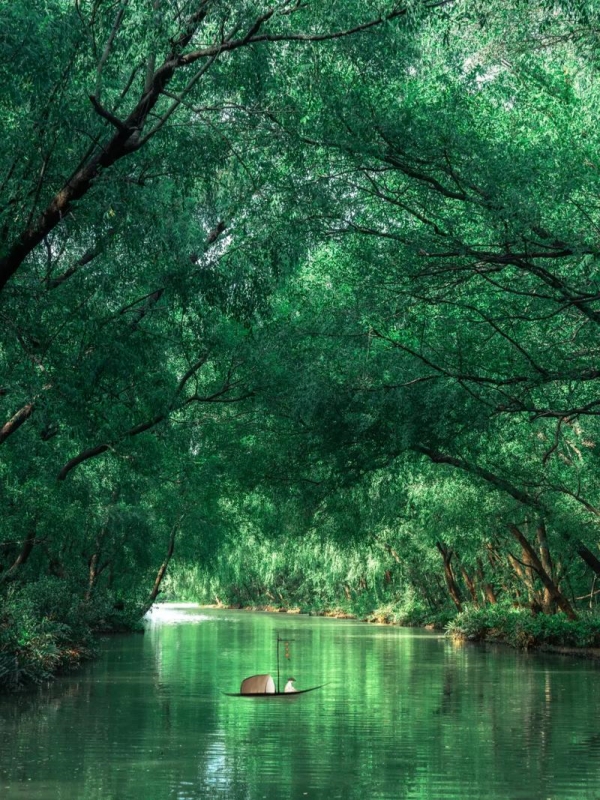
Nansha Wetland Park
One of Guangdong's larger protected mangrove wetlands, spanning roughly 25–40 km² of tidal flats and channels. The park is a wintering ground for Saunders's gulls, black-faced spoonbills and Dalmatian pelicans. Entry is free or nominal — about $0–2 (¥0–15) — with boardwalk loops past a small visitor centre. It occasionally closes on Mondays or for conservation work, so confirm on site before a special trip.
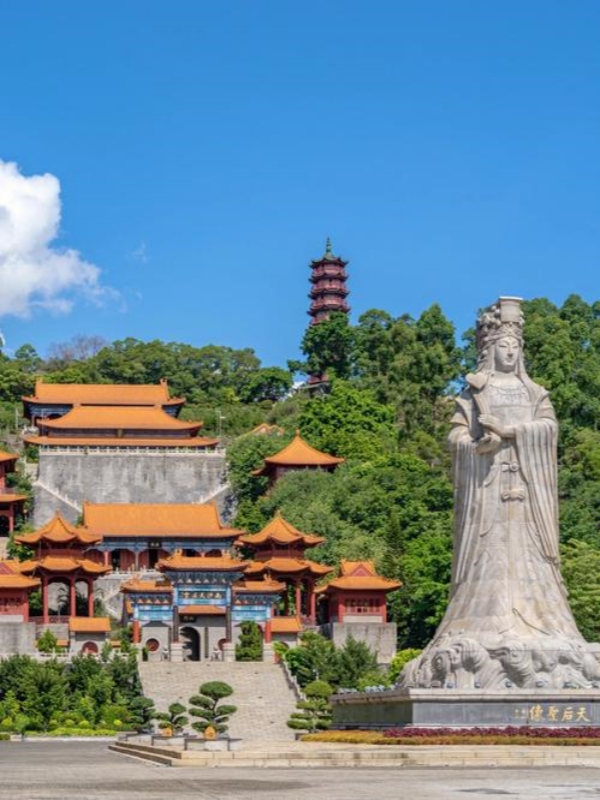
Tianhou Temple
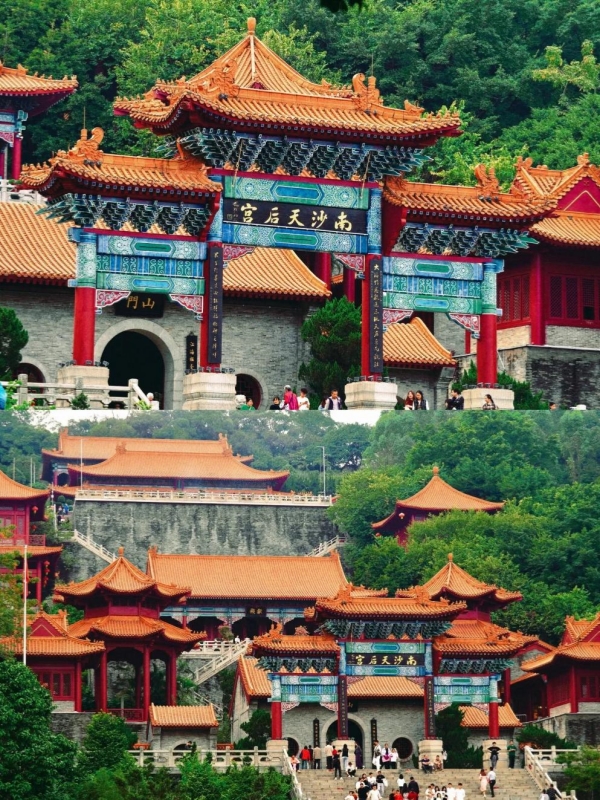
Tianhou Temple
A 70,000 m² Mazu worship site at the Pearl River mouth, built in Ming-Qing architectural style with stone carvings and a sea-view plaza facing the estuary. The grounds are free; inner halls cost about $3–7 (¥20–50). Daily hours typically run 08:00–17:30. The temple anchors most half-day visits because it pairs a short stroll with a working ferry-terminal view.
Nansha Cruise & Yacht Hub
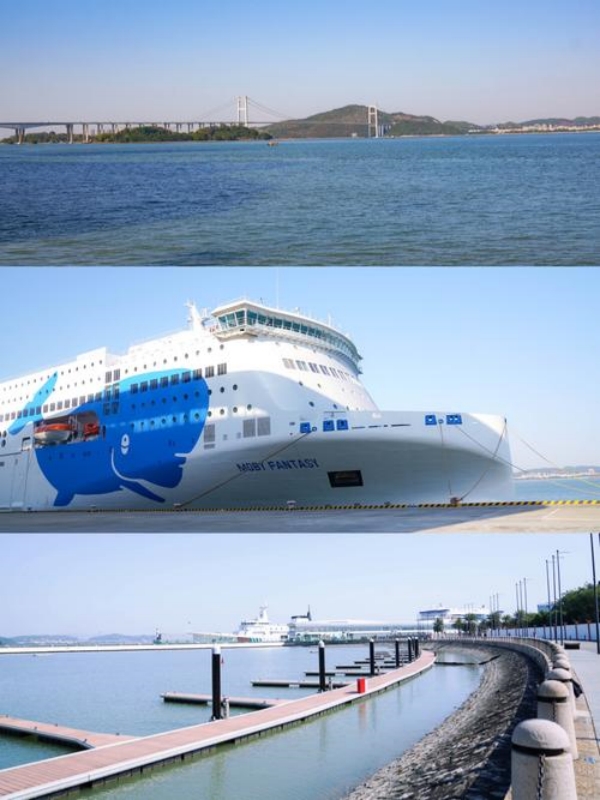
The Nansha Cruise & Yacht Hub
Nansha Cruise Port is the main sea gateway for foreign visitors. A small marina and yacht-club promenade sit at the eastern edge, with sunset views over the Pearl River estuary. Day visitors without a sailing can walk the waterfront and watch the working ferries come and go.
- Marina promenade: walk the waterfront without booking a sailing.
- Hong Kong and Macao sailings: depart from the main terminal; check in 60 minutes ahead.
- Sunset estuary views: best from the eastern seawall between 17:30 and 19:00 in winter.
Aerospace & Innovation Tourism
Nansha is positioning itself as a commercial space and satellite hub in the Greater Bay Area, with aerospace tenants clustered near the Nansha Innovation Hub. Some factory-visit tours are bookable on request through international booking sites. Otherwise, the area is best treated as a stopover rather than a primary attraction.
Huangshanlu Forest Park & Coastal Walks
Nansha Wetland Park
A hillside forest reserve inland from the coast, with short hiking loops and a small entrance fee of about $2–3 (¥10–20). The Taisha River seawall adds a flat cycling path that links to the cruise terminal — useful for an early-morning or pre-ferry ride.
🚆 Explore Shenzhen's Classic Transport & Shopping Hub: As you travel across the Greater Bay Area from Nansha, take time to visit one of Shenzhen's foundational central districts, home to busy border crossings, bustling market streets, and direct rail connections to Hong Kong. Learn more in our guide to Luohu in Shenzhen.
Food & Where to Eat
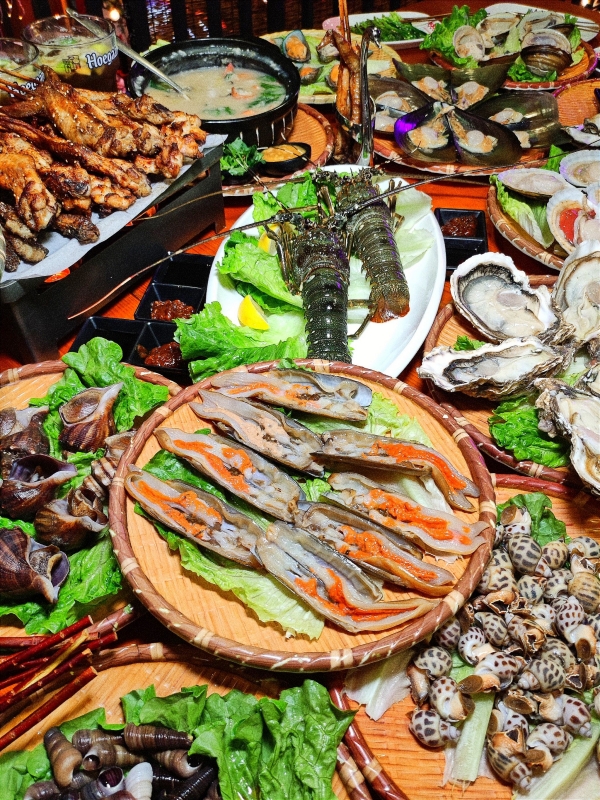
Nansha Cantonese Seafood
Cantonese seafood leads in Nansha, with day-catch restaurants along the Wanqingsha waterfront at about $15–35 (¥100–250) per person. Hotel dim-sum breakfasts are reliable mid-range options; Cantonese hot-pot chains sit inside the main shopping malls for about $15–22 (¥100–160) per head. A small Western and coffee scene has opened near Lingshan Island's retail outlets, though selection is thin outside hotel cafés.
- Wanqingsha seafood: dinner-only river views with day-catch menus.
- Hotel dim sum: convenient breakfast option across mid-range brands.
- Shopping-mall hot pot: reliable chain restaurants in central Nansha malls.
- Lingshan Island coffee: limited Western options, mostly near hotels.
Average mid-range sit-down meals run $12–20 (¥85–140) per person. Card acceptance is uneven in smaller venues — mobile-payment apps dominate locally, so set up WeChat Pay or Alipay before arriving, or pay through the hotel concierge.
Getting There from Central Guangzhou
Metro Line 18 is the simplest route from central Guangzhou; Lines 4 and 22 (Pazhou–Nansha) provide alternatives. Below is a side-by-side of the four main ways in, plus the airport transfer.
All four mainland options end within walking distance of the metro or a short ride from the wetlands and Tianhou Temple. However, the cross-border ferry is the reason many travelers pass through Nansha at all — sailings depart from the cruise terminal, not the central metro stops, so plan the trip as two separate legs.
Where to Stay in Nansha District
Most foreign visitors base themselves in one of three clusters: Wanqingsha downtown near the wetlands and temple, the cruise-port area for ferry connections, or a Metro Line 18 station for fast access back to Guangzhou. Mid-range rooms cluster around $45–90 (¥320–650); business brands like Marriott, Hilton, Atour and Holiday Inn Express run about $80–120 (¥580–850). Backpacker hostels are scarce. Book through international booking sites that accept foreign cards.
For first-time visitors, the cruise-port cluster is the easiest single-base option, especially if you are connecting to or from Hong Kong by sea.
Planning a Day Trip vs an Overnight
From central Guangzhou, a half-day covers one main sight well — Tianhou Temple plus Nansha Wetland Park is the standard pairing on Metro Line 18. Two days and one night lets you add the cruise-port terminal, one seafood dinner and an early-morning bird walk.
Best months are October to early April. May through September brings humidity and typhoon risk that can close the wetlands and disrupt ferries. For example, ferry cancellations typically spike from July through September.
If you are entering China via the Hong Kong–Zhuhai link, Nansha is a reasonable first-night stop. However, most foreign travelers arrive via Guangzhou Baiyun (CAN), 70 km north, or Shenzhen Bao'an (SZX), 80 km east.
Frequently Asked Questions
Q: Is Dagang part of Nansha District?
Yes. Dagang Subdistrict is administered under Nansha District, Guangzhou. Its address is Dagang Town, Nansha District, Guangzhou, Guangdong Province, and it falls within the 511400 postal-code series. Dagang sits on the district's northwest edge, closer to central Guangzhou than the cruise port.
Q: What country is Nanshan District Shenzhen in — and how does it differ from Nansha District?
Nanshan District is one of nine districts of Shenzhen city, in Guangdong Province, China. It is not the same as Nansha District in Guangzhou. The two cities sit roughly 90 km apart; the names differ by one letter (nansha vs nanshan) but they are administratively unrelated.
Q: What is there to do in Nanshan District Shenzhen?
Outside this article's scope. Nanshan District, Shenzhen hosts tech landmarks including Tencent's Binhai building in the Hi-Tech Park area, Shenzhen Bay Park, OCT theme parks and beach frontage. Nanshan also includes coastal Shekou and Qianhai nearby. For Nansha District (Guangzhou), see the Top Things to Do section above.
Q: Do I need a visa for Nansha District?
Standard Chinese visa policy applies. Visa-free transit up to 240 hours (10 days) is available for many nationalities via Shenzhen, Guangzhou or other designated entry points. Confirm the latest visa-free list with the Chinese embassy before travelling, as eligibility and entry ports are updated regularly.
Q: Can I take a ferry from Nansha to Hong Kong or Macao?
Yes. Nansha Cruise Port runs ferries to Hong Kong (via Hong Kong–Macau Ferry Terminal and SkyPier connections) and limited Macao services. Walk-up fares run roughly $35–50 (¥250–360) to Hong Kong and about $40 (¥280) to Macao. Sailings are most frequent on weekday mornings; book ahead online for guaranteed seats, especially on weekends and holidays.
Q: What is the postal code for Nansha District, Guangzhou?
The base postal code for Nansha District, Guangzhou is 511400, with sub-codes by subdistrict (Nansha Subdistrict, Wanqingsha, Dagang and others). For Nanshan District, Shenzhen the postal code falls in the 518000 series. Always include the four-digit suffix when mailing within China.
Q: Is Nansha District worth visiting on a day trip from Guangzhou?
Yes for visitors interested in wetlands, Mazu temple architecture and Pearl River scenery. Combine Tianhou Temple and Nansha Wetland Park on a half-day via Metro Line 18. Trade-off: travel time from central Guangzhou is comparable to Foshan or Conghua — Nansha suits travelers who already have a Guangzhou base.
Q: When is the best time to visit Nansha Wetland Park?
Late October to early April, when migratory Saunders's gulls and black-faced spoonbills arrive in the bay. The boardwalk is largely wheelchair-accessible, though some side trails flood after heavy rain. Check seasonal closures on the park's official page before visiting, especially around conservation days.