Kunming South Station
Kunming South Railway Station opened in December 2016 in Chenggong District, about 28 kilometers south of downtown Kunming. The station handles high-speed trains on the Shanghai-Kunming, Nanning-Kunming, and Kunming-Yuxi lines, plus the China-Laos Railway that started running in 2021. It's roughly 48 kilometers from Changshui International Airport and 80 kilometers from Stone Forest. The station has 16 platforms and can handle around 128,000 passengers daily. Train D887 leaves here every morning for Vientiane, making it the main gateway for rail travel into Southeast Asia from southwestern China. See what to do in Kunming from exploring centuries-old temples to wandering through colorful flower markets and tasting street food in the old quarter.
Quick Facts About Kunming South Railway Station
| 🚉 Station Name | Kunming South Railway Station (昆明南站) |
| 🆔 Station Code | KOM |
| 📍 Location | Xiangyuan Street, Chenggong District, Kunming |
| 🏙️ Distance to City Center | 28 km (17 miles) |
| ✈️ Distance to Airport | 48 km to Kunming Changshui International Airport |
| 🗓️ Opened | December 2016 |
| 🚆 Platforms & Tracks | 16 platforms, 30 tracks |
| 👥 Designed Daily Capacity | ~128,000 passengers |
| 🌏 Key Highlight | Origin station of China–Laos Railway international trains |
| 🚇 Metro Access | Line 1 & Line 4 |
Chenggong District Location and the China-Laos Railway Connection
-

- Chenggong District
-
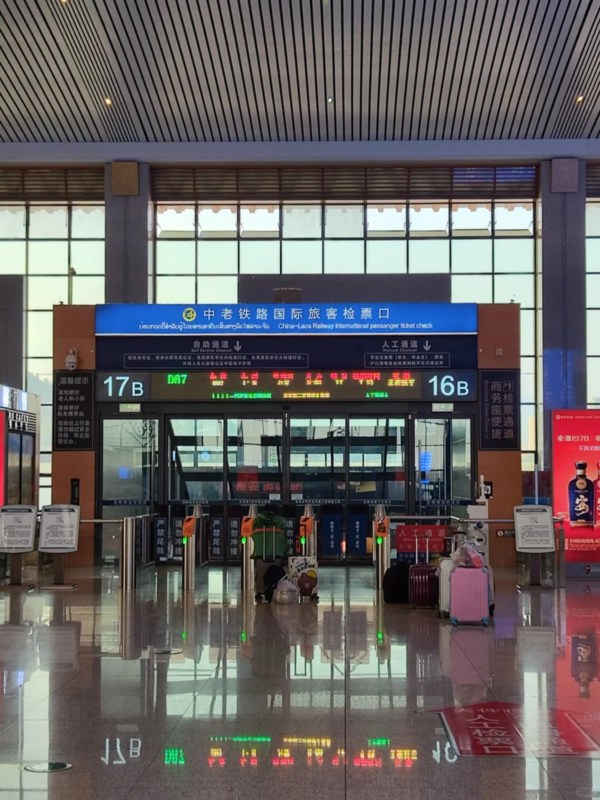
- The China-Laos Railway
Finding Kunming South Railway Station in Chenggong District
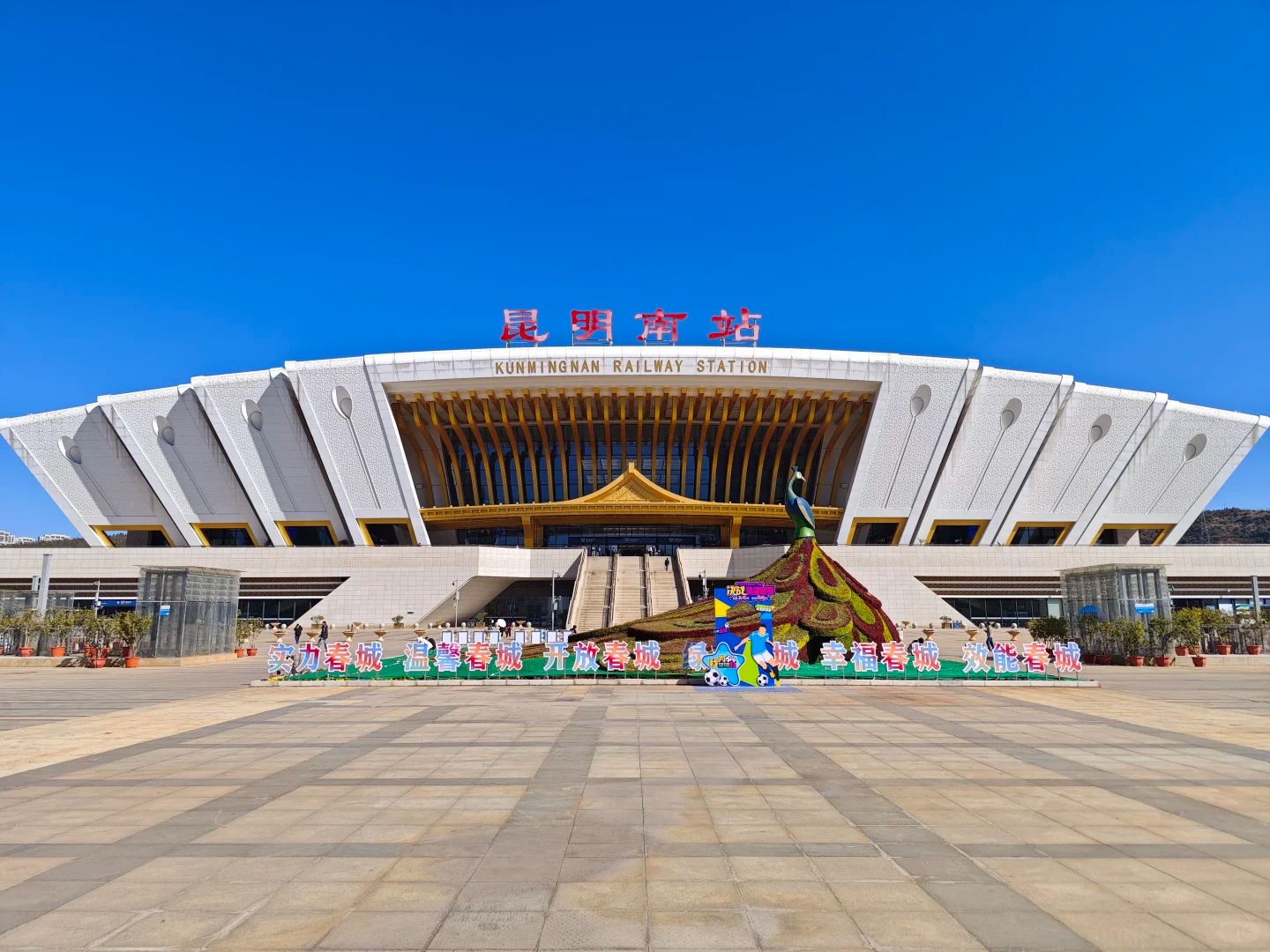
The Kunming South Railway Station is located in Chenggong District, the newer of the two parts of Kunming developing out of the old center of the city. It is located at the Xiangyang Street, approximately 28 kilometers away, which is the downtown. It is only 7 kilometers to Dianchi lake and it is so close to the administrative center of the city, just 3 kilometers. The glass dome is the first thing that catches your eye when you first arrive to the building, which consists of eight sections with a shape of a fan-like object that resembles the feathers of a peacock in the process of spreading out.
The front plaza is broad and largely deserted unless at the busiest time. Sarah of Australia informed me that she had believed she had arrived at the wrong station upon leaving the metro. All was too fresh, too sanitary. The waiting hall is located on the third floor and escalators take you up over shops and ticket machines. The platforms are visible below through the glass floor sections as you look down as you walk.
The China-Laos Railway Reaches Southeast Asia
The China-Laos Railway is part of the Belt and Road Initiative connecting Kunming to Vientiane in 9 hours 30 minutes. Kunming South Station is where this route starts. The "eight railways into Yunnan, four to neighboring countries" plan makes this hub important for crossing into Southeast Asia. Each train carries 390 passengers and serves travelers from 112 countries. On opening day in December 2021, passengers lined up with cameras ready. One Thai businessman said he'd been waiting years for this route—no more flying to Chiang Mai and driving north. The peacock design on the building isn't random. It represents ethnic minority cultures in Yunnan, where the peacock symbolizes good fortune. The eight feathers match the eight railway lines converging here.
Train Routes from Kunming South Railway Station: Where Can You Go?
-
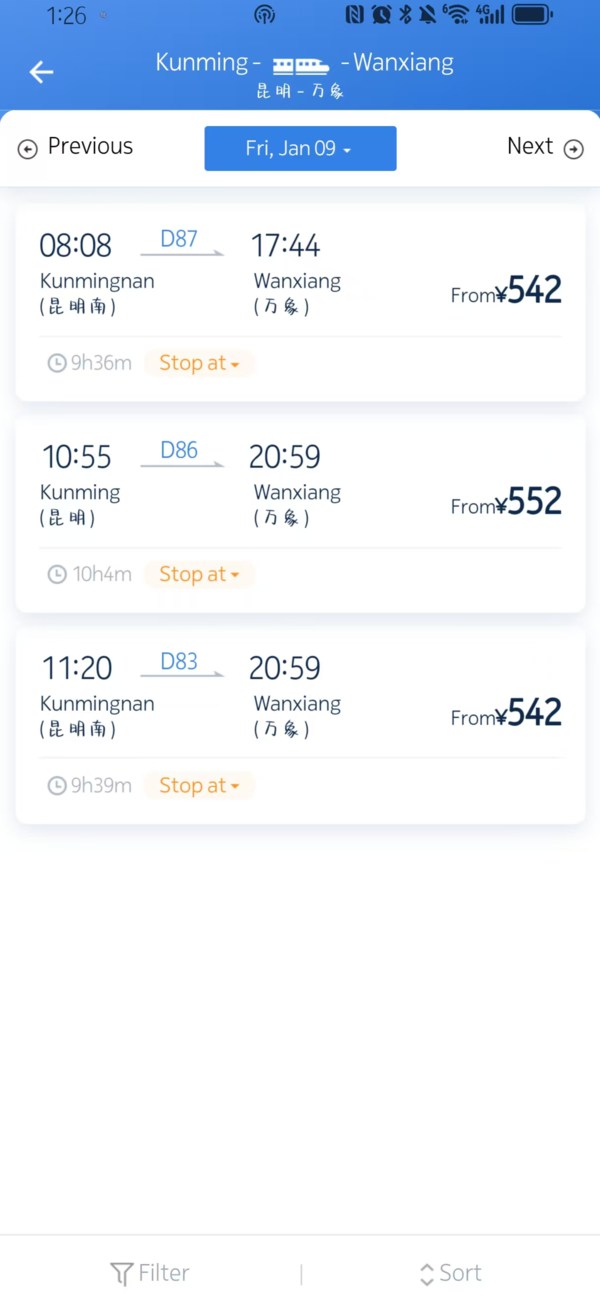

- To Laos
-
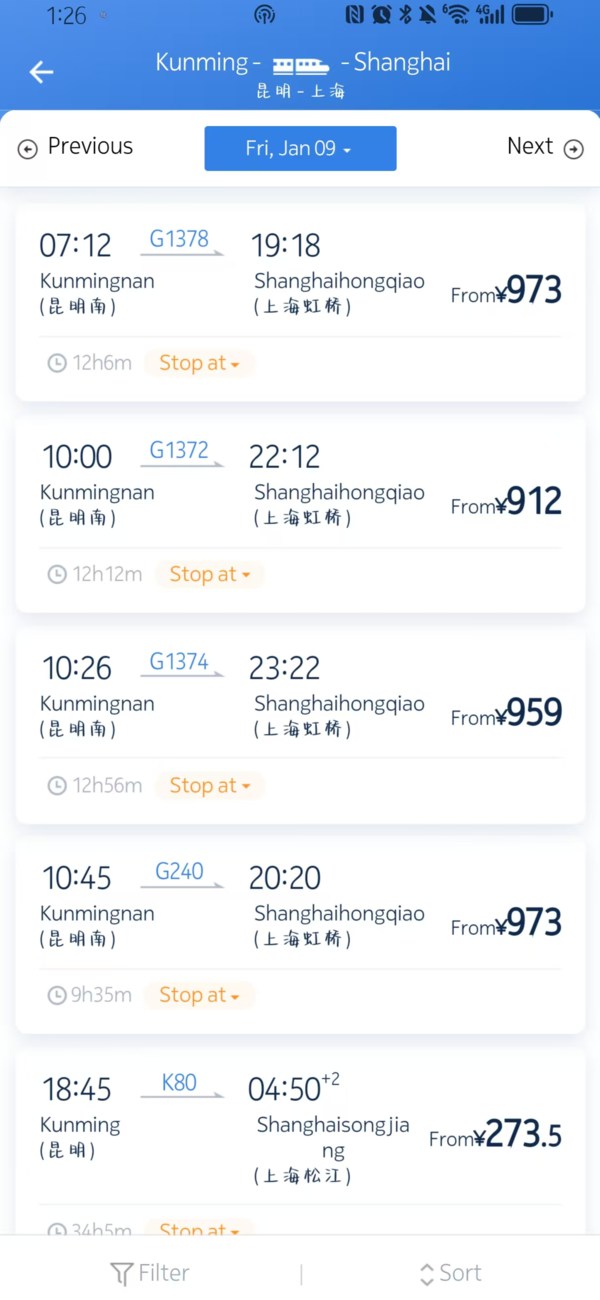
- To Shanghai
-
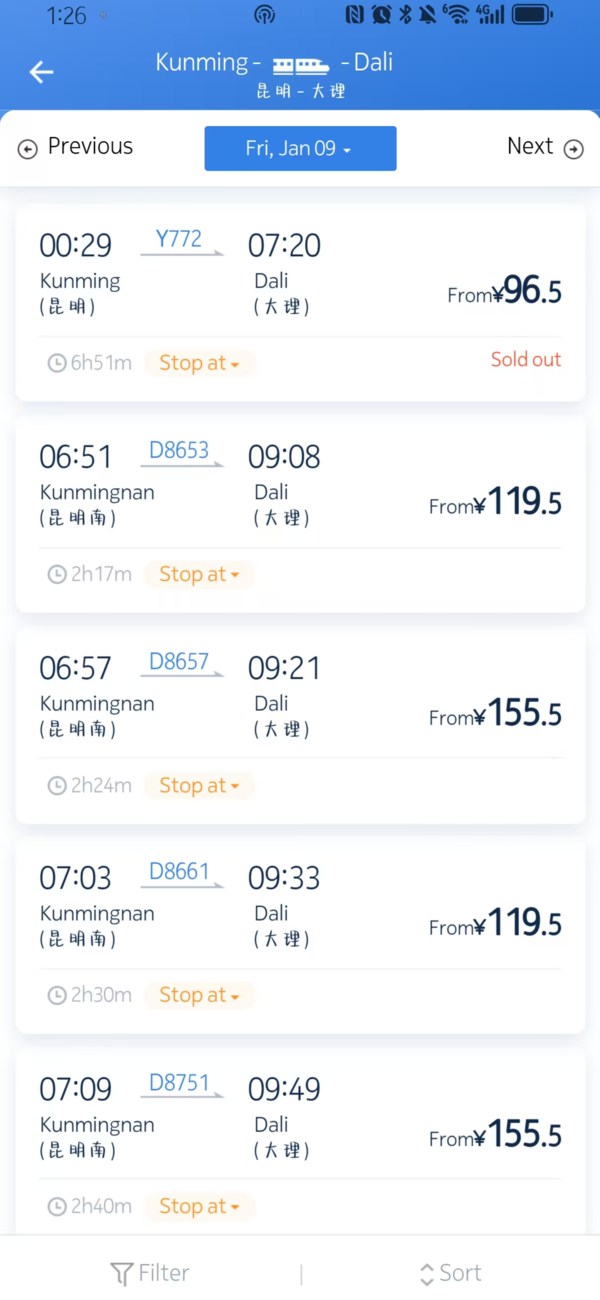
- To Dali
International Routes: The China-Laos Railway Experience
Main International Trains
Train D887 (Kunming South → Vientiane)
Departure: 08:08 AM
Arrival: 05:38 PMTotal Duration: 9h 30m (border stop included)
Ticket Prices:
Second Class: ¥508
First Class: ¥813
Business Class: ¥1538
Train D888 (Vientiane → Kunming South):
Same schedule, opposite directionBooking:
Station counters: 15–18
Online: 12306
Onboard Experience
Dining car serves Dai-style food
Signature dish: Pineapple Fried Rice
Price: ¥40–60
Served inside a hollowed pineappleStaff languages: Chinese / Lao / basic English
Crew actively assist with:
Customs forms
Border procedures
(Observed helping European passengers directly onboard)
Border Check at Mohan
Passengers remain seated
Documents required:
Passport
Laos arrival card (distributed by crew in advance)Processing time: 50–90 minutes
Stamping:
China exit stamp
Laos entry stamp
Train to Luang Prabang
Train C304
Departure: 10:15 AM
Arrival: 06:40 PM
Duration: 8h 25m
Operation: Daily except Wednesdays
Scenic highlight:
Mekong River
Mountain landscapes
Best views on right-side seats
Booking Tips
Chinese holidays: Book 3 days ahead
Off-season: 1 day ahead usually sufficient
Ticket prices: Fixed (no surge pricing)
Domestic High-Speed Routes: Connecting Across China
Major Long-Distance Routes
Kunming South → Shanghai Hongqiao (G76)
Departure: 08:55 AM
Duration: 10h 33m
Same-day arrival
Ticket Prices:
Second Class: ¥806
First Class: ¥1290
Business Class: ¥2466Uses latest rolling stock (smoother ride, better reclining seats)
Kunming South → Beijing West (D87)
Duration: ~11h 35m
Price Range: ¥720–2194Kunming South → Guangzhou South
Multiple departures daily
Mainly D-trains
Average duration: ~9 hours
Train Code Guide
G-trains
Speed: up to 350 km/h
Fastest & most expensiveD-trains
Speed: up to 250 km/h
Good balance of speed and priceC-trains
Short-distance routes
Usually under 3 hours
Seat Class Notes
Second Class: standard, cost-effective
First Class: wider seats, footrests
Business Class:
Airline-style lie-flat seats
Very expensive
Best only if cost is not a concern
Dali
Train: D8771
Duration: 2h 33m
Price: ¥126–202
Note:
No direct train to Lijiang
Dali is the midpointFrom Dali → Lijiang:
Train or bus
Additional ~2 hours
Xishuangbanna
Trains: C277 / C265
Duration: 3h 16m – 3h 40m
Price: ¥247–395
Jianshui Old Town
Train: D9982 (holiday schedules)
Duration: 1h 52m
Ideal for:
Short cultural side trips
Ancient architecture & local food
-
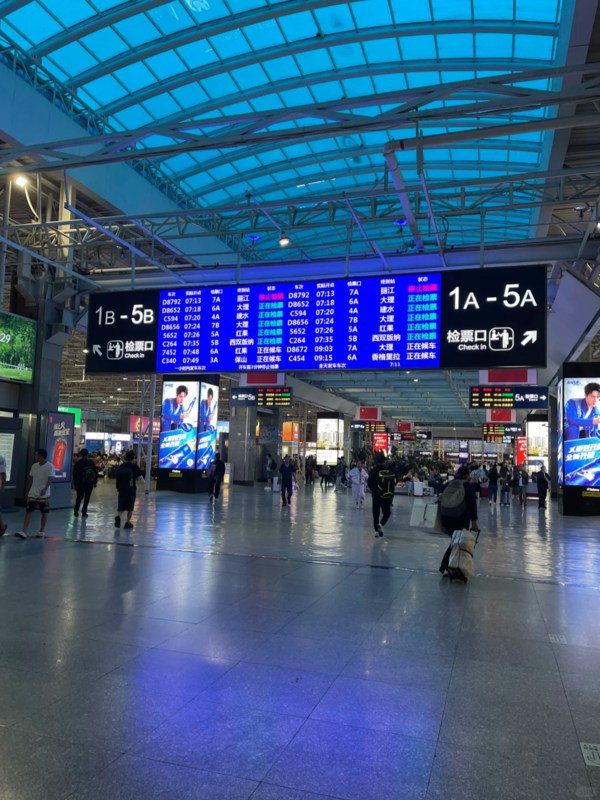
- 1F of Kunming South Station
-
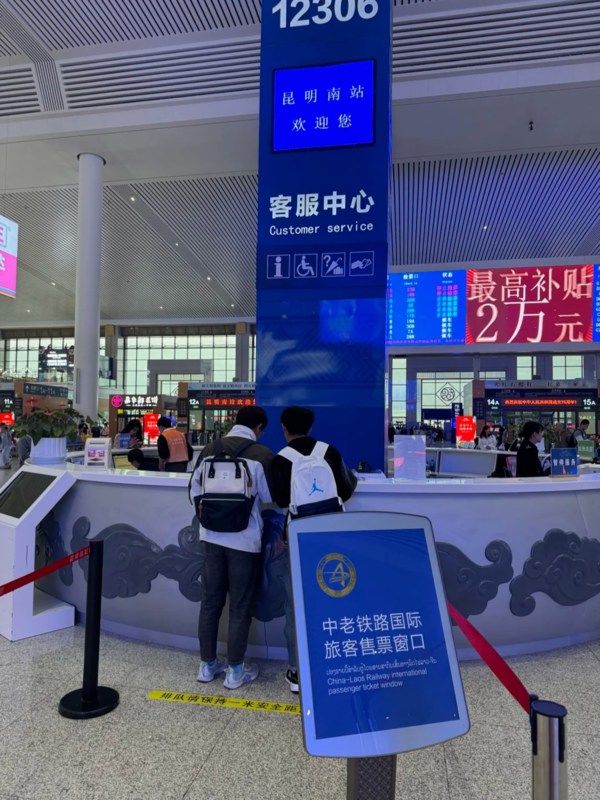
- International Ticket Counter
-
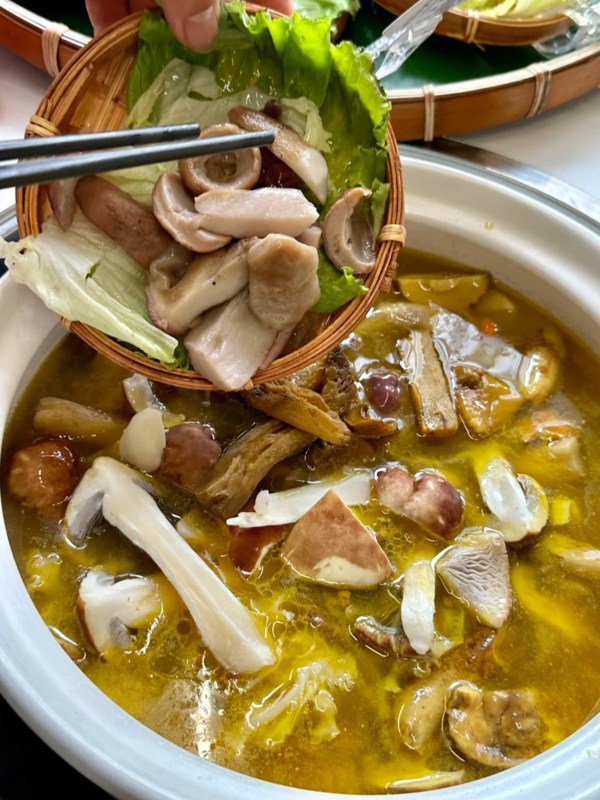
- Food in Kunming South Station
Station Layout Floor-by-Floor Guide
Kunming South Railway Station has the third floor that deals with waiting areas. The rays of sunlight are passing through the glass dome and landing in broad beams upon rows of gray seats. The ceiling is redesigned after peacock feathers; eight fan-shaped designs that are spread apart. This theme of the dancing peacock is the symbol of ethnic minorities of Yunnan that view the peacocks as their fortune. There are shops and restaurants in the mezzanine above the seats. This level has taxi and drop-off cars in the outside.
Platform level is one floor lower with 16 platforms divided in four parts: Hu-Kun (Shanghai-Kunming), Yu-Kun (Chongqing-Kunming), Huan-Dian (Dianchi area) and Yun-Gui (Yunnan-Guizhou). Platform numbers are displayed in electronic boards in Chinese and English. Checking before departure is recommended between 20 minutes because their information changes in real time.
Arrivals are done on the first floor. Exit signs direct to East Plaza either to taxis or to the parking lot with 1,025 spaces. The basement is connected to Metro Line 1 and 4. The distances between platforms and metro take 5-8 minutes.
The third floor center is the best place that first-time visitors should look up the dome to see how the design of the peacock actually works. The building is easier to comprehend after you get to know the layout that is admittedly difficult to know entirely without visiting it.
Facilities Designed for International Travelers
The third floor has windows 15-18 that deal with international passengers. They take passports to buy tickets and employees there are generally capable of communicating in basic English. The station has scattered ninety self-service ticket machines with majority having English language options. In the case of loss of ID, an emergency temporary ID printing service is located just outside the main entrance.
Free drinking water stations sit in every waiting area. Mother-baby rooms are on the third floor, one on each side (east and west). Wheelchair rentals and accessible restrooms are available—ask at the information desk. Luggage lockers are on both first and third floors. Charging stations have USB ports and AC outlets, though they fill up fast during peak hours.
Chinese, Lao and English text is presented in all the signs. International Service Post It is the service that lends out translation equipment in the form of small handheld machines located on the third floor, next to Gate 12. According to a Korean traveler whom I had a conversation with, ordering noodles with a borrowed one proved to be better than using her phone, which has a translate application, so I can not ascertain whether this is still the case. Counter 5 staff are reportedly conversant in better English than the rest of the windows, but I cannot confirm that any longer.
Food and Shopping Before Your Journey
On the third floor, the cross-bridge noodle stores sell a bowl of noodles between 25-45. You receive the raw materials as a side dish (meat cuts, vegetables, quail eggs) and pour them into the boiling broth by yourself. The rice noodles take an approximate of half a minute to soften. Between 11 AM and 1 PM, the shop becomes crowded and should thus eat at an earlier or later time.
Flower cakes (鲜花饼) are good souvenirs costing between 15 and 30 per box. The Jiahua brand show in Gate 8 appears to be very popular among locals who purchase gifts. The local coffee roasters at Yunnan charge around 20-25 to make an Americano, whereas Starbucks charges 30-35 to make the same portion.
The commercial area anchors on KFC and McDonalds. KFC occasionally sells Yunnan-related products such as the Tender Beef Wufang, but the menu changes every now and then. Pu'er tea sanes deal with high quality products- Laobanzhang and Bingdao products cost high, ¥200+ a small cake. Silver jewelry and batik cloth are sold in the shops of the ethnic handicrafts, in case you are interested. Explore Kunming's night markets where vendors sell grilled skewers, barbecued tofu, and flower cakes fresh off the griddle for half what you'd pay at the station.
Booking Tickets & Essential Tips for Foreign Travelers
-
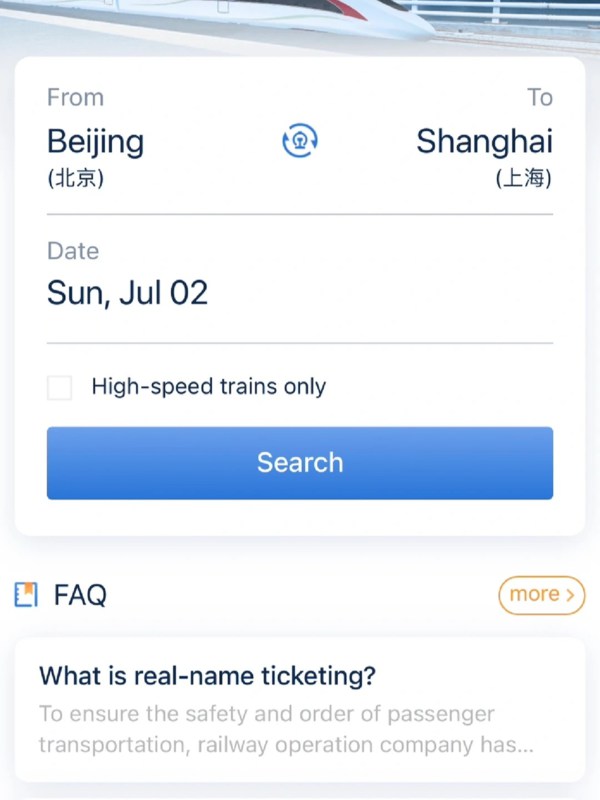
- English Version of 12306
-
- Alipay & Wechat Pay
How to Book Your Train Tickets Step-by-Step
The 12306 application is in the English language. Get it in the app stores of China or visit the 12306.cn/en site. In order to register, you are requested to provide your passport number rather than a Chinese ID. The payment option takes Visa, mastercard and American Express. It is only a matter of 10 minutes or so when you are all set.
In the case of domestic trains, 30 days advance booking is possible. International trains open to Laos in 7 days. Trip.com and Ctrip international version are also functional provided 12306 makes you confused but they charge minimal fees on their services.
Kunming south station windows 15-18 sell international tickets in everyday between 7 AM to 9 PM. Employees there deal with English-language D887/D888 conversation. D887 may also be booked using the English interface of 12306, or at the official site of Laos Railway.
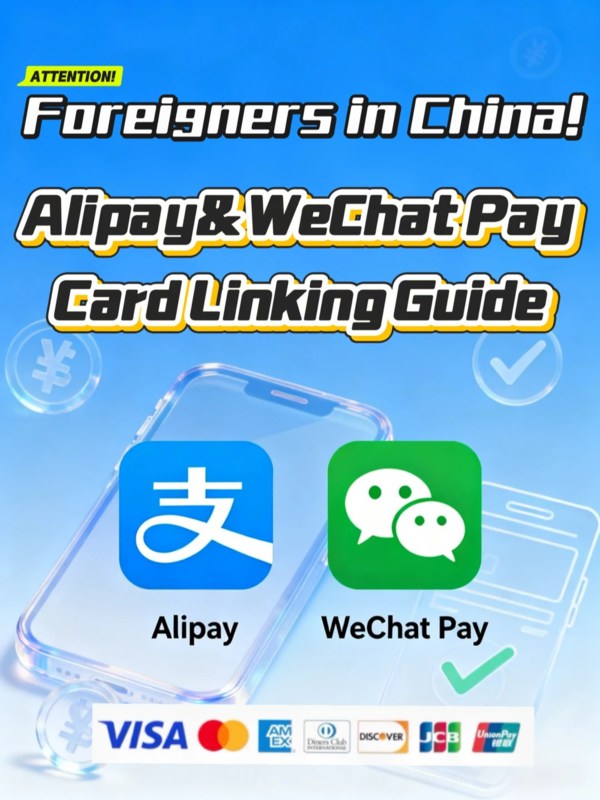
Once bound in the app settings, WeChat Pay and Alipay accept foreign cards. It is quicker than typing in the information on the card each time. Cash operators handle the hard copy in the station windows and not in self-service machines. The 12306 first-time users: this should be done at least a week in advance, add a payment method, and do not show up five minutes before your train: this is never good.
Entry Requirements and Border Crossing Procedures
Trains In China, yes, foreigners can take trains. The local flights at home will only require a passport, no visa to board the station. E-ticket is paperless; all you have to do is swipe your passport against the gate scanner.
International trains require a six-month left to expiry valid passport. Laos has visa on arrival at Vientiane, although this varies depending on the existing policies. There are nationalities that are supposed to apply. Register one hour before D887 arrives about the customs forms and security.
The Chinese exit officers at Mohan border check-point first stamp your passport. Then immigration boards of Lao stamp. The whole stop lasts 50-90 minutes. Checking of luggage is minimal- luggage remains on rack unless it raises a red flag. You may take flower cakes and pu’er tea along. A nervous Australian traveler was instructed by a single hand gesture by one of the border guards as to the point to fill the form. They are accustomed to disoriented foreigners.
Cash over $5,000 USD equivalent and carrying restricted items are questions that the customs declaration will ask. Fill it honestly.
Insider Tips to Avoid Common Mistakes
Book early during Spring Festival (late January/early February), National Day (October 1-7), and summer (July-August). Tickets sell out days ahead. Metro to Kunming South Station gets packed between 7:30-9 AM and 5:30-7 PM on weekdays. Security lines for international trains take 15-30 minutes, domestic trains move faster.
Download Pleco or Baidu Translate before you arrive—station WiFi drops constantly. Screenshot your ticket confirmation and hotel address in Chinese. Learn 厕所 (cèsuǒ - toilet), 出口 (chūkǒu - exit), 站台 (zhàntái - platform).
ATMs on the first floor accept foreign cards. The station has no currency exchange, so handle that at the airport. Keep ¥200-500 cash for taxis and small purchases.
The "Qinzhuang Xing" luggage service costs ¥20-50 and delivers bags from your hotel to the platform or from the station to your next hotel. Trains allow 20kg free baggage per passenger. Business class lounge access costs ¥50 for anyone, not just business ticket holders. Best photo spot is the third floor west entrance around sunset when light hits the peacock dome. WiFi password gets posted near the information desk—changes weekly.
Kunming South Station vs. Kunming Main Station: Quick Comparison
| Feature | Kunming South Station | Kunming Main Station |
| 🚉 Station Type | High-speed rail hub | Traditional railway station |
| 🚄 Train Types | G / D / C bullet trains | K / T / Z regular trains |
| 🌍 International Routes | ✅ China–Laos Railway | ❌ None |
| 📍 Location | Chenggong District (suburban) | City center (near Green Lake) |
| 🎯 Best For | Fast travel, international trips | Budget travel, overnight trains |
| ✈️ Distance from Airport | 48 km | 30 km |
| 🚇 Metro Lines | Line 1, Line 4 | Line 1, Line 2 |
| 💰 Price Level | Higher (high-speed premium) | Lower (slower trains) |
| ⏱️ To Dali | 2 hours (high-speed) | 6–8 hours (regular train) |
| 🏛️ Architecture | Modern peacock design | Traditional station building |
Kunming South Station works better if you value time or you're heading to Laos. Main Station suits budget travelers and overnight journeys. The two stations sit 28 kilometers apart. Metro Line 1 connects them in 40 minutes for ¥3-5. Taxis cost around ¥80 and take 45 minutes.
Check your ticket carefully—getting to the wrong station means missing your train. I've seen people panic-sprint to taxis when they realize their mistake 30 minutes before departure.
First-time Yunnan visitors planning Dali and Lijiang should use Kunming South. The high-speed train saves 4-6 hours compared to regular trains from Main Station. That's an extra afternoon exploring instead of sitting on a slower train staring at your phone.
FAQ about Kunming South Railway Station
Q: How far is Kunming South Railway Station from the airport?
Kunming South Station sits about 48 kilometers (30 miles) from Changshui International Airport. Airport Bus 919K is the cheapest option at ¥13, taking roughly 1.5 hours. It runs from 7 AM to 8 PM. Taxis cost ¥120-150 and take 50 minutes, though rush hour can push that to 90 minutes. If you're catching the China-Laos train, book a morning flight and give yourself 3.5 hours minimum—that covers bus travel, station security, and international train procedures. The airport metro extension is under construction, expected around 2027.
Q: Can I buy train tickets with a foreign credit card?
Yes. Ticket windows and most self-service machines at Kunming South Station accept Visa, Mastercard, and American Express. The 12306 app and website support foreign cards too. I'd recommend setting up WeChat Pay or Alipay with your international card beforehand—these digital wallets work at every machine and process faster than physical cards. Windows 15-18 handle international train tickets and have card readers designed for foreign cards. Staff there usually manage basic English. Cash works at windows if you're worried about payment issues.
Q: What's the best way to get from Kunming South Station to Lijiang?
There's no direct high-speed train to Lijiang yet. The easiest route goes through Dali first—trains like D8771 leave every 30-60 minutes, taking 2 hours 33 minutes for ¥126-202. From Dali, catch a bus or connecting train to Lijiang (another 2 hours). Alternatively, overnight trains run from Kunming Main Station (the old one downtown) straight to Lijiang. You leave evening, arrive morning. The high-speed extension to Lijiang is under construction, supposedly opening late 2026 or early 2027. That'll cut total travel time significantly once it's done.
Q: How early should I arrive for international trains to Laos?
Arrive at least 60 minutes early, though 90 minutes is safer during peak travel periods. International trains require extra border paperwork—customs declaration forms, passport checks, briefings from tri-lingual crew. The train stops at Mohan checkpoint for 50 minutes while staff board to inspect documents. You stay seated during this. Domestic trains let you arrive 20 minutes before departure, but international services close check-in 30 minutes prior. Security lines for Platform 3 (international departures) run longer than domestic platforms.
Q: Is there English signage throughout the station?
Kunming South Station has tri-lingual signs in Chinese, Lao, and English everywhere—directional markers, platform numbers, train schedules, facility labels. Restaurant menus and some shop signs stay Chinese-only though. The International Service Post near Gate 12 on the third floor loans free translation devices. These handheld machines work offline and help with food vendors or specific questions. Staff at international ticket windows generally speak functional English. Younger employees tend to handle English better if you need help navigating.
Q: What food is available, and can I bring my own on the train?
The third floor commercial area has cross-bridge noodles (¥25-45), Yunnan coffee shops (local beans, cheaper than Starbucks), plus KFC and McDonald's. Station prices run 20-30% higher than outside—standard for Chinese railway hubs. You can absolutely bring outside food. Many travelers buy fresh fruit at first floor shops before boarding. International trains serve Dai-style meals (pineapple rice, pork ribs) in the dining car, but bringing snacks is common. Don't bring durian—that strong-smelling fruit isn't allowed on trains.
Q: Can I store luggage if I want to explore Kunming first?
Luggage lockers are on both first and third floors. Small bags cost ¥10-20 per day, large suitcases ¥20-40. The staffed counter near Gate 8 on the third floor handles oversized items for similar prices. The "Qinzhuang Xing" service is more convenient—hotels can send your luggage directly to your train platform for ¥20-50, or deliver from the station to your next accommodation. You don't have to carry bags around Kunming at all. Service counters in the waiting hall handle bookings. WeChat Pay and Alipay work for payment.
Q: Can I manage the station without speaking Chinese?
You can manage, but prep work helps. Download offline translation apps (Google Translate, Pleco, Baidu Translate) before arrival—station WiFi drops constantly. Screenshot your ticket confirmation, hotel address, and destinations in Chinese characters. The International Service Post at Gate 12 loans free translation devices, and staff there speak better English. In emergencies, ask younger employees—they're usually willing to help with translation apps. Learn key phrases: 昆明南站 (Kunming Nanzhan), 出租车 (chūzūchē - taxi), 地铁 (dìtiě - metro). Digital screens show English schedule information.