Kuanzhai Alley in Chengdu
Chengdu's Kuanzhai Alley (宽窄巷子) is a pedestrian block of restored Qing-dynasty courtyards at the heart of the city, roughly 30.6740 N, 104.0612 E. The three parallel lanes — Wide, Narrow, and Well — each carry a different tempo: Wide Alley leans quiet and craft-forward, Well Alley buzzes with snack stalls and evening opera, and Narrow Alley threads the two together with mixed architecture and coffee shops. Travelers who wander beyond the south archway find 45 hidden courtyards behind the storefronts, plus the street's own street-side rhythm of ear-cleaning practitioners, teahouse clusters, and face-changing shows that perform late into the night.
The block sits in Qingyang District on Changshun Street, a 3-minute walk from Metro Line 4's Kuanzhai Alley Station. Free to enter, it rewards anywhere from a two-hour snack-and-photo loop to a half-day that folds in teahouse stops, a Sichuan opera show, and the surrounding temple-and-park cluster. For first-time visitors, the main question is not whether to come but how to split the three lanes — and which snacks land in Well Alley versus Wide.
Quick Facts
What Kuanzhai Alley Is and Its Three Lanes
Kuanzhai Alley began as a Manchu-banners garrison quarter during the Qing Dynasty, and it kept that layered fabric through the early Republic years when Western-style facades started appearing alongside the old courtyard walls. The modern restoration, which earned the block a National Demonstration Pedestrian Street designation in 2020, preserved the original footprint while converting the 45 courtyards behind the storefronts into a mix of boutique teahouses, craft shops, and cultural venues. The three parallel lanes that make up the block each took on a distinct character over that time, and knowing which lane carries what makes the difference between a well-paced visit and a confusing loop.
Wide Alley (Kuan Xiangzi 宽巷子)
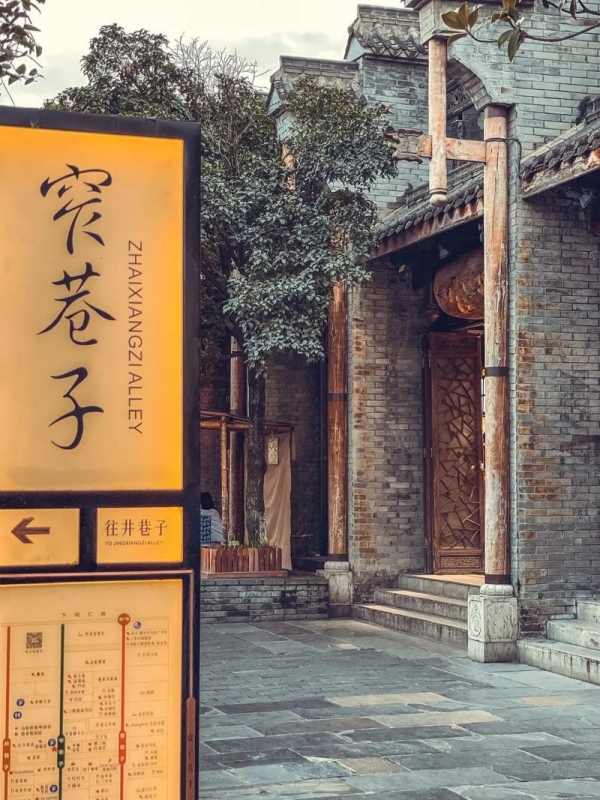
Kuanzhai Alley in Chengdu
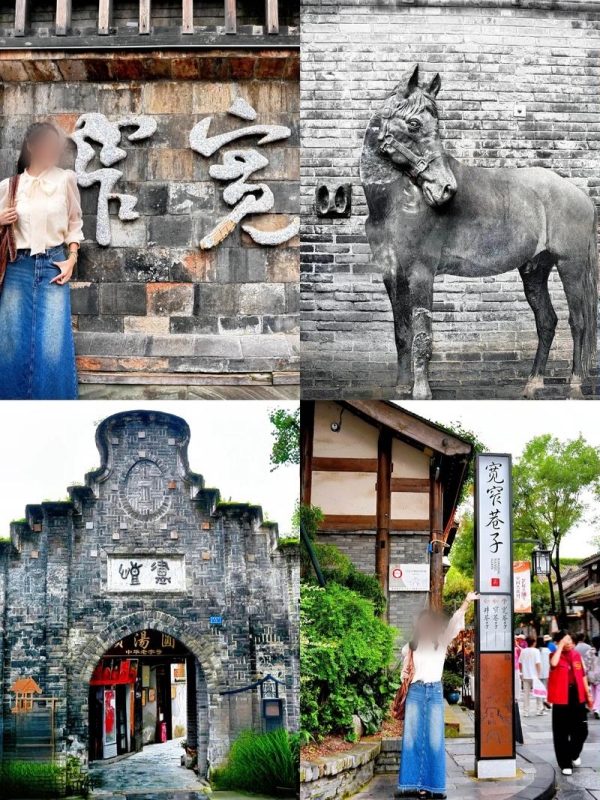
Wide Alley is the broadest of the three, and its scale draws the eye upward to the restored Qing-era courtyard mansions that line both sides. The mansions sit behind carved timber gates, and their two-story rooflines — traditional clay tiles and dark beams — are the most-photographed architectural feature on the block. Boutique teahouses occupy several of the courtyards here, and the storefronts lean toward Sichuan crafts and Republic-era-themed cafés rather than snack stalls. Most early morning photographs of Kuanzhai Alley are framed through the south archway looking north into Wide Alley, which is why that gateway angle appears so consistently across travel content. The lane keeps a quieter pace than Well Alley, particularly before 11:00 and after 21:00 when the nearby bars have not yet filled the courtyards.
Narrow Alley (Zhai Xiangzi 窄巷子)
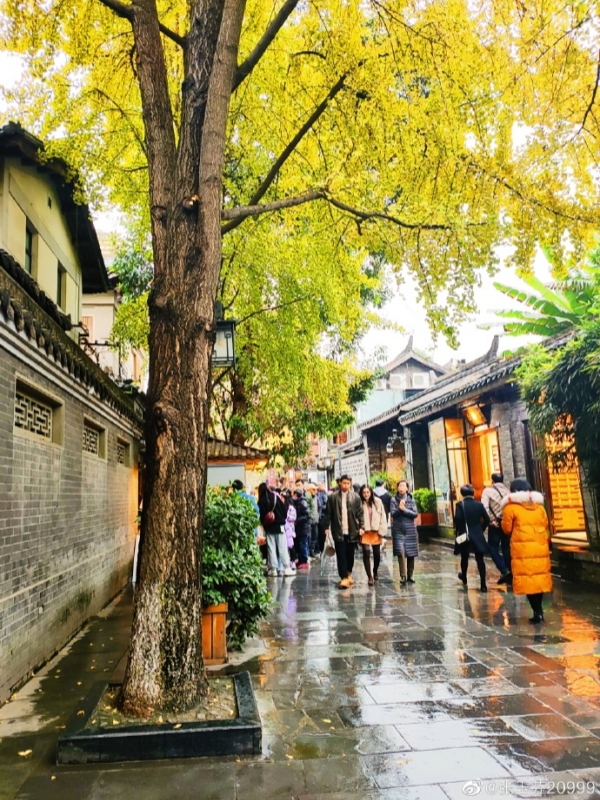
Kuanzhai Alley in Chengdu
Narrow Alley runs parallel to Wide Alley and carries a tighter, denser feel. Qing walls meet early-Republic brick here, and small Western-style architectural elements — arched windows, wrought-iron railings — surface on a handful of buildings. The mixed-era streetscape makes this lane the most architecturally varied of the three, though it also absorbs the commercial spill from both neighbors. European-style coffee shops, small craft bars, and ice-cream stands cluster here, and the lane's width means foot traffic can feel heavier during peak afternoon hours. Photographers tend to work the corner where Narrow Alley meets the unnamed side lane, where gray brick, bamboo, and a single red lantern create a composable frame at almost any time of day.
Well Alley (Jing Xiangzi 井巷子)
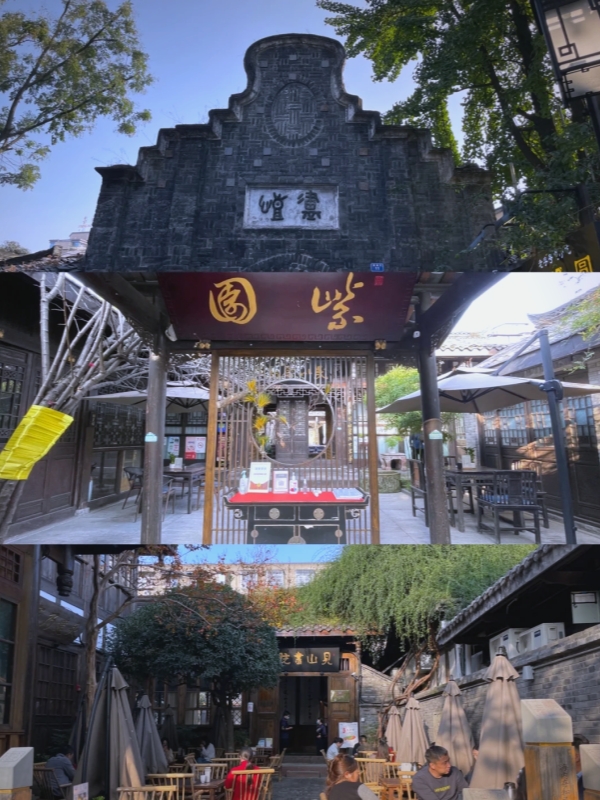
Kuanzhai Alley in Chengdu
Well Alley takes its name from the original well that still marks a spot along the lane, and the street-level energy here reflects that folk-culture focus. Snack stalls, small teahouses, and open-air performance areas line both sides, with shadow-puppet shows and Sichuan opera face-changing acts running most evenings in the courtyards just behind the storefront row. The lane fills earliest in the day — by 10:00 the first vendors are set up — and stays busy latest, with the teahouses and stalls running until the early morning hours on weekends. For most visitors on a snack-and-culture loop, Well Alley is the anchor lane, and the others are accessed as short north-south connectors from it.
🐼 Plan Your Ultimate Chengdu Itinerary: Visiting this historic pedestrian block is just one of the many incredible highlights waiting for you in the Sichuan capital. Discover ancient streets, giant panda sanctuaries, and culinary hotspots in our comprehensive guide to the Best Places to Visit in Chengdu.
Photo Spots and Best Light in the Alleys
The photographic range at Kuanzhai Alley concentrates on architectural texture and lantern-lit atmosphere, with a smaller set of candid human moments available in the evenings. The block rewards photographers who time their shots to the lane's density cycles rather than arriving mid-afternoon when foot traffic is heaviest. Six angles cover the block's most consistent results, and the timing window for each is narrow enough that a short list helps planning.
Gateways, Doors, and Window Lattices
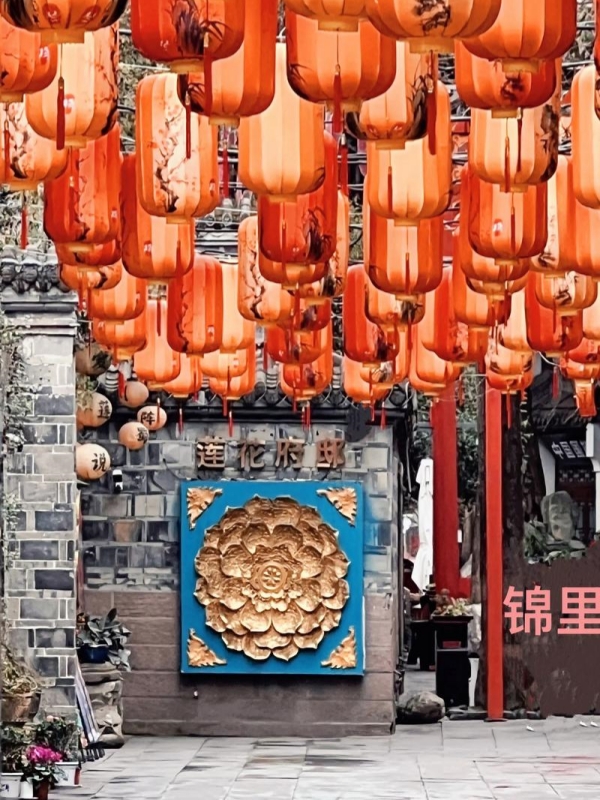
Kuanzhai Alley in Chengdu
The south archway gateway frames the block's most recognizable shot — a visitor walking through the carved wooden arch toward Wide Alley, with the lane's roofline visible beyond. Cleanest results come on weekday mornings before 10:00 when pedestrian density drops, and a wide aperture on a phone or camera blurs the few people present. The carved timber gates between courtyards along Wide Alley offer a secondary gateway series; these are narrower, taller, and catch directional light better in the early morning than at midday when the sun overhead flattens the detail.
The flower-shaped window lattices (花窗) embedded in Wide Alley walls are the best crop for tight detail shots — their intricate carved patterns photograph sharply in overcast light, which removes the hard shadow lines that direct sun creates on carved surfaces.
Courtyards and Rooflines
The restored courtyard mansions behind the storefronts carry the block's most complete Qing-era roofline sequences. A second-floor teahouse table on the Well Alley side offers a north-facing view of the roofline — dark clay tiles, dark wooden beams, and the courtyard wall beyond — that is difficult to replicate from ground level.
The gray-brick-and-bamboo corners scattered through Narrow Alley and the side lanes work for smaller compositions; they are consistent, low-contrast, and usable in most lighting conditions. Travelers who want to capture the courtyard atmosphere without purchasing tea can position themselves at the courtyard thresholds and shoot inward, though some courtyards restrict photography at their interior tables.
Night Lanterns and the Plaza
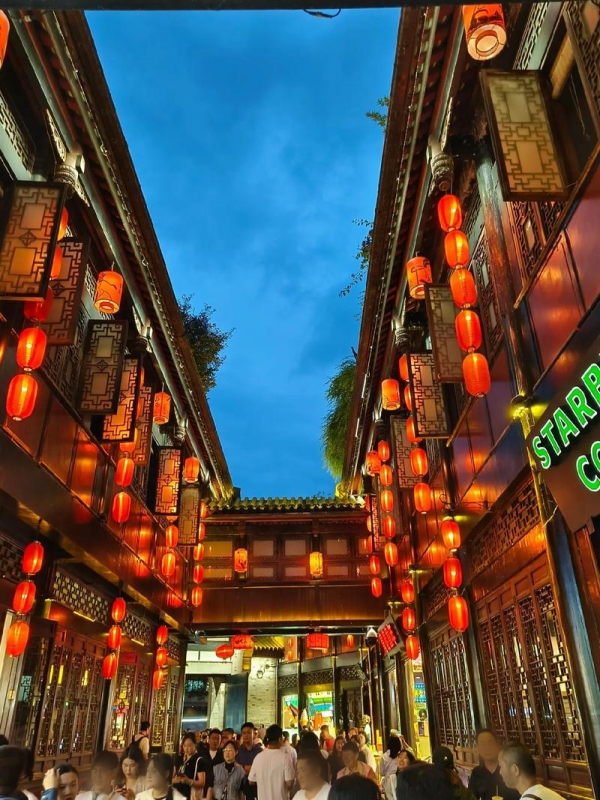
Kuanzhai Alley in Chengdu
Civil twilight to 30 minutes after sunset is the single most productive window for Kuanzhai Alley photography. The red lanterns throughout Well Alley switch on as the sky dims, and the warm spill from the lanterns onto the stone-paved lane creates the glow that dominates the block's most-shared images. The stone-paved heart of Narrow Alley at night carries the strongest lantern concentration, and the darker lane walls frame the warm light without competing.
In the southern plaza, the evening square dancing runs from roughly 19:00 to 21:00, and the movement of the dancers against the lantern backdrop adds a human element that static daytime shots lack. Tripods are generally tolerated in the plaza and in the quieter side lanes; the busier Well Alley sections are harder to shoot stable on a tripod due to foot traffic.
Snack Map Across the Three Lanes
The most practical way to navigate the food along Kuanzhai Alley is to think lane by lane rather than chasing a single vendor list. Well Alley concentrates the snack stalls and is where most of the classic Sichuan portions sit, while Wide Alley hosts the teahouses and craft-oriented bites, and Narrow Alley absorbs a mix of Western-style quick options alongside some of the more experimental local stands. A four-stop snack loop — three savory classics plus one sweet or cold item — typically runs about $6–10 (¥40–70) per person.
Sichuan Classics on the Strip
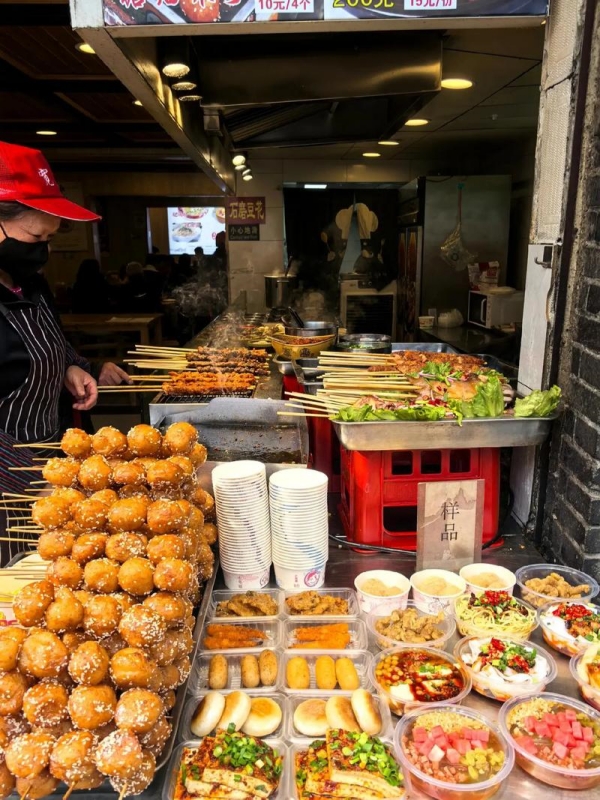
Snacks at Kuanzhai Alley in Chengdu
Well Alley's three-to-five classic stalls anchor the snack experience, and they cluster in the lower section near the south plaza entrance where foot traffic is heaviest. The Three-Gun (三炮) stall is the most visually distinctive — vendors toss glutinous rice balls in the air and catch them on a wooden board, coating each portion in malt sugar. The portions are small, shareable, and eaten standing. Sweet-water noodles (甜水面) use thick wheat noodles in a sauce that balances sugar and chili oil, making them a gentler entry point for travelers unaccustomed to full mala heat.
Long chaoshou (龙抄手) wonton soup follows the Sichuan style with a mildly spicy broth, and dan dan noodle stalls in the same stretch serve sesame-based sauce with minced pork over a small portion of noodles. Most portions run $2–5 (¥10–30) depending on the stall and whether extra toppings are added, and the vendors typically work without a formal menu — pointing and gesturing is standard and works fine.
Sweet and Cold Snacks
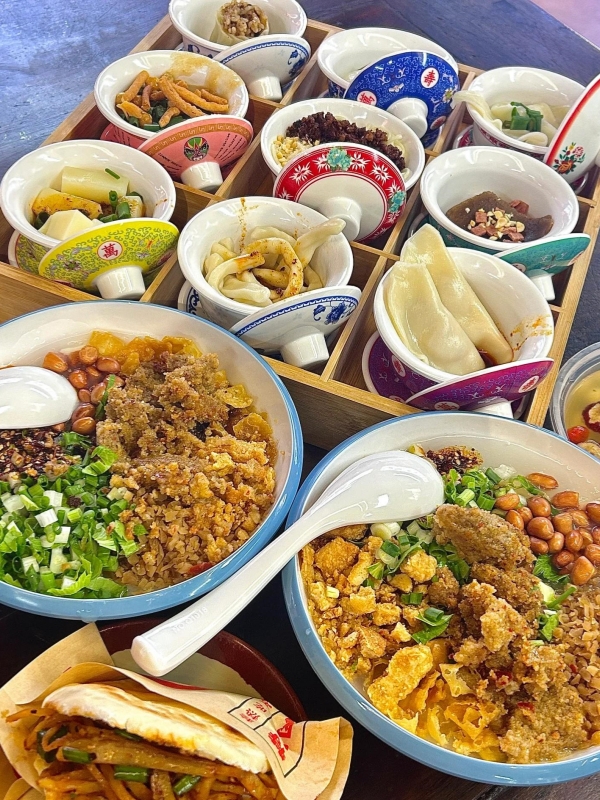
Snacks at Kuanzhai Alley in Chengdu
The sweet and cold category fills the gap for visitors who want to pace the savory items or who find full-mala dishes too intense. Bing fen (iced rice jelly) appears most consistently at carts near the Well Alley performance zones; the jelly cubes sit in sweet syrup and are one of the more refreshing options on a hot Chengdu afternoon. Sugar-oil twists (糖油果子) are smaller, crunchier, and slightly sweet from the caramel coating — they travel well and work as a between-lane snack.
The San Da Pao (三大炮) mochi-throw stall draws a crowd because the process is part of the show: the vendor tosses the portions between stations before coating them, and the sound of the impact carries down the lane. Fried banana on a stick and mango pomelo sago cups round out the cold-sweet options and tend to appear closer to Narrow Alley where the Western-influenced vendors set up. Each of these runs $1–3 (¥8–20), so a four-item sweet-and-cold circuit is lighter on the budget than the savory classics and gentler on the palate.
Tea, Ear Cleaning, and Sichuan Opera
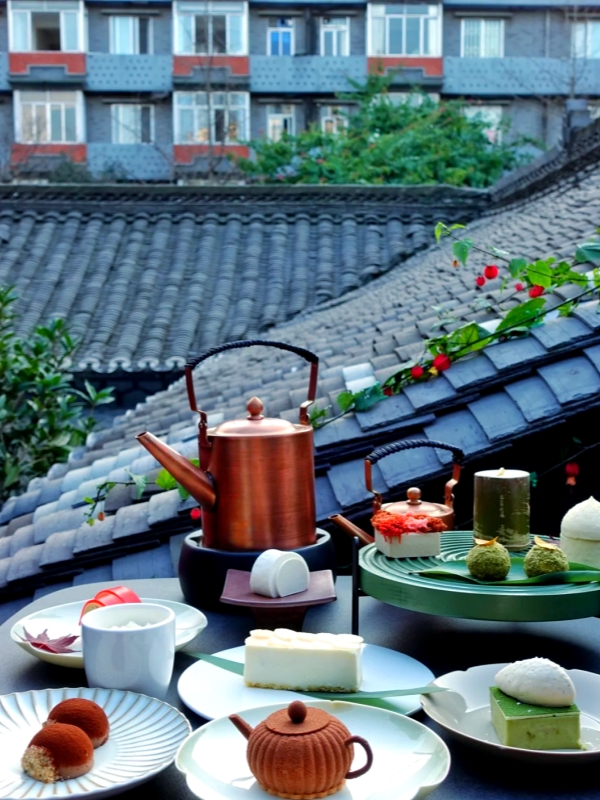
Snacks at Kuanzhai Alley in Chengdu
Beyond the food stalls, two cultural experiences anchor the slower end of a Kuanzhai Alley visit. A pot of tea at one of the courtyard teahouses costs roughly $7–14 (¥50–100) for two, and the teahouses on Wide Alley and the inner section of Well Alley offer covered-bowl tea service that echoes the older Chengdu tradition. The setting — courtyard tables under dark wooden beams, small gardens between courtyards — is part of what visitors pay for, so the tea houses on the quieter inner lanes offer a more considered atmosphere than the busier outer-row stalls. Ear cleaning practitioners operate in the open lane, typically near the Well Alley performance areas, and charge $3–7 (¥20–50) depending on the duration. The service is a common Chengdu street practice, and the practitioners work quickly and with visible tools on a portable stool setup.
Sichuan opera face-changing shows run most evenings from one of the courtyard theatres in Well Alley, with tickets priced around $14–21 (¥100–150). The show is largely plotless — face-changing, fire breathing, and acrobatics carry the performance — which means it translates without Mandarin fluency. Tickets are available on Trip.com and Klook or at the door if the performance is not sold out. For foreign visitors, the costume change speed and the theatrical build-up are the primary spectacle, and the small theatre size means a front-row seat is accessible even at the lower ticket tier.
🌶️ Taste the Capital of Gastronomy: While exploring the historic alleys and teahouses is a must, Chengdu is officially a UNESCO City of Gastronomy. To ensure you don't miss out on authentic spicy wontons, mapo tofu, and hotpot, plan your culinary itinerary with our guide to booking the ultimate Chengdu Food Tour.
Getting to Kuanzhai Alley and Around
The metro is the most reliable approach to Kuanzhai Alley from anywhere within central Chengdu. Metro Line 4 serves Kuanzhai Alley Station (宽窄巷子站) directly, with exits B and C dropping visitors at the south plaza and the south archway entrance within a 3-minute walk. From Chunxi Road, the commercial district hub, the metro ride takes roughly 15 minutes on Line 2 with a transfer to Line 4, or a taxi runs $3–5 (¥20–35) for a 10–15-minute door-to-door trip. DiDi's English-language interface works well for ride-hailing within the city, and the address to show a taxi driver is 青羊区长顺上街127号.
Options from Tianfu and Shuangliu Airports
Walking Routes to Nearby Sights
The surrounding cluster of sights is walkable from Kuanzhai Alley's south plaza. People's Park lies roughly 10 minutes east along the main streets, and the park's Heming Teahouse sits at its northern edge where covered-bowl tea service continues in the open-air setting that travelers who want a quieter teahouse experience often prefer. Wenshu Temple is about 15 minutes east on foot, and its vegetarian buffet is a practical stop for lunch if the timing lines up — the temple grounds are free to enter, and the food court inside the temple complex operates daily.
For Wuhou Shrine and Jinli Ancient Street, the metro is faster: a Line 2 to Line 3 transfer at a few points along the route brings the trip to roughly 25 minutes by train. Walking from Kuanzhai Alley through People's Park toward Du Fu Thatched Cottage takes about 50 minutes on foot and is not the most efficient option unless the park walk itself is part of the plan.
Side Trips from Kuanzhai Alley
Kuanzhai Alley's central Qingyang District location puts several other notable Chengdu attractions within a short walk or a single metro line. The most common pairing is with Jinli Ancient Street, but People's Park and Wenshu Temple are closer and often more immediately rewarding for travelers with limited time. Each of these is reachable without retracing the route to Kuanzhai Alley, so they work as a morning-afternoon-evening sequence that starts at the alleys.
Kuanzhai Alley vs Jinli Street
Both streets are restored heritage pedestrian zones with food stalls, teahouses, and souvenir shops — and the confusion between them is common because they serve similar functions for first-time visitors. The core difference is era and atmosphere. Kuanzhai Alley leans on its Qing-Dynasty Manchu-banners origins and the courtyard-restoration model, and the commercial mix skews toward upscale crafts and tea culture alongside the food stalls.
Jinli Ancient Street, which sits next to Wuhou Shrine, takes the Three Kingdoms period as its thematic anchor, and the lane itself is denser, narrower, and more packed with snack vendors than Kuanzhai. Evening lighting at Jinli draws large crowds, and the Wuhou Shrine entry fee runs roughly $7 (¥50). Travelers who prefer a quieter pace and wider lanes tend to rate Kuanzhai Alley higher; those who want denser street-level energy and a longer snack run may prefer Jinli. A half-day that includes both is manageable, but prioritizing one over the other depends on how much time the Chengdu itinerary allows.
People's Park and Wenshu Temple
The two closest stops from Kuanzhai Alley are People's Park and Wenshu Temple, both east along Changshun Street. People's Park is a 10-minute walk and functions as a living Chengdu park rather than a formal attraction — the Heming Teahouse near its northern gate still serves covered-bowl tea from roughly $3 (¥20) per pot, and the Matchmaker's Corner runs weekend speed-dating sessions that are more spectacle than participation event but draw a local crowd.
🍵 Experience the Relaxed Teahouse Culture: While Kuanzhai Alley offers a lively, artistic courtyard atmosphere, you can experience the ultimate, unhurried lifestyle of the locals just a short walk away. Learn where to sip jasmine tea and watch outdoor activities in our guide to Chengdu People's Park.
Wenshu Temple is about 15 minutes east and is an active Buddhist monastery with well-maintained grounds, a vegetarian restaurant in the complex, and free entry. The temple's vegetarian buffet is a practical lunch stop — the food is honest, priced at the lower end of the range for temple complexes in major cities, and the setting inside the monastery walls is noticeably calmer than the streets outside. Combining a morning Kuanzhai Alley visit with a lunch stop at Wenshu Temple and an afternoon People's Park tea break covers three stops without requiring metro or taxi between them.
🏮 Explore Historic Spiritual Sites: For travelers who love the traditional architecture of these Qing-dynasty courtyards, the city's ancient temples offer another tranquil escape filled with incense, gardens, and classic vegetarian dining. Plan your visit with our guide to Wenshu Yuan Monastery.
Where to Stay Near Kuanzhai Alley
Frequently Asked Questions
Q: Is Kuanzhai Alley free to enter?
Yes. General admission to the pedestrian lanes is free ($0 / ¥0). Only the dedicated courtyard museums, tea-tasting rooms, and Sichuan opera shows charge admission — tickets for the opera run roughly $14–21 (¥100–150).
Q: How do I get to Kuanzhai Alley by metro?
Take Metro Line 4 to Kuanzhai Alley Station (宽窄巷子站), exits B or C. From either exit the south plaza and the south archway are a 3-minute walk. The station is directly served by Line 4, which connects with Lines 1, 2, 3, and 7 at transfer stations across the city.
Q: What is the best time of day to visit?
Weekday mornings between 08:30 and 10:30 give the clearest gateway photos and the emptiest courtyard lanes. Lantern-lit shots work best from 1 hour before sunset to 30 minutes after. The evening square dancing in the southern plaza runs roughly 19:00–21:00 if the human-movement atmosphere appeals.
Q: How long does a visit to Kuanzhai Alley take?
A 2–3-hour walk through all three lanes with a snack stop or two covers the basics. Adding a courtyard teahouse visit and a Sichuan opera show extends the time to 4 hours or more, which is a practical half-day itinerary when combined with the nearby park and temple stops.
Q: Are the Sichuan opera shows worth it for foreign visitors?
The face-changing performance is visual and needs no Mandarin to follow — the speed of the costume changes and the theatrical build-up carry the show. Tickets run about $14–21 (¥100–150) on Trip.com or Klook, or at the courtyard theatre door if available. The show is plotless, which removes the language barrier entirely.
Q: Is Kuanzhai Alley touristy or authentic?
Kuanzhai Alley is a tourist-oriented block of restored Qing-Dynasty courtyards, and evening foot traffic is heavy. The restoration is faithful and the 45 courtyards carry real historical depth, but the commercial atmosphere is polished. Travelers who want a more local rhythm should walk 10 minutes east to People's Park and the Heming Teahouse, where Chengdu's everyday teahouse culture runs without the visitor infrastructure.
Q: What should I try eating on a first visit?
Three high-value first stops in Well Alley: the Three-Gun (三炮) mochi-throw stall, a bowl of sweet-water noodles (甜水面), and a cup of bing fen for dessert. The total spend runs roughly $4–6 (¥25–40). Tea is optional — the food stalls give a better sense of the lane's street-level energy than a seated teahouse stop.
Q: Are credit cards or mobile pay accepted at the stalls?
Most snack stalls operate on WeChat or Alipay only, and some require RMB cash. Credit cards are not widely accepted at the lane stalls themselves. Teahouse counters and the opera theatre box office increasingly accept international cards, and both are bookable on Trip.com and Klook with online payment.
Q: I saw "Kuanzhai Alley" in Irvine or Chicago — is that the same place?
No. A casual-dining restaurant brand in the United States uses the same English name but is entirely separate from the Chengdu pedestrian block at 长顺上街127号. This article covers the historic Qingyang District attraction in Chengdu.