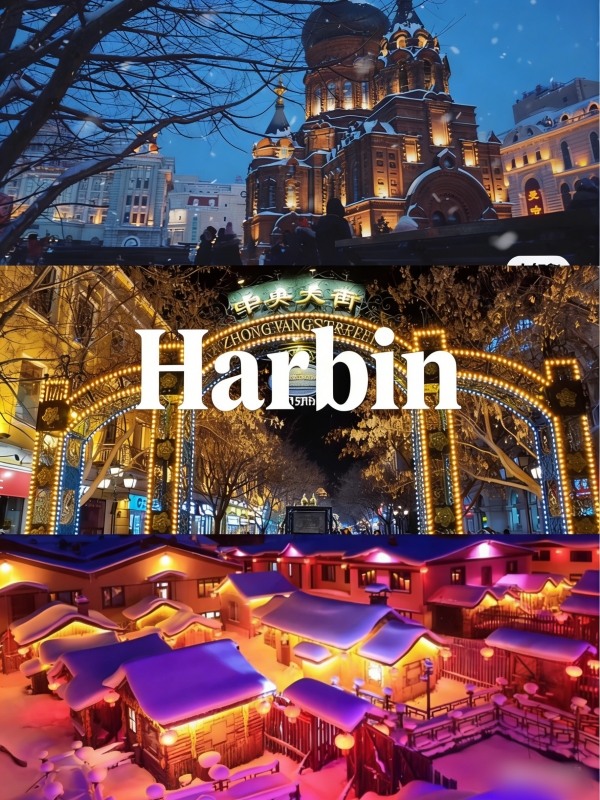
Harbin People
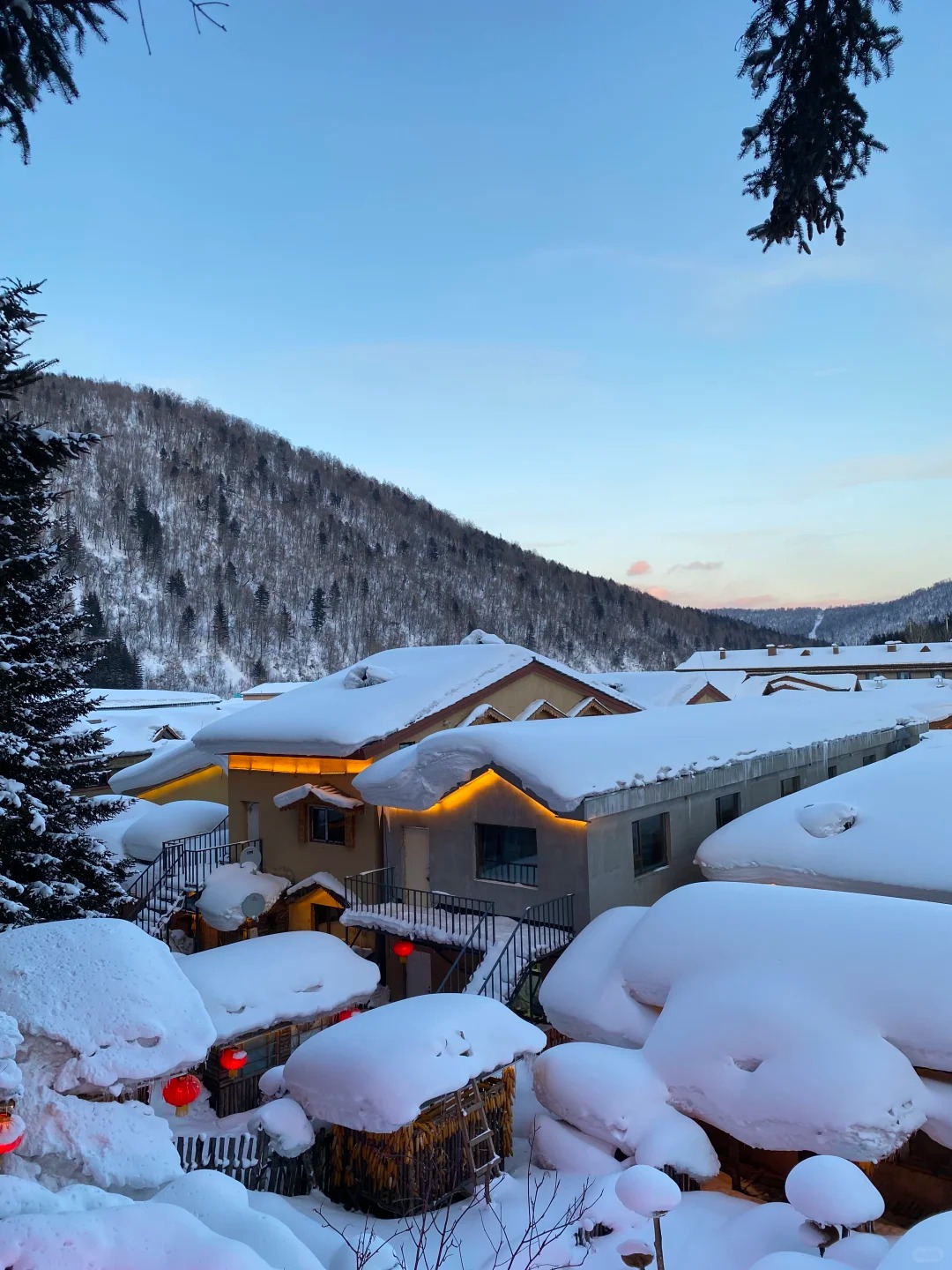
Harbin people (哈尔滨人) represent one of China's most distinctive regional cultures. This city of 10 million residents has forged a personality shaped by extreme winters and multicultural history. Living where temperatures plunge to -30°C has created remarkably resilient, warm-hearted people. They're famous across China for blunt directness, boisterous humor, and overwhelming generosity. Harbin people embody the broader Dongbei (Northeast Chinese) identity. Understanding these residents unlocks one of China's most authentic travel experiences.
🏙️ Ready for a change of pace? Once you’ve experienced the fiery, direct warmth of the North, discover the "Haipai" sophistication of the South. Explore the intricate etiquette and colonial history of the "Magic City" in our companion guide: [Culture in Shanghai: The Haipai Guide to History, Etiquette, Food, and Belonging].
A city of 47 ethnic groups shaped by extraordinary history
Who lives in Harbin today: the numbers behind the diversity
-


- Manchu
-

- Korean
-
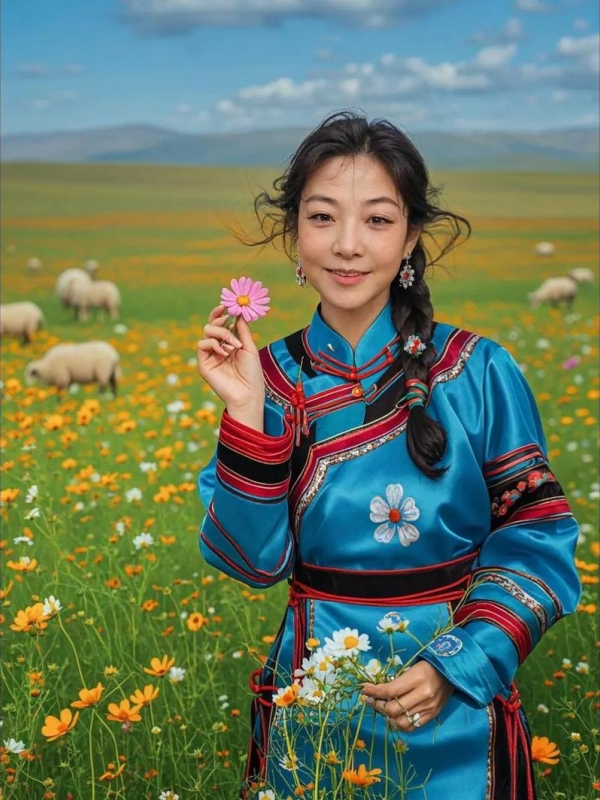
- Mongol
Ethnic Breakdown - Data Points:
- Han Chinese: 95% — The overwhelming majority shapes daily culture
- Manchu: 3.3% — Historical rulers whose language named the city
- Korean Chinese: ~1% — Maintain distinct language and culinary traditions
- Hui Muslims: 0.34% — Run mosques and halal restaurants citywide
- Smaller groups — Mongol, Xibe, Daur, Hezhe, Oroqen, Ewenki communities
Table - Harbin Demographic Data 2020:
| Ethnic Group | Population | Percentage |
|---|---|---|
| Han Chinese | ~9,500,000 | 95% |
| Manchu | ~330,000 | 3.3% |
| Korean | ~100,000 | 1% |
| Hui | ~34,000 | 0.34% |
| Mongol | ~14,000 | 0.14% |
| Others (42 groups) | ~32,000 | 0.32% |
The Dongbei personality: loud, direct, and impossible not to love
热情 (Rèqíng): warmth so intense it overwhelms foreigners

Warmth So Intense It Overwhelms Foreigners
This isn't performative kindness. It's cultural instinct. The Chinese term is 热情 (rèqíng). It translates poorly to "enthusiasm" or "warmth." The reality is far more intense. Harbin people give guests their absolute best. This means expensive baijiu at dinner. Extravagant meals for every occasion. Help offered before you ask for it.
直爽 (Zhíshuǎng): the bluntness that builds quick connections
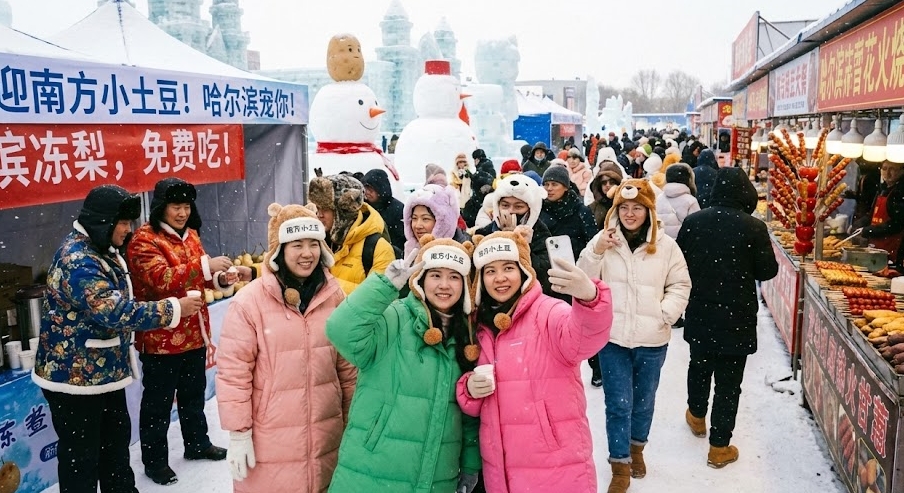
Hearts Melting in the Ice City
Shanghainese communication involves careful calculation. Beijing speech carries political diplomacy. Harbin conversation is refreshingly direct. Research confirms northerners are more individualistic. They use more analytical thinking. They open up to strangers faster.
Cultural Comparison: Visitors from indirect communication cultures initially feel shocked. Japanese and British travelers report discomfort. But this bluntness builds friendships rapidly. There's no ambiguity to decode. You always know where you stand. Southern Chinese even find it jarring. One Guangzhou visitor noted: "Harbin people asked me more in one hour than my Shanghai colleagues asked in three years."
Why Dongbei is China's comedy capital

Northeast Errenzhuan
The regional dialect itself sounds funny to other Chinese. Internet users joke about laughing on Dongbei buses. The humor tends toward self-deprecation. People find comedy in economic hardship. This connects to industrial decline since the 1990s.
Humor Examples - Dongbei Style:
- Self-mockery: Comedian Li Xueqin jokes her hometown Tieling was "the center of the universe"
- Physical comedy: 二人转 performers use exaggerated gestures and rapid-fire dialogue
- Wordplay: The dialect's unique expressions create natural punchlines
💡 Visitor Tip: Don't be offended if locals make jokes about your height, weight, or appearance. This is affectionate teasing. They're including you in their humor culture. Laugh along and you'll make instant friends.
From frozen river swimming to square dancing: daily life in the Ice City
Winter swimming: the tradition that defines resilience

Winter Swimming in Harbin
The river is China's "holy land" for winter swimming. Yu Xiaofeng, age 61, has swum here for 30 years. His community slogan during COVID: "Rather suffer through winter swimming than line up at the hospital."
⚠️ Don't attempt winter swimming without guidance. The practice requires gradual conditioning. Sudden cold-water immersion is dangerous. Locals train their bodies over years.
Square dancing: the social glue of evening life
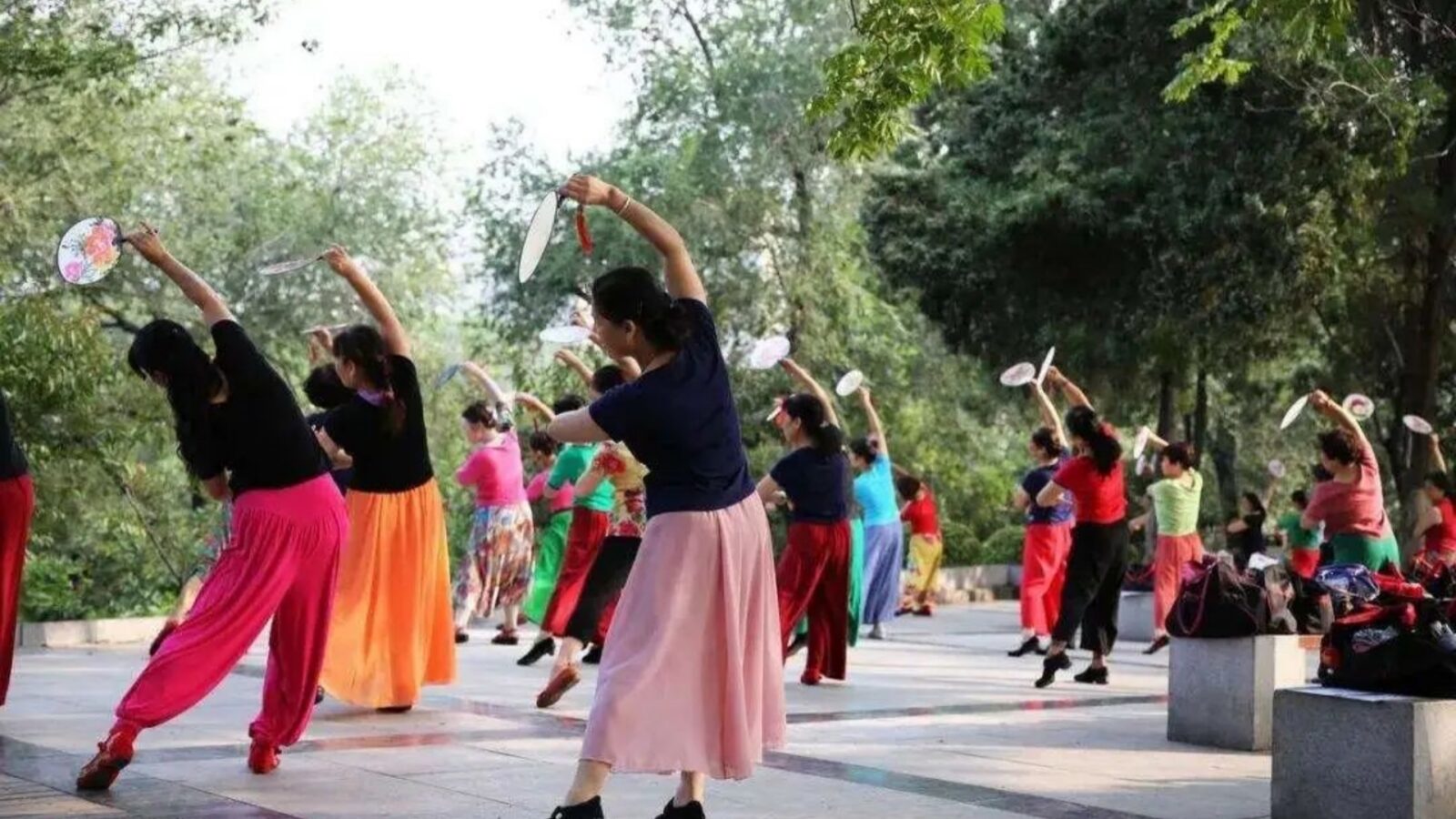
Square Dancing in Harbin
The practice involves middle-aged and elderly women primarily. They dance to folk songs, pop music, and K-pop. This represents affordable exercise. It builds social bonds. It creates community in a collective culture.
Why It Matters: Square dancing appears frivolous to outsiders. For participants, it's essential social infrastructure. Many are retired with limited social circles. The dancing provides structure, friendship, and purpose. Harbin's particularly harsh winters make this gathering even more meaningful.
The Ice and Snow Festival: when the whole city participates
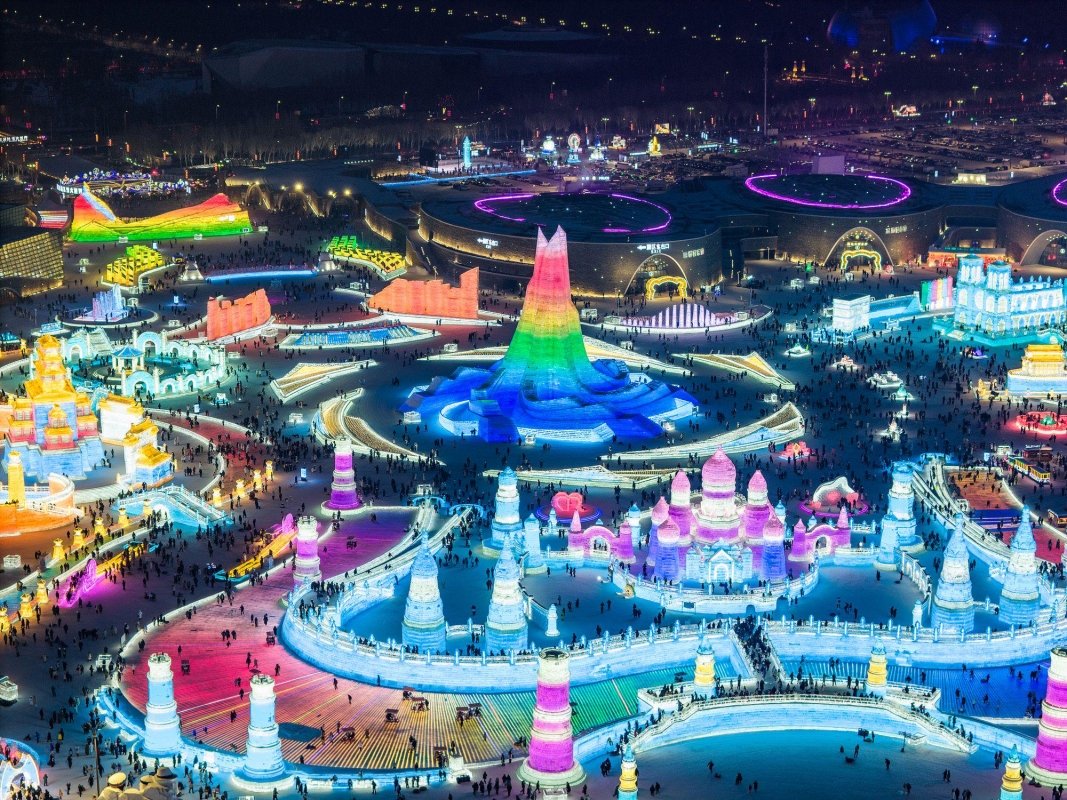
Harbin Ice and Snow World Landscape
Behind The Scenes - Worker Reality: Tens of thousands labor around-the-clock for three weeks. Most ice harvesters are nearby farmers. They earn 200-300 yuan ($29-43) daily. They haul 700-kilogram ice blocks in -30°C conditions. Ice sculpting is provincial-level intangible cultural heritage. Annual construction exceeds $500 million in costs.
Dongbei cuisine: generous portions and bold flavors
Signature dishes every visitor must try
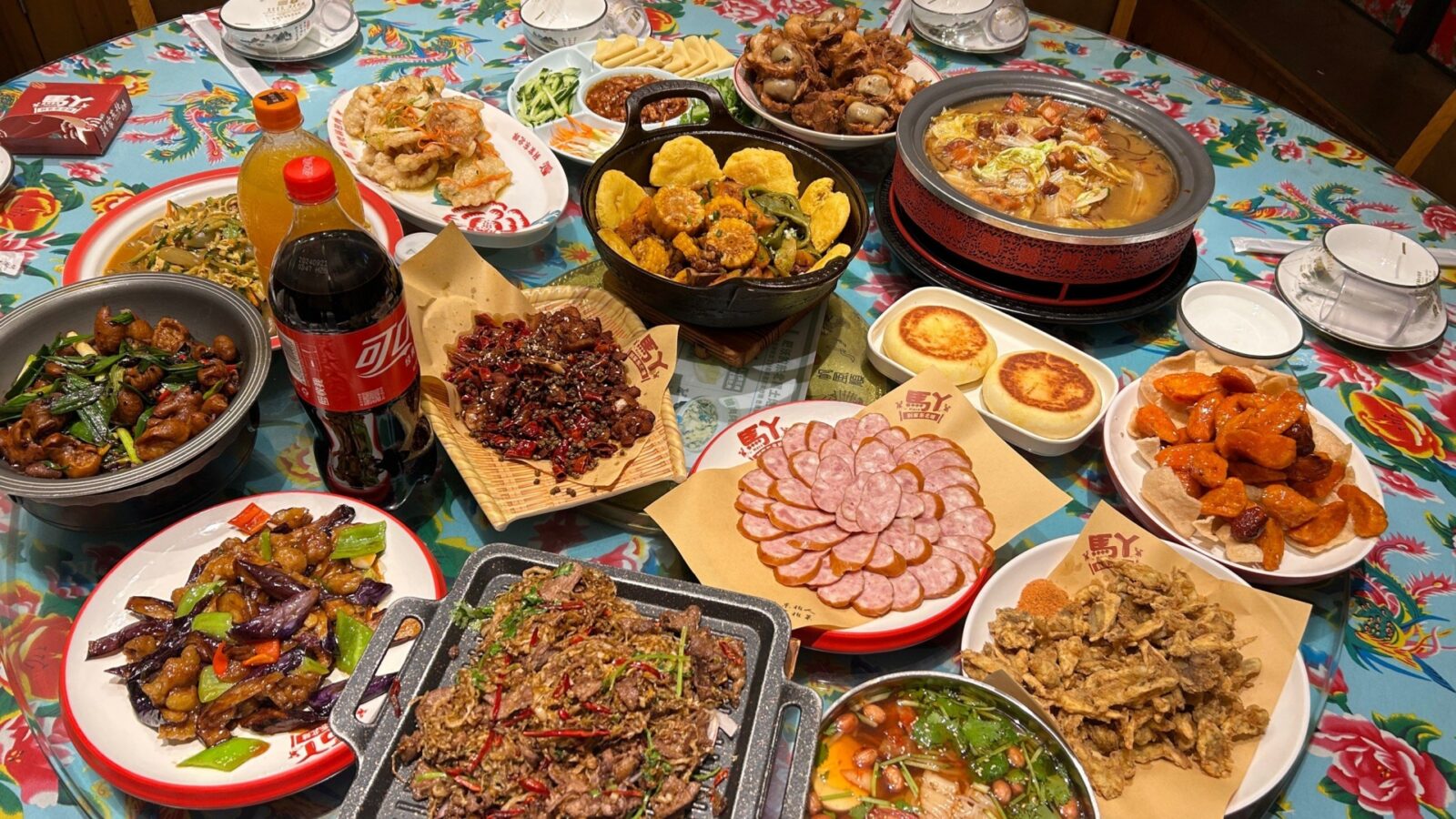
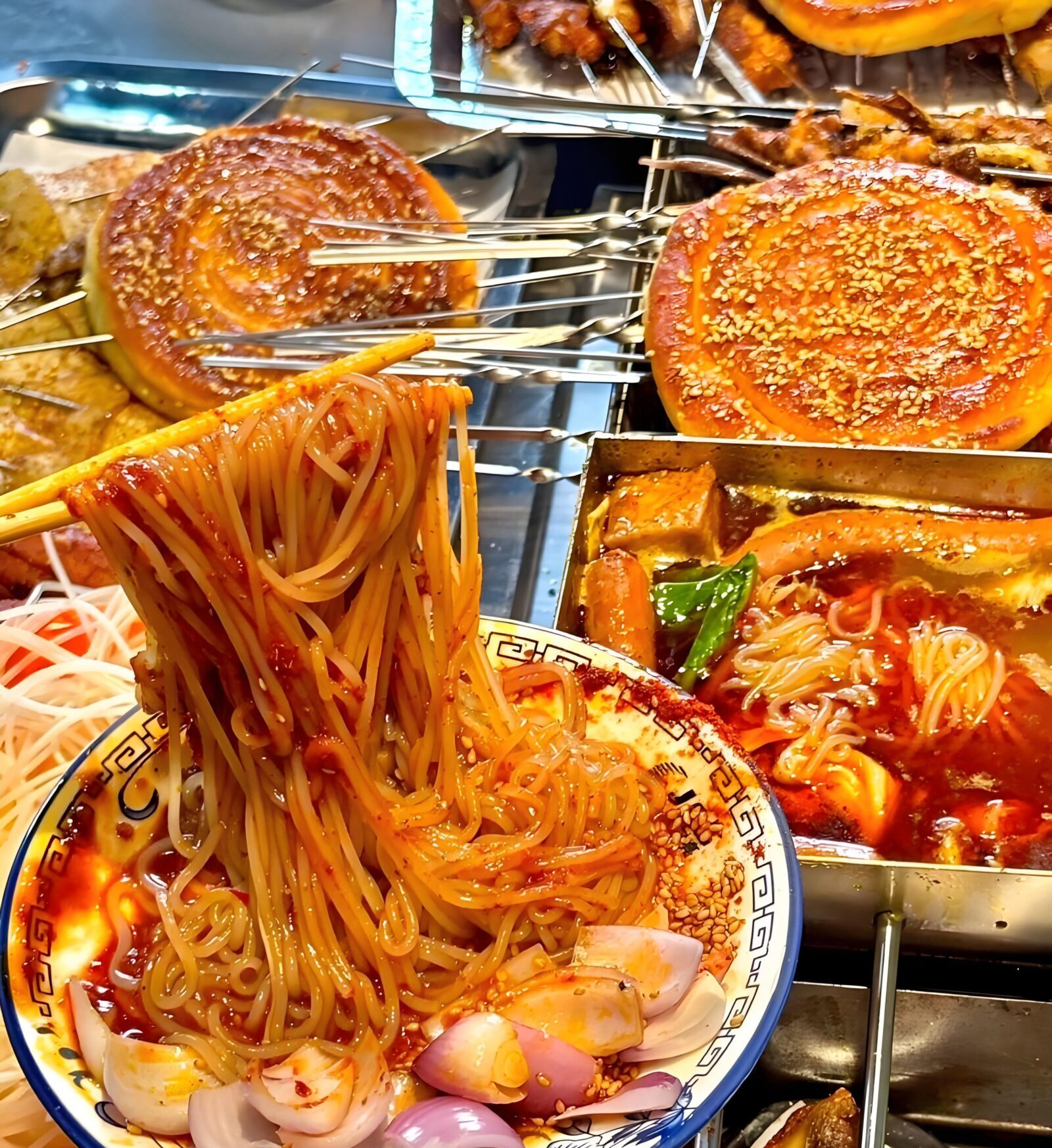
Signature Dishes in Harbin
Must-Try Dishes:
- 锅包肉 (Guōbāoròu): Sweet and sour crispy pork created for Russian officers
- 铁锅炖 (Tiěguō Dùn): Iron pot stew with meat, vegetables, and corn cakes
- 地三鲜 (Dì Sān Xiān): Stir-fried potatoes, eggplant, and green peppers
- 杀猪菜 (Shāzhū Cài): Traditional pork and blood sausage with pickled cabbage
Beer culture and toasting etiquette
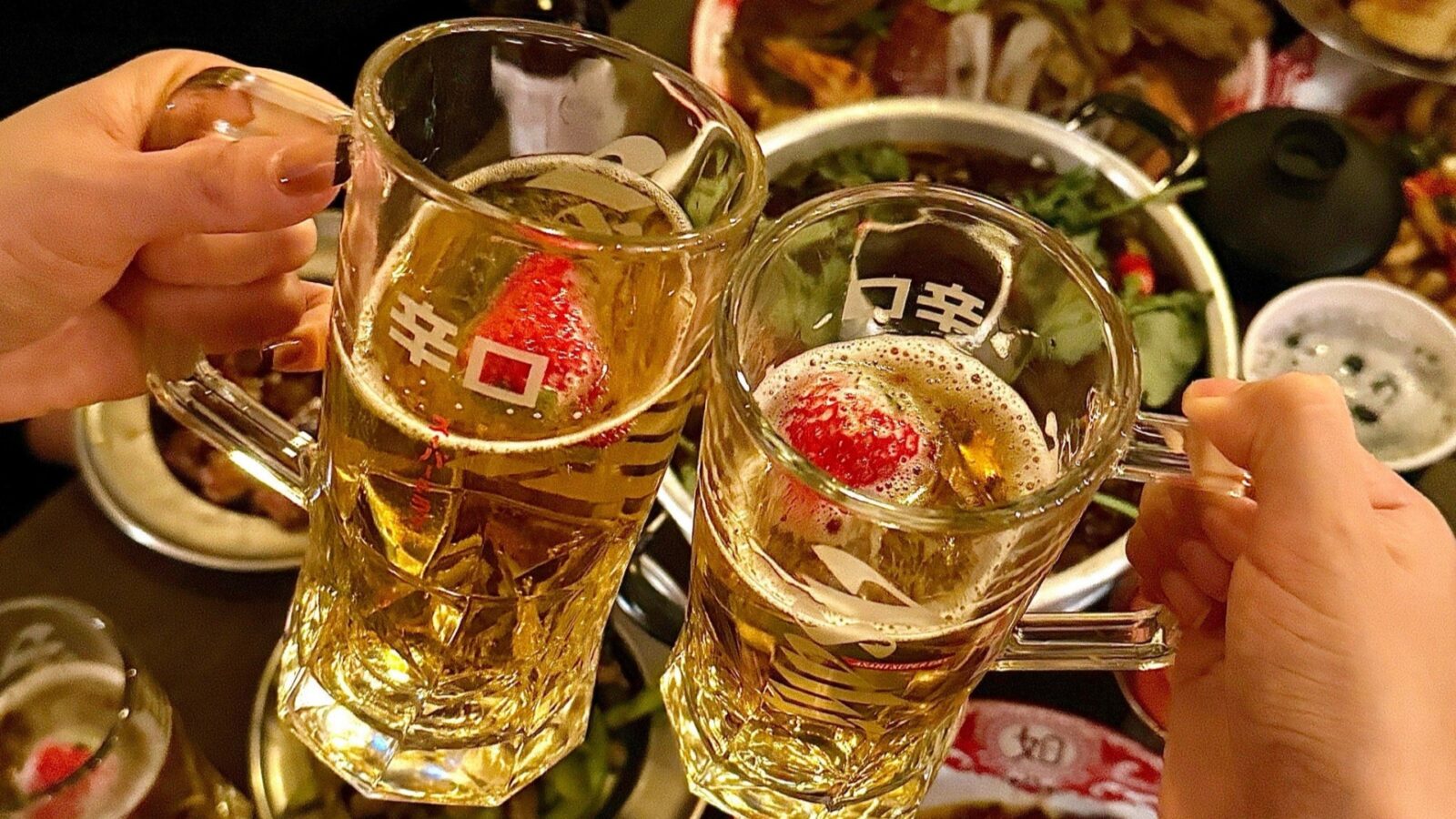
Beer Culture in Harbin
Toasting Rules - What Foreigners Need To Know:
- Hold your glass lower than senior guests
- The proposer drinks first
- Refusing a toast causes the host to lose face
- Announce health reasons beforehand if you can't drink
- Use "以茶代酒" (yǐ chá dài jiǔ) — "tea substitutes for alcohol"
🍺 Survival Strategy: The practice of 劝酒 (quànjiǔ) means urging others to drink. Hosts demonstrate sincerity through shared discomfort. Set your boundaries clearly and early. Harbin people will respect your limits once established.
The philosophy behind Dongbei portions
Leaving food shows abundance. An empty table suggests stinginess. Pickled Chinese cabbage (酸菜/suāncài) is fundamental. Nearly every household maintains giant clay fermentation vats.
Cultural Quirk: Harbin dumplings are never dipped in soy sauce. This shocks Chinese from other regions. Locals mix vinegar, garlic, and chili instead. Ask for this combination at restaurants.
What every visitor needs to know before arriving
Language: the unexpected gift for Mandarin learners
This beats virtually any other major Chinese city. That said, English proficiency remains generally low. Even in tourist areas, fluent speakers are uncommon.
Practical Language Solutions:
- Download Google Translate or Baidu Translate with offline Chinese
- Prepare key phrases on your phone
- Hotels usually have English-speaking staff
- Translation apps work better here than southern dialect areas
Useful Dongbei Expressions:
- 贼拉 (zéilā): "Incredibly" → 贼拉好吃 = insanely delicious
- 整 (zhěng): Catch-all verb for "do/get/make"
- 你嘎哈去? (nǐ gà há qù?): "What're you up to?"
Safety, payments, and visa policies for 2025
Payment Revolution - 2024-2025 Changes: Both Alipay and WeChat Pay now accept international cards. Link Visa or Mastercard via passport verification. Single transaction limits raised to $5,000. Annual limits reach $50,000. All 3-star+ hotels accept international bank cards. Major attractions do the same.
Still Carry Cash: Keep ¥200-500 in cash daily. Some smaller vendors only accept Chinese mobile payments. ATMs are widely available. Exchange rates at airports are reasonable.
Visa-Free Transit Policy: The expanded 240-hour policy started December 17, 2024. Citizens of 55 countries can stay up to 10 days. Harbin Taiping Airport is an eligible entry port.
Cultural etiquette: what Harbin people appreciate
"I'm vegetarian, which is challenging in Dongbei cuisine. Once I explained clearly, my hosts prepared separate vegetable dishes. They didn't make me feel difficult. They were genuinely curious about vegetarianism and asked thoughtful questions." — Priya Sharma, Indian software engineer, 2024
Cold Weather Reality Check: Winter temperatures hit -30°C regularly. Locals move quickly between heated spaces. Central heating keeps apartments above 20°C. Dress in layers you can remove indoors. Invest in quality winter boots with traction. Slipping on ice is the biggest physical risk.
Frequently Asked Questions about Harbin People
Q: Are Harbin people friendly to foreigners?
Harbin people are exceptionally welcoming to foreigners. The city's reputation for hospitality is well-earned through generations. Language barriers don't prevent kindness. Taxi drivers offer free rides. Strangers help with directions enthusiastically. The Dongbei character values hospitality above all. You'll likely experience more warmth than expected. This genuine friendliness makes Harbin people special.
Q: What are Harbin people like compared to other Chinese cities?
Harbin people are notably more direct than southern Chinese. They speak louder and more bluntly. Personal questions come quickly. Compared to reserved Shanghainese, they seem incredibly open. The Dongbei personality prizes honesty over politeness. Humor is more self-deprecating here. Generosity manifests through excessive food and drink. Locals call themselves "Northeasterners" first, reflecting strong regional identity.
Q: Is Harbin safe for solo female travelers?
Harbin is very safe for solo female travelers. Violent crime rates are extremely low. The 2024 World Travel Index rates safety at 84% daytime, 74% nighttime. The biggest risks are weather-related, not criminal. Slipping on ice poses more danger than people. Solo female travelers report overwhelmingly positive experiences. Harbin people often offer unsolicited help and protection.
Q: How do I politely refuse alcohol at a Harbin dinner?
Announce health or medication reasons before toasting begins. Use the phrase "以茶代酒" (yǐ chá dài jiǔ) — "using tea to substitute for alcohol." Harbin people will respect genuine medical reasons. Don't repeatedly refuse without explanation. Once you've stated your reason clearly, they'll accommodate you. Remain firm but friendly. Accept their hospitality in other ways instead.
Q: What language do Harbin people speak?
Harbin people speak Mandarin closest to the official standard. Their dialect is phonologically cleaner than most Chinese cities. Many national TV announcers come from Harbin. This makes communication easier for Mandarin learners. However, colorful slang exists in casual conversation. Terms like 贼拉 (incredibly) appear frequently. But educated speech remains highly intelligible to Mandarin students.
Q: When is the best time to experience Harbin's local culture?
Winter offers the most authentic Harbin people experience. The Ice Festival runs January through February. Winter swimming happens daily along Songhua River. Locals gather in heated restaurants and bathhouses. The city mobilizes communal resilience against cold. Summer's Beer Festival in July shows different energy. Both seasons reveal Harbin people's character differently. Winter demonstrates toughness and warmth together.
Q: How should I behave in a traditional Dongbei bathhouse?
Traditional bathhouses are gender-segregated and completely naked. Enter with an open mind. Shower thoroughly before entering communal areas. The full-body scrub is traditional and effective. Relax in various temperature pools. Harbin people socialize freely while bathing. Don't be surprised by staring at foreigners—it's curiosity, not hostility. The experience is deeply social among locals, not intimate.
Q: Do Harbin people speak English?
English proficiency in Harbin remains generally low. Even in major tourist areas, fluent speakers are uncommon. Hotel front desks usually have basic English capability. Younger people may know survival phrases. Download translation apps before arriving. Google Translate works with VPN. Baidu Translate functions without VPN. Harbin people appreciate any language effort and help despite barriers.
Q: What's the tipping culture in Harbin?
Tipping is not expected or practiced in Harbin. Restaurants don't anticipate tips. Taxi drivers don't expect additional money. Adding a tip can cause confusion. High-end hotels serving international guests might accept tips, but it's never required. Chinese hospitality doesn't operate on tipping logic. Harbin people serve guests out of cultural obligation, making the experience refreshingly straightforward.
Q: Are there any cultural taboos I should avoid in Harbin?
Avoid excessive waste of food at meals. Don't stick chopsticks vertically into rice bowls—this resembles incense at funerals. Refuse gifts or toasts once or twice before accepting. Never write someone's name in red ink, which symbolizes death. Don't tap chopsticks on bowls like begging. Be respectful when photographing elderly Harbin people. Ask permission first when possible.