Coolest Hotels in Beijing
Beijing's hotel scene has quietly become one of the most architecturally ambitious in Asia. A generation of landmark openings — Kengo Kuma, Antonio Citterio, and a wave of courtyard conversions — pushed the city past pure business-tower luxury and into design-as-experience territory. The result is a crop of properties where the building itself is the reason to check in. Whether you want a glass pyramid filled with Warhol, a minimalist cube in Sanlitun, or a twelve-room courtyard off a hutong lane, this guide maps the options that actually reward a design-conscious traveler.
Quick Facts
What "Cool" Means in Beijing's Hotel Scene
Coolest Hotels in Beijing
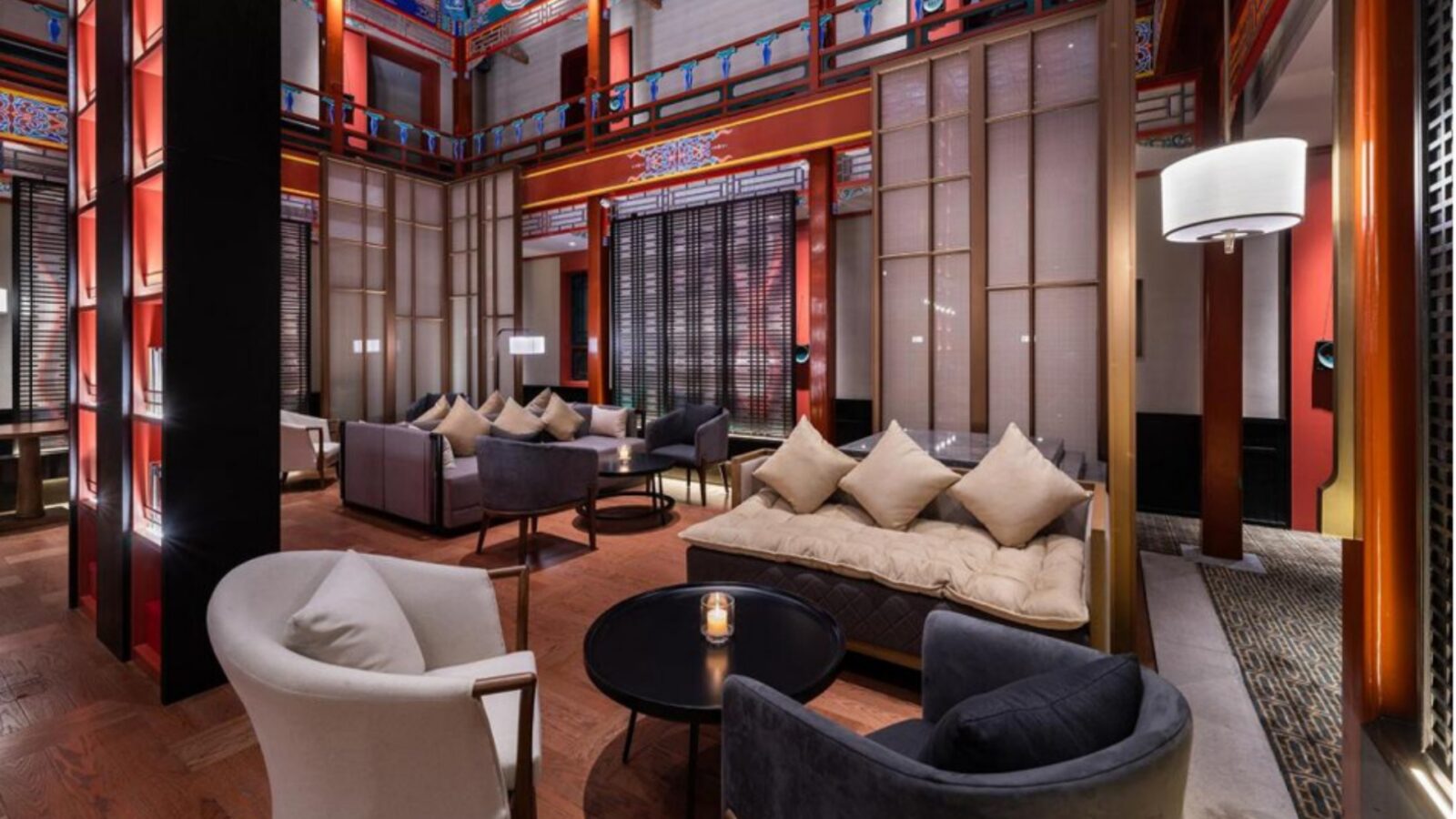
The word "cool" gets overused in travel writing, but in Beijing it describes something specific: architecture as the primary amenity. A hotel here can be worth checking into purely for the building, the art program, or the way it handles its neighborhood. The shift started around 2015 and accelerated through 2019, when a wave of architect-led openings pushed the city past pure business-tower luxury and into design-as-experience territory.
From "Boutique" to "Design-Forward"
The term "boutique" in Beijing historically described small properties with a personal touch, often converted from courtyard houses. "Design-forward" means something different: architect-led projects with curated art programs, statement interiors, and often a major brand behind them. The practical difference matters for travelers. Design-forward properties typically offer larger rooms, full-service spas, and international brand booking engines. Boutique stays trade scale for atmosphere and often require more flexibility on amenities.
Why Beijing's Cool Factor Has Shifted
Several landmark openings reshaped what a Beijing hotel could be. The Opposite House arrived in 2008 with Kengo Kuma's minimalist cube. Hotel Éclat followed in 2012 inside a CBD shopping complex. Bulgari opened in 2017 with Antonio Citterio's modernist interiors. Rosewood refreshed its art program, Mandarin Oriental Wangfujing launched in 2019, and The PuXuan opened the same year near the Forbidden City. At least three of the picks below opened or rebranded after 2015 — that generational shift is what this guide maps.
Iconic Design: The Statement Stays
Hotel Éclat Beijing Coolest Hotels in Beijing
Three properties define Beijing's design-forward tier. Each opened as a deliberate statement — a building meant to change how travelers see the city. The three below represent different design languages, but all share one trait: the architecture is the main attraction.
Hotel Éclat Beijing
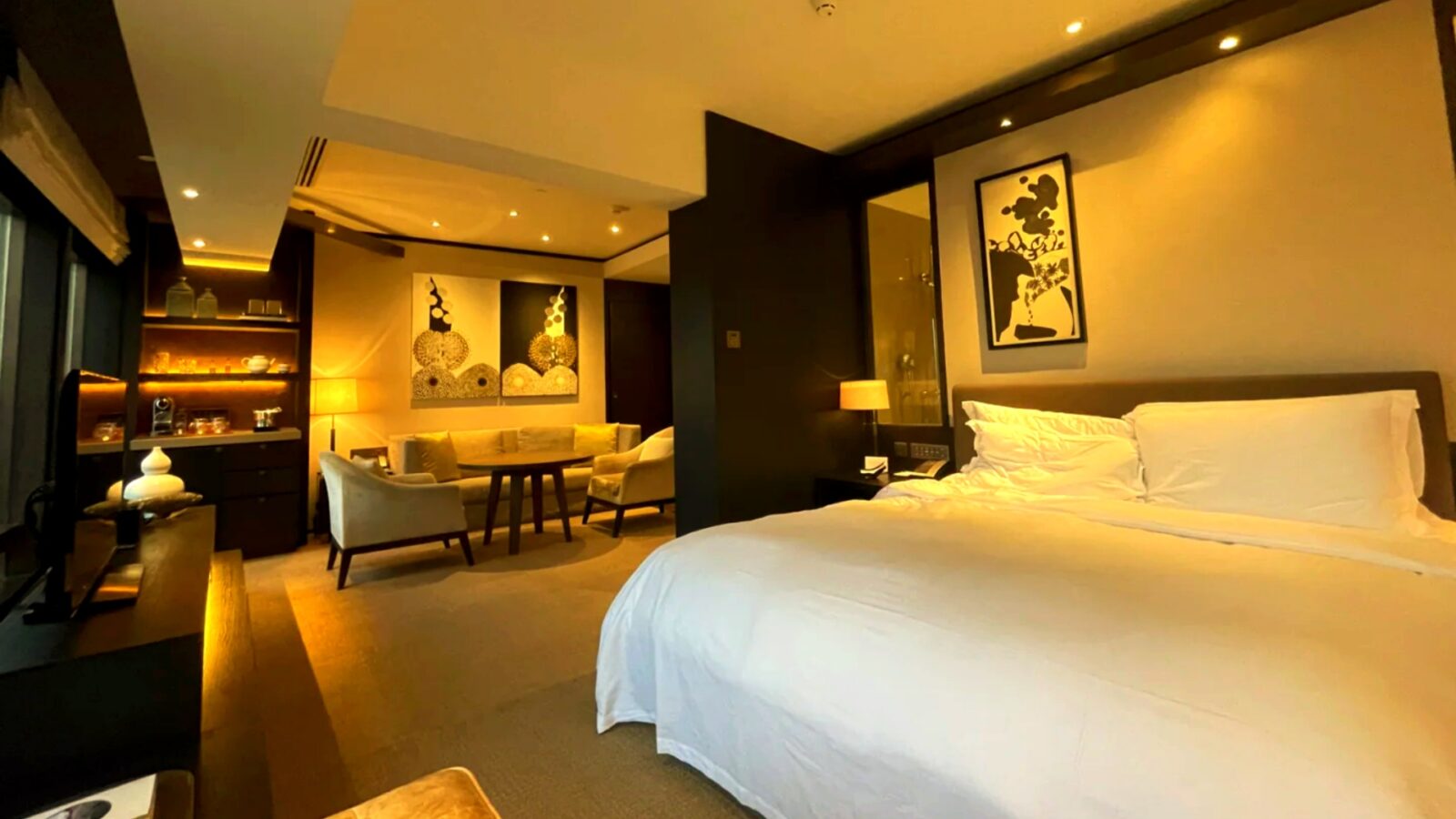
The glass quarter-pyramid inside Parkview Green FangCaoDi mall is visible from the CBD streets below. Inside, about 100 rooms feature dark leather upholstery and Korean marble bathrooms. The museum-style atrium holds two bronze doors relocated from London's Battersea Power Station — a detail that rewards close attention on arrival. Rotating art includes Dalí, Warhol, Matisse, and works by Chinese contemporary artist Gao Xiaowu. The Lobby Lounge is the only on-site food-and-beverage option; there is no full restaurant. Adults-only art exhibits run periodically. Starting doubles are about $240 (¥1,700) per night.
The Opposite House
Kengo Kuma designed the lime-green glass cube that opened in Sanlitun in 2008. About 98 rooms inside feature blond-wood floors, dark slate walls, and sliding-glass bathroom partitions that open the space. The courtyard-style lobby sets the tone immediately. On-site dining covers Mesh (a terrace bar) and Sureño (Mediterranean wood-fired cuisine). The Sanlitun Village location puts bars and boutiques within walking distance. Minimalism here is intentional, not a budget decision — the stripped-back interiors are the point. Starting doubles are about $260 (¥1,850) per night.
Rosewood Beijing
Rosewood occupies a Chaoyang CBD tower next to the CCTV Headquarters. Roughly 282 rooms showcase a contemporary Chinese art collection displayed throughout the lobby and corridors. The Sense spa rounds out the offering. On-site dining includes Bistro (Red Bowl) for hot pot and a northern Chinese kitchen. The Imperial Suite occupies the top floor. What sets Rosewood apart is its blend of design programming with full business-traveler infrastructure — a combination the statement properties below do not attempt. Starting doubles are about $300 (¥2,150) per night.
🏨 Capital Luxury Insights: Learn more about high-end hotel history and major luxury developments in Beijing with our spotlight on the Trump Beijing Hotel.
Mid-Tier Cool: Style Without the Splurge
CHAO Sanlitun Beijing Coolest Hotels in Beijing
The $130–$180 band is where Beijing's design-vs-luxury tradeoff tilts toward design. International-brand service standards apply, but rooms are smaller and amenities fewer than flagship properties. For travelers who care more about the building than the spa menu, this range delivers the most value per design statement.
East Beijing
The 369-room East Beijing sits inside the Indigo retail-office complex near Jiangtai Subway Station on Line 14. The 798 Art Zone is a five-minute drive. Business-leisure styling features white leather seating, garden murals in select rooms, and in-room iPad touch controls. Two on-site dining options cover Hagaki for Japanese-Californian cuisine and Xian, a cocktail lounge. The location trade-off is real: a taxi to Tiananmen or Sanlitun takes 25–40 minutes depending on traffic. Starting doubles are about $130 (¥920) per night.
CHAO Sanlitun Beijing
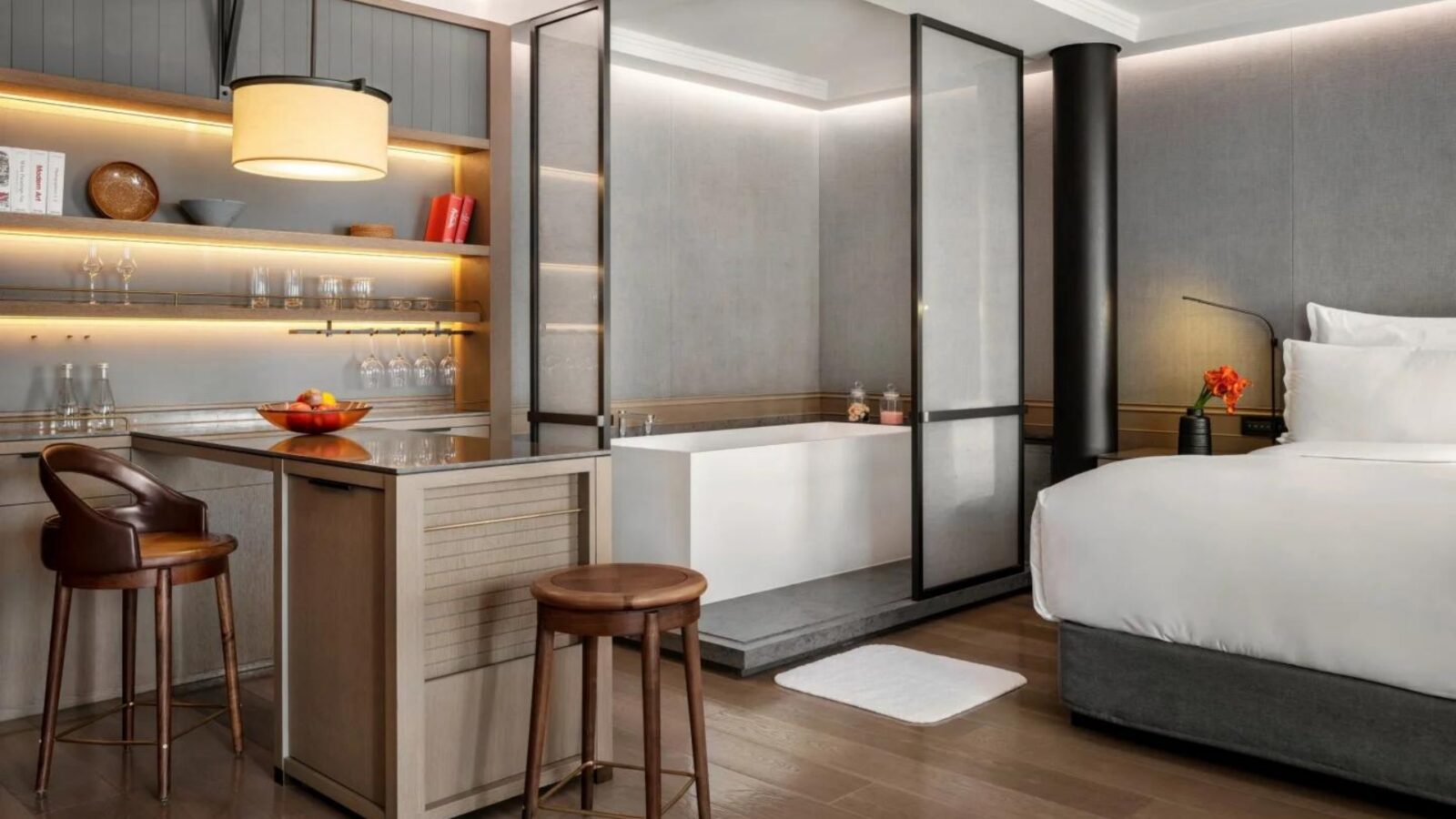
About 180 rooms inside the Sanlitun entertainment district define CHAO as a music-art-focused property. Industrial-loft common areas pair with rotating local-artist programming throughout. An on-site restaurant and bar serve the neighborhood crowd. The design appeals to travelers who want nightlife within walking distance, not a hotel bar. Trade-offs include smaller rooms compared with Rosewood-class properties and street noise on weekend nights. Starting doubles are about $180 (¥1,280) per night.
🏙️ Shanghai Stay Comparison: Exploring high-rise accommodations beyond Beijing? Read our detailed review of the landmark Longemont Hotel Shanghai.
Hutong Boutiques: Beijing's Own Design Vernacular
The Orchid Hotel Coolest Hotels in Beijing
Beijing's hutong hotels represent a design category that does not exist elsewhere in Asia. These courtyard conversions — many built around traditional siheyuan layouts — offer atmosphere that no high-rise can replicate. The trade-off is scale: rooms are small, elevators rare, and English-language service inconsistent. Several options beyond the two featured picks below are worth considering:
- Hotel Kapok: 200 m from the Forbidden City, minimalist courtyard design, starting around $100 (¥720).
- Cours Et Pavillons: Antique courtyard houses near central Beijing, starting around $110 (¥790).
- Layering Courtyard Hotel Qianmen: Modernist hutong conversion near Qianmen, starting around $95 (¥680).
- Mandarin Oriental Qianmen: 2019 mansion-style courtyard rebuild in the historic Qianmen quarter, starting around $420 (¥3,000) — included for its design language rather than price point.
The Orchid Hotel
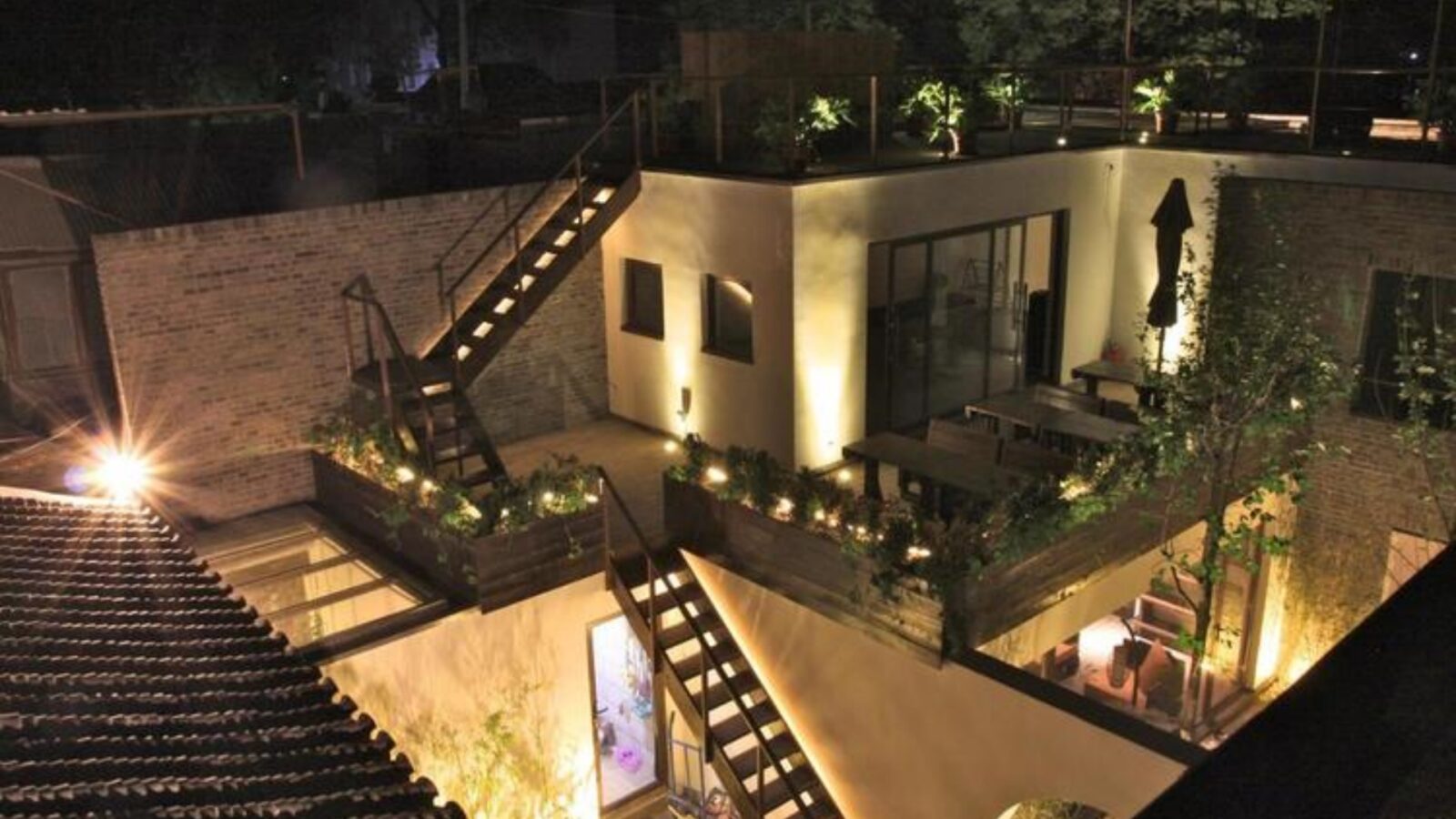
Twelve rooms inside a courtyard conversion near the Drum Tower and Houhai bar strip place The Orchid at the atmospheric end of the boutique scale. Traditional Chinese architectural details coexist with modern bathrooms. A rooftop terrace offers one of the best courtyard views in the area. Breakfast is included. Houhai Lake is a twelve-minute walk. The trade-offs are property-wide: this is a small hotel, front desk English varies by shift, and the original building has no elevator — confirm accessibility needs before booking. Starting doubles are about $120 (¥860) per night.
161 Hulu Courtyard
Nine rooms inside a hutong hotel ten minutes' walk from Wangfujing Street make 161 Hulu the quietest option in this guide. Traditional Chinese-style decoration, free Wi-Fi, and a central location define the offering. There is no on-site restaurant beyond breakfast. The property suits travelers who want hutong atmosphere within walking distance of the Forbidden City and Wangfujing shopping. Room count and service level match the scale. Starting doubles are about $95 (¥680) per night.
🧺 Practical Travel Tips: Need laundry options during an extended stay in China? Check out our guide to finding and using a China Laundromat.
Booking and Getting Around for Foreign Visitors
Foreign visitors face a practical layer that domestic travelers do not: payment apps, booking channels, and transport apps differ from what most international travelers assume. The good news is that Beijing's design-forward hotels are set up for foreign card payments. Here is what actually works.
Where Foreign Visitors Book
Three platforms carry most of the hotels in this guide with English-language interfaces and international card payment:
- Trip.com: Broad mainland inventory, English support, accepts international cards, mobile app available.
- Booking.com: Wide selection with free cancellation on most rates; comparable international-brand coverage.
- Klook: Partner rates for several featured properties; useful for bundling attractions with accommodation.
The hotel's own website is worth checking — rates often match Trip.com, and loyalty program points may apply. Meituan, Dianping, and WeChat mini-programs require a mainland phone number and WeChat Pay or Alipay; they are not practical for most foreign visitors. The "from $X" rates in this guide are based on Trip.com and Booking.com starting rates — the channels a foreign visitor can actually use.
From the Airport to the Lobby
Beijing has two commercial airports. Beijing Capital International Airport (PEK) handles most international arrivals. Daxing International Airport (PKX) is further south and primarily serves domestic and regional routes.
- PEK to Dongzhimen or Beijing Station: Airport Express train, about $5 (¥25), 30 minutes.
- PEK to Sanlitun / CBD by taxi: Metered taxi, about $15–20 (¥100–140), 40–60 minutes depending on traffic.
- PKX to Caoqiao: Daxing Airport Express, about $7 (¥45), 40 minutes, then subway onward.
- PKX to central Beijing by taxi: About $35–50 (¥250–350), 60–90 minutes.
Use the official taxi queue at arrivals. Do not accept rides from unmarked drivers in the terminal. Verify last-train times on the day of travel.
Getting Around Beijing
Beijing's subway is the cleanest, cheapest, and fastest way between hotels and major sights. Fares run about $0.50–1.30 (¥3–9) depending on distance. English signage appears at every station. Mobile payment works through the Beijing Subway app or a transport-linked foreign card. DiDi is the dominant ride-hailing platform; the English interface functions with an international phone number and payments route through the app. Metered taxis are abundant and cheap by international standards. Have your destination in Chinese characters on your phone — most drivers do not speak English. Bike-sharing apps (Meituan, Hellobike) require mainland phone numbers and are impractical for short-stay visitors.
📱 Booking Platform Guide: Before reserving your room, compare booking platforms, rates, and foreign card support in Trip vs Booking vs Agoda Best Way to Book China Hotels.
Frequently Asked Questions
Q: What is the most design-forward hotel in Beijing?
Hotel Éclat Beijing and The Opposite House are the two most cited design statements — the pyramid-and-art versus the minimalist cube. Bulgari Beijing sits at the top of the splurge band, while Rosewood Beijing offers the strongest ongoing art program. Pick by what design-forward means to you: architecture, art collection, or neighborhood integration.
Q: Where is the best area to stay in Beijing for first-timers?
Sanlitun works best for nightlife and walkable restaurants (The Opposite House, CHAO). Wangfujing suits travelers prioritizing Forbidden City access (Mandarin Oriental Wangfujing, PuXuan, 161 Hulu). The CBD / Chaoyang area serves business-hotel comfort near major sights (Rosewood, Bulgari, Hotel Éclat). Save the hutong stays (Orchid, 161 Hulu) for a second visit when atmosphere outweighs convenience.
Q: Are Beijing hotels expensive?
Entry-tier design properties (161 Hulu, Orchid, Hotel Kapok) start around $95–120 (¥680–860) per night. Mid-tier design (East Beijing, CHAO) runs $130–180 (¥920–1,280). Flagship design (Éclat, Opposite House, Rosewood, Bulgari) ranges $240–420 (¥1,700–3,000). Compared with Tokyo, Hong Kong, or Singapore, Beijing's design tier costs significantly less for equivalent quality.
Q: Do Beijing hotels accept foreign credit cards?
International-brand hotels (Rosewood, Bulgari, Mandarin Oriental, Peninsula, Waldorf Astoria, Hilton, Marriott) accept Visa, Mastercard, and usually Amex. Independent hutong boutiques (Orchid, 161 Hulu, Cours Et Pavillons) often accept only UnionPay, Alipay, WeChat Pay, or cash — confirm payment methods before arrival.
Q: Is it worth staying in a hutong boutique hotel?
Yes, if you value atmosphere, walkable hutong food, and proximity to older neighborhoods over large rooms and a pool. No, if you have mobility issues, need a gym, or are visiting Beijing for the first time — international-brand hotels are easier to navigate.
Q: What's the best Beijing hotel for a Forbidden City view?
Mandarin Oriental Wangfujing and The Peninsula Beijing both have rooms facing the Forbidden City skyline. The PuXuan Hotel and Spa is within walking distance but most rooms face the city. Hotel Kapok sits 200 m from the eastern gate but does not have skyline-view rooms.
Q: Can I book Beijing hotels on Trip.com or Booking.com?
Yes — both platforms carry most Beijing hotels with English-language booking and international card payment. Trip.com is the broader mainland option; Booking.com is comparable for international-brand inventory. Both typically allow free cancellation up to 24–48 hours before check-in.
Q: How much is a taxi from Beijing Capital Airport to central Beijing?
A metered taxi from PEK to Sanlitun, CBD, or Wangfujing costs about $15–20 (¥100–140), 40–60 minutes depending on traffic. The Airport Express train to Dongzhimen costs about $5 (¥25), 30 minutes. From Daxing Airport, a taxi runs $35–50 (¥250–350), 60–90 minutes. Use the official taxi queue at arrivals and avoid unmarked drivers.