Black Dragon Pool Park
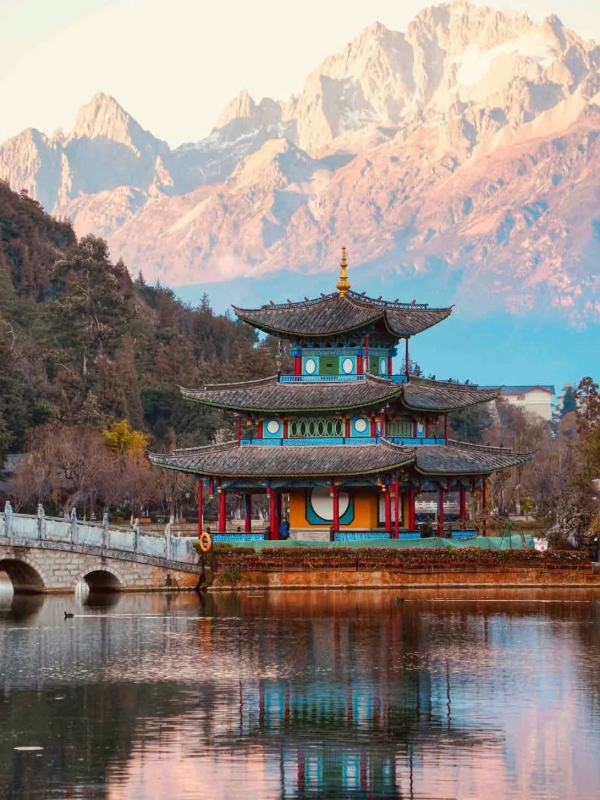
Black Dragon Pool Park (黑龙潭), also called Jade Spring Park (玉泉公园), sits at the foot of Xiangshan Mountain on the northern edge of Lijiang Old Town in Yunnan Province, at roughly 2,500 m elevation. In China, Black Dragon Pool is best known for the mirror-still water that reflects the snow-capped peaks of Jade Dragon Snow Mountain — a composition framed by centuries-old temple halls and a five-arched bridge. The park is free to enter, holds the densest cluster of national-level protected Ming and Qing architecture in Lijiang, and doubles as a working Naxi cultural center where visitors can also catch traditional fan dance performances.
Quick Facts
Why Visit Black Dragon Pool
Black Dragon Pool Park
Even with Lijiang's maze of cobblestone alleys and the buzz of Sifang Street, Black Dragon Pool remains a place apart. The park delivers four experiences that are difficult to find together elsewhere in the region.
- Iconic Reflection View: The still spring water captures an almost perfect mirror image of Jade Dragon Snow Mountain, framed by the Five-Hole Bridge and Deyue Tower — one of Lijiang's most photographed compositions.
- Free Access: Once you hold the Lijiang Old Town maintenance fee receipt (about $7), the park gate never charges again, making it an excellent value stop at any point in your itinerary.
- Ming and Qing Architecture Density: The park holds the most concentrated collection of nationally protected Ming and Qing halls in Lijiang, earning it the unofficial title of the "Lijiang Ming and Qing Architecture Museum."
- Living Naxi Culture: The Dongba Culture Research Institute has operated inside the park since 1981, meaning the space is not a museum relic but an active cultural hub with regular demonstrations and performances.
🐉 Discover Local Water & Temple Legends: Beyond the main waters of Black Dragon Pool, explore nearby scenic waters and mountain pools in our visitor guide to 18 Ponds of the Dragon King.
Ancient Architecture of Black Dragon Pool
Black Dragon Pool Park
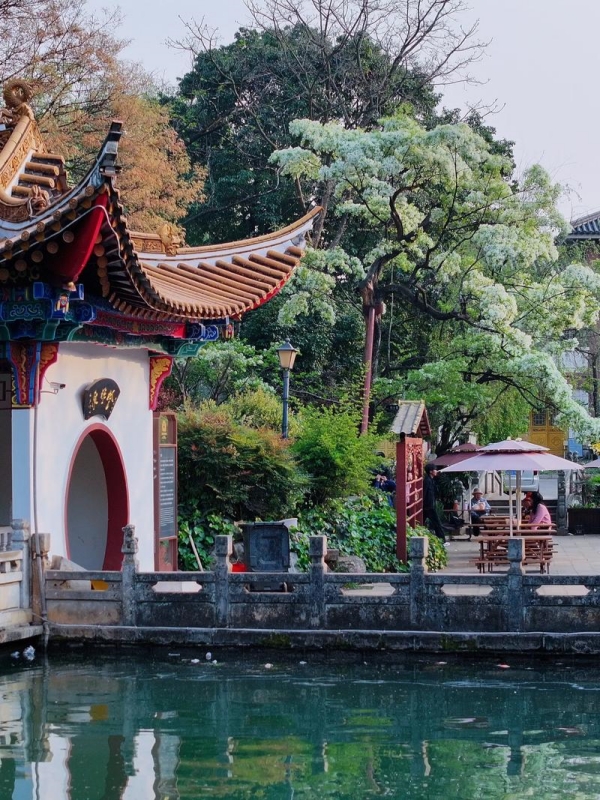
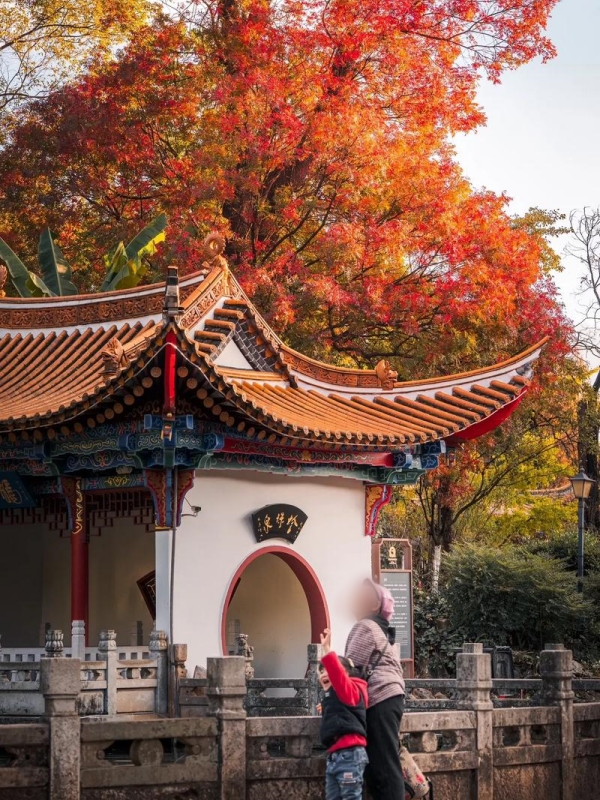
Black Dragon Pool holds the most concentrated cluster of nationally protected cultural relics in all of Lijiang. The original Dragon King Temple was constructed in the second year of the Qianlong reign (1737), rebuilt in the sixtieth year of Qianlong, and again restored in the eighteenth year of Guangxu. Qing emperors Jiaqing and Guangxu both granted the temple the title of "Dragon God," which eventually gave the pool its current name. After 1949, several Ming and Qing halls from other sites around Lijiang were relocated here, creating the park's distinctive architectural ensemble.
Dragon God Shrine and Deyue Tower
The main building complex is centered on the Dragon God Shrine and Deyue Tower, with the Theatre Pavilion completing the axis. Deyue Tower rises from the water on all sides, connected to the Theatre Pavilion by a covered passage. The renowned writer Guo Moruo composed both the plaque above the tower entrance and the paired couplets inside, verses that describe the harmonious relationship between the stillness of the pool and the majesty of the mountain. This arrangement forms the visual and symbolic heart of the park.
Five-Phoenix Tower
The Five-Phoenix Tower originally stood inside Zhishan Fuguo Temple before being carefully relocated to Black Dragon Pool Park in 1979. Its 24 eaves sweep upward from the four corners in a configuration that resembles five phoenixes spreading their wings in flight. The hall remains one of the most frequently photographed structures in all of Lijiang, appearing in virtually every visitor's album of the park.
Suocui Bridge and Other Relocated Halls
Suocui Bridge is a Qing Jiaqing-period wind-rain bridge with head plaques reading "Yangqing" and "Suocui." The surrounding relocated structures include several notable halls, each moved to the park from sites across Lijiang after 1949.
- Jade Emperor Pavilion: Qing-era hall relocated to the park, now standing near the pool's eastern edge.
- Liberation Forest Gate Tower: Ming-era gate structure, one of the oldest structures in the ensemble.
- Guangbi Tower: Ming-era hall with distinctive double-eaved construction.
- Tingli Pavilion: Qing-era pavilion offering views across the southern pool surface.
- Yiwen Pavilion and Wenming Fang: Smaller halls that round out the architectural ensemble, contributing to the "Lijiang Ming and Qing Architecture Museum" designation.
🏮 Explore Historic Dayan Ancient Town: Located just a short walk south from the park gates, discover cobblestone alleys, traditional Naxi courtyards, and local food in our guide to Lijiang Old Town.
The Jade Dragon Snow Mountain Reflection
Black Dragon Pool Park
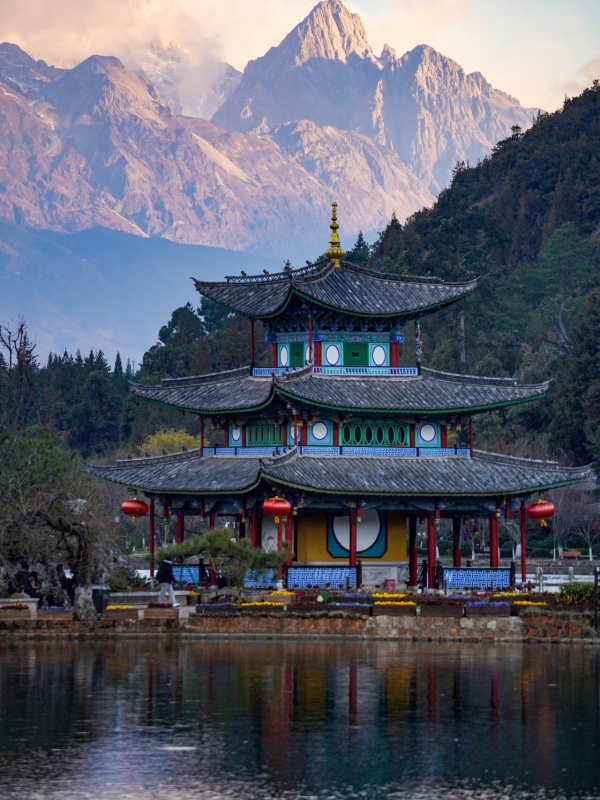
The spring-fed water that fills Black Dragon Pool originates from the melted snow of Jade Dragon Snow Mountain, roughly 15 km away as the crow flies. At roughly 40,000 sq m, the pool is large enough to absorb the full mountain panorama while still maintaining mirror stillness on calm mornings. The classic composition pairs the Five-Hole Bridge and Deyue Tower in the foreground with the reflected peak directly behind, a lineup that works best when the surface is undisturbed.
- Best light: Early morning (07:30–09:30) and late afternoon (16:30–18:30) provide soft, angled light that warms the stone architecture and catches the snow line on the peaks.
- Clearest seasons: October through December and March through April typically offer the sharpest sky clarity and lowest atmospheric haze, giving the most defined reflection.
- Wind factor: The pool sits in a relatively sheltered basin, so mornings are calmer than afternoons — arrive at opening time for the steadiest surface.
- Elevated view: A 30-minute climb up Xiangshan Mountain behind the park delivers a sweeping panorama over Lijiang Old Town with Black Dragon Pool visible in the northern frame.
🏔️ Plan Your Trip to the Snow Peaks: To experience the majestic mountain framed in the pool's reflection up close, explore cable car routes, glaciers, and tickets in our complete guide to Jade Dragon Snow Mountain.
Naxi Fan Dance and Cultural Performances
Black Dragon Pool operates as an active Naxi cultural center, anchored since 1981 by the Dongba Culture Research Institute inside the park. Group Naxi fan dances are performed regularly, typically during morning hours and often without charge. The fan dance tradition here encompasses several distinct styles, and visitors interested in the performing arts will find multiple options ranging from free park demonstrations to ticketed evening shows.
Types of Fan Dance Seen in Lijiang
Lijiang's stage shows and park demonstrations draw from several fan dance traditions, each with distinct movements and costuming.
- Silk Fan Dance (绸扇舞): The most common style in Naxi stage performances; dancers hold silk-painted fans that flow with soft arm movements, creating sweeping visual patterns against the stage lighting.
- Paper Folding-Fan Dance (折扇舞): Features sharper opening and closing gestures with rigid paper fans, often performed to traditional Naxi string music.
- Feather/Kongming Fan Dance (羽扇舞): Slower, more ceremonial movements using large feather fans, typically paired with Dongba ritual dress during cultural demonstrations.
- Modern Stage Dance Fan (舞蹈扇): Brighter colored fans used in larger theatrical productions like "Lijiang Eternal Love," where the choreography emphasizes spectacle over tradition.
- Dongba Ritual Fan Gestures: Specific movements drawn from Dongba religious practice, demonstrated at Black Dragon Pool's cultural center as part of the living heritage program.
Where to Buy Fans and Performance Souvenirs
Hand-painted silk fans make practical souvenirs and are widely available in the craft shops surrounding Black Dragon Pool and throughout Lijiang Old Town.
- Sifang Street and Alleys: The main square of Lijiang Old Town and its surrounding lanes, roughly 10–15 minutes on foot from the park, offer the widest selection. Hand-painted silk fans range about $7–14 (¥50–100).
- Black Dragon Pool Cultural-Craft Market: A small market cluster near the park's main entrance sells a modest range of fans, typically priced $4–10 (¥30–70).
- Wuyi Street Craft Halls: This street holds larger craft shops with a broader selection of Naxi costumes and accessories alongside fans, ranging $10–28 (¥70–200).
- Note: Souvenir fans are primarily decorative — performance-grade fans used on stage are heavier and constructed differently.
Live Performance Venues Around Black Dragon Pool
A spectrum of shows surrounds Black Dragon Pool, from free morning gatherings to large-scale theatrical productions.
- Inside Black Dragon Pool Park: Free Naxi group dances and Dongba cultural demonstrations, typically held during morning hours with no ticketing required.
- Naxi Ancient Music Hall: About 20 minutes' walk into Old Town, this venue presents traditional Naxi music alongside short dance pieces. Tickets run about $20–28 (¥140–200).
- "Lijiang Eternal Love" (丽江千古情): The major theatrical production in town, staged at a dedicated theater with large-scale Naxi dance and historical narrative. Tickets cost about $45–60 (¥298–428).
- "Impression Lijiang" (印象丽江): Zhang Yimou-directed outdoor mass dance performance held at the Jade Dragon Snow Mountain base, roughly 27 km from the park. Tickets are about $42 (¥280).
Getting to Black Dragon Pool
Black Dragon Pool sits about 1 km upstream from Lijiang Old Town along the Jade River, making it one of the most accessible cultural sites from the town center. The park is reached easily by bus, taxi, or on foot from most points in the old town and surrounding area.
Frequently Asked Questions
Q: What is Black Dragon Pool famous for in China?
Black Dragon Pool is famous for its mirror-still water that reflects Jade Dragon Snow Mountain, the densest cluster of nationally protected Ming and Qing architecture in Lijiang, and its role as home to the Dongba Culture Research Institute since 1981. Located on the northern edge of Lijiang Old Town at roughly 2,500 m elevation, it is one of the most photographed natural and cultural sites in Yunnan Province.
Q: Is Black Dragon Pool free to enter?
Park entrance is free, but visitors must hold the Lijiang Old Town maintenance fee receipt (about ¥50 / about $7) to pass through the gate. This receipt also covers access to other heritage sites within the old town, so most travelers already have it before arriving at the pool.
Q: When is the best time to photograph the Jade Dragon Snow Mountain reflection?
The best light falls during early morning (07:30–09:30) and late afternoon (16:30–18:30), when soft angles warm the stone architecture and define the snow line on the peaks. Clear-day autumn and winter months — October through December and March through April — offer the sharpest visibility and least atmospheric haze. The pool sits in a sheltered basin, so mornings tend to be calmer and the reflection steadier.
Q: What is the Five-Phoenix Tower at Black Dragon Pool?
The Five-Phoenix Tower is a Ming-era hall whose 24 eaves sweep upward from the four corners, creating the silhouette of five phoenixes in flight. Originally built inside Zhishan Fuguo Temple, it was carefully relocated to Black Dragon Pool Park in 1979. It remains one of the most frequently photographed structures in all of Lijiang.
Q: Where can I see Naxi fan dance performances in Lijiang?
Free Naxi group dances and Dongba demonstrations take place inside Black Dragon Pool Park, typically during morning hours. The Naxi Ancient Music Hall in Old Town offers traditional music and short dance pieces for about $20–28 (¥140–200). For full-scale productions, "Lijiang Eternal Love" at the main theater runs about $45–60 (¥298–428), and the outdoor "Impression Lijiang" at Jade Dragon Snow Mountain base costs about $42 (¥280).
Q: What is Black Dragon Fire in China?
The phrase most often appears as a brand name for a Chinese lager-style beverage named after the pool, not a geographic location. In travel searches it occasionally refers to the lantern-lit evening atmosphere at Black Dragon Pool, but the park itself does not host a permanent fire-themed show or event under that name.
Q: How long should I spend at Black Dragon Pool?
One to three hours covers most visits. One hour is sufficient to see the main reflection viewpoint and Deyue Tower. Two to three hours allows enough time for Five-Phoenix Tower, Suocui Bridge, and the full circuit of relocated halls. Adding the Xiangshan Mountain climb — roughly 30 minutes each way — for the panoramic view over Dayan would extend the visit to half a day.
Q: Is Black Dragon Pool the same as the Black Dragon River?
No — Black Dragon Pool (黑龙潭) is the spring pool and park in Lijiang, Yunnan, sitting at roughly 2,500 m elevation. The Black Dragon River (黑龙江) is the Heilongjiang or Amur River in northeastern China, which forms the border between China and Russia. The pool feeds the Jade River system that runs through Lijiang Old Town, but it has no geographic connection to the river in the north.