Best Restaurants In Chongqing
Chongqing's dining reputation is built almost entirely on incredibly spicy, oil-heavy hotpot. Because of this, many foreign visitors assume every meal will be a painful test of endurance. But the truth is, the local food scene is much wider than the extreme spice you see online. While navigating these steep streets, I found that the best restaurants in Chongqing range from delicate, non-spicy fine dining to local spots hidden inside WWII air-raid shelters. You just need to know exactly where to look to avoid burning your palate. Here are a few practical places I rely on when I visit.
Top Michelin Fine Dining Experiences For Expats
Fu Hao Restaurant (Cantonese Elegance)
Fu Hao Restaurant
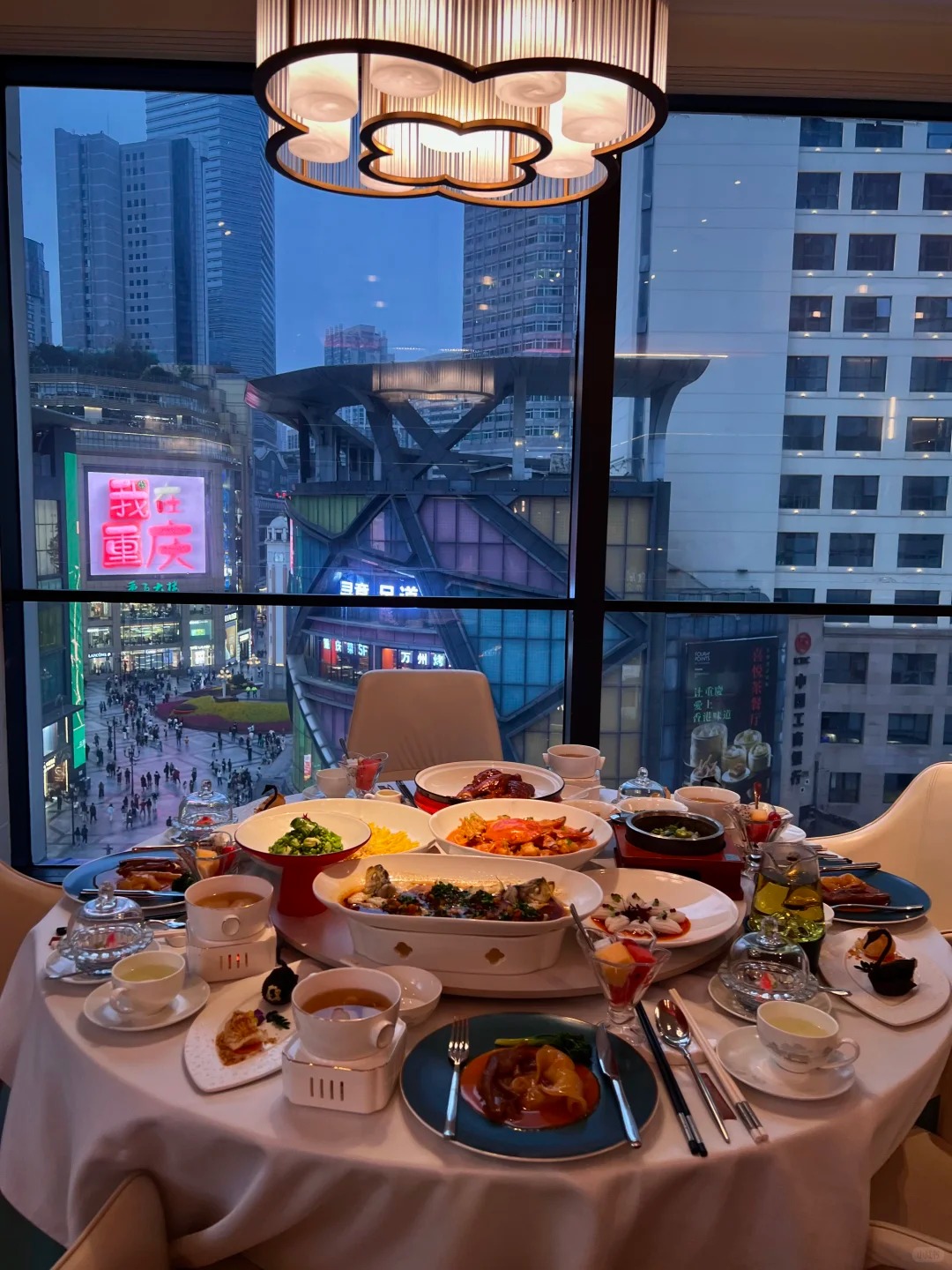
I remember eating here when my throat was practically raw from days of testing local street food. If your stomach urgently needs a sanctuary away from the city's famous chili oil, this Michelin one-star spot is arguably your safest bet. The waitstaff actually speak functional English and hand you a physical menu packed with accurate photos. You never have to play stressful guessing games with what you are about to eat. I usually just point at the pictures, and the ordering process goes entirely smoothly.
Signature dish: Honey glazed roast goose. They manage to get the skin incredibly crispy, and they serve it alongside a sweet plum sauce that cuts right through the rich meat.
Flavor profile: Completely zero spice. You can expect mild, slightly sweet, and heavily savory Cantonese flavor combinations.
Rating and vibe: It holds a solid 4.9 on local review platforms. The dining room feels very much like a quiet, old-school banquet hall, offering a huge contrast to the noisy streets outside.
Practical info: I think I paid around ¥400 to ¥600 last time I went. You can find it tucked inside the Metropolis Oriental Plaza right in the Jiefangbei area.
Aleia Restaurant (Authentic Spanish Flavors)
Aleia Restaurant
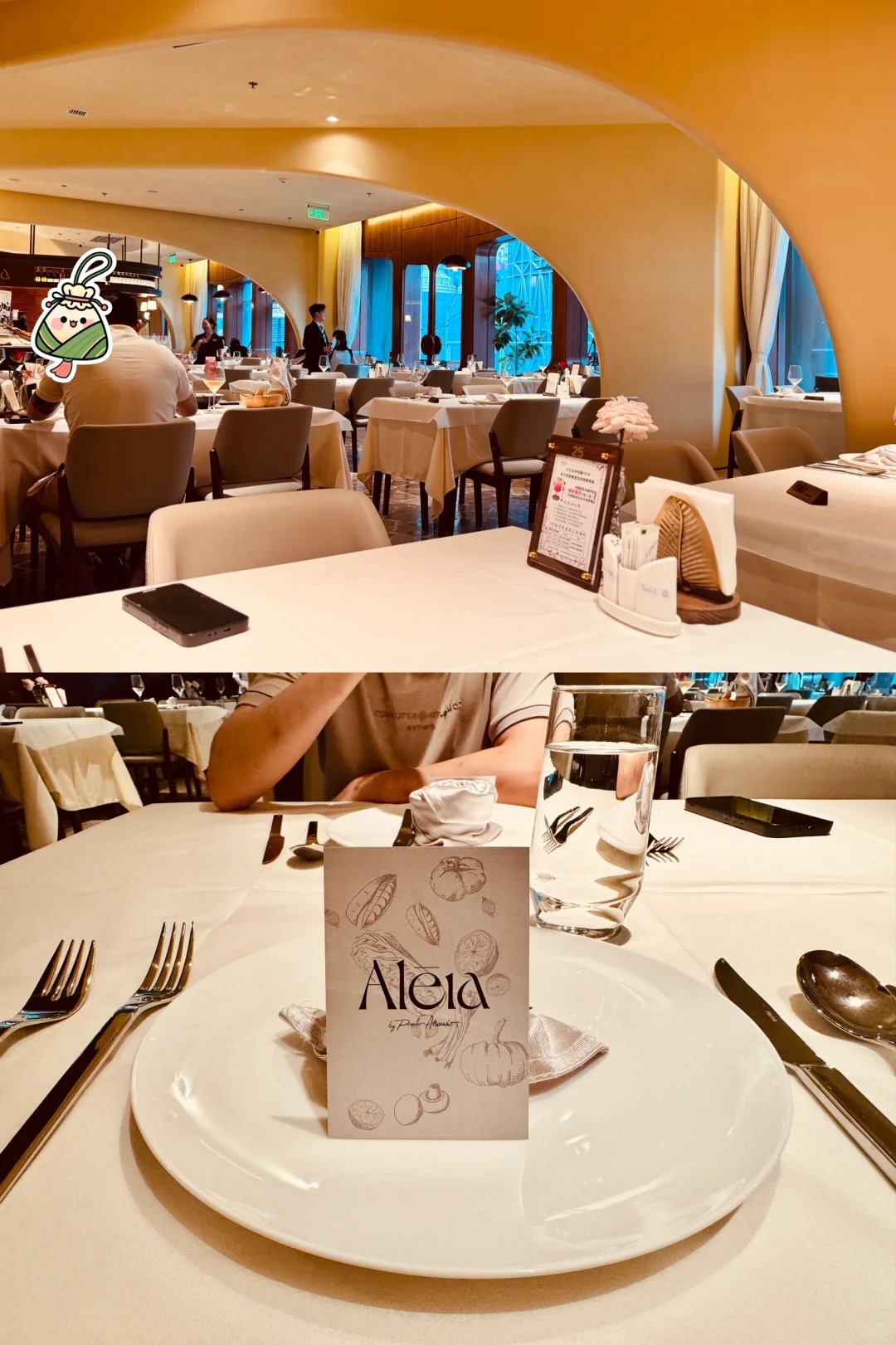
After about three straight days of heavy local banquets on my last trip, I actively searched my map for something totally different. Aleia is the very first Spanish Michelin-starred venue in the city, and stepping inside genuinely rescued my foreign palate. Sometimes you simply hit a wall with regional Chinese cuisine, and sitting down to familiar European cooking feels incredibly relieving. The staff here understand exactly how to cater to international guests.
Signature dish: The paprika grilled octopus. It comes out smoky and tender without feeling rubbery at all. I highly recommend ordering a pitcher of their iced Sangria to handle the humid city heat.
Flavor profile: Authentic Spanish Mediterranean. They do not sneak any numbing Sichuan peppercorns into the pans, sticking strictly to olive oil, garlic, and sea salt.
Rating and vibe: Currently sits at a 4.7 rating. The interior lighting is intentionally dim and romantic, so I always suggest booking a table here for an evening date rather than a loud family lunch.
Practical info: Budget roughly ¥450 to ¥650 per person depending on what you drink. Conveniently, it sits in the exact same Metropolis Oriental Plaza building as Fu Hao.
Iconic Hot Pot Spots Among The Best Restaurants In Chongqing
Zhoushixiong Hot Pot Jiefangbei Branch (Tourist-Friendly)
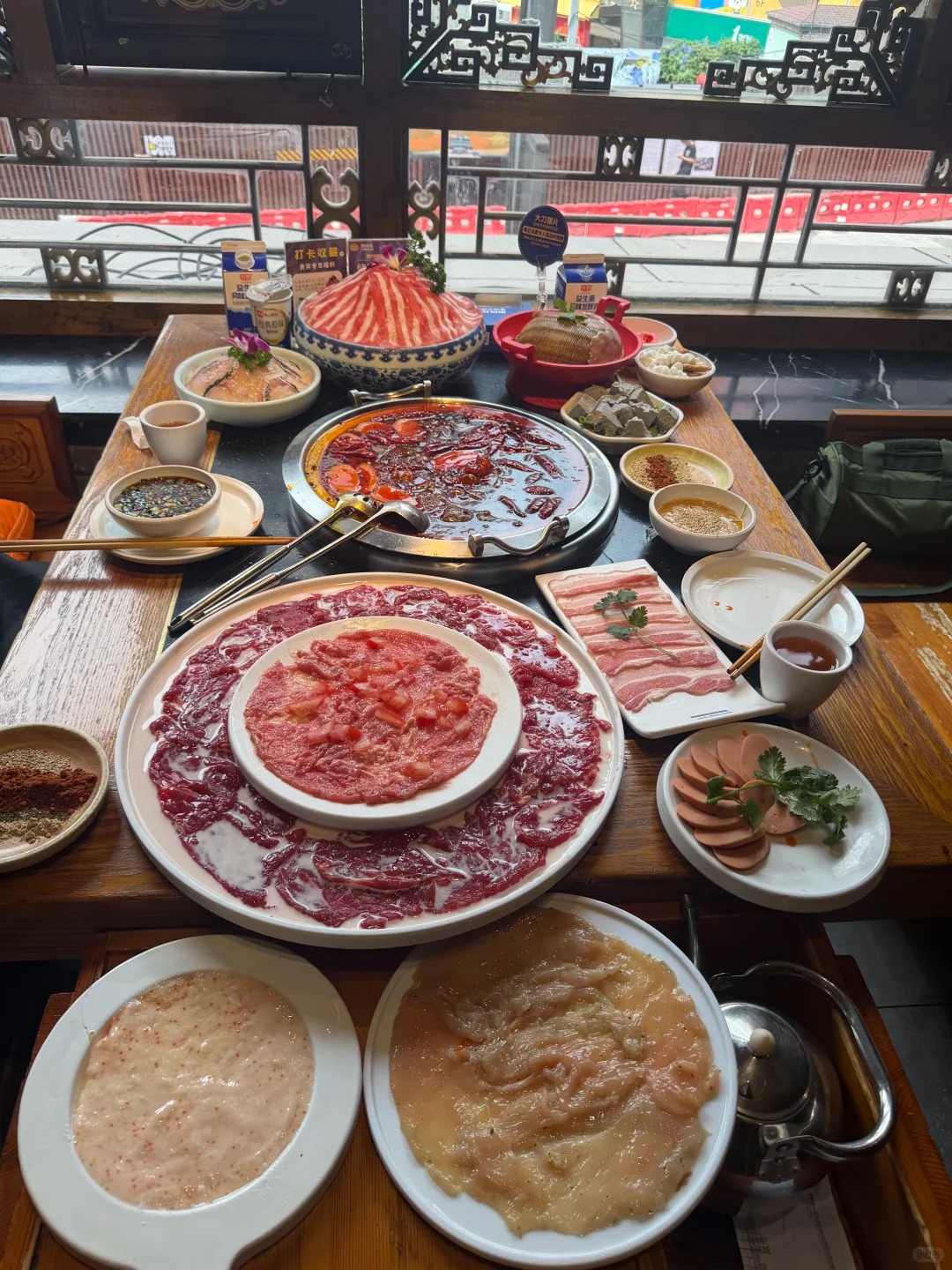
Zhoushixiong Hot Pot Jiefangbei Branch
This specific spot constantly blows up on Xiaohongshu, and for very good reason. It easily ranks high among the best restaurants in Chongqing because it actually caters well to foreign visitors without losing its intense local edge. If you feel entirely intimidated by the complicated local dining rules, the staff here will practically guide you through the whole meal. I once watched a server patiently show an American tourist exactly how long to boil different meats using hand gestures. You do not have to figure everything out on your own.
Signature dish: Freshly sliced beef and premium kidney slices. The thin meat cooks in literal seconds once it hits the boiling liquid.
Flavor profile: You definitely need to order a "Yuanyang pot" here. This setup splits the metal pot straight down the middle—one half holds furious, bubbling chili oil, while the other holds a calm, savory bone or mushroom broth.
Local dining tip: Always ask the waiter to mix a garlic and sesame oil dip for you. Coating your cooked meat in this pure sesame oil actively neutralizes the extreme heat and protects your stomach from the spices.
Rating and vibe: It holds a 4.8 rating and sits firmly on Dianping’s "Must-Eat" guide. The place gets loud, fast-paced, and extremely busy, filled mostly with younger crowds snapping photos.
Practical info: Expect to spend around ¥120 to ¥160 per person. You really need to grab a queue number before 6 PM, or you might end up waiting outside for hours.
Cygnet Hotpot At Hongyadong (Stunning Cliffside Views)
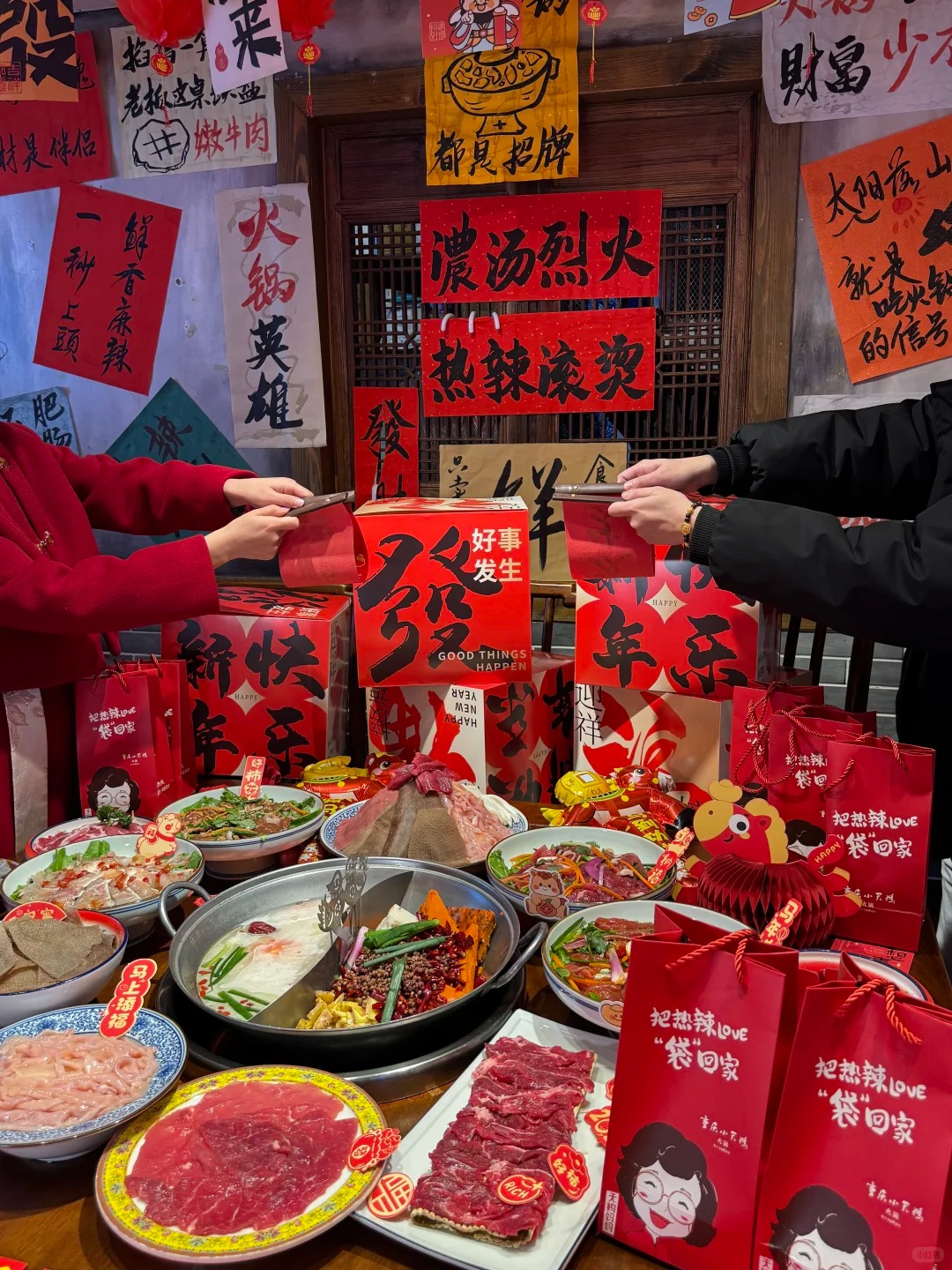
Cygnet Hotpot At Hongyadong
Eating at this location is mostly about the overwhelming sensory experience rather than just the food on your plate. Sitting right inside the famous stilted building complex, you get a direct, sweeping look at the river below. I vividly remember dipping beef into my broth right as the massive Qiansimen Bridge suddenly lit up outside the glass window. The visual shock of the city neon reflecting off the dark river while you eat is genuinely hard to beat. It completely changes the atmosphere of your dinner.
Signature dish: Classic crunchy beef tripe, fresh duck intestines, and assorted local vegetables. The ingredient quality remains solidly consistent despite the heavy tourist traffic.
Flavor profile: Traditional savory and spicy hotpot flavors. However, they are highly customizable. You can specifically request "Wei La" (mild spicy) if you want to test your limits safely.
Rating and vibe: It usually sits around a 4.6 on local review sites. The atmosphere leans slightly more upscale and comfortable compared to the sweaty, crowded street-level joints.
Practical info: A typical meal here runs about ¥150 to ¥200 per person. You absolutely must call ahead and explicitly reserve a window seat. If you just walk in blindly, they will likely seat you in the middle of the dining room where you see nothing but other tables.
Unique Air-Raid Shelters And Local Hidden Gems
Zenglaoyao Fish Restaurant (WWII Cave Dining)
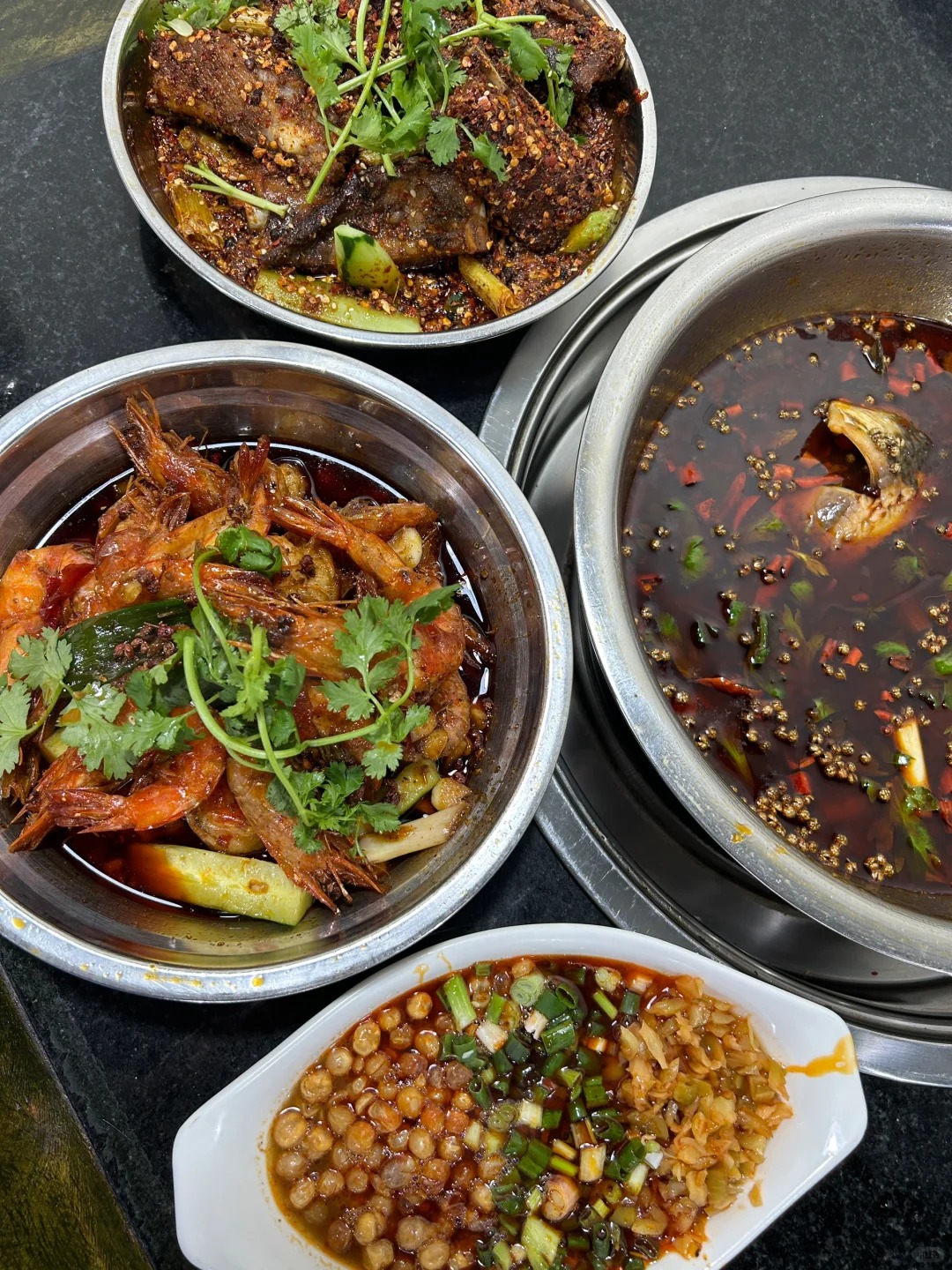
Zenglaoyao Fish Restaurant
Walking into this restaurant feels like stepping entirely out of the modern city grid. The venue operates deep inside an authentic World War II air-raid shelter, and the heavy air immediately hits you with a bizarre mix of underground dampness and roasted chilies. The long, winding concrete tunnels constantly echo with the chaotic noise of locals shouting over drinking games, and I actually got slightly lost trying to locate my assigned table during my first visit. You are not just buying dinner here; you are diving into a raw, unfiltered piece of local history. The waiters move incredibly fast through the narrow spaces, so you need to be ready when they approach.
Signature dish: The cold Crucian Carp and the massive plates of crispy deep-fried pork ribs. You will spot these exact two dishes sitting on quite literally every single table in the cave.
Flavor profile: Expect a shockingly aggressive "Heavy Mala" experience. The kitchen smothers everything in intense numbing peppercorns, thick red chili oil, and heavy scoops of crushed raw garlic.
Local dining tip: The staff do not speak a single word of English, and they certainly do not carry translated menus. You must download a reliable photo translation app beforehand so you can simply point your camera at the paper menu and point to order.
Rating and vibe: It consistently holds around a 4.5 rating from locals who prioritize bold flavors over comfortable, quiet seating. The environment stays hot, slightly smoky, and unbelievably loud from start to finish.
Practical info: Most diners spend roughly ¥100 to ¥130 per person. If you have a naturally weak stomach or are totally new to Sichuan spices, I strongly recommend taking a stomach protector before tackling this specific meal.
Must-Visit Food Streets For Authentic Local Snacks
Bayi Delicious Street (Haochi Jie)
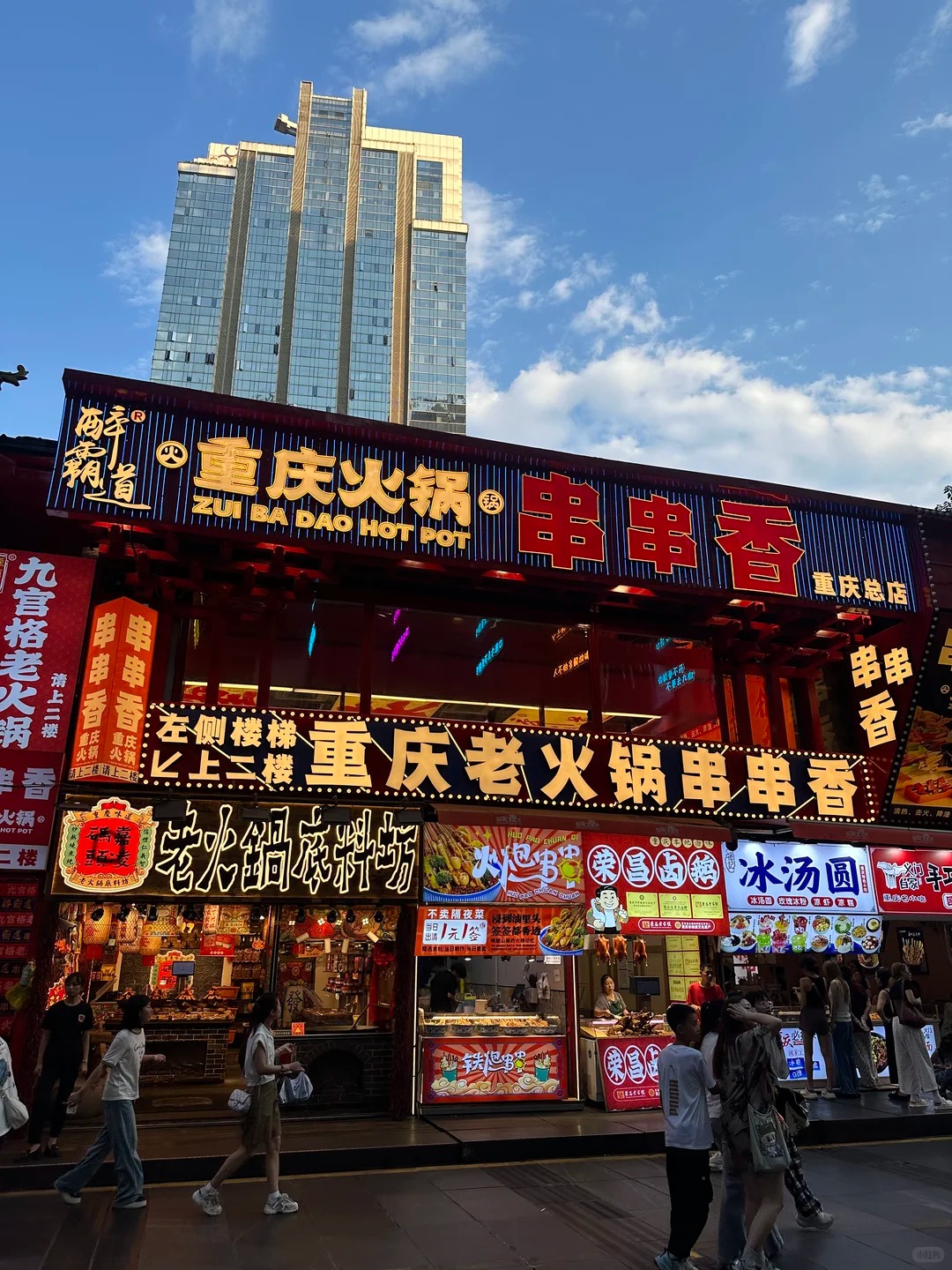
Bayi Delicious Street
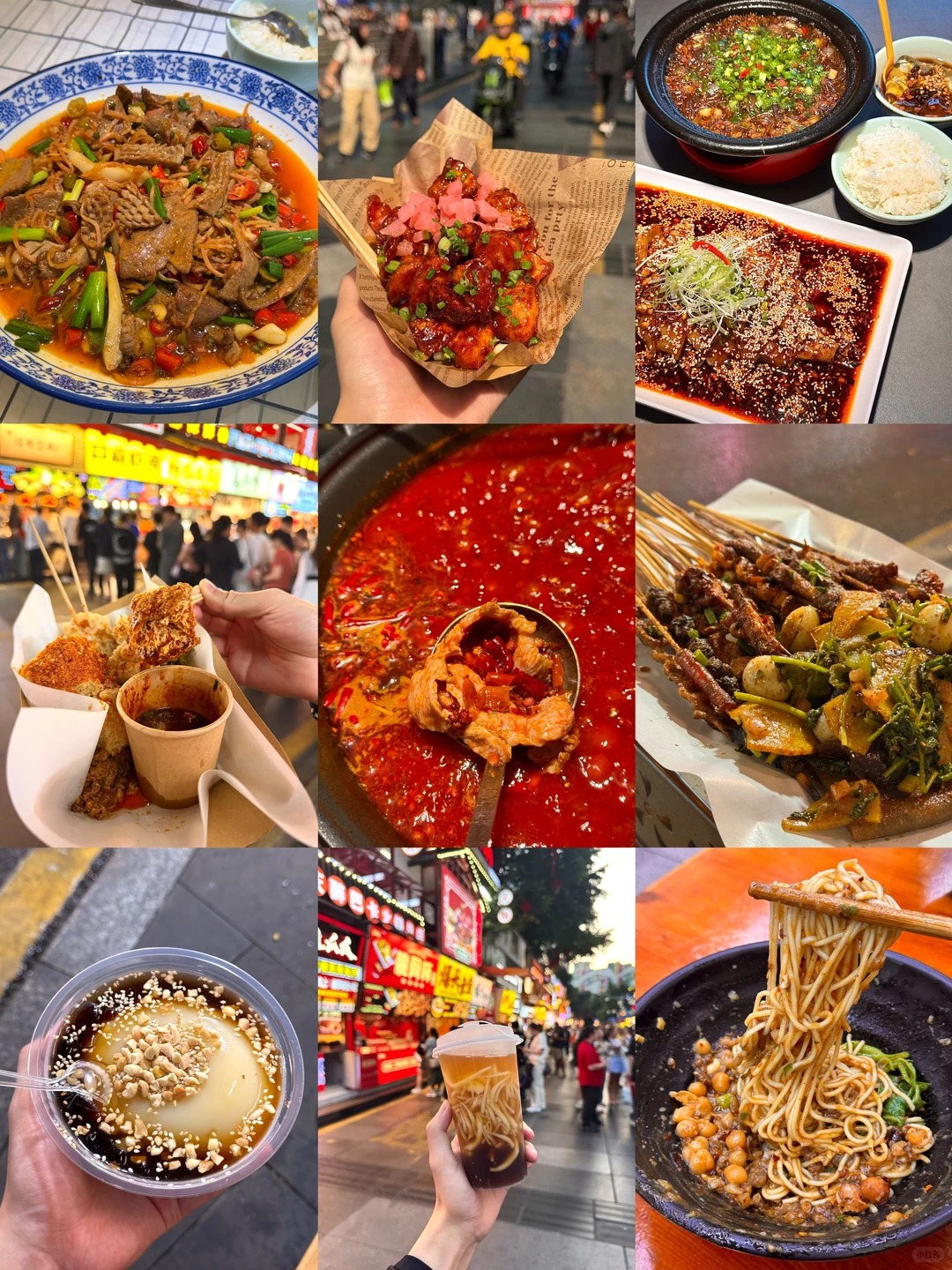
If you want to quickly experience the chaotic, fast-paced "walk and eat" culture of the city, this pedestrian street in the Jiefangbei district is the absolute epicenter. I remember standing by a trash can here during my first trip, desperately trying to balance a paper bowl of noodles while dodging electric delivery scooters. You do not come here for a relaxing, sit-down meal. Instead, you slowly push your way through the dense crowds, grabbing small bites from different brightly lit stalls as you go. If you are craving more after-dark culinary adventures, be sure to check out our detailed guide to the Chongqing night market.
Signature snacks: The iconic Spicy Sweet Potato Noodles (Suan La Fen) and the comforting Mountain City Sweet Rice Balls (Tangyuan). You will see huge lines for both.
Flavor profile: It is a game of extreme contrasts. The potato noodles hit you with an aggressive mix of sour vinegar and numbing chili oil, while the warm, sugary rice balls act as the perfect immediate cure for the heat.
Vibe and crowd: Incredibly loud, energetic, and crowded with hungry teenagers and office workers after 6 PM. You will likely be eating your food while standing up or crouching by the sidewalk.
Practical info: You absolutely must set up WeChat Pay or Alipay on your phone before arriving. The vast majority of these tiny street vendors do not keep physical cash change anymore, and trying to hand them large paper bills will only frustrate the massive lines behind you.
Ciqikou Old Town Snack Alleys
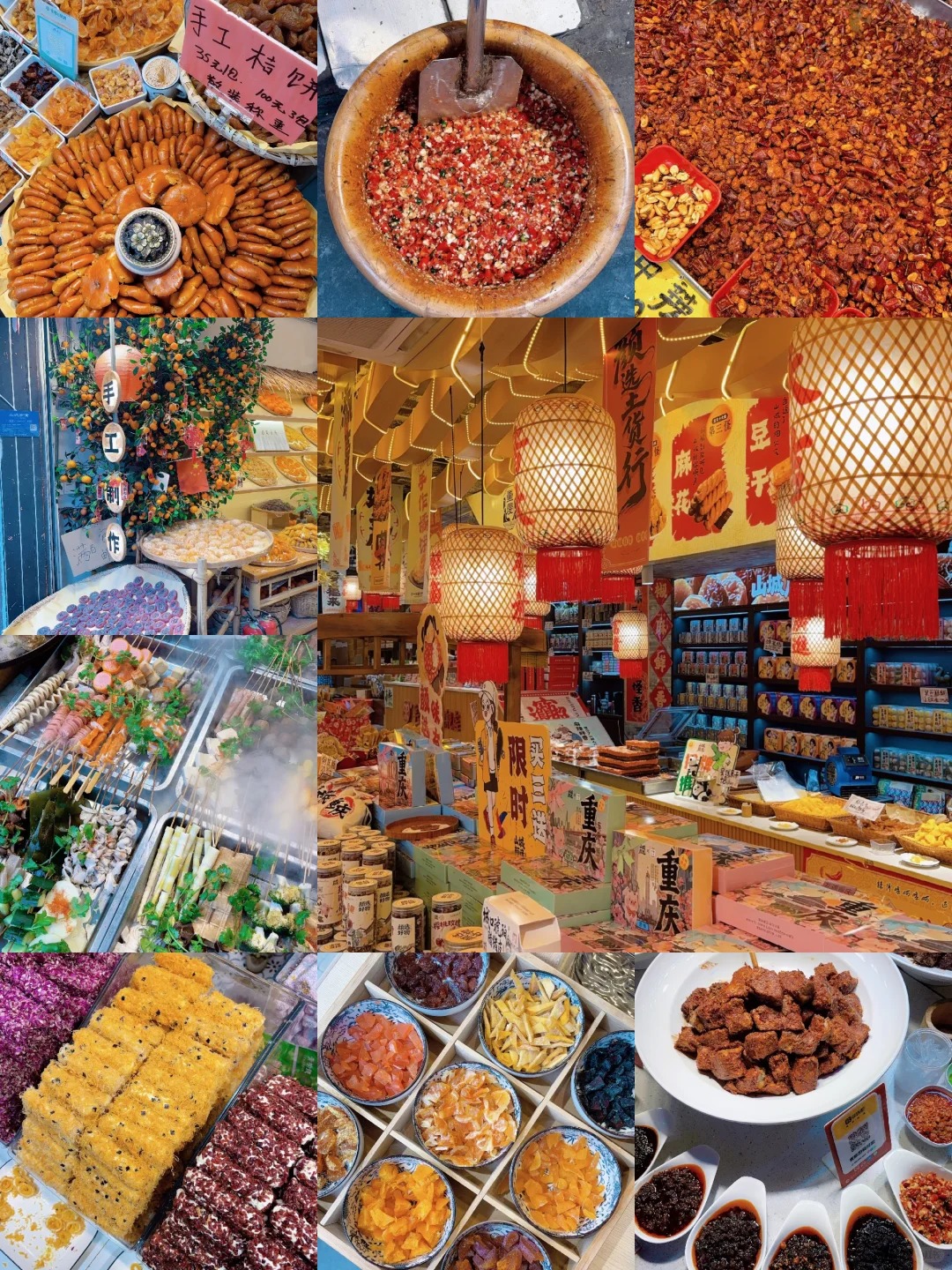
Ciqikou Old Town Snack Alleys
This historic area offers a vastly different dining pace compared to the neon-lit downtown streets. Walking over the old stone pavements, you can easily combine your traditional sightseeing with continuous, casual snacking. The wooden storefronts are packed tightly together, and the local vendors here are surprisingly aggressive about handing out free samples to tourists walking by. I actually managed to fill myself up just by accepting small pieces of pastries and dried beef from the eager shop owners.
Signature snacks: The legendary Chen Fried Dough Twist (Chen Mahua). You will walk past at least a dozen different shops aggressively claiming to be the "true original," but the safest bet is simply joining the longest queue of local aunties.
Flavor profile: These crispy dough twists come in several distinct variations. You can grab sweet honey-glazed ones, deeply savory salted ones, or even an intensely spicy chili version if you want to keep pushing your limits.
Vibe and crowd: Highly atmospheric and traditional. The narrow alleys constantly echo with vendors shouting promotions and the heavy, rhythmic thuds of workers pounding fresh chili paste in massive stone mortars right by the street.
Practical info: Do whatever you can to avoid visiting on a Saturday or Sunday afternoon. The ancient streets are quite narrow, and when the weekend domestic tour groups arrive, you will find yourself being physically shoved forward by the crowd rather than actually walking.
Excellent Halal And Vegetarian Dining Options
Yilangfang Chongqing Halal Hotpot
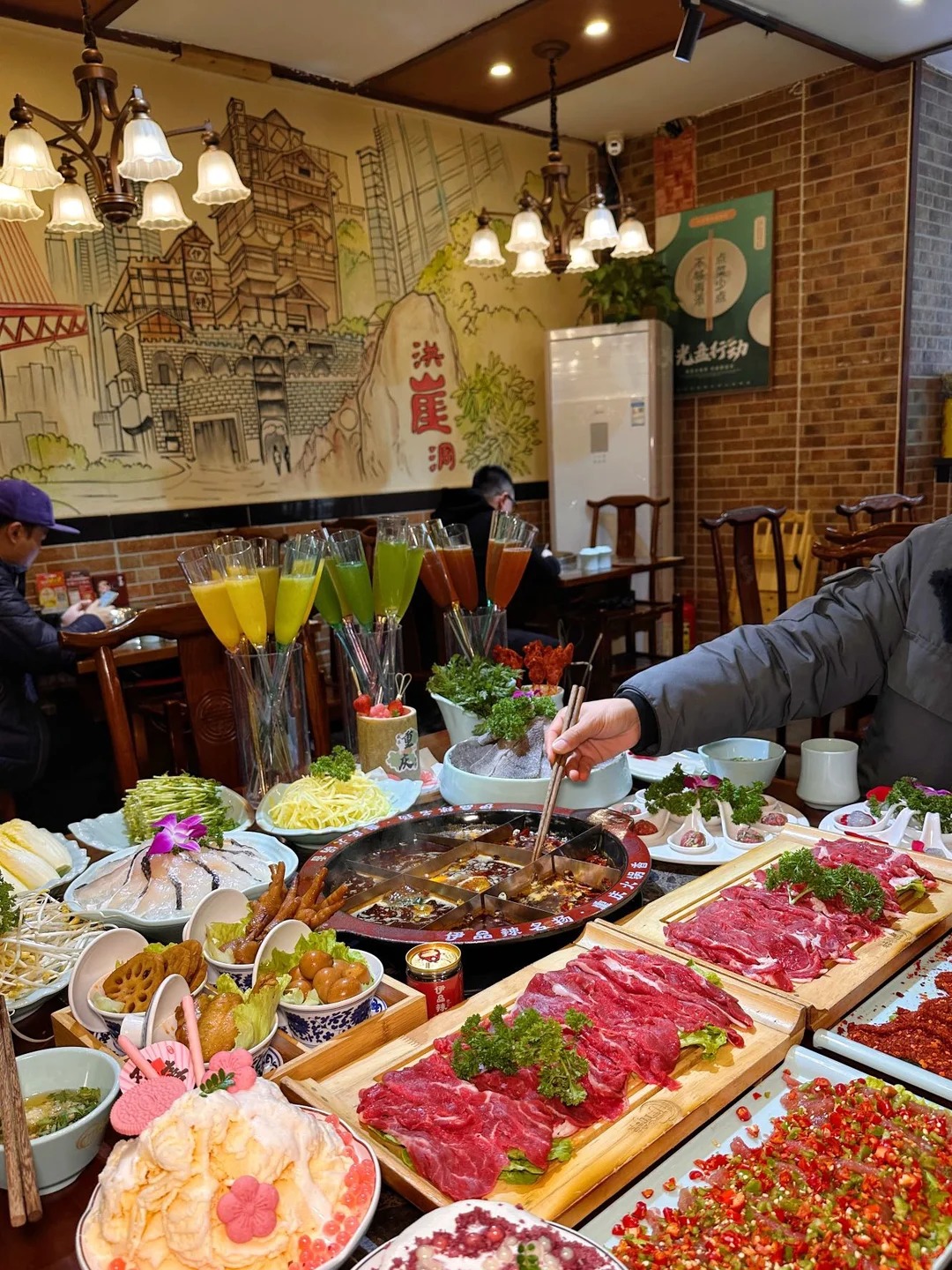
Yilangfang Chongqing Halal Hotpot
Finding a spot that strictly adheres to Islamic dietary laws while still delivering that aggressive local flavor used to be a major headache for some of my visiting friends. However, Yilangfang completely solves that problem without compromising the authentic hotpot experience. The restaurant operates under strict Halal certification, ensuring that Muslim travelers can comfortably enjoy the city's famous culinary export without any anxiety. The staff here are incredibly respectful of religious requirements, maintaining spotless dining areas and separate facilities.
Signature dish and service: The premium, freshly hand-cut mutton and beef slices are the absolute highlights of the menu. Furthermore, the management actually provides a dedicated, quiet prayer room for guests to use during their visit.
Flavor profile: You get the best of both worlds. They serve a fiercely authentic, numbing spicy broth made entirely with Halal-certified beef tallow, alongside a deeply rich, nourishing clear bone broth for those who prefer zero heat.
Rating and vibe: It consistently earns high ratings (around 4.5) from the local Muslim community. The dining environment is noticeably cleaner, brighter, and much less chaotic than your typical street-level hotpot joints.
Practical info: An average dinner here will cost you roughly ¥110 to ¥140 per person. It sits fairly close to the Jiefangbei center, making it an easy walk after a day of shopping.
Pure Lotus Vegetarian (High-End Plant-Based)
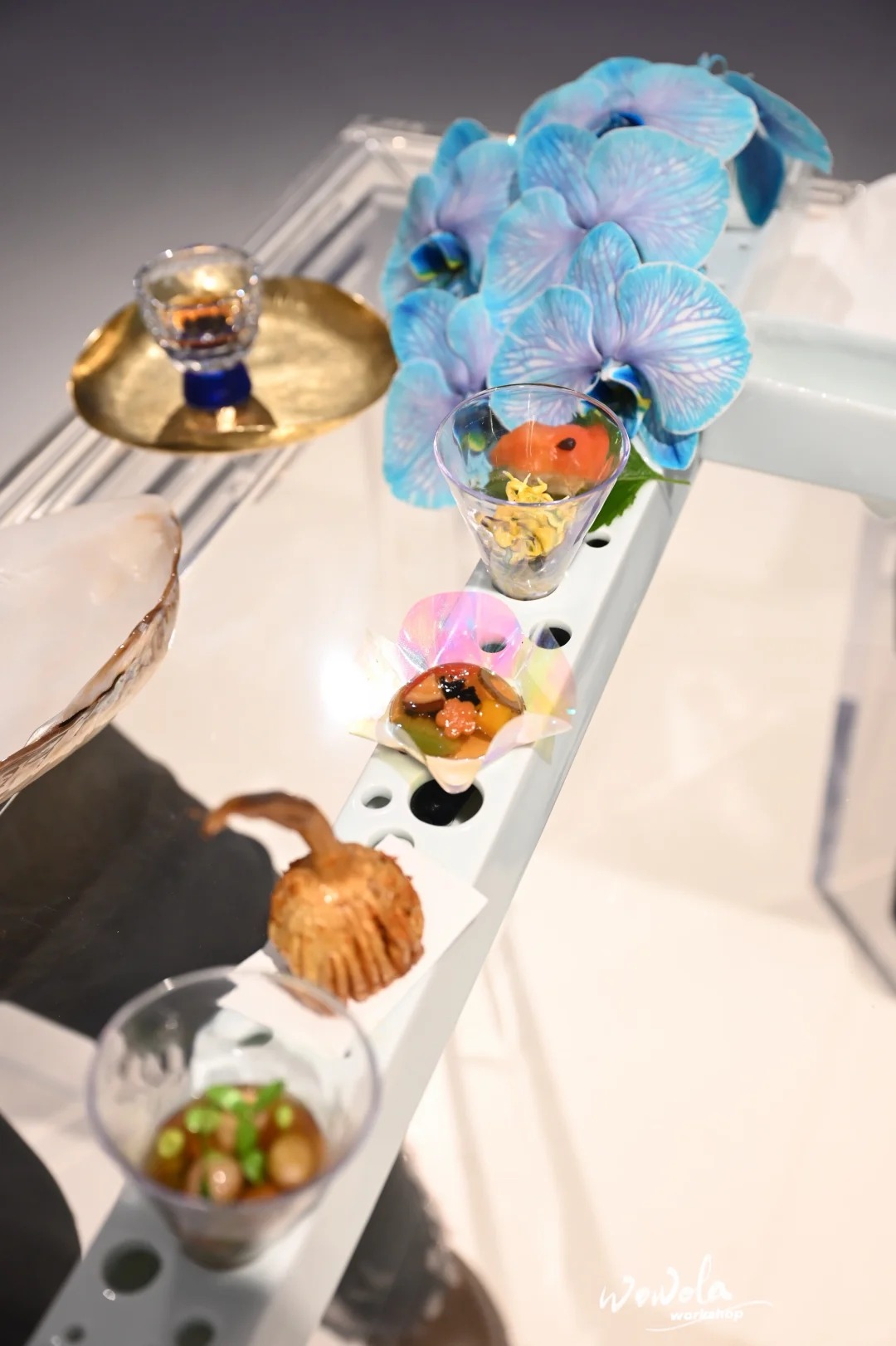
Pure Lotus Vegetarian
If you need a complete physical and mental break from the overwhelming noise and heavy oils of standard Sichuan dining, stepping into this restaurant feels like entering a secluded Zen temple. The contrast is genuinely striking; the chaotic street noise instantly vanishes the moment the heavy wooden doors close behind you. For plant-based travelers or anyone simply suffering from extreme chili fatigue, this place offers a masterclass in delicate, meat-free Chinese gastronomy. You are paying for the profound atmosphere just as much as the food.
Signature dish and service: They specialize in high-end mock meats and incredibly intricate, artistic plating. The slow-simmered wild mushroom soups and delicate handmade tofu dishes arrive at your table looking like literal edible sculptures.
Flavor profile: Expect extreme lightness and pure umami. The kitchen completely avoids heavy local seasonings, delivering a highly refreshing, 100% zero-spice experience that focuses entirely on natural, fresh ingredient flavors.
Rating and vibe: It maintains a stellar 4.8 rating on local apps. The atmosphere is deeply tranquil, with soft traditional music playing and incense burning lightly in the background.
Practical info: This is definitely a premium, sit-down dining experience. You should budget around ¥200 to ¥300 per person, and I highly recommend asking your hotel to call ahead and secure a private, curtained booth for the best experience.
FAQ about Best Restaurants in Chongqing
Q: Do restaurants in Chongqing offer English menus?
Honestly, it heavily depends on where you decide to eat. High-end dining spots like the Michelin-starred Fu Hao or Aleia will hand you perfectly translated English menus right away. However, if you venture into local hidden gems or WWII air-raid shelter joints, you will only see Chinese characters. I always tell my foreign friends to download the WeChat or Baidu Translate app before their trip. You can simply point your phone camera at the paper menu to figure out what you are ordering, which usually works flawlessly.
Q: How spicy is authentic Chongqing food for a foreigner?
It is genuinely intense and rarely exaggerated. Local chefs absolutely do not hold back, and their "mild" level would still be considered incredibly hot in most Western countries. The spice here is a unique combination of fiery red chilies and numbing Sichuan peppercorns that literally makes your lips tingle. If you have a sensitive stomach, you must explicitly ask for "bu la" (no spice) or stick entirely to Cantonese and Western restaurants. Otherwise, you might spend your next day staying very close to your hotel bathroom.
Q: What is a "Yuanyang" hot pot and why do I need it?
A Yuanyang pot is an absolute lifesaver for foreign visitors trying to experience the city's food culture safely. It is essentially a large metal pot divided strictly down the middle by a curved metal barrier. One side boils with aggressive, dark red chili oil, while the other side simmers with a mild, comforting pork bone or mushroom broth. Ordering this split pot allows you to bravely test the authentic local spice, but gives you a safe, non-spicy fallback when your mouth inevitably starts burning.
Q: Do I need to tip waiters at restaurants in China?
No, you absolutely do not need to tip anyone. In fact, tipping is not part of the culture anywhere in mainland China, and leaving loose cash on your table will likely confuse the waitstaff. I have actually seen local waiters physically chase foreign tourists down the street just to return a 50 RMB note they thought was accidentally left behind. The final price you see on your digital bill or printed paper receipt is exactly what you pay.
Q: How can I book a table without a Chinese phone number?
This can be quite frustrating because local apps like Dianping almost always require a domestic phone number to secure a digital reservation. If you don't have a temporary Chinese SIM card, your best strategy is asking your hotel receptionist to call the restaurant on your behalf. For extremely popular spots with cliffside river views or Michelin stars, try to have your hotel make the call at least a full day in advance. Showing up as a walk-in during peak dinner hours usually guarantees waiting outside for hours.
Q: Are there any good non-spicy local dishes in Chongqing?
Surprisingly, yes. While the city mostly markets itself on extreme heat, you can absolutely find gentle local flavors if you look past the bright red hotpot signs. I highly recommend trying the classic crispy duck, or grabbing a warm bowl of sweet rice balls (Tangyuan) from the crowded local snack streets. You can also easily find specialized restaurants serving incredibly delicate, slow-simmered chicken soup or fresh steamed river fish, which contain absolutely zero chili peppers.
Q: Is street food in Chongqing safe for foreign tourists to eat?
Generally speaking, yes, but you still need to use some basic common sense when picking a stall. I always check TripAdvisor forums or local apps, and the general consensus is to only eat at stalls that have a massive, fast-moving line of local residents. If a street vendor has high turnover, the ingredients are constantly being freshly cooked at extremely high, bacteria-killing temperatures. However, I would strongly suggest avoiding pre-cut fresh fruit or anything served with tap water ice cubes during your first few days.
Q: Can I use international credit cards at these restaurants?
You cannot just swipe a physical foreign Visa or Mastercard at most local restaurants here. Only high-end international hotels and a few luxury fine-dining rooms actually possess the correct international card machines. However, you can easily link your foreign credit card directly to the Alipay or WeChat app on your smartphone before you arrive. I did this last time I visited, and it allowed me to seamlessly scan QR codes and pay for everything from street noodles to expensive banquets without carrying any cash.