Zhangjiajie
A Zhangjiajie city map does more than mark streets. It tells you how to split your time between the urban core, the Tianmen Mountain cable-car base, and the park gateway at Wulingyuan. Knowing where the airport, rail stations, and bus terminals sit on the grid saves hours on a short trip.
Zhangjiajie is a prefecture-level city in northwestern Hunan Province. Its compact downtown runs along the Lishui River in Yongding District, while the sandstone pillars behind Avatar begin about 30 km north in Wulingyuan District. Most visitors only ever touch these two districts, plus the airport and the two rail stations. This page lays out the urban layout, the key landmarks, and the transport links that hold them together.
Quick Facts
Where Zhangjiajie Sits in China
-
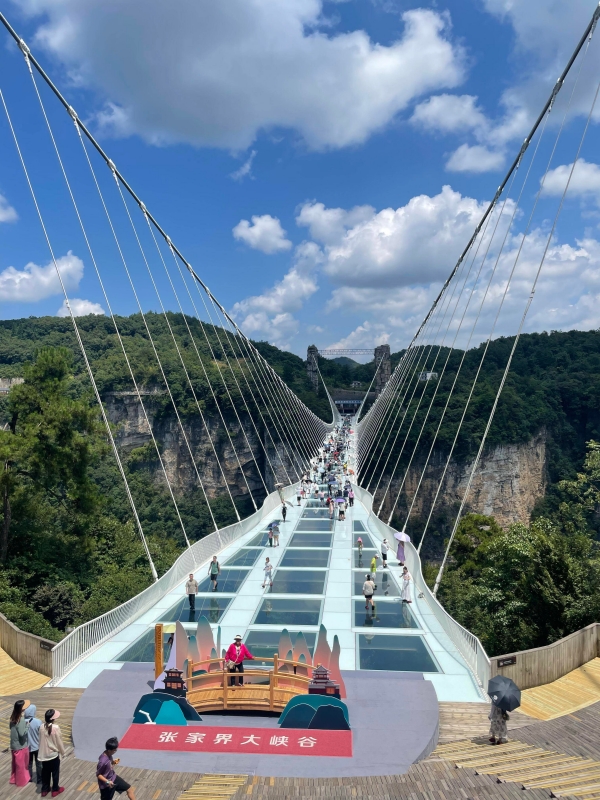

- Zhangjiajie
-
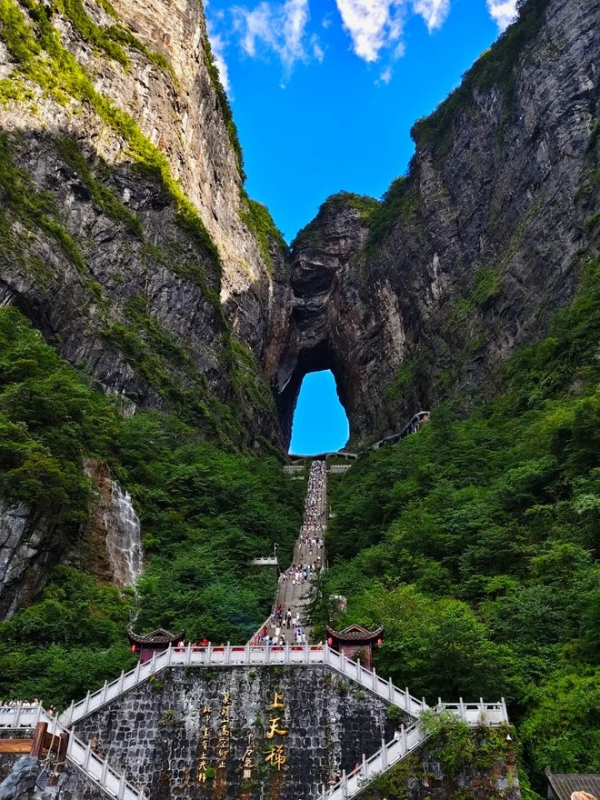
- Zhangjiajie
-
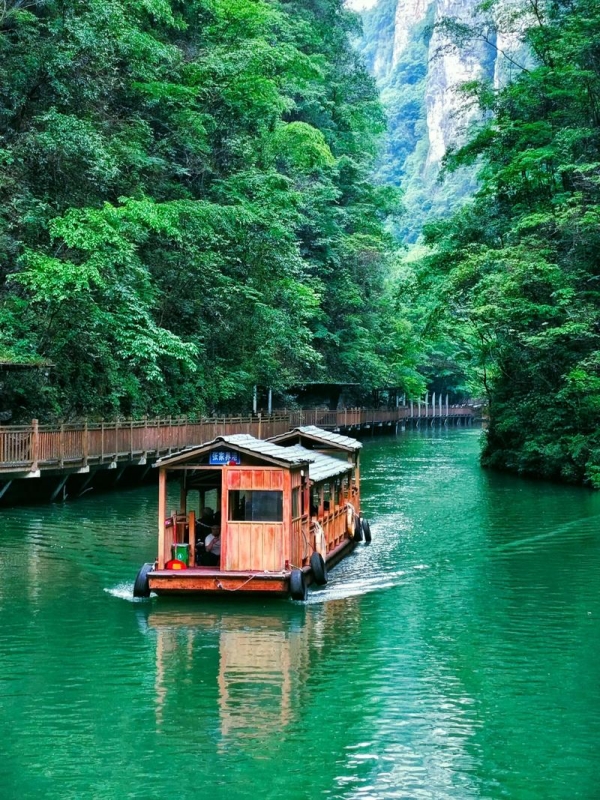
- Zhangjiajie
-
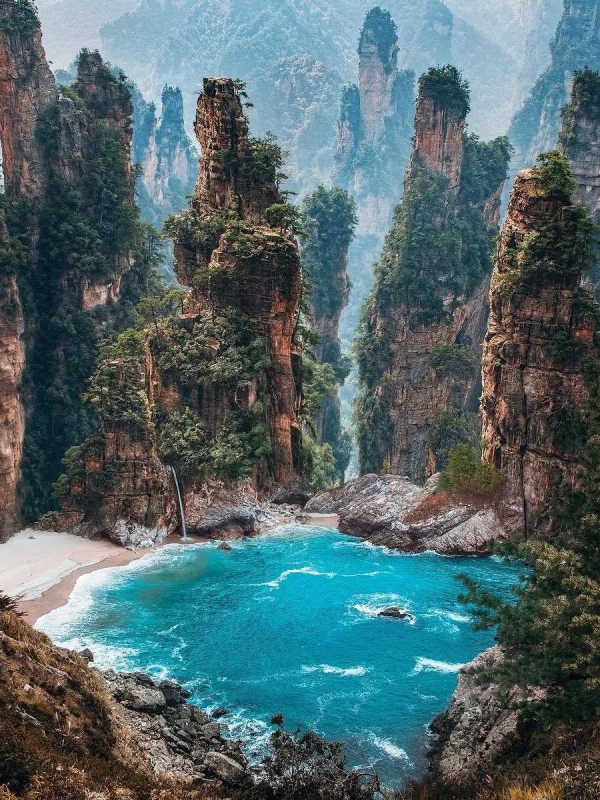
- Zhangjiajie
Zhangjiajie sits in the northwest corner of Hunan Province. To the north it borders Enshi Tujia and Miao Autonomous Prefecture in Hubei; to the west, Xiangxi Tujia and Miao Autonomous Prefecture; to the south and east, the rest of Hunan — Changde, Yiyang, and Loudi. The boundary with Hubei also forms part of the Yangtze tributary watershed, since the Lishui River flows south into Dongting Lake, which feeds the Yangtze. For most foreign visitors, the city is the gateway into the sandstone country of northwestern Hunan.
Approximate straight-line distances to reference cities:
- Changsha (provincial capital): about 270 km southeast
- Wuhan: about 500 km east
- Shanghai: about 1,000 km east
- Beijing: about 1,400 km north
- Guangzhou: about 700 km south
- Chongqing: about 350 km west
Air access runs through Zhangjiajie Hehua Airport (DYG), with direct flights to Beijing, Shanghai, Guangzhou, Shenzhen, Chengdu, Xi'an, Kunming, and a handful of Southeast Asian cities such as Bangkok and Seoul in some seasons. Rail access runs through Zhangjiajie Railway Station for conventional trains and Zhangjiajie West HSR station on the Hunan–Hubei high-speed line. High-speed services connect to Changsha South in about 2.5 hours and to Wuhan in about 4 hours.
For more, see our guide to Shenzhen Talent Park.
Zhangjiajie City Districts and Layout
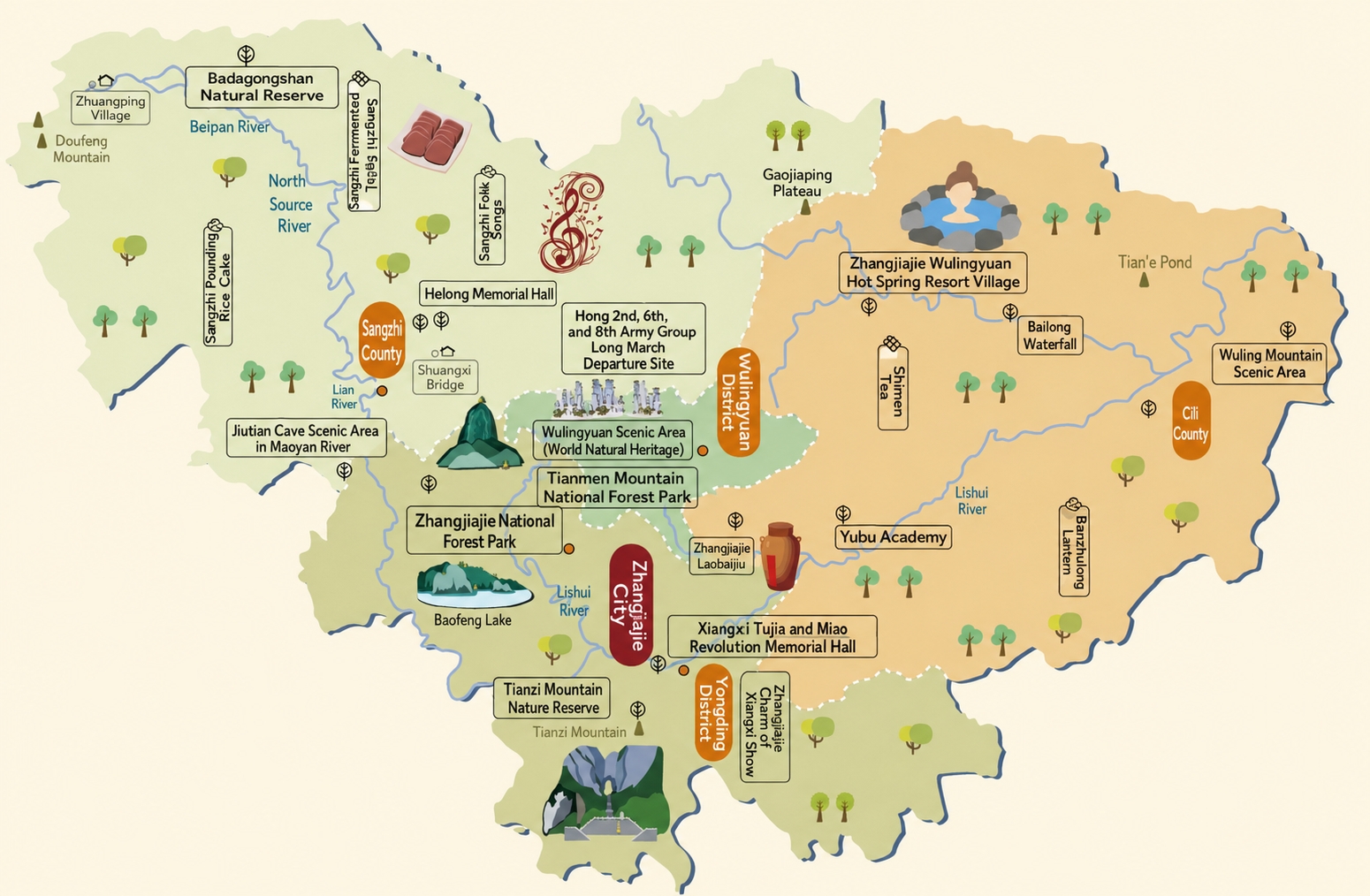
Map of Zhangjiajie
Zhangjiajie is a prefecture-level city with two urban districts and two counties. The two urban districts — Yongding and Wulingyuan — are the parts visitors plot on a Zhangjiajie city map, since they hold nearly every hotel, restaurant, airport, and park entrance. Meanwhile, Cili County to the east and Sangzhi County to the west are rural and rarely appear on tourist maps.
The downtown footprint is a roughly 6 km × 4 km rectangle along the Lishui River. On any Zhangjiajie city map, plot four anchors: Hehua Airport south of the river, Zhangjiajie Railway Station east of the bus cluster, the Tianmen Mountain cable-car base on the south-east edge, and the Lishui River bisecting the urban area north-south. Key streets include Jiefang Road, Dayong Road, Ziwu Road, and Guanli Road.
See also our Visit Zhangjiajie National Park guide.
Yongding District — the Main Urban Center
Yongding District is where a Zhangjiajie city map gets crowded with icons. It holds Hehua Airport, both rail stations, the central bus station, the Tianmen Mountain cable-car lower station, the night-market food streets, and most mid-range and international-chain hotels. The Lishui River cuts through it, with the older commercial core to the south and newer hotel development on both banks. English support is concentrated here, and most of the urban area fits within a 15-minute taxi ride.
For more, see our guide to Real Avatar Mountains.
Wulingyuan District — Gateway to the National Park
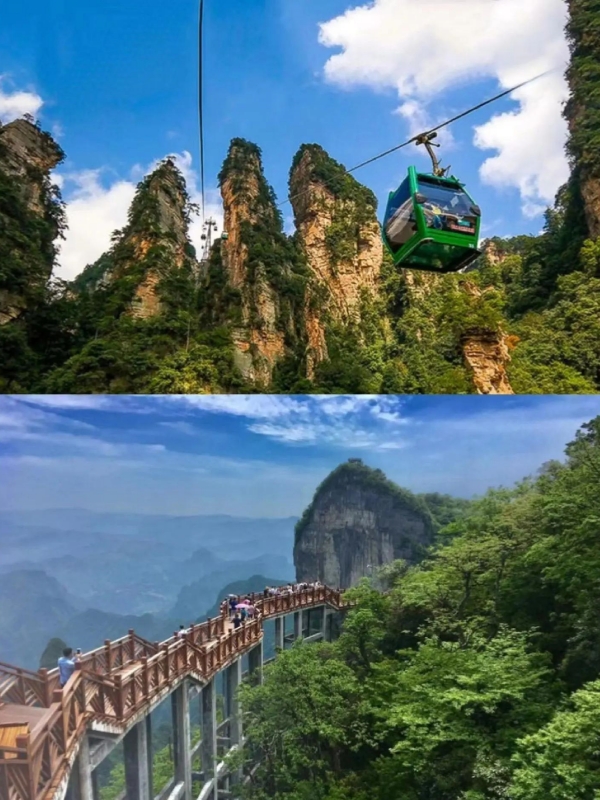
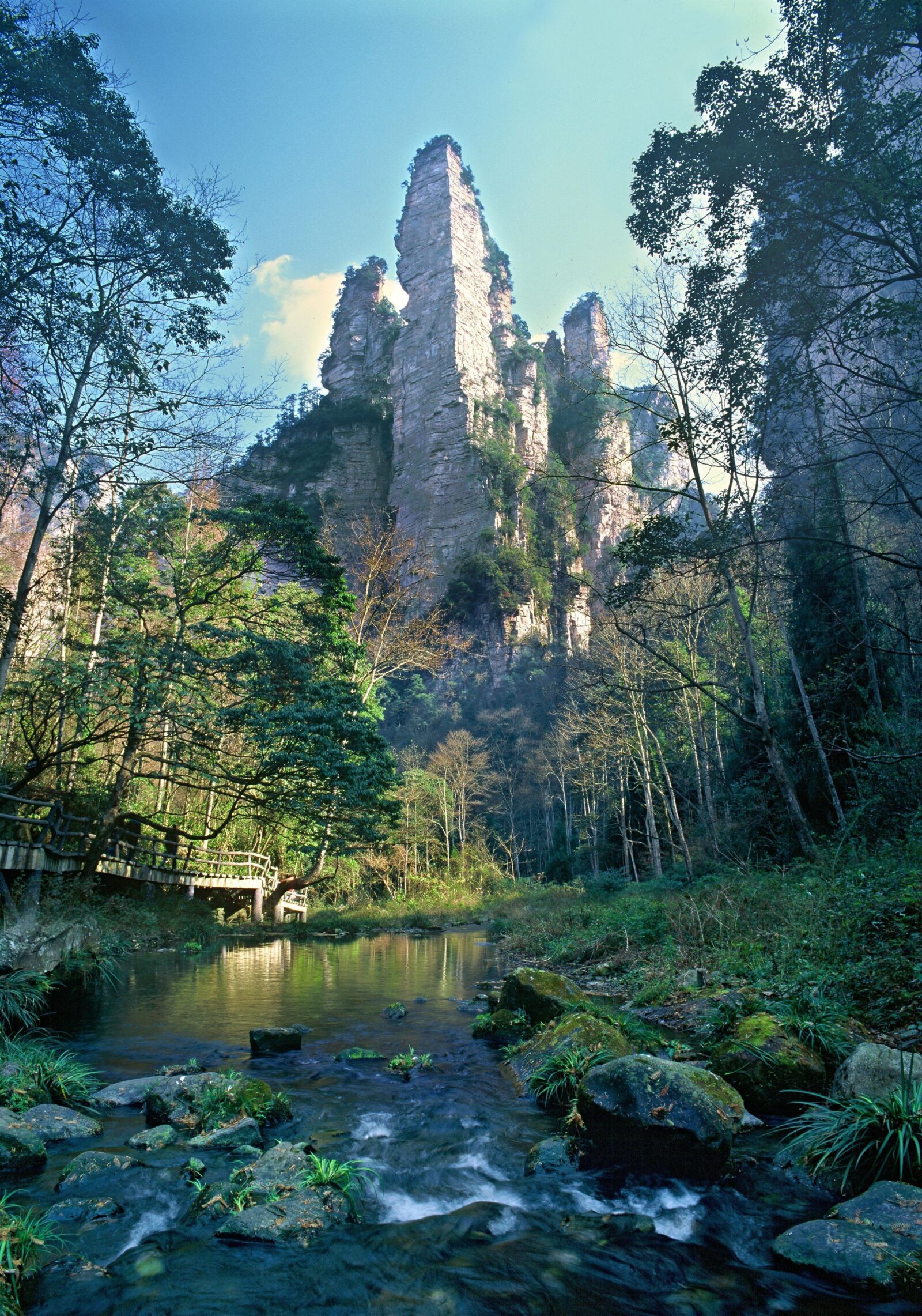
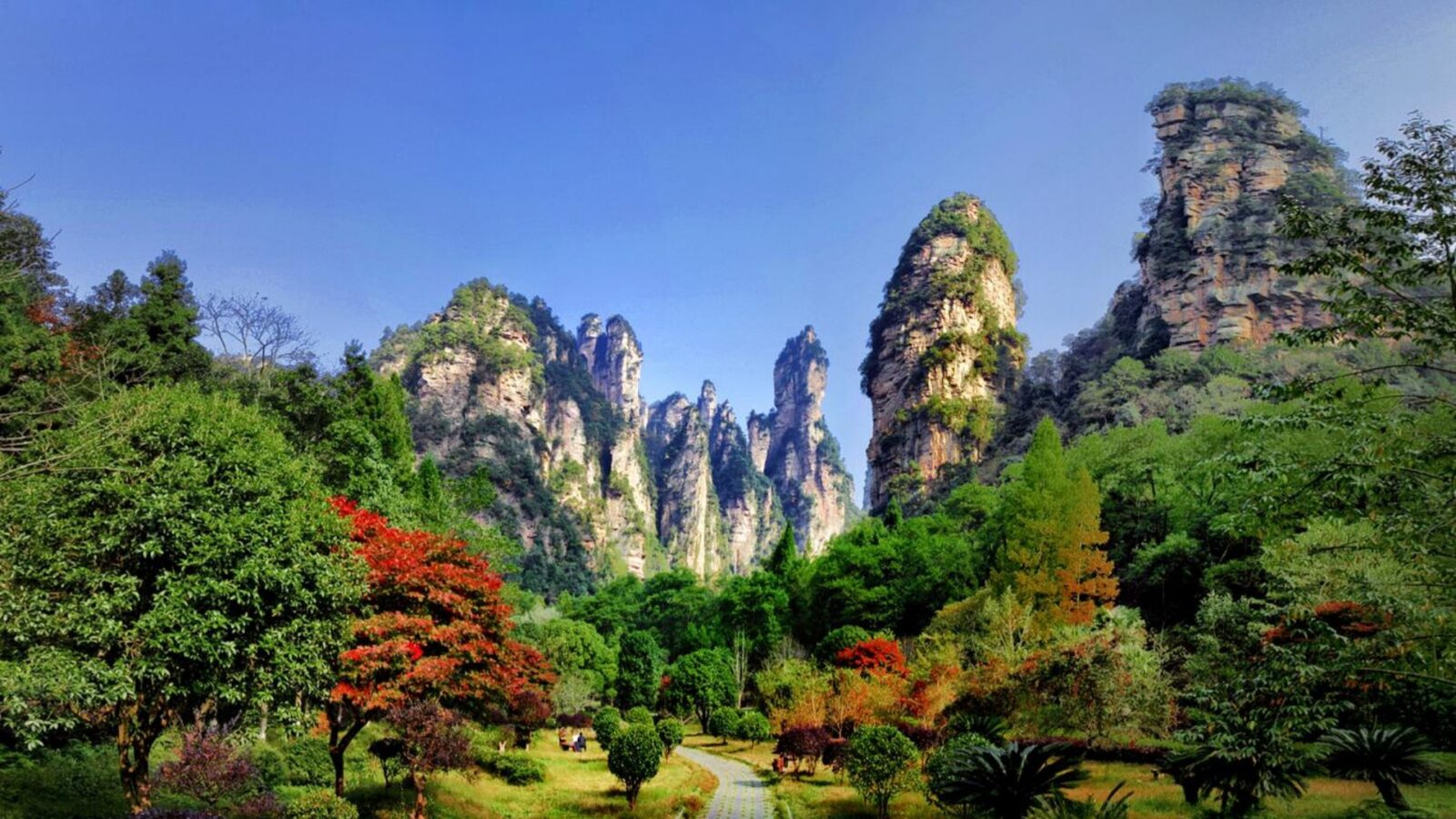
Wulingyuan District sits about 30 km north of Yongding downtown and contains the UNESCO-listed Wulingyuan Scenic Area — Zhangjiajie National Forest Park, Tianzi Mountain Nature Reserve, Suoxi Valley Nature Reserve, and Yangjiajie. The town of Wulingyuan has its own hotels, restaurants, and park-ticket offices. As a result, many visitors stay overnight there instead of commuting from Yongding.
Where to Stay on a Zhangjiajie City Map
Three zones work for most visitors, each with a different use case:
- Yongding downtown near Jiefang Road: best for first-time visitors who want restaurants, English-speaking hotel desks, and short rides to the Tianmen Mountain cable-car base; mid-range rooms about $35–70 (¥250–500) per night.
- Wulingyuan town: best for two-or-more-night park stays; mid-range rooms about $25–55 (¥180–400) per night, often with park-ticket booking on-site.
- Near Zhangjiajie Railway Station: convenient for late arrivals or early departures, but a short taxi to the main dining and Tianmen-base area; rooms about $28–55 (¥200–400).
Getting Around Zhangjiajie City
Zhangjiajie
A Zhangjiajie city map is most useful paired with a working knowledge of the bus and taxi network. Public buses cover all of Yongding downtown and run the Wulingyuan corridor. Taxis are abundant in the urban core. Walking works inside the central grid, but English signage is limited. Knowing the standard fare, the Wulingyuan tourist-bus route, and the taxi flag-fall saves time on every outing.
City Buses and Tourist Shuttle Routes
The Zhangjiajie city bus network uses numbered routes 1 through about 17 within Yongding downtown, plus cross-district and tourist routes. The Wulingyuan tourist bus departs the Central Bus Station every 20 minutes in daylight, reaching Wulingyuan town in about 50 minutes for about $2.50 (¥18). Route 4 and Route 5 run downtown to the Tianmen Mountain cable-car base for about $0.30 (¥2) in 15–20 minutes. Stops are announced only in Mandarin, so ask the hotel desk for the stop name in Chinese characters before you board.
Taxis, Ride-Hailing, and Walking
Taxis are abundant in Yongding downtown, with a flag-fall of about $1 (¥7) for the first 2 km and most in-city rides about $3–6 (¥20–40). Insist on the meter or agree a price first. Didi works in Zhangjiajie, though full features require a Chinese phone number. Walking is fine inside the central grid — the Lishui River promenade is flat and well-maintained — but keep your destination written in Chinese for taxi conversations.
Digital Maps That Work for Visitors
Apple Maps renders Zhangjiajie reasonably well for foreigners without a Chinese phone number. Google Maps is blocked in mainland China. Baidu Maps and Amap have the best bus and walking coverage but need a Chinese phone number to register. Offline maps via Maps.me work if you cache the Hunan tile before arrival. Meanwhile, the city tourism bureau publishes updated PDF maps each year for visitors who prefer a printable Zhangjiajie city map.
From the City to Wulingyuan and Tianmen Mountain
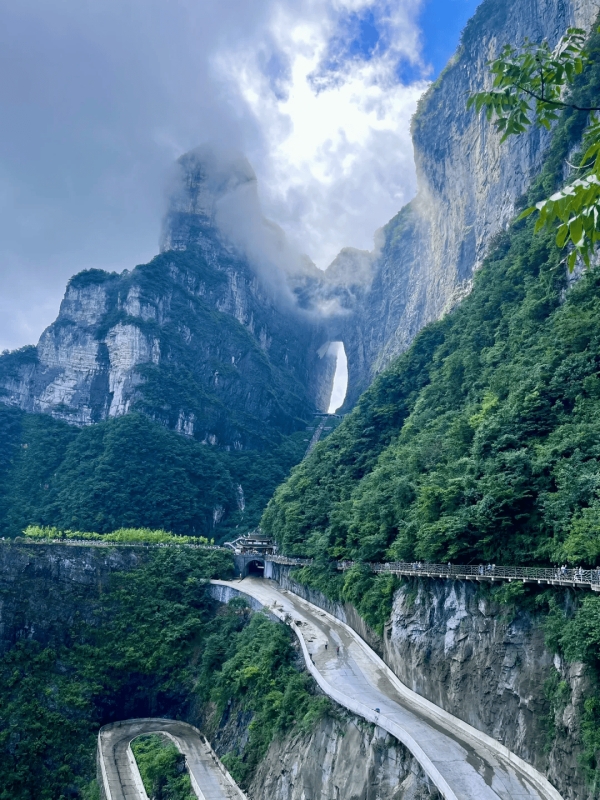
The practical reason most visitors zoom in on a Zhangjiajie city map is to plan the trip out to the parks. Two park gateways matter, and they sit at very different distances from downtown. Tianmen Mountain is about 6 km south-east, with its cable-car base on the edge of Yongding urban area. Wulingyuan Scenic Area is about 30 km north — the entry gate to Zhangjiajie National Forest Park and the Avatar-style pillars. Getting to either is straightforward once you know which bus or shuttle to catch.
Hotel tour desks sell shuttle packages that combine city hotels with park tickets, typically about $25–45 (¥180–320) including the Wulingyuan entry ticket; these are bookable on Trip.com and Klook and accept foreign credit cards. The general-admission Wulingyuan ticket runs about $32 (¥225) for four days, and the Tianmen Mountain ticket runs about $22 (¥158) including the cable car. Independent travelers can build their own day using the bus and taxi options above, with no advance booking required.
Frequently Asked Questions
Q: How far is Wulingyuan National Park from Zhangjiajie city center?
Wulingyuan National Park sits about 30 km north of Yongding downtown. The Wulingyuan tourist bus covers the distance in roughly 50 minutes for about $2.50 (¥18), leaving Zhangjiajie Central Bus Station every 20 minutes in daylight. A direct taxi takes about 40 minutes and costs roughly $21 (¥150). Confirm the bus departure point on the day, as it does not shift seasonally.
Q: Is there a direct bus from Zhangjiajie Hehua Airport to the city center?
Yes. Airport shuttle buses run between Hehua Airport (DYG) and downtown Yongding for about $0.70 (¥5), with a journey time of 20–30 minutes depending on traffic. A taxi covers the same route in 15 minutes and costs about $8–11 (¥60–80), depending on the exact hotel location. Shuttle schedules roughly track flight arrivals, though late-night services may be thin.
Q: Can I walk from a downtown Zhangjiajie hotel to Tianmen Mountain?
Partially. The cable-car base sits about 6 km from most downtown hotels, and the walk along main roads is flat but long, with limited English signage and few pedestrian shortcuts. The practical option is a 15-minute taxi ride costing about $4–6 (¥25–40) or bus Route 4 / 5 for about $0.30 (¥2). Cyclists sometimes cover the distance in under 30 minutes.
Q: Are Zhangjiajie city buses foreigner-friendly?
Buses run on schedule and the fare is low at about $0.30 (¥2), but stops are announced only in Mandarin and route maps are in Chinese characters. Download an offline map of Zhangjiajie before arrival and keep your destination written in Chinese to show the driver. Most drivers will nod if the stop is correct and gesture when to get off.
Q: Which part of Zhangjiajie city should I stay in for park access?
For Tianmen Mountain, stay in Yongding downtown near Jiefang Road; the cable-car base is a short taxi or bus ride away. For Wulingyuan, either stay in Wulingyuan town itself, which is closer to the park gates, or in Yongding downtown for more restaurants and English support. Mid-range rooms run about $25–70 (¥180–500) per night in both areas.
Q: Do I need a Chinese payment app to ride Zhangjiajie buses?
Not for ordinary buses. Standard fares can be paid in cash with small bills dropped into the fare box at the front. Some newer tourist shuttles increasingly require Alipay or WeChat Pay QR codes. Carry about ¥20–50 in small notes as a backup, and ask your hotel desk which lines still take cash on the day.
Q: How long does the drive from the city to Wulingyuan take?
The drive takes about 40 minutes in light traffic. At peak holiday periods — National Day, Chinese New Year, and summer weekends — it stretches to 60–90 minutes. Depart before 07:00 or after 10:00 to avoid the worst congestion. The Wulingyuan tourist bus follows a similar timetable but skips the parking hassle at the gate.
Q: Is Zhangjiajie city itself worth a day to walk around?
Yes, for an evening. The Lishui River promenade, the older commercial streets near Jiefang Road, and the night-market food streets are all walkable from most downtown hotels. A half-day is enough to cover the riverfront and a couple of meals; the rest of your time belongs to Tianmen Mountain and Wulingyuan. Local guides offer short walking tours if you want context.