Dental Implant Cost Chin
Dental implants in China have emerged as one of the most affordable options for tooth replacement available worldwide. The dental implant cost china ranges from $300-$1,500 per tooth in January 2026—compare that to $3,000-$6,000 in the United States. In 2022, the Chinese government reformed pricing once again, capping service fees at ¥4500 (≈$630) and slashing the cost of implant materials by 55%. Even Swiss tier brands like Straumann now ring in at $620-$1,100 in Chinese clinics.
This guide shows you what you’ll actually pay at public hospitals vs international clinics, which brands give the best value, and how China stacks up against Thailand, Mexico, and Turkey. I’ll detail hidden costs like bone grafting ($500-$3,000), explain why treatment involves two trips, and clarify what your insurance may cover. Let’s get to the real numbers so you can plan your budget with no surprises!
✅ Make an informed choice: Beyond the unbeatable prices, discover the best hospitals and detailed procedures in our comprehensive resource: [Affordable, Quality Dental Implants in China: Your Guide to Costs, Best Hospitals, Procedures & Tips].
China Beats Thailand and Mexico on Swiss Brands ($620 vs $1,200)
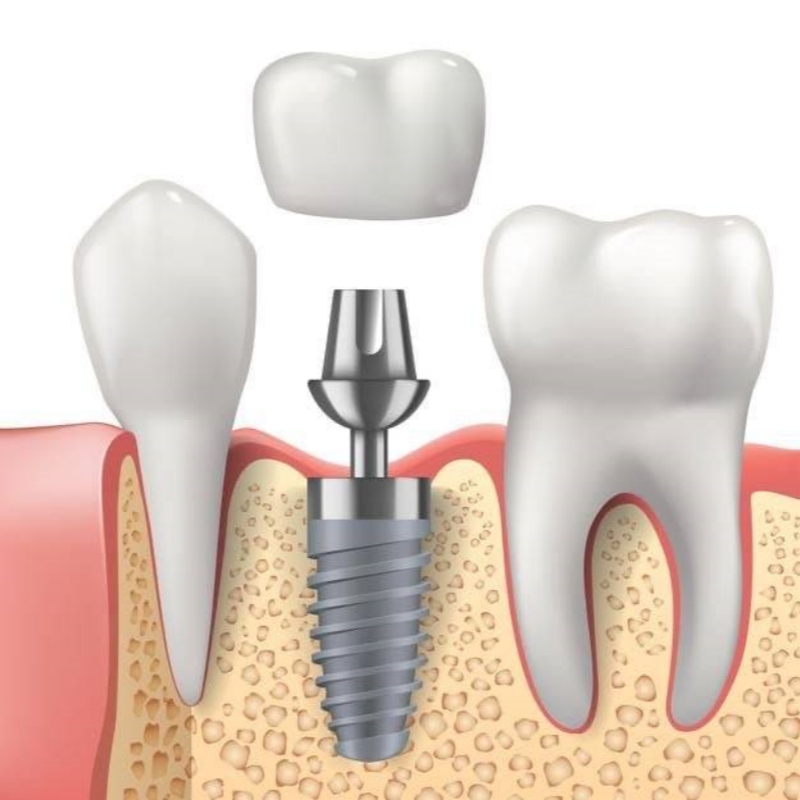
Implant Model
Here's a quick comparison of what you'll actually pay for premium implants across popular medical tourism destinations in 2026:
| Destination | Straumann (Complete) | Nobel Biocare | Osstem (Korean) | All-on-4 (Single Arch) |
|---|---|---|---|---|
| China | $620-$1,100 | $700-$1,400 | $840-$1,120 | $8,000-$15,000 |
| Thailand | $1,200-$1,800 | $1,000-$1,600 | $900-$1,400 | $7,600-$9,600 |
| Mexico | $1,400-$2,000 | $1,200-$1,800 | $750-$1,200 | $7,500-$13,500 |
| Turkey | $800-$1,500 | $700-$1,400 | $600-$1,000 | $5,000 (incl. hotel) |
Straumann implants cost $620-$1,100 in China, half of Thailand's $1,200-$1,800
You might notice a shocker in these numbers - China is the cheapest place to get Swiss premium brands placed. You can get a complete Straumann package in Beijing or Shanghai for $620-$1,100. The same procedure costs $1,200-$1,800 in Bangkok, and $1,400-$2,000 in Tijuana. How? China’s Volume-Based Procurement program forced suppliers to lower their prices by 63% to access China’s enormous market. Straumann’s response? Open a manufacturing campus in Shanghai to keep transportation costs low, while maintaining its Swiss standards.
Thailand definitely wins on convenience—you can finish everything in one 7-10 day trip and spend your recovery period on Ko Samui beaches. But if you need premium implants and don't mind the hassle of two separate visits, China delivers the lowest prices globally for top-tier brands. Nobel Biocare follows the same pattern at $700-$1,400 in China versus $1,000-$2,000 elsewhere. Turkey advertises those tempting all-inclusive packages with hotel stays for All-on-4 procedures (around $5,000 total), but when you break down single-tooth Straumann implants, they still run $800-$1,500—noticeably higher than China's government-regulated rates.
Korean brands deliver identical quality at $490-$840 (Osstem FDA-approved since 1997)
Osstem complete packages cost $840-$1,120 in China as of early 2026, compared to $900-$1,400 in Thailand. Dentium's SuperLine system drops even lower at $490-$770. To be honest, these brands hold FDA, CE, and ISO certifications with extensive clinical data backing them up. Osstem's TSIII implant shows 98.8% success rates at five-year follow-up—only 0.6% lower than Straumann's 98.2%. The company designed this system specifically for soft bone stability, which actually reduces your need for expensive bone grafting procedures.
Korean brands command 44% of China's implant market in 2026 because they balance quality and affordability so well. You save $300-$500 per tooth versus Swiss brands while accepting a statistically insignificant difference in long-term outcomes. Think about it—is that 0.6% success rate difference worth an extra $400 to you? MegaGen's AnyRidge system costs slightly more at $550-$800 but excels in low bone density cases. If your CT scan shows borderline bone quality, this brand might actually save you from a $1,500 grafting procedure down the line.
Chinese domestic implants match 97.5% success rates at $280-$630
The Beijing Daqing Xige complete packages cost $280-$420 as of January 2026. Trausim and Bioconcept range from $350-$630. They’re CE marked and export to 60+ countries. I was surprised by the four-year follow-up showings of 97.5% vs. 98%+ for international brands. We’re talking 0.5% difference in improvement. The gap though is years of clinical track record (10-15 years versus Straumann’s 30+ years of documented outcomes).
China's NMPA approval process requires the same biocompatibility testing as FDA standards. These implants use German-sourced titanium and similar surface treatments as premium brands. You'll save $700-$1,400 per tooth compared to Swiss options. The risk? We simply don't have three-decade outcomes data yet. If you need multiple implants and want to minimize costs, domestic brands make perfect sense. For a single front tooth where aesthetics matter most, spending extra on Straumann might give you better peace of mind—it's really about your personal risk tolerance.
Turkey's all-inclusive packages can't compete on premium implant prices
Turkey shops those alluring All-on-4 package deals for $5,000 all inclusive with hotel and airport transfers. China quoted $8k on top of that for treatment alone. Scratch the surface, though, and peek at those single-tooth procedures - the Turkish quoted me for Straumann implants at $800-$1,500 each versus China’s $620-$1,100. Clearly for some complex jobs, the bundle in Turkey has its appeal. Go ahead and book your 6-day trip to Istanbul, get that All-on-4 surgery under your belt (that’s a pun, work with it), then kick back in your hotel while they figure it all out.
For one to three single implants using premium brands, China's government price controls give you measurably better value. Mexico offers similar convenience for Americans—you can literally drive across the border to Los Algodones, pay $750-$1,650 per implant, and drive home the same week. But you're still paying 50-100% more than China's regulated rates. The question becomes: how much is convenience worth to you?
Government Price Cap Limits Public Hospitals to $630 Service Fees
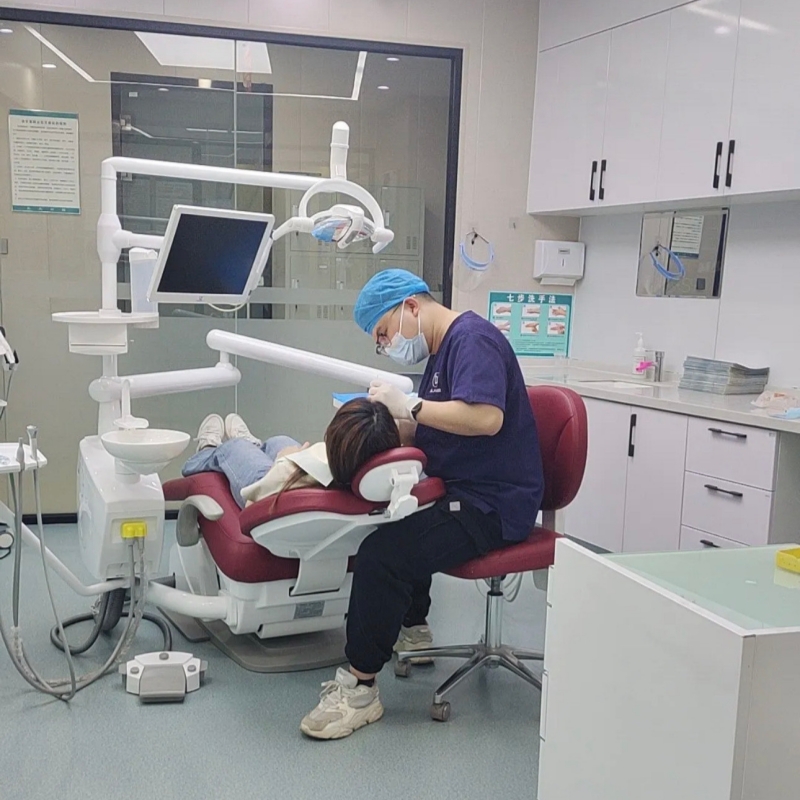
Private International Clinics
Here's what you actually pay when you break down dental implant cost China at government-regulated facilities in 2026:
| Cost Component | Public Hospital (VBP) | Private International Clinic | What It Includes |
|---|---|---|---|
| Medical Service Fee | $630 (capped) | $1,200-$2,000 | Consultation, surgery, anesthesia, follow-ups |
| Implant Fixture | $77-$260 | $200-$400 | Titanium post (brand-dependent) |
| Abutment | $70-$150 | $150-$300 | Connector piece |
| Crown | $110-$840 | $300-$1,200 | Visible tooth replacement |
| CT Scan | $22-$72 | $100-$300 | Diagnostic imaging |
| Total Range | $909-$1,952 | $1,950-$4,200 | Complete single implant |
CNY 4,500 ceiling covers surgery and anesthesia but excludes implant materials
Your $630 service fee covers your consultation, the surgery to place the implant, local anesthesia, and standard follow-up visits. It does not—and this part seems to trip a lot of people up—cover the implant fixture itself ($77-$260), abutment ($70-$150), crown ($110-$840), or diagnostic imaging to be sure there’s enough bone ($22-$300). Your actual total works out to: $630 service fee + $400 average materials + $200 basic crown = $1,230 minimum for the complete implant.
The policy applies to 3,000+ public and private clinics that volunteered to participate in the government's price governance program. You can verify participation by checking the National Healthcare Security Administration website (www.nhsa.gov.cn) or asking the clinic to show you their price disclosure certificate posted in the waiting room. Non-participating private clinics can charge whatever they want—typically $1,680-$3,500 for the complete package. Actually, some fancy clinics in Shanghai's financial district charge even more.
Private international clinics charge $1,680-$3,500 for English-speaking staff
Shanghai's Arrail Dental quotes $2,100-$2,800 for complete implants as of January 2026. Beijing's United Family Hospital charges $2,500-$3,500. You're paying a 100-150% premium over public hospital rates to get English-fluent dentists, Western-standard facilities, and immediate appointment availability. Public hospitals make you wait 2-4 weeks for an opening and provide zero English support. The examination rooms look dated—I'm talking 1990s equipment and harsh fluorescent lighting.
International clinics offer same-week bookings, accept international insurance direct billing, and honestly feel just like American dental offices with their modern chairs and ambient music. If you speak Mandarin or hire a medical translator for $30-$50 per day, public hospitals save you $1,500+. If language barriers stress you out and you value premium service with no miscommunication risks, international clinics are worth the markup.
VBP bulk procurement slashed implant costs from $700 to $260 (63% drop)
Prior to the 2022 Volume-Based Procurement program, Straumann implants cost clinics around $700 per unit. The government negotiated bulk purchasing agreements that slashed the price to $260 - a shocking drop of 63%. Osstem fell from $240 to $108. The winning bid was from Hangzhou Minsheng Lide at only $77 for a domestic implant. These prices are what hospitals adapt to suppliers, not edge they charge patients, but the savings do definitely trickle through.
Average dental implant cost China dropped from $2,000-$3,000 pre-reform to $1,200-$1,800 in 2026. Straumann reported 40-45% lower average selling prices in China but offset this with 25% volume growth as more middle-class patients could suddenly afford treatment. You directly benefit from government healthcare policy designed to make dental care accessible to 1.4 billion people—and foreign medical tourists get to ride that wave too.
Dental Implant Costs in China Vary by City: Beijing, Shanghai and Shenzhen
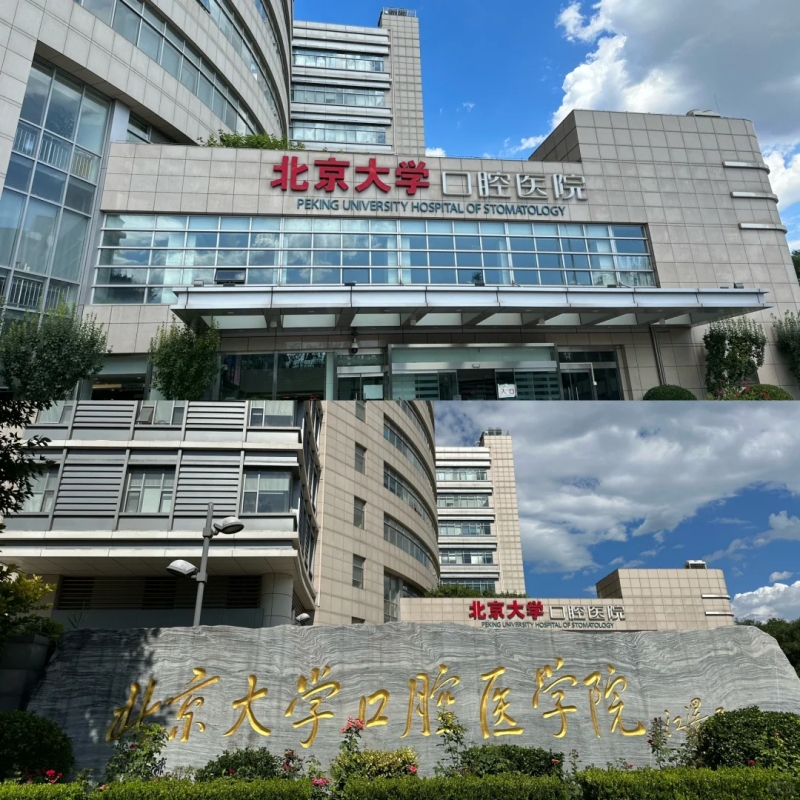
Peking University Hospital of Stomatology
Beijing public hospitals offer $530-$2,520 single implants with comprehensive pricing tiers
Peking University Hospital of Stomatology and Beijing Stomatological Hospital provide the most transparent dental implant cost China structure as of 2025-2026. Here's their standard pricing framework:
| Implant Category | Brand/Technology Type | Price Range (USD) | Best For |
|---|---|---|---|
| Single Tooth Implant | Chinese Domestic Brands | $530-$680 | Budget-conscious patients, good bone health |
| Korean Brands (Osstem, Dentium) | $810-$960 | Standard recovery cases seeking value | |
| US Brands (Hiossen) | $1,370-$1,820 | Mid-to-high quality demands | |
| Swiss Premium (Straumann) | $1,510-$2,520 | Complex cases, long-term durability | |
| Half Arch Restoration | Immediate Load Technology | $16,800-$21,000 | Missing multiple consecutive teeth in elderly |
| All-on-4 Technique | $25,200-$30,800 | Severe bone loss cases | |
| Full Arch Restoration | Traditional Fixed Method | $28,000-$35,000 | Full edentulous patients with normal bone |
| Zygomatic Implant Technology | $49,000-$56,000 | Upper jaw severe bone resorption |
Expect 3-4 week wait times for initial consultations at these public institutions. Zero English support—you'll need to bring a medical translator ($30-$50 per day) or rely heavily on Baidu Translate. United Family Hospital's international department charges $2,500+ for single implants with English-speaking dentists, effectively doubling the cost for basic Korean brand options.
The $1,500+ price gap between public and private facilities buys you convenience and clear communication. If you're comfortable navigating China independently or traveling with a Mandarin-speaking companion, public hospitals deliver rock-bottom dental implant cost China rates—especially for complex cases like All-on-4 where you save $10,000-$15,000 compared to Western prices. International clinics make more sense for short business trips where you can't afford wait times or language barriers that might compromise treatment quality.
Shanghai clinics offer $530-$2,240 single implants with premium brand options
Shanghai's dental market provides comprehensive pricing across multiple brand tiers. Here's the detailed pricing structure as of January 2026:
Single Tooth Implant Pricing (By Brand)
| Implant Brand | Price Range (USD) | Suitable For & Features |
|---|---|---|
| Chinese Domestic | $530-$840 | High cost-performance, suitable for patients with good bone conditions. Budget-conscious with limited budgets (promotional price as low as $277/tooth) |
| Korean Osstem | $490-$950 | Mainstream mid-range brand, mature technology, stable bone integration, best value choice |
| Korean Aodent | $630-$910 | More stable than Osstem, suitable for longer recovery periods with higher quality demands |
| US Hiossen | $1,090-$1,330 | Mid-to-high bone defect repair, surface treatment technology advanced, fast healing |
| German Camlog | $1,190-$1,370 | European precision manufacturing, suitable for patients demanding high accuracy |
| Swiss ITI (Straumann) | $980-$1,820 | Cutting-edge surface technology, bone integration rate 97%, long recovery success rate high, suitable for high-end or bone-deficient patients |
| Swedish Nobel Biocare | $1,050-$2,240 | Premium immediate loading first choice, PCC/Active design suitable for inadequate bone mass, excellent clinical data |
Half & Full Arch Restoration Pricing
| Treatment Type | Technology | Price Range (USD) | Description |
|---|---|---|---|
| Half Arch | Korean Fixed | $3,500-$5,040 | Typically 4-6 implants, supports half-arch fixed bridge |
| Half Arch | Swiss ITI Fixed | $5,040-$7,700 | Premium materials + digital guided surgery, higher stability |
| Half Arch | Swedish Nobel All-on-4 | $10,630-$11,890 | For severe bone resorption, requires immediate loading |
| Full Arch (All-on-4) | Korean System | $7,000-$9,090 | Only 4 implants support full-arch denture, minimal trauma, suitable for time-sensitive cases |
| Full Arch (All-on-4) | German/Swiss System | $16,220-$18,180 | ITI or Camlog premium system, digital guided navigation with full-arch restoration |
Note: Prices listed are for implant fixtures only, excluding abutments, crowns, pre-treatment CT, bone grafting, and other additional procedures. Some promotional activities (such as "First Implant $277") are time-limited flash sales, terms require confirmation.
Arrail Dental has 20+ locations around Shanghai, with WeChat booking available for appointments within 48 hours. Yonghua Dental has similar pricing. Both clinics use foreign-trained dentists and English medical records. Both are conveniently located in Pudong and the Jing’an district near metro stops.
They serve expats and business travelers who are willing to pay more in order to save time. You get 30-50% premiums over public hospitals for “white-glove service”—English speakers, Western-standard facilities with modern chairs and ambient music, and appointment slots available the same week. Some dental clinics can also bill international insurers like CIGNA and Allianz directly, so you don’t have to pay thousands out-of-pocket and fight to get reimbursement later.
For complex All-on-4 cases, Shanghai's premium German/Swiss systems at $16,220-$18,180 still save you $8,000-$16,000 compared to US prices of $25,000-$35,000.
Shenzhen and Guangzhou cut costs 30-40% for Hong Kong residents crossing border
Clinics near Shenzhen's Luohu border crossing charge $840-$1,200 for complete implants. You're literally 15 minutes from Hong Kong via high-speed rail. Guangzhou ranges from $900-$1,300. Hong Kong residents have been making same-day trips for dental care since the border reopened, communicating in Cantonese, and sometimes getting partial Hong Kong insurance reimbursement.
Second-tier cities like Chengdu and Xi'an drop to $630-$900 but lack English-speaking staff and international-standard facilities. The sweet spot in 2026 is definitely Shenzhen—you get 30-40% savings versus Shanghai while maintaining reasonable quality standards. Just verify the clinic participates in the government price governance program and holds proper NMPA certifications before booking anything.
Zirconia Crowns Add $210-$490, E.max Ceramics Reach $840
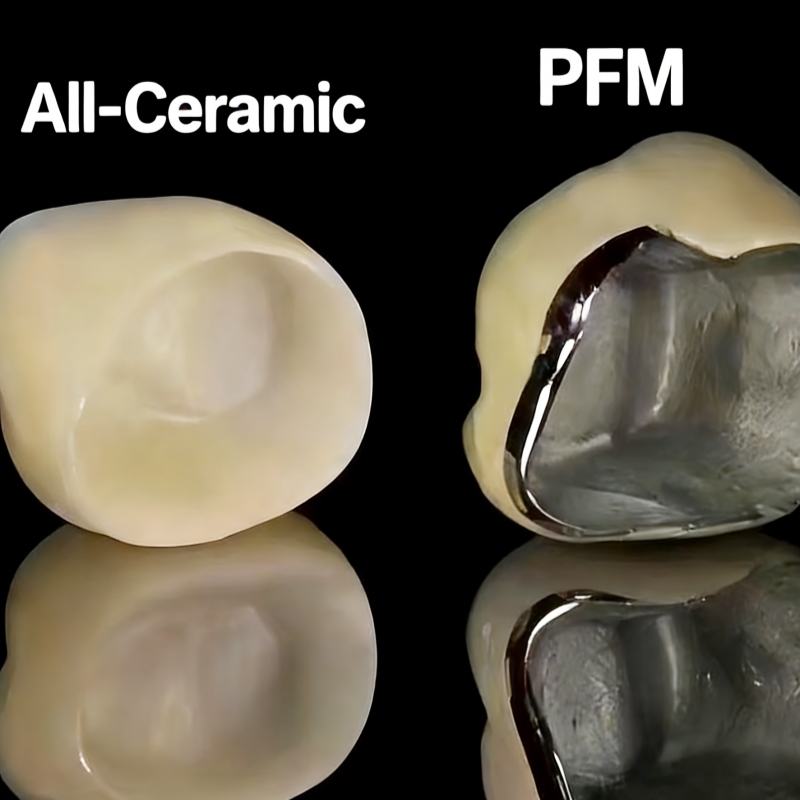
Crown Materials
The Crown materials significantly impact your final dental implant cost China in 2026:
| Crown Material | Price Range | Lifespan | Strength (MPa) | Best For | Key Drawbacks |
|---|---|---|---|---|---|
| Porcelain-Fused-Metal | $110-$350 | 8-12 years | 600-800 | Budget back teeth | Metal shows, allergy risk |
| Monolithic Zirconia | $210-$490 | 15+ years | 850-1,200 | All back teeth | Slightly opaque |
| High-Translucent Zirconia | $300-$490 | 12-15 years | 600-800 | Premolars | Less strength |
| E.max Lithium Disilicate | $350-$840 | 10-15 years | 400-500 | Front teeth only | Weak for chewing |
Porcelain-fused-to-metal saves $100-$200 but risks gum discoloration after 5 years
PFM crowns: $110-$350. 8-12 years life with good care. Strong enough to withstand heavy chewing forces. However, the metal edge can show through the gumline as a dark gray line after 5-10 years (especially if your gums retract very slightly with age). About 5-10% of patients will develop allergic reactions to nickel or other quality base metals. PFM is good for back molars where esthetics don’t matter. Never use on front teeth unless you are on a tight budget.
Most Chinese dentists are now moving away from the use of PFM, especially as they provide all-ceramic crowns that do not possess the same problems in creation. It’s like the Clover drive—works great, but there are newer and better options!
Monolithic zirconia balances strength and cost at $210-$490 for 15+ year lifespan
Zirconia crowns cost $210-$490 in 2026 and deliver 850-1,200 MPa of strength—that's comparable to titanium. They last 15+ years and work perfectly for back teeth that handle maximum chewing force. The material is slightly opaque, so it doesn't quite match natural tooth translucency for front teeth. But 70% of patients choose zirconia because it offers the best strength-to-cost ratio for dental implant cost China procedures.
No metal means zero allergy risk and no dark gumline issues. High-translucent zirconia formulations ($300-$490) improve aesthetics for front teeth but sacrifice some strength. Dentists typically recommend standard zirconia for molars and high-translucent versions for premolars in the smile zone. You know what? It's a smart compromise.
High-translucent E.max delivers natural appearance for visible front teeth
E.max lithium disilicate crowns cost $350-$840 and provide the most natural-looking results. Light transmission matches real tooth enamel almost perfectly—it's actually quite impressive when you see it side-by-side. Use this for your front six teeth (incisors and canines) where people see your smile. The material is weaker than zirconia at around 400-500 MPa, so it's unsuitable for back molars where you're grinding food.
Most dentists recommend a combination approach: E.max for front teeth plus zirconia for back teeth. This brings your total crown costs to $1,500-$2,200 for a complete implant in the visible smile zone. You get maximum aesthetics where it matters without overpaying for premium materials on hidden back teeth. It's honestly the most practical strategy.
International Insurance Rarely Covers Implants, But Payment Plans Available
High-tier expat plans from Allianz and CIGNA cover up to $1,000 with 10-month wait
William Russell’s Dental Plus add-on kicks in to cover implants up to £1,000 after the 10 month waiting period as of January 2026. CIGNA Global also includes implants in some plans—you’ll have to call and double-check before booking your treatments. Allianz Care also has a dental module that’s optional with an annual limit of €1,500.
The reimbursement process involves paying the clinic yourself, obtaining official Fapiao receipts and diagnostic records, and submitting claims for 6-8 week processing.Time to get back to my dental woes!
As with the rest of our health insurance, most plans exclude preconditions. Insurance isn’t the way to heal yourself once you got the tooth loss diagnosis. What surprised me was how many plans don’t cover dental implants specifically but cover basically everything else. Pay attention to the fine print when figuring out your true out-of-pocket dental implant cost China.
WeChat Pay requires Chinese bank account, credit cards work at international clinics only
Public hospitals accept only cash (Chinese yuan) or UnionPay debit cards in 2026. No Visa or Mastercard—period. International clinics take major credit cards but charge 3% currency conversion fees. WeChat Pay and Alipay work if you have a Chinese bank account linked. The international versions have limited functionality.
Open a Bank of China account if you're staying more than a few weeks—this gives you full access to China's mobile payment ecosystem. Otherwise, withdraw cash from ATMs as needed (your bank charges $3-$5 per transaction plus 1-3% foreign exchange fees). It's honestly a bit annoying, but manageable.
Private clinics offer 3-6 month installment plans for $5,000+ treatments
Installment plans typically apply to All-on-4 or multiple implants totaling $5,000+. Expect to pay 30-50% upfront, then split the balance over 3-6 months. Some clinics partner with third-party financing platforms that charge 0-8% interest. Foreign patients need to provide a passport and hotel booking confirmation to qualify.
Single-tooth implants under $2,000 usually require full payment before surgery. Ask about payment flexibility during your initial consultation if you need to spread costs over time. What surprised me was how negotiable this can be—clinics want your business and will work with you if you're pleasant about it.
FAQs: Dental Implant Cost in China
Q: What country is the cheapest to get dental implants?
Mexico's Los Algodones and Turkey's Istanbul offer $400-$750 per single implant—the absolute lowest global prices in 2026. But dental implant cost China beats them on premium Swiss and German brands. Straumann costs $620 in China versus $1,200 in Thailand or Turkey. For All-on-4 full arches, choose Turkey at $5,000 including hotel. For single high-end implants, China delivers better value. The best choice depends on how many teeth you need and which brands matter to you.
Q: How much does a 1 tooth implant cost in the USA compared to China?
USA prices range from $3,000-$6,000 per tooth in 2026 (Straumann runs $4,500+). China charges $300-$1,500. Add round-trip flights at $800-$1,500 and 7-night hotel stays at $300-$600. You still save $1,200-$4,000 per implant. Medical tourism makes most sense when you need 3+ implants—the savings multiply while your travel costs stay fixed. For single teeth, calculate whether the hassle of two international trips justifies the savings.
Q: Is China good for dentistry quality and safety?
The 3,000+ clinics participating in VBP price governance and JCI-accredited private hospitals like United Family maintain reliable standards. Risks come from small unlicensed clinics with loose oversight. Verify NMPA certification, ask to see sterilization protocols, and check dentist licenses on the National Health Commission website. Language barriers cause more problems than quality issues—miscommunication about treatment plans leads to wrong procedures. Bring a translator or choose English-speaking international clinics to minimize this risk.
Q: Do Chinese dentists speak English at public hospitals?
Public hospitals rarely have English-speaking staff outside international departments (which charge $50-$100 extra per visit for translation). Big-city Grade-3A hospitals might have one English-fluent dentist, but you can't choose your appointment slot. International private clinics employ foreign-trained and returned overseas Chinese dentists with fluent English. Budget solution: hire medical translators for $30-$50 per day or use Baidu Translate's real-time camera translation feature. It's not perfect, but workable.
Q: What happens if the implant fails after I return home?
Most clinics provide 5-10 year warranties covering implant fractures or loosening caused by manufacturing defects in 2026. Warranties exclude failures from poor oral hygiene or trauma. They don't cover your flight back to China for repairs. Consider buying Medical Travel Shield insurance ($200-$400) which covers treatment failures and re-treatment costs. Your home country dentist can handle most complications if you provide them with the original implant brand and specifications from your Chinese clinic records.
Q: How much does All-on-4 full arch restoration cost in China?
Single-arch All-on-4 runs $8,000-$15,000 in China compared to $25,000-$35,000 in the USA in 2026. The package includes 4 titanium implants, temporary dentures, and permanent zirconia bridges. Korean brand packages start at $8,000-$11,000. Swiss Straumann systems cost $12,000-$15,000. You can complete temporary restoration in a single 10-14 day trip. The permanent bridges require a second visit after 3-6 months of healing. Some clinics offer same-trip permanent restorations if your bone quality is exceptional.
Q: Do I need bone grafting and how much does it cost?
About 40% of patients need grafting if they delayed treatment beyond 6 months post-extraction or have periodontal disease history. CT scans showing bone density below 40 HU require grafting. Minor grafting for single implants costs $500-$1,000. Major reconstruction runs $1,500-$3,000. Upper back teeth often need sinus lifts at $1,500-$3,000 per side because the sinus cavity sits directly above the bone. Grafting extends your timeline by 6-9 months before implant placement can begin. It's honestly one of the biggest variables in dental implant cost China.
Q: How do I verify if a clinic participates in the government price cap program?
Visit the National Healthcare Security Administration website (www.nhsa.gov.cn) or search their WeChat official account "国家医保服务平台" (National Medical Insurance Service Platform). Look for the list titled "口腔种植价格治理医疗机构名单" (Dental Implant Price Governance Participating Institutions). Participating clinics must display price disclosure boards showing the CNY 4,500 service fee cap and VBP-approved implant brand pricing. Ask receptionists to show you this certification before paying any deposits. It's your protection against surprise charges.