China Grand Canyon: Enshi Grand Canyon
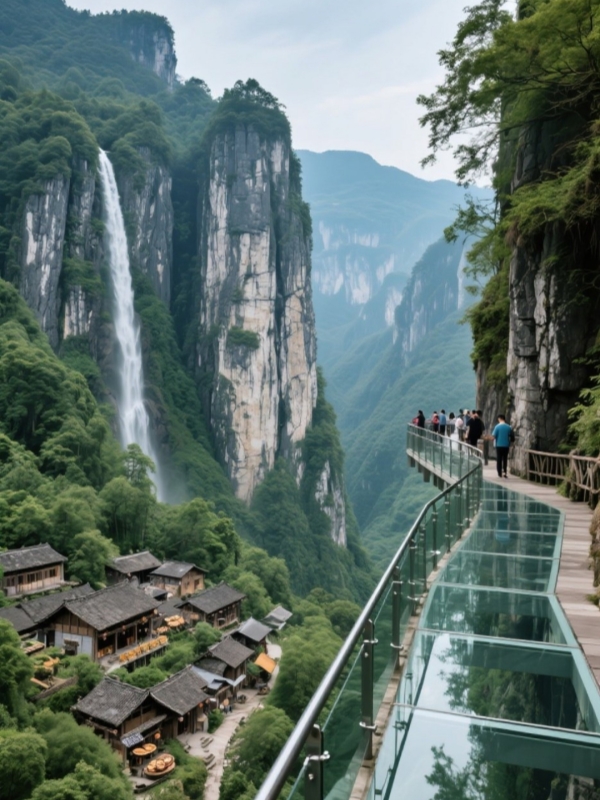
When foreign visitors search "China Grand Canyon," they almost always mean Enshi Grand Canyon in western Hubei — a 600-m-deep karst canyon with a freestanding 150-m stone pillar and a glass walkway pinned to its cliff face. It is the most heavily visited canyon in the country and the only one marketed internationally under the simple label "China Grand Canyon." This guide covers everything practical you need to plan a visit, followed by a comparison of China's ten most distinctive canyons so you can decide where to go.
Quick Facts
Enshi Grand Canyon — China's Most Famous Canyon
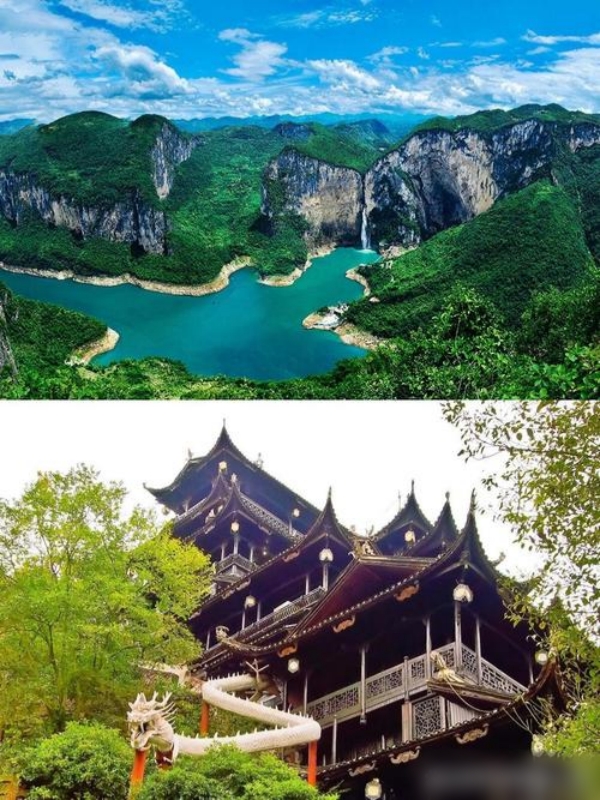
Enshi Grand Canyon
The China Grand Canyon that appears on international booking platforms is Enshi Grand Canyon in Hubei Province. It sits within the Enshi Tujia and Miao Autonomous Prefecture, roughly 52 kilometers southeast of Enshi city center. The karst landscape took shape over roughly 200 million years, producing sinkholes, vertical fissures, sheer cliffs, and underground rivers.
The highest cliff face rises about 1,500 meters above the valley floor. A freestanding limestone column called the One Incense Burner stands roughly 150 meters tall at the plateau edge. The canyon area covers about 300 square kilometers combining two named scenic zones. In 2024 it gained UNESCO Global Geopark status, and it holds China's top 5A scenic-area rating. Those two designations together make it the most formally recognized canyon in the country for international visitors. Most foreign travelers who enter "China Grand Canyon" into a search engine land on Enshi's listing.
Highlights Inside Enshi Grand Canyon
Two named scenic zones form the core loop at Enshi Grand Canyon. Seven Star Village sits at the cliff-top plateau. Yunlong Ground Fissure runs below it. A glass walkway bridges a section of the upper cliff face. Most visitors arrive at the visitor center, take the upper cable car to the plateau, walk the cliff-top loop including the One Incense Burner, then descend into the fissure on foot before exiting.
The One Incense Burner (Yizhu Xiang)
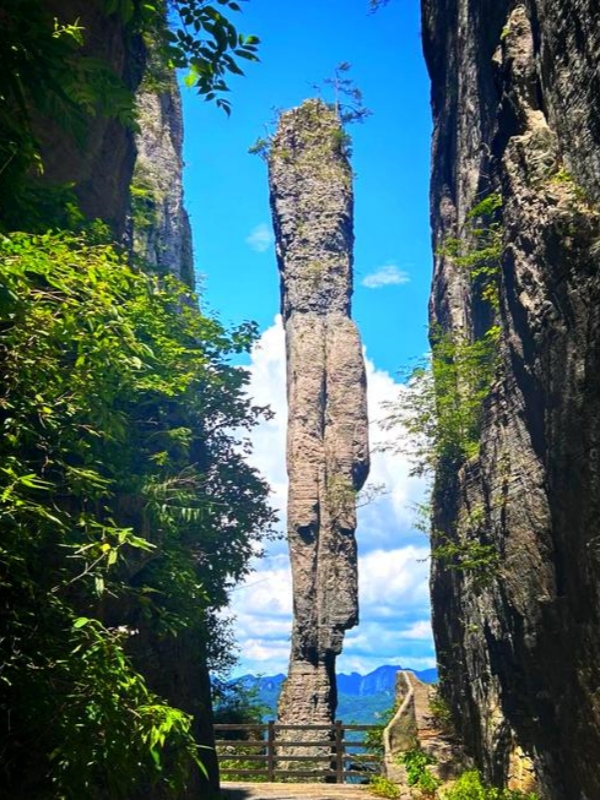
Enshi Grand Canyon
The One Incense Burner is the signature rock formation at Enshi Grand Canyon. It is a single freestanding limestone column roughly 150 meters tall rising from the cliff-edge plateau. The shape gives the formation its name — it resembles a stick of incense standing upright. You reach it via the upper scenic zone after taking the cable car to Seven Star Village. The viewing platform near the second cable-car drop-off gives the clearest line of sight. Morning light cuts fewer shadows, which helps with photography.
- Location: On the Qixingzhai (Seven Star Village) plateau, upper scenic zone
- Access: Upper cable car from visitor center, then ~1.5 km walking from the plateau drop-off
- Best time for photos: Morning (08:30–10:30) for least shadow on the column face
⛰️ Explore More Canyons: Discover the towering cliffs, hiking trails, and ancient villages hidden inside Longqing Gorge China.
Seven Star Village (Qixingzhai)
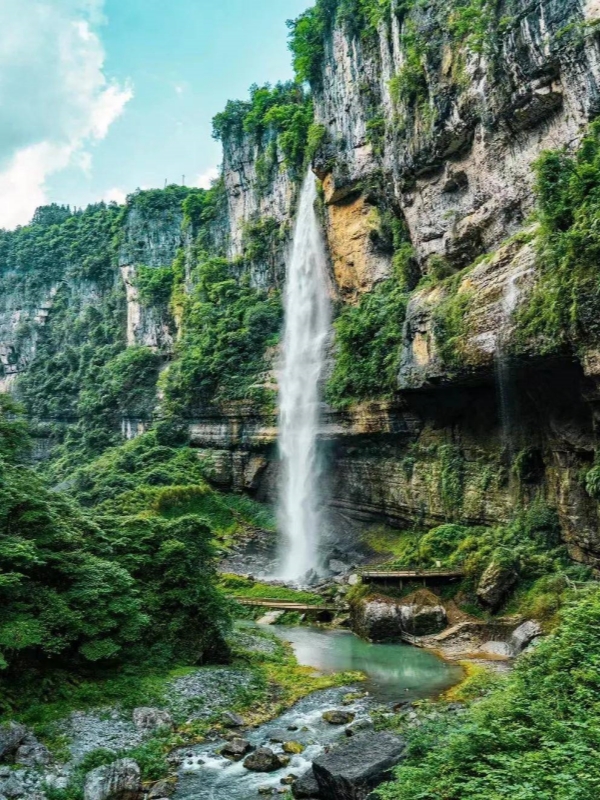
Enshi Grand Canyon
Seven Star Village is the cliff-top zone that holds the One Incense Burner and a string of cliff-edge viewing platforms. The upper cable car from the visitor center is the standard route up — a one-way fare of about $14 (¥98). Once on the plateau, a loop walk of roughly 4–5 kilometers links the main platforms. The glass walkway is also part of this zone and is included in the main combo ticket.
- Role: Upper scenic zone; holds the One Incense Burner and glass walkway
- Cable car: about $14 (¥98) one-way from visitor center to plateau
- Loop walk: ~4–5 km between major viewing platforms
🏜️ Western Canyon Highlights: Experience the dramatic red sandstone landforms and mountain corridors in our guide to Tianshan Grand Cayon.
Yunlong Ground Fissure
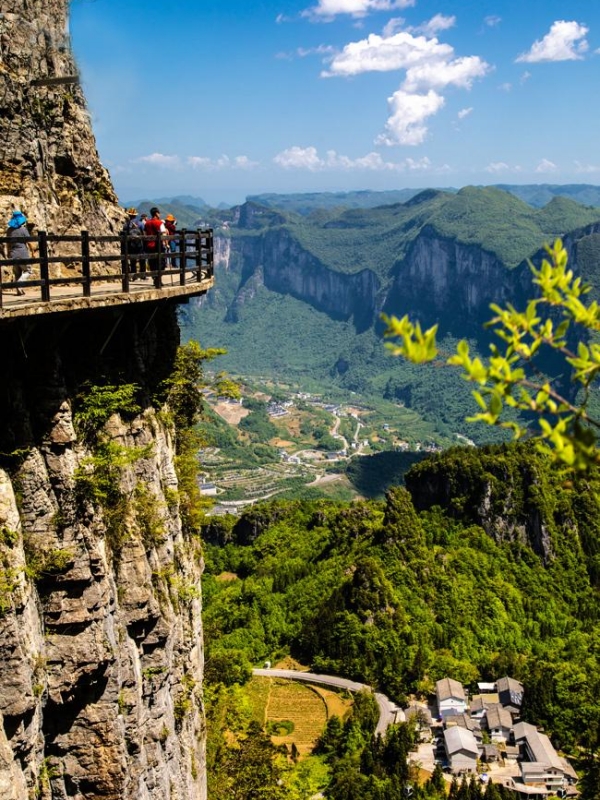
Enshi Grand Canyon
Yunlong Ground Fissure is the lower scenic zone at Enshi Grand Canyon — a slot canyon roughly 3.5 kilometers long, carved by surface and underground rivers over geological time. Visitors typically descend from Qixingzhai on foot to reach the bottom loop. The route goes downstream through the narrow gorge, passing waterfalls and exposed rock walls. Heavy rain in July and August can cause parts of the fissure to close temporarily.
- Route: Descend on foot from Qixingzhai plateau into the ~3.5 km slot canyon
- Length: Approximately 3.5 km of walking through the fissure
- Seasonal note: Heavy rain in July–August can trigger temporary closures — check conditions on the morning of your visit
🏔️ Volcanic Canyons & Alpine Lakes: Explore the dramatic volcanic rift and alpine landscapes in our full feature on Changbai Mountains.
Top 10 Grand Canyons in China
Of the dozens of major gorges carved across Chinese territory, these are the most distinct by depth, length, geological origin, or international recognition. Enshi sits in the middle of the pack on sheer numbers, but leads on visitor access and tourism infrastructure — a key reason it absorbs the "China Grand Canyon" label abroad.
Yarlung Tsangpo and Three Gorges are best suited for travelers already based in Tibet or Chongqing. Tiger Leaping Gorge attracts serious hikers. Nujiang offers remoteness but limited English signage. For first-time canyon visitors and most international travelers, Enshi Grand Canyon remains the most approachable entry point on this list.
Tickets, Hours & Glass Walkway Safety
Planning ahead on tickets and timing helps avoid the biggest pain points at Enshi Grand Canyon. The site fills up quickly on weekends and public holidays. Below is a clear breakdown of what you will pay, when to arrive, and how to handle the glass walkway safely.
Ticket Options and Prices
The main combo ticket covers both scenic zones and the glass walkway — it is the standard purchase for most visitors. Individual zone tickets also exist but cost nearly as much, so the combo offers better value. Child discounts apply by height and age; confirm the exact thresholds at booking since the rules change periodically.
- Main combo ticket: about $55 (¥388) — covers Qixingzhai, Yunlong Ground Fissure, and the glass walkway
- Upper cable car: about $14 (¥98) one-way
- Yunlong escalator: about $7 (¥50) — saves the climb back up from the fissure
- Child discounts: free for young children; half-price for older children — verify exact height/age thresholds at booking
Glass Walkway Safety Essentials
The cliff-side glass walkway at Enshi Grand Canyon is enclosed with railings and is short — most visitors cross in 5–15 minutes. It is included in the main combo ticket with no separate fee. A few operator rules apply to all walkers, and a couple of practical details are worth knowing before you arrive.
- Footwear: Closed-toe shoes only — no sandals or heels; the path can be wet from cliff spray
- Height/age restrictions: Apply — confirm exact cm and age thresholds at booking or on site
- Best timing: Calmest right at opening (08:30); crowded 11:00–14:00
- Weather risk: Afternoon thunderstorms in summer can close the walkway — check the morning forecast
- Prohibited: Do not run, lean over the rail, or bring large tripods; operators may refuse entry
- Crossing time: 5–15 minutes depending on crowding and pace
Opening Hours and Best Months
The site runs longer hours in peak summer and shorter hours in the off-season. Last entry shifts depending on the time of year, so it is worth checking before you set out. April, May, September, and October offer the most reliable conditions. July and August see the heaviest rainfall, and occasional trail closures in Yunlong Ground Fissure follow.
- Shoulder season hours: 08:00–17:30 (last entry ~15:00)
- Peak summer hours: 07:30–18:00 (last entry ~16:00)
- Best months: April, May, September, October — warm, mostly dry, good visibility
- Avoid: July–August — rainy season, possible Yunlong Fissure closures after heavy rain
Getting to Enshi Grand Canyon
Reaching Enshi Grand Canyon involves two stages: getting to Enshi city or its airport, then covering the final 52 kilometers to the canyon. Both stages have more than one option, so you can choose based on budget or schedule. The tourist shuttle is the typical foreigner-friendly choice for the last leg because taxi return logistics can be awkward.
By Air to Enshi Xujiaping Airport
Enshi Xujiaping Airport (ENH) has direct flights from several major hubs including Shanghai, Beijing, Guangzhou, and Shenzhen. Flight time from these cities runs roughly 2–3 hours. Fares vary by origin and booking date, typically ranging from about $120–250 (¥850–1800) one-way.
- Route network: Direct flights from Shanghai, Beijing, Guangzhou, Shenzhen, and other major hubs
- Flight time: ~2–3 hours from major eastern and southern cities
- Fare range: about $120–250 (¥850–1800) one-way depending on origin and booking date
By High-Speed Rail to Enshi Station
Enshi Station sits on the Shanghai–Wuhan–Chengdu high-speed rail line. From Wuhan the journey takes roughly 4 hours. And from Chongqing it is about 3 hours. From Chengdu the ride runs around 5 hours. Second-class fares typically range from about $30–80 (¥210–560) depending on the departure city.
- Rail line: Shanghai–Wuhan–Chengdu high-speed rail line via Enshi Station
- Journey times: ~4 hours from Wuhan, ~3 hours from Chongqing, ~5 hours from Chengdu
- Fare range: about $30–80 (¥210–560) second class depending on origin
Last Leg — Enshi City to the Canyon
The distance from Enshi city center to the canyon is roughly 52 kilometers. A tourist shuttle bus runs this route for about $4 (¥30) per person. Taxis or Didi cost roughly $35–45 (¥250–320) one-way. Taxis sometimes decline to return without a separate one-way booking arranged in advance, which makes the shuttle the simpler option for most visitors.
- Distance: ~52 km from Enshi city center to the canyon gate
- Shuttle option: Tourist shuttle bus — about $4 (¥30) per person, foreigner-friendly
- Taxi/Didi: about $35–45 (¥250–320) one-way; confirm the driver will return before departing
Practical Tips for Visiting China's Grand Canyons
A few planning basics apply to almost any canyon visit in China. Season choice affects trail conditions and visibility. Physical demands vary widely — Enshi is a long stair walk, while Yarlung Tsangpo requires altitude acclimatization. Booking channels differ from what most domestic Chinese visitors use, and the Tibet Travel Permit has its own lead time.
Best Seasons for Each Canyon
Each canyon has its own optimal window. Spring and autumn are safest across most sites. Summer works for some northern and western canyons but brings monsoon rain to Yunnan and Hubei. Winter access is limited at high-altitude sites like Changbai Mountain and Yarlung Tsangpo.
- Enshi / Taihang / Wujiang: April through October
- Yarlung Tsangpo: April–June and September–October
- Tiger Leaping Gorge: March–June and September–November
- Keketuohai: June through October
- Changbai Mountain: June through September
- Three Gorges cruises: April–May and September–November
Physical Preparation and Gear
Enshi Grand Canyon requires roughly 5–6 hours of walking with significant stair climbing. Yarlung Tsangpo sits above 3,000 meters and demands altitude acclimatization. Tiger Leaping Gorge is a real multi-day hike with steep elevation gain. Closed-toe shoes are essential for any glass walkway or cliff-edge trail. A rain shell and water bottle are useful at nearly every canyon site.
- Enshi: 5–6 hours of stair walking — prepare for sustained elevation change
- Yarlung Tsangpo: Altitude acclimatization required — do not rush the ascent
- Changbai Mountain: High elevation; dress for cold even in summer
- Universal: Closed-toe shoes, rain shell, water bottle — essential at any canyon
Booking Tips for Foreign Visitors
Trip.com and Klook carry English-language tickets for Enshi Grand Canyon, Tiger Leaping Gorge, Taihang Mountain, Changbai Mountain, and Keketuohai. Yarlung Tsangpo requires a Tibet Travel Permit (入藏函) arranged through a registered travel agency — the process takes roughly 3–4 weeks. Bring your passport to the entrance gate at every Chinese scenic area; ticket collection is tied to the booking name and ID number.
- Online platforms: Trip.com and Klook carry English tickets for Enshi, Tiger Leaping, Taihang, Changbai, and Keketuohai
- Tibet permit: Yarlung Tsangpo requires a Tibet Travel Permit — arrange via registered agency ~3–4 weeks ahead
- Passport requirement: Bring your passport to the entrance gate at every Chinese scenic area
Frequently Asked Questions
Q: How long do you need at Enshi Grand Canyon?
One full day — plan for 8–10 hours — to cover both Seven Star Village and Yunlong Ground Fissure plus the glass walkway. A half-day visit is possible only by skipping the fissure entirely, which means missing one of the two named zones the combo ticket covers.
Q: Is the Enshi glass walkway safe for people afraid of heights?
The walkway is enclosed with railings and most visitors cross in 5–15 minutes. The earliest morning slot right at 08:30 opening tends to be the quietest. Visitors with severe vertigo can skip the walkway without losing access to the rest of the canyon — the Yunlong Ground Fissure runs at ground level and does not involve heights.
Q: What is the deepest canyon in China?
Yarlung Tsangpo Grand Canyon in Tibet holds the record — officially listed as roughly 6,009 meters deep and 504.6 kilometers long, making it the deepest canyon on Earth. Enshi Grand Canyon is much shallower in absolute terms (the cliff face is about 1,500 meters) but far more accessible for international visitors.
Q: Do I need a guide to visit Enshi Grand Canyon?
No guide is required to enter. Main junctions carry Chinese and English signage. If you want historical or cultural context, an English-speaking guide can be booked through Trip.com or Klook for roughly $80–120 (¥560–840) per day.
Q: Can foreigners visit Yarlung Tsangpo Grand Canyon?
Yes, but a Tibet Travel Permit (入藏函) is mandatory. Independent travel inside the Tibet Autonomous Region is not permitted. You must arrange the permit through a registered travel agency — the process typically takes 3–4 weeks before your intended arrival date.
Q: Is Tiger Leaping Gorge suitable for a day hike?
Yes. The standard day-hike route follows the upper trail to the Halfway House or Tina's Guesthouse area — roughly 12 kilometers round trip, taking 4–6 hours. The full lower trail requires two days with overnight accommodation at one of the guesthouses along the route.
Q: When is the best season for Enshi Grand Canyon?
April, May, September, and October offer the best conditions — warm temperatures, mostly dry weather, and good visibility for photography. July and August bring the heaviest rainfall; parts of Yunlong Ground Fissure can close temporarily after heavy rain.
Q: How do foreign visitors book Enshi Grand Canyon tickets?
Trip.com and Klook carry the combo ticket with English-language confirmation. Meituan and Dianping — the main domestic channels — require a mainland Chinese phone number and a domestic payment app, so they are not workable for most foreign visitors. Bring your passport on the day of the visit for ticket collection at the gate.