
Best Time to Visit Hainan Island:Four Distinct Seasons With Unique Coastal, Mountain & Gourmet Experiences All Year Round
The best time to visit Hainan Island is from November to April—this is when the island switches into dry season mode: skies clear, humidity drops, and daytime temps linger at around 22–27°C (72–81°F) in Sanya. The really sweet times are December to March when the rain really drops to a minimum—19.5mm (0.77in) in January—and when the South China Sea glitters with enough visibility to send divers booking return trips.
While the north freezes in winter, Sanya’s beaches bustle year-round with open-air dining. But timing is key: the storms of typhoon season (June–October) unsettle even the most intrepid travellers, and Chinese national holidays fill every resort. Read below for a month-by-month breakdown of the weather, plus a season-by-season overview of activities and the exact dates you’ll want to plan around, or avoid.
Hainan Island Weather by Month
Understanding Hainan weather by month is the fastest way to lock in the best time to visit Hainan Island for your trip style and budget.
† Data reflects long-term normals for Haikou (northern Hainan). Sanya (southern tip) runs approximately 2–3°C (4–5°F) warmer year-round: e.g., January daytime highs around 23–25°C (73–77°F), nights around 18–20°C (64–68°F).
⭐ = top-rated months | Crowd: 👤 = light → 👤👤👤👤👤 = peak | Data baseline: Haikou; Sanya runs 2–3°C warmer throughout.
January is statistically the driest month on record — just 19.5mm (0.77in) of rain and only 8 rain days. September flips to the opposite extreme at 244.1mm (9.6in), marking the peak of the wet season. For the most reliable beach weather, plan around the ⭐ months above.
Best Season to Visit Hainan Island for Activities
Winter for Divers and Sun Seekers
-
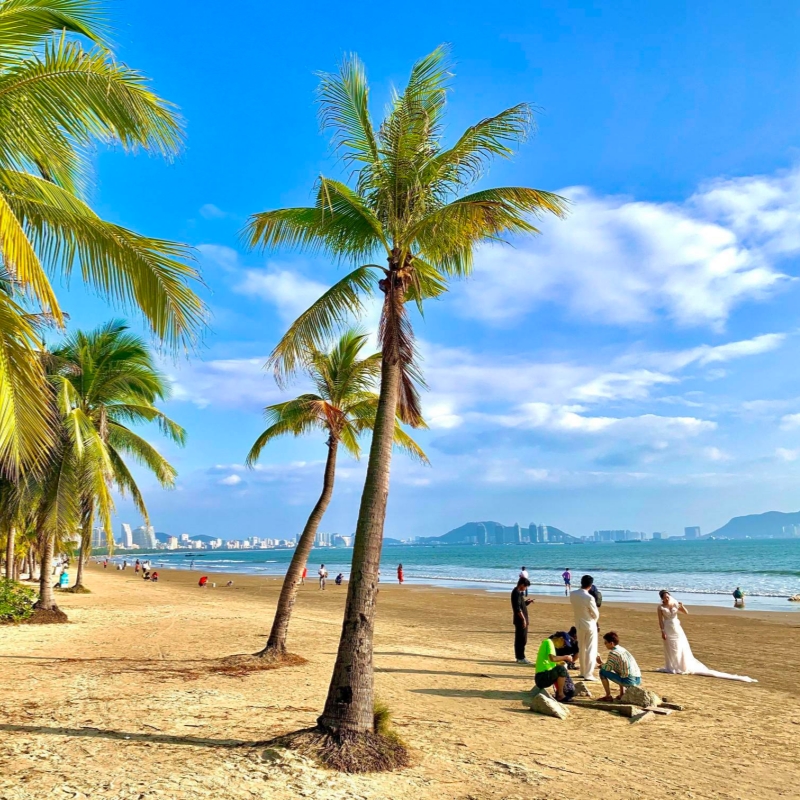

- Coconut Coast in Winter Hainan
-
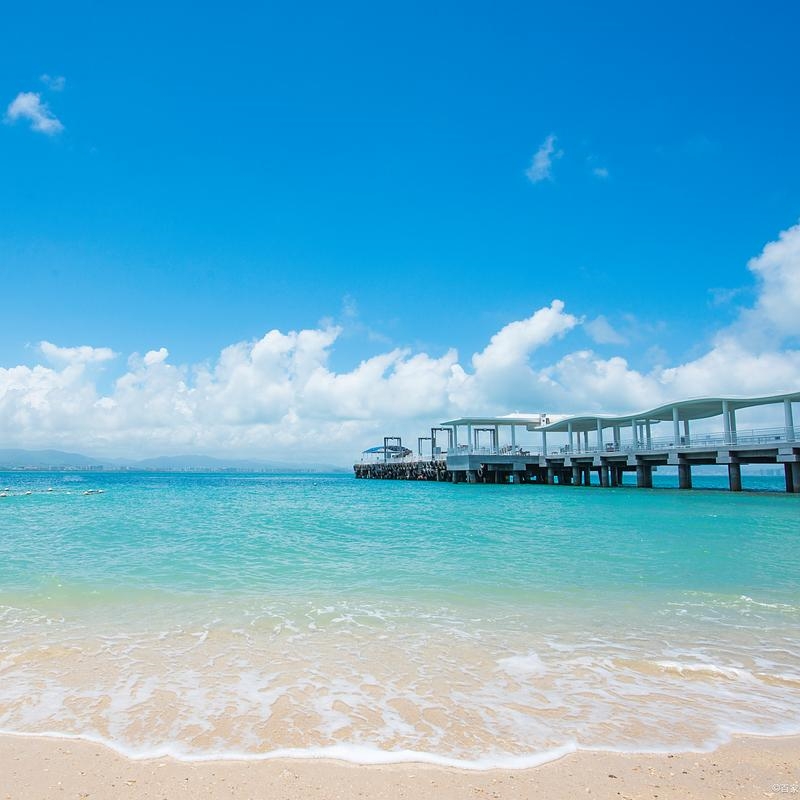
- Quiet Winter Coastal View
-

- Clear Winter Underwater Diving
-
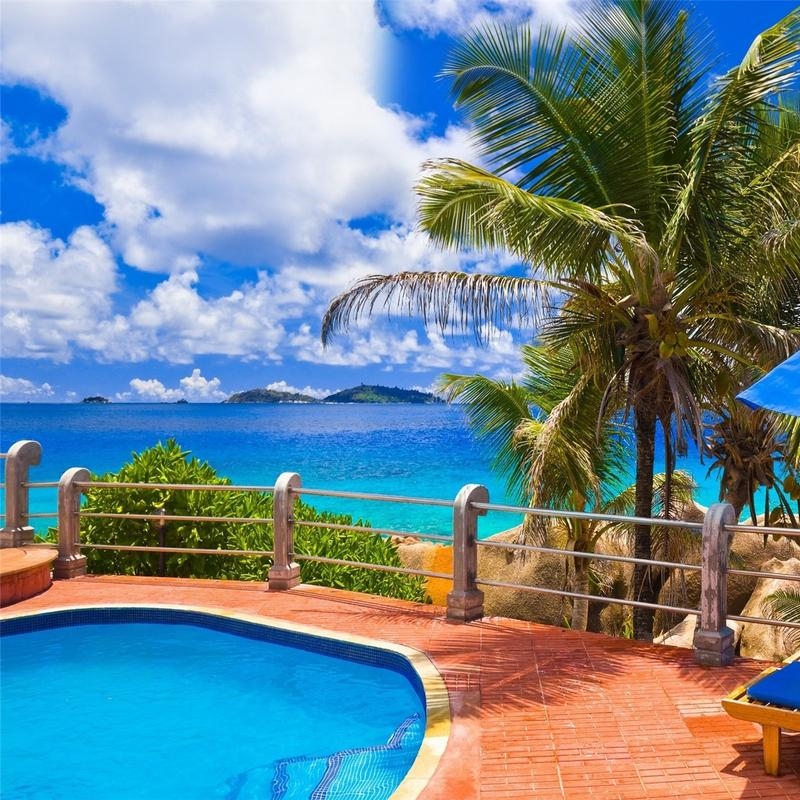
- Winter Hainan Resort Pool
Winter is Hainan’s golden season — dry skies, calm seas, and water temperature hovering around a reasonably balmy 24–26°C (75–79oF) make every underwater session genuinely worthwhile. One honest caveat though: the sea feels ‘refreshing’ rather than ‘tropical bathwater’ (so bring a thin rash guard for snorkel sessions longer than 45 minutes).
- 🤿 Scuba diving at Wuzhizhou Island & Yalong Bay: peak visibility season; coral gardens and reef fish at their clearest; the best window for both certified dives and beginner resort dives
- 🏖 Beach relaxing on Dadonghai & Sanya Bay: wide sandy shores, low humidity, breezy evenings; ideal for slow-paced winter sun escapes without the summer crowds
- ⛳ Golf at Mission Hills Haikou or Yalong Bay Golf Club: Hainan’s world-class fairways are most pleasant December through February; book tee times well in advance during peak weeks
- 🏯 Tianya Haijiao (天然海角) at sunset: winter light hits the granite boulders perfectly; Spring Festival folk customs in late January and February add a welcome cultural layer
Spring for Hikers and Beginner Surfers
-

- Wuzhi Mountain Trail
-

- Yanoda Rainforest
-
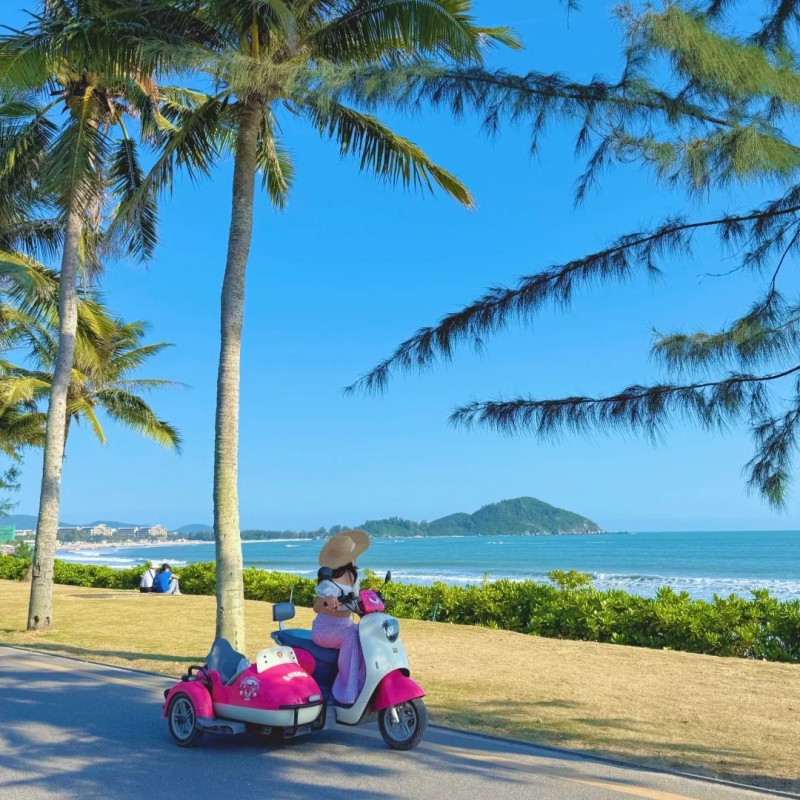
- Shimei Bay Coast
-
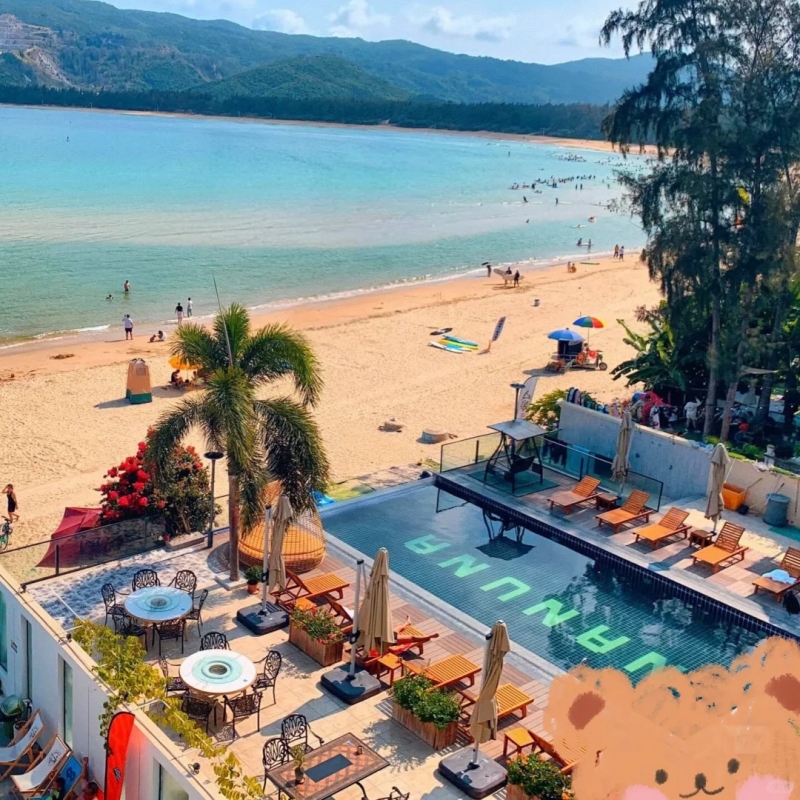
- Houhai Village Beach
Spring is a dear friend — relatively dry in March, growing warmer and more humid as we approach May and the rainy season. March and April reach a pleasant 21–31°C (70–88°F) and are great for just about everything.
- 🥾 Hiking Wuzhi Mountain (五指山): March–April is ideal; lush post-dry-season greenery, cooler summit temperatures around 20°C (68°F), and trail conditions at their best before summer rains arrive
- 🌊 Surfing at Shimei Bay (石梅湾) & Houhai Village: spring swells pick up steadily; Houhai suits beginners with mellow breaks, with board rental available from local hostels
- 🌺 Yanoda Rainforest Cultural Tourism Zone: tropical flowers in full bloom; moderate temperatures make the forest walks genuinely enjoyable before summer heat sets in
- 📸 Boao Forum Area & Qionghai coastal scenery: April is shoulder season — fewer crowds, lower hotel rates, and the bay’s turquoise water still perfect for photography
From late April onward, humidity climbs noticeably — pack reef-safe sunscreen and stay well hydrated on outdoor walks.
Summer for Budget Travelers and Experienced Surfers
-

- Summer Atlantis Waterpark
-

- Eco Resort by Wuzhi Mountain
-

- Summer Surfing at Riyue Bay
-

- Parasailing at Sanya Sea
Summer is too hot, too humid and too wet for a conventional beach holiday, but it’s perfect for surfers, waterpark fans and backpackers travelling on the cheap. Hotel rates drop 30–50% compared to peak season when more exacting guests want perfect swimming and sunshine.
- 🏄 Surfing at Riyue Bay (日月湾), Wanning: northeast swells bring 3–5m waves, up to 6m during typhoon swell; check current conditions via local surf schools before paddling out
- 🎢 Atlantis Sanya Aquaventure Waterpark: indoor and outdoor water slides and wave pools; a summer staple for families; book tickets online in advance to avoid queues
- ⛰️ Wuzhi Mountain hiking & eco-resort stays: summit temperatures run approximately 5°C (9°F) cooler than coastal Sanya — a genuine escape from the heat for nature lovers
- 💰 Budget-friendly off-peak exploring: hotel rates at their annual low; a great window to explore Haikou’s Qilou Old Street and local markets without weekend crowds
Monitor typhoon forecasts via nmc.cn (China Meteorological Administration) or the Joint Typhoon Warning Center at jtwc.navy.mil for English-language advisories — and always hold travel insurance that covers natural disasters.
Autumn for Value Seekers and Cyclists
-

- Pink Dusk at Autumn Sanya
-
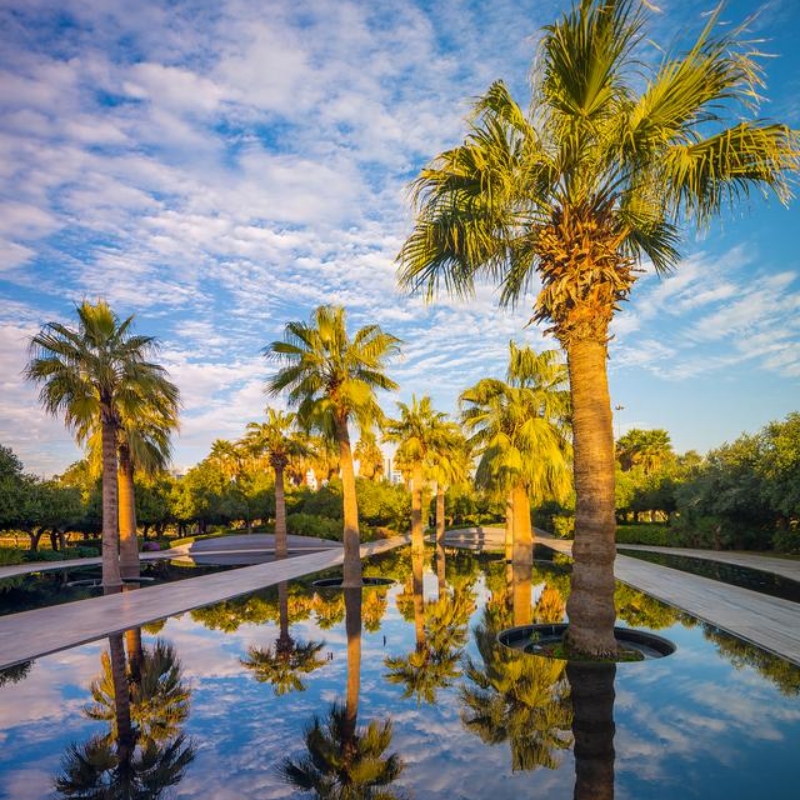
- Mirror Pool at Autumn
-
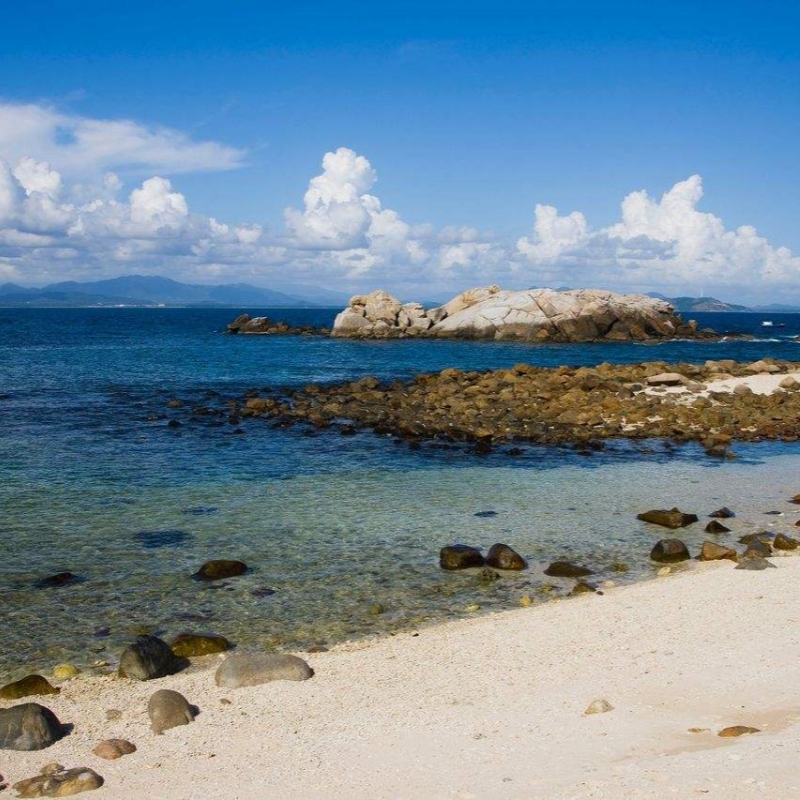
- Clear Rocky Coast
-

- Coconut Beach
September is still stormy, but by October the skies begin to clear - and November is the opening of Hainan’s best time to come window. It really is the best value month on the island; you have perfect weather without the resort’s December prices.
- 🎬 Hainan International Film Festival (late November–early December, Sanya/Haitang Bay): film screenings, red-carpet events, and a lively cultural atmosphere; worth timing a November trip around
- 🏖 Dadonghai Beach from late October: sand largely crowd-free, water still warm at around 26°C (79°F), hotel rates not yet at December peaks — the quietest this beach ever gets
- 🚵 Cycling Sanya Bay coastal path: October’s clear skies make this 22km seafront route ideal; rent bikes from hotels or via Meituan shared-bike stations along the waterfront
- 🌊 Surfing at Riyue Bay — winter season warm-up: November brings the first northeast swells of the surf season; check the current-year schedule at World Surf League Asia for competition dates
For a broader look at activities beyond weather windows, see the guide to things to do in Hainan.
Best Places to Visit in Different Parts of Hainan
Popular Beaches and Islands in Sanya
Sanya is the crown jewel of any best time to visit Hainan Island itinerary — and each of its top beaches shines brightest in a slightly different season.

Nanshan Guanyin by Sanya Sea
- Yalong Bay (亚龙湾) — Best: December–March: Clear water with 30m+ visibility for divers; certified dive ¥580–680/tank; resort dive (no certification needed) ¥300–400; snorkelling trips approximately ¥200/2hr
- Wuzhizhou Island (蜈支洲岛) — Best: November–April: Premier dive site with coral gardens; current entrance + round-trip ferry ¥144 peak / ¥136 low season (from ¥133 pre-booked online); electric cart island tour available as an add-on (pricing verified 2025–2026)
- Sanya Bay (三亚湾) — Best: November–March: 22km coastal cycling path, wide sandy beach, and dramatic sunset views; far less crowded than Yalong Bay and considerably easier on the budget
- Tianya Haijiao (天涯海角) — Best: December–February: Most atmospheric in winter light; Lunar New Year folk performances add a cultural layer; pairs well with Hainan’s duty-free policy shopping at nearby Haitang Bay — for a full shopping breakdown, see the duty-free shopping guide
Old Streets and Parks in Haikou

Night View of Qilou Old Street
Beyond Sanya, Hainan’s north and interior offer a completely different travel rhythm — culture, surfing, and rainforest, each with its own ideal seasonal window.
- Qilou Old Street (骑楼老街), Haikou — Best: November–April: Historical shop-house arcade architecture; best explored in cooler, drier months; pair the walk with a bowl of Hainan Rice Noodles from the morning market stalls nearby
- Riyue Bay (日月湾) & Houhai Village, Wanning — Best: November–March: Riyue Bay hosts Hainan’s flagship surfing competitions each winter; check the current-year schedule at World Surf League Asia; Houhai suits beginners with mellow breaks and hostel surf culture
- Yanoda Rainforest & Wuzhi Mountain — Best: March–May: Dry-season trails before summer rains; Wuzhi summit at approximately 1,867m (6,125ft) stays noticeably cooler year-round, making it a reliable retreat in any season
- Volcanic Crater Park (火山口公园), Haikou — Best: Any dry month: Unusual lava landscape unlike anything else on the island; more enjoyable October–April when humidity is lower and the paths stay dry
Local Food to Experience in Hainan
Peak Season Picks (November–March)
-

- Wenchang Chicken
-
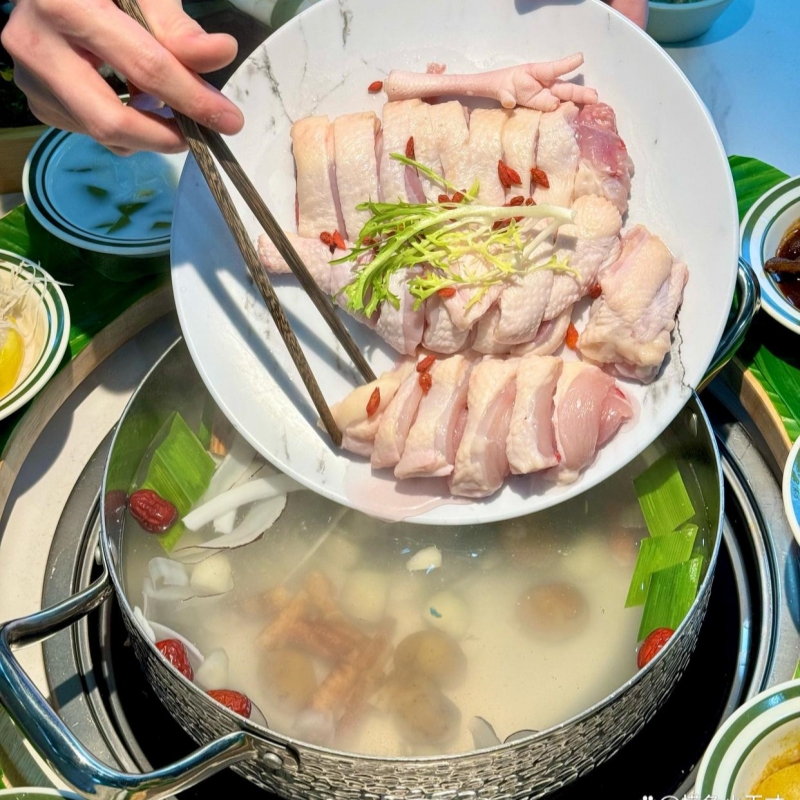
- Coconut Chicken Hotpot
-

- Hainan Rice Noodles
-

- Qingbuliang
This is when Hainan’s seafood is freshest and the street food markets are fully alive — here’s what to order.
- Wenchang Chicken: Hainan’s most iconic dish; silky white-cut chicken served with fragrant rice; best tried in Wenchang itself or at dedicated restaurants throughout Sanya
- Hele Crab: Wanning specialty with rich golden roe; peak-season crabs are at their plumpest from October through February — worth the trip east for the freshest catch
- Coconut Chicken Hotpot: sweet coconut-broth base with free-range chicken; Sanya’s most-ordered group meal and perfect for cooler winter evenings when a hot pot actually makes sense
- Hainan Rice Noodles: classic breakfast staple; try the thick-noodle version (粗粉) from Haikou’s old market stalls for the most authentic version at well under ¥20
- Qingbuliang: chilled coconut-based dessert soup with yam, lotus seeds, and longan; sold at street stalls year-round but most refreshing during the cooler dry season
Off-Season Eats (April–October)
-
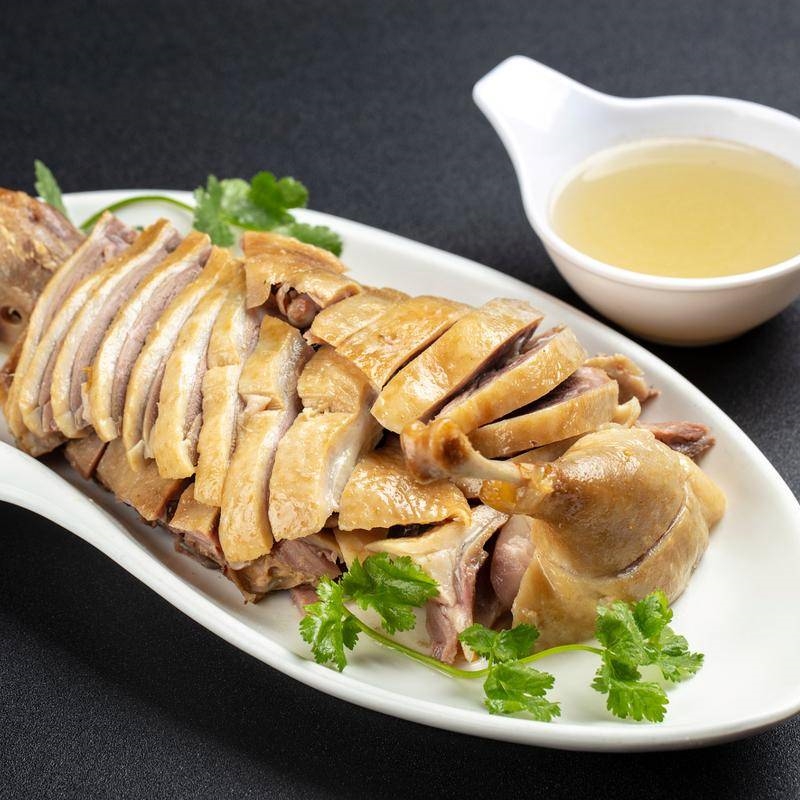
- Jiaji Duck
-
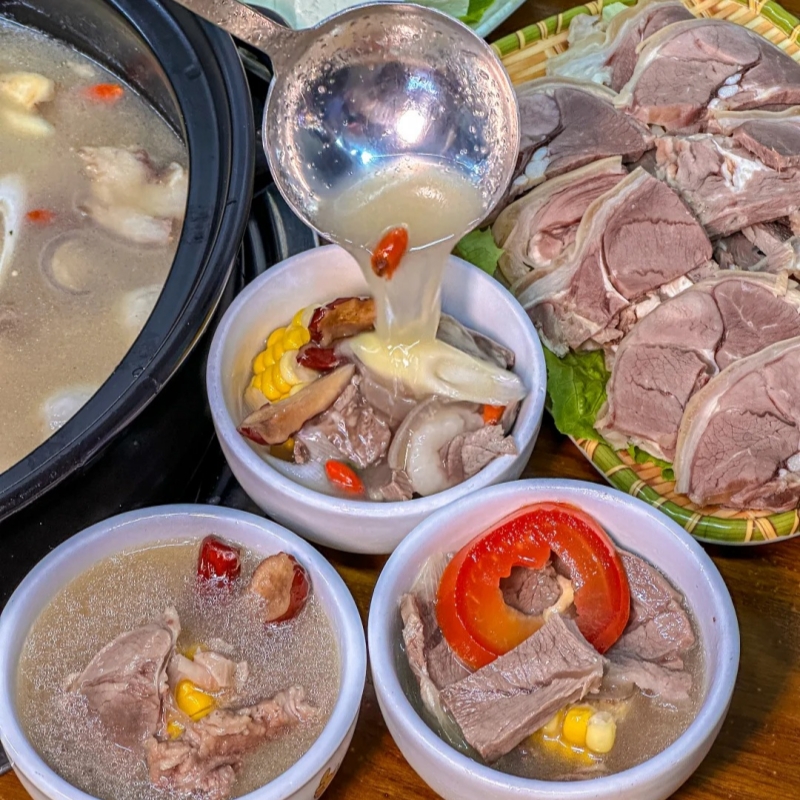
- Dongshan Mutton
-
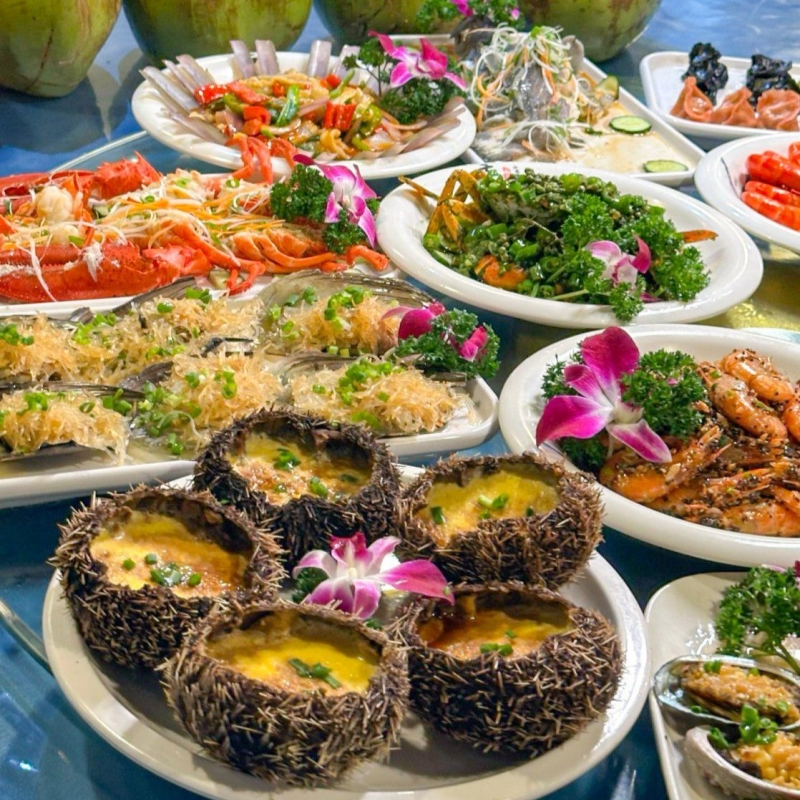
- Local Fresh Seafood Feast
-
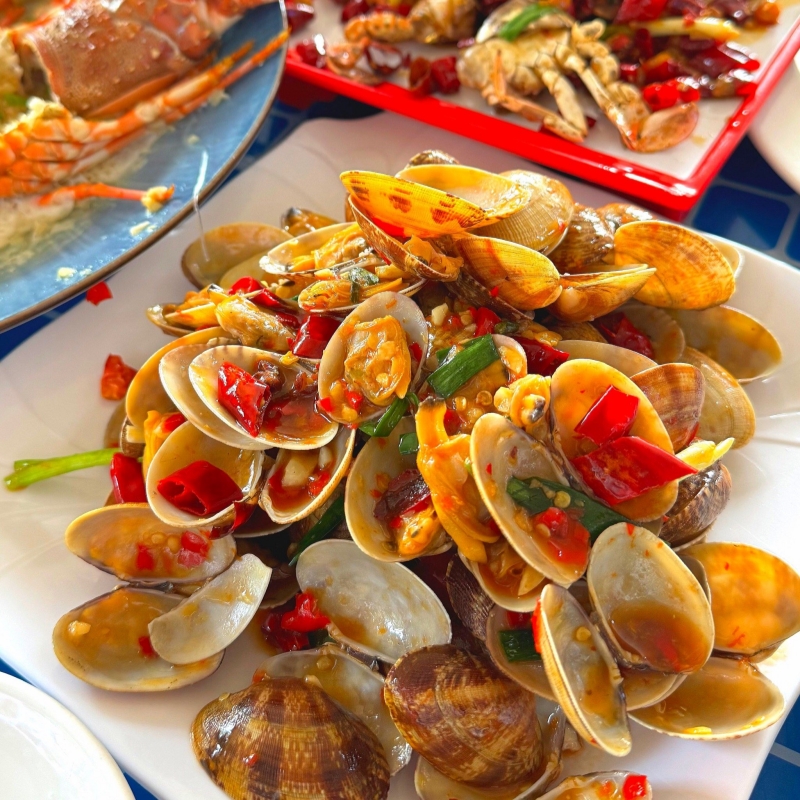
- Local Fresh Seafood Feast
If visiting in the off-season, the heat actually unlocks a few seasonal specialities worth seeking out.
- Jiaji Duck: Qionghai specialty with crispy-skinned braised duck; available year-round, however restaurants are quieter in off-peak months and more open to negotiating a whole bird at a fair price
- Dongshan Mutton: mountain goat from Wanning; best ordered white-cut or charcoal-grilled; a cool, overcast summer day makes this the most satisfying meal on the island
- Fresh catch from local fishing markets: Houhai Village and Xincun Fishing Port run morning markets with seafood at a fraction of resort prices; find a local restaurant nearby to have it simply steamed or fried to order
Typhoon Season and Dates to Avoid
When Typhoons Hit Hainan
Typhoon season in Hainan (June - October); the wettest month statistically is September (244.1mm/9.6in) and the period of greatest risk for storms is from July to September. The island’s eastern coast, around Wanning and Qionghai, is the first part of the island to be affected by incoming systems, which track west from the Western Pacific. This is the principal reason for picking November to April for a visit to Hainan Island.
If travel between June and October is unavoidable, keep these points in mind:
- Track forecasts: Monitor the China Meteorological Administration at nmc.cn (typhoon section) for Chinese-language updates, or the Joint Typhoon Warning Center at jtwc.navy.mil for English-language advisories — both are free and updated frequently during active storms
- Flight disruption: Both SYX (Sanya) and HAK (Haikou) airports suspend operations when typhoons make landfall; hold at least one buffer day on either end of the trip during June–October
- Insurance: Purchase travel insurance with a natural-disaster clause before departure — standard policies often exclude typhoon-related cancellations without this specific add-on
- Silver lining: Pre-typhoon swells at Riyue Bay can reach 5–6m; for seasoned surfers this is a genuine draw, but for everyone else, stay well back from the water
Chinese Holidays to Skip
Even within the peak season (November–April), some windows are worth navigating around — these three create congestion that undermines an otherwise excellent trip:
During Spring Festival peak, Yuya Road (朕亞路) and the main Sanya Bay coastal routes experience severe traffic jams — pre-book airport transfers or arrange hotel private pickup rather than relying on rideshare apps.
How to Fly and Travel to Hainan Island
Getting to Hainan Island is straightforward — the key decision is which airport to fly into and how to connect from your home country.
During peak season (December–January), book flights 6–8 weeks ahead — seats to SYX fill fast as domestic demand peaks over the best time to visit Hainan Island winter holiday window.
Frequently Asked Questions About Hainan
Q: When is the absolute best month to visit Hainan Island?
January is statistically the prime month — just 19.5mm (0.77in) of rainfall, a daytime high around 21°C (70°F) in Haikou (warmer in Sanya), and only 7 rain days across the whole month. When planning the best time to visit Hainan Island, January delivers the ideal combination of dry weather, clear seas, and manageable crowds — provided you arrive before Chinese New Year (usually late January or early February). December is equally excellent and slightly less congested.
Q: What is the typhoon season in Hainan?
The Hainan Island typhoon season runs from June through October, with September as the peak rainfall month at 244.1mm (9.6in). Knowing when to avoid the best time to visit Hainan Island is just as important as knowing when to go — if travel during typhoon season is unavoidable, track real-time forecasts at the China Meteorological Administration portal (nmc.cn, typhoon section) or the Joint Typhoon Warning Center (jtwc.navy.mil) for English-language advisories, and always hold travel insurance with a natural-disaster clause.
Q: What is the coldest month in Hainan?
January is the coolest month, with lows around 15.4°C (59.7°F) in Haikou and a still-comfortable 18–20°C (64–68°F) in Sanya. There is no real “winter cold” here by most travellers’ standards — a light jacket or long-sleeve layer is the heaviest clothing most visitors ever need. This mild coolness is, in fact, one of the key reasons January falls within the best time to visit Hainan Island window.
Q: Is Hainan Island worth visiting for foreign tourists?
Absolutely — but understanding the entry rules before booking matters. Citizens of countries covered by China’s broader unilateral visa-free scheme (EU Schengen states, UK, Australia, New Zealand, Japan, South Korea, Singapore, and 50+ other countries as of 2026) can enter via any open port including SYX and HAK without prior arrangement. Those relying on the Hainan 59-country regional visa-waiver should confirm with their airline or hotel agent first: this policy requires arrival via designated ports (SYX or HAK) and may involve pre-registration through a sponsoring local travel agency in some cases — it is visa-free entry, not a visa on arrival. Choosing the best time to visit Hainan Island — November through April — gives foreign tourists the best combination of weather, accessibility, and resort availability.
Q: How many days is enough for Hainan?
For a Sanya beach-focused trip, 4–5 days is comfortable. Adding Haikou and 2–3 inland stops pushes the ideal length to 7–8 days. A full island loop — covering Wanning’s surf beaches and the interior mountains alongside the coast — rewards 10–12 days. During the best time to visit Hainan Island (December–March), build in one buffer day; flight delays and resort area traffic during peak windows are genuine considerations.
Q: Is Hainan good to visit in April or November?
Both months fall within the broader best time to visit Hainan Island window, but they suit different travellers. April is warmer at 24–31°C (75–88°F) and approaching the rainy season — a good fit for surfers and budget travellers chasing shoulder-season hotel rates, though humidity is rising and sunscreen becomes non-negotiable. November, however, is the sleeper pick: perfect weather at 22–27°C (72–81°F), the sea still warm from summer, hotel rates not yet at December peaks, and the first northeast swells arriving for surfers. For most travellers, November offers the best value-to-experience ratio of any month on the island.