Bao Hua Temple
Bao Hua Temple sits in Liujia Village, about fifteen minutes from Kunming's city center. Most people miss it completely. The temple was founded during the Ming Dynasty by Jinglun Chan Master, who studied under the 23rd patriarch of the Linji Sect. Over fifty monks still live and practice here today, which makes it different from the tourist-heavy temples you'll find downtown. If you've already visited the more commercialized Buddhist sites in the city, you'll notice the contrast immediately—Yuantong Temple.
The place runs on monastery time. Morning prayers start at 6 AM whether tourists show up or not. The architecture follows traditional Linji Sect principles, and the Xumi Lecture Hall can hold a thousand people during major Buddhist events. If you want to see how a working monastery actually functions in modern China, this is probably one of the better examples in Yunnan.
Quick Facts about Bao Hua Temple
| 🏯 Official Name | Liujia Village Chan Temple |
| 📍 Location | Liujia Village, Guandu District |
| 🕰️ Founded | Ming Dynasty (circa 1400s) |
| 🧘 Religious Sect | Linji Chan Buddhism |
| 👥 Active Monks | 50+ resident monks |
| ⏰ Opening Hours | 6:00 AM – 6:00 PM |
| 🎟️ Entrance Fee | Free (donations welcome) |
| 🌤️ Best Time | Early morning or late afternoon |
| ⏱️ Visit Duration | 1.5–3 hours |
| 🚇 Getting There | Metro Line 1 + bus or taxi |
Saffron Robes, Incense Smoke, and Fifty Devoted Monks
-
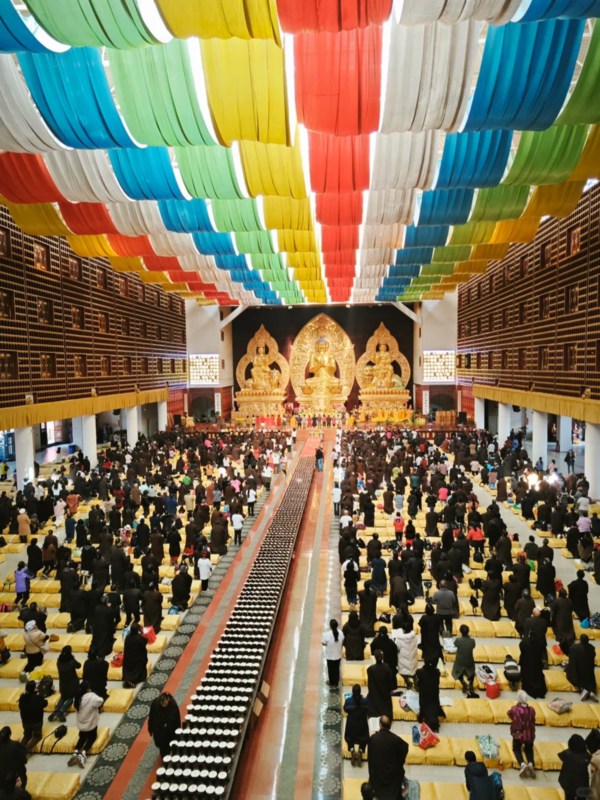

- Sutra Chanting Ceremony
-
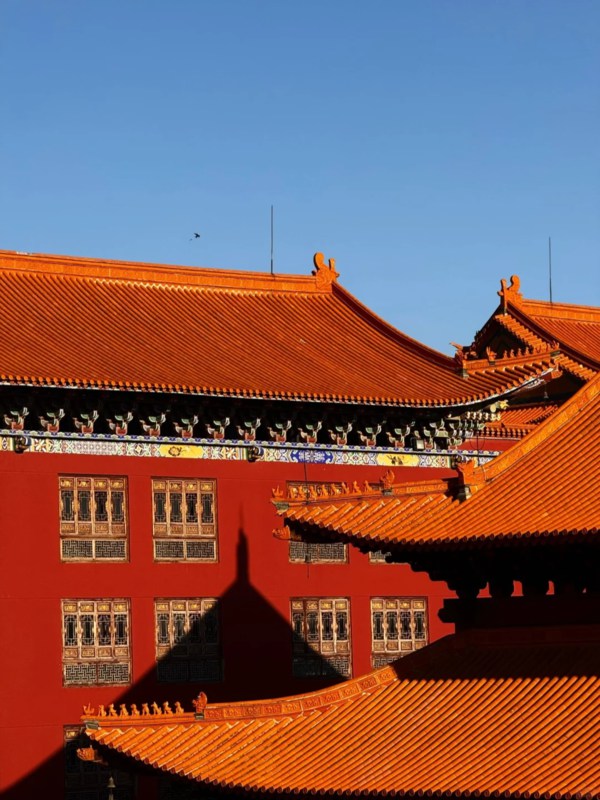
- Red Wall of Temple
-
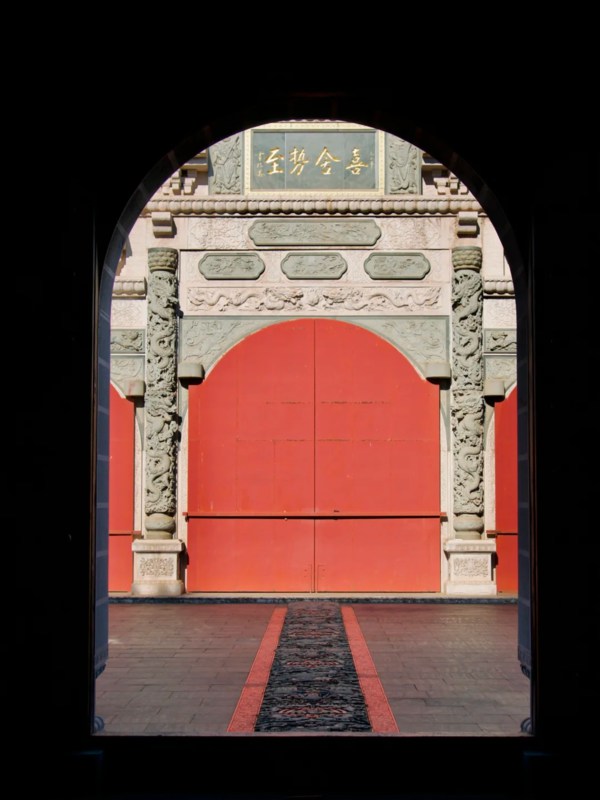
- Gate of Bao Hua Temple
What You'll See That Other Temples Don't Offer
Monks are found at Yuantong Temple downtown, mostly at opportunities where they are being photographed. Bao Hua Temple does not operate in that way. The monks, here, really reside on the spot. One day (Tuesday morning) I saw a young monk rearranging sutra texts in the library. He was not raising his show to no one. The simple sorting of pages, with the occasional stop of a passage.
The chanting you hear is also not recorded, it is actual voices, a little off-key echoing in the courtyards at 6 AM, noon, and 5 PM. The beats change a bit with each performance since these are not a tourist show, though they are genuine daily prayers. You could hear monks discussing Buddhist scriptures in the courtyard or working in the vegetable garden at the back of the main hall. And it does not feel like a place of worship as most visits of temples do.
The Numbers That Tell the Story
Fifty-plus monks call this place home year-round. That's a significant community for a monastery in Kunming. The Xumi Lecture Hall alone can fit a thousand people, which is rare in Yunnan province. Most temples max out at maybe two or three hundred capacity. The temple holds three chanting sessions daily—morning, midday, and evening. During Chinese New Year, they ring the bell 108 times starting at midnight, following a tradition that dates back to the Ming Dynasty. Each strike supposedly represents clearing one worldly trouble. The bell's deep tone carries across Guandu District. Local residents set their watches by it, or so I've heard from a taxi driver who grew up nearby.
Daily Life and Rituals at Bao Hua Temple
-
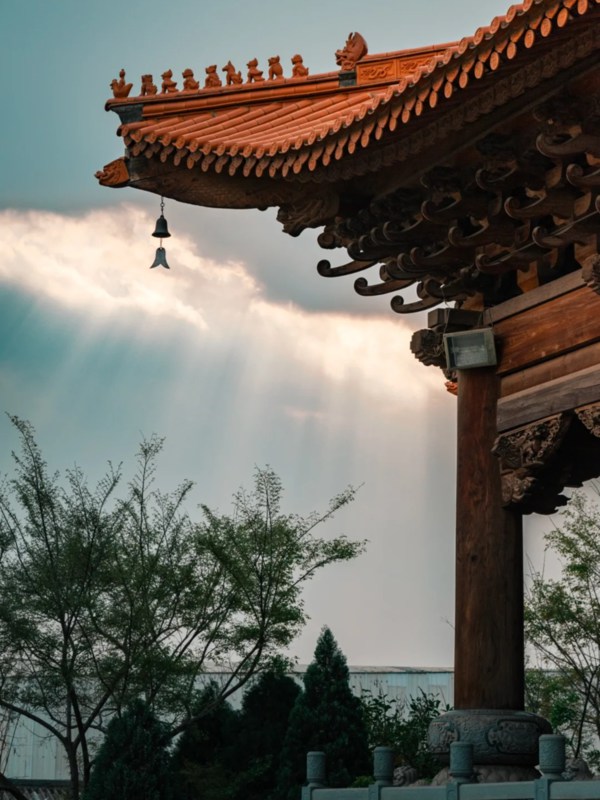
- The Temple in the Morning
-
- Architectural Highlights
-
- The Vegetarian Feast
Morning Magic: The 6 AM Bell Ritual
The bell rings at exactly 6 AM. I was told that it weighs several hundred kilograms, but I did not check that. The music comes in waves, through the morning fog. You can feel it in your chest, then hear it go round to your ears. And the percussion of wooden fish follows not long afterward--that rhythmic tok-tok-tok which is the chanting-step of monks. The smoke of incense is very syrupy at this time of the day. It gets the first in light in the windows of the hall in its lattices, forming these diagonal rays which seem artificial and yet not so.
At 5.30 AM, monks wake up to get involved in cleaning. The chanting commences at about 6:15 to forty-five minutes. You may be standing at the rear of the hall and observe. All you need to do is keep quiet and make no photos of their faces. I showed up on a Tuesday once. There were perhaps twenty monks there, and their voices overlapped in that low drone. One old monk continued to lose his track in the sutra and kept on turning pages one way or another. Nobody seemed bothered. Then, at the end of the session they marched out to breakfast. The entire affair was amateurish, as was evidently the intention.
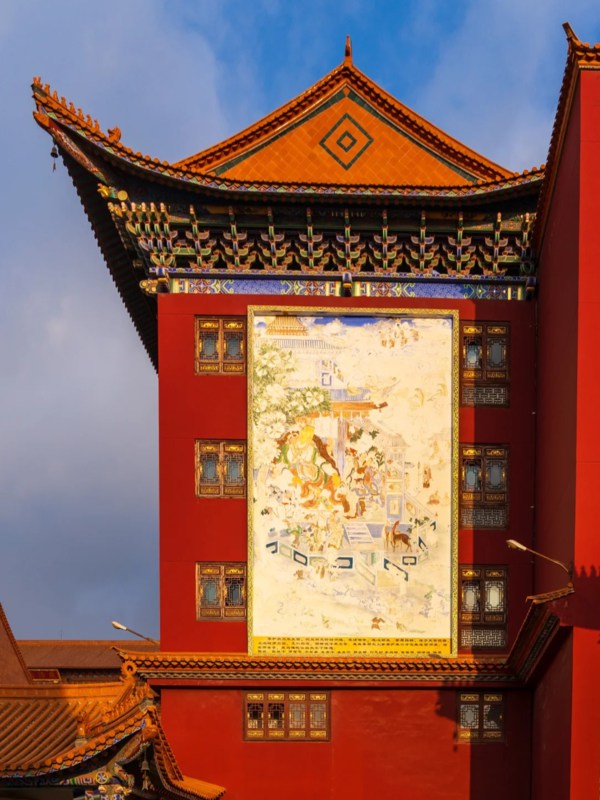
Architectural Highlights Worth Your Camera Time
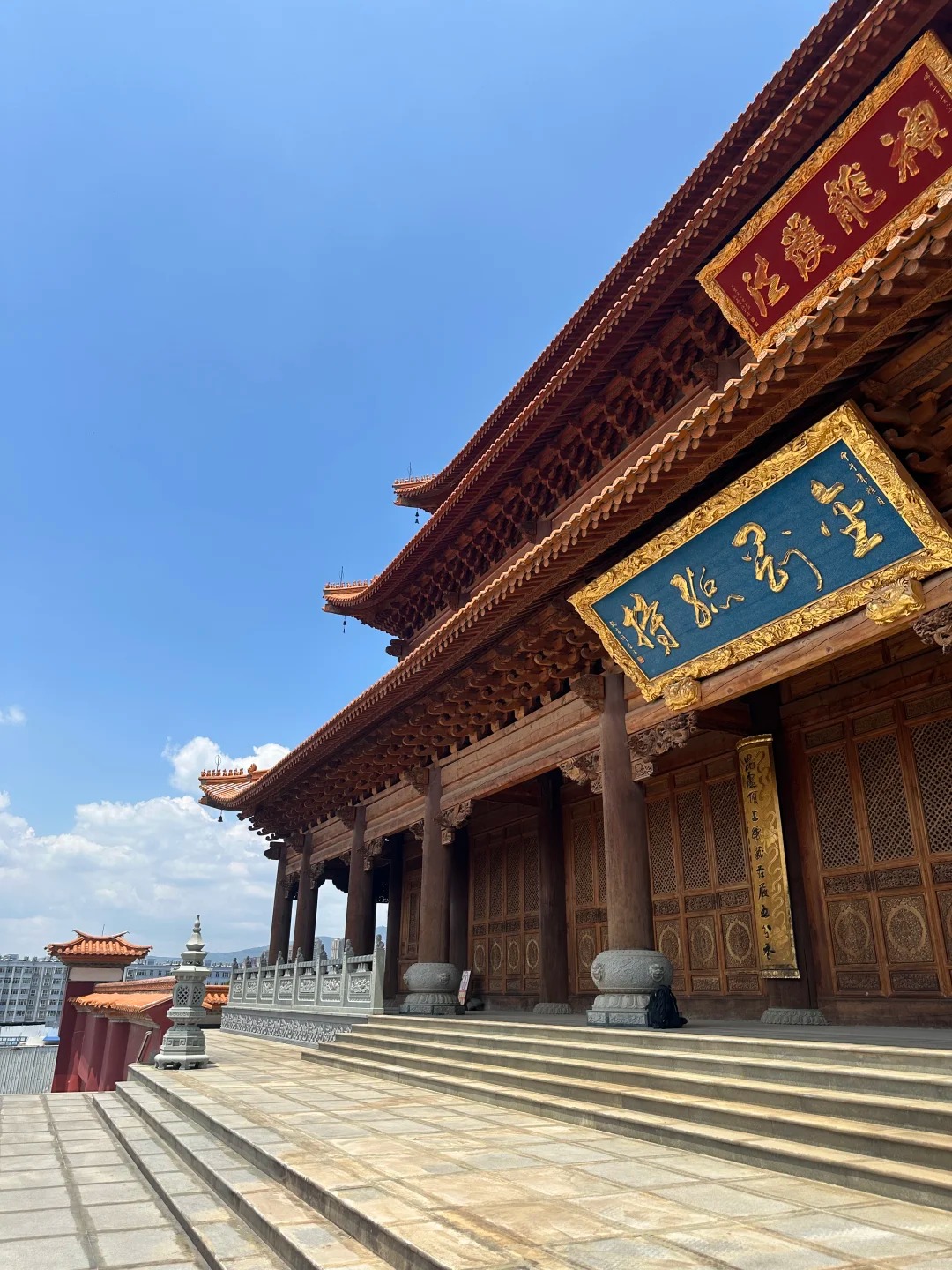
The architecture of the temple mostly revolves around the Xumi Lecture Hall. It accommodates a thousand individuals through tiered platforms rather than on individual seats. The ceiling is covered with wooden beams in a complicated bracket system- no nail, merely joint-locking. The construction methods used by Ming Dynasty, based on the information plaque. The statue of the main Buddha was made in the 1990s, therefore, it is not old. The workmanship is good but solid. On wood, by gold leaf, with that composed look they always have.
There are stone tablets near the entrance gate. These document the history of the temple in Classical Chinese. I have no idea what they say, but they seem to have been referring to the donors and reconstruction work of the Qing times. Optimum photography occurs at 4 PM to 6 PM when the sunlight is inclined at an angle against the red walls. This warm light is given to the courtyard. The light of morning is also effective, however, colder.
Do not take pictures in the primary hall. Not all monks are against it as long as you are respectful. Others aren't. No cameras are allowed anywhere in the sutra library.
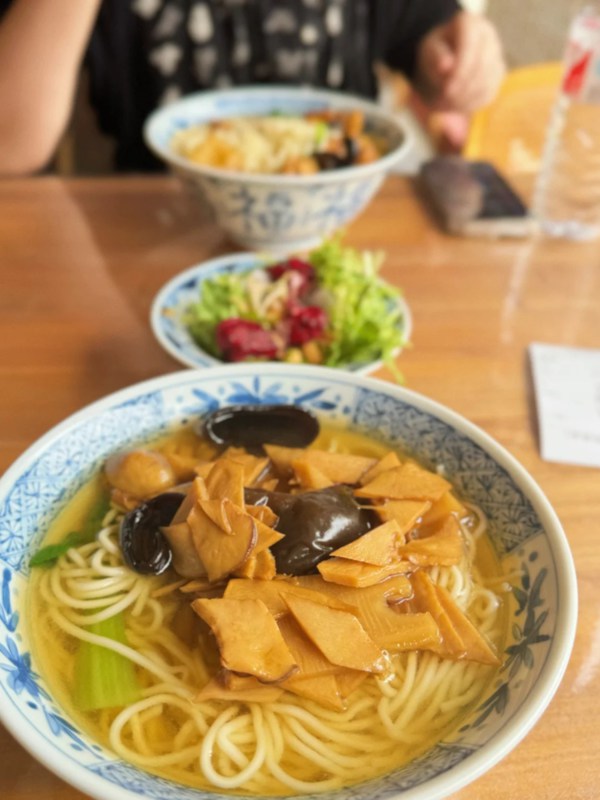
The Vegetarian Feast You Shouldn't Miss
Bao Hua Temple also has lunch every day between 11:30 AM and 12:30 PM. The food is also plain, mostly rice, stir-fried vegetables, tofu in various strains, and mushroom soup occasionally. No fancy presentation. They have cafeteria style, metal trays with compartments. During holidays they will prepare luohan zhai that is the classic Buddhist food with eighteen ingredients that symbolize the eighteen arhats. Light sweet, a bit so due to bamboo shoots and wood ear mushrooms.
Price is approximately 20-30 each person, given into a donation box. No fixed price. I was with a Taiwanese tourist once who accidentally overpaid and got lost when no one gave change to them. It goes like that, you choose what is fair. The quality of the foods is much better than most of the downtown restaurants that are vegetarian as they are not attempting to imitate meat. Simply cooked vegetables, perhaps too simple, to the taste of some. None of MSG either, which you will notice, should you be sensitive of it.
During meal times it is technically expected to be quiet and tourists do not necessarily obey it. The monks have their meals in a separate room. You will find the lay persons and visitors all in the primary eating area.
The History and Legacy of Bao Hua Temple
-
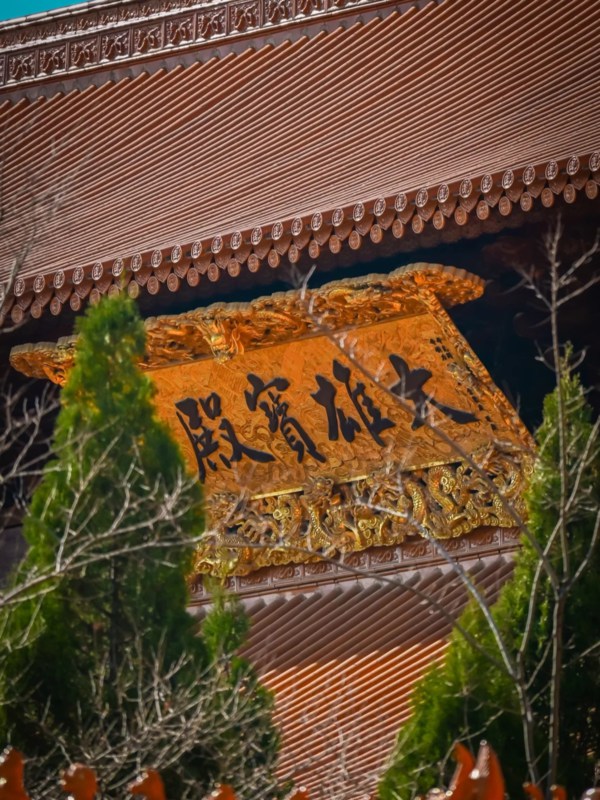
- Plaque of Bao Hua Temple
-
- Spring Festival Activities
From Jinglun's Vision to Modern Sanctuary
Jinglun Chan Master came to Liujia Village either in the early 1400s. He was a 23 rd generation successor of Gutian Zushi under the Linji lineage. They say that he came there due to its closeness to Guandu Ancient Town that was already a trading hub at that time. Guandu was a means of community support to the monks and they needed it to survive. Bao Hua Temple has prospered during the Qing and Ming dynasties. Old documents state that it accommodated more than a hundred monks at high seasons.
The Cultural Revolution was a blow, however. The temple was destroyed like most of the religious places. During the 1980s, only half-walls were left. The process of reconstruction began in the 1990s and was approved by the government as well as donations by the locals. The major buildings which you see today had been re-constructed at that time by following the original architectural designs where feasible. In 2011, it was listed as a Harmonious Temple by the State Administration of Religious Affairs, or simply official recognition of the contribution to the community made by the place. That reputation enhanced increased maintenance funding.
The Linji Sect's Mark on Architecture and Rituals
One of the traditions is the Linji tradition, which is characterized by stick and shout method of teaching. Students would be literally beaten to death with a stick by masters or randomly shouted at to wake them up. Today you can never find monks hitting anyone but the aspect of sudden realization still influences the way this Buddhist sanctuary functions. This is also indicated in the architecture. Halls are constructed to produce musical surprises--chanting comes back echoing oddly, bells ring at a length than you would imagine.
This is in comparison to temples of Caodong Sect which prefer gradual enlightenment and balanced designs. Linji buildings are more alive and unpredictable. Linji Chan is the representation of the Han Chinese Buddhist in Yunnan, where Tibetan Buddhism prevails in the northwest. It is another kind of philosophical way. To outsiders, this is equivalent to the fact that ceremonies here are quicker, more spontaneous. The abbot could change direction and ask a question to the congregation in the midst of prayers. It never makes everybody sleepy as they are engaged instead of reciting by heart.
Cultural Highlights Beyond the Religious
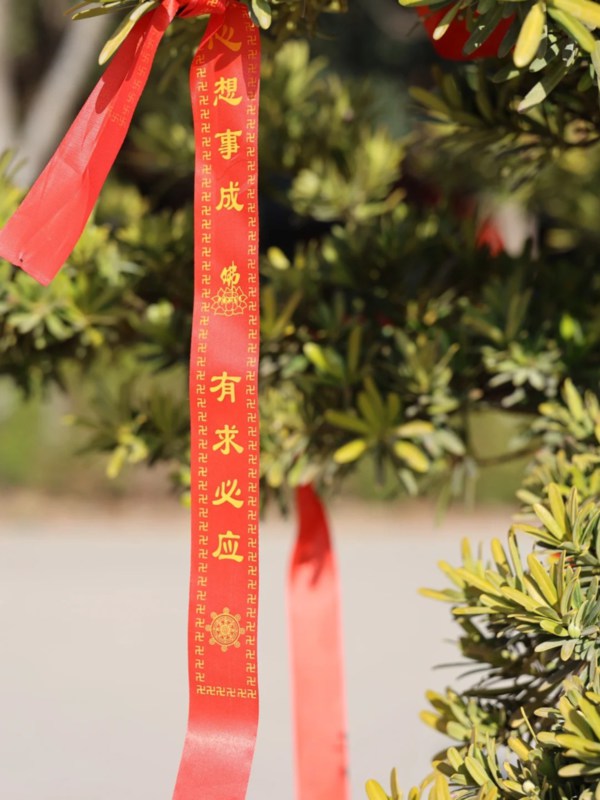
Bao Hua Temple Spring Festival is not only Buddhist ceremony. The temple is also the venue of folk shows- dragon dances, local snacks. This practice began several decades ago when the monastery aimed at being a community-gathering location. Those that lived in old Kunming still recall how they used to visit it during New Years as children. The temple also plays the role of the headquarters of Guandu District Buddhist Association that coordinates religious activities in various temples in the region.
Since the beginning of the 2000s, Abbot Chonghua has been operating the place. He advocated the temple to provide free vegetarian meals on the big holidays and arranged Buddhist study classes to amateurs. Such a community interaction is what makes the temple to remain relevant even after its religious role.
Practical Information: Planning Your Visit to Bao Hua Temple
-
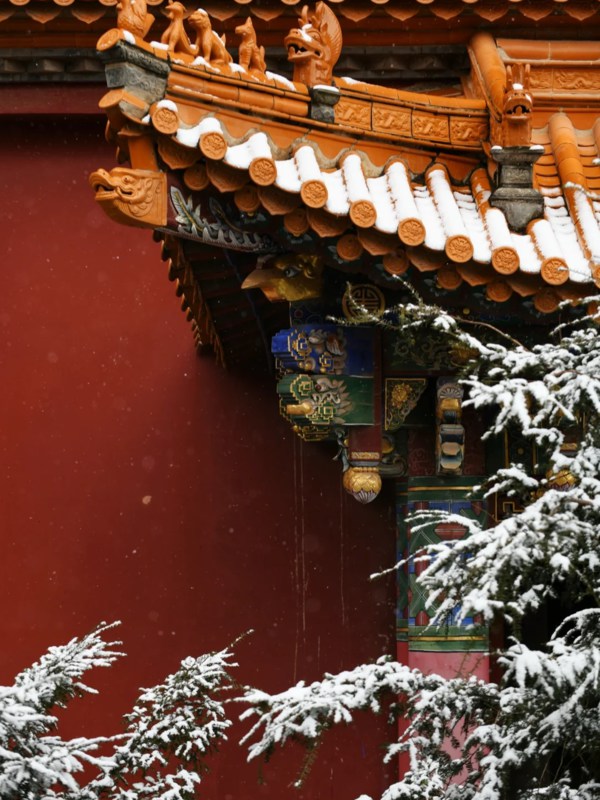
- Winter of Bao Hua Temple
-
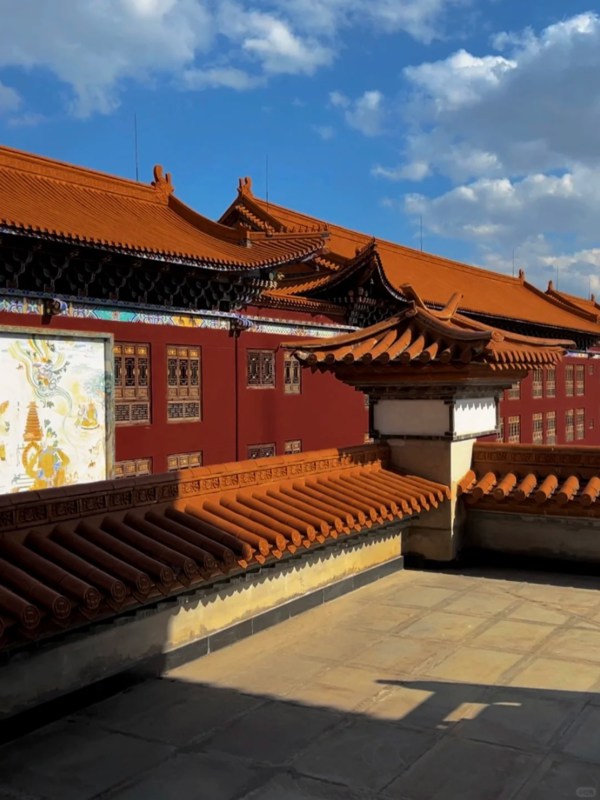
- Rooftop of Temple
Getting There: Your Transportation Options
It requires some planning to get to Bao Hua Temple because it is not on the metro line. Use Metro line 1 to Huangtupo Station or Guanshang Station. At either end get 165 or bus Z43 towards Liujia Village. Another twenty minutes are added by the bus ride. A one-way trip between downtown Kunming takes about fifty minutes, perhaps an hour on a rush hour.
Taxi or Didi is simpler. Getting out of the city center, you will pay ¥50-70 to be able to get a twenty-minute ride under traffic conditions. Provide the Chinese address (官渡区六甲村宝华寺) to the driver since Bao Hua Temple in English is not going to work. When you are already at Guandu Ancient Town, then you just need to walk about fifteen minutes north eastwards. The path is quite clear--it will do to be directed by the natives.
There is limited parking which is located in a small parking lot in front of the entrance. Weekends and holidays are full of occupancies. There are usually positions available in weekday mornings. I did not observe the parking charges the last time but this could have changed. If you're building a multi-day itinerary and want to maximize your time in the area, this complete guide to things to do in Kunming shows how the temple connects with other attractions.
When to Visit: Timing Your Experience Right
The most authentic experience is in the early morning at the time of 6 AM and 8 AM. You so will hear the bell-ritual and morning chants with the least interruption of the tourists. The air is cooler too. In the afternoon (after 4 PM to 6 PM) is good to take photographs. The red walls take the light of that golden hour. Evening prayers are done at around 5 PM by the monks.
The spring and the autumn are the best weather seasons. The weather of Kunming is moderate throughout the year, however, during summer, it receives a lot of rain that may soil the courtyards. The mornings in winter are so cold in the halls that are not heated. The greatest of the events at the temple is the Chinese new year- 108 bell strikes at midnight, folk performance, special vegetarian meals. It is a cheerful, almost festal air. But you are going to be sharing the space with hundreds of local people. It's crowded.
Visitors are much fewer on weekdays more so on weekdays with Monday to Thursday being the weekdays. I would guesst around thirty to fifty on a normal Tuesday and two hundred on Saturday. The Birthday of Buddha in the end of April or the beginning of May attracts the masses as well. Test the lunar calendar dates.
Cost Breakdown and What's Included
The admission to the temple of Baohua is free. No admission booth, no admission cost. They also have donation boxes in various places- near the main hall, at the incense burner and the dining area. Proposed quantities are not displayed. I have also observed individuals investing between ¥5 and ¥100.
The price of incense bundles ranges between ¥5-20 with regard to size. The minor ones are good enough to the casual visitors. The price of offering fruits to the alter is approximately ¥10-15 in case you would like to follow such a tradition. The vegetarian lunch will cost ¥ 20-30 each as it has already been stated. Parking appeared to be free but make sure when you arrive there.
Budget 50-100 in total including transportation, meal and donations in half-day visit. That is ok but not too much.
FAQ about Bao Hua Temple
Q: Is Bao Hua Temple worth visiting if I'm not Buddhist?
Yes, definitely. The architecture alone justifies the trip. The Xumi Lecture Hall's bracket system is impressive even if you don't care about religious history. I'm not Buddhist myself, and I found the atmosphere calming—just the sound of wooden fish percussion and incense smoke creates this meditative environment. You're observing a functioning monastery, which feels different from visiting a museum. The cultural aspect matters too. Bao Hua Temple represents Ming Dynasty architectural principles and Linji Chan traditions that shaped Yunnan's religious landscape. You don't need faith to appreciate craftsmanship or history.
Q: How much time should I allocate for a visit?
One hour covers the basics if you're rushed—walk through the main courtyard, peek into the halls, maybe grab a quick vegetarian snack. Two hours is more realistic for a standard visit. That gives you time to observe a chanting session, explore the lecture hall, read some information plaques, and eat lunch properly. Three hours works if you want the full experience: arrive for 6 AM prayers, have breakfast nearby, photograph the temple during morning light, then stay for the midday meal. I'd lean toward two hours minimum. The place isn't huge, but rushing through defeats the purpose.
Q: Can I participate in the morning chanting ceremony?
You can observe from the back of the hall. Full participation isn't really an option unless you're a serious Buddhist practitioner or have prearranged something with the monks. Stand quietly, don't take flash photos, and leave your phone on silent. Some visitors try to mimic the chanting or prostrations, which comes off awkward. Just watch. The ceremony lasts about forty-five minutes. If you want to light incense beforehand, that's totally fine. Position yourself near the doorway so you can leave discreetly if needed. The monks won't interact with you during prayers—they're focused on their practice.
Q: Is photography allowed inside Bao Hua Temple?
Courtyard and exterior shots are fine anytime. Inside the halls, it depends. Some monks don't mind if you photograph architecture or Buddha statues from the back. Never photograph monks' faces without explicit permission—that's the main rule. The sutra library is completely off-limits. During chanting ceremonies, put the camera away. I've seen tourists get scolded for taking flash photos during prayers. If you're unsure, just ask a monk by pointing at your camera and making a questioning gesture. They'll usually nod yes or no. When in doubt, skip it.
Q: What's the difference between Bao Hua Temple and Yuantong Temple?
Yuantong Temple is Kunming's main tourist temple—much larger, more commercialized, located downtown. You'll find tour groups, souvenir shops, and a general theme park vibe. Bao Hua Temple is smaller, less polished, and actually functions as a working monastery. Yuantong has better English signage and accessibility. This place offers authenticity instead. If you want impressive scale and convenience, go to Yuantong. If you prefer seeing how monks actually live without the tourist infrastructure, come here. Both have merit. I'd say Yuantong for first-time visitors to Kunming, Bao Hua Temple for anyone seeking something quieter.
Q: Are there English signs or guides available?
Very limited English signage. The main plaques near the entrance have some English, but inside the halls, it's mostly Chinese. No English-speaking guides that I'm aware of. Download a translation app before you visit—Google Translate's camera function works decently on the information boards. Honestly though, the experience doesn't rely heavily on reading. You're there to observe architecture, watch ceremonies, and absorb atmosphere. A basic understanding of Buddhist temple layouts helps more than language skills. The monks speak minimal English, but hand gestures work for simple questions like where's the bathroom or can I take photos.
Q: Can I combine this with other nearby attractions?
Absolutely. Guandu Ancient Town is fifteen minutes on foot—old streets, snack vendors, traditional architecture. That's an easy half-day combination. Taiping Temple sits about twenty minutes away by taxi if you want to compare Buddhist sites. For nature, Haidong Wetland Park is maybe thirty minutes by car. I'd structure it as morning at the temple for prayers and breakfast, then walk to Guandu for lunch and exploring. Or reverse it—Guandu Ancient Town first, then afternoon at the temple for that golden hour photography. Both locations share similar historical connections to old Kunming trade routes.
Q: Is the temple accessible for people with mobility issues?
Not particularly. The entrance has steps, and the courtyards are mostly flat but uneven stone paving. No ramps that I noticed. The main hall requires climbing about ten steps. Wheelchairs would struggle here. If you have mild mobility concerns, stick to the outer courtyard and lower levels. The lecture hall is ground level once you're past the entrance gate. I saw an elderly visitor with a cane manage fine, but a wheelchair user would find it challenging. No accessible restrooms either from what I could tell. This is an old temple retrofitted for modern use, not designed with accessibility standards.