Jing'an Temple Shanghai
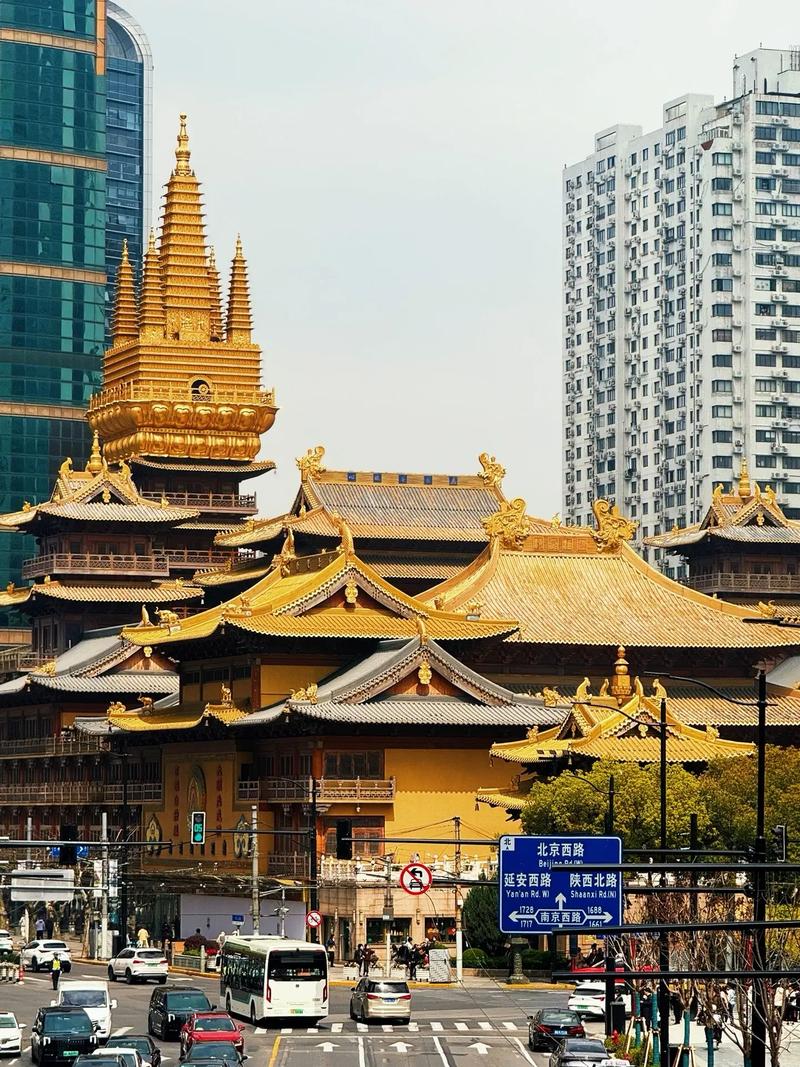
Jing'an Temple Shanghai is a 1,700-year-old Buddhist temple at 1686 West Nanjing Road, sitting in the middle of Shanghai's busiest shopping district. Founded in 247 AD, it houses a 15-ton pure silver Buddha, an 11-ton jade Buddha (China's largest), and a 650-year-old Ming bell that still rings. What makes Jing'an Temple different? You'll see golden temple roofs surrounded by luxury malls—it's where ancient spirituality crashes into modern Shanghai, and locals actually pray here, not just tourists snapping photos.
Here's why this guide matters for visiting Shanghai's Jing'an Temple: most people miss the best experiences because they don't know when to visit, how to participate respectfully, or where the real treasures are. This guide walks you through everything—from sacred blessing rituals and cultural treasures to photo spots and surrounding food. You'll learn how to book tickets, which metro exit saves you 10 minutes, proper incense etiquette, and answers to practical questions like wheelchair access and night visits. Whether you're here for spiritual practice or just want to understand why this temple matters to Shanghai, you'll know exactly what to do when you arrive.
Essential Information: Jing'an Temple Shanghai at a Glance
| Category | Details | Tips & Notes |
|---|---|---|
| 📍 Location | 1686 West Nanjing Road, Jing'an District, Shanghai | Core of Jing'an Temple commercial area, next to Jiuguang Department Store & Jing'an Park |
| 🚇 Metro Access | Lines 2, 7, 14 - Jing'an Temple Station | Exit 1 or Exit 2, 1-minute walk to entrance |
| 🎫 Admission Tickets | Regular days: 50 RMB (~$7 USD) Students/Seniors 65+: 30 RMB (with ID/passport) FREE: Lunar 1st & 15th of each month | 💡 Ticket includes 3 incense sticks |
| ⏰ Opening Hours | Daily: 7:30 AM - 5:00 PM Lunar 1st/15th: Opens 5:30 AM Fri/Sat evenings: Extended to 8:00 PM | 🌙 Night illumination Fri/Sat is spectacular! |
| 📱 Advance Booking | Required via "Jing'an Foyuan" (静安佛缘) mini-program | Book 1-3 days ahead, select date & time slot |
| ⏱️ Time Needed | Core areas: 1.5-2 hours With photos & prayers: 3 hours Including meditation class: 4 hours | Plan extra time for surrounding food & shopping |
| 🏛️ Heritage Status | Shanghai Cultural Heritage Site & National Key Buddhist Temple | Famous for "Golden Copper Roof & Thousand-Year Sacred Relics" (铜瓦金顶、千年圣迹) |
🏙️ Before your visit to Jing’an Temple, check out Legendary 12 Historical Sites in Shanghai: Walk Through the City’s Living Past to discover other corners where Shanghai’s past still whispers.
Must-Experience 1: Sacred Blessing Experience at Jing'an Temple Shanghai
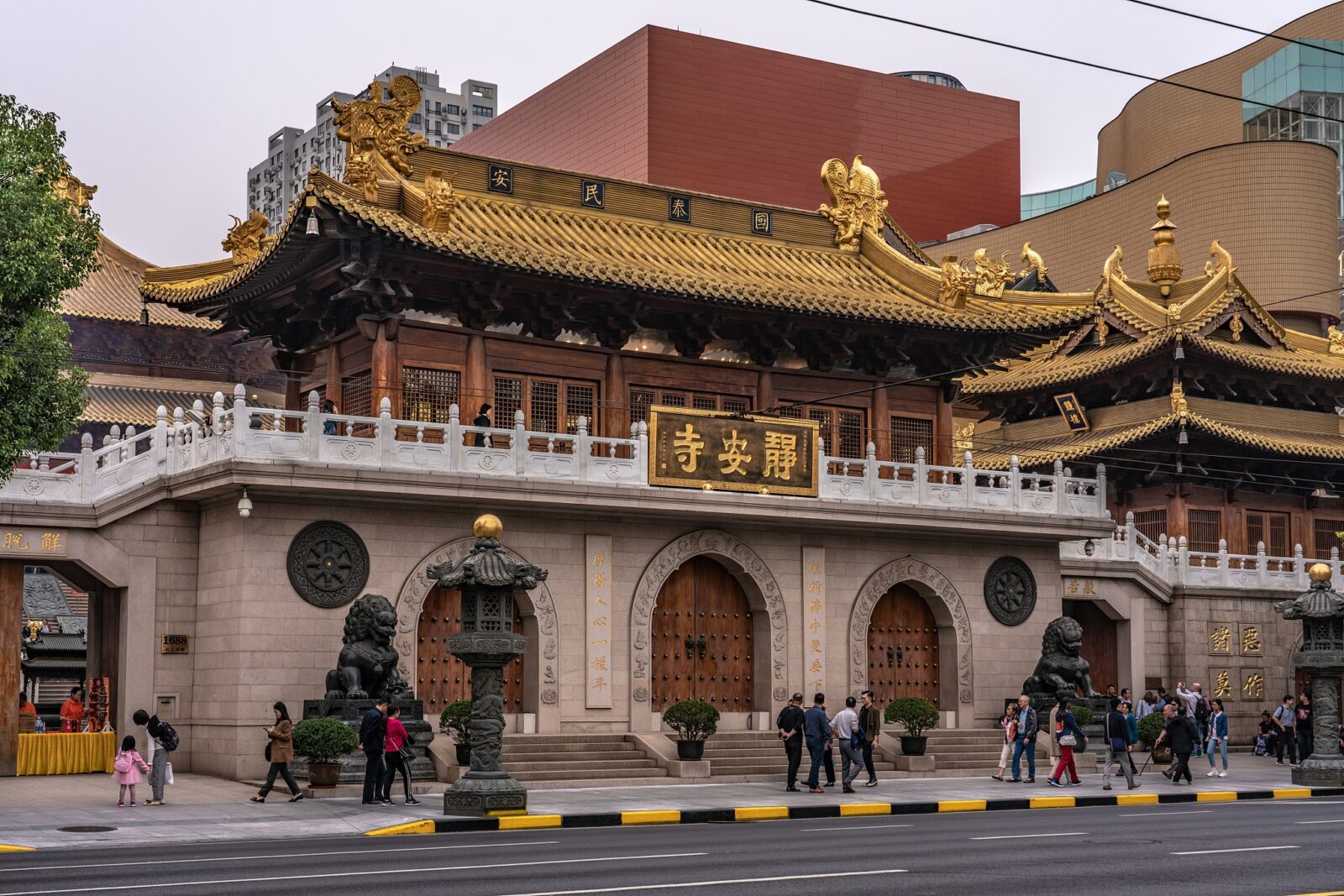
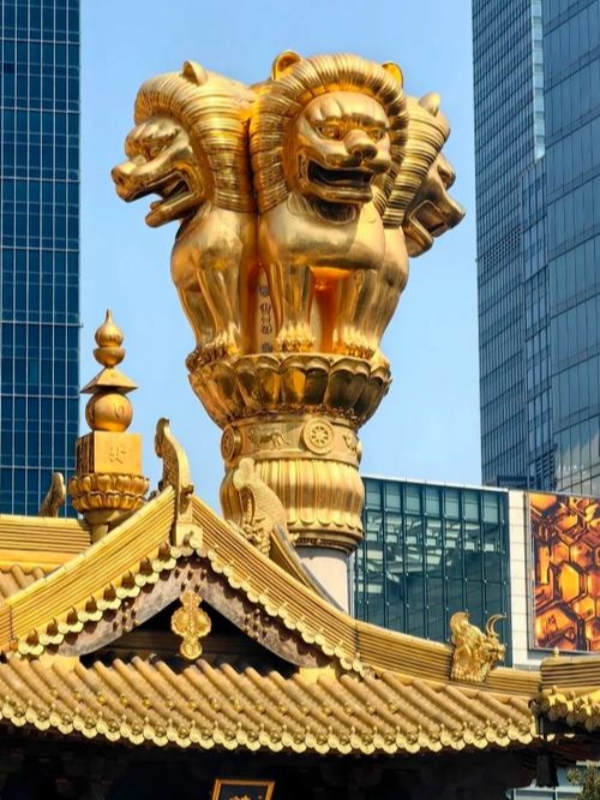
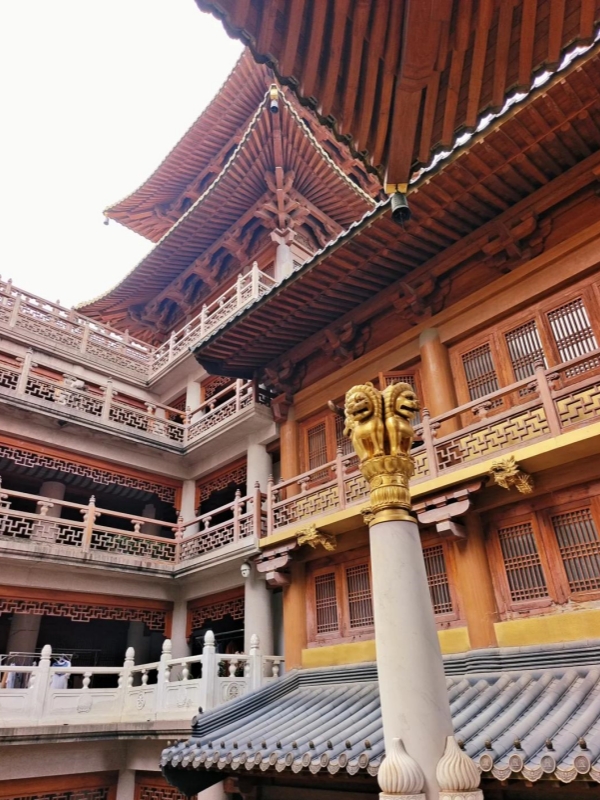
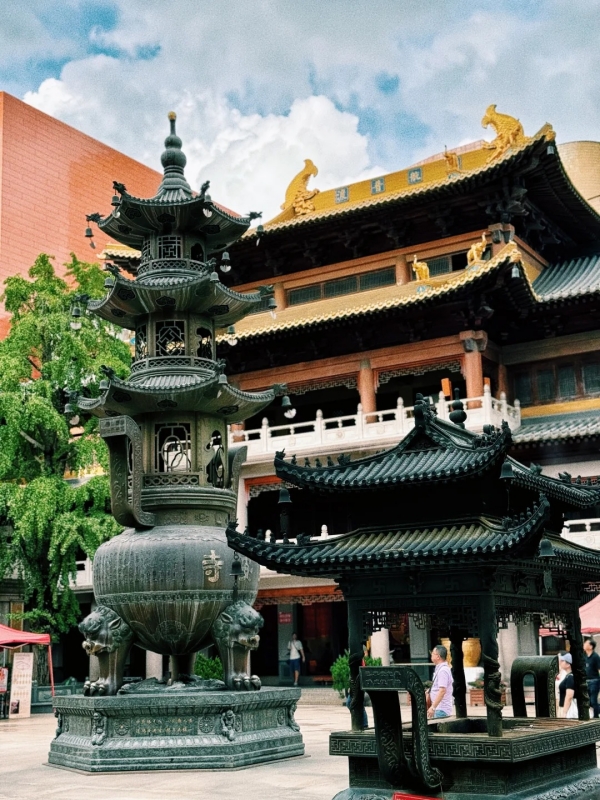
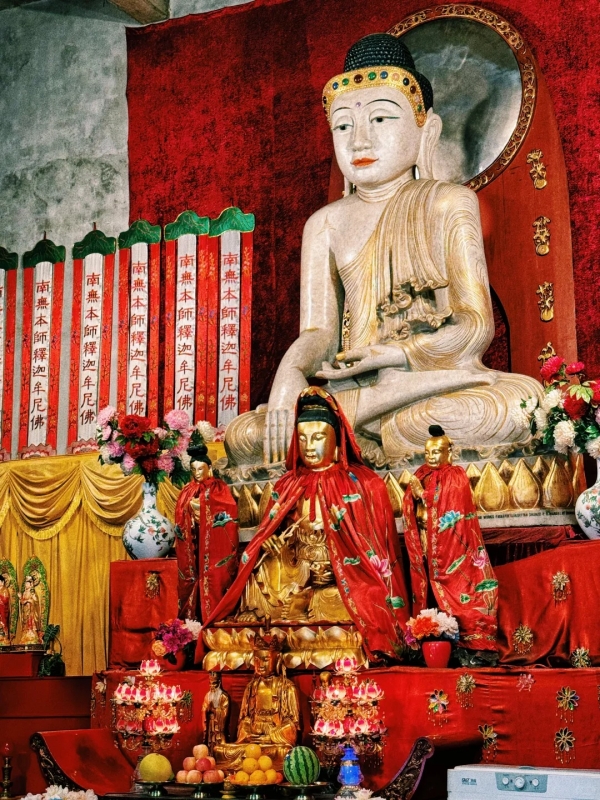
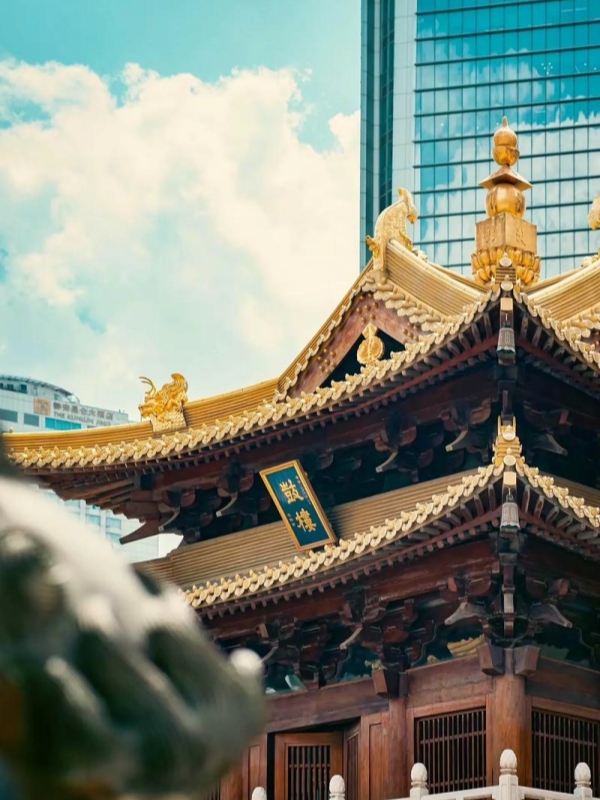
This is why people visit Jing'an Temple—not for Instagram, but for actual spiritual practice. Here's how to participate respectfully, whether you're Buddhist or just curious.
The Ashoka Pillar: Your First Stop
Before you arrive at Jing'an Temple proper you will encounter the giant Sanskrit Pillar that stands outside the main gate. Carved from granite and nearly 18m (59ft) high, the pillar is capped by a 16-ton white copper sculpture known as Four Lions Roaring (the lions are gold-plated), representing Buddha’s teachings as they spread all over the world. The four Chinese characters for May the True Dharma Abide Forever (正法久住), written in a traditional calligraphy style, by the abbot himself.
This is one of the best free photo spots and photographers – or non-paying tourists - often pose here for their ‘I was here’ photo before deciding whether or not to pay admission.
Offering Incense at the Main Hall
After entering Jing'an Temple, you can purchase incense (10 RMB per person if your ticket doesn't include it). Here's the proper procedure locals follow:
Light the incense at the designated candle stations in the front plaza.
Face the main hall (Mahavira Hall), hold incense at forehead level with both hands.
Bow three times from the waist.
Rotate clockwise and repeat three bows for each cardinal direction (honoring Buddhas in all directions).
Place incense upright in the large burner—do not stab forcefully.
Inside the main hall, you'll see the 15-ton pure silver Shakyamuni Buddha statue. This is Jing'an Temple's centerpiece. Walk clockwise around it three times if you want blessings, though obviously do this sincerely or not at all. Locals come here to pray for wisdom and peace.
The Fuhui Baoding: Coin-Tossing Tradition
Front courtyard of Shanghai Jing’an Temple is the Fuhui Baoding, the tallest extant white copper incense burner in the world. At 10.23 meters high and weighing 15.5 tons, its major attraction, however, is making a wish by tossing a coin atop it. For 10 RMB, you can buy 10 brass coins at the service counter and taking a few steps back stand 3-4 meters and toss away, trying to land your coins onto the calligraphy engraved along the rim of the burner. If you hit an inscription, legend has it that your wish will be granted.
I rarely hitting it, one in ten maybe, and that seems pretty typical from just watching several dozen families try. The place gets lively on weekends with all those making a wish. The small copper bells along the edge ring softly in the breeze, lending a peaceful ambience. It’s touristy but also fun, even the locals join in!
Hall-Specific Blessings
Each hall at Jing'an Temple serves different purposes:
Guanyin Hall (观音殿) - housing a 6.2 metre (20ft) Guanyin (Goddess of Mercy), heavily lacquered, but carved from one imperfectly thousand year old camphor tree weighing 5 tons, (in the news recently, she has been idly waiting for the obligatory three years). The faithful here pray for peace and to be granted marital partners; if you want to leave it fresh flowers, you will see why (local custom) when you gaze up into the bewitching face of this Mother figure - a faint scent of camphor can still be detected in the air, especially on humid days!
Shakyamuni Hall (牟尼殿) - here is a Shakyamuni Buddha carved from white jade. The health and blessing prayers are made here; in front is a golden gem vessel of scripture (聚宝缸), covered in inscriptions of the Diamond Sutra. Touch it caressingly with your right hand while bowing slightly, they say if you do, you will be unconsciously transferring Merit and Wisdom. (This is popularly given as "the most photographed object, since no Buddha face restriction applies).
Must-Experience 2: Cultural Exploration at Jing'an Temple
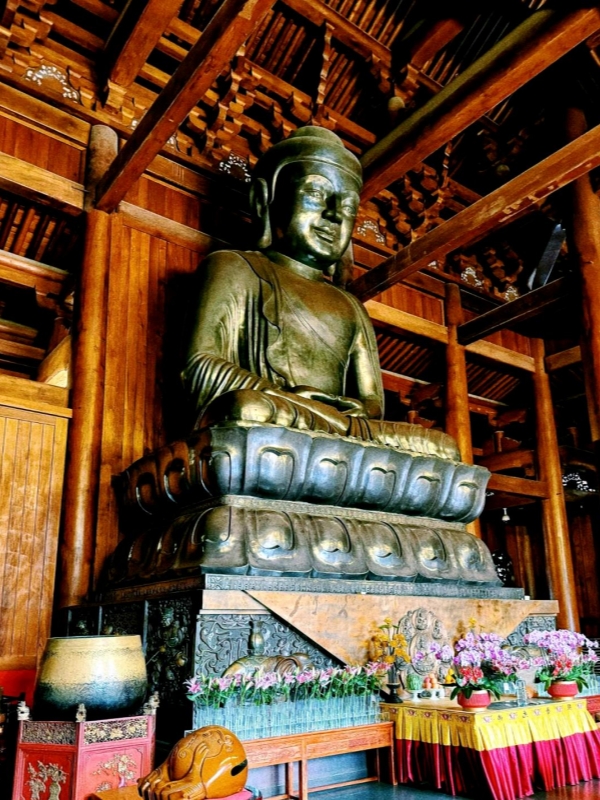
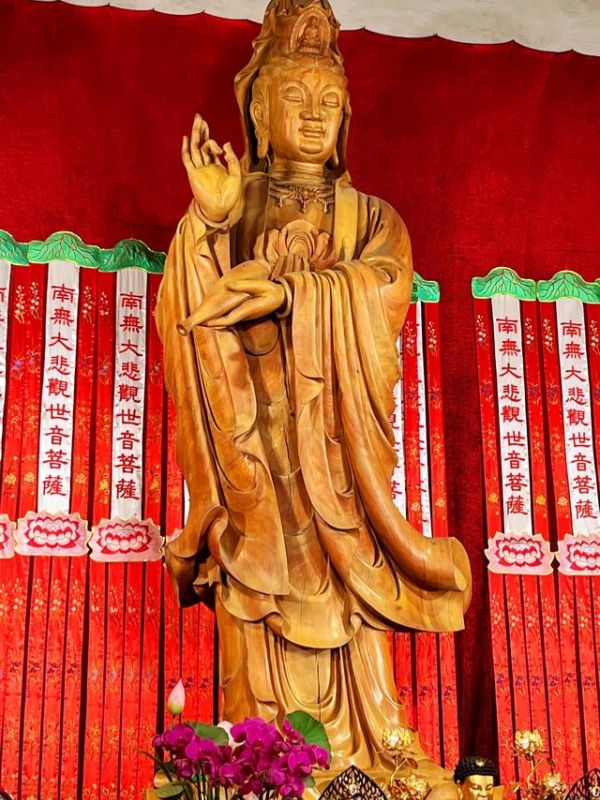
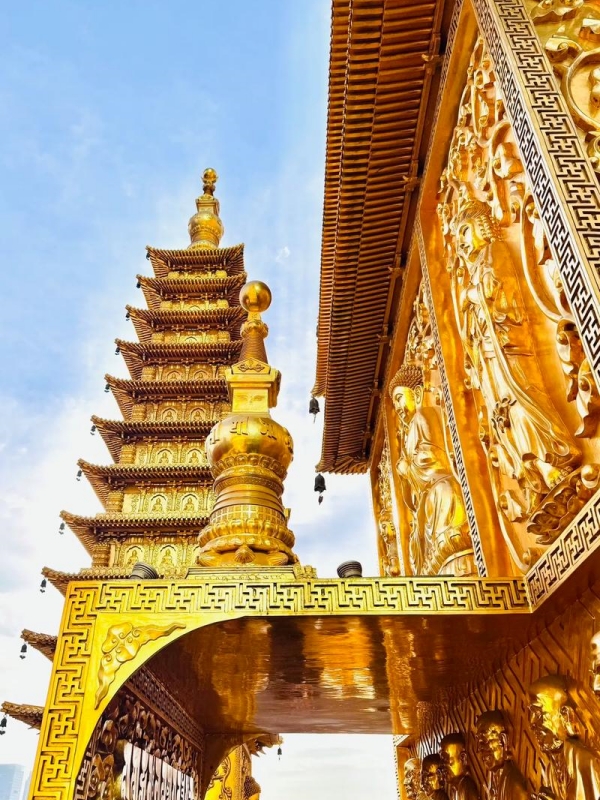
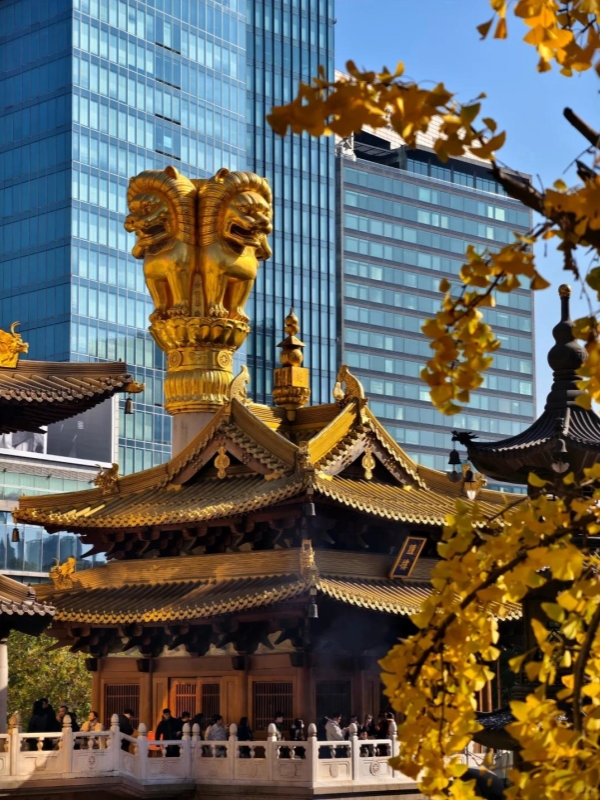
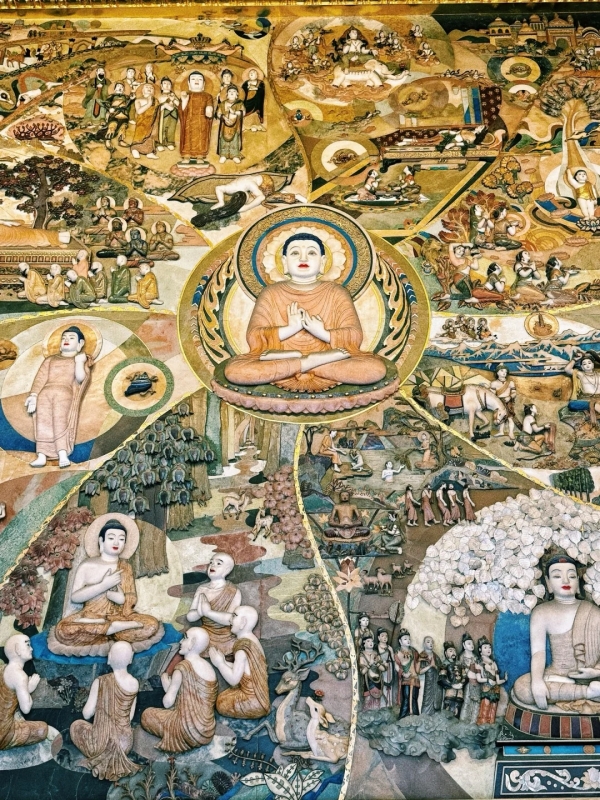
Beyond prayers, Jing'an Temple Shanghai offers genuine historical and architectural treasures worth understanding. Here's what actually matters.
The Three Temple Treasures
Jing'an Temple has three "town temple treasures" (镇寺三宝) that you should prioritize:
1. Ming Dynasty Bronze Shakyamuni Buddha (Main Hall): Cast during the early Ming Dynasty, this bronze statue has survived over 600 years. The craftsmanship shows incredible detail in the robe folds and hand positions (mudras), following traditional Buddhist iconographic rules. Look closely at the base—you'll see inscriptions dating its creation.
2. Hundred-Year Camphor Wood Guanyin (Guanyin Hall): The thousand-year-old camphor tree this was carved from makes it irreplaceable. At 6.2 meters tall with a thousand hands, each hand position has specific meaning in Buddhist symbolism. The wood's natural oils have preserved it for centuries—this is why the hall still smells faintly of camphor.
3. Song Dynasty Stone-Carved Diamond Sutra (Scripture Pavilion): Dating to the Song Dynasty (960-1279 AD), this stone carving of the Diamond Sutra survived the Cultural Revolution intact. The calligraphy represents classic Song Dynasty style. You can't touch it (it's behind protective glass), but you can photograph the intricate characters carved over 800 years ago.
Architectural Craftsmanship Worth Noticing
The Golden Copper Roof: This isn't just pretty—it's an engineering marvel. Master craftsman Zhu Bingxin's team designed the copper roof using traditional techniques merged with modern metallurgy. The secret? Special copper alloy and surface treatment prevent tarnishing even in Shanghai's brutal humidity. Look up anywhere in Jing'an Temple complex and you'll see golden roofs that won't dull over time. The roofs follow traditional architecture with dougong (bracket sets) and sweeping eaves, but modern welding is hidden beneath the ornamentation.
Burmese Teak Pillars: The main hall has 46 massive teak columns imported from Burma. Teak naturally resists rot and insects—these columns will last another thousand years. During afternoon hours (2-4 PM), side lighting shows the wood grain beautifully. Shoot upward from the base for dramatic scale in photos.
Gemstone-Inlaid Murals: The back wall of Mahavira Hall at Shanghai Jing'an Temple displays "Eight Stages of Shakyamuni Buddha's Enlightenment" using "hundred treasures inlay" technique. Coral, turquoise, jade, amber, and other semi-precious stones are cut and positioned to create narrative scenes. Each mural contains dozens of individual gemstones. View from about 5 meters back where the stones blend into coherent images—different lighting conditions (morning vs afternoon) change how the stones reflect.
Digital Prayer Experience (New in 2025)
You scan your ticket, pick a lotus lantern and write your wish. A lotus lantern floats around the wall with your wish written on it projected across the screen. It’s not a must, but lots of young people use it - staff told me that 70% of people under 30 use it! The effect is of hundreds of floating lanterns rooved over with wishes in English and Chinese.
AR guide glasses. 50 RMB/hour rental.
You can see images of how the building looked throughout its history superimposed on the modern building. I simply pointed my gaze at the main hall, and could see how it must’ve looked while being rebuilt in the 1980s through 2000s. The English narration is very good! I used it for about 30 minutes and learned many things that I’d never have picked out with my own eyes.
Must-Experience 3: Special Features at Shanghai Jing'an Temple
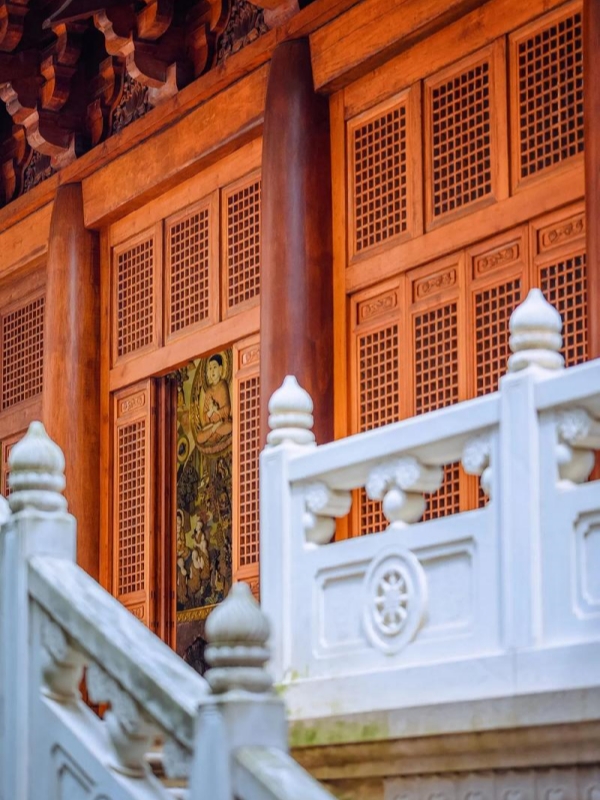
Shanghai Jing'an Temple
Beyond standard temple activities, Jing'an Temple offers unique experiences you won't find at other Shanghai temples.
Vegetarian Restaurant with City Views
Jing'an Temple's vegetarian restaurant operates 11 AM - 2 PM on the second floor. The rooftop terrace overlooks Nanjing West Road—you get ancient temple architecture in the foreground with modern skyscrapers behind. It's surreal eating lunch in a Buddhist temple while watching Ferrari dealerships across the street.
Recommended dishes:
Double Mushroom Noodles (双菇面): 38 RMB, consistently earns 4.8/5 ratings on Dazhong Dianping.
Lotus Pastry (荷花酥): 28 RMB per serving, known for its Instagram-worthy presentation.
Herbal Teas: 15 RMB, available in several varieties.
No alcohol (Buddhist temple), all dishes strictly vegetarian. Small snack booth near visitor center has bottled water (5 RMB) and packaged snacks. The restaurant gets crowded 12-12:30 PM—arrive by 11:15 AM or after 1 PM for tables.
Free Meditation Classes in English
Every Wednesday and Saturday at 9:00 AM, Shanghai Jing'an Temple offers free meditation classes with English guidance. You need to book 1 day ahead through the mini-program. The 1-hour session includes:
Basic sitting meditation instruction
Breathing techniques
Q&A with monks (some speak English)
Temple cultural souvenir bookmark at the end
This is genuinely valuable—most foreign visitors don't know about it. The monks teaching are patient with beginners. You don't need Buddhist beliefs to attend; they welcome anyone interested in learning meditation techniques. Dress modestly and arrive 10 minutes early.
Temple Cultural Products
The Dharma Circulation Office (法务流通处) near the exit sells Buddhist cultural items. Unlike tourist traps, these prices are reasonable:
Glazed bead bracelets: 50-200 RMB (The "Peace Glazed Bracelet" is a popular souvenir recommendation on Xiaohongshu).
Blessed fortune bags: 80-150 RMB, containing protective amulets.
Calligraphy scrolls: 200-500 RMB, hand-written by monastery monks.
Temple cultural books: 30-100 RMB, with some English translations available.
They accept WeChat Pay/Alipay and can provide official invoices (发票) for your purchases. Items are genuinely blessed in temple ceremonies—not just commercial products. Locals buy these as gifts, not just tourists.
✨ Surrounded by soaring towers, Jing’an Temple still holds its own charm, and so does the City God Temple—see how it remains a rising star in Visiting the City God Temple of Shanghai in 2025 — The Details That Stayed With Me.
Instagram Photo Spots: Jing'an Temple Shanghai
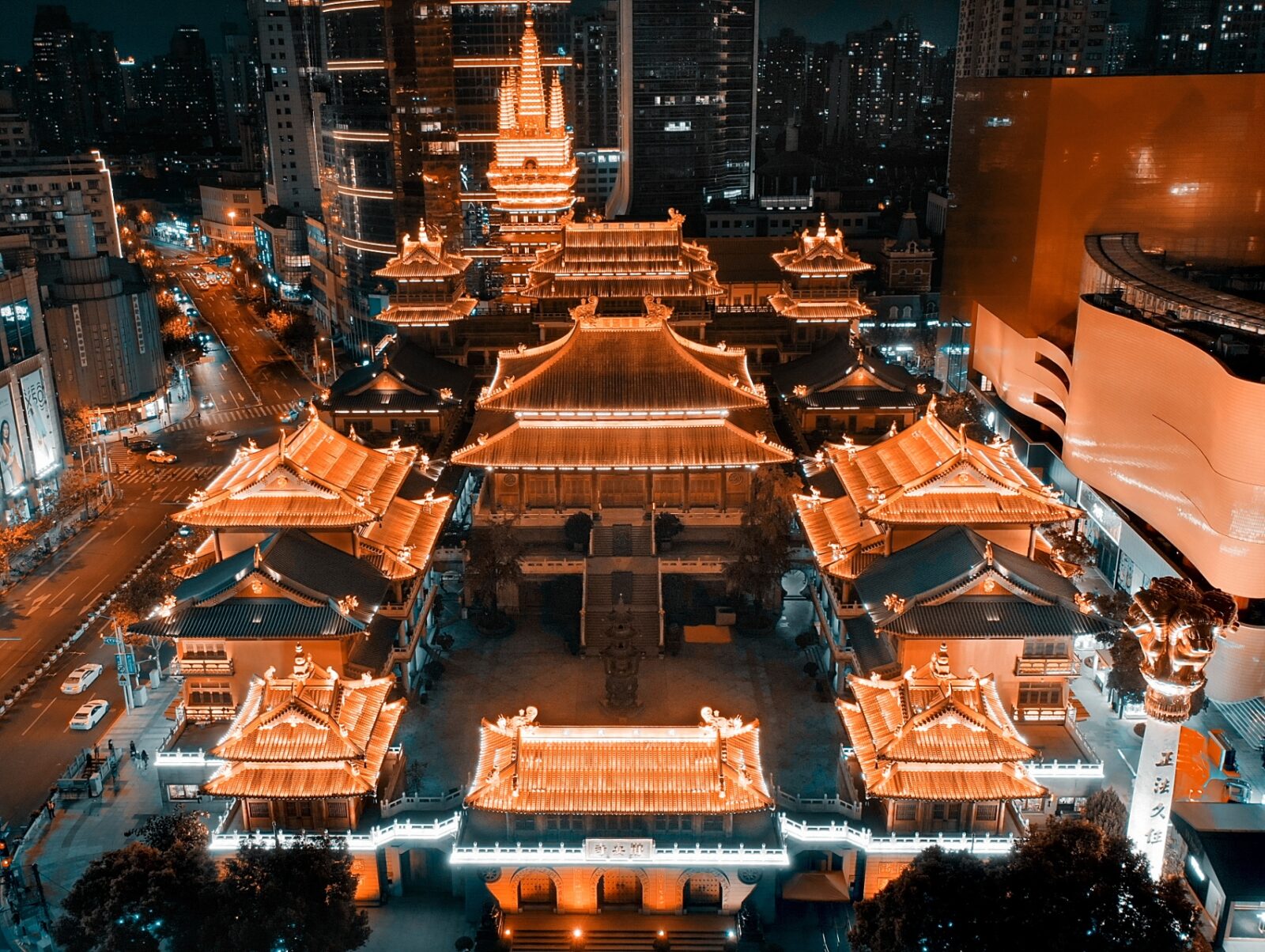
Jing'an Temple Shanghai Landmark
Based on multiple visits testing different times and angles at Jing'an Temple, here are the 3 essential spots with specific tips for the best shots.
Spot 1 - The Kerry Centre Skybridge: Iconic Jing'an Shot
Pedestrian Bridge (Kerry Centre) - Jing'an Temple Shanghai! Iconic Golden Roofs with Skyscrapers behind. Access via Metro Line 14 exit 13B or Jing'an Park Gate 3.
Best times: 3-4 PM, during which the side lighting adds warp and depth to the photo. Ideal on sunny days! Use portrait mode to give the skyscrapers a little bit of blur behind the golden roofs! Make sure to position yourself slightly toward the left side of the bridge for the most symmetrical composition. MY SECRET TIP: Start from the bridge then walk about 20 meter west till another angle which is less crowded and has an interesting tree in the mid-ground.
I personally visited this point for three different shoots to finally achieve my best shot - the soft, warm light of the early morning shot versus the golden glows of the late afternoon sun, either way it has the greatest visual impact. This shot of Jing'an Temple Shanghai is the most shared by Instagram for a good reason.
Spot 2 - The Water Reflection at Jing'an Park
Five minutes from Jing’an Temple, south west corner pond. Beautiful reflections of the temple in the water with a bamboo grove framing everything. Visit around 7–9am when the water is still. If it is a rainy day, you may get more mood as well.
Tap the reflection you want to expose properly as the default will most likely make reflection too dark. Spring there’s cherry blossoms + in Autumn the ginkgos turn gold… Wooden platform on the east side so you can get a higher shot without the fence ruining it. Not a lot of people know this spot, so it’s usually empty in the mornings of weekdays.
Spot 3 - The Golden Hour Courtyard at Jing'an Temple
Inside the courtyard of Jing’an Temple, next to the Fuhui Baoding. The burner is in the foreground and you can see the roofs of the main hall in the back, next to the smoke on the other side of the courtyard creating more layers. At golden hour, 4.30-5.30, this scene becomes magical, as the light seems to set the roof on fire and the smoke will be rendered as ribbons of light.
Wait for when the smoke drifts across the frame. Consider to use HDR mode to balance out the bright roof with the darker courtyard, or simply slightly underexpose to recover details in the roof. Busy area, be patient. Most visitors congregate around the entrance to the main hall, so waiting a little to get to the side of the framing creates clearer types of frames.
Beyond Jing'an Temple: The Shanghai District
-
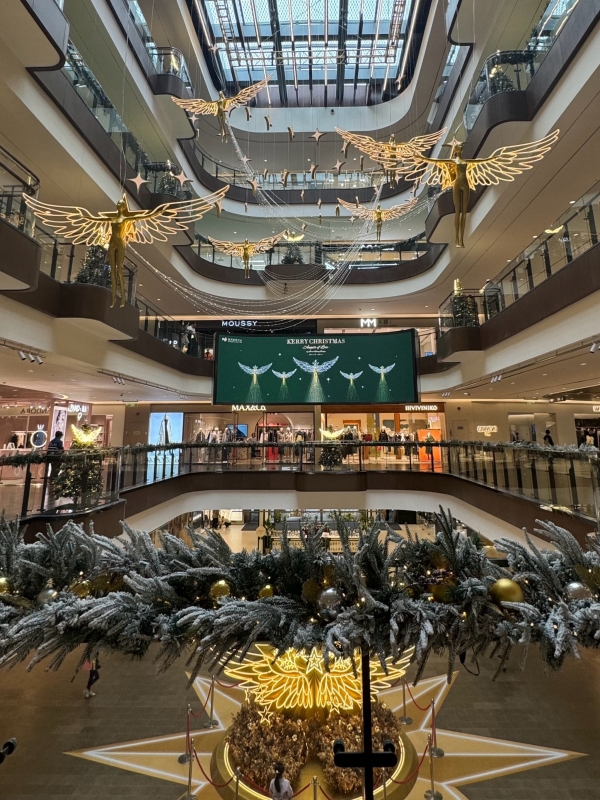

- Kerry Centre
-
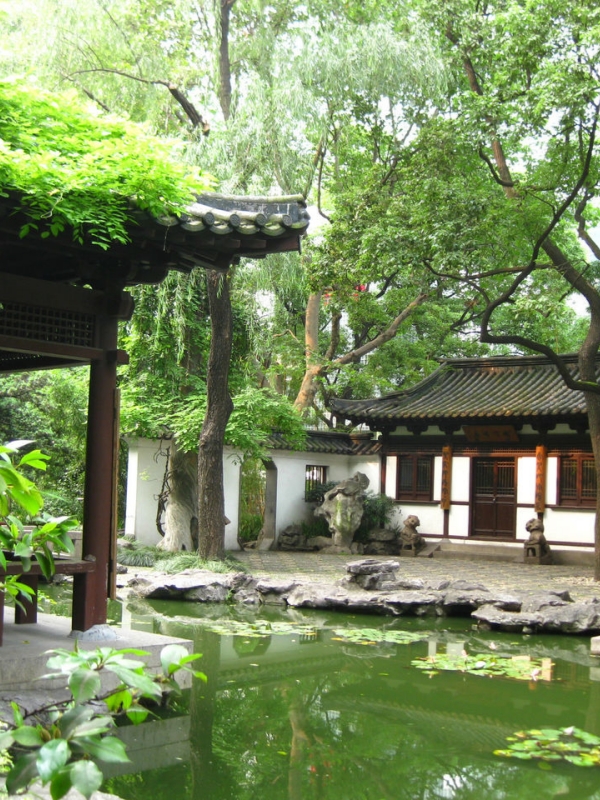
- Jing’an Park
-
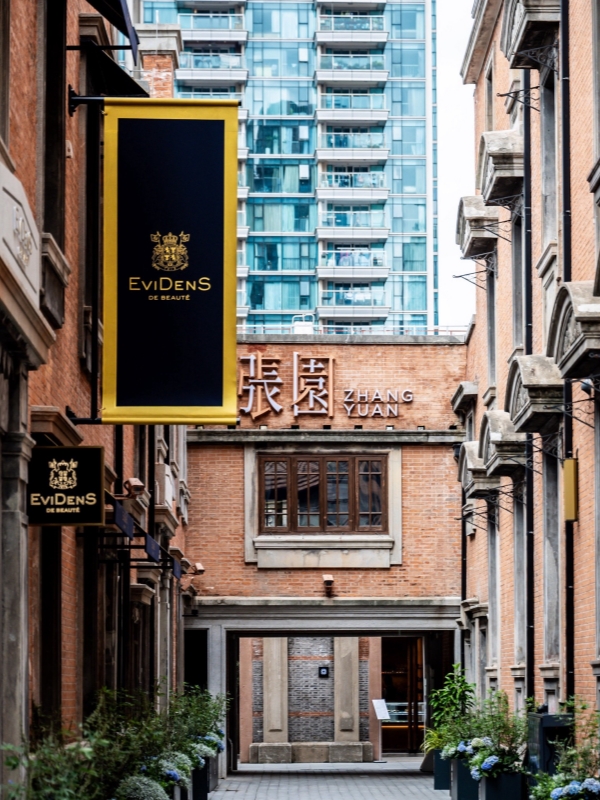
- Zhangyuan
Don't isolate your Jing'an Temple visit. The area offers exceptional dining and cultural attractions within walking distance.
Food Near Jing'an Temple Shanghai
Jiuguang Department Store basement (2 minutes from Jing'an Temple): Japanese supermarket and food court. Renhe Guan (8 minutes): Michelin one-star Shanghainese, braised eel and red-braised pork are incredible, 300 RMB per person, book 3-7 days ahead.
Luochunge Shengjianbao (12 minutes): Shanghai's best pan-fried buns, 12 RMB for four. Visit before 11 AM or after 2 PM to avoid lines. Shuangxi Old Shop (10 minutes): water buffalo milk double-skin pudding, 18 RMB, 90%+ check-in rate on Xiaohongshu.
Starbucks Reserve Roastery inside Kerry Centre (3 minutes from Jing'an Temple): world's largest Starbucks, specialty drinks 50-80 RMB, you can watch roasting process. DD Coffee (5 minutes): osmanthus lattes 32 RMB, minimalist design, Instagram-worthy. Jing'an Temple's vegetarian restaurant: double mushroom noodles 38 RMB, rooftop terrace overlooks Nanjing Road, earns 4.8/5 on Dazhong Dianping.
Cultural Sites Around Jing'an Temple
Zhangyuan (10 minutes from Shanghai Jing'an Temple): renovated shikumen houses, free admission though some exhibitions charge 20-50 RMB, late afternoon (3-5 PM) best light.
Jing'an Park (5 minutes): 33,600 square meters, bamboo groves, water features, free entry, peaceful escape from surrounding density.
Shaanxi North Road (15 minutes): historic villas, watch traditional qipao dress-making at Longfeng Qipao, quieter than famous Xintiandi.
Transportation to Jing'an Temple Shanghai
One of Jing'an Temple's biggest advantages? It's ridiculously easy to reach from anywhere in Shanghai.
By Metro: Getting to Jing'an Temple
Jing'an Temple Station serves Lines 2, 7, and 14. Exit 1 or 2, one-minute walk to entrance. Line 2 connects Pudong Airport, People's Square, The Bund, Hongqiao—no transfers needed.
| Starting Location | Subway Line/Direction | Number of Stops | Approximate Time | Cost (RMB) |
| Pudong Airport | Line 2 toward Xujing East | 24 stops | 70 minutes | 8 RMB |
| Hongqiao | Line 2 toward Pudong Airport | 10 stops | 30 minutes | 4 RMB |
| The Bund | (Not specified) | 4 stops | 12 minutes | (Not specified) |
First trains start ~5:40-6:00 AM, last trains ~10:50-11:35 PM. Download "Metro Daduhui" app for real-time schedules. Buy Shanghai Transportation Card if staying multiple days—slight discounts, works on metro and buses.
By Taxi: Reaching Jing'an Temple Shanghai
DiDi (China's Uber) and Meituan offer English interfaces.
| Starting Location | Estimated Cost (RMB) | Estimated Cost (USD) | Approximate Time |
| Pudong Airport | 150 - 180 RMB | $21 - $25 | ~60 minutes |
| Hongqiao | 50 - 70 RMB | $7 - $10 | ~25 minutes |
| The Bund | 25 - 35 RMB | (Not specified) | ~15 minutes |
Show driver the address in Chinese: 南京西路1686号 or "静安寺正门" (Jing'an Temple Main Gate). Traffic is terrible during rush hours (7:30-9:30 AM, 5-7 PM)—metro is genuinely faster then. Alternative: ask for Kerry Centre, three-minute walk to Jing'an Temple.
Insider Tips for Visiting Jing'an Temple Shanghai
Successful visits to Jing'an Temple require understanding both practical logistics and cultural expectations. Here's what I wish someone told me before my first visit.
Best Times to Visit Jing'an Temple
Weekday mornings 9-11 AM offer best balance of light and manageable crowds at Shanghai Jing'an Temple. Arrive at 7:30 AM opening for most serene experience. Avoid weekends if possible—Saturday/Sunday crowds make photography difficult, 20+ minute waits for viewing main halls.
Lunar 1st/15th days offer free admission but attract 3-5x normal crowds. Only visit these days if interested in genuine Buddhist practice rather than comfortable sightseeing—arrive before 6 AM if you do. Friday/Saturday evening illumination (6-8 PM) provides unique experience worth prioritizing.
Dress Code at Jing'an Temple
Shoulders covered (no tank tops), shorts/skirts at least mid-thigh. Footwear needs back straps—flip-flops aren't allowed at Shanghai Jing'an Temple. I've seen tourists forced to buy overpriced temple t-shirts (80 RMB) to gain entry, so dress appropriately.
Bring passport (reservation requires ID), WeChat Pay/Alipay for most transactions, 50-100 RMB cash for coin exchange. Light jacket helpful—halls are heavily air-conditioned. Portable charger essential for photo sessions. Large backpacks must be checked in free lockers.
Photography Rules at Jing'an Temple Shanghai
CAN photograph: architectural exteriors, courtyards, decorations, your companions, halls showing statues as part of architecture. CANNOT photograph: close-ups of Buddha faces, monks without permission, people praying, certain restricted halls. Flash prohibited indoors, no tripods.
Gray area for statues at Jing'an Temple: you can photograph the HALL (showing statue as part of architecture), not okay to zoom in on Buddha's face. When in doubt, photograph from doorway looking in.
Frequently Asked Questions: Jing'an Temple Shanghai
Q: Is Jing'an Temple Shanghai wheelchair accessible?
Partially, with limitations. Main courtyard and ground floor halls have ramps and flat surfaces wheelchairs can navigate. Upper floors, Bell Tower, Drum Tower, some side pavilions—stairs only, no elevators. Vegetarian restaurant is second floor, no lift. If mobility is a concern, you can experience about 60% including silver Buddha (ground floor) but miss jade Buddha and upper levels. Accessible restroom on ground floor near visitor center. I'd recommend combining with Kerry Centre skybridge viewing—has elevator access, excellent Jing'an Temple views without requiring entry.
Q: Can I visit Jing'an Temple Shanghai at night?
Yes, but only Friday/Saturday evenings 6-8 PM with special illumination. Need separate reservation through same mini-program, same 50 RMB admission. Not all areas accessible—some side halls close at 5 PM—but main attractions fully lit. Illuminated Shanghai Jing'an Temple is particularly romantic, less crowded than daytime. For photography, arrive around 7 PM during blue hour when sky provides beautiful gradient backgrounds.
Q: Do I need advance booking for Jing'an Temple?
Since 2025, yes—advance reservation through "Jing'an Foyuan" mini-program required, book 1-3 days ahead for Jing'an Temple Shanghai. Walk-up entry not guaranteed during peak periods. If you arrive without reservation, sometimes same-day slots available, but don't count on it during weekends, holidays, or free admission days. Process takes ~5 minutes, requires WeChat.
Q: What's the best season to visit Shanghai Jing'an Temple?
Late September through early November: optimal temperatures (18-25°C), clear skies, manageable crowds outside October's first week (Golden Week). Spring (March-May) also excellent with cherry blossoms, though more rain. Summer (June-August) brings hot humid weather and peak crowds—early morning or evening visits essential. Winter (December-February) has fewest tourists and dramatic light but requires warm clothing.
Q: How does Jing'an Temple compare to Jade Buddha Temple?
Jing'an Temple Shanghai wins for location convenience (city center, direct metro), architectural grandeur (golden roof is spectacular), modern facilities, striking ancient-modern contrast. Jade Buddha offers more authentic atmosphere in residential neighborhood, genuinely tranquil spaces, historical jade Buddhas from 1882. If visiting only one, choose Jing'an Temple for quintessential Shanghai experience and convenience. According to TripAdvisor, first-time visitors overwhelmingly prefer Jing'an Temple.
Q: Are there English tours at Jing'an Temple Shanghai?
AR glasses (50 RMB/hour) provide historical info in English at Jing'an Temple. Free brochures in English/Japanese/Korean at visitor center. Wednesday/Saturday meditation classes include English guidance. Freelance guides near entrance 100-200 RMB per group—quality varies. Platforms like GetYourGuide offer structured tours $80-120 for 2 hours. Honestly though, with this guide and the free brochure, self-guided works perfectly.
Q: What about the free admission days at Jing'an Temple?
Lunar 1st/15th each month = free at Shanghai Jing'an Temple, but 3-5x normal crowds, mostly devout Buddhists not tourists. Atmosphere becomes genuinely spiritual. Special chanting services, much higher religious activity. Arrive before 6 AM to avoid worst crowds. Check lunar calendar apps for dates. Free tradition dates back centuries—new and full moons considered auspicious for merit-making. Choose free days if cultural immersion is priority; pay 50 RMB for comfortable exploration.
Q: Can foreigners participate in ceremonies at Jing'an Temple?
Yes, foreigners welcome to observe and respectfully participate at Jing'an Temple Shanghai. Daily morning chanting ~8 AM, evening chanting ~4 PM open to public. Stand quietly in back, mimic bowing/kneeling if comfortable, or just observe. Wednesday/Saturday meditation classes offer English guidance for beginners regardless of background. Remove hats, silence phones, no photography during ceremonies, don't interrupt until sessions conclude. Jing'an Temple staff appreciate genuine interest over perfect execution.