Shangrao Lingshan
Shangrao Lingshan is located in the northeast of Jiangxi Province, not far from Shangrao city center, and is usually visited as a day trip or short hiking stop. The area is known for its layered mountain ridges, stone paths, and wide viewpoints rather than sharp peaks. Wooden walkways connect most sections, making the hike manageable even without much experience. On clear days, low clouds drift between the hills, and the scenery changes with the weather. Compared with nearby Sanqing Mountain, Shangrao Lingshan feels quieter and less commercial, which suits travelers who prefer a slower pace.
Quick Facts About Shangrao Lingshan
| 📍 Location | Guangxin District, Shangrao City, Jiangxi Province |
| ⛰️ Main Peak Elevation | 1,496 meters (4,908 ft) |
| 🪨 Peaks & Formations | 72 peaks, 108 rock formations |
| 🎟️ Admission | ¥75 (about $10 USD) |
| 🚠 Cable Car | ¥80 one-way (around $11 USD) |
| 🛗 Escalator | 1,236 meters, often called the world’s longest |
| ⏰ Opening Hours | Peak: 7:00–17:30 / Off-peak: 8:00–17:00 |
| ⏳ Suggested Visit | About 4–5 hours |
| 🍃 Best Seasons | April–May, September–October |
Granite Peaks and Taoist Heritage at Lingshan Scenic Area
-

- Granite Peaks
-
- Taoist Architecture
-
- All Kinds of Rocks
72 Sword-Like Peaks Rising Through the Clouds
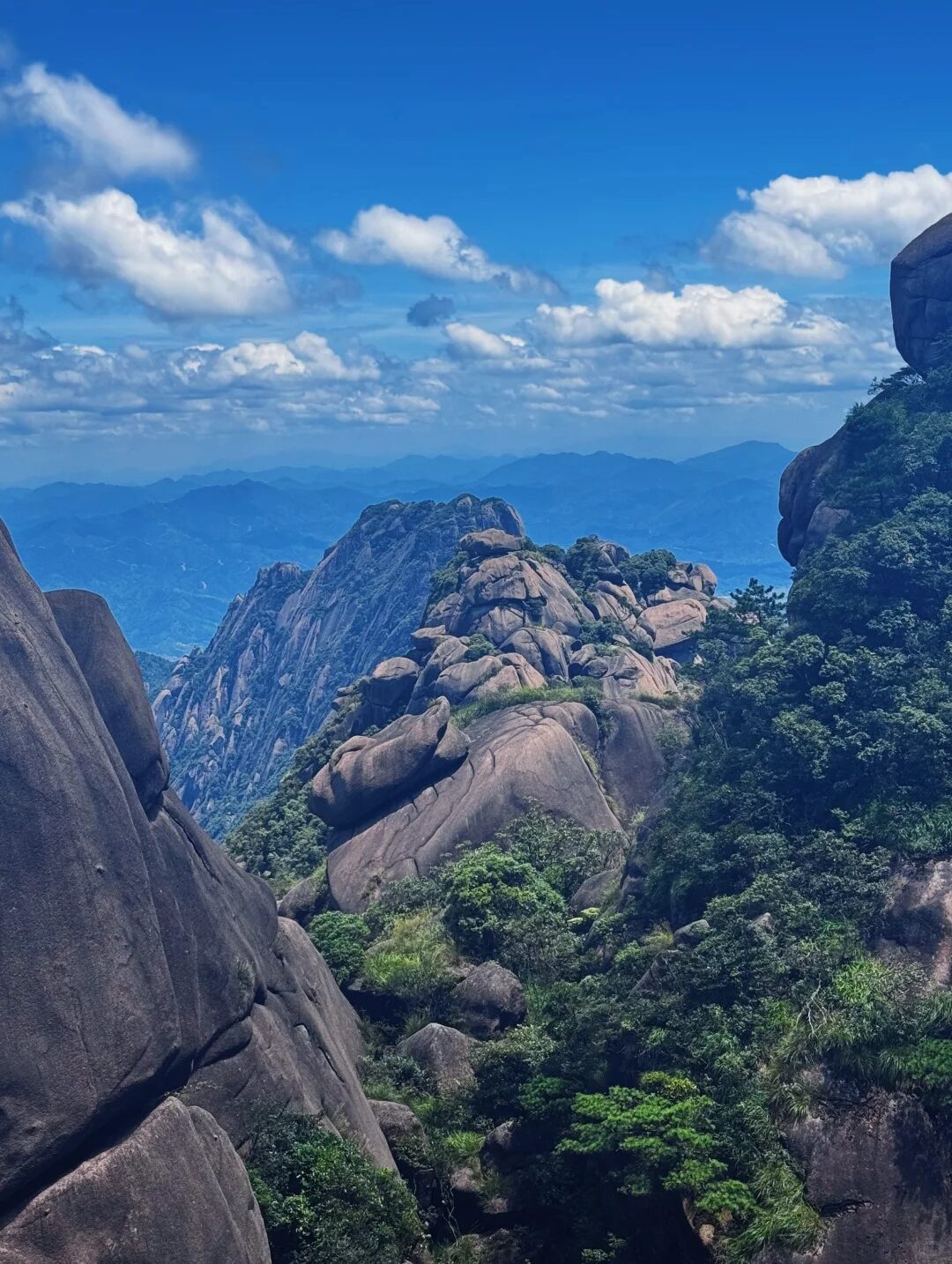
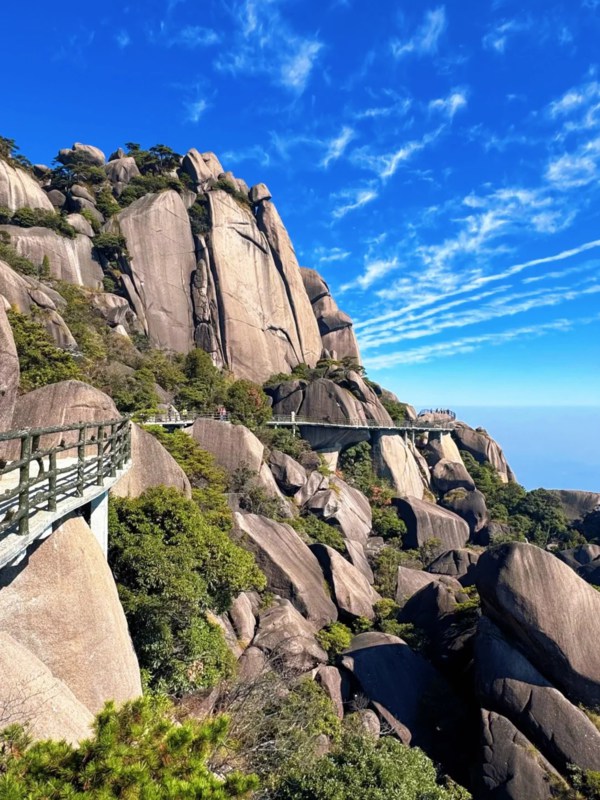
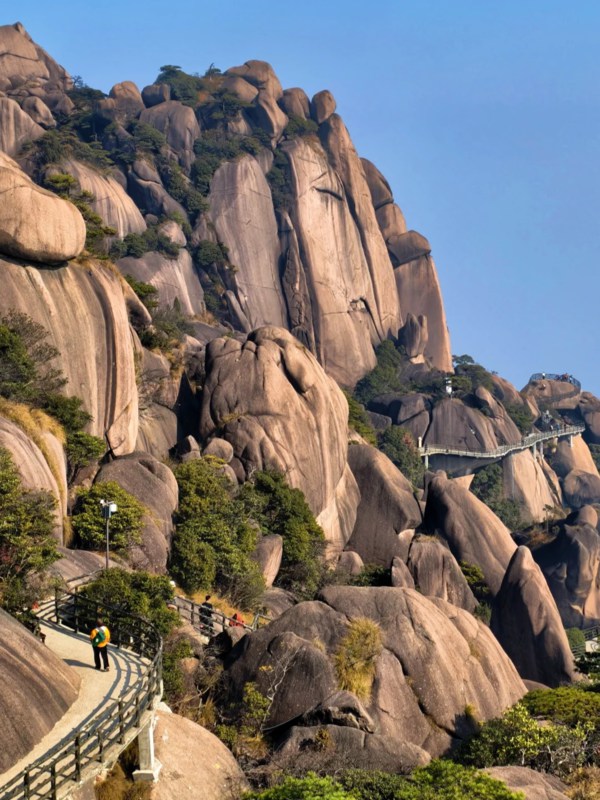
The scenery in the Shangrao Lingshan is not accidental, it is almost artificial, but geology has done the job many years before some trail shows up. The mass of the mountain is made of granite which was created 200 million years ago and it was formed through lifting and erosion. There is still an old theory in conversation, among the locals, that there was a crater of meteorite 12 kilometers in diameter, which formerly occupied this spot; nobody can prove it, but the ridgelines are in a circle. There are 72 very near-by mountains of the Lingshan Scenic Area, all narrow and straight up, and giving them that sword-like appearance, which people invariably talk about.
It also has 108 named rock formations and some names are more memorable than others. When the light strikes the spine sideways, Dragon Ridge appears exactly like a spine. Turtle and Snake Embrace seems to be poetic till you see the rounded shell shape clinging to a wavy stone shape. The Heavenly Sword is the Tianjian Peak, which slices the sky without any soft inclination whatsoever. Mornings are good in this. Slender mist glides between the mountains, and all becomes quiet and then the entire scene looks like a low-budget xianxia film, only without actors, thankfully. This silent hour is the reason why shangrao lingshan made such an impression in the first place.
The 33rd Blessed Land in Taoist Scripture
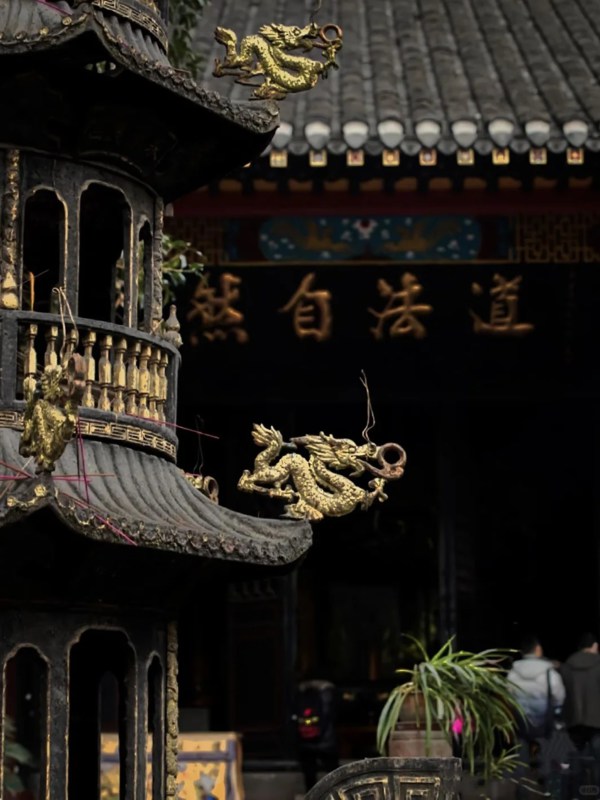
More than the mountains are the layers of the mountain produced by belief. There are 36 Grotto-Heavens and 72 Blessed Lands listed in classical Taoist literature and Lingshan Mountain Shangrao is the 33rd Blessed Land. That is the reason why temples will be found in the locations which seem to be inconvenient and even dangerous. Shifo Temple is held together to a steep wall; local guides explain that monks of the Song-dynasty, hefted the stone pillars up into position using vines, which until you are down the bottom and up the other side, sound like a fairy tale.
Tianxin Temple and Tianzun Temple are elevated and located on less travelled roads, and are commonly overlooked by touring masses. There are springs that run along them and one of them, according to caretakers, has never dried up, even in hot years. The water yet flows clear, though not because of belief. The most interesting thing is that the space of Taoism and Buddhism are united by a mountain without clear boundaries. The odor of incense mingles, the figures are modified, yet nobody appears to mind. I heard some temple bells clanging in the valley one morning and I heard some hikers whispering. It is that intersection of faith, stone and everyday footsteps that provide shangrao lingshan with the permanence it has.
The 1,236-Meter Cliffside Escalator: Accessibility Revolution at Shangrao Lingshan
-
- Cliffside Escalator
-

- Cable Car
World Record Engineering on Ancient Mountainside
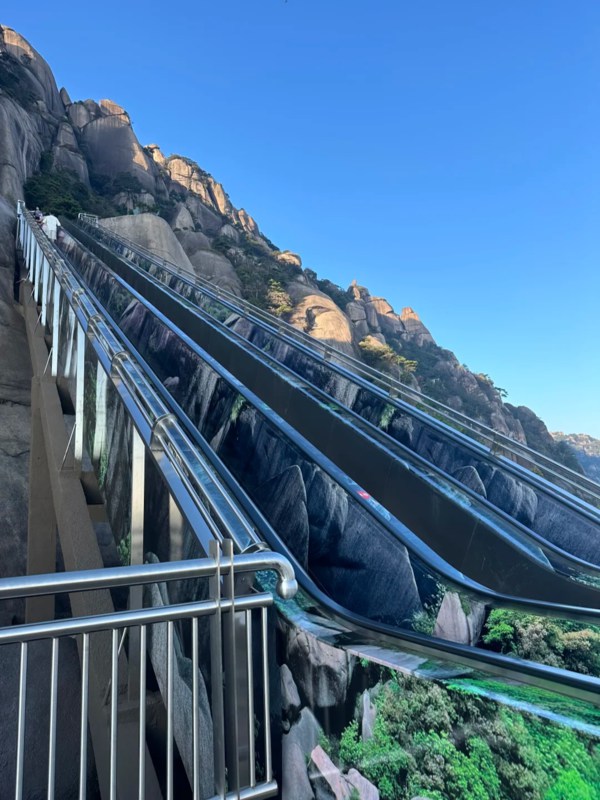
Shangrao silently altered the movement of people within the mountain in October 2025. The 1,236 meter cliffside escalator started, which was constructed on the rock face. It operates in 10 linked segments of about 50 meters long, and the aggregate gains of about 88 stories. It is now possible to walk to the place in nearly 2 hours; today it is possible to walk the distance in less than 10 minutes, with a slight delay at every transfer point.
This Shangrao Lingshan escalator was soon to gain a new name as the longest escalator China ever constructed in a natural scenic location and controversy followed. Other hikers claim that it water goes down the mountain experience and makes work a luxury. Others note the glaringly obvious: the old visitors, families, and less mobile people eventually access the perspectives that were previously closed to them. Being next to it, with the low mechanical hum reverberating on granite walls, it becomes difficult to imagine that it is either entirely intrusive or entirely helpful. It is like a compromise-modern steel being sewed to ancient stone whether people like it or not.
Traditional Alternatives Still Available
Those who like the usual ones are not left behind as the Lingshan Scenic Area has not forgotten the usual paths. The cable car is the most popular among first-time tourists. One way ride is ¥80 and takes approximately 20 minutes and has open views of the ridgelines. The large number of people riding and walking up and down even out time and effort.
The hiking paths are also still important in this area, in particular, two trails, informally referred to as 985 and 211 by the locals, owing to the name of two university rankings in China. The 985 road is steeper but will present you with bigger sceneries and less people. The 211 line is smoother yet more long. A trap that is easy to fall into: the buses of going back do not come frequently. Failure to do one, and you may spend more time than you want. The commentary of a traveler sitting next to me was rather simple: The road was so steep that I wonder why I made this life decision. That combination of agony and reward continues to characterize Shangrao Lingshan whether with an escalator or not.
Five Elements Plank Road and Must-See Viewpoints
-
- Five Elements Plank Road
-
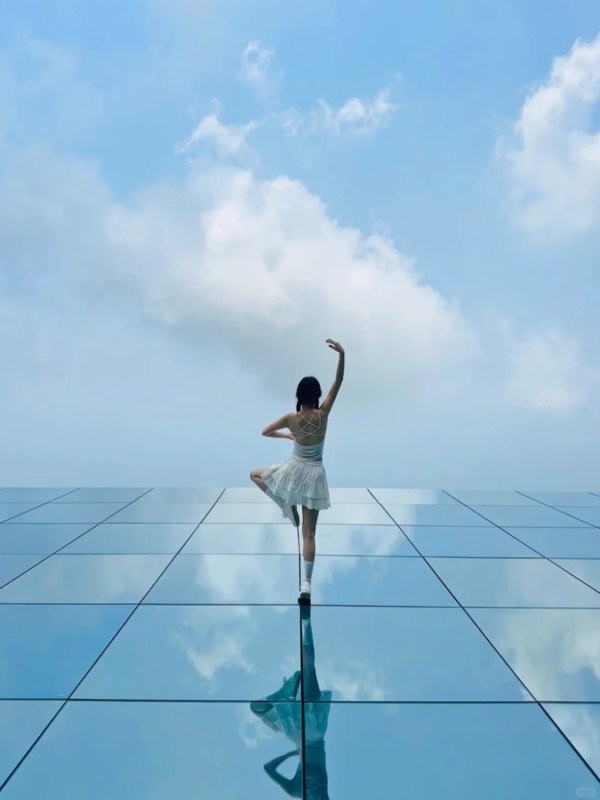
- Sky Mirror Platform
8,000 Meters of Suspended Walkways
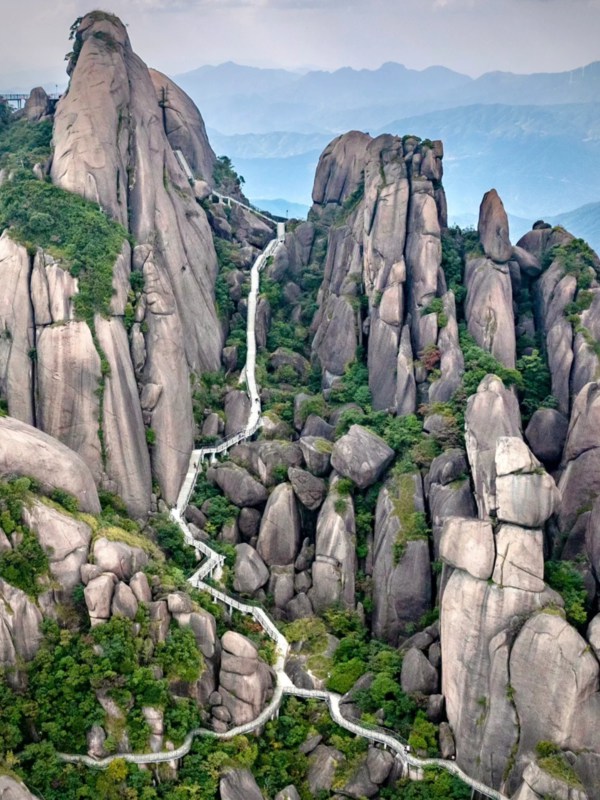
It is the Five Elements Plank Road that most people recall, and normally in the middle of their legs. The complete system stretches approximately 8,000 meters and splits into five connected parts named after the traditional elements: metal, wood, water, fire, and earth. Walking the full loop takes three to four hours, especially with stops and crowds along the way. The road winds across East Tai Peak, the center of sightseeing, and follows the cliffs for long stretches. Designers maintain a width of about 1.5 to 2 meters—wide enough to pass comfortably, yet narrow enough to keep hikers alert.
The best way to go is the entrance on the left side, which leads to Hama Watching the Sky, to Tianti Peak, the glass plank road and the courageous viewpoint called Xiongba Tianxia. This series maintains constant changes in elevation and prevents re-tracing. In Lingshan Scenic Area Shangrao this loop is better exposed and safer than most believe.
Sky Mirror and Glass Platform Photography
On paper, the Sky Mirror Platform appears to be very basic: it is a glass floor, it is outdoors and it is a clear horizon. As a matter of fact, everything depends on timing. You want to do it in the early mornings, when the clouds are floating beneath your feet, and the glass is like the sky. That effect dies quickly with the ascent of the sun.
Individuals with good photos tend to dress loosely in lighter colors and this looks better compared with the dark stone that surrounds them. The wide-angle lens is beneficial, yet the phone cameras are also sufficient provided the light co-operates. It has been one of the most photographed places at Shangrao Lingshan, and I heard one visitor say that they had taken more than a hundred pictures before they decided on three. That reaction seems common. If you enjoy capturing dramatic landscapes from glass platforms, you might also want to see how photographers tackle vertical cliffs and sky bridges at Zhangjiajie National Park.
Avoiding Common Pitfalls
Weather is everything, as many would think. During cloudy or rainy days, the views practically disappear hence clear forecasts are worth waiting. Change in elevation is almost 800 meters and the weather cools rapidly; no jacket is an option. The sunlight remains very strong even when the air is cool and therefore sunscreen is useful. Final cable cars and buses are early, and missing them is a cause to wait a long time-setting an alarm is not excessive. Pickups on the weekends, weekdays are less hectic. On the mountain Lingshan, even tiny planning decisions have an impact on the entire experience.
Best Time to Visit Shangrao Lingshan (Weather, Crowds, and Light)
-
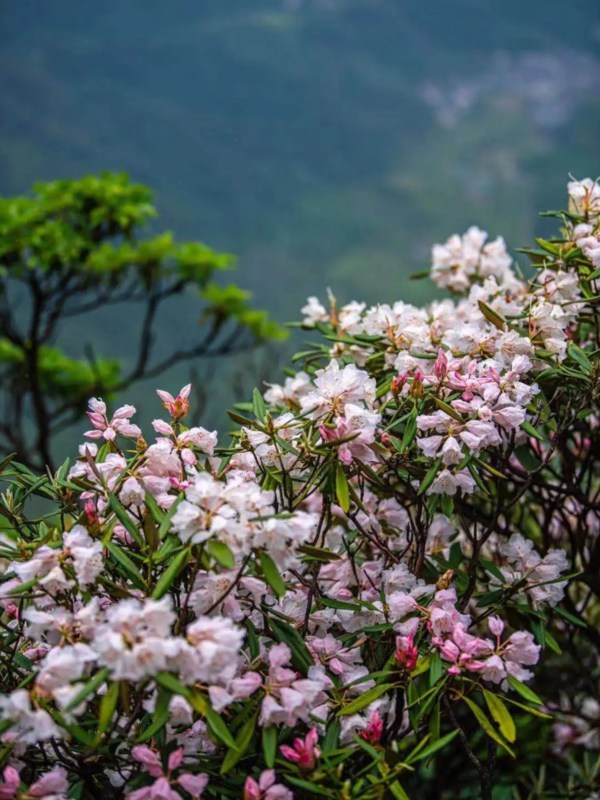
- Spring Flower of Lingshan
-
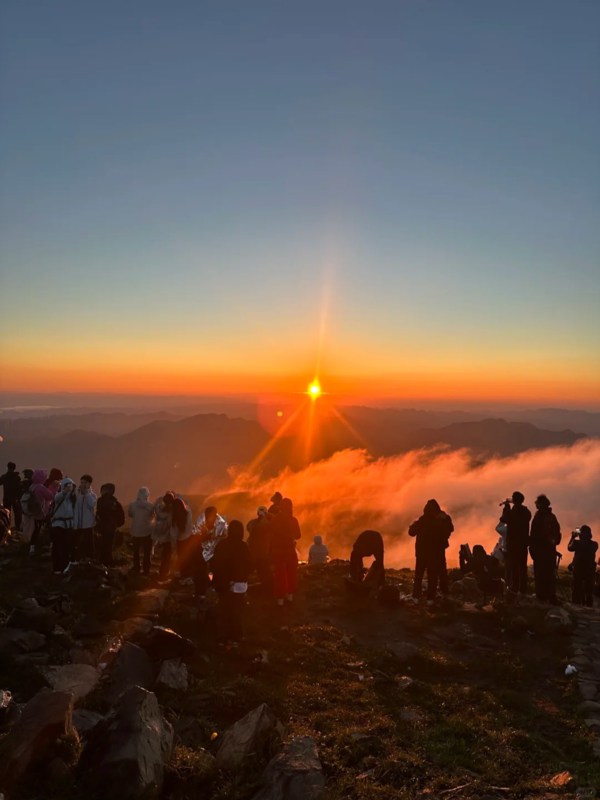
- Sunrise of Lingshan
Seasonal Differences You Actually Feel on the Mountain
Timing is the key to the Shangrao Lingshan experience than a few first-timers anticipate. April through May, the spring is associated with the soft green leaves and the clouds of low height moving between mountains at times. The mornings are so much like a xianxia drama, with the fog winding round the 72 peaks of swords. During summer it is hot and humid, the rock walks become slippery when it rains and the mosquitoes are remarkably insistent. Autumn, September to October, is usually the best time with clear visibility, clean air, and not so many people on the trail, this is the best place to do a photography. The winter is generally colder but there are a few parts on top that might be chilly or slightly frozen, hence jackets and compatible clothes will be needed.
Tourists tend to underestimate the sunshine, as well. Even on a clear day, mid-mountain clouds often linger until late morning, slightly distorting the peaks. One traveler described how a sudden breeze blew the fog aside like a curtain, transforming the entire scene in seconds—experiences like this make arriving early worthwhile.
Weekdays vs Weekends—How Crowds Change the Experience
Crowds influence visits even more than weather. Families, tour buses, and social media groups swarm the glass platforms and plank roads on weekends. The Five Elements Plank Road can reach near gridlock, especially at Tianti Peak and the Sky Mirror Platform. On weekdays, hikers encounter far fewer people, so they can pause freely at Shangrao Lingshan viewpoints without constantly moving aside for others. To photographers or anyone who is preferring to avoid the busy foot traffic, weekdays do matter.
The evenings attract fewer people, but remember that the time of cable cars and escalator cease their work before the sun sets. Others choose to arrive late morning on weekdays so as to enjoy sunlight without having to go early. Timing on weeksday with good weather enhances the chances of the existence of cloud-filled valleys, clear vistas and even temporary rainbows close to waterfalls.
Sunrise, Midday, or Late Afternoon?
Light dramatically changes perception. Sunrise often catches mist in the valleys below, ideal for reflective shots on glass platforms. Midday can be harsh, flattening rock textures but making distant peaks pop in the sunlight. Late afternoon brings golden hues, especially on East Tai Peak, but shadows deepen fast. Personally, early morning slightly before 8 a.m. seems the sweet spot for both lingshan scenic area shangrao photography and a quiet, immersive experience.
Getting to Shangrao Lingshan and Nearby Attractions
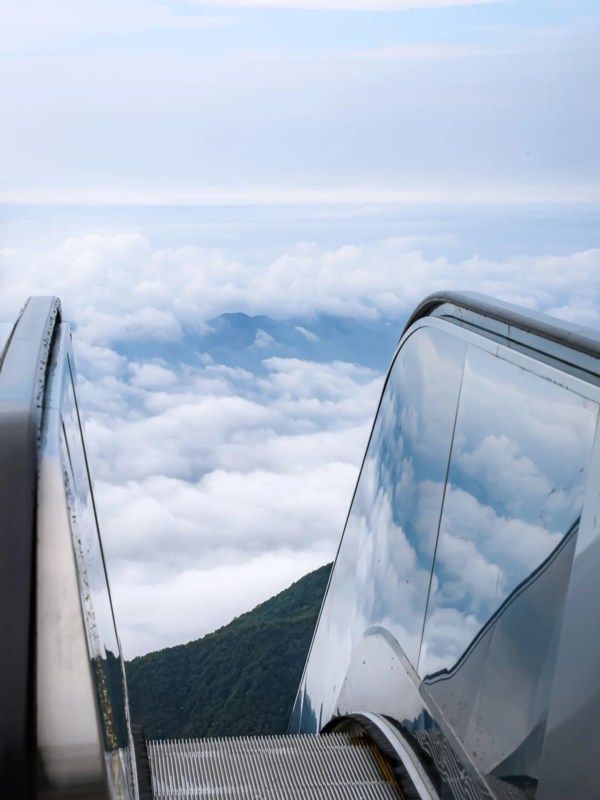
Sea of Clouds in Lingshan
Where Is Shangrao City in China?
Shangrao sits in the northeast of Jiangxi Province, calmly surrounded by more conversational neighbors. High-speed trains connect it efficiently: travelers can reach Shanghai in just over three hours and Hangzhou in under two, depending on the service. Shangrao Sanqingshan Airport (SQD) handles domestic flights, though they are infrequent. Visitors quickly notice the distinct local dialect when they arrive. Shangrao speech is a part of Gan language family, and it is very different with standard Mandarin. Such language change frequently catches first-time visitors who are heading to Shangrao Lingshan off guard.
Transportation to Lingshan Scenic Area
Once you get in town, it is easy to reach the mountain itself. Tourist buses leave the Shangrao Railway Station and head to the Lingshan Scenic Area, and it takes approximately one hour, and the buses leave the passengers nearby the main entrance. Ride-hailing apps or cabs reduce the commute time to about 30 minutes, and the costs are affordable according to the city standards. Driving is also effective; the majority of the people just drive to Lingshan Scenic Area Visitor Center which does not charge any parking. A little but essential suggestion: buses that are going back are not frequent. Make sure that the departure time is confirmed at the early time, or the mountain day may end up in a long wait.
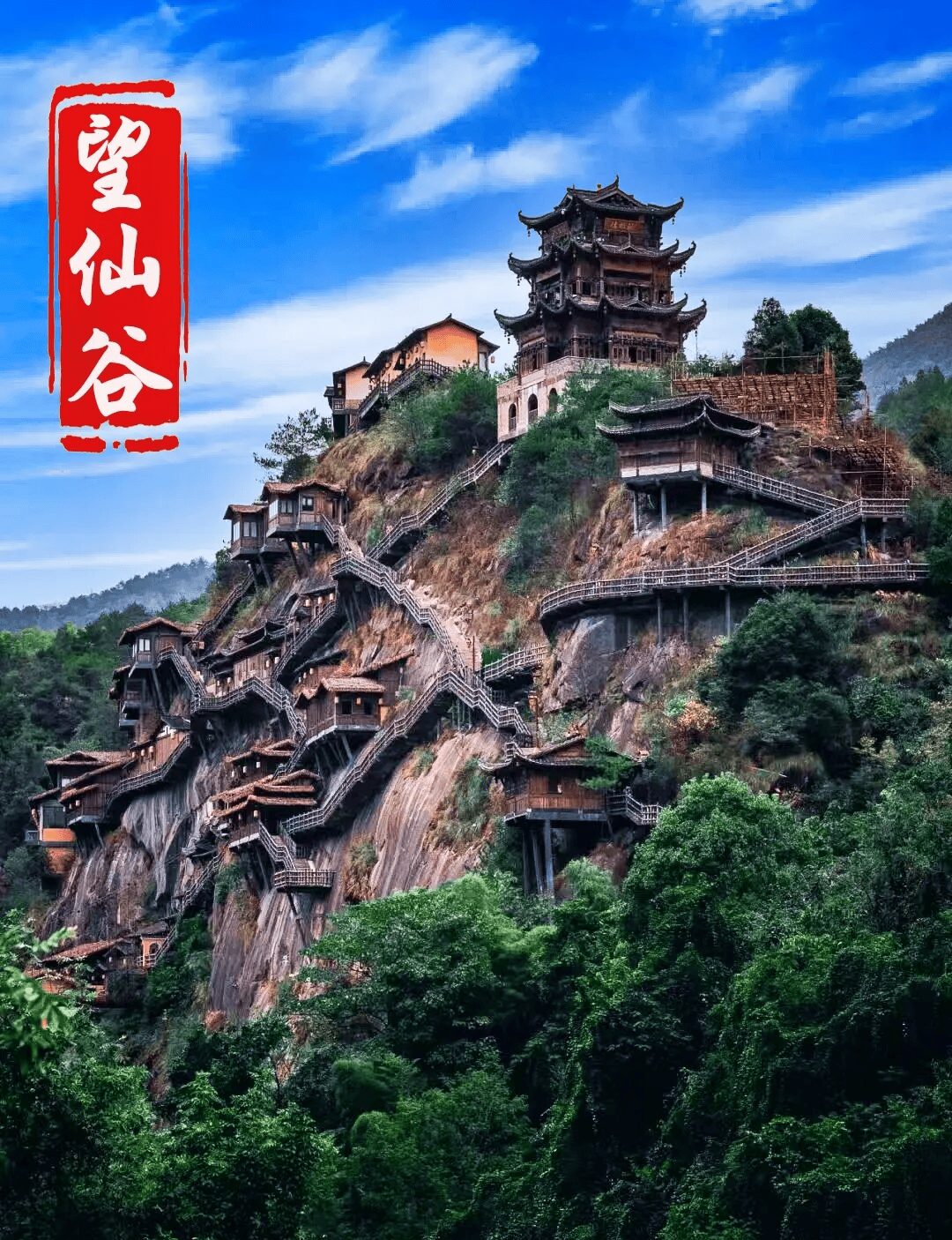
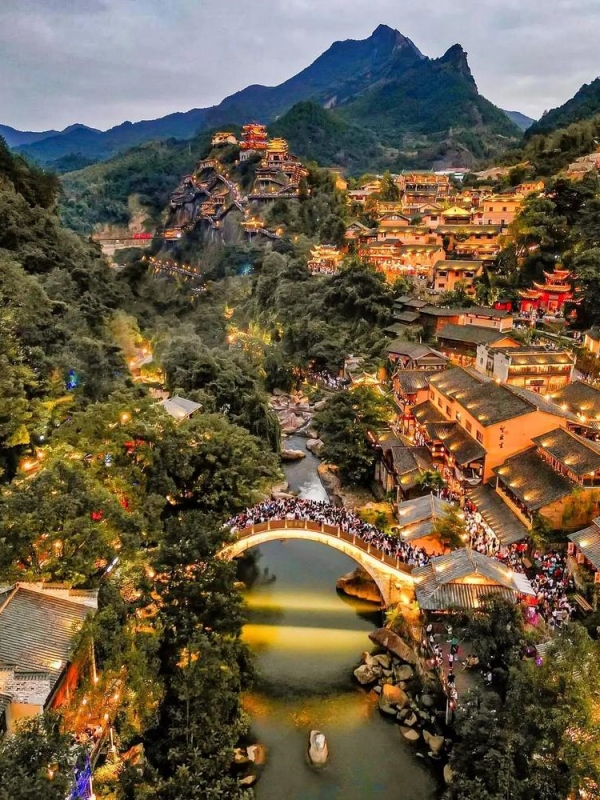
Wangxian Valley—The Cliffside Village Below
Wangxian Valley, sometimes referred to as a real-world xianxia location, is located approximately 20 kilometers at the foothills of Lingshan. Stone houses are stuck to the cliffs, particularly during the period after sun sets where lights come on. Qingnuguan falls peak at mid-morning and locals claim that there are double rainbows approximately 10 a.m. during the guesthouse cliffsides. An expedient method is to combine at the valley about 3 p. m., spend the night, and in the early morning of the next day, go off to Shangrao Lingshan, when there is no noise in the mountain.
FAQ About Shangrao Lingshan
Q: Where is the Lingshan mountain escalator located?
The Lingshan mountain escalator is situated within Shangrao Lingshan Scenic Area in Guangxin District, Jiangxi Province, eastern China. Opened in October 2025, this 1,236-meter system has ten connected sections, each about 50 meters long. It climbs along the mountainside from the cable car upper station to the summit, reducing a strenuous two-hour hike to roughly ten minutes. Visitors often stop midway to take photos, as the views along the escalator are unexpectedly dramatic.
Q: How long does it take to visit Shangrao Lingshan?
Most travelers spend around 4–5 hours exploring Shangrao Lingshan thoroughly. Riding the cable car or the new escalator system saves energy and time. Walking the Five Elements Plank Road alone takes 3–4 hours, depending on stops. Early arrivals before 9 a.m. allow visitors to enjoy quiet trails and better lighting for photos. Even with a relaxed pace, you can cover main peaks, temples, and viewpoints within half a day, making Shangrao Lingshan suitable for a day trip from Shangrao city.
Q: What is the best time to visit Lingshan Scenic Area?
Spring (April–May) and autumn (September–October) offer the clearest skies and comfortable temperatures at Lingshan Scenic Area. Morning fog weaving through the granite peaks adds drama to photographs. Summer can be hot and humid, with occasional low visibility due to mist, while winter is colder at higher elevations, with temperatures dropping significantly above the 800-meter base. Early mornings are recommended for both photography and avoiding weekend crowds in the Lingshan Scenic Area.
Q: Is Shangrao Lingshan worth visiting compared to Sanqingshan?
Yes, Shangrao Lingshan provides a distinct experience from UNESCO-listed Sanqingshan. It attracts fewer international tourists, offering a quieter, more authentic feel. The new escalator improves accessibility, while Taoist temples and sharp granite peaks rival Sanqingshan’s rounded formations. Many travelers combine both mountains—the contrast between Shangrao Lingshan’s sword-like ridges and Sanqingshan’s smooth peaks creates a richer Jiangxi itinerary, perfect for photographers or those seeking less crowded natural scenery.
Q: How do I get to Shangrao Cliff Village (Wangxian Valley)?
To reach Wangxian Valley, take a taxi or ride-hailing service from Shangrao Railway Station (~50 minutes, ¥100–150). Seasonal tourist buses also operate, though schedules vary. The valley lies about 20 kilometers from Shangrao Lingshan, making it feasible to stay overnight in cliffside guesthouses. This arrangement works well for a two-day itinerary, allowing sunrise or early-morning hikes up Shangrao Lingshan while avoiding weekend crowds.
Q: What is the Shangrao dialect like?
The Shangrao dialect belongs to the Gan Chinese family, distinct from standard Mandarin. Tonal patterns sound unusual even to native Mandarin speakers. Most younger locals and tourism staff speak Mandarin fluently. At major attractions like Lingshan Scenic Area, English signage exists but can be limited. Using a translation app is helpful for ordering meals, asking directions, or understanding temple information. Despite linguistic differences, communication rarely becomes a major barrier.
Q: Can elderly visitors or those with mobility issues visit Shangrao Lingshan?
Yes, since the 2025 escalator opening, Shangrao Lingshan has become significantly more accessible. Cable cars take 20 minutes up, while the escalator reduces steep climbs. Summit viewpoints are reachable without exhausting steps. The Five Elements Plank Road is mostly flat once elevated. However, some glass platforms and narrower cliffside sections may still challenge those with serious mobility restrictions. Careful planning and pacing ensure older visitors can enjoy most scenic highlights.
Q: What should I pack for visiting Lingshan Mountain Shangrao?
Visitors should wear non-slip shoes, as paths can be steep or wet. A light jacket is essential due to temperature drops at high elevation. Sunscreen, sunglasses, and a hat protect from strong UV rays. Bring water, snacks, and a camera or phone with a wide-angle lens—plenty of photos await. Portable chargers help with extended shoots. Avoid sandals or heels; the mountain’s stone paths are uneven. Packing wisely ensures comfort while exploring Lingshan Mountain Shangrao.