Longhua Temple
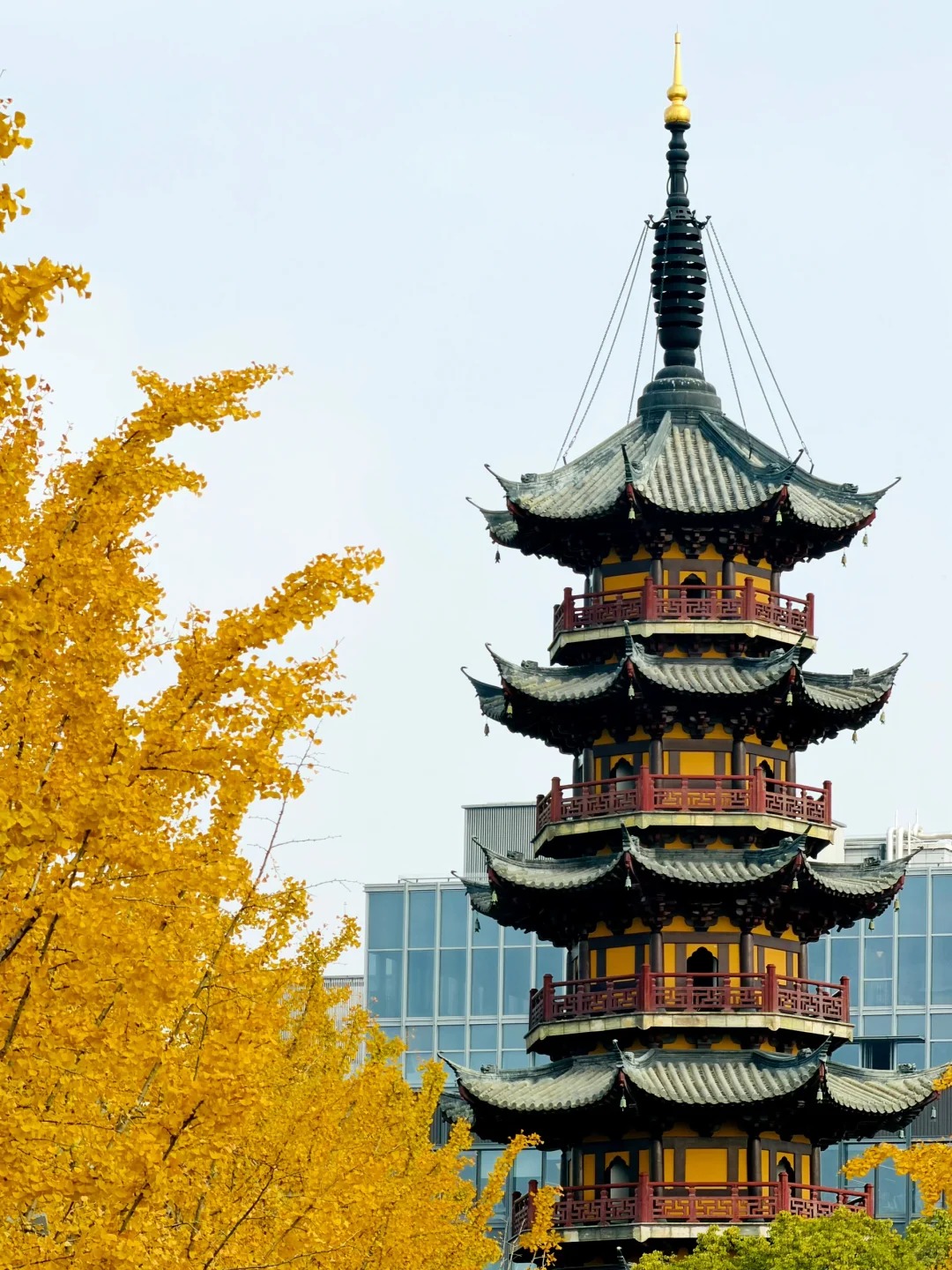
Longhua Temple sits in Xuhui District, south of central Shanghai. The seven-story pagoda is the first thing you notice—octagonal, about 40 meters tall, built in 977 AD during the Song Dynasty. It's the oldest temple complex in Shanghai, with roots going back to 242 AD, though wars destroyed the original structures multiple times. What stands now mostly dates from Qing Dynasty reconstructions in the 1800s.
The temple draws crowds during the spring peach blossom season and New Year's Eve bell-ringing ceremony. Most visitors spend 1-2 hours walking the five main halls, checking out the pagoda (you can't climb it anymore), and maybe trying those vegetarian noodles everyone queues for. If you prefer something more centrally located, Jing'an Temple on West Nanjing Road offers a shinier, more tourist-friendly alternative right among the shopping malls. Metro Line 11 or 12 gets you there—Exit 3, cross the road, temple's right there.
Quick Facts about Longhua Temple
| 🏯 Chinese Name | 龙华寺 (Lónghuá Sì) |
| 📍 Location / Address | No. 2853 Longhua Road, Xuhui District, Shanghai |
| 🎟️ Entrance Fee | ¥10 RMB (free on the 1st & 15th lunar days) |
| 🕒 Opening Hours | 7:00 AM – 4:30 PM daily |
| 🚇 Metro Access | Line 11 / Line 12, Longhua Station, Exit 3 |
| 📜 Founded | 242 AD (legend) / 977 AD (documented) |
| ☸️ Religion | Buddhist (Mahayana, Maitreya focus) |
| 🌸 Best Time to Visit | March–April (peach blossoms & temple fair) |
| ⏱️ Time Needed | 1.5–2 hours |
Seven-Tiered Pagoda Rises Above Longhua Temple Grounds
-
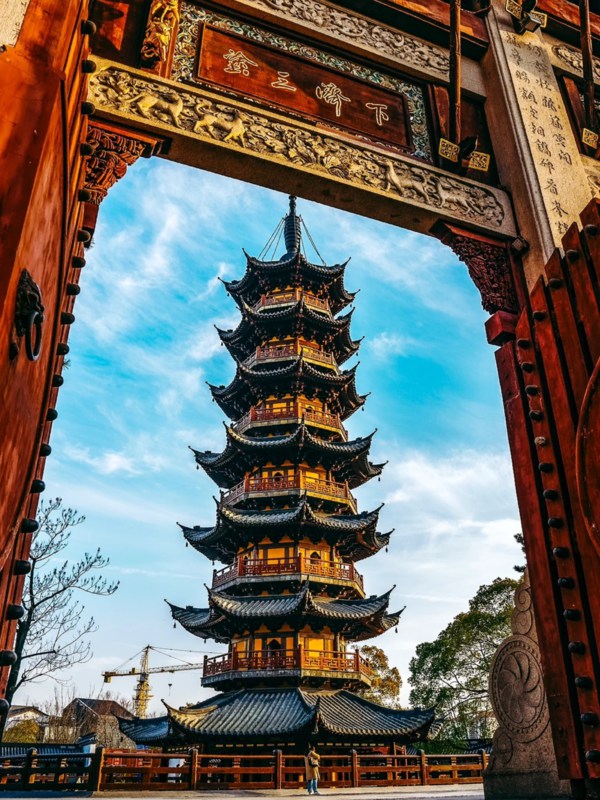

- Seven-Tiered Pagoda
-
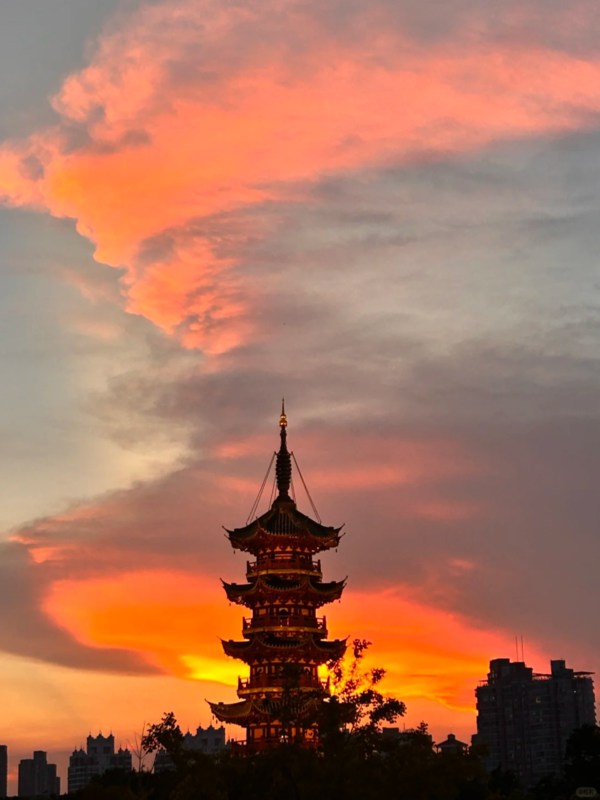
- Dusk Time of Longhua Temple
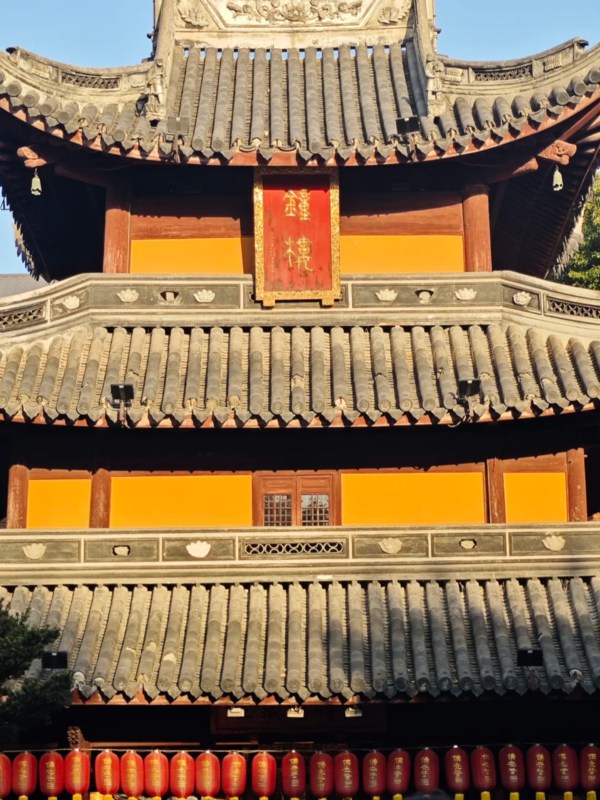
The Longhua Pagoda sits at the front entrance, impossible to miss. Seven stories, octagonal shape, getting narrower as it climbs to about 40 meters. Each tier has those upturned eaves—traditional Chinese style—and small bells hanging from the corners. On windy days you can hear them clinking. Not loud, but noticeable if you stop for a second.
The structure is brick at its core with wooden staircases winding inside. Or there used to be wooden stairs. These days the pagoda's closed to visitors. Shanghai's soft soil caused it to tilt over the centuries, and preservationists decided climbing wasn't safe. A TripAdvisor review I came across mentioned someone being "disappointed you can't go up," but honestly, the exterior is the main attraction. The brick has this weathered look, darker near the base where moisture hits it.
There's a spot called Pagoda Shadow Garden (Ta Ying Yuan) on the southwest corner of the temple complex. Around dusk, the pagoda's shadow stretches across this small garden area. Timing matters—you need clear weather and the right season, probably spring or autumn. Some visitors walk clockwise around the base three times before entering the main halls. It's a Buddhist tradition, something about accumulating merit. You'll see locals doing it, especially older folks who've been coming here for years.
Song Dynasty Architecture in Brick and Timber
The Song Dynasty was the time when the Longhua Pagoda was reconstructed in 977 AD, but there were some legends that it existed before. Its architecture is conscious: on the exterior, it is octagonal, and on the interior, square. The levels turn at right angles to one another. This distribution of weight trick was what made it fire proof and survived almost one thousand years of weather and war.
You can't climb it now. The woody elements of the exterior are weak and that tilt is not improving. In the 1950s, the remaining portion of the original brick core was stabilized by major work done by the preservation crews. They preserved the Song architecture-those balconies, banisters all built up in accordance with the historical documents. But access? Not happening. This historical monument is less concerned with the top floor tourist photography.
Five Sacred Halls March Along the Axis at Longhua Temple
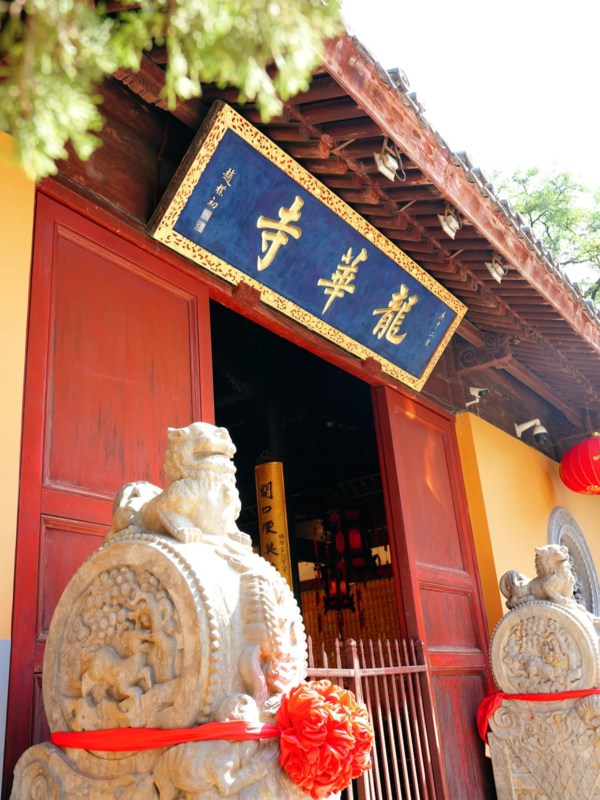
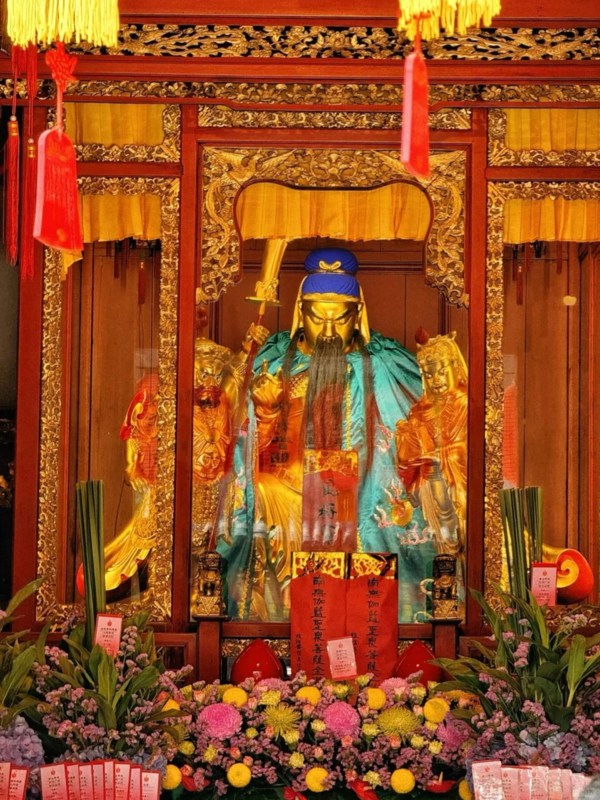
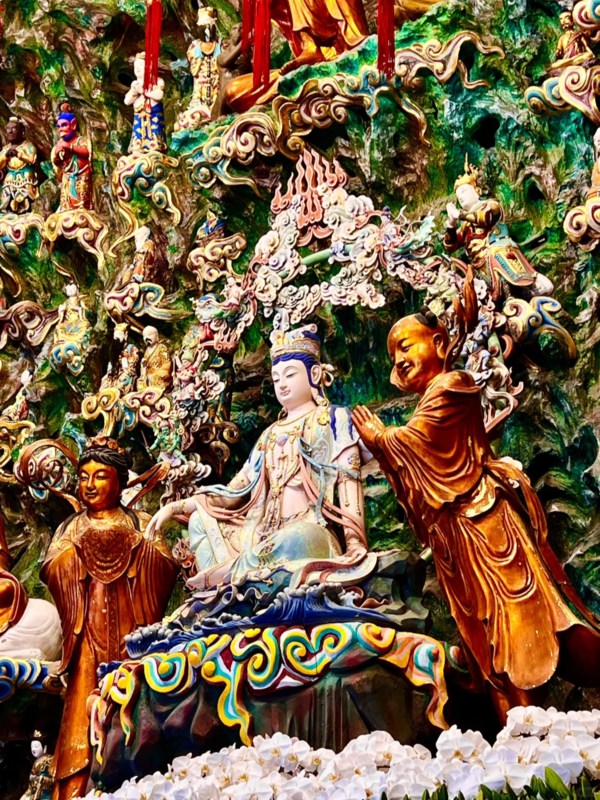
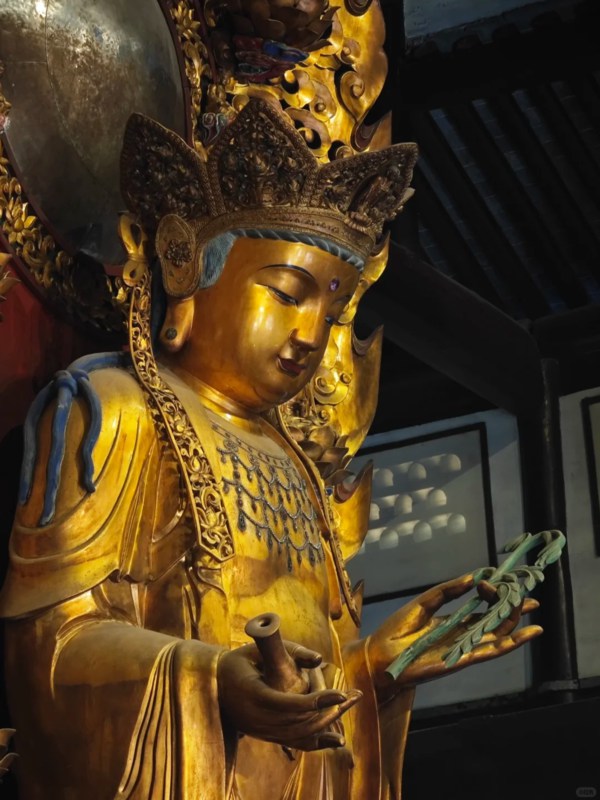
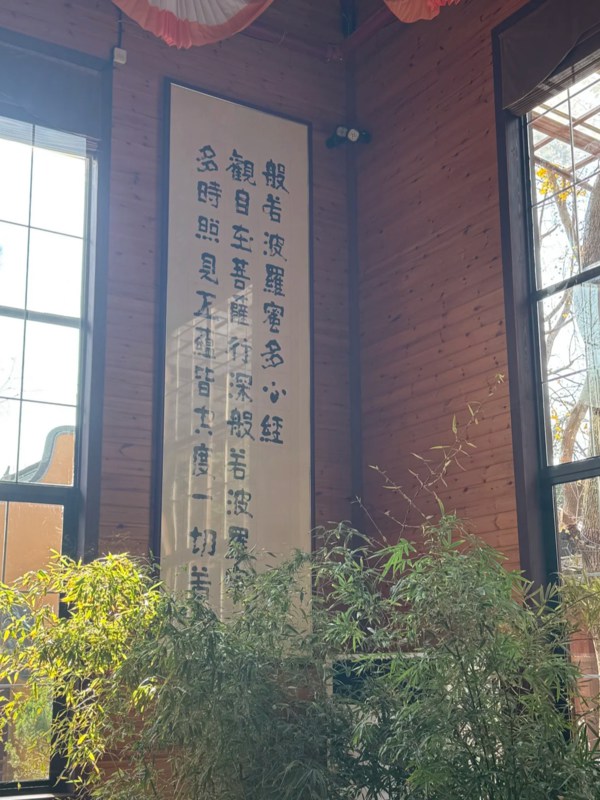
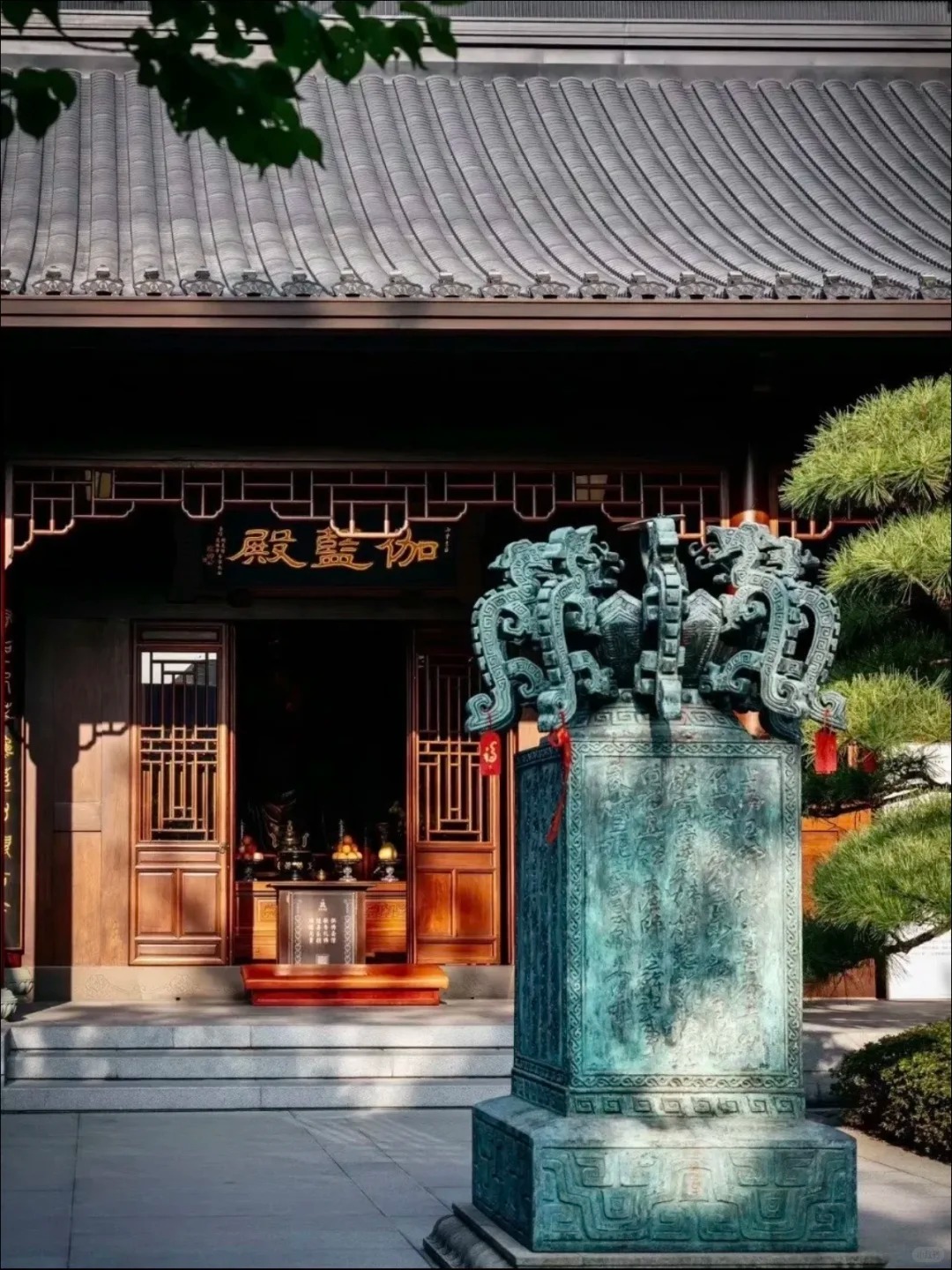
Longhua Temple follows the Song Dynasty's Jialan Five-Hall layout—a straight north-south line of buildings. You enter through the pagoda area and walk a central path connecting five main halls. Bell Tower sits on the east, Drum Tower on the west. Chan Buddhist architects valued symmetry.
Maitreya Hall: The Three Lion Kings Guard the Gate
The first one is the Maitreya Hall (Mile Dian). The entrance is surrounded by two stone lions which look fierce and have their mouths open. There is just a third statue of a lion in it, which they are all known as the Three Lion Kings. The temple myth suggests that only the most elite temples of China receive such designation. I do not know whether it is official or local tradition but it is seriously taken by worshippers.
Here the Maitreya Buddha statue depicts him as the Cloth Bag Monk- big belly, smiling face, and sitting relaxed. Here we have the future Buddha, who will come after the present era of existence. Children will refer to the statue and laugh since he is not serious like other Buddhas, he is jolly. Parents hush them, non-violently. The hall is a friendly but not, threatening space.
Heavenly King Hall: Four Guardians Stand Four Meters Tall
Secondly is the Heavenly King Hall (Tianwang Dian). The walls have four huge statues- the Heavenly Kings, which are approximately four meters high. They are carrying various weapons: a sword, a pipa (Chinese lute), an umbrella, a snake. Both of them are paths and responsibilities: the defense of the Buddhist world against the demons.
The statues look severe. Gold color, fancy armor, wrinkles that do not permit a word of conversation. Here the odour of incense becomes the more intense--all light sticks are lit here, and people move on. The smokes form columns and grab the light which passes through the doorways. Years of ash and offerings give the floor around the incense burners a dark shade.
There is also a smaller Maitreya statue in the center of this hall, this time with a heavenly crown. The juxtaposition of the smiling Maitreya and the fierce Heavenly Kings puts up a strange balance- compassion wrapped in strength.
Mahavira Hall: Where Worshippers Spend the Most Time
The central one is Mahavira Hall (Daxiongbao Dian), the core of Longhua Temple. This is the main statue of Buddha, Vairocana, and two disciples. All is covered with gold paint including the statues, the carved backdrop and even the decorations on the ceiling. It is graphically overwhelming in a calculated manner.
It is the place where the worshippers spend the majority of the time. Bowing, offering, murmuring or whiskey praying. The hall is even heavier than the previous ones, even when it is full. Here, people are slower and purposive. In the background of the main Buddha, an island setting carved Guanyin (Avalokitesvara), of female form, she is standing on a rock, with waves on both sides. The carving is intricate and elaborated so that you can notice even separate drops of water in wood.
The acoustics of the hall is unnatural. Voices do not echo so much but sound of the clicking of prayer beads is heard clearly. Others are kneeling and prolonged. Others are standing with the hands clasped together, and gazing at the face of the Buddha.
Three Sages Hall: Amitabha and His Companions
Three Sages Hall (Sansheng Dian) is a hall that accommodates three statues: in the center of the hall, there is the Amitabha Buddha, accompanied by Bodhisattvas Avalokitesvara and Mahasthamaprapta. It is the Pure Land tradition -Amitabha is the ruler of the Western Paradise, and here are the faithful Buddhists whose hope is to be born again.
The hall is less noisy compared to Mahavira. There are fewer people here that pass, perhaps it is earlier on, perhaps it is that the cult of Amitabha is not so prevalent in Shanghai as in other Buddhist schools. Yet the statues are lovely. Avalokitesvara is holding a willow branch and a vase- the symbols of mercy and healing. Mahasthamaprapta is holding a lotus flower.
The light penetrates in a different manner in this hall. The windows are also placed in such a way that it catches the afternoon sun that makes the gold paint look warmer. The effect is felt if you come at about 3-4 PM.
Scripture Hall: Where the Temple's Treasures Rest
The last hall is Scripture Hall (Cangjing Lou). This one's smaller, less grand. It holds three treasures of Longhua, Buddhist sutras (some of which are copies of the Tripitaka) and a gold seal issued by one of the Ming Dynasty emperors, and Buddha statues of different dynasties.
You can't handle any of these. They are either put in a glass room or stored in refrigeration. The sutras are written by hand, and the characters are minute and accurate. The gold seal has imperial markings. The Buddhas present various forms of art - Tang round, Song elegant and Ming detailed.
This hall doubles up in a role of a museum and in a role of a working library to the monks. At times you'll find them perusing the books in this part but the tourists are not permitted in those places. Here the odour of old paper and incense wood is the strongest in the temple. It is the smell of conservation, of things that have been preserved so well over a long time.
Best Photography Spots Around Longhua Temple
-
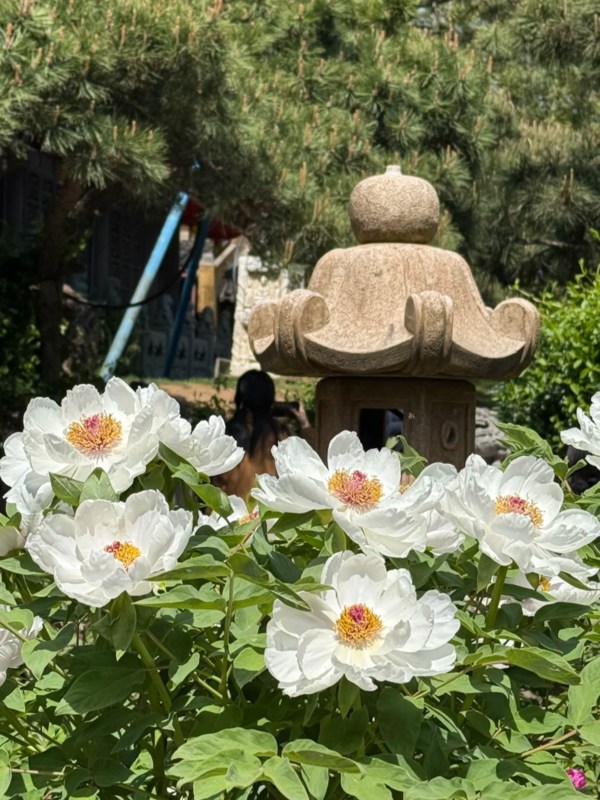
- Garden of Longhua Temple
-
- Bell Tower
The pagoda dominates most photos, but the temple has other angles worth capturing if you're not just shooting for Instagram. Lighting matters—early morning and late afternoon give you softer shadows. Midday sun washes everything out. Weekdays mean fewer people blocking your shots.
Pagoda from the Main Entrance
The classic angle. Stand at the temple's front gate looking south toward the pagoda. You get the full seven-story view, symmetrical, with the entrance arch framing it. This works best in morning when the sun comes from the east—the pagoda's face lights up while the background stays slightly darker. Late afternoon reverses this, giving you a silhouette effect that's dramatic but loses architectural detail. Most visitors take this shot. It's predictable, but there's a reason it's popular.
Pagoda Shadow Garden at Dusk
Pagoda Shadow Garden (Ta Ying Yuan) sits southwest of the main pagoda. The name isn't metaphorical—at dusk, especially in spring or autumn, the pagoda's shadow stretches across this small garden area. You need clear weather and timing around 5-6 PM depending on the season. The shadow isn't sharp-edged; it's more of a darkening pattern on the grass and stones. Poetic if you're into that. Underwhelming if you expected something more defined. I've seen photographers set up tripods here, waiting for the right moment. It's a patient person's shot.
Bell Tower and Drum Tower Symmetry
From the center courtyard between Heavenly King Hall and Mahavira Hall, you can frame the Bell Tower (east) and Drum Tower (west) in a symmetrical composition. They mirror each other—same hexagonal windows, same curved eaves. Shoot from low angle to include the rooflines against the sky. Blue sky days work best; gray days make the buildings blend into the background. This shot requires fewer people in frame, so early morning (7-8 AM) gives you cleaner results.
Peach Blossoms Explode When Dragon Fair Arrives
-
- The Temple Fair
-
- Peach Blossoms
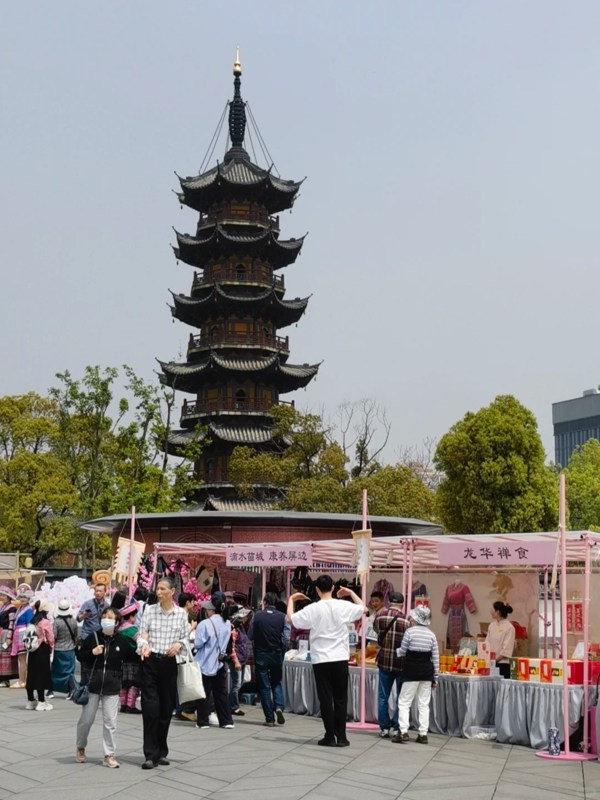
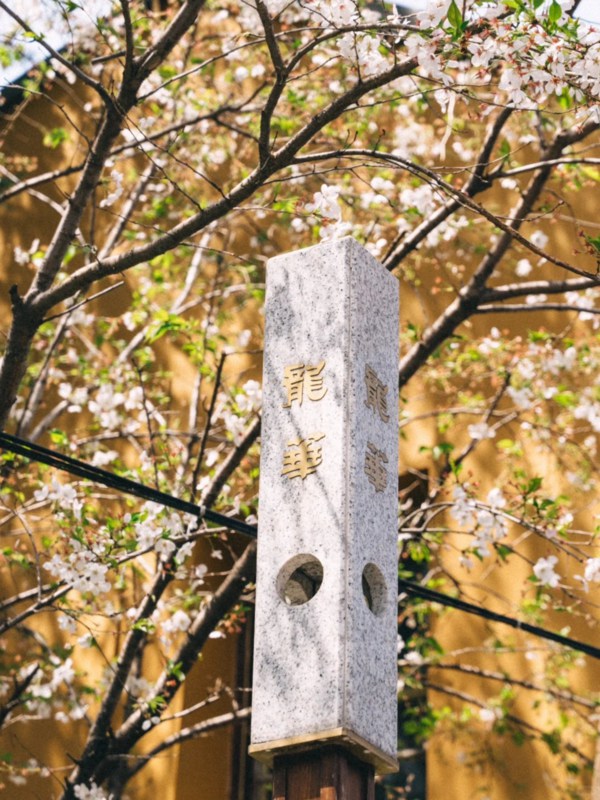
This is an ancient saying of Shanghai: "三月三, 到龙华, 看桃花" (On March 3 rd, go to long hua, see the peach blossoms). It is observed on the third day of the third lunar month, which is in the regular calendar normally at the end of March or the beginning of April. Longhua Temple is the place where the annual temple fair is held that date back more than 400 years.
The fair honours Maitreya Buddha in his rebirth as the Cloth Bag Monk (Budai). Legend has it that the day is the one he manifested to people. The temple identifies it through ceremonies, performances and a lot of noise. Dancing in dragons and lions also begin early and the drums are wailing so loudly that you can feel the beats in your chest. The sellers lined the temple walks with their booths, where they sold handcrafted things the lanterns of paper, embroidered pouches, etc. There are also food stalls, but these are generally typical Shanghai street food. No show-business, but what you could see at any country fair.
It is also the period when the peach trees are in blossom. There was large orchards on the grounds of the temple; now it is smaller, and the trees that have survived give a production. The pink flowers can be clustered on the dark brick of the pagoda--the contrast of those is good subject to photography, provided you can take a clear angle at them. The peach trees are still densely concentrated around the garden behind the temple. Get up early in a morning in case you do not have many people to block your view.
New Year's Eve Bell Rings 108 Times at Longhua Temple
Longhua Temple is going to open late on the 31st December in order to hold a bell-ringing ceremony. To use the new year, they beat the five-ton copper bell 108 times. Buddhism holds that there are 108 human afflictions which include greed, anger, ignorance, all that. One is supposed to be cleared by each of the rings.
The temple allows tourists to be involved. You pay a little money, perhaps 20 or $30, according to the year, and they give you the mallet. One solid strike. The music is low-pitched in the tower and resonant. They say you can hear it blocks away.
Lines form early. Locals are not fooling about it first bell of the year is something to them. Other families huddle together and wait their turn wrapped in their warm-ups against the cold. This is in contrast to the daytime visits of temples. More muffled motives, though there were hundreds present. This is not attended by many tourists. It is more a tradition that is maintained by Shanghai locals.
Vegetarian Noodles Sell Out Before Noon
Vegetarian Noodles
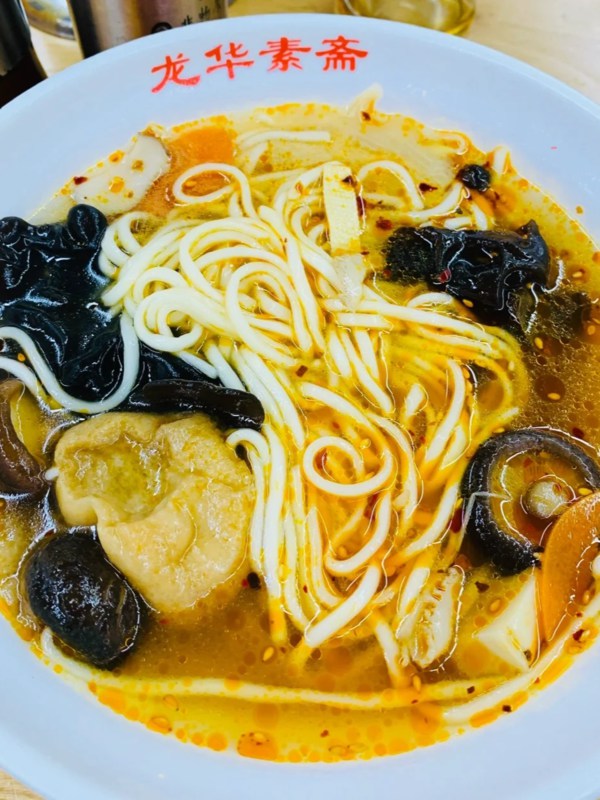
At the back of the fourth hall, there is a small vegan restaurant. The noodles served in the temple cost ¥10 each bowl and they are very limited. A queue will be forming around 11 AM, immediately after incidence in the morning. Worshipers complete their prayers and go there right away- it is nearly ritualistic. The line is a moving one, though not fast.
In the back kitchen, steam comes out of large pots. The noodles are served with nothing on it, though you may sprinkle it with 素鸡 (su ji), which are rolled pieces of bean curd, and they resemble chicken and yet they are not chicken. The texture is tender, somewhat chewing. The broth is light, vegetable and nothing heavy. It's not gourmet food. It is just pure and simple, the type of food that residents have been consuming here over the decades.
Buddhists eat vegetarian food in their temples - no meat, no strong smells such as garlic and onions. Purity thing. Longhua Temple continues to maintain that tradition, without taking temple-tourist prices. Some of the TripAdvisor reviews state that the noodles are a hidden gem, but I do not understand how hidden it is when all people are queuing. One of the reviewers said that they tasted like the cooking of grandmother, which is perhaps an exaggeration, but you understand. Not visitor food but real food. For more authentic eating experiences beyond temple noodles, check out where Shanghai locals actually eat their daily meals across the city's neighborhoods.
Orange Tabbies Patrol Between Incense Burners
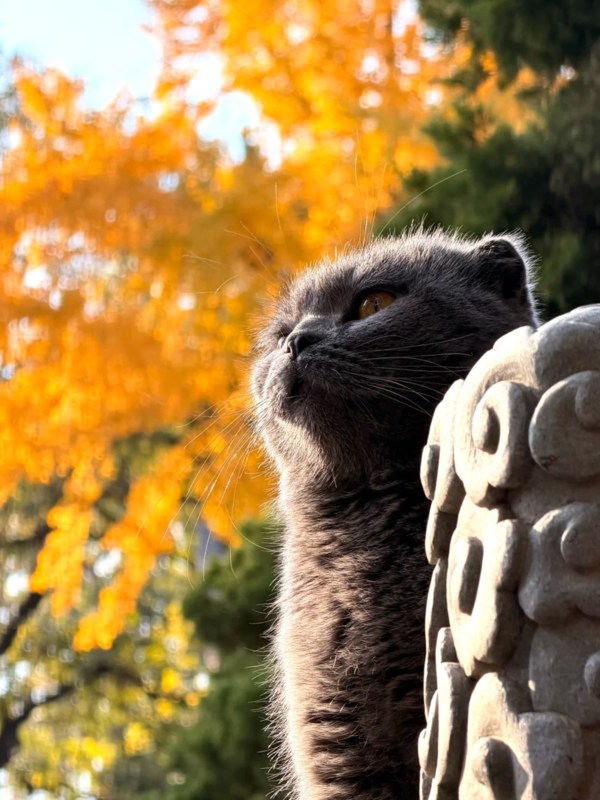
Cats in Longhua Temple
The temple grounds are inhabited by a number of cats. When you come, they do not run away. Not very amiable, and yet not timid. Owning the place, temple cats. Some of the tourists pause up to take pictures. I watched one attempt by a child to pet one; the cat only gave in after a span of ten seconds before it moved out. That kind of tolerance.
These minor things like cats sleeping, the smoke of incense floating around make Longhua Temple look inhabited instead of being preserved. Not a museum. A working environment where living occurs.
In case you want to light incense, the bundles cost ¥10 available at the donation boxes around the burners. They say that you have to use your left hand as a sign of respect. Before entering the main halls, then walk three times clockwise around the pagoda. Local people will do this unconsciously, muscle-memory with years of visits. Other individuals carry incense. Most just buy it there. During such days the smoke in the courtyards is so thick that sandalwood smell blends with the trees that are in blossom. During the spring, it is peach blossoms. The mix is sweeter than the scent suggests.
Prison Walls Turned into Martyr Gardens
The area around Longhua Temple has a storied past; it was once the execution site of suspected Communists during Kuomintang's (KMT) purge in Shanghai in 1927, resulting in thousands of deaths here. Additionally, during World War II, the Japanese maintained a major civilian internment camp nearby, where British/Americans and other Allied citizens were held under very poor conditions.
Today, the Longhua Martyrs Cemetery, a memorial park located behind Longhua Temple, marks the location of the execution ground. You can reach the cemetery within five minutes. It is peaceful, well-landscaped, has many sculptures and an Eternal Flame in honor of those who died. The long prison that held those who were executed can still be seen and is open for viewing; you will see no graphic portrayals of what took place, only well-preserved rooms with explanatory signs.
The transition from execution site to memorial feels deliberate—from violence to remembrance. The cemetery doesn't intrude on the temple experience. They're separate spaces, connected by proximity but distinct in purpose. Most visitors to the temple don't even realize the cemetery exists unless they specifically look for it. If you're interested in Shanghai's 20th-century history, it's worth the detour. If you're just there for the temple and pagoda, you won't stumble into it accidentally.
FAQ About Longhua Temple
Q: Is Longhua Temple worth visiting for first-time Shanghai travelers?
It depends what you're after. Longhua Temple feels more authentic than Jing'an Temple, which sits in the middle of shopping malls and attracts tour buses. Jade Buddha Temple is smaller, more contained. Longhua gives you space—the pagoda, five halls, peach gardens if you time it right. It's further south, so not convenient if you're staying in Puxi. But if you want a temple experience that feels less like a photo stop and more like an actual functioning religious site, it works. Best for people who don't mind traveling 30-40 minutes by metro for something quieter.
Q: Is Longhua Temple Buddhist or Taoist?
Longhua Temple is Buddhist, specifically Mahayana Buddhism. The main focus is Maitreya Buddha—the future Buddha. You'll see his statues in the first hall, often depicted as the smiling Cloth Bag Monk. Taoist temples have a different setup, different deities like the Jade Emperor or Laozi. The architecture overlaps sometimes, but the iconography gives it away. Longhua's halls follow Buddhist tradition: Heavenly Kings, Arhats, Bodhisattvas. If you see dragons and immortals everywhere, that's probably Taoist. Here it's Buddha statues, sutras, monks chanting. Purely Buddhist space.
Q: What is the dress code for Longhua Temple?
There's no official dress code posted anywhere. I've seen people in shorts and tank tops walk through without issue. That said, covering shoulders and knees shows respect, especially if you're entering the main halls where people are actively praying. Comfortable shoes matter more—the temple has stone paths, stairs, uneven ground in the garden areas. In summer, lightweight long pants or a skirt work fine. Winter, just dress warm. Shanghai gets cold and damp. The courtyards don't have heating. Layers help. Nobody's checking your outfit at the gate, but modest clothing fits the atmosphere better.
Q: Can you climb the Longhua Pagoda?
No. The pagoda's been closed to climbers for years. Shanghai's soft soil caused it to tilt over time, and the wooden exterior components are fragile. Preservation teams stabilized it in the 1950s, but opening it to foot traffic would accelerate deterioration. You can walk around the base, take photos from every angle, visit Pagoda Shadow Garden to see the shadow effect at dusk. Some travelers complain about this on TripAdvisor—"came all this way and can't go inside." Fair frustration, but the exterior view is the main attraction anyway. The architecture, the bells hanging from the eaves, the way it rises above everything else—that's what you're there for.
Q: How long does it take to visit Longhua Temple?
Budget 1.5 to 2 hours for a standard visit. That covers the pagoda area, walking through all five halls, maybe grabbing vegetarian noodles if the line isn't bad. If you're there during the temple fair in March/April, add another hour or two—crowds slow everything down, plus you'll want time to watch performances and browse stalls. Just hitting the pagoda and main Mahavira Hall? An hour works. People move at different speeds. Some rush through in 45 minutes. Others sit in the courtyards, watch the cats, soak in the atmosphere for half a day. The temple doesn't demand a full afternoon, but it rewards slower exploration if you've got time.
Q: What's the difference between Longhua Temple and Jing'an Temple?
Location first: Longhua Temple sits in Xuhui District, south of central Shanghai. Jing'an Temple is smack in the middle of West Nanjing Road, surrounded by luxury malls. The atmosphere reflects that. Jing'an gets tourists, shoppers, people killing time between stores. Longhua draws more local worshippers—older folks burning incense, families during festivals. History-wise, Longhua's older. Its pagoda dates to 977 AD. Jing'an's been rebuilt more recently, shinier, more polished. The experience at Longhua feels less commercialized. No aggressive souvenir vendors, no crowds jostling for selfies. Just quieter, more grounded. If you want authenticity over convenience, go to Longhua.
Q: Can I take photos inside Longhua Temple?
Courtyards and exterior areas, yes. The pagoda, garden paths, bell tower—all fair game. Inside the main halls where Buddha statues are displayed, it's usually discouraged. Some halls have signs saying no photos. Others don't, but people still avoid it out of respect for worshippers. Nobody's going to chase you down if you sneak one, but it feels intrusive when people are praying. The best photo spots are outside anyway: the pagoda at different angles, Pagoda Shadow Garden around dusk, peach blossoms in spring. Early morning or late afternoon gives softer light. Midday sun washes things out. Weekdays mean fewer people blocking your shots.
Q: Is there vegetarian food available at Longhua Temple?
Yes, behind the fourth hall. The temple's vegetarian restaurant serves noodles for ¥10 a bowl. It's basic but solid—light broth, soft noodles, optional 素鸡 (steamed bean curd rolls). They usually open around 11 AM and run until 2 PM, though hours can vary. Expect a line, especially after morning incense when worshippers finish praying and head straight there. The queue moves, but not fast. Cash or mobile payment works. Some days they sell out early, so don't count on late lunch. It's not gourmet, just simple vegetarian temple food. Exactly what you'd expect, nothing fancy. If you're hungry and there, it's worth the ¥10.